

News
US approves $1bn military equiment for Nigeria to combat insecurity

The United States State Department has approved the sale of military equipment worth $1bn to Nigeria to combat insecurity.
This is contained in a statement issued on Thursday by the US Department of Defence and the weapons include 12 attack helicopters, 2,000 advanced precision kill weapon system guidance sections, and night vision imaging system.
The Defense Security Cooperation Agency said the sale of the weapons was part of efforts to boost security in Nigeria.
It stated, “The State Department has made a determination approving a possible Foreign Military Sale to the Government of Nigeria of AH-1Z Attack Helicopter Related FMS Acquisitions and related equipment for an estimated cost of $997 million.
“The Defense Security Cooperation Agency delivered the required certification notifying Congress of this possible sale today.
“The Government of Nigeria has requested to buy twelve (12) AH-1Z Attack Helicopters; twenty-eight (28) T-700 GE 401C engines (24 installed, 4 spares); and two thousand (2,000) Advanced Precision Kill Weapon System (APKWS) guidance sections. Also included is Night Vision Cueing Display (NVCD); commercial variant GPS with Standard Positioning Service (SPS); communication equipment; electronic warfare systems; AN/AVS-9 Aviator’s Night Vision Imaging System; M197 20mm machine gun; Target Sight System (TSS); support equipment; spare engine containers; spare and repair parts; tools and test equipment; technical data and publications; personnel training and training equipment; Mission Planning system; U.S. Government and contractor engineering; technical, and logistics support services; U.S. Government and contractor assistance and oversight of facilities construction to include the provisioning of plans, drawings and specifications.
“$25M of case funds will be allocated for institutional and technical assistance to the Armed Forces of Nigeria (AFN) to continue Air Ground Integration (AGI) program, which includes developing targeting processes that are legally compliant with International Humanitarian Law and the Laws of Armed Conflict; and other related elements of logistics and program support. The total estimated program cost is $997 million.
“This proposed sale will support the foreign policy goals and national security objectives of the United States by improving the security of a strategic partner in Sub-Saharan Africa.
“The proposed sale will better equip Nigeria to contribute to shared security objectives, promote regional stability and build interoperability with the U.S. and other Western partners. This sale will be a major contribution to U.S. and Nigerian security goals. Nigeria will have no difficulty absorbing the equipment and services into its armed forces.
“The proposed sale of this equipment will not alter the basic military balance in the region. The principal contractors will be Bell Helicopter, Textron, Fort Worth, TX; and General Electric Company, Lynn, MA. There are no known offset agreements in connection with this potential sale.
“Implementation of this proposed sale will require the assignment of U.S. Government or contractor representatives to Nigeria for mobile training teams and contract logistics support. The case will include special training on the law of armed conflict and human rights, and air-to-ground integration to minimize civilian harm in air operations.
“This proposed sale will also require multiple trips by U.S. Government and contractor representatives to participate in program and technical reviews plus training and maintenance support in country, on a temporary basis, for a period of five (5) years. It will also require approximately three (3) contractor support representatives to reside in country for a period of two (2) years to support this program.
“There will be no adverse impact on U.S. defense readiness as a result of this proposed sale.
“This notice of a potential sale is required by law. The description and dollar value is for the highest estimated quantity and dollar value based on initial requirements. Actual dollar value will be lower depending on final requirements, budget authority, and signed sales agreement(s), if and when concluded.”







News
Army Arrests Two Soldiers for Acting as Bouncers at TikToker Peller’s Lavish Lagos Wedding

Army Arrests Two Soldiers for Acting as Bouncers at TikToker Peller’s Lavish Lagos Wedding
The Nigerian Army has arrested two serving soldiers over their alleged involvement in providing unauthorised private security at the lavish wedding ceremony of popular TikTok personality Habeeb Hamzat, known as Peller, and fellow content creator Jarvis in Lekki, Lagos State. Military sources confirmed that the arrests followed credible intelligence indicating that the soldiers participated in an illegal deployment during the star-studded event held over the weekend. The two personnel were apprehended on Tuesday morning as investigations commenced into the incident. The arrested soldiers have been identified as Private Onasanya Ifeoluwa, with service number 23NA/85/10007, and Private Ukpai Onyinyechi, with service number 23NA/85/7885. Both are attached to the 81 Division Medical Services and Hospital (81DMSH) in Obalende, Lagos.
The arrests came after videos from the high-profile wedding circulated widely on social media, showing uniformed military personnel providing security services and controlling access to parts of the venue. One widely shared clip allegedly showed a soldier acting as a personal bouncer for TikTok personality Ivanna, escorting her through the crowded venue. The footage triggered widespread criticism online, with many Nigerians questioning why serving military personnel were allegedly deployed to a private social event involving influencers and celebrities. The Nigerian Army has repeatedly maintained that serving personnel are prohibited from undertaking unauthorised private security duties or participating in illegal deployments without official approval. A military source stated: “Following credible intelligence on the involvement of Nigerian Army personnel in illegal deployment during popular social influencer’s wedding known as Peller at Lekki, Lagos, the Group arrested the personnel. Preliminary investigation is ongoing to establish the extent of their involvement and identify other personnel connected with the incident.”
READ ALSO:
- Canada Deports 205 Nigerians, 10,607 Illegal Immigrants in June Crackdown
- 2027: Sultan of Sokoto Dismisses Claims of Backing Tinubu’s Re-election
- Why I Rejected Tinubu, Buhari’s Offers to Join APC — Fayose
Peller and Jarvis’ wedding, held on August 1, 2026, attracted several prominent entertainers, social media influencers, and content creators. The couple, who have built a massive following through TikTok livestreams and relationship content, had about 400 guests expected to wear the wedding Aso Ebi, with the eight-yard version priced at ₦700,000. Videos from the ceremony dominated social media platforms, with large crowds of fans and guests in attendance. The event became one of the most talked-about celebrity occasions of the weekend, but controversy soon followed after clips surfaced showing men in military uniforms managing access to parts of the venue and escorting some attendees.
The Nigerian Army is now investigating whether the soldiers acted on their own, received unofficial instructions, or were involved through another channel. The military has reiterated its commitment to professionalism and discipline, stating that any personnel found to have violated regulations will be sanctioned in accordance with the Armed Forces Act. Military sources said the soldiers would face disciplinary proceedings if the ongoing investigation establishes that they breached military regulations. The Army emphasised that military uniforms, weapons, and official authority must never be used for personal gain or private commercial engagements. At the time of this report, there is no indication that Peller or the event organisers are under investigation, and neither party has publicly reacted to the development. The focus of the military inquiry remains on the conduct of the soldiers and whether any superior officer or other authority approved their participation.
Army Arrests Two Soldiers for Acting as Bouncers at TikToker Peller’s Lavish Lagos Wedding
News
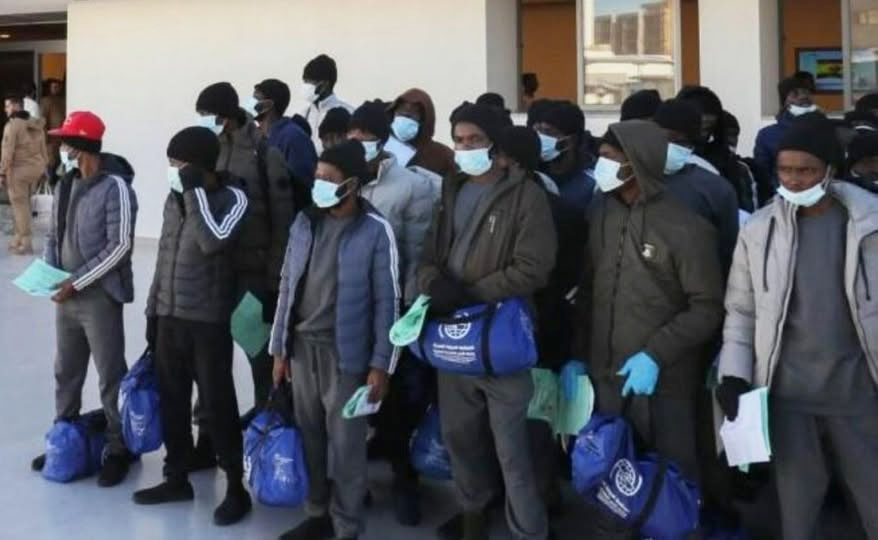
Canada Deports 205 Nigerians, 10,607 Illegal Immigrants in June Crackdown
Canada Deports 205 Nigerians, 10,607 Illegal Immigrants in June Crackdown
No fewer than 205 Nigerian nationals were among the 10,607 illegal immigrants deported from Canada in June 2026, according to official data released by the Canada Border Services Agency (CBSA) , as the Canadian government intensified enforcement of its immigration laws. The latest Immigration Removal Statistics show that Nigeria accounted for nearly two per cent of all deportations during the month, ranking 9th among the countries with the highest number of immigration removals for the first half of 2026. India recorded the highest number of deportations, with 3,323 nationals removed, followed by Mexico with 1,573, Haiti with 431, and the United States with 372. Other countries with significant numbers of nationals deported included Colombia (354), Romania (293), Bangladesh (227), Pakistan (207), and Chile (190), according to the CBSA data.
The latest figures bring the total number of Nigerians deported from Canada to 643 between January 2025 and June 2026, making Nigeria the only African country to appear among the top 10 nationalities removed from Canada during the period. Data shows that 438 Nigerians were deported in 2025, placing Nigeria 10th among countries with the highest number of immigration removals that year. Between January and June 2026, another 205 Nigerians were deported, moving the country to 9th position on the list.
READ ALSO:
- 2027: Sultan of Sokoto Dismisses Claims of Backing Tinubu’s Re-election
- Why I Rejected Tinubu, Buhari’s Offers to Join APC — Fayose
- Tinubu Meets Jim Ovia, NELFUND CEO at Aso Rock as Student Loans Hit ₦303bn
The deportation figures for Nigeria have fluctuated over the past six years: 302 Nigerians were deported in 2020, 242 in 2021, and 200 in 2022. Nigeria dropped out of the top 10 list in 2023 and 2024 before returning in 2025. For the first six months of 2026, the top nationalities removed were India (3,323), Mexico (1,573), Haiti (431), United States (372), Colombia (354), Romania (293), Bangladesh (227), Pakistan (207), Nigeria (205), and Chile (190).
According to the CBSA, the vast majority of deportations resulted from non-compliance with Canada’s immigration laws , particularly involving refugee claimants. In 2025, 19,225 removals involved refugee claimants found inadmissible due to non-compliance, while 2,549 non-claimants were removed on similar grounds. Other deportations were linked to criminality , organized crime , misrepresentation , and other violations under Canada’s Immigration and Refugee Protection Act.
Canada has significantly increased immigration enforcement in recent years. Total deportations rose from 12,858 in 2020 to a record 23,160 in 2025. In the first half of 2026 alone, the country recorded 10,607 enforced removals, suggesting another high-deportation year is likely if the current trend continues. The CBSA is currently removing approximately 400 inadmissible individuals every week. Through Canada’s Border Plan, the agency received $30.4 million to strengthen its capacity to complete 20,000 removals annually. As of June 30, 2026, the CBSA reported 40,827 removal cases in progress , while its overall immigration enforcement inventory exceeded 572,000 active files. The agency has also stepped up enforcement against individuals linked to extortion-related activities. As of June 18, 2026, the CBSA had opened 484 immigration investigations, issued 139 removal orders, and removed 81 individuals in connection with extortion cases. In the Pacific Region, 46 individuals have been removed; in the Greater Toronto Area, 17; and in the Prairie Region, 18. Commenting on the enforced removals, the CBSA said: “Removing individuals who do not have the right to enter or stay in Canada is essential to maintaining the integrity of Canada’s immigration program and to ensuring fairness for those who come to this country lawfully.”
Canada Deports 205 Nigerians, 10,607 Illegal Immigrants in June Crackdown
News
2027: Sultan of Sokoto Dismisses Claims of Backing Tinubu’s Re-election
2027: Sultan of Sokoto Dismisses Claims of Backing Tinubu’s Re-election
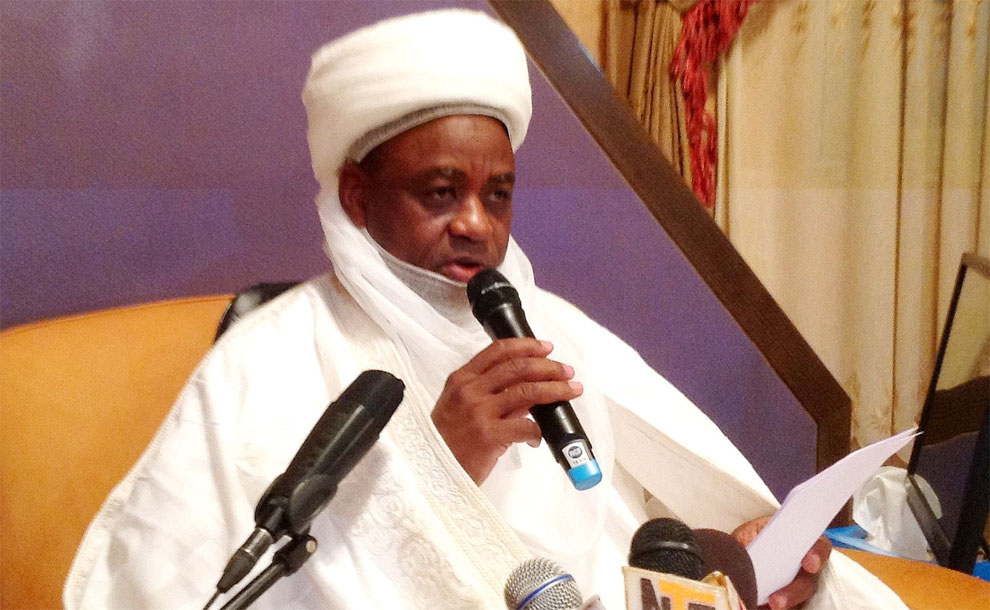
The Sultan of Sokoto, Alhaji Muhammad Sa’ad Abubakar III, has firmly dismissed reports circulating on social media claiming that he endorsed President Bola Ahmed Tinubu’s re-election bid ahead of the 2027 general elections, insisting that he has no favourite candidate and remains above partisan politics. In a statement issued on Tuesday by his Media Team and signed by Prince Bashir Adefaka, the revered traditional ruler described the reports as false and misleading, urging Nigerians to disregard what it called a “malicious and unpatriotic attempt to drag the revered personality of the Sultan into partisan politics for selfish interests.” “Our simple response to the report is that it is not possible for the Sultan, as the father of all, to make such a statement, either publicly or in any other forum,” the statement read in part.
The Media Team emphasised that the Sultan occupies a unique position as both a traditional and religious leader whose responsibility is to serve all Nigerians without political bias. The statement stressed that his role requires him to remain impartial while offering guidance and blessings to all Nigerians, regardless of their political affiliations. “Let it be made clear once again that the institutions of monarchy and religion led by the Sultan are institutions of a father figure. As such, His Eminence cannot but remain within the purview of that role by offering fatherly, royal and spiritual blessings, as well as guidance, to Nigerian politicians who seek his counsel and blessings,” the statement said. The monarch noted that his doors remain open to all Nigerians, irrespective of political persuasion, and that his willingness to receive politicians should not be interpreted as support for any individual or party. “The Sultan’s doors cannot be shut against anyone who comes to him, regardless of political affiliation or persuasion. His Eminence has consistently demonstrated that he is the father of all and will continue to relate with all Nigerians without discrimination,” the media team added.
READ ALSO:
- Why I Rejected Tinubu, Buhari’s Offers to Join APC — Fayose
- Tinubu Meets Jim Ovia, NELFUND CEO at Aso Rock as Student Loans Hit ₦303bn
- ‘We’ll Meet at The Field’ – Amaechi Replies Tinubu, Vows to Match Ruling Party’s Campaign Tactics
The clarification follows the circulation of posts on social media alleging that the Sultan had openly endorsed Tinubu for another term in office. Some claims suggested that the Sultan declared Tinubu as “our only choice” and demanded the creation of a Fulani commission during a television appearance. However, fact-checking organisation Dubawa traced the viral claim to a video recorded during the opening ceremony of the 2026 National Conference of the Miyetti Allah Cattle Breeders Association of Nigeria (MACBAN) held in Abuja on July 30, 2026. A review of the full speech showed that the Sultan was not discussing the 2027 presidential election or endorsing President Tinubu for a second term. Translated from Hausa, the Sultan was actually commending President Tinubu for establishing the Federal Ministry of Livestock Development and expressing support for the government’s livestock reforms, not endorsing his re-election bid. The Sultan’s remarks were taken out of context and misrepresented to create a false impression.
The Media Team reiterated that the Sultan remains committed to promoting peace, unity, stability, and harmonious coexistence across the country, regardless of ethnic, religious, or political differences. It called on members of the public to reject any attempt to misrepresent the Sultan’s position or associate him with the political campaign or candidacy of any individual ahead of the 2027 general elections. The statement further appealed to media practitioners and social media users to exercise responsibility and restraint by verifying information before circulating reports capable of misleading the public or unnecessarily dragging revered traditional and religious institutions into partisan political controversies.
As the President-General of the Nigerian Supreme Council for Islamic Affairs, the Sultan has consistently projected himself as a non-partisan national figure, receiving politicians across party lines while advocating peace, dialogue, and national unity rather than political endorsements. The clarification comes amid increasing political activities and speculations ahead of the 2027 general election, with prominent national figures and traditional rulers often becoming subjects of political claims and endorsements on social media. By firmly rejecting the reports, the Sultan reaffirmed his commitment to remaining above partisan politics while continuing to promote national cohesion and equal treatment for all Nigerians, regardless of their political preferences.
2027: Sultan of Sokoto Dismisses Claims of Backing Tinubu’s Re-election
-
 News3 days ago
Oloyede clears air on JAMB’s ₦36m ‘snake swallowed money’ controversy
-

 News3 days ago
475 Police Officers Recalled After Controversial Retirement, Ordered for Mandatory Induction
-

 metro3 days ago
MURIC Hails Oloyede as ‘Game Changer,’ Says He Proved Muslims Can Excel in Public Office
-

 Sports3 days ago
Nigeria Shines in Commonwealth Games, Tops Africa with 10 Gold Medals
-
 Auto3 days ago
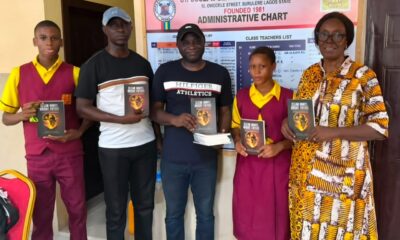
Lanre Shittu Motors Leads Drive to Steer Lagos Students Away from Crime, Donates books to public Schools
-

 Education3 days ago
UNIOSUN ranks third among state universities in latest Webometrics ranking
-
 Auto3 days ago
FRSC Boss: Tinubu’s CNG, EV Drive Creating Jobs, Attracting Investment
-
 metro3 days ago
DSS, Vigilantes Ambush, Kill Notorious Bandit Kingpin Idi Abasu Aiki, Over 60 Fighters in Katsina