

Health
Why some people develop headaches during sex –Neurologist

A Professor of Clinical Neurology and Internal Medicine at the College of Medicine, University of Nigeria, Enugu, Ikenna Onwuekwe, has said that people with existing headaches are often more prone to having headaches when having sexual intercourse.
The health urged people who experience headaches during sex not to take it lightly but rather seek medical intervention from specialists.
According to the neurologist, people who have migraine, tension, medications, or fevers often experience a worsening of their headache when they engage in sex.
Prof. Onwuekwe, however, noted that some people without already existing headaches also experience headaches with the onset of sex, before orgasm, or after orgasm.
Onwuekwe, who is also the head of the Neurology Unit and Consultant Neurologist at the University of Nigeria Teaching Hospital, Enugu, explained that since there are possibly confusing reasons for sex to cause headaches, anyone having such must be seen by a competent Neurologist and Headache Specialist for proper diagnosis and treatment.
Speaking in an interview with PUNCH HealthWise, the don said sexual intercourse is a demanding physical activity, adding that it can be associated with the start of or worsening of an already existing headache.
READ ALSO:
- Gunmen behead lawmaker representing Soludo’s constituency
- Oba of Benin to Tinubu: We’re praying for you to get APC ticket
- Ban: Okada rider, passenger to be arrested, prosecuted, says Lagos police
He stated that the 2018 International Classification of Headache Disorders recognises the disorder called primary headache associated with sexual activity.
“This primary disorder serves to distinguish it from headache due to other causes such as migraine that can be made worse during or secondary to sexual activity.
“Because sex is a demanding physiological activity, people with already existing headaches from migraine, tension, medications, or fevers may experience a worsening of their headache if they start or engage in sex.
“The primary headache associated with sexual activity describes people who only get a headache with the onset of sex, before orgasm, or at orgasm.
“Such people must not have any prior existing headache condition,” he said.
According to him, for a few people who experience headaches post-orgasm, it may be due to issues with cerebrospinal fluid leakage.
A cerebrospinal fluid leak is when you’re leaking the fluid that surrounds your brain and spinal cord. CSF is vital to how your brain and spinal cord work, protecting and cushioning them from outside forces, Cleaveland Clinic said.
Continuing, the neurologist said for primary headache associated with sexual activity, the headache may be severe in intensity for one minute to 24 hours duration or of mild intensity for up to 72 hours.
He said that while there is no accurate data for this condition in Nigeria, about one per cent of the general population worldwide is estimated to have primary headaches associated with sex, adding that men are at greater risk than women.
He added that the typical age of presentation is between 20 – 45 years.
“By way of the cause of this primary headache of sexual activity, the exact reason is unsure though factors associated with haemodynamic instability are incriminated.
“It is known that during sexual activity, the Valsalva maneuver occurs and there are robust increases in blood pressure of these sufferers during sex much more than is seen in healthy controls and people with migraine.
“Systolic blood pressure can shoot up to as high as 160-170mmHg or more in this condition.
“Typically, the headache will repeat with recurrent sexual activity but 15 per cent of cases may have remissions lasting two months at a time in-between attacks. A chronic cause is well recognised.
“In every case of headache brought on by or worsened during sex, it is important to distinguish primary headache (without any other evidence associated condition that can cause headache) from secondary headache syndromes where potentially lethal conditions may exist such as brain aneurysms or tumours or stroke with bleeding into the brain.”
“Another condition that may look like primary sexual headache is called reversible cerebral vasoconstriction syndrome where selected arteries at the back of the brain get temporarily blocked by spasm. This can occur during sex or any exercise but it is not a primary headache associated with sex.
On the diagnosis, he said apart from detailed clerking and examination, neuroimaging modalities and examination of cerebrospinal fluid amongst other investigations may be needed to arrive at the specific disorder and to establish the diagnosis of a primary or a secondary headache syndrome.
He said treatment varies according to the specific cause.
READ ALSO:
- Two million pounds ‘stolen’ by ex-Minister Jeremiah Useni seized in Jersey
- Troops dislodge IPOB/ESN training camp, neutralise two wanted gunmen
- We’ll hold CAN, Kumuyi responsible for eventuality in crusade – IPOB
“For some people, the Neurologist may recommend reducing the frequency of sex while for others, there may be a need to adopt more passive sex positions and use recumbent postures more often.
“People with hypertension need to be properly controlled on medications and the use of certain drugs that enhance sexual function but cause vasodilation of blood vessels must be strictly regulated.
“For candidates diagnosed to have primary headache associated with sexual activity, certain medications are useful such as indomethacin and propranolol among others.
“In all cases, there is a need to stress the critical need for the headache expert to guide the identified sufferer to ensure best practices and better quality health including satisfactory sexual health.
“So many cases have come to public knowledge about people found to have collapsed and died in bedrooms at home and in hotels during sex activity.
These are not usually cases of primary headaches associated with sexual activity but likely cases of lethal consequences of secondary headaches associated with sexual activity.
“In these latter cases, at the height of orgasm or with increasing intensity of sex, there is either a massive acute coronary event such as myocardial infarction (heart attack) or a massive intracranial event such as a large cerebral haemorrhage.”
The expert noted that to have satisfactory and safe sexual life, it is vital to have a clean bill of health, to know one’s health risks, and have them controlled by a competent physician.
“Otherwise, one can sometimes pass on to the other side while in active pleasurable service.
“For those known to have a diagnosis of primary headache associated with sexual activity and it happens frequently, the headache can be prevented by taking medications like indomethacin or beta-blockers minutes before the onset of sex.
“But it must be stressed that there is no room for self-prescription here. Expert neurological management is key,” Onwuekwe said.









Health
LASUTH Doctors Suspend Strike in Third Week After Agreement With Lagos Govt

LASUTH Doctors Suspend Strike in Third Week After Agreement With Lagos Govt
Resident doctors at the Lagos State University Teaching Hospital (LASUTH) have suspended their indefinite strike in its third week after reaching an agreement with the Lagos State Government on some of their outstanding welfare and remuneration demands.
The doctors, under the Association of Resident Doctors, LASUTH (LASUTH-ARD), commenced the industrial action on September 11, 2026, following unresolved concerns over specialist allowance, salary shortfalls, advancement arrears and professional allowances.
The suspension followed negotiations between representatives of the doctors and the Lagos State Government, with the development paving the way for the doctors to return to their duties at the tertiary healthcare institution.
LASUTH-ARD agreed to suspend the strike for 10 weeks to allow the government time to implement the issues covered by the agreement.
The 10-week period does not mean the doctors are remaining on strike for another 10 weeks. Rather, they have returned to work and suspended the industrial action during the period while monitoring the government’s implementation of the agreement.
At the end of the 10 weeks, the doctors are expected to reconvene and review the level of implementation before deciding on their next course of action.
READ ALSO:
- Anambra Police Arrest 25-Year-Old Suspect Linked to 2023 Kidnap, Murder
- 2027: Otti Explains Why He Supports Tinubu Despite Remaining in Labour Party
- EFCC Chairman Raises Alarm Over Alleged Theft of Nigeria’s Public Funds
The dispute had centred largely on the non-payment of specialist allowance to Grade Level 14 resident doctors, particularly Senior Registrars I (SR1).
The doctors had also demanded payment of outstanding salary and advancement arrears, as well as 25 months’ arrears under the revised Professional Allowance Table (PAT).
Another major demand was a detailed and transparent breakdown of the salary components being used by the Lagos State Government to pay resident doctors.
Before declaring the indefinite strike, LASUTH-ARD had issued a seven-day ultimatum to the state government over the outstanding issues.
The doctors acknowledged some interventions by the government, including payment of the 2026 Medical Residency Training Fund (MRTF) and implementation of the revised professional allowance table.
However, the association maintained that critical welfare and remuneration issues remained unresolved, prompting the industrial action.
The Nigerian Association of Resident Doctors (NARD) had backed the LASUTH doctors during the dispute and called for a resolution of the outstanding issues.
The strike had disrupted some healthcare services at LASUTH, with patients affected by the withdrawal of services by resident doctors.
With the suspension now agreed, the doctors are expected to resume normal duties while the implementation of the agreement is monitored.
The development provides temporary relief from the industrial dispute, but the underlying issues will remain subject to the government’s compliance with the commitments reached during negotiations.
The 10-week suspension therefore gives both sides a period to implement and assess the agreement. If the doctors determine at the end of the period that the outstanding issues have not been adequately addressed, the association will decide on its next course of action.
For now, however, the LASUTH resident doctors have returned to work, bringing the current phase of their industrial action to a suspension after entering its third week.
LASUTH Doctors Suspend Strike in Third Week After Agreement With Lagos Govt
Health
MTN, Gates Foundation Launch $25m AI Maternal Health Initiative for 500,000 Nigerian Women
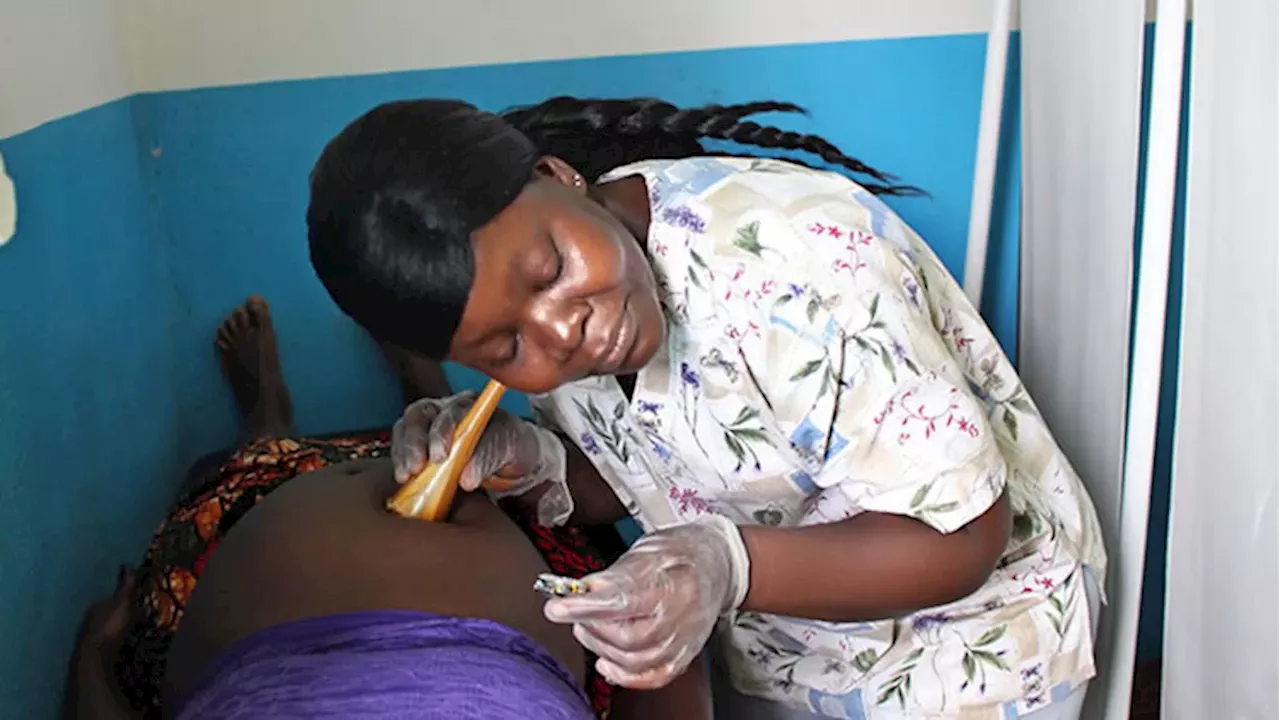
MTN, Gates Foundation Launch $25m AI Maternal Health Initiative for 500,000 Nigerian Women
MTN Group Foundation and the Gates Foundation have launched a four-year AI-enabled maternal healthcare initiative in Nigeria with a target of helping 500,000 women access higher-quality maternal health services by 2030.
Known as the Nigeria Maternal Health Multiplier, the initiative will combine artificial intelligence, mobile technology, affordable smartphones, data access and improved connectivity to support pregnant women, frontline health workers and primary healthcare facilities, particularly in underserved communities.
The partnership, announced in New York on the sidelines of the 81st United Nations General Assembly (UNGA 81), comes with an initial investment of approximately $25 million between 2026 and 2030 through direct and in-kind contributions from MTN and the Gates Foundation.
The organisations said the initial funding is intended to serve as an anchor investment that can attract additional resources and potentially support the expansion of the model into other African markets.
Under the programme, 5,000 frontline health workers will be equipped with digital tools designed to help them identify pregnancy and childbirth complications earlier, while 500 health facilities will be supported to provide more consistent and higher-quality maternal healthcare.
The programme will focus on three major areas: AI-enabled, phone-based decision-support tools for mothers and health workers; affordable smartphones and mobile data for pregnant women; and improved connectivity at primary healthcare facilities.
The digital tools are expected to provide women with trusted health information throughout pregnancy, childbirth and the postnatal period, while giving frontline workers access to real-time guidance that can assist in identifying warning signs and responding to complications.
READ ALSO:
- Niger Mosque Attack: Bago Says 63 Abducted, 14 Freed, Three Killed
- UNGA 81: Trump Threatens to ‘Annihilate’ Iran if No Deal Is Reached
- Mambilla: Malami Defends $200m Settlement, Rejects ICC Corruption Findings
The initiative is designed to work within Nigeria’s existing healthcare system rather than operate as a separate medical service. It will build on the Federal Government’s Maternal and Neonatal Mortality Reduction Innovation Initiative (MAMII), which is being implemented by the Federal Ministry of Health and Social Welfare under the country’s Sector-Wide Approach to health reform.
Nigeria was selected as the first implementation market because of the scale of its maternal health challenges.
According to MTN and the Gates Foundation, Nigeria accounts for nearly 30 per cent of maternal deaths globally, despite progress made in reducing maternal mortality over the past decade. The organisations also said only about 59 per cent of Nigerian women complete four or more antenatal care visits, potentially leaving some pregnancy complications undetected until they become severe.
Globally, maternal deaths have fallen by about 40 per cent since 2000, but progress has slowed in recent years. The organisations said the risk of maternal death remains dramatically higher in sub-Saharan Africa than in Western Europe.
The MTN-Gates initiative is therefore being positioned as a technology intervention aimed at closing some of the gaps that prevent women and health workers from receiving or acting on timely health information.
MTN Group President and Chief Executive Officer Ralph Mupita said technology could make maternal healthcare more personalised, predictive and accessible.
Mupita said the partnership would seek to put trusted and locally relevant health information directly into the hands of mothers and healthcare professionals, with the ambition of developing a model that could eventually be scaled across Africa.
Gates Foundation Chief Executive Officer Mark Suzman said artificial intelligence has significant potential to improve healthcare, but its benefits should reach people who are most likely to be excluded by the cost of emerging technologies.
The foundation said its contribution would include expertise in maternal, newborn and child health, digital health innovation, responsible AI and evidence-based scale-up, while MTN would contribute its telecommunications infrastructure, digital inclusion capabilities, device distribution networks and local market experience.
Nigeria’s Minister of Communications, Innovation and Digital Economy, Bosun Tijani, welcomed the initiative, saying one of the country’s challenges has been ensuring that useful innovations are supported by the systems needed to drive adoption.
READ ALSO:
- Obasanjo Family, Orji Kalu Among Nigerians Linked to $271m US Property Investigation
- Nationwide Blackout Looms As Electricity Workers Give NAF Three-Day Ultimatum
- Phyna, Nkechi Blessing Take Social Media Feud To Boxing Ring In Lagos
Tijani said partnerships such as the MTN-Gates programme could help translate Nigeria’s digital transformation into practical services for people who need them most.
The Coordinating Minister of Health and Social Welfare, Muhammad Ali Pate, also welcomed the partnership, saying strengthening primary healthcare and empowering frontline health workers are central to the government’s health-sector reforms.
Pate said initiatives that work with existing health systems could help reach women who remain underserved.
The new programme comes as the Federal Government intensifies efforts to reduce maternal and neonatal mortality through MAMII and other interventions.
MAMII, launched in November 2024, targets 172 local government areas across 33 states. According to the Federal Ministry of Health and Social Welfare, the targeted areas represent about 20 per cent of Nigeria’s LGAs but account for approximately 55 per cent of maternal deaths.
The government has set a target of reducing maternal mortality by 30 per cent and neonatal mortality by 20 per cent in the targeted areas by 2028, while providing free, timely and comprehensive maternal healthcare to about 2.9 million pregnant women.
The Federal Government said more than 250 health facilities were implementing MAMII as of September 2026 in states including Bauchi, Borno, Kaduna, Kano, Katsina and Ogun.
More than 32,000 women and 1,700 newborns had reportedly benefited from emergency obstetric and neonatal care under the initiative, while the National Emergency Medical Treatment and Ambulance Service had transported nearly 79,000 beneficiaries to appropriate healthcare facilities.
The government also reported a 20 per cent increase in fourth-visit antenatal attendance in MAMII-supported areas during one quarter.
The government has simultaneously introduced incentives intended to encourage women to use maternal and newborn healthcare services.
At a September 14 event in Abuja, the Coordinating Minister of Health and Social Welfare said more than 60,000 women had received free Caesarean sections and other emergency obstetric services through the National Health Insurance Authority, while more than 120,000 frontline health workers had been retrained.
The government also reported that thousands of healthcare facilities had been revitalised and more than 6,000 women affected by obstetric fistula had received corrective treatment and empowerment support.
Minister of State for Health and Social Welfare Iziaq Salako said the 2023/2024 Nigeria Demographic and Health Survey indicates that a Nigerian woman faces approximately a one-in-19 lifetime risk of dying from pregnancy-related causes.
He also said Nigeria accounts for close to 29 per cent of global maternal deaths, highlighting the continuing scale of the country’s maternal health burden.
The MTN-Gates initiative adds a digital component to these broader government interventions by addressing access to information and connectivity alongside conventional healthcare services.
For example, a health worker in a connected primary healthcare facility could use the programme’s digital tools to receive guidance when assessing a pregnant woman, while a woman with access to the supported phone and data services could obtain health information and follow-up support without relying exclusively on physical visits to a healthcare facility.
The initiative, however, is not intended to replace doctors, nurses, midwives or other healthcare professionals. Its stated purpose is to provide additional digital decision-support, connectivity and health information within the existing healthcare system.
The partnership also reflects growing interest in using AI in African healthcare, particularly in areas where shortages of healthcare personnel, limited connectivity and geographical barriers can affect access to services.
The organisations said the programme’s combination of connectivity, devices, data and AI-enabled tools is intended to make digital maternal healthcare more accessible to women who might otherwise be excluded by cost or location.
The initiative’s immediate targets are 500,000 women, 5,000 frontline health workers and 500 health facilities by 2030.
MTN and the Gates Foundation said the approximately $25 million initial investment is expected to catalyse additional funding, with the longer-term ambition of developing a scalable approach that could be adapted for other African countries.
The programme therefore places artificial intelligence and digital connectivity alongside antenatal care, emergency obstetric services, health-worker training, facility upgrades and government incentives in Nigeria’s broader effort to reduce preventable maternal and newborn deaths.
MTN, Gates Foundation Launch $25m AI Maternal Health Initiative for 500,000 Nigerian Women
Health
Lagos Intensifies Surveillance as Adulterated Palm Oil Raises Food Safety Concerns

Lagos Intensifies Surveillance as Adulterated Palm Oil Raises Food Safety Concerns
The Lagos State Government has intensified surveillance of markets across the state following concerns over increasingly sophisticated forms of palm oil adulteration, including the alleged use of industrial dyes and other substances to alter the appearance of the widely consumed cooking oil.
The warning was issued by the Lagos State Consumer Protection Agency (LASCOPA) after a technical presentation at the Lagos State Food Safety Conference and Exhibition 2026, where experts examined emerging risks in the palm oil supply chain and ways of detecting adulterated products.
The presentation, titled “Palm Oil Adulteration: Emerging Risks, Detection Strategies and Regulatory Control,” was delivered by Dr Nurah Oseni, a senior lecturer in the Department of Food Technology at Auchi Polytechnic.
Oseni identified several factors that make palm oil vulnerable to adulteration, including its high trading volume, price differences, informal market practices and the perception among some consumers that a deeper red colour indicates better quality.
She raised particular concern over the reported use of Sudan and Azo dyes to artificially intensify the colour of palm oil.
The expert also identified the blending of palm oil with recovered or recycled oils, including spent cooking oil, and the use of combinations of adulterants designed to make detection more difficult.
Another concern is traceability fraud, involving practices such as falsifying product labels and batch records, which can make it difficult for regulators to establish the origin and movement of suspect products through the supply chain.
However, the warning does not mean that genuine palm oil is inherently unsafe or cancer-causing.
The health concern relates specifically to adulterated palm oil containing prohibited or potentially hazardous substances. Industrial Sudan dyes, for example, are not approved food colourants because of their established health risks.
The distinction is important because naturally produced palm oil can have varying shades of orange, red and yellow depending on the fruit, processing method and other factors.
Oseni therefore cautioned consumers against judging the safety or authenticity of palm oil solely by its colour.
READ ALSO:
- Saudi Arabia Rejects Nigeria’s Request for More 2027 Hajj Slots
- MURIC Warns FG: Any Move Against Atiku Now Lacks Tact
- Jetour T1 Storms Abuja as Automaker Accelerates Nigeria Expansion
She said simple visual examination could be used as an initial precaution, noting that genuine palm oil may separate into layers, with the lower portion appearing orange to reddish-yellow rather than uniformly deep red.
She nevertheless stressed that visual inspection cannot conclusively establish palm oil adulteration.
The expert also warned consumers against relying on the popular water test for palm oil, saying such household methods cannot scientifically confirm whether the product has been adulterated.
Laboratory analysis is required to establish the presence of prohibited dyes or other contaminants.
She recommended a tiered detection system involving risk-based screening, rapid physicochemical and spectroscopic tests and confirmatory laboratory analysis.
She also called for proper sampling and chain-of-custody procedures to ensure that laboratory results are reliable enough to support regulatory action.
Oseni proposed a five-stage surveillance model for Lagos — “Risk Map, Sample, Screen, Confirm and Act.”
The proposed system would involve identifying high-risk areas, collecting samples, carrying out preliminary screening, confirming suspected cases through laboratory testing and taking enforcement action where violations are established.
She also recommended the creation of an adulteration intelligence database and closer cooperation among processors, traders, laboratories, regulators, researchers and consumers.
The General Manager and Chief Executive Officer of LASCOPA, Afolabi Solebo, reaffirmed the agency’s commitment to protecting consumers from unsafe and substandard products.
Solebo urged Lagos residents to remain vigilant and report suspected cases of adulterated palm oil and unscrupulous trading through LASCOPA’s official channels.
He said market surveillance had been intensified across the state and warned that anyone found dealing in adulterated products would face appropriate enforcement action, including arrest and prosecution under relevant laws.
The latest warning comes against the backdrop of previous concerns about adulterated palm oil in Lagos markets.
Earlier this year, LASCOPA took enforcement action against a trader following concerns over allegedly adulterated palm oil, reinforcing the agency’s focus on the product and its potential risks.
The wider concerns have also attracted the attention of the National Agency for Food and Drug Administration and Control (NAFDAC).
NAFDAC Director-General, Professor Mojisola Adeyeye, has stressed that allegations about unsafe or adulterated food should be subjected to scientific testing and regulatory investigation before definitive conclusions are reached.
NAFDAC has also expressed concerns about the adulteration of palm oil with azo dyes and other hazardous contaminants, particularly products packaged and sold through informal markets.
The position places greater responsibility on state consumer protection and food safety agencies to strengthen market monitoring and enforcement within their jurisdictions.
Research into palm oil adulteration has highlighted the difficulty of identifying contaminated products through appearance alone. Adulterants can be used to make lower-quality palm oil appear more intensely red, exploiting consumer preferences for deeper colour.
The detection of such adulteration therefore requires appropriate analytical techniques rather than reliance solely on visual characteristics.
For consumers, food-safety experts and regulators recommend buying palm oil from trusted and traceable sources and reporting suspicious products rather than attempting to establish their safety through informal tests.
Unusual colour, odour, excessive sediments or other abnormal characteristics may justify further investigation, but none of these signs alone proves that palm oil is adulterated.
The issue also highlights a broader challenge facing the Nigerian food system: ensuring traceability and regulatory oversight in informal markets, where products can pass through several stages between producers, processors, wholesalers and retailers before reaching consumers.
At the Lagos food safety conference, stakeholders called for stronger enforcement, improved laboratory capacity, better traceability and greater cooperation among regulators, businesses and consumers.
LASCOPA’s intensified surveillance is consequently expected to focus on identifying specific cases of adulteration, collecting samples for proper testing and taking enforcement action where violations are confirmed.
Residents have meanwhile been encouraged to remain cautious when purchasing palm oil, avoid unverified claims about supposedly dangerous products and report suspected cases through official regulatory channels.
The Lagos government’s latest warning is therefore a call for greater vigilance over food safety and palm oil adulteration, rather than a blanket warning against consuming genuine palm oil.
Lagos Intensifies Surveillance as Adulterated Palm Oil Raises Food Safety Concerns
-

 News2 days ago
Anambra Releases ₦473m Salary Arrears Document as Obi’s Debt Claim Sparks Fresh Dispute
-

 Sports3 days ago
Former Super Eagles Captain Troost-Ekong Embraces Islam, Recites Shahadah in Doha
-

 International3 days ago
Milei Slams UN as ‘Useless’ Over Falklands Dispute
-

 metro2 days ago
EFCC Chairman Raises Alarm Over Alleged Theft of Nigeria’s Public Funds
-

 News1 day ago
Keyamo: ₦70,000 Minimum Wage No Longer Enough as Cost of Living Soars
-

 Business3 days ago
FG Seeks Private Capital, States’ Support to Transform Nigeria’s Ports
-

 metro3 days ago
Rivers: Nwuche Urges FG to Grant Amnesty to Repentant Cultists, Militants
-

 Politics2 days ago
2027: Otti Explains Why He Supports Tinubu Despite Remaining in Labour Party