

Business
FG hands over Afam power plant to Transcorp
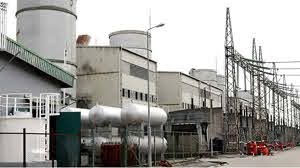
The Federal Government has handed over the Afam Power Plant in the Oyigbo Local Government of Rivers State to Transcorp Power Consortium, which emerged the preferred bidder of the power asset, with a bid offer of N105.3bn.
This is coming as the Group Chairman of Transcorp Plc, Mr. Tony Elumelu, has said that access to electricity is central to Nigeria’s economic growth.
The handing over of the Afam Power Station followed the fulfilment of the requirement of the request for proposal (RfP) and approval granted by the National Council on Privatisation (NCP) after Transcorp had paid 25 per cent of the bid amount (N26.325 billion), a condition precedent to the handing over.
At the ceremony marking the final consummation of the transaction in Abuja yesterday, the Director General of the Bureau of Public Enterprises (BPE), Mr. Alex Okoh, said it was a significant milestone in the process of the privatisation of the last successor generation company of the defunct Power Holding Company of Nigeria (PHCN) and a culmination of several years of painstaking efforts by the National Council on Privatisation (NCP) and the BPE in the face of daunting challenges.
Okoh added that sequel to the previous failed attempts to privatise Afam Power Plc and the approval granted by NCP for the recommencement of a new process, the bureau had commenced a free, fair and transparent competitive process of the privatisation of Afam Power Plc and Afam Three Fast Power Limited, which culminated in Transcorp Power Consortium emerging as the preferred bidder with a combined offer of N105,300,000,000.
He stated that after negotiations, which were impacted, among others, by the COVID-19 pandemic, the federal government, through the BPE signed the Share Sale and Purchase Agreement (SSPA) with Transcorp Power Consortium on November 5, 2020.
He said, “In line with the requirements of the RfP and approval granted by the NCP, Transcorp Power Consortium paid 25 per cent (cash) of the bid amount today November 26, 2020, which was a condition precedent to the current activity of handing over.
“Distinguished guests, I must add that my emphasis on cash payment is to correct some misinformation in the media that purported that the Afam deal is a mere reconciliation of figures between the federal government and Transcorp. For the benefit of those who wish to know, this idea was never accepted by both the NCP and its several sub-committees.
“However, with the payment of the money by Transcorp to the treasury today, we hope this unfounded and concocted information being fed to the public would stop.”
He added that the challenges facing the electricity sector in Nigeria are enormous, and it was convincing that the opportunities are far greater and certainly worth exploiting.
He noted that the federal government has demonstrated commitment to create the enabling environment encourage private sector investors to take on these challenges and the opportunities therein to ensure quality and cost-effective service delivery to electricity consumers while also receiving adequate compensation.
While congratulating Transcorp Consortium for emerging the winner, he thanked other bidders for their faith in the process, the government and economy despite the trying times.
The challenge now, he stated, is for Transcorp Consortium to use its proven capacity and pedigree as demonstrated with Transcorp Ughelli Power Plant and Transcorp Hotel, Abuja to transform Afam Power into an exemplary utility company of reference.
Okoh, who gave a synopsis of the power sector privatisation journey, said change did not come easy, adding that the reform is necessary for laying a solid foundation for sustainable electricity supply, loss and cost-reduction as well as service efficiency in the sector other ventures.”
In his remarks, Elumelu said the event was an epoch, adding that access to electricity is central to economic growth.
Elumelu cited the contraction of the nation’s gross domestic product in the third quarter by 3.6 per cent as part of the pitfalls of a poor power base.
He noted that getting the power sector right is one of the elements needed to correct the negative economic trend.
Elumelu, assured the people that Transcorp Power Consortium will improve the nation’s power situation, create jobs and better the lot of its host communities.
He added that the confidence reposed in the company by the federal government would not be taken for granted.
He said Transcorp possesses the human and financial muscles to meet the expectations of the federal government and Nigerians.









Business
Tantita Operations Push Oil Export Earnings to $9.39bn in Q2

Tantita Operations Push Oil Export Earnings to $9.39bn in Q2
Nigeria’s crude oil export earnings rose to $9.39 billion in the second quarter of 2026, with improved pipeline security, higher production and greater stability in the Niger Delta supporting the stronger performance.
Provisional Balance of Payments (BOP) data showed that Nigeria’s total goods exports increased to $20.08 billion in Q2, up from $15.56 billion in the first quarter.
Crude oil exports increased by 15.78 per cent to $9.39 billion, while natural gas exports climbed by 40.15 per cent to $3.63 billion.
The improvement has renewed attention on the role of pipeline security in protecting Nigeria’s oil production and ensuring that crude reaches evacuation points and export terminals.
Among the companies involved in pipeline surveillance in the Niger Delta is Tantita Security Services Nigeria Limited (TSSNL), which was engaged by the Federal Government to protect oil pipelines and other critical petroleum infrastructure.
Tantita’s operations, carried out alongside government security agencies, have focused on tackling oil theft, illegal bunkering and pipeline vandalism and improving the security of facilities used to transport crude oil.
READ ALSO:
- Fifty Years After “Africa Has Come of Age”: A Personal Reflection on Nigeria’s Silence at the United Nations
- Family seeks N10m to free kidnapped newlywed, other victims
- Trump launches ‘Super Intelligence Force’ to keep US ahead in AI race
Industry stakeholders have linked the improved operating environment in the Niger Delta to increased crude production and stronger export performance. However, the rise in export earnings cannot be attributed to Tantita alone, as production volumes, international oil prices, investments, operational efficiency and wider government measures also influence export receipts.
The broader export figures also showed significant improvements across other sectors of the petroleum industry.
Refined petroleum product exports increased by 66.24 per cent to $3.94 billion, while non-oil exports rose by 25.30 per cent to $3.12 billion during the quarter.
At the same time, Nigeria’s crude oil imports fell sharply from $1.39 billion in Q1 to $580 million in Q2, further strengthening the country’s external position.
The stronger export performance helped push Nigeria’s current account surplus to $7.54 billion, representing a 67.93 per cent increase from the $4.49 billion recorded in Q1. The figure was also higher than the $5.17 billion recorded in Q2 2025.
The increase in the current account surplus was driven largely by higher export earnings and an improved goods account.
The rise in crude earnings also coincided with stronger production, with Nigerian crude output reaching about 1.56 million barrels per day in June 2026, excluding condensates.
The development is significant for Nigeria, which has struggled in recent years to consistently meet its production potential because of crude oil theft, pipeline vandalism, ageing infrastructure and underinvestment in the upstream sector.
Improving security around oil-producing assets has therefore become a key part of efforts to raise output and increase foreign-exchange earnings.
Tantita, led by High Chief Government Oweizide Ekpemupolo, popularly known as Tompolo, has been at the centre of the Federal Government’s pipeline surveillance arrangement in the Niger Delta.
Stakeholders, however, say sustained growth in oil earnings will require more than surveillance operations. They have called for continued investment in exploration and field development, improved infrastructure, enhanced recovery from mature fields and faster development of major deepwater projects.
The Federal Government has also been pursuing measures aimed at attracting fresh investment into Nigeria’s upstream sector, including fiscal incentives for deepwater oil and gas projects.
For Nigeria, the latest export figures offer a boost at a time when the country is seeking stronger foreign-exchange inflows, increased oil production and greater fiscal revenues.
The challenge now is to sustain the improvement by keeping petroleum infrastructure secure, reducing crude losses and ensuring that higher production translates into consistent export earnings and broader economic benefits.
Tantita Operations Push Oil Export Earnings to $9.39bn in Q2
Business
Dangote Sets 40-Month Deadline for $16bn East Africa Refinery in Kenya
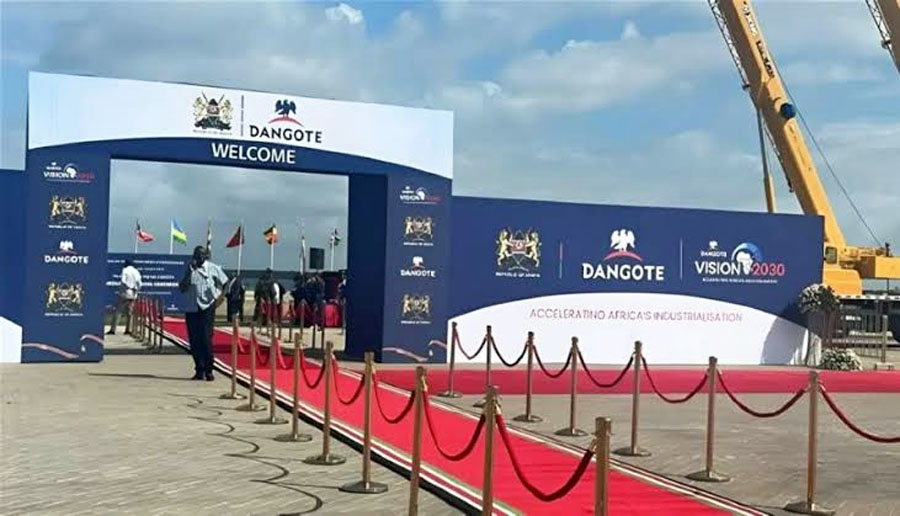
Dangote Sets 40-Month Deadline for $16bn East Africa Refinery in Kenya
Nigerian industrialist Aliko Dangote has set a 40-month completion target for his planned $16 billion East Africa refinery in Lamu, Kenya, following the official groundbreaking of the project.
Dangote and Kenyan President William Ruto broke ground for the 700,000-barrel-per-day (bpd) refinery on Wednesday, September 30, 2026, with the facility designed to supply refined petroleum products to Kenya and other countries across the region.
Dangote said the refinery would be commissioned within 40 months.
“We will come back here and commission this refinery in 40 months from today,” he said at the ceremony.
The Dangote East Africa Petroleum Refinery and Petrochemicals Complex is expected to process about 700,000 barrels of crude oil daily, making it one of the largest refining projects in Africa and, when completed, potentially the world’s largest single-train refinery.
The project is expected to produce petrol, diesel, jet fuel, polypropylene and base oil, with the products targeted at Kenya and wider East African markets. Dangote has also said part of the refinery’s jet-fuel output could be supplied to Europe and the United Kingdom.
The facility will also include a planned 1,000-megawatt power plant, which Dangote said would provide electricity for the wider industrial complex.
READ ALSO:
- Zimbabwe Tycoon Wicknell Chivayo, Wife Among Six Killed in Helicopter Crash
- 2027: Amaechi Recalls How APC Defeated PDP, Orders ADC Mobilisation
- Adeyanju Faults Okpebholo’s Governance, Commends Edo Anti-Kidnapping Efforts
Beyond refining, the billionaire said the project would create an industrial ecosystem covering petrochemicals, logistics, engineering, marine services, manufacturing, technology and small and medium-sized enterprises.
Dangote also announced plans for a training school that would prepare 1,000 Kenyan engineering graduates for opportunities associated with the project. The wider development is expected to generate thousands of jobs across the refinery and related industries.
The project has attracted major international engineering and technology partners, with Honeywell Technologies providing process technologies, licensing, engineering services, catalysts, equipment and digital solutions.
The use of established designs and experience from Dangote’s Nigerian refinery is expected to shorten the development schedule compared with a typical new refinery.
Engineers India Limited is also involved in the project under a major engineering and project-management contract.
Dangote’s Kenyan project is modelled partly on the experience of his 650,000-bpd refinery in Lagos, with the new facility expected to draw on technology and engineering experience gained from the Nigerian plant.
The refinery is expected to source crude from Uganda and other African producers, while serving a market extending beyond Kenya to countries including Uganda, Rwanda, Tanzania, Ethiopia and South Sudan.
Regional leaders who attended the groundbreaking included Ugandan President Yoweri Museveni and Ethiopian Prime Minister Abiy Ahmed, alongside other African leaders and former Nigerian President Olusegun Obasanjo.
President Ruto described the project as an investment in energy security, industrialisation and regional integration, while stressing the importance of ensuring that Kenyan citizens benefit from the employment and training opportunities created by the refinery.
Dangote has also proposed allowing governments in the region to take a combined 30 per cent stake in the refinery, potentially giving participating countries an opportunity to benefit financially from the project.
However, the project faces a legal challenge over the land on which it is being developed. A Kenyan court ordered parties to maintain the status quo over a disputed parcel in Lamu after residents challenged the development, citing ancestral land claims and other concerns.
Environmental concerns have also been raised over the potential impact of the project on the coastal ecosystem and the wider Lamu area.
Despite the legal and environmental issues, Dangote has said the project will proceed.
Once completed, the $16 billion Kenya refinery is expected to increase refining capacity in East Africa, reduce dependence on imported petroleum products and support the region’s broader industrialisation drive.
Dangote Sets 40-Month Deadline for $16bn East Africa Refinery in Kenya
Business
Dangote Draws Battle Lines as Fuel Import Fight Heads Back to Court
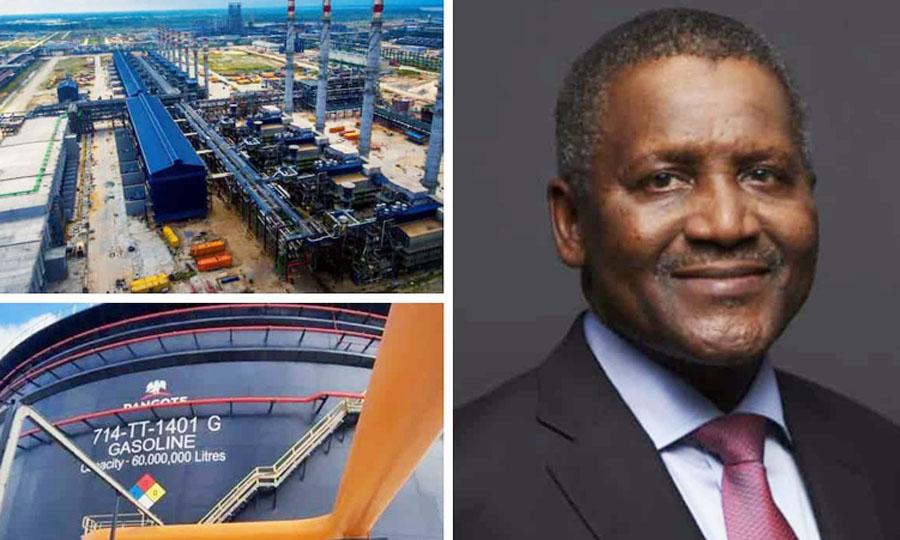
Dangote Draws Battle Lines as Fuel Import Fight Heads Back to Court
Aliko Dangote, President of Dangote Industries Limited, has said he is prepared to face legal challenges as the dispute over fuel imports, domestic refining and import licences intensifies in Nigeria.
Dangote spoke amid renewed litigation involving the Dangote Petroleum Refinery and the Nigerian Midstream and Downstream Petroleum Regulatory Authority (NMDPRA) over the continued importation of refined petroleum products into Nigeria.
The latest development followed a Federal High Court ruling in Abuja directing the NMDPRA to continue granting, extending or renewing fuel import licences for Matrix Energy, A.A. Rano and AYM Shafa, provided the companies meet the relevant legal and regulatory requirements.
Justice Inyang Ekwo ruled that the regulator’s handling of the companies’ applications did not comply with provisions of the Petroleum Industry Act (PIA). The court also held that the NMDPRA has a responsibility to promote competition in the midstream and downstream petroleum sectors.
The ruling did not give the three companies unrestricted authority to import petroleum products. Their operations remain subject to applicable regulatory and statutory requirements.
READ ALSO:
- Tinubu Returns After 30 Days in Europe, Says ‘I’m Healthy and Ready to Work’
- NMDPRA Moves Against Fuel Pump Fraud, Threatens Licence Revocation
- $2.1m Land Suit: Court Orders Wike’s Son to Produce American Passport
The judgment has added fresh momentum to a wider dispute over whether Nigeria should continue granting petrol import licences as domestic refining capacity expands.
The Dangote Refinery, which has a stated capacity of 650,000 barrels per day, has challenged the continued issuance or renewal of some import licences in a separate case.
The refinery’s position is that continued imports should be restricted where domestic refining capacity is available to supply the local market. The case remains before the court.
The NMDPRA, however, has continued to approve import permits, citing the need to safeguard petroleum supply and energy security.
The regulator approved permits covering about 830,000 metric tonnes of petrol for several marketers for the fourth quarter of 2026. The beneficiaries included Matrix Energy, A.A. Rano, AYM Shafa, NIPCO, Pinnacle Oil and Gas and Bono Energy.
The development has intensified debate over competition in Nigeria’s downstream oil sector, particularly as the Dangote Refinery expands its contribution to domestic fuel supply.
Dangote’s comments also came as his business interests face other legal challenges outside Nigeria.
In Kenya, a court has ordered the preservation of the existing status quo over land earmarked for Dangote’s proposed 700,000-barrel-per-day refinery in Lamu, following a dispute involving residents who claim ancestral rights over part of the proposed project site.
Dangote has maintained that he is prepared to defend his investments through the legal process.
The businessman has also said Africa could largely eliminate its dependence on imported refined petroleum products by 2030, as new refineries come on stream across the continent.
In Nigeria, the continuing dispute places domestic refining, fuel imports, competition, petroleum regulation and energy security at the centre of an increasingly significant legal and commercial battle.
The competing positions have not been finally resolved, with the various court cases still ongoing.
Dangote Draws Battle Lines as Fuel Import Fight Heads Back to Court
-

 metro2 days ago
NYSC Kidnap: Abductors Demand N950m for 19 Prospective Corps Members in Imo
-

 Politics2 days ago
2027: Oshiomhole Dares Opposition Over ₦500 Petrol Promise, Says APC Will Take Argument to Nigerians
-

 Entertainment3 days ago
Olu Jacobs Laid to Rest in Lagos as Dignitaries, Nollywood Stars Honour Screen Icon
-
 metro2 days ago
N500 Petrol, Wage Award: Public Sector Workers Begin Warning Strike
-

 metro2 days ago
Amaechi: Tinubu’s Policies Made My Mother’s Drugs Unaffordable
-

 metro1 day ago
‘I Thought I Was Dead’ — Hairstylist’s Daring Escape From Kidnappers After Benin-Ore Ambush
-

 Entertainment2 days ago
Less Than Four Months After Wedding, Jarvis Threatens Peller With Lawsuit Over Second-Wife Plan
-

 metro2 days ago
Tension as Kidnappers Threaten to Kill Abducted Oyo Corps Members
You must be logged in to post a comment Login