

Politics
No decision yet on voter registration extension – INEC
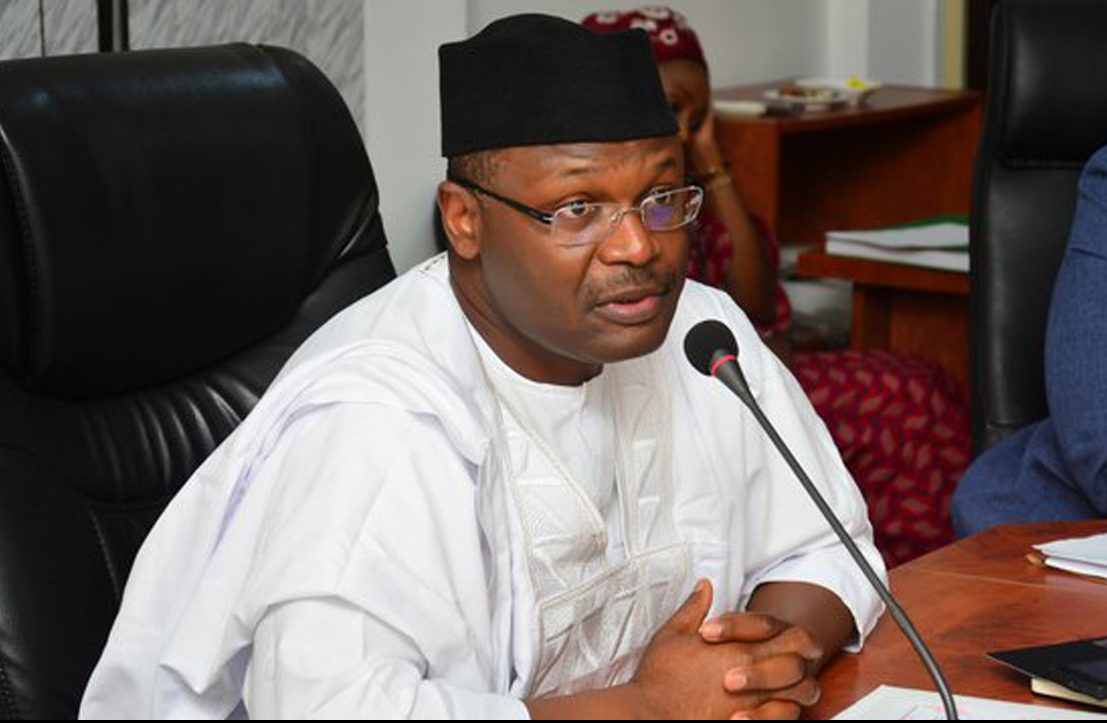
With 11 days to the end of the continuous voter registration by the Independent National Electoral Commission, the commission has said it is yet to decide on the growing request for extension.
There has been a clamour for an extension of the exercise, which began in June 2021 and is scheduled to end on June 30, 2022. Ahead of the 2023 elections, the exercise has witnessed a surge in the number of registrants in recent weeks, prompting the calls for an extension. The online registration ended on May 30, 2022.
The House of Representatives on Wednesday asked the commission to extend the CVR by 60 days, while several civil society organisations and individuals also called for an extension to the exercise to enable more Nigerians to register.
Earlier, the Socio-Economic Rights and Accountability Project and 185 concerned Nigerians filed a suit at the Federal High Court in Lagos asking the court for, among other things, an order of mandamus to direct and compel INEC to extend voter registration by a minimum of three months and take effective measures to ensure that eligible Nigerians are able to register to exercise their right to vote in the 2023 general elections.
INEC, in a notice on its website, said the deadline for the registration was to enable the commission to clean up the registration data, print the permanent voter cards and compile the register ahead of the 2023 general elections.
READ ALSO:
- Five die as IPOB, gunmen clash in Anambra
- Anambra octogenarian arrested for defiling 10-year-old
- Three Ogun State-based armed robbers operating in Lagos arrested
Speaking on the request, Mr Rotimi Oyekanmi, the Chief Press Secretary to the Chairman of INEC, Prof Mahmood Yakubu, stated that the commission was yet to decide on the issue. He told our correspondent in an interview on Friday, “INEC does not have any position yet. As of today, the deadline for the CVR remains June 30, which is less than 13 days away. The commission will decide what to do next when we get to the bridge.”
The INEC chairman said in June that as of June 1, about 10.2 million fresh registration had been recorded since the exercise started. In many parts of the country and in social media, there has been a renewed drive and persuasion by individuals for people, especially the youths, to register and collect their PVCs.
There are indications that at the end of the exercise, the number of registered voters nationwide might increase from the 84 million in 2019 to over 100 million by 2023.
The Executive Director, YIAGA Africa, Samson Itodo, said recently during INEC’s first Twitter Spaces, that the efforts by youths to register was fascinating but that they should go beyond registering to ensure they collect their PVCs and vote.
PVC collection
Meanwhile, the Independent National Electoral Commission in Osun State says it has extended the collection of Permanent Voter Cards in the state ahead of the governorship election on July 16.
In a statement by the commission’s Public Affairs Officer, Mrs Oluwaseun Osimosu on Saturday, INEC said the decision was aimed at easing the collection of PVCs by those that had yet to collect the items.
“INEC wishes to inform the public, most especially all eligible voters who have yet to collect their Permanent Voter Cards that they can collect their PVCs at the registration areas (wards) from June 22 to June 26.
PUNCH




Politics
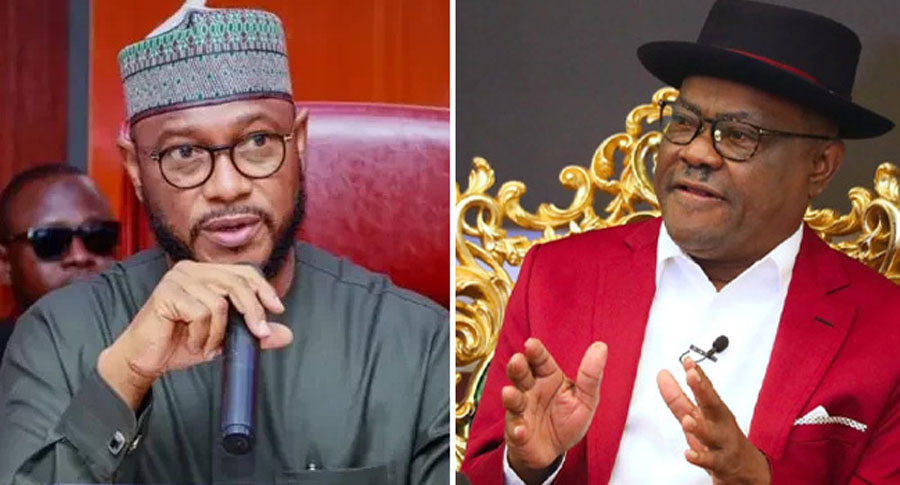
2027: Lawal Challenges Wike To Clarify Allegiance Over Rainbow Coalition
2027: Lawal Challenges Wike To Clarify Allegiance Over Rainbow Coalition
Zamfara State Governor Dauda Lawal has challenged Nyesom Wike, Minister of the Federal Capital Territory (FCT), to clarify his political allegiance ahead of the 2027 elections, amid a disagreement between the minister and governors elected on the platform of the All Progressives Congress (APC).
Lawal said Wike could not support President Bola Tinubu’s 2027 re-election bid while also backing candidates of other political parties in governorship and legislative elections.
The Zamfara governor made the comments in an interview with Channels Television’s Inside Sources on the sidelines of the 81st United Nations General Assembly (UNGA) in New York.
“Our message is very, very clear: be on one side, you can’t be on two sides,” Lawal said, arguing that Wike should either fully align with the APC or make his position outside the party clear.
Lawal confirmed that APC governors were effectively asking Wike to join the party if he intended to continue supporting Tinubu’s 2027 presidential campaign.
Asked whether the governors wanted Wike to join the APC, Lawal responded: “Exactly.”
He also said he would discuss Wike’s political position with President Bola Tinubu when the President returns from his working vacation abroad.
READ ALSO:
- Unexplained Wealth: Obasanjo, Osinbajo, Others for Shittu’s Book Launch
- MURIC Blasts Nigeria Over UNGA Stance on Palestine, Netanyahu
- Why I Accept My Daughters’ Same-Sex Relationships — Charly Boy
At the centre of the dispute is the Rainbow Coalition, a cross-party platform backing Tinubu’s presidential bid while allowing its members to retain their political affiliations and support candidates in other contests.
Wike, who remains a member of the Peoples Democratic Party (PDP), has maintained that his support for Tinubu does not require him to support APC candidates in governorship, National Assembly or state House of Assembly elections. Through his Senior Special Assistant on Public Communications and Social Media, Lere Olayinka, Wike has described the coalition as a multi-party arrangement rather than an APC platform.
The position has put Wike at odds with the Progressive Governors Forum (PGF), the umbrella body of APC governors. The forum has said its members would not support political arrangements capable of undermining Tinubu’s re-election bid, weakening the APC or adversely affecting its candidates in the 2027 elections.
Lawal said he supported the forum’s position and that the APC governors would not change their stance.
He also responded to Wike’s criticism of some APC governors as “lazy”, saying the FCT minister knew those he was referring to and that the performance of individual governors should be assessed based on their records in office.
The exchange between Lawal and Wike adds another dimension to the political realignment ahead of the 2027 general elections, with party affiliation, cross-party alliances and support for candidates at different electoral levels emerging as points of contention.
2027: Lawal Challenges Wike To Clarify Allegiance Over Rainbow Coalition
Politics
2027: Fayemi Denies Galadima’s Claim He Is Coordinating Opposition Group Against Tinubu
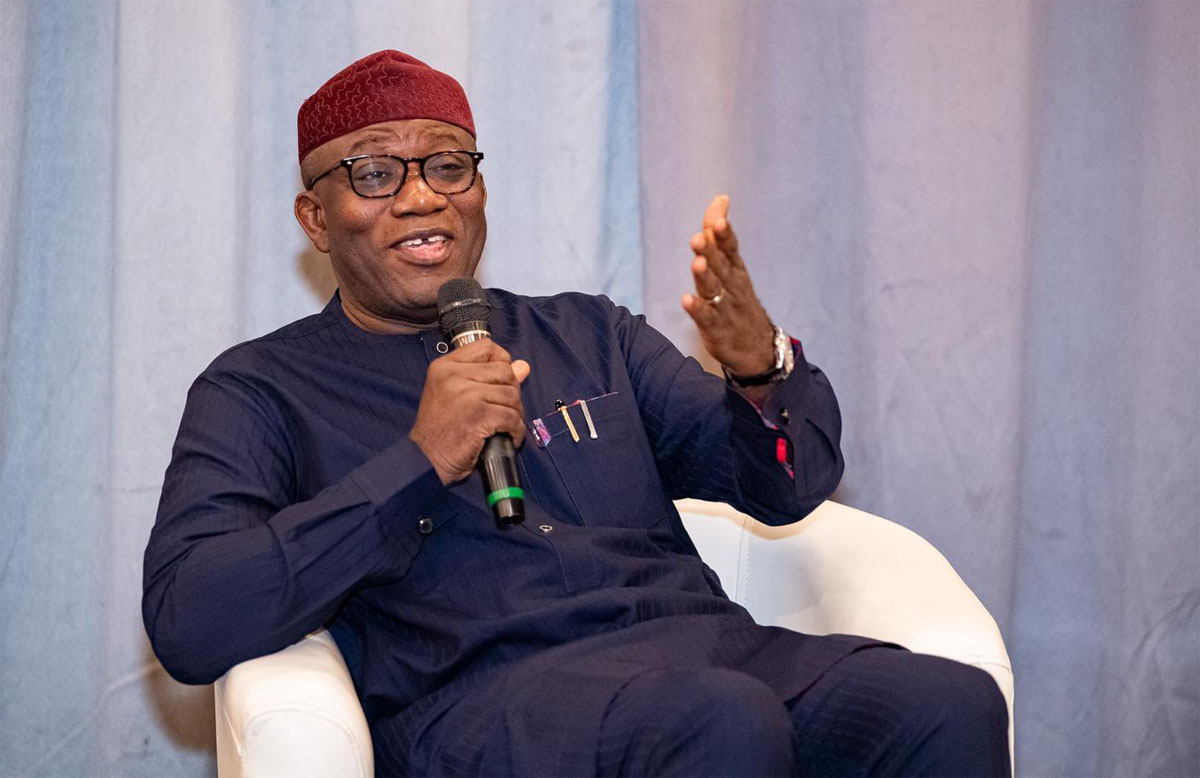
2027: Fayemi Denies Galadima’s Claim He Is Coordinating Opposition Group Against Tinubu
Former Ekiti State Governor Kayode Fayemi has rejected a claim by Nigeria Democratic Congress (NDC) chieftain Buba Galadima that he is coordinating a seven-member opposition group working towards challenging President Bola Ahmed Tinubu in the 2027 presidential election.
Galadima made the allegation during an appearance on Channels Television’s Politics Today, where he discussed possible strategies by opposition politicians ahead of the 2027 election.
According to Galadima, he is one of seven opposition figures meeting under Fayemi’s coordination to develop a strategy for challenging Tinubu.
“I am part of the group of the opposition candidates, seven of us meeting under the coordination of ex-Governor Kayode Fayemi of Ekiti State to try to work on that. And we are making progress,” Galadima said.
When asked what the group was working towards, Galadima responded that its objective was “defeating Tinubu.” He did not publicly identify the other members of the alleged seven-person group.
Galadima also outlined his preferred strategy for the 2027 election, arguing that opposition parties should field their own candidates rather than attempt to place a single candidate on the ballot through a joint arrangement at this stage.
He suggested that opposition supporters could subsequently be encouraged to back one candidate if, close to the election, the opposition reached a consensus about which candidate should receive broader support.
READ ALSO:
- Appeal Court Upholds Two-Year Jail Term for Ex-UNICAL Dean Ndifon
- Ogun Man Arrested Over Alleged Killing of Neighbour After ‘Rough Play’ With Child
- Viral Anti-Obi Video: Lagos Police Move Against Inspector Osumah Frank
However, Fayemi has denied that he is coordinating the group described by Galadima.
Julius Ogunro, a media aide to the former governor, told TheCable that there was “no truth” in the allegation and referred to an earlier denial issued by Fayemi’s media office.
The latest denial follows a similar claim made in August by Rotimi Amaechi, the African Democratic Congress (ADC) vice-presidential candidate.
Amaechi had said he and Fayemi were involved in initial discussions that later expanded to include other political stakeholders interested in creating a broader opposition platform.
Fayemi’s media office rejected that claim at the time.
Ahmad Sajoh, head of the Fayemi Media Office, said the former governor remained a committed member and leader of the All Progressives Congress (APC) in Ekiti State.
Sajoh said Fayemi had consistently affirmed his commitment to the APC and was working within the party to address its challenges and advance what he described as its progressive ideals.
Fayemi served two non-consecutive terms as Ekiti State governor on the APC platform between 2010 and 2022. He also served as Minister of Solid Minerals Development under former President Muhammadu Buhari.
The latest controversy comes amid continuing efforts by opposition politicians and groups to explore possible cooperation ahead of the 2027 presidential election.
Political actors opposed to the APC administration have held discussions about possible alliances, cooperation and strategies for presenting a stronger challenge at the polls. Different proposals have emerged, including arrangements in which parties retain their individual candidates while coordinating support around a candidate considered acceptable to a wider section of the opposition.
Galadima’s comments form part of that broader discussion, but his claim about Fayemi’s role has not been independently confirmed.
The identities of the other six people allegedly involved in the group have also not been publicly disclosed by Galadima.
Fayemi’s position, as communicated through his media aides, remains that he is committed to the APC and that the claim that he is coordinating the alleged seven-man opposition group is untrue.
The disagreement therefore leaves two conflicting accounts: Galadima says Fayemi is coordinating a group of opposition figures working towards a common strategy against Tinubu, while Fayemi’s representatives reject the claim and maintain that he remains committed to the ruling party.
As political activities ahead of the 2027 general election intensify, further developments will determine whether the reported opposition discussions translate into a formal political arrangement or remain informal consultations among politicians and political groups.
2027: Fayemi Denies Galadima’s Claim He Is Coordinating Opposition Group Against Tinubu
Politics
2027: Otti Explains Why He Supports Tinubu Despite Remaining in Labour Party
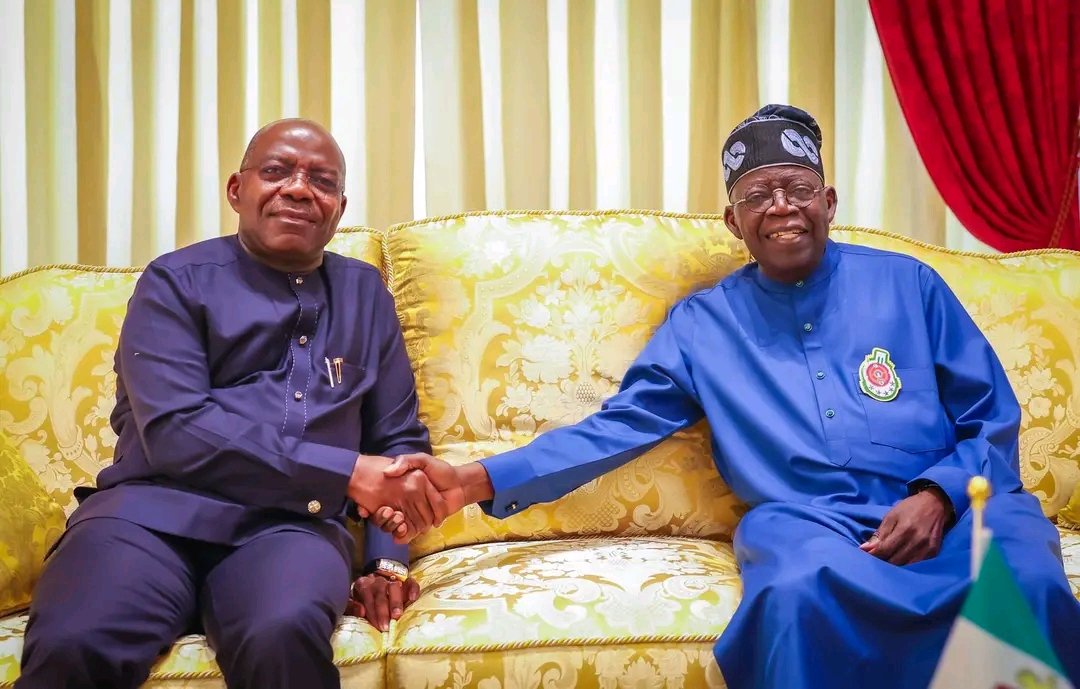
2027: Otti Explains Why He Supports Tinubu Despite Remaining in Labour Party
Abia State Governor Alex Otti has clarified his position on President Bola Ahmed Tinubu’s 2027 re-election bid, saying his support for the President is linked to his responsibilities as a governor and member of the National Economic Council (NEC).
Otti made the clarification during a televised interview after questions emerged over his political relationship with Tinubu and his continued membership of the Labour Party (LP).
The governor said he could not reasonably oppose Tinubu while serving as a state governor and participating in the Federal Government’s decision-making process through the NEC.
According to Otti, his position is based on his role in government and should not be interpreted as an abandonment of the Labour Party or its presidential candidate for the 2027 general election.
Otti explained that he supports Tinubu as the President of Nigeria, while maintaining that he has a separate position regarding the presidential candidate he supports in the 2027 election.
When asked whether Tinubu was his preferred presidential candidate, Otti indicated that he has a candidate within the Labour Party, separating that choice from his support for Tinubu in his capacity as President.
The clarification effectively draws a distinction between Otti’s role as a governor working with the Federal Government and his political position ahead of the next presidential election.
Otti was elected Abia State governor in 2023 on the Labour Party platform and has remained associated with the party despite the departure of former Anambra State governor Peter Obi, who was the Labour Party’s presidential candidate in the 2023 election.
READ ALSO:
- EFCC Chairman Raises Alarm Over Alleged Theft of Nigeria’s Public Funds
- Abia Police Arrest 20-Year-Old, Recover Gun, Suspected Cannabis, Three Motorcycles
- Anambra Releases ₦473m Salary Arrears Document as Obi’s Debt Claim Sparks Fresh Dispute
Obi has since left the Labour Party and is now the presidential candidate of the Nigeria Democratic Congress (NDC) for the 2027 election.
Otti previously said he would remain in the Labour Party despite Obi’s departure, explaining that his decision to stay was independent of Obi’s political movement.
The governor’s latest comments come amid growing political realignment ahead of the 2027 presidential election, with Tinubu seeking another term and several opposition parties preparing their candidates.
The issue became particularly prominent after Minister of the Federal Capital Territory Nyesom Wike said Otti was backing Tinubu’s re-election.
At the time, Otti’s Commissioner for Information, Okey Kanu, acknowledged the governor’s cordial relationship with Tinubu but said an explicit confirmation of Otti’s political position would have to come from the governor himself.
Otti has now publicly explained that his support for Tinubu is connected to his responsibilities as governor and NEC member.
He also argued that the President has a constitutional right to seek another term and suggested that disagreements over government policies should be handled through the appropriate government channels rather than public confrontation.
The Abia governor further pointed to areas where he agrees with some policies of the Tinubu administration, including the removal of the petrol subsidy, which he said is consistent with his own economic thinking.
Despite his relationship with the Presidency, Otti has continued to identify with the Labour Party.
The party has also continued to publicly associate itself with the governor. On September 23, Labour Party presidential candidate Dr Sunday Chibuzo Okereke led a solidarity roadshow in Arochukwu, Abia State, where he mobilised support for Otti and other Labour Party candidates ahead of the 2027 elections.
The development is significant because Otti’s position could otherwise have been interpreted as a political break with the Labour Party following Obi’s departure.
However, his latest clarification does not amount to an announcement that he has defected to the All Progressives Congress (APC) or abandoned the Labour Party.
Otti remains a Labour Party governor, while maintaining a working relationship with the Tinubu administration at the federal level.
The governor has also previously ruled out seeking the presidency himself after completing his tenure in Abia, saying he does not intend to pursue another major elective political office after leaving the governorship.
His latest comments therefore place his position ahead of 2027 in two separate contexts: his institutional relationship with Tinubu as President and his stated support for a Labour Party presidential candidate in the forthcoming election.
2027: Otti Explains Why He Supports Tinubu Despite Remaining in Labour Party
-

 metro3 days ago
Lagos Arrests Man Over Viral Video of Toddler Being Flogged
-

 News2 days ago
Anambra Releases ₦473m Salary Arrears Document as Obi’s Debt Claim Sparks Fresh Dispute
-

 Sports3 days ago
Former Super Eagles Captain Troost-Ekong Embraces Islam, Recites Shahadah in Doha
-

 metro3 days ago
Kwara Police Deny Shooting Motorcyclist at Oyun Bridge, Explain Viral Video
-
 International3 days ago
Milei Slams UN as ‘Useless’ Over Falklands Dispute
-

 News1 day ago
Keyamo: ₦70,000 Minimum Wage No Longer Enough as Cost of Living Soars
-
 metro2 days ago
EFCC Chairman Raises Alarm Over Alleged Theft of Nigeria’s Public Funds
-
 Business3 days ago
FG Seeks Private Capital, States’ Support to Transform Nigeria’s Ports