

Politics
2023 elections in jeopardy over in-fighting at INEC
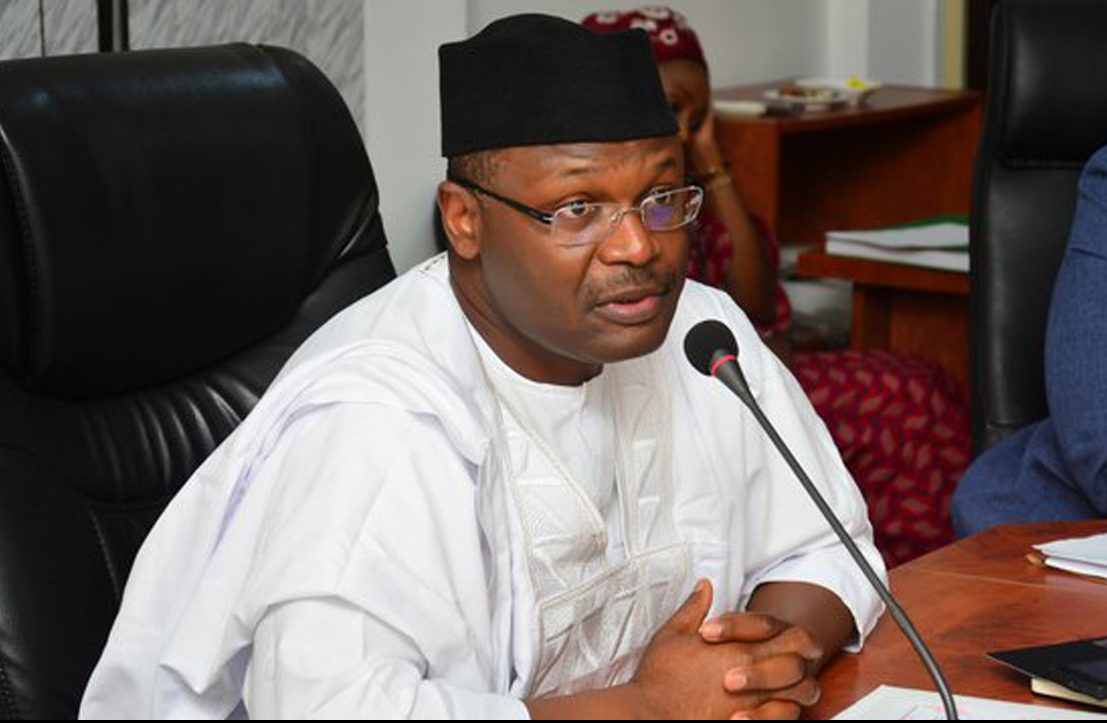
There is palpable tension in the Independent National Electoral Commission, INEC, over the continued push by the All Progressives Congress, APC, leadership to ensure the participation of Senate President, Ahmad Lawan, and Godswill Akpabio, in the 2023 senatorial elections of Yobe North Senatorial District and Akwa Ibom North West Senatorial District, respectively.
Contrary to what the leadership of INEC had told Nigerians, that the commission is legally bound to stand by the monitoring reports received from “our state offices”, verified pieces of information available to Vanguard suggest that INEC may have ignored these reports in some states of the federation including Kano, Sokoto, Abia, Ogun, Oyo, Akwa lbom.
This has not gone down well with some Resident Electoral Commissioners, RECs, according to Vanguard sources.
In fact, morale of INEC staff at some of the state offices has been dampened because some of the reports of the monitoring committees are either being tampered with or ignored.
As a result of this, INEC has instigated and encouraged so many litigations in various federal high courts across the country. As at the last count, the Commission acknowledged that there are over 300 cases filed in court that it is joined as a party.
That is not all.
The Election and Political Parties’ Monitoring, EPM, and Legal Department of the Commission, under the direction and control of INEC leadership, have become theatres of intrigues, as politicians are preying on both departments to perfect their underhand ploys.
As it is for APC, so it is for PDP
APC and intrigues at INEC Hq
Vanguard was reliably informed by highly strategic sources at INEC headquarters that the Commission accepted from leadership of the APC, particulars of candidates that claimed to have conducted primaries that its State offices did not monitor.
For instance, in Kano, where the REC, Professor Risikuwa Shehu-Arabu, addressed the press recently that the only governorship primary the state office monitored produced Mohammed Abacha, son of maximum dictator General Sani Abacha, this was changed by APC leadership and INEC’s EPM Department for one Ambassador Sadiq Wali.
READ ALSO:
- ASUU adamant on renegotiated agreement
- Why APC will be re-elected in 2023 – Fashola
- Hypertensive man dies as bribe-chasing LASTMAmen seize vehicle
In Yobe State, where Senate President Ahmed Lawan has tried unsuccessfully, so far, with APC leadership, to intimidate Bashir Sheriff Machina, the winner of the senatorial election to step down, other forces have been mobilised, with a view to getting the name of the senate president on the ballot.
Vanguard was made to understand that an attempt was made to persuade the immediate past REC in Yobe, Ahmed Makama, who had served as a special adviser to former President Olusegun Obasanjo, to endorse as received, a letter dated June 7, 2022, instead of its original which had a June 22, 2022, date, when the letter allegedly got to the Yobe office of INEC from the leadership of the APC. This happened before the REC handed over upon expiration of his tenure, last month.
REC Makama rebuffed all entreaties.
The letter would have suggested that the APC leadership had earlier given indication to INEC that a fresh senatorial primary was in the offing as early as June 7, 2022, wherein the senate president may have participated in a primary monitored by INEC as stipulated by law.
But the letter itself would have created an impossible scenario as Senator Lawan was contesting for the presidential ticket at the party’s convention in Abuja at about June 7, 2022.
Under section 84(1) of the Electoral Act 2022, monitoring of party primaries by INEC is mandatory. The Act used the word, shall, twice, to underscore the importance.
It states that “A political party seeking to nominate candidates for elections under this Act shall hold primaries for aspirants to all elective positions which shall be monitored by the Commission”
Section 29(1) of the 2022 Act provides that only “candidates that emerged from valid primary” can be submitted to INEC for publication.
Section 84(13) states that where a political party fails to comply with the provision of the Act, INEC shall reject the names submitted to it by political parties.
Just as it happened in Kano, the story is same in Abia, where, in the previously published particulars of NASS candidates, INEC that monitored Abia Central Senatorial District primary won by Hon. Sam Onuigbo, who defeated his closest rival, Chief Henry Okoh, by 157 to 152 votes, INEC has, surprisingly, accepted from APC, one Emeka Atuma, who Onuigbo alleged, did not buy nomination form for senate and never participated in the process, to replace the winner.
Again in the just published particulars of candidates 48 hours ago, APC NWC first wrote a letter for the use of direct mode of primary that was monitored by INEC state office, but another parallel primary with indirect method was allegedly held at another venue not monitored by INEC, yet a former civil servant staff of INEC recently appointed as national commissioner instructed that the name of the individual from the so called indirect primary conducted without ward, LGA and state delegates should be forwarded and the primary monitored by state office ignored.
Worst still is Akwa lbom State, where out of the 26 candidates that emerged from valid primary conducted and monitored by INEC state office, only two names were taken from the report of the state office.
No APC governorship candidate, in line with the state office report.
Instead, the APC leadership chose to pick just two names from the list of primaries monitored by INEC, and uploaded to INEC 24 names of candidates not monitored by INEC.
Curiously, INEC published names of candidates not monitored by its state office. and published by the election management body remains a puzzle.
PDP and INEC’s indifference to court order
In Delta State, where there was a valid Federal High Court judgment served on INEC, with specific unequivocal orders of court that disqualified Mr. Sherrif Oborevwhori and “commanded” both PDP(2nd defendant) and INEC(3rd defendant) separately, as parties, to replace the disqualified Oborevwori with the name of Mr. David Edevbie, both PDP and INEC are yet to comply with the orders of the court.
Instead, INEC wrote a letter merely to remind PDP of the judgment.
The letter completely betrayed INEC’s reluctance to enforce the order of the court, compared to the content of similar letters circulating in the social media in respect of court orders to PDP in the past.
In its letter to the National Chairman of PDP, dated 27th June, 2022, and signed by Rose Oriaran-Anthony, Secretary to the Commission, and titled NOTIFICATION OF PENDING ORDERS IN SUIT NO. FHC/ABJ/CS/807/2022 BETWEEN DR. MICHAEL ONOLEMEMEN & 2ORS. V. INEC, SUIT NO. FHC/ABJ/808/(2022)BETWEEN BARRISTER NOSA ADAMS & 8ORS. V. INEC & SUIT FHC/ABJ/809/2022 BETWEEN CHRISTABEL O. EKWU & 23ORS. V. INEC AND THE NEED TO COMPLY WITH THEM, INEC said
READ ALSO:
- Kaduna Train: How Ransom Blockade Triggered Hostage Beating Video
- Omo-Agege’s aide shot dead in Delta
- Davido’s father threatens to deal with Osun State Governor-Elect
“The Commission hereby draws the attention of the Peoples Democratic Party (PDP) to the Orders of Court arising from the three (3) suits listed above.
“2. In line with the Orders of Court, the Commission is restrained from accepting and recognising any list of candidates other than the list containing the names of the plaintiffs as the PDP’s duly nominated candidates for the election of the seats of:
“a. Senators representing the senatorial zones of Edo North, Edo South and Edo Central of Edo State,
“b. Nine Federal House of Representatives of Edo State, and
“c. The twenty four House of Assembly Constituencies across Edo State.
“3. Accordingly, the Commission expects the PDP to forward the nomination forms of the respective candidates as ordered by the Federal High Court, Abuja.
“4. Please accept the assurance of theCOmmission’s warm regards.”
As a reminder last week, INEC again wrote to the PDP National Chairman on 18th July, 2022.
The letter, titled, RE: SUIT NO FHC/ABJ/CS/795/2022 BETWEEN DAVID EDEV(B)IE V. OBOREVWHORI SHERRIF FRANCIS OROWEDOR AND 2ORS., stated thus:
“This is to draw your attention (to the Judgment) Order of the Federal High Court of Nigeria, Abuja, in the above mentioned suit which has been served on the Commission.
“2. While hoping your party takes note of the Judgment Order, please accept the assurance of the Commission’s warm regards.”
The letter was signed by Rose Oriaran-Anthony, Secretary to the Commission. Right now, the Commission is funtus officio in the two cases.
Pressure on INEC
However, its National Chairman, Professor Mahmoud Yakubu, has come under heavy pressure, specifically in the case of Senator Lawan and Akpabio from the leadership of the APC.
He is yet to shift ground.
Although, in a July 9, 2022, press release issued by Festus Okoye, Esq. National Commissioner and Chairman, Information and Voter Education Committee, the Commission made its position clear.
Inter alia, Okoye stated in the release, “…. In relation to the primaries for the Akwa Ibom North West and Yobe North senatorial districts, the Commission stands by the monitoring reports received from our state offices. For this reason, the Commission did not publish the personal particulars of any candidates for the two constituencies at variance with the state reports.”
Sources at INEC informed Vanguard that political parties, particularly the ruling APC, is mounting pressure on the leadership of the Commission.
Vanguard was made to understand that some of the back and forth that has gone on in recent days about names published by INEC as candidates, some of who did not participate in primaries monitored by INEC, or did not even purchase nomination forms, may not be unconnected with underhand moves going on at the Commission.Vanguad was told that some of INEC’s recent publications containing names of those whose nomination fell short of legal requirement is a “testing of the waters because the Lawan and Akpabio situations have become very notorious and delicate”.
An aggrieved INEC Commissioner at its national headquarters expressed worry that “if the Commission is allowing itself to be seen as complicit in party affairs, this will erode the confidence of the people in INEC’s own electioneering activities when it takes charge of general elections. Does it mean INEC would become unreliable?”
Femi Falana’s position
In an ARISE television interview, Femi Falana, SAN, expressed worry at the lack-lustre attitude of the political leadership in the country to obey simple laws.
According to him, Section 115(D) of the Electoral Act, 2022, which Senate President Lawan helped package “has criminalised double nomination.
“So, you can’t say that you took part in the presidential primary and you took part in the senatorial primary at the same time. Under that section of the law, double nomination attracts two years imprisonment.
“Again, I will expect INEC to draw the attention of the APC to the provision of the law that ‘you’re playing with fire’”.
Falana’s position came against the background of the moves by the APC leadership to seek to ensure that the names of Lawan and Akpabio are forwarded as senatorial candidates in Akwa Ibom and Yobe State.
Section 115(D), in respect of nomination offences, states that it is an offence when “a person…signs a nomination paper or result form as a candidate in more than one constituency at the same election”.
VANGUARD




Politics
2027: Northern Students Back Tinubu, Pledge Campus-to-Campus Mobilisation

2027: Northern Students Back Tinubu, Pledge Campus-to-Campus Mobilisation
Student leaders from tertiary institutions across Nigeria’s 19 northern states and the Federal Capital Territory (FCT) have declared support for President Bola Ahmed Tinubu’s 2027 re-election bid, promising to mobilise students across campuses in support of his candidacy.
The declaration was made in Kaduna at the inauguration of the Students’ Wing of Arewa for Asiwaju (A4A), a support group created to coordinate student mobilisation ahead of the 2027 presidential election.
The organisers said the students’ position was influenced by policies and programmes of the Tinubu administration, particularly in education, student financing, skills development and youth empowerment.
The coordinator of the A4A Students’ Wing and President of the Bayero University Kano Students’ Union Government, Abdulmudallib Sheriff, said the students’ support was intended to translate into an organised mobilisation network rather than remain a symbolic declaration.
Sheriff cited the Nigerian Education Loan Fund (NELFUND) among the federal government programmes that informed the students’ position, saying the scheme had provided financial support to students facing difficulties funding their tertiary education.
He also pointed to government initiatives in technical and vocational education, skills acquisition and youth development as areas the student leaders considered relevant to young Nigerians.
According to the organisers, the A4A Students’ Wing plans to build a coordinated structure capable of reaching students in universities, polytechnics and colleges of education across the northern region.
The Kaduna inauguration was attended by student union leaders and representatives of tertiary institutions from different parts of Northern Nigeria.
READ ALSO:
- Pope Leo XIV Warns Against Letting AI Make Human Decisions
- Kara Bridge Repairs, Multiple Crashes Trigger 14-Hour Gridlock on Lagos-Ibadan Expressway
- 2027: Court Gives Atiku Seven Days to Serve Tinubu Through APC in Eligibility Suit
Kaduna State Governor Uba Sani, who addressed the gathering, urged the student leaders to base their political engagement on policies and verifiable records rather than personal attacks against political opponents.
Sani highlighted areas including education, infrastructure, healthcare, agriculture and technical and vocational education, while drawing attention to programmes such as NELFUND and federal TVET initiatives.
The student endorsement comes amid increasing political mobilisation across Northern Nigeria ahead of the 2027 general election.
Several groups in the region have recently announced support for Tinubu’s second-term bid, including organisations representing Muslim women scholars, preachers and Da’wah leaders. Other groups representing communities and youth interests in the North have also held meetings and launched mobilisation activities ahead of the election.
A separate group representing Igbos living in the 19 northern states and the FCT has also expressed support for Tinubu and pledged to mobilise voters for his re-election.
The growing activity reflects efforts by political support groups to build grassroots structures well ahead of the 2027 poll, with youth and student voters expected to remain an important constituency for political parties and candidates.
The Tinubu administration has made NELFUND one of its prominent education initiatives. The programme provides loans and related financial assistance to eligible Nigerian students in tertiary institutions, with the government presenting it as part of efforts to reduce financial barriers to higher education.
The administration has also promoted technical and vocational education and training (TVET) as part of its broader youth skills-development agenda.
However, the endorsement announced in Kaduna represents the position of the participating student leaders and organisations. It does not necessarily reflect the views of all students, tertiary institutions or young people across Northern Nigeria.
The political development also comes as opposition groups and presidential aspirants intensify their own mobilisation efforts ahead of the 2027 election.
The African Democratic Congress (ADC) and other opposition political actors are building structures across the country, while presidential contenders, including Atiku Abubakar and Peter Obi, are also seeking support ahead of the election.
The student leaders backing Tinubu said their immediate focus would be to extend the A4A Students’ Wing to more campuses and strengthen its mobilisation network across the North.
Their declaration adds to the growing series of political endorsements and campaign activities taking place ahead of the 2027 presidential election, as competing political groups seek to attract young voters and build support at the grassroots.
Ultimately, the endorsement remains a declaration by the participating student organisations, while individual voters will make their choices through the electoral process.
2027: Northern Students Back Tinubu, Pledge Campus-to-Campus Mobilisation
Politics
2027: Court Gives Atiku Seven Days to Serve Tinubu Through APC in Eligibility Suit
2027: Court Gives Atiku Seven Days to Serve Tinubu Through APC in Eligibility Suit
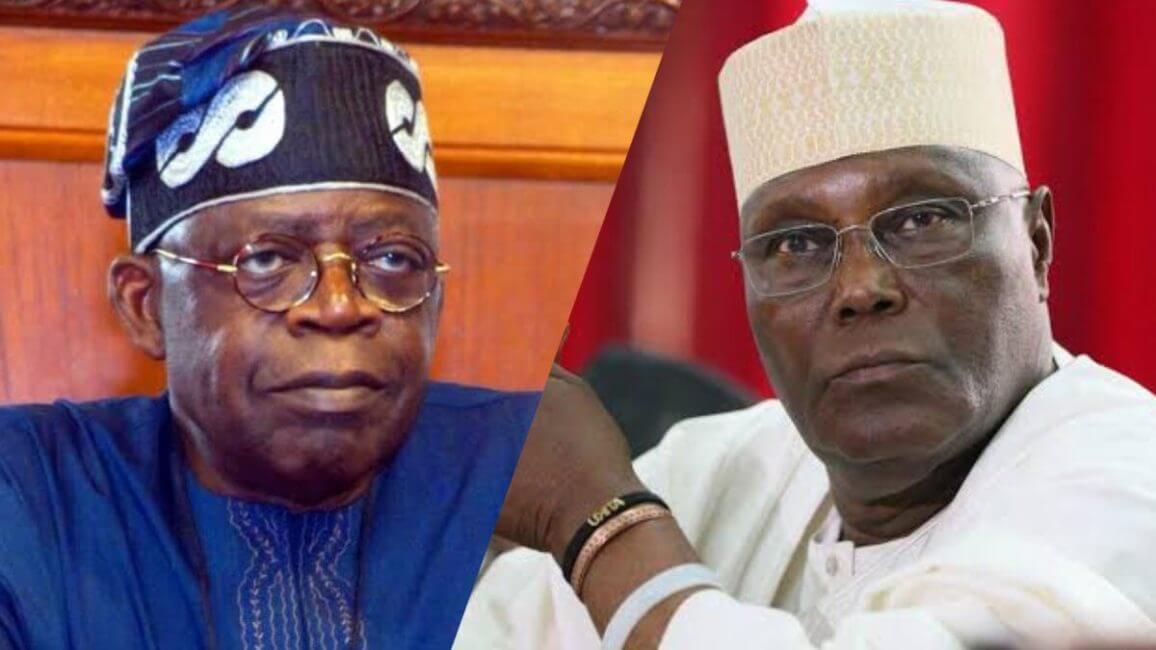
The Federal High Court in Abuja has granted former Vice President and African Democratic Congress (ADC) presidential candidate Atiku Abubakar seven days to serve President Bola Ahmed Tinubu with a suit challenging his eligibility to contest the 2027 presidential election.
Justice Inyang Ekwo issued the order after granting an application for substituted service, allowing Atiku and the ADC to serve the President through his political party, the All Progressives Congress (APC).
The suit, marked FHC/ABJ/CS/1888/2026, was instituted by Atiku and the ADC against Tinubu, the APC and the Independent National Electoral Commission (INEC).
Atiku is asking the court to determine whether Tinubu is qualified to participate in the 2027 presidential election based on allegations concerning an NYSC discharge certificate allegedly submitted to INEC.
According to the plaintiffs, the disputed certificate bears the name “Tinubu Bola Adekunle”, which they contend raises questions about its authenticity and its connection with the President. Atiku’s case also alleges that the document was presented to INEC as genuine and raises questions about information contained in the electoral documents submitted by Tinubu.
The allegations remain claims before the court and have not been established by a final judgment.
READ ALSO:
- “Clash of Egos”: Ayo Fayose Downplays Public Feud Between Wike and APC Governors
- ASUU Crisis Deepens: Lagos Universities Join UNIBEN, Taraba on Indefinite Strike
- Lagos Power Outage: Ikeja Electric Blames TCN as Businesses, Homes Groan
The plaintiffs are relying on provisions of the 1999 Constitution relating to the presentation of forged certificates to INEC. They are seeking, among other reliefs, orders that would prevent Tinubu and the APC from participating in the 2027 presidential election on the basis of the allegations contained in the suit.
The latest ruling followed a procedural dispute over how the President should be served with the court processes.
When the matter came up earlier in September, Atiku’s lawyers told the court that they had been unable to personally serve Tinubu. Although counsel representing Tinubu indicated that he was prepared to accept service on behalf of his client, the plaintiffs declined, saying they wanted to avoid possible technical objections concerning the validity of service at a later stage.
The court subsequently allowed the issue to be addressed through substituted service.
Justice Ekwo had earlier adjourned proceedings to September 28 following the service dispute. The judge also warned lawyers involved in the case against discussing the matter in the traditional or social media, directing that arguments concerning the case should be presented in court.
Meanwhile, Tinubu and the APC have rejected the allegations and asked the Federal High Court to dismiss the suit.
In their response, the President and the APC denied that Tinubu submitted a forged certificate to INEC for either the 2023 or 2027 presidential elections. They also questioned the legal foundation of Atiku and the ADC’s action and raised preliminary objections to the case.
The defendants have argued that the disputed certificate has not been established as forged and that the NYSC has not disowned the document at the centre of the controversy.
They have therefore urged the court to dismiss the suit rather than proceed to the substantive claims.
INEC has also challenged Atiku’s case and opposed aspects of the plaintiffs’ application to amend their suit. The electoral commission has raised procedural and legal objections, including arguments concerning the competence of the action and the plaintiffs’ standing.
The case has consequently developed into a series of preliminary procedural and legal disputes even before the court determines the central allegations surrounding the disputed NYSC certificate.
Atiku and the ADC maintain that the alleged certificate and information submitted to INEC raise constitutional questions concerning Tinubu’s eligibility for the 2027 presidential election.
Tinubu and the APC, however, deny the allegations and are seeking the dismissal of the case, while INEC has also opposed the action.
The Federal High Court’s latest decision is limited to the method and timeframe for serving Tinubu with the court processes.
It does not constitute a ruling that Tinubu is ineligible to contest the 2027 election, nor does it establish that the disputed NYSC certificate is forged.
The substantive claims, alongside the objections raised by Tinubu, the APC and INEC, remain before the court for determination.
2027: Court Gives Atiku Seven Days to Serve Tinubu Through APC in Eligibility Suit
Politics
“Clash of Egos”: Ayo Fayose Downplays Public Feud Between Wike and APC Governors

“Clash of Egos”: Ayo Fayose Downplays Public Feud Between Wike and APC Governors
On Channels Television, the former Ekiti governor says tensions over the ‘Rainbow Coalition’ will not hurt President Tinubu’s 2027 prospects.
Former Ekiti State Governor Ayo Fayose has weighed in on the sharp exchange between Federal Capital Territory (FCT) Minister Nyesom Wike and the All Progressives Congress (APC) Governors’ Forum, characterizing the disagreement as a battle of individual egos rather than a genuine threat to President Bola Ahmed Tinubu’s 2027 re-election campaign.
Speaking Tuesday night during an appearance on Channels Television’s Politics Today, Fayose noted that public friction often surfaces when assertive leaders navigate complex multi-party arrangements.
The spat erupted after Imo State Governor Hope Uzodimma, speaking for the APC Governors’ Forum, announced that party executives would reject any outside alliance or coalition capable of diluting the party’s strength or challenging its candidates in upcoming elections.
Wike responded swiftly during a televised broadcast, describing the governors as politically lazy and clarifying that his “Rainbow Coalition” was created specifically to mobilize cross-party votes for the president rather than fight local battles on behalf of state governors.
Addressing the controversy, Fayose remarked that everyday Nigerians understand Wike’s outspoken personality just as they understand the institutional posture of the Governors’ Forum.
He insisted that the rhetorical crossfire has no direct bearing on the president’s electoral fortunes, observing that political leaders across the spectrum possess strong personal pride that occasionally spills into public view. Fayose maintained that practical grassroots voter mobilization will ultimately outweigh public posturing as the 2027 race draws nearer.
“Clash of Egos”: Ayo Fayose Downplays Public Feud Between Wike and APC Governors
-
 Politics2 days ago
2027: Northern Lecturers Back Tinubu, ASUU Disowns Endorsement
-

 metro2 days ago
Police Arrest Mother Over Alleged Brutal Abuse of 7-Year-Old Girl in Anambra
-

 Sports2 days ago
‘I Was Never the Chosen One’ — Dembele Responds to Mbappe
-
 News3 days ago
Nwifuru Dismisses Cubana Chief Priest as ‘Attention-Seeker’
-

 Education2 days ago
JAMB Moves 2027 UTME Time — Here’s What Candidates Need To Know
-
 Politics3 days ago
2027: Sowore Promises ₦500,000 Minimum Wage, Free Education, 24-Hour Electricity
-
 metro2 days ago
Grand Chief Imam calls for professional communication structure for Rabitoh 1964
-
 Politics1 day ago
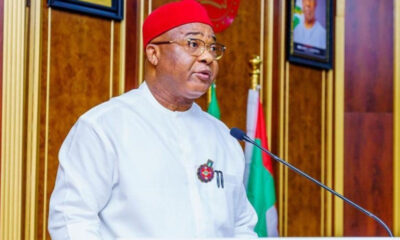
2027: APC Governors Reject Wike’s Rainbow Coalition, Insist on Party Loyalty