

News
Wike appoints another 28,000 special advisers

Rivers State glGovernor, Nyesom Wike, has appointed 28,000 more Special Assistants for political units in the state.
Their appointments, he said, would take immediate effect.
The appointment came despite the condemnations trailing his earlier appointment of 14,319 political advisers.
The latest appointment is contained in a press statement by Kelvin Ebiri, Special Assistant on Media to the Governor.
It will be recalled that the governor had on Tuesday, 11 October, 2022 appointed 319 Ward Liaison Officers and 40 Local Government Area Liaison Officers.
Meanwhile, Wike has approved N1 billion for emergency relief measures to support flood victims in Ahoada West and Ogba/Egbema/ Ndoni Local Government Areas (LGAs) of the State.
The governor, who empathised with the flood victims, has also set up a Taskforce to coordinate the distribution of relief materials to affected communities in the State.
Wike said the N1 billion approved by the Rivers State Government was to enable vulnerable families, particularly in Ahoada West and Ogba/Egbema/Ndoni LGAs, which are the most impacted areas in the State, to cope with the devastating flood which has inundated homes, farmlands and forced residents of affected communities to relocate to safer places.
The governor said the Permanent Secretary, Special Services Bureau (SSB) in the Office of the Secretary to the Rivers State Government, Dr. George Nwaeke, would serve as the Chairman of the Taskforce, while, Mrs. Inime I. Aguma, is the Secretary.











News
NEC Targets Cheaper Fares, Food Prices in 90-Day Plan to Ease Nigerians’ Hardship
NEC Targets Cheaper Fares, Food Prices in 90-Day Plan to Ease Nigerians’ Hardship
Nigerians struggling to cope with soaring food prices and transport fares may be in line for some relief as the National Economic Council has approved a 90-day economic action plan aimed at reducing the cost of living and making essential services more affordable.
At the heart of the initiative is a push to ensure that government economic reforms translate into tangible benefits for ordinary citizens, particularly commuters who spend a significant portion of their daily earnings travelling to work, trading centres and other places of livelihood.
The council has specifically directed federal and state governments to ensure that savings from the use of compressed natural gas-powered and electric vehicles are reflected in lower transport fares, rather than remaining with fleet owners and transport operators.
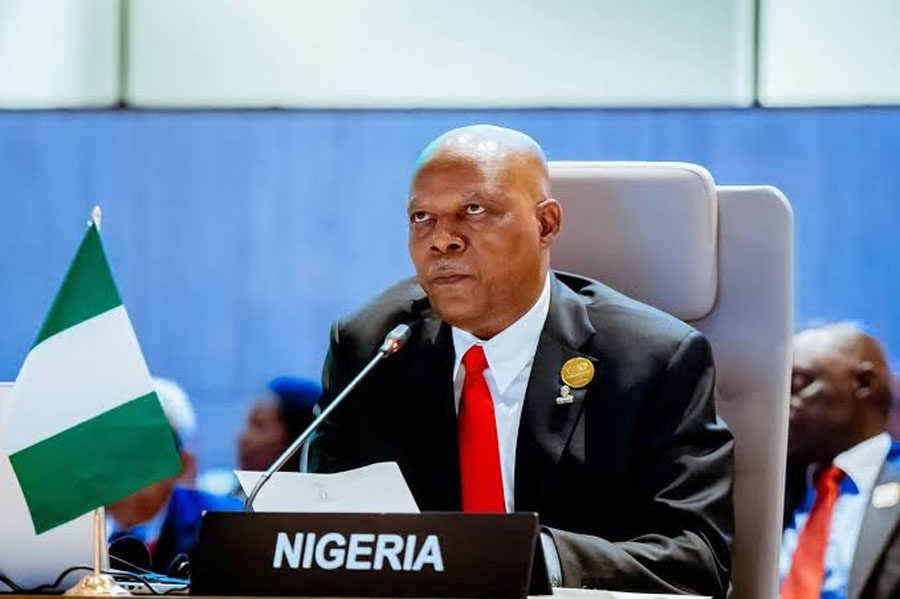
The plan was proposed by the Federal Ministry of Finance and endorsed on Thursday at the 161st meeting of the NEC, chaired virtually by Vice-President Kashim Shettima.
According to a statement by Stanley Nkwocha, the Senior Special Assistant to the Vice-President on Media and Communications, the 90-day programme has five priority areas: food affordability, tax harmonisation, completion of high-impact projects, removal of investment bottlenecks and regulated household support.
The council’s intervention comes amid persistent pressure on household budgets, with the rising cost of transportation and food leaving many Nigerians with less money to meet other essential needs.
For workers, traders, artisans and small business owners, cheaper transportation could mean retaining more of their daily earnings, while improved food affordability could ease the pressure on already stretched household incomes.
Speaking at the meeting, Shettima said the effectiveness of government policies should be judged by their impact on the daily lives of citizens, including access to affordable transportation, healthcare, employment and financial security.
“The first dividend of prosperity should be the confidence to plan a life. Our task is to make such confidence less dependent on fortune,” he said.
The Vice-President stressed that the National Compressed Natural Gas Bus Initiative should not be judged merely by the number of buses deployed but by how much it reduces the financial burden on commuters.
“The cost of reaching a livelihood should never consume the livelihood itself,” he said.
The council consequently resolved to establish a joint financing framework between the Federal Government and state governments to accelerate the deployment of CNG-powered and electric vehicles.
It also directed relevant authorities to engage transport unions and operators to ensure that the operational savings associated with the vehicles translate into lower fares for passengers.
The directive seeks to address a key concern surrounding the transition to alternative-energy transportation: whether the savings from cheaper fuel and more efficient operations will benefit commuters or simply improve operators’ profit margins.
Beyond transportation, the 90-day plan will focus on measures to improve food affordability, streamline taxation, remove barriers to investment and fast-track projects expected to deliver significant economic benefits.
The NEC also approved the establishment of a national dashboard to monitor projects across the country, with particular emphasis on transparency, accountability and tracking the utilisation of funds generated from the removal of petrol subsidies.
The monitoring mechanism is expected to strengthen oversight of public spending and improve the tracking of projects intended to cushion the effects of economic reforms.
Shettima called for closer cooperation between the Federal Government and state governments, warning that their separate responsibilities must not become excuses for failing to provide essential services.
However, the ultimate test of the 90-day plan will be whether Nigerians begin to experience measurable improvements in the cost of transportation, food and other necessities within the stipulated period.
For a worker who must spend a substantial part of a day’s wages getting to work, or a family struggling to put affordable meals on the table, the success of the initiative will not be determined by government announcements or the number of alternative-fuel buses introduced.
It will be measured by the money left in their pockets at the end of the day.
News
FG Moves Against Filling Stations Short-Changing Nigerians With False Measurements

FG Moves Against Filling Stations Short-Changing Nigerians With False Measurements
The Federal Government has announced plans to intensify nationwide surveillance against false measurements and short-changing of consumers at filling stations and other commercial outlets, warning businesses against practices that deny Nigerians the full value of their money.
The planned enforcement drive is expected to strengthen checks on measuring equipment used in commercial transactions, including fuel dispensers, as authorities seek to curb under-dispensing of petrol and other forms of measurement fraud.
The initiative comes amid renewed concerns about inaccurate fuel pumps at retail outlets, where motorists may pay for a specified quantity of petrol but receive less than the amount displayed on the dispensing meter.
The Nigerian Midstream and Downstream Petroleum Regulatory Authority (NMDPRA) has already raised the alarm over cases of under-dispensing at filling stations across the country and directed operators to carry out immediate calibration and verification of their dispensing equipment.
In September, the regulator warned that filling stations found delivering less fuel than customers paid for, using improperly calibrated equipment or otherwise compromising dispensing accuracy would face enforcement action. Persistent or serious violations could attract sanctions, including the revocation of operating licences.
The NMDPRA said the directive was intended to ensure that motorists receive the correct quantity of petroleum products and restore confidence in transactions within the downstream oil sector.
READ ALSO:
- Police Arrest Man Over Fake Presidency Number Plate in Abuja
- Shettima Blasts States Over Power Woes, Says Govs Must Stop Waiting for Abuja
- Fourth Gas Leak in Six Months: Over 100 Ogun Pupils Hospitalised, Schools Shut as Parents Panic
The regulator also called on industry associations, including the Independent Petroleum Marketers Association of Nigeria (IPMAN), the Petroleum Products Retail Outlets Association of Nigeria (PETROAN), the Major Energy Marketers Association of Nigeria and the Depot and Petroleum Products Marketers Association of Nigeria, to notify their members and ensure compliance.
PETROAN subsequently directed its members nationwide to inspect their dispensing meters, while its president, Billy Gillis-Harry, urged motorists to monitor pump readings and request receipts when buying fuel.
The association acknowledged that dispensing equipment could develop faults through prolonged use, potentially resulting in either under-dispensing or over-dispensing. It said regular checks were necessary to ensure that customers received the quantity for which they paid.
The Federal Government’s planned nationwide crackdown is expected to reinforce efforts to improve measurement accuracy and protect consumers from dishonest commercial practices.
The issue has become particularly significant amid high petrol prices and the deregulation of Nigeria’s downstream petroleum sector, which has left consumers facing varying pump prices across locations.
With motorists spending substantial amounts on fuel, even small discrepancies in dispensing measurements can result in financial losses when repeated across multiple transactions.
Authorities have continued to stress that filling station operators are responsible for ensuring that their equipment is properly maintained, calibrated and verified in line with applicable regulations.
The broader enforcement effort is also expected to address the use of faulty or manipulated measuring equipment in other commercial activities, where inaccurate weights and measurements can similarly short-change consumers.
The Federal Government’s stated objective is to promote fair trade, strengthen consumer protection and ensure that Nigerians receive the exact quantities of goods and services for which they pay.
However, the effectiveness of the planned crackdown will depend on consistent inspections, transparent enforcement and appropriate sanctions against businesses found violating measurement standards.
FG Moves Against Filling Stations Short-Changing Nigerians With False Measurements
News
Jubilation in Ogun Camp as 3,050 NYSC Members Receive ₦50,000 Palliative, 500 Mattresses

Jubilation in Ogun Camp as 3,050 NYSC Members Receive ₦50,000 Palliative, 500 Mattresses
Abeokuta, Ogun State — There was widespread jubilation at the NYSC Orientation Camp in Ogun State on Wednesday following the announcement that 3,050 serving corps members will receive a one-off cash palliative of ₦50,000 to cushion the effects of the current economic hardship in the country.
The announcement, which was met with wild cheers and celebrations, comes as part of the state government’s efforts to support youths undergoing their mandatory one-year national service.
In addition to the cash disbursement, the Ogun State Government has also approved the immediate delivery of 500 mattresses to the camp to improve the living conditions of the corps members.
The news broke via a report by Pulse, detailing that the palliative is aimed at easing the financial burden on the young graduates, particularly in light of the rising cost of living and transportation across the nation.
Visuals from the camp showed corps members in their traditional white and green kits, raising their caps in excitement, a clear indication of the relief the financial support brings.
Speaking on the development, a camp official noted that the cash injection will go a long way in helping the corps members manage their daily expenses, including transportation to their Places of Primary Assignment (PPA) and personal upkeep.
The distribution of the ₦50,000 cash palliative and the provision of the 500 mattresses are expected to be rolled out in the coming days. The move has been widely commended by stakeholders who view it as a proactive step by the Ogun State Government to prioritize the welfare of youths serving in the state.
Jubilation in Ogun Camp as 3,050 NYSC Members Receive ₦50,000 Palliative, 500 Mattresses
-

 metro3 days ago
Army Major, Soldiers Killed in ISWAP Ambush in Yobe State
-
 metro2 days ago
Atiku: US Lobbying Firm Raises Alarm Over Alleged Assassination Plot
-

 metro2 days ago
Five Arraigned Over Kidnapping of 20 Prospective NYSC Members in Imo
-

 metro3 days ago
Breaking: Afenifere Leader Pa Fasoranti Dies at 100
-

 metro2 days ago
‘We Don’t Know What Else to Do’ — Mother Begs for Release of Abducted Children
-

 metro3 days ago
‘I Never Asked Them to Abandon Loved Ones’ — Obi Clarifies Diaspora Remarks
-

 Auto2 days ago
Happening now: Hyundai unveiling of Mufasa and Grand Creta
-

 Auto2 days ago
Beyond the Showroom: Why After-Sales Service Will Define Auto Industry Winners