

Health
FG: Over 1.6 Million Nigerians Now on HIV Treatment

The federal government has said it has been able to put 1,619,133 persons living with HIV on regular treatment.
The number represents 98 per cent of the population that had tested positive to the virus.
It said based on the findings it made, government was working towards expanding the points of service from the current 6,000 to about 40,000 locations identified in the mapping across the 36 states and Federal Capital Territory (FCT).
The Director General of the National Agency for the Control of AIDS (NACA), Dr. Gambo Aliyu who gave an update on government’s efforts, described the achievement as a significant leap when compared to 838,020 persons captured in the treatment net in 2017.
Addressing stakeholders and the media at a press conference to flag off this year’s World AIDS Day in Abuja, Aliyu said the theme of this year’s World AIDS Day which was, “Equalise to End AIDS: Equal Access to Treatment and Prevention Services,” seeks to end unequal access to HIV prevention and treatment among vulnerable population groups.
He said the objective was to promote equal access across population that were marginalised, among the vulnerable and key affected population groups by removing economic, social, cultural and legal barriers to HIV prevention services across population groups that are vulnerable to HIV.
READ ALSO:
- Adeleke to Directors: Accept Permanent Secretary appointment from Oyetola and get fired
- Kidnappers in army uniform abduct Lagos passengers, probe begins
- LASTMA recovers pump-action rifle inside impounded vehicle
According to the NACA boss, Nigeria’s success story was evident from the significant dip in the HIV prevalence of 3.4 per cent in 2017, to a population based prevalence of 1.3 percent in 2018
“As at the end of September 2022 we have 1,619,133 persons on treatment, which represents a significant leap when compared to 838,020 persons in 2017.
“Our treatment sites have increased from 251 in 2007 to 2,262 in 2020,” he said.
Aliyu disclosed that new HIV infections have gradually declined from 103,404 in 2019, to 92,323 in 2021.
He added that significant growth in key population treatment centres have risen from 10 in 2017, with a coverage of 16,147 to 118 in 2021 with coverage of over 221,010
Also, he said pre-COVID 19 Molecular laboratory assessment done in 27 sites was now in over 100 sites accessible for prevention and treatment purposes
In the same vein, Aliyu said through Alignment 2.0 HIV prevention and treatment was now shifting ownership to states while guaranteeing continued partnership and support from Donors
He noted that the launch of N62 billion Trust Fund of Nigeria (HTFN) was a further step towards sustained country level funding and ownership of the national response.









Health
FG Confirms Ebola Case in Abuja, Identifies 44 Contacts

FG Confirms Ebola Case in Abuja, Identifies 44 Contacts
The Federal Government has confirmed a case of Ebola virus disease (EVD) in the Federal Capital Territory (FCT), Abuja, after laboratory tests returned positive for a woman who recently arrived in Nigeria from Uganda.
The Coordinating Minister of Health and Social Welfare, Professor Muhammad Ali Pate, announced the development on Tuesday, October 20, 2026, saying health authorities had identified 44 close contacts and commenced contact tracing to prevent further transmission.
According to the minister, the patient was admitted to a private hospital in Abuja, where she received medical attention for several days before the infection was confirmed. She is currently in isolation and receiving medical care.
The Federal Ministry of Health and Social Welfare is coordinating the response with the Nigeria Centre for Disease Control and Prevention (NCDC), the FCT Health Services Secretariat and other relevant authorities.
Public health teams are tracing and monitoring people who may have been exposed to the patient, including healthcare workers, other patients, caregivers and people who travelled with her.
The government said surveillance had been intensified, while the hospital where the woman received treatment was receiving support to strengthen infection prevention and control measures.
The minister urged public and private healthcare facilities across Nigeria to remain on high alert and promptly identify, isolate and report suspected cases to the appropriate public health authorities.
READ ALSO:
- Breaking: Afenifere Leader Pa Fasoranti Dies at 100
- Army Major, Soldiers Killed in ISWAP Ambush in Yobe State
- Chaos in Abeokuta as Algerian Fans Attack Coach, Vandalise Stadium After Rangers Defeat
Healthcare workers were also directed to maintain strict infection prevention and control practices to reduce the risk of exposure and protect patients and medical personnel.
Pate appealed to Nigerians to remain calm, vigilant and cooperative with health officials, stressing that early detection and prompt reporting were essential to containing the infection.
He noted that Nigeria had successfully contained an Ebola outbreak in 2014 and had experience and public health systems to respond to the current situation.
The government also urged anyone contacted during the tracing exercise, including passengers who may have travelled with the patient, to provide the necessary information and comply with official public health guidance.
Ebola virus disease is a serious illness that can spread through direct contact with the blood or other body fluids of an infected person who has developed symptoms, or through contaminated objects and materials.
Symptoms may include fever, severe weakness, headache, vomiting and diarrhoea. The incubation period ranges from two to 21 days.
Anyone who believes they may have been exposed and subsequently develops symptoms should contact public health authorities for guidance and avoid close contact with others while awaiting advice.
The NCDC operates a toll-free call centre on 6232, available 24 hours a day, seven days a week, for information and reports of suspected cases.
Nigeria’s latest case comes amid a wider Ebola outbreak affecting parts of Africa, including the Democratic Republic of the Congo and countries in East Africa. The NCDC had previously warned of the risk of imported infections and strengthened national preparedness measures.
The Federal Government said investigations and contact tracing were continuing, with further updates expected through the NCDC and the Presidential Task Force on Ebola Virus Disease.
Authorities have urged the public to rely on verified information, follow official health advice and avoid spreading unconfirmed reports as efforts continue to contain the infection.
FG Confirms Ebola Case in Abuja, Identifies 44 Contacts
Health
NAFDAC Seizes Fake Drinks Worth Over ₦2bn at Lagos Trade Fair Complex
NAFDAC Seizes Fake Drinks Worth Over ₦2bn at Lagos Trade Fair Complex
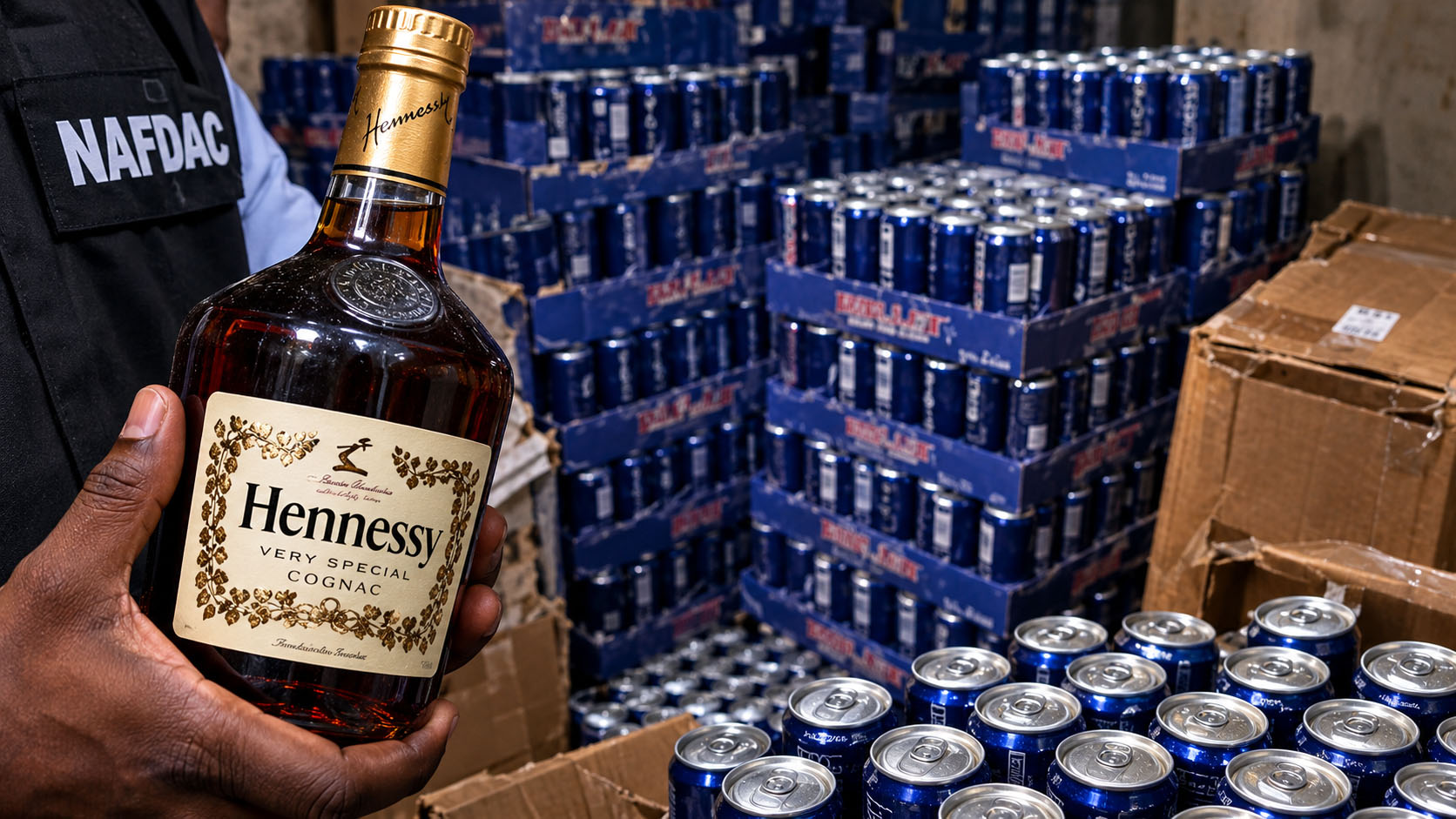
The National Agency for Food and Drug Administration and Control (NAFDAC) has uncovered a suspected large-scale counterfeit alcoholic beverage operation at the Lagos International Trade Fair Complex, seizing products reportedly valued at more than ₦2 billion.
The operation, conducted on Tuesday, October 13, 2026, followed intelligence reports about suspected illegal activities within the commercial complex.
The raid reportedly led to the discovery of more than 20 illegal stores allegedly used for the production and distribution of counterfeit alcoholic beverages and other prohibited activities.
According to reports on the operation, the facilities were concealed within makeshift stores originally designated as parking spaces within the complex.
During the exercise, NAFDAC officials reportedly discovered individuals allegedly involved in blending and counterfeiting popular alcoholic beverage brands, revalidating expired and unsafe drinks for resale, and stockpiling banned imported products.
Two suspects were reportedly apprehended during the operation, while the seized products were evacuated from the premises.
The discovery has raised concerns about the possible circulation of counterfeit, expired and unsafe alcoholic beverages in Nigerian markets, particularly products repackaged to appear genuine.
READ ALSO:
- Cosmetics Top Fake Products as NAFDAC Seals 179 Establishments, Arrests 52
- Nigeria Secures UN Human Rights Council Seat With 172 Votes
- Houthi Missile Targeting Riyadh Shot Down as Debris Injures Four, Damages 15 Homes
NAFDAC has repeatedly warned that the consumption of adulterated or unsafe beverages could expose consumers to serious health risks.
The agency urged members of the public to remain vigilant and report suspected cases of illegal manufacturing, relabelling, revalidation and sale of regulated products.
Consumers were also advised to exercise caution when purchasing alcoholic beverages, particularly products with suspicious packaging, questionable expiry dates or other signs of tampering.
NAFDAC provided its official complaints line, 0800-1-NAFDAC (0800-1-623322), for members of the public to report suspected violations.
The latest enforcement action forms part of the agency’s efforts to combat counterfeit and substandard products and protect public health.
Investigations are expected to establish the full extent of the alleged activities and identify other individuals who may be connected to the suspected distribution network.
NAFDAC Seizes Fake Drinks Worth Over ₦2bn at Lagos Trade Fair Complex
Health
Cosmetics Top Fake Products as NAFDAC Seals 179 Establishments, Arrests 52

Fake and substandard cosmetics accounted for the largest number of product seizure entries recorded by the National Agency for Food and Drug Administration and Control (NAFDAC) between January and August 2026, as the agency intensified its nationwide crackdown on counterfeit and unsafe products.
NAFDAC recorded 401 cosmetics seizure entries during the eight-month period, ahead of drinks, with 215 entries, and drugs, with 112, according to an enforcement report released on Wednesday, October 14.
The agency also reported 213 raids, 474 new cases, 295 concluded cases, 821 product seizure entries, 179 establishments closed or sealed, and 52 arrests during the period.
The figures were disclosed by NAFDAC Director-General, Professor Mojisola Adeyeye, in a statement detailing the activities of the agency’s Directorate of Investigation and Enforcement.
The enforcement operations covered a broad range of regulated products, including food, medicines, cosmetics, medical devices, packaged water, beverages and chemicals.
The agency said it also carried out 157 surveillance activities, imposed 218 administrative sanctions and conducted 22 product destruction exercises between January and August.
READ ALSO:
- Nigeria Secures UN Human Rights Council Seat With 172 Votes
- Houthi Missile Targeting Riyadh Shot Down as Debris Injures Four, Damages 15 Homes
- Outrage as Israeli Settlers Torch Mosque, Burn Vehicle in Occupied West Bank
The report further showed that cosmetics accounted for 64 of the 179 establishments closed or sealed, while drinks accounted for 67 of the 213 raids conducted during the period.
NAFDAC clarified that the seizure figures represented product seizure entries rather than the physical quantity or monetary value of goods confiscated. The numbers therefore indicate the frequency with which product categories appeared in enforcement records, not necessarily the total volume of items seized.
The prominence of cosmetics in the figures raises concerns about the circulation of counterfeit, unregistered and substandard beauty products in Nigeria. Unsafe cosmetics can expose consumers to harmful ingredients, contamination and misleading product claims, particularly when products are manufactured or sold outside regulatory controls.
Some skin-lightening and medicated cosmetic products have previously been seized by NAFDAC during enforcement operations. The agency has repeatedly warned consumers to exercise caution when buying products from unverified suppliers and to check registration details before use.
In February 2026, NAFDAC reported uncovering banned, counterfeit and unregistered cosmetic products valued at more than ₦3 billion in a warehouse at the APT Trade Fair Complex in Lagos. The products included prohibited whitening soaps and other cosmetic items.
The latest enforcement figures also come amid wider concerns over counterfeit medicines and adulterated food and beverages. NAFDAC has warned that falsified products may contain incorrect ingredients, harmful substances or ingredients that do not meet required quality and safety standards.
The agency’s enforcement directorate continued investigations, surveillance, raids and legal processes during the eight-month period. Of the 474 new cases recorded, 295 were concluded, while 52 arrests were made.
NAFDAC has maintained that sustained enforcement is necessary to disrupt the manufacture, importation and distribution of unsafe products and protect consumers from potential harm.
Consumers are advised to buy cosmetics and other regulated products from reputable outlets, inspect packaging and labelling, and verify product registration through NAFDAC’s official channels. Suspicious products or suspected counterfeiting activities can also be reported to the agency.
The figures underline the scale of enforcement activity required to tackle fake cosmetics and other unsafe products in Nigeria, while highlighting the need for continued surveillance, consumer awareness and accountability across the supply chain.
Cosmetics Top Fake Products as NAFDAC Seals 179 Establishments, Arrests 52
-

 News2 days ago
FG Challenges World Bank’s 124% Debt-to-Revenue Warning, Cites Rising Income
-

 metro22 hours ago
Army Major, Soldiers Killed in ISWAP Ambush in Yobe State
-

 metro3 days ago
NAFDAC Probes Corps Member’s Death at Enugu Camp as Fake Drug Claims Emerge
-

 Politics2 days ago
Buhari Feared Tinubu Presidency, Resisted Pressure to Back Him – Baba-Ahmed Claims
-

 metro22 hours ago
Breaking: Afenifere Leader Pa Fasoranti Dies at 100
-

 metro2 days ago
Ogun House Fire Horror: Husband Arrested After Wife Dies Following Domestic Dispute
-

 Entertainment2 days ago
Nollywood Mourns as Actress, Beauty Queen Tenia Abraham Dies at 32
-

 News2 days ago
NLC, Falana Mobilise Nigerians Against Petrol Price Hike, Mount Pressure on Tinubu Govt