

News
I didn’t call for a coup in criticising Buhari, says Kukah
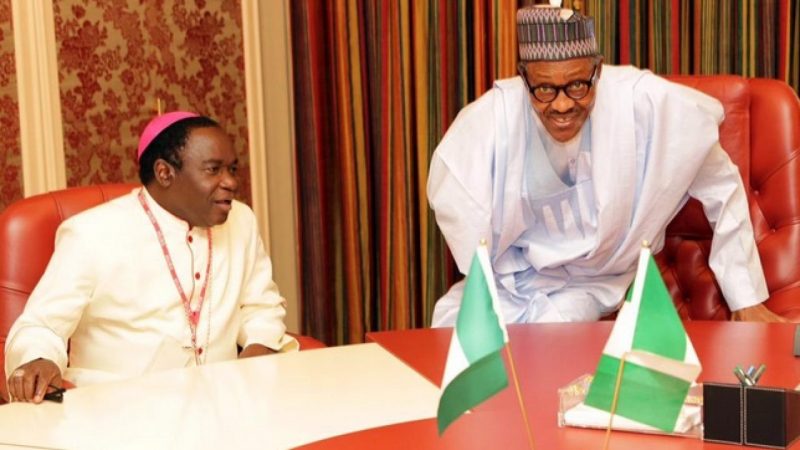
Bishop of Sokoto Catholic Diocese, Matthew Kukah, says he did not call for a coup in his criticism of President Muhammadu Buhari.
The priest said he only expressed his personal view “based on evidence”.
While accusing Buhari of nepotism in his Christmas message on Friday, Kukah had said there could have been a coup if a non-northern Muslim commander-in-chief does a fraction of what Buhari had done.
The Arewa Youth Consultative Forum (AYCF) has called for the prosecution of Kukah for allegedly demanding a coup, describing the bishop’s comments as “treasonable”.
But speaking with reporters on Monday night, Kukah said it was unfair for anyone to report that he called for a coup.
“The loss of lives in the last ten years, even before the advent of this administration, calls for concern,” he said.
“The reactions are a reflection of every citizen that makes up Nigeria. It is sad that when you drop something in Nigeria, everybody goes back to their enclave and abandons the larger picture. I am someone who never takes offence to what people say about me.
“What I said was my opinion based on evidence and what has happened in Nigeria, and if you looked into the records, there is evidence that justifies that statement, and if anyone thinks I am wrong, they should come out with a superior position.
“It is unfair for a journalist or news medium to report that I called for a coup while expressing my personal view about Nigeria.”
The cleric also responded to calls by some people asking him to drop his priesthood cassock and join the political fray, saying if he was to join politics, it would have been during the time of late Aminu Kano and not now.
The Catholic priest added that he had no plans to indulge in partisan politics.
Kukah said, “I have no plan and will never play partisan politics for any reason. Those who link my message to partisan politics are only playing to the gallery,” he said.
“Take, for instance, brilliant Nigerian youths making comments about Chelsea or Arsenal and have never been to England. Does that make them players of such club sides?
“So, why will someone think because Bishop Kukah is speaking, therefore he is a politician? People who make this argument are totally ignorant of elementary politics and ignorant of the role of a priest.
“The truth is that a lot of us have not seen a priest saying what I am saying. The truth of the matter is, we are all in politics, but party politics for me, no. I am not a member of any political party and I cannot be. If it comes to voting, I do my right.
“Whatever I said can please or displease anyone, but that is my own opinion and doesn’t stop others from saying their own opinion. If you think my motive is wrong, say yours.”







News
FG to Attach 300 NYSC Corps Members to CNG Workshops for Skills Training

FG to Attach 300 NYSC Corps Members to CNG Workshops for Skills Training
The Federal Government has announced plans to train and attach 300 National Youth Service Corps members to compressed natural gas conversion centres across the country as part of efforts to equip young Nigerians with practical technical skills and promote the adoption of CNG-powered vehicles.
The initiative is expected to provide the selected corps members with specialised training in CNG vehicle conversion and maintenance, enabling them to acquire skills that could improve their employment and entrepreneurship prospects after completing their national service.
The Senior Special Assistant to the President on Youth Initiatives, Monitoring and Delivery, Dr Titilope Gbadamosi, disclosed the plan at the opening of a CNG Retrofitting Training Programme for corps members at the NYSC FCT Orientation Camp in Kubwa, Abuja.
Gbadamosi said the selected corps members would undergo training and certification as CNG technicians before being deployed to CNG conversion centres across the country.
She explained that the programme would cover the six geopolitical zones and was designed to contribute to the Federal Government’s broader plan to expand the conversion of petrol and diesel-powered vehicles to CNG.
According to her, the initiative is expected to support the government’s target of converting 100,000 vehicles to CNG annually, while simultaneously creating opportunities for young Nigerians to develop specialised technical expertise.
The programme is being implemented in collaboration with relevant government agencies and stakeholders in the automotive and energy sectors.
READ ALSO:
- INEC reprints Osun ballot papers, result sheets, includes SDP candidate
- Iran Had Detailed Intel on Trump’s Location Before Secret Turkey Escape
- PSG Pocket £5.2m After Super Cup Thriller, Villa Get £3.4m
The Minister of Youth Development, Ayodele Olawande, said the initiative would provide corps members with practical skills capable of complementing their university and polytechnic qualifications.
Olawande urged the beneficiaries to take the training seriously, describing technical and vocational skills as important tools for reducing youth unemployment and increasing self-reliance.
He said the Federal Government was interested in ensuring that the NYSC programme did not end with the traditional primary assignment and community development activities, but also provided corps members with skills that could sustain them after their service year.
The Director-General of the NYSC, Brigadier General Olakunle Nafiu, also described the programme as an important step towards equipping young Nigerians for emerging opportunities in Nigeria’s changing energy and automotive landscape.
He said the collaboration demonstrated the scheme’s commitment to providing corps members with practical skills and preparing them for the labour market.
The National Automotive Design and Development Council is also involved in the initiative, particularly in relation to technical standards and certification for the CNG conversion training.
The Federal Government has in recent years intensified efforts to promote CNG as a cheaper alternative fuel following the removal of petrol subsidy and the resulting increase in transportation costs.
The government has maintained that greater adoption of CNG could help reduce transportation costs, conserve foreign exchange spent on petroleum products and create new jobs in the automotive conversion and maintenance sector.
The training of NYSC members is therefore expected to address both sides of the policy — increasing the pool of skilled personnel available to service the growing CNG industry while providing young Nigerians with employable technical skills.
Meanwhile, reports circulating that each of the 300 corps members will receive a monthly training allowance of ₦100,000 have not been independently confirmed in the official details released on the programme.
The confirmed aspect of the initiative is that the selected corps members will receive specialised training and certification before being attached to CNG conversion centres across the country.
The programme is expected to serve as a pilot for broader youth-focused skills development initiatives as the Federal Government continues to seek ways of linking national service with employment, entrepreneurship and emerging economic opportunities.
FG to Attach 300 NYSC Corps Members to CNG Workshops for Skills Training
News
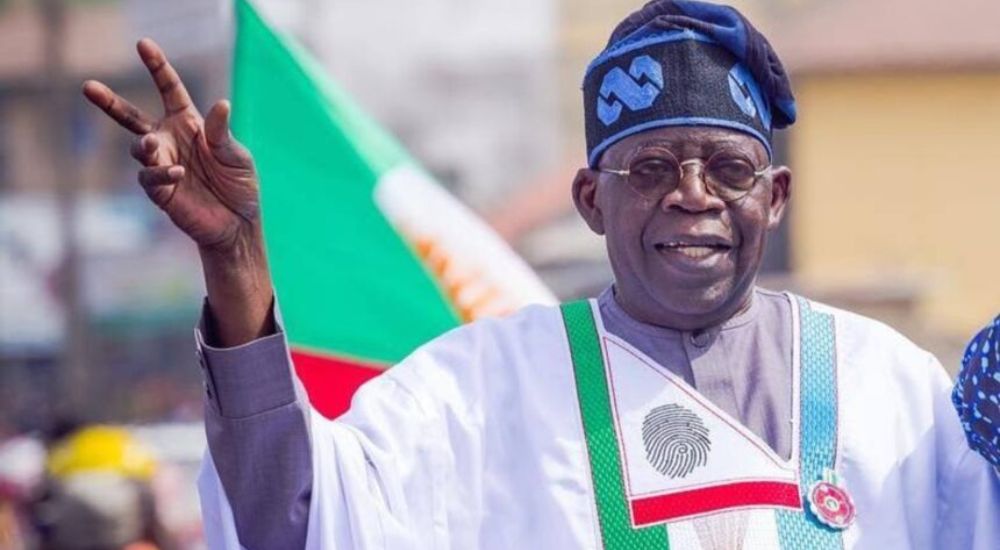
Tinubu Vows to Secure Nigeria, Declares Unity Non-Negotiable Amid Worsening Insecurity
News
Ronaldo Marries Georgina Rodriguez in Intimate Portugal Wedding Ceremony

Ronaldo Marries Georgina Rodriguez in Intimate Portugal Wedding Ceremony
-
 Education2 days ago
Nigerian Young Academy, LASU to Host 16th International Conference on Convergent Research
-
 News2 days ago
Trump smuggled out of Turkey in catering truck over Iran threat
-
 Politics2 days ago
Keep Religion Out of Nigeria’s ‘Dirty Politics,’ Gumi Tells Jingir
-

 metro2 days ago
Ex-Aiye Confraternity Leader Arrested in Lagos, Confesses to Multiple Killings in Mushin
-

 Education3 days ago
Nigerian Mother Gifts Son a Live Goat After Polytechnic Graduation
-
 News2 days ago
South Africa Visa Applications Double From Nigerians Despite Xenophobia Concerns – Envoy
-
 metro2 days ago
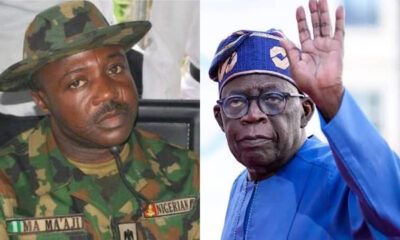
‘I Acted Out of Patriotism’ — Army Colonel Ma’aji Breaks Silence, Explains Why He Plotted Coup Against Tinubu
-

 International3 days ago
Radio Caroline Fined Over False King Charles III Death Announcement
You must be logged in to post a comment Login