

Business
CBN excludes Abuja, Lagos PoS operators from cash swap programme

The Central Bank of Nigeria has excluded mobile money/Point of Sales agents in Abuja and Lagos from its newly launched cash swap programme.
The Punch reports the development ahead of the January 31 deadline for the phasing out of the old N1,000, N500 and N200 notes.
It reports a Frequently Asked Questions document released to selected agents obtained on Monday that the CBN provides some guidelines for the cash swap programme.
According to the document, the only five banks approved for the programme are Access Bank, Zenith Bank, United Bank for Africa, First Bank of Nigeria and First City Monument Bank.
It read in part, “Not all agents can participate. This is open to only selected agents profiled by the super agent/MMO/bank and submitted to the Central Bank of Nigeria and participating banks (Access, Zenith, UBA, First, FCMB).”
On the number of states selected for the programme, it read, “Selected agents in all the 36 states (except Lagos State and FCT, Abuja). Lagos and Abuja agents are excluded from this.”
READ ALSO:
- For challenging Tinubu, Shettima’s nominations, court fines Udeze-led AA N1m
- NNPC fails to stop Ararume’s N100bn case against unlawful removal as board chairman
- SDP chairman, excos dump party, declare support for Jandor
The PUNCH also learnt that the agents are restricted from using the new notes for their regular transactions, only for the programme.
On where the agents can get the new notes, the document added, “from one of these designated banks (Zenith, First Bank, Access, UBA, FCMB). However, you must have a bank account with that bank and your operators (super agent/MMO/bank) will have pre-registered you with the bank where you have an account.”
It added, “you must go to the bank you have informed operator (super agent/MMO/bank) of. That is where your agent details will be submitted to for verification when you get there to collect the new notes.”
Also, each agent’s name, BVN number, and operator’s name are required before the new notes will be released.
The document added that the bank would also verify the agent’s picture and finger print.
The document also noted that an agent is expected to have a record of the customer’s Know-Your-Customer information, which includes name, phone number, bank, account number and amount.
It was also noted that why there is no restriction on how much a customer can deposit, only N10,000 can be released per customer under the cash swap programme.
The CBN also urged the agents to open a bank account or wallet for customers with bank accounts.
The PUNCH also learnt that an agent can only get up to N500,000 new notes weekly for the programme.
Also, each agent is expected to record all transactions performed with the new notes and submit the record to the operator (super agent/MMO/bank).
CBN threatens sanction
Regarding what happens if an agent uses the new notes for other purposes other than the new naira initiative, the document noted, “There will be severe sanctions such as de-listing as an agent, withhold of any applicable benefit, de-list from future programmes, negative report to bank & CBN and other such penalties as directed by regulatory authorities.”
READ ALSO:
- University of Calabar suspends HoD for one year over extortion
- Appeal court nullifies APC guber primaries in Benue orders fresh election
- Osun APC accuses Adeleke of being behind rising insecurity in the state
In a memo by Moniepoint to their agents, agents were asked to collect BVN, NIN, or voter’s card details from customers paid new notes.
The memo read in part, “The Swap should be in the form of PoS withdrawals only of not more than N10,000 per person. Any withdrawal more than N10,000 per person should not be paid with new notes.
“Agents are also permitted to charge cash-out fees for the cash swap transactions but prohibited from charging any further commissions to customers for this service.
“You are to collect BVN, NIN or votes card details from customers paid with new notes for weekly submissions to the CBN.
“The CBN will continue to monitor implementation of the programme and provide further guidance as may be necessary.”
The National President, Association of Mobile Money and Bank Agents in Nigeria, Mr Victor Olojo, told our correspondent that a proposed meeting with the CBN did not hold.
He further noted that the agents were still actively involved in the process and a framework had been provided to guide the programme.
The CBN when announcing the cash swap programme which began on Monday, noted that the initiative was aimed at enabling citizens in rural areas or those with limited access to formal financial services to exchange old naira notes for the redesigned notes. To promote financial inclusion, the CBN said the service was also available to anybody without a bank account.
It said agents might, on request, instantly open a wallet or account, leveraging the CBN tiered know your customer framework. This, according to the bank, will ensure that this category of the populace (unbanked citizens) is able to exchange or deposit their cash seamlessly without taking unnecessary risks or incurring undue costs.
The CBN also directed agents to sensitise customers to opening wallets/bank accounts and the various channels for conducting electronic transactions.
A PoS agent (name withheld), who reached out to the executive members of the AMMBAN, noted that PoS agents were risking their lives in Kebbi to circulate the new notes.
He said, “Here in Kebbi State, the new notes are only in circulation within the Birnin Kebbi the state capital, and agents are doing their best to mop up the old notes, taking the risk of traveling with huge cash from rural areas to the state capital as most of the banks in Kebbi State has only one branch in the state capital while the few banks exist in the selected local governments are over-crowded.”
The AMMBAN president had earlier told the PUNCH that the issue of insecurity would likely affect the operations of some PoS agents, noting that some measures were also in place to safeguard the agents and the cash.







Auto
Policy Bottlenecks Threaten Nigeria’s Clean Mobility Drive, LCCI Warns
Policy Bottlenecks Threaten Nigeria’s Clean Mobility Drive, LCCI Warns
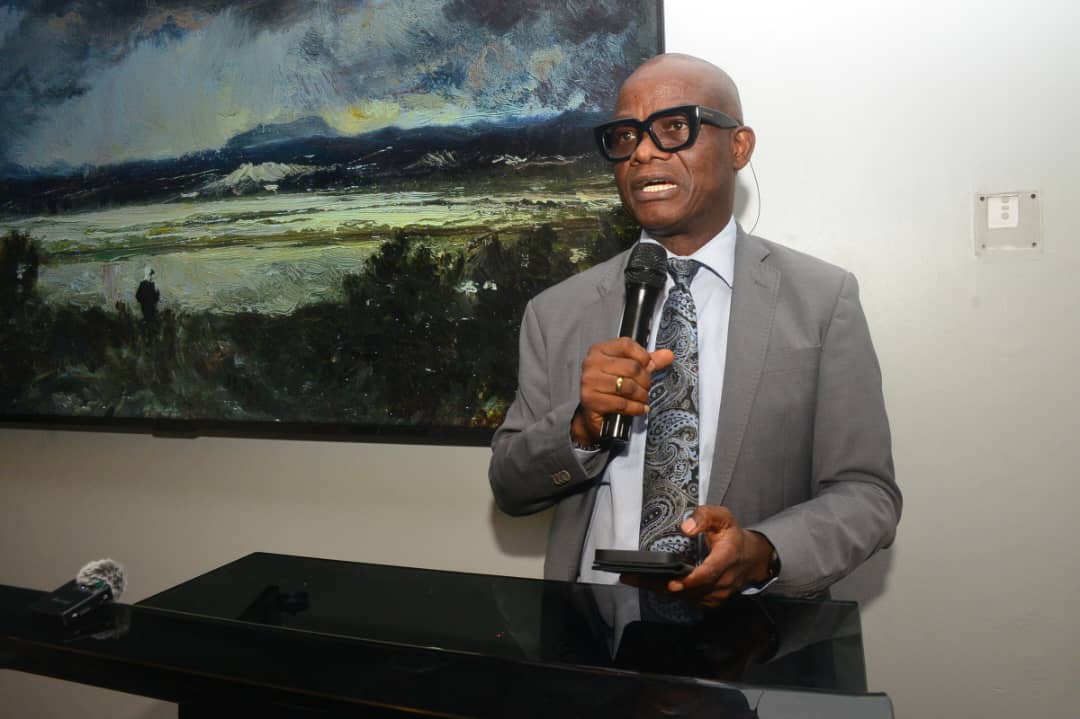
The Chairman of the Auto and Allied Sector Group of the Lagos Chamber of Commerce and Industry (LCCI), Dr. Femi Eguahide, has warned that policy inconsistencies, regulatory bottlenecks and weak coordination between the public and private sectors could derail Nigeria’s clean mobility ambitions, urging the Federal Government to deepen collaboration with industry stakeholders to accelerate the transition to Compressed Natural Gas (CNG) and Electric Vehicles (EVs).
Speaking at the 3rd Nigeria Auto Industry Summit in Lagos on Thursday, Eguahide said the success of the Federal Government’s clean mobility agenda would depend on sustained stakeholder collaboration, policy consistency and the removal of operational challenges slowing investment and implementation.
The summit, organised by the Nigeria Auto Journalists Association (NAJA) under the theme, “Nigeria’s Clean Mobility Future: The EV and CNG Journey Under the Bola Tinubu Administration,” brought together policymakers, regulators, automobile manufacturers, financiers, transport operators, researchers, safety agencies and development partners to chart a roadmap for accelerating Nigeria’s transition to cleaner transportation.
Eguahide acknowledged the Federal Government’s commitment to alternative energy solutions through the Presidential Initiative on Compressed Natural Gas and Electric Vehicles (Pi-CNG & EV), but stressed that translating policy into tangible results would require stronger coordination between government institutions and private investors.
According to him, the automotive industry remains a critical driver of industrialisation, job creation and economic growth, making it imperative for government agencies to work closely with manufacturers, assemblers, financiers and technology providers to create a more predictable and investment-friendly operating environment.
READ ALSO:
- Policy Bottlenecks Threaten Nigeria’s Clean Mobility Drive, LCCI Warns
- Troops arrest three suspects over killing of soldier in Imo ambush, recover stolen rifles
- Kidnapped Lt. Col. Ofor Amobi, civilian rescued after 10-day military operation in Enugu
He said effective policy implementation must be backed by continuous stakeholder engagement capable of resolving challenges surrounding vehicle conversion, local manufacturing, infrastructure development, financing and technology deployment.
Eguahide maintained that Nigeria possesses enormous potential to build a globally competitive clean mobility ecosystem, but cautioned that fragmented policies and institutional inefficiencies could slow the country’s progress if left unresolved.
He therefore urged government agencies to deepen engagement with the organised private sector to develop practical solutions that would accelerate the rollout of CNG refuelling infrastructure, EV charging networks and local automotive production.
Earlier, the Federal Government reaffirmed its commitment to expanding Nigeria’s clean mobility ecosystem through increased investment in infrastructure, local manufacturing and strategic partnerships.
Speaking on behalf of the Executive Chairman and Chief Executive Officer of the Presidential Initiative on Compressed Natural Gas and Electric Vehicles (Pi-CNG & EV), Barrister Ismaeel Ahmed, the Initiative’s Chief Compliance Officer, Engr. Zayyanu Tamberi Yabo, said the programme had evolved into a key pillar of President Bola Tinubu’s transport and energy reform agenda.
According to Ahmed, the Presidential Initiative was established not merely to promote alternative fuels but to build an integrated ecosystem covering infrastructure development, investment, vehicle conversion, local manufacturing, technical capacity building and consumer confidence.
“Our approach from the beginning has been to build the foundations of a sustainable industry rather than pursue isolated interventions,” he said.
He disclosed that certified CNG conversion centres had expanded significantly across the country over the past two years, while new refuelling stations were being developed through public and private sector investments.
Ahmed added that vehicle conversions continue to rise as commercial transport operators and private motorists increasingly embrace CNG because of its lower operating costs.
He also highlighted partnerships with financial institutions, energy companies and automobile manufacturers aimed at improving access to financing and accelerating the adoption of clean mobility technologies.
Despite the progress, he identified infrastructure expansion, consumer financing, local manufacturing capacity, technical training, research, innovation and standardisation as priority areas requiring sustained attention.
In his welcome address, NAJA Chairman Theodore Opara described the summit as a strategic platform for shaping the future of Nigeria’s automotive industry.
He said reforms introduced by the Tinubu administration had created fresh momentum for CNG, electric vehicles and local automotive manufacturing, adding that stronger collaboration among government, industry players and the media would be critical to sustaining the gains.
Also speaking, the Director-General of the Standards Organisation of Nigeria (SON), Dr. Ifeanyi Chukwunonso Okeke, represented by Engr. Olalekan Omoniyi, said strict compliance with internationally recognised standards would determine the success of Nigeria’s transition to EVs and CNG-powered transportation.
He disclosed that SON had developed more than 80 Nigerian Industrial Standards for CNG vehicles and equipment, as well as 87 additional standards and the National Nigeria Guideline (NNG 1214:2024) for CNG vehicle conversions.
The SON boss warned against the proliferation of uncertified conversion centres and substandard equipment, urging mandatory certification for imported and locally assembled EVs, CNG vehicles, conversion kits and charging infrastructure.
Policy Bottlenecks Threaten Nigeria’s Clean Mobility Drive, LCCI Warns
Auto
FRSC Pledges Robust Safety Measures as Nigeria Accelerates EV, CNG Mobility Drive
FRSC Pledges Robust Safety Measures as Nigeria Accelerates EV, CNG Mobility Drive
The Federal Road Safety Corps (FRSC) has declared that road safety will remain at the heart of Nigeria’s transition to Electric Vehicles (EVs) and Compressed Natural Gas (CNG)-powered transportation, pledging to strengthen regulations, enforcement and stakeholder collaboration to ensure the shift to cleaner mobility does not compromise public safety.
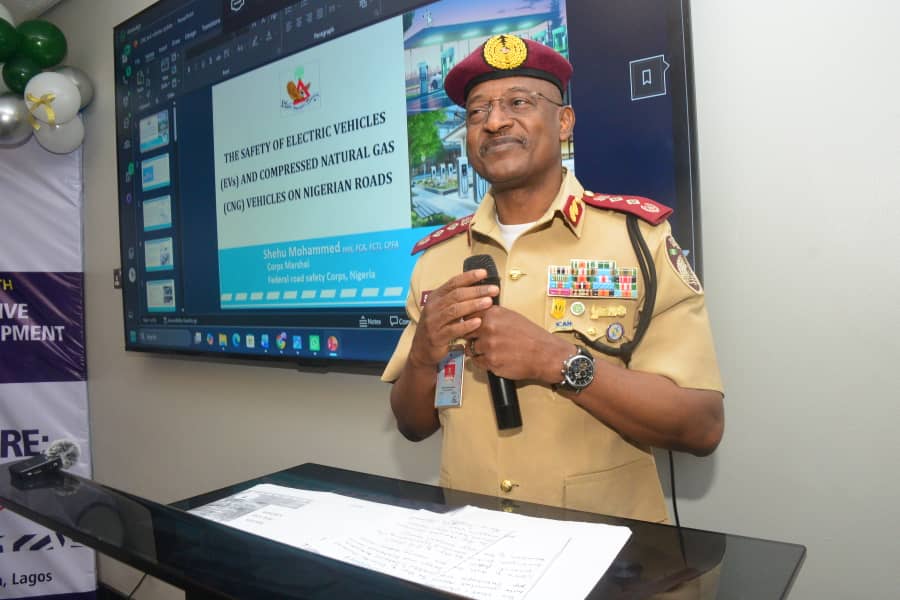
The Corps Marshal of ghe FRSC, Shehu Mohammed, made the declaration while delivering a keynote address at the 3rd Nigeria Auto Industry Summit organised by the Nigeria Auto Journalists Association (NAJA) in Lagos.
The summit, themed “Nigeria’s Clean Mobility Future: The EV and CNG Journey Under the Bola Tinubu Administration,” brought together government officials, regulators, manufacturers, energy companies and other industry stakeholders to chart the future of sustainable transportation in Nigeria.
Mohammed said the growing adoption of EVs and CNG-powered vehicles presents significant opportunities for cleaner transportation, lower operating costs and improved energy security, but warned that these benefits can only be fully realised through robust safety regulations, effective enforcement and continuous collaboration among stakeholders.
READ ALSO:
- Naming Atiku as My Running Mate in 1999 My Biggest Political Error – Obasanjo
- Woman Strangles Co-wife’s 3-Year-Old Daughter to Death in Kwara
- Court Awards N12m Damages Against Police for Abduction, Unlawful Detention of Journalist
He noted that as alternative-fuel vehicles become more prevalent on Nigerian roads, regulatory institutions must evolve to address emerging technologies through specialised training, updated operational guidelines and stronger enforcement frameworks.
According to him, the FRSC has already begun positioning itself for the transition by strengthening safety regulations, engaging key stakeholders and developing operational frameworks specifically designed for EVs and CNG-powered vehicles.
The Corps Marshal stressed that Nigeria’s clean mobility agenda should not only focus on reducing carbon emissions but also on improving road safety, raising vehicle standards and building public confidence in emerging transport technologies.
He added that achieving a safe and sustainable transition would require the active participation of road users, transport operators, vehicle manufacturers, conversion centres, regulators and other critical stakeholders.
Mohammed reaffirmed the FRSC‘s commitment to working closely with government agencies, industry players and development partners to ensure that Nigeria’s journey towards cleaner transportation delivers lasting safety, environmental and economic benefits for the country.
FRSC Pledges Robust Safety Measures as Nigeria Accelerates EV, CNG Mobility Drive
Auto
Pi-CNG boss: Clean mobility will cut transport cost, create jobs, power Nigeria’s economic growth
Pi-CNG boss: Clean mobility will cut transport cost, create jobs, power Nigeria’s economic growth
The Federal Government has declared that Nigeria’s transition to compressed natural gas (CNG) and electric vehicles (EVs) is no longer an environmental ambition but a critical economic strategy to slash transportation costs, strengthen energy security, create jobs and unlock new investments across the automotive value chain.
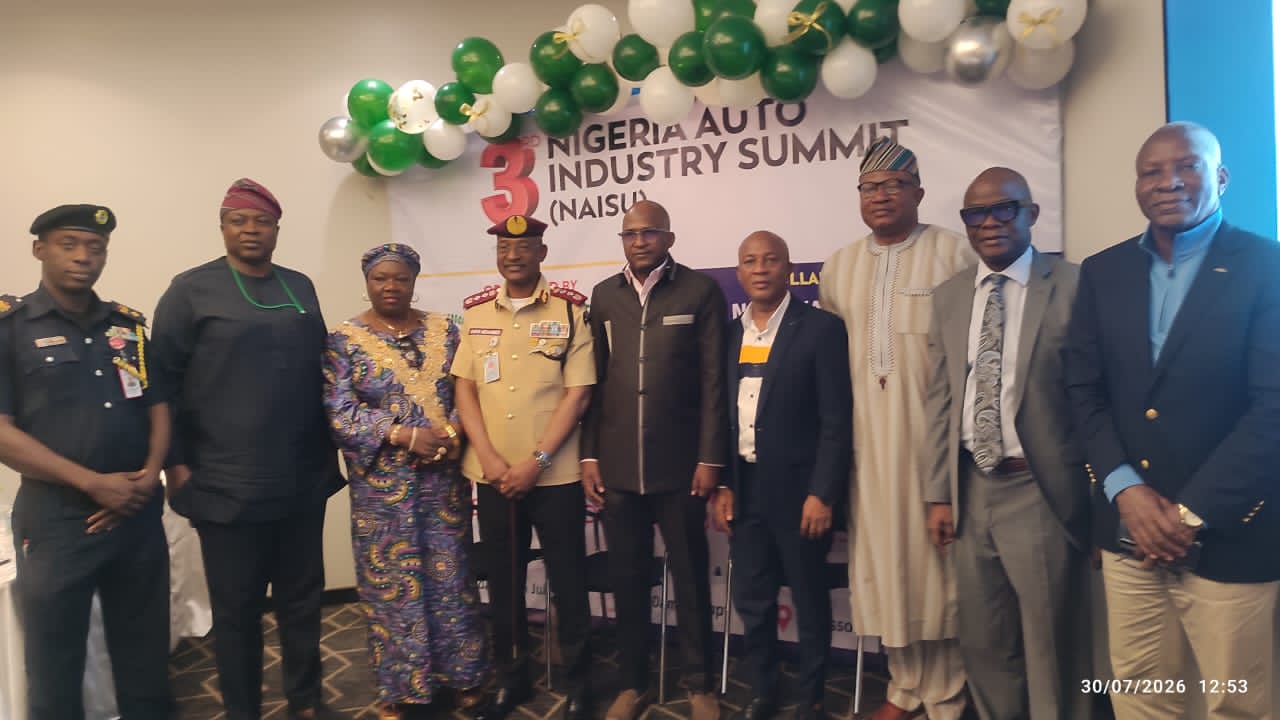
Making the declaration at the 3rd Nigeria Auto Industry Summit (NAISU) organised by the Nigeria Auto Journalists Association (NAJA) in Lagos, the Executive Chairman and Chief Executive Officer of the Presidential Initiative on Compressed Natural Gas and Electric Vehicles (Pi-CNG & EV), Barrister Ismaeel Ahmed, said clean mobility had become a central pillar of President Bola Ahmed Tinubu’s transport and energy reforms.
Delivering a keynote address titled, “Nigeria’s Clean Mobility Future: The EV and CNG Journey Under the Bola Tinubu Administration,” Ahmed said the Presidential Initiative was established to coordinate Nigeria’s transition to cleaner transportation by building a sustainable ecosystem for CNG and electric mobility.
He explained that the Initiative’s mandate extended beyond promoting alternative fuels to attracting investments, expanding refuelling and charging infrastructure, supporting vehicle conversion, strengthening local manufacturing, developing technical skills and boosting consumer confidence.
According to him, the programme was conceived following the removal of fuel subsidy to provide Nigerians with a practical and affordable transport alternative by leveraging the country’s abundant natural gas resources.
“Our focus from the beginning has been to build the foundation of a sustainable industry rather than pursue isolated interventions,” Ahmed said, noting that Pi-CNG & EV has worked closely with regulators, investors, vehicle manufacturers, conversion firms, financial institutions, development partners, transport unions and state governments.
Reviewing the Initiative’s achievements over the past two years, he said Nigeria’s CNG ecosystem has expanded rapidly, with more certified conversion centres established across the country and refuelling infrastructure growing through public and private sector investments.
He added that vehicle conversions have continued to rise as commercial transport operators and private motorists increasingly embrace the lower operating costs of CNG, while thousands of technicians have been trained to ensure safe and professional conversion services nationwide.
Ahmed also disclosed that strategic partnerships with financial institutions, energy companies, vehicle manufacturers and state governments are helping to improve access to financing, stimulate infrastructure development and accelerate the adoption of clean mobility solutions.
To strengthen safety and regulatory compliance, he announced the introduction of the Nigeria Gas Vehicle Monitoring System, which he said would enhance transparency, improve regulatory oversight and build public confidence in the conversion industry.
While acknowledging the remarkable progress recorded in CNG adoption, Ahmed stressed that the Initiative remains equally committed to advancing electric mobility, saying Nigeria’s long-term transport future would be powered by multiple clean-energy technologies.
He revealed that government is engaging manufacturers, investors and development partners on electric vehicle deployment, charging infrastructure, local assembly and policy reforms aimed at accelerating market growth.
Despite the progress, Ahmed identified infrastructure expansion, consumer financing, local manufacturing, technical capacity development, research, innovation and standardisation as key areas requiring sustained investment and collaboration.
He urged government agencies, investors, manufacturers, transport operators, financial institutions, development partners and the media to work together to overcome these challenges and build a sustainable clean mobility ecosystem.
Describing the media as a strategic partner, Ahmed called on members of the Nigeria Auto Journalists Association to intensify public education on the economic, environmental and technological benefits of clean mobility.
“The transition to clean mobility is as much an information challenge as it is an infrastructure challenge. Public understanding influences public acceptance, while market confidence is built on accurate, timely and responsible information,” he said.
He pledged deeper engagement with journalists through regular technical briefings, industry dialogues and improved access to credible data to combat misinformation and promote informed public discourse.
Ahmed said Pi-CNG & EV would continue expanding CNG infrastructure nationwide, strengthen the regulatory framework, support local manufacturing and vehicle conversion capacity, deepen financing partnerships and collaborate with stakeholders to build a commercially viable clean mobility industry.
According to him, the true measure of the Initiative’s success will not be the number of conversion centres or refuelling stations established, but its ability to reduce transport costs, improve energy security, generate employment, stimulate industrial growth and improve the quality of life of Nigerians.
He commended NAJA for providing a platform for robust industry dialogue, saying stronger collaboration among government, industry players and the media would be essential to accelerating Nigeria’s clean mobility transition.
-

 Aviation2 days ago
Obi Must Apologise, Pay ₦25,000 or Face FAAN Action — Keyamo Issues Ultimatum
-

 Politics2 days ago
Where Will Peter Obi’s Votes Come From? I Can’t See It – Keyamo Predicts Tinubu’s Landslide Victory
-

 metro3 days ago
Grand Chief Imam warns Bennylee against religious provocation, urges respect for judicial process
-

 metro2 days ago
‘We’ll Marry Beautiful Ones, Kill the Rest’ – Terrorists Reject N155m Ransom for 176 Kwara Captives
-

 metro2 days ago
IGP Redeploys Osun CP to Force Headquarters Ahead of August 15 Governorship Election
-

 metro2 days ago
42 Cows Die Mysteriously in FCT Community, Herder Collapses in Shock
-

 Auto2 days ago
Côte d’Ivoire woos Nigerian auto investors to regional mobility expo
-

 Education1 day ago
ICYMI: Court orders JAMB, CBT centre to pay ₦10m over forced removal of candidate’s hijab during UTME