

metro
Four killed, 14 injured as overloaded bus somersaults on Ibadan-Oyo road

Four killed, 14 injured as overloaded bus somersaults on Ibadan-Oyo road
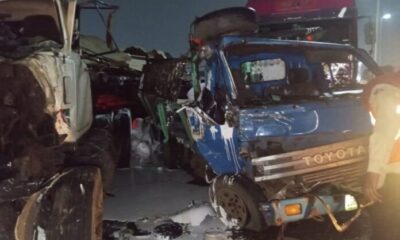
At least four people have been confirmed dead and 14 others seriously injured when an 18-seater Toyota bus somersaulted on Saturday on Ibadan-Oyo Expressway in Oyo State.
All the injured were said to have been rushed to the State Hospital in Oyo.
According to Atiba Unit Commander of the Federal Road Safety Corp (FRSC), Bayode Olugbesan, the accident was caused by overspeeding and overloading.
He said 20 people were involved in the accident but four were confirmed dead by doctors at the State Hospital.
Olugbesan further disclosed that the bodies of the dead victims had been deposited at the mortuary.
“All the victims are male and their destination is the North. The cause of the crash was overspeeding and overloading; the bus was supposed to carry 14 passengers but was loaded with 20 passengers,” he said.
He appealed to road users to be careful while driving and avoid overspeeding, overloading and night travel.
Four killed, 14 injured as overloaded bus somersaults on Ibadan-Oyo road






metro
Scores of Terrorists Killed, 60 Arrested in Nationwide Military Operations
Scores of Terrorists Killed, 60 Arrested in Nationwide Military Operations
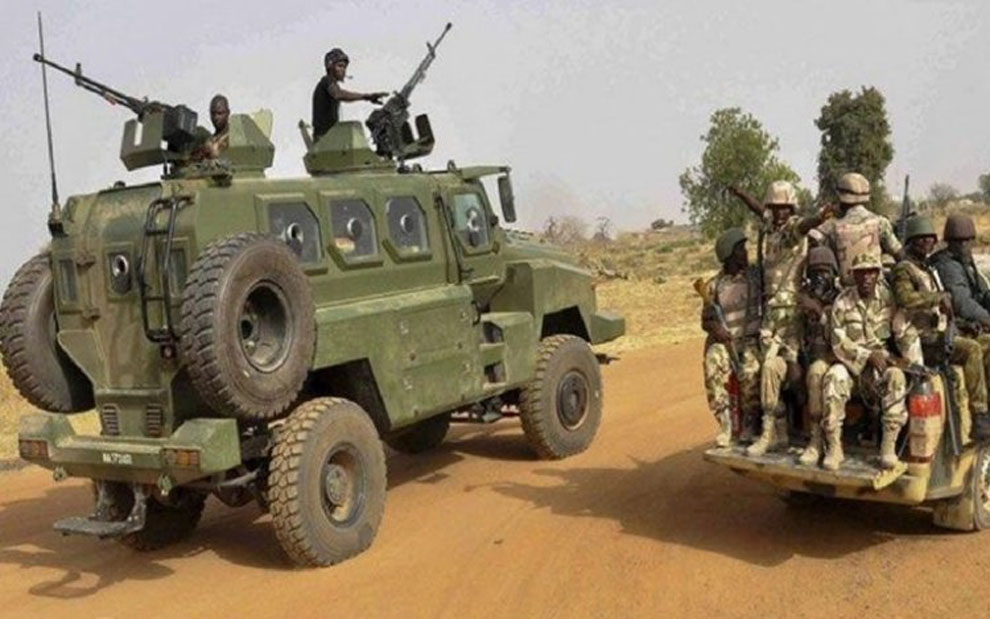
In a major coordinated offensive against terrorist networks, troops of the Nigerian Army have bombed scores of terrorists, arrested a high-profile operative linked to notorious terrorist leader Dogo Gide, and detained 60 suspected collaborators in separate intelligence-led operations across the country. The operations, recorded between August 12 and 13, 2026, also led to the recovery of weapons, military uniforms, and other items, according to military authorities. The Theatre Command, Joint Task Force North West, Operation Fansan Yamma, launched Operation Clean Sweep IV, a coordinated ground and air offensive aimed at intensifying pressure on terrorists and armed criminal elements across the region. The Media Information Officer, Lieutenant Colonel Aliyu Danja, said the operation brings coordinated ground and air actions to bear on identified threats across the North Western States, with the objective of degrading terrorist capabilities, disrupting their movements and logistics, and denying them the opportunity to establish footholds within Nigerian communities.
In Kaduna State, troops of 4 Demonstration Battalion arrested a suspected ISWAP operative at Kadage Check Point while he was allegedly conveying seven pairs of sewn foreign camouflage uniforms to a terrorist camp. Preliminary interrogation revealed that the suspect was a close confidant of Dogo Gide and had been supplying logistics to him, indicating the deep-rooted network of support that enables terrorist operations in the region. Troops recovered 23 yards of foreign camouflage material, two mobile phones, three ATM cards, and an identity card from the suspect, providing valuable intelligence for ongoing operations. The arrest of this high-value target is expected to disrupt supply chains to terrorist camps and weaken the operational capabilities of Dogo Gide’s network.
READ ALSO:
- Navy Rescues 22 Sea Robbery Victims, Recovers Hijacked Boat in Akwa Ibom
- Keyamo Issues One-Week Ultimatum to Airlines Over Debt Repayment Plans
- [ICYMI] How Nigerian Medical Doctor Was Promoted to Captain in US Army
In Adamawa State, troops of 226 Battalion, supported by hunters, raided a motor park in Gombi following intelligence on suspected terrorist collaborators allegedly disguising themselves as menial workers and hawkers. The operation led to the arrest of 60 suspects, who are currently being held for further investigation. This follows similar operations in the region, including the recent arrest of a 43-year-old suspected collaborator in Mubi South, Adamawa State, demonstrating the military’s sustained efforts to dismantle support networks for terrorist groups. The arrests send a strong message that those who provide support to terrorists, whether through logistics, shelter, or information, will face the full weight of the law.
In Katsina State, troops of Sector 2 conducted a clearance operation on August 12 around suspected terrorist enclaves in Dutsinma Local Government Area. The operation mounted significant pressure on the terrorists, compelling them to abandon their positions and withdraw into surrounding bushes, while clearance operations are ongoing in the general area. In Zamfara State, the Air Component of Operation Fansan Yamma conducted precision strikes on terrorists who had converged on motorcycles in Anka Local Government Area. The strikes reportedly neutralised scores of terrorists and forced survivors to abandon their motorcycles and flee into surrounding bushes, with air assets subsequently locating and engaging the fleeing terrorists. Troops of 1 Brigade also recovered an RPG bomb during a patrol around Tunga-Jambako in Maradun Local Government Area following an earlier terrorist ambush, highlighting the ongoing threat posed by terrorist elements in the region.
In Benue State, troops of Operation Whirl Stroke arrested five suspected terrorists during operations in Chito, Jootar, and Ikyior in Ukum Local Government Area. The troops destroyed the suspected enclaves and recovered two motorcycles and two locally fabricated guns, dealing a significant blow to terrorist operations in the state. The military also intercepted five women and seven children suspected to be family members of terrorists in Mafa Local Government Area of Borno State, with the group reportedly escaping from a terrorist enclave in Gazuwa Camp. Similarly, six male children were intercepted at Ajiri after reportedly escaping from Murofari Village following clashes between rival terrorist groups, indicating the internal conflicts and fragmentation within terrorist networks. In a related operation, troops of Operation SAVANNAH SHIELD foiled an advance by terrorists from Zamfara into Niger State, recovering an AK-47 rifle and 398 rounds of ammunition after following credible intelligence on the movement of terrorists riding about 200 motorcycles towards Inana Village in Rijau Local Government Area of Niger.
Danja said a major component of Operation Clean Sweep IV was the effort to contain and dismantle the Lakurawa terrorist network across the theatre. The Lakurawa group has deeper Sahelian roots in the Mali–Niger border region and emerged in northwestern Nigeria between 2016 and 2018 as a community self-defence force before transforming into a violent extremist group that imposes its own interpretation of Islamic law on communities it controls. “The operation is designed to prevent the infiltration and reinforcement of Lakurawa elements into Nigeria while denying the group the opportunity to exploit border areas as corridors for movement, logistics and the establishment of enclaves,” he said. The operation further seeks to block the activities of terrorist elements operating around the River Niger axis and the Kainji Lake National Park, thereby preventing them from using the area as a platform for projecting violence into adjoining communities and other parts of the North West. “The launch of Operation Clean Sweep IV underscores the proactive and sustained posture of Operation Fansan Yamma in confronting evolving terrorist threats across the region. The Theatre remains resolute in protecting civilian communities, securing Nigeria’s territorial integrity and denying terrorist elements the opportunity to regroup, reinforce or establish operational footholds,” Danja said.
Scores of Terrorists Killed, 60 Arrested in Nationwide Military Operations
metro
Navy Rescues 22 Sea Robbery Victims, Recovers Hijacked Boat in Akwa Ibom
Navy Rescues 22 Sea Robbery Victims, Recovers Hijacked Boat in Akwa Ibom
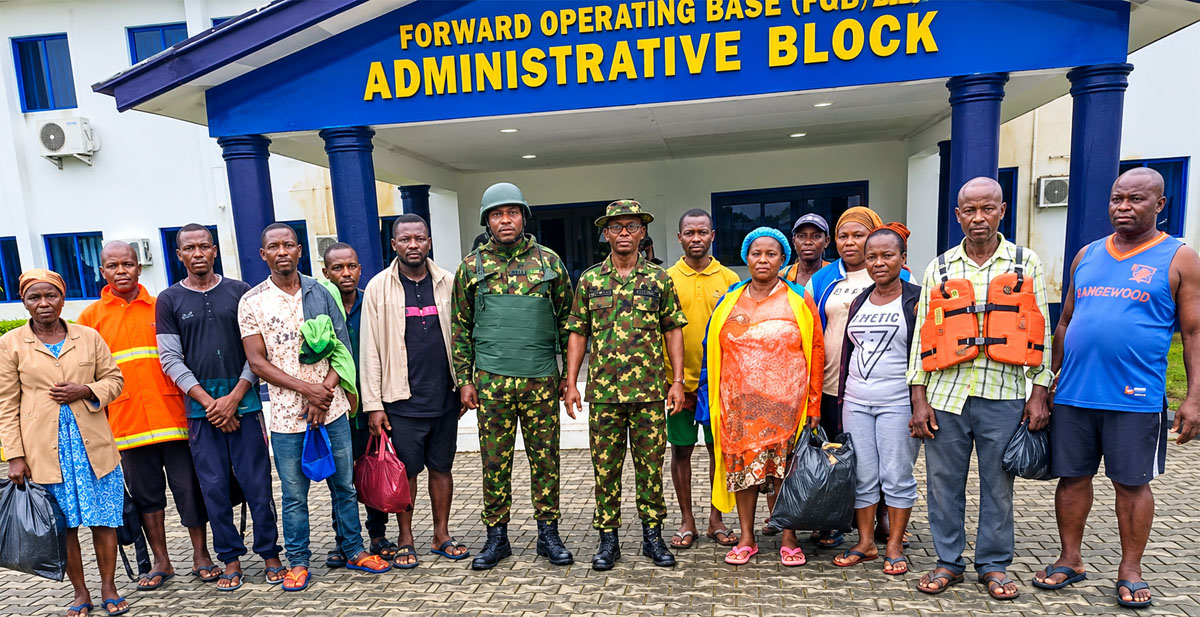
The Nigerian Navy has rescued 22 passengers following the hijacking of a wooden passenger boat by suspected sea robbers along the Calabar–Oron–Ibaka waterway in Akwa Ibom State. The operation, conducted on August 11, 2026, was carried out by personnel of the Forward Operating Base (FOB) Ibaka, in collaboration with Operation Delta Safe (OPDS) Sector 4 and the Marine Police. This coordinated effort demonstrates the Navy’s commitment to ensuring the safety and security of Nigeria’s waterways and the people who depend on them for transportation and livelihood.
The operation followed an attack on a passenger boat travelling from Henshaw Town Beach in Calabar to Utan Uyata, Ibaka. According to the Commanding Officer of FOB Ibaka, Navy Captain Adebowale Omotosho, the passenger boat came under attack shortly after passing the Enwang community when five armed men in a speedboat intercepted the vessel and took control of the boat and its passengers. The attackers, armed with dangerous weapons, threatened the passengers and forcibly took over the vessel, leaving the victims terrified and helpless in the middle of the waterway.
The Director of Naval Information, Navy Captain Abiodun Folorunsho, disclosed in a statement that the passengers were abducted while the vessel was hijacked. Following receipt of the distress information, personnel of FOB Ibaka and collaborating security agencies launched a coordinated operation to locate the victims and recover the hijacked boat. The swift response by the security forces was critical in ensuring that the criminals were unable to escape with their captives and that the vessel was recovered without any loss of life.
READ ALSO:
- Keyamo Issues One-Week Ultimatum to Airlines Over Debt Repayment Plans
- [ICYMI] How Nigerian Medical Doctor Was Promoted to Captain in US Army
- JAMB Aggregate Score 2026/2027: How Nigerian Universities Calculate Your Admission Chances
The security operation forced the suspected kidnappers to abandon their captives and the hijacked boat at Asak-Ikang Creek on Wednesday before fleeing towards Oron. Naval personnel, working with collaborating security agencies, immediately conducted a sweep of the creek and rescued 11 passengers who had been abandoned by the attackers. Another 11 passengers who had escaped during the initial attack were subsequently located and debriefed at the OPDS Sector 4 command post, bringing the total number of rescued and accounted-for victims to 22. The successful rescue operation highlights the effectiveness of inter-agency collaboration and the importance of timely intelligence in combating maritime crime.
The rescued passengers were taken to the FOB Ibaka Sickbay for medical assessment and first aid before arrangements were made for their safe return to Calabar alongside the recovered boat. The Navy confirmed that no ransom was paid for their release, underscoring the professionalism and commitment of the security forces to protecting citizens without capitulating to the demands of criminals. The passengers, though traumatized by their ordeal, were reported to be in stable condition and grateful for the timely intervention of the Navy and other security agencies.
The Flag Officer Commanding, Eastern Naval Command, Rear Admiral Chidozie Okehie, reaffirmed the Nigerian Navy’s commitment to strengthening maritime security, enhancing inter-agency cooperation and leveraging timely intelligence to deny criminals freedom of action along the nation’s waterways. Okehie said the successful operation underscored the Navy’s determination to protect lives, safeguard legitimate maritime activities and maintain a secure maritime environment. He emphasized that the Navy would continue to adopt proactive measures to prevent such incidents and ensure that perpetrators are brought to justice.
He added that the Nigerian Navy would continue to work with sister security agencies and other stakeholders to combat sea robbery, kidnapping and other forms of maritime criminality across the country’s waterways. This successful operation follows recent naval efforts in the region, including the destruction of a suspected militant camp in Cross River State and the rescue of three passengers in a separate operation in Akwa Ibom earlier in August 2026. The Navy’s sustained presence and proactive operations in the region have contributed to a significant reduction in maritime crime and increased confidence among waterway users.
Navy Rescues 22 Sea Robbery Victims, Recovers Hijacked Boat in Akwa Ibom
metro
[ICYMI] How Nigerian Medical Doctor Was Promoted to Captain in US Army
![[ICYMI] How Nigerian Medical Doctor Was Promoted to Captain in US Army](https://newstrends.ng/wp-content/uploads/2026/08/Chi-Uzoma.jpg)
[ICYMI] How Nigerian Medical Doctor Was Promoted to Captain in US Army
Every year, Nigerians across the globe continue to distinguish themselves in various fields of human endeavour, and the United States military is no exception. The latest Nigerian to achieve this rare feat is Chi Uzoma, a Nigerian-born medical doctor who has been promoted to the rank of Captain in the United States Army, marking a significant career milestone for the Nigerian professional serving abroad. Uzoma shared the exciting news on social media on Sunday, August 9, 2026, expressing deep gratitude for the journey that brought her to this moment. In her post on X, she wrote, “Today, I proudly wear the rank of CAPTAIN. The journey has been nothing short of a blessing, and I’m deeply grateful to God for every opportunity that has brought me to this moment.” The announcement was accompanied by a photograph of her in military uniform, bearing the name “UZOMA,” and the post quickly garnered widespread attention and congratulatory messages from Nigerians at home and in the diaspora.
This promotion to Captain comes just a few months after Uzoma was elevated to the rank of Sergeant in March 2026, demonstrating a swift and consistent progression within the U.S. military. Her rapid advancement through the ranks highlights a period of remarkable professional growth and dedication to service. At the time of her sergeant promotion, she wrote, “Got promoted to Sergeant today. Grateful to God for the journey, the lessons, and challenges that led to this moment. Proud to wear these stripes.” This quick rise from Sergeant to Captain within a few months is unusual and speaks volumes about her competence, discipline, and the high regard in which she is held by her superiors. Her journey is particularly inspiring because she combines her military service with a career as a medical doctor, two demanding professions requiring immense discipline, expertise, and dedication to excel in simultaneously. Her achievement has drawn widespread commendation from Nigerians, especially within the Igbo community, with many celebrating her as an example of professional excellence on the international stage and a role model for young Nigerian women aspiring to careers in medicine or the military.
READ ALSO:
- JAMB Aggregate Score 2026/2027: How Nigerian Universities Calculate Your Admission Chances
- Davido Halts London Concert, Threatens to Walk Off Stage Over Fan’s Disrespect to Staff
- Davido Halts London Concert, Threatens to Walk Off Stage Over Fan’s Disrespect to Staff
Uzoma’s accomplishment adds to a growing and impressive list of Nigerians excelling in the United States Armed Forces. In January 2026, Amanda Azubuike made history as the first Nigerian woman to be promoted to the rank of Brigadier General in the U.S. Army. Born in London to Nigerian parents of Igbo descent, Azubuike began her military journey at age 17 in the Air Force Junior ROTC program and has served for over three decades in senior leadership roles, including at the Pentagon. Her historic promotion was celebrated across Nigeria and the diaspora as a testament to the resilience and excellence of Nigerian professionals on the global stage. In another remarkable achievement, June 2026 saw Colonel T.G. Ajato, a Nigerian Army officer, make history at the United States Army War College by becoming the first International Fellow to win the prestigious Frank Kelly Writing Award for outstanding research. He also earned a Master’s Degree in Strategic Studies and developed model answers approved by the college for future examinations, further cementing Nigeria’s reputation as a nation that produces world-class military and academic talent.
In another noteworthy development from earlier this year, Nollywood actor Joseph Momodu announced his enlistment into the United States Army, completing his Basic Combat Training at Fort Leonard Wood, Missouri. Momodu, who had a successful acting career with credits including Coming to Nigeria and appearances in Tinsel and The Johnsons, dedicated his enlistment to his late father, a former officer in the Nigeria Police Force. He shared his emotional journey on Instagram, writing, “On April 12, 2026, I honoured my late father in a historic way. Twenty years after his passing, I picked up the baton where he left off in the Nigeria Police Force and carried it forward by getting enlisted into the United States Army.” The actor reflected on the intense demands of military training, describing it as a journey “forged through tears, fear of failure, resilience, endless days, short nights, fatigue, rain, and the scorching sun.” He passed the Armed Services Vocational Aptitude Battery (ASVAB) examination on his first attempt and now serves as Specialist (SPC) J.A. Momodu with the 1st Platoon, Charlie Company, 3rd Battalion, 10th Infantry Regiment. His transition from the entertainment industry to military service has inspired many young Nigerians to consider careers in the armed forces, showing that it is never too late to pursue a dream.
These achievements collectively tell a powerful story of Nigerian excellence, determination, and service on the global stage. From Captain Chi Uzoma combining medicine with military service, to Brigadier General Amanda Azubuike breaking glass ceilings, to Colonel T.G. Ajato excelling in academic military research, and Specialist Joseph Momodu honoring his father’s legacy, these Nigerians are not just making personal successes—they are uplifting the image of Nigeria and inspiring the next generation. Their journeys demonstrate that with hard work, resilience, and faith, Nigerians can succeed anywhere in the world. As more Nigerians continue to distinguish themselves in various fields globally, their stories serve as powerful reminders that national pride transcends geographical boundaries. Congratulations to Captain Chi Uzoma and all Nigerians making the nation proud through their service and excellence on the global stage.
[ICYMI] How Nigerian Medical Doctor Was Promoted to Captain in US Army
-
 Education3 days ago
Nigerian Young Academy, LASU to Host 16th International Conference on Convergent Research
-
 News3 days ago
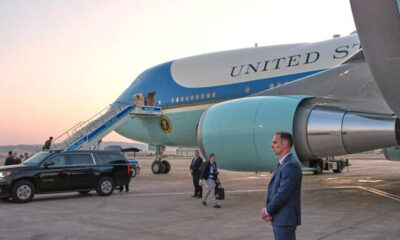
Trump smuggled out of Turkey in catering truck over Iran threat
-
 News2 days ago
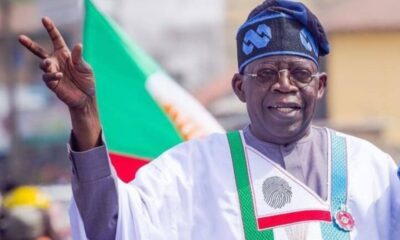
Tinubu Vows to Secure Nigeria, Declares Unity Non-Negotiable Amid Worsening Insecurity
-
 News23 hours ago
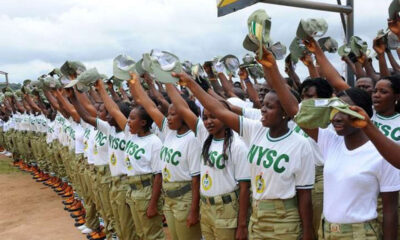
FG to Attach 300 NYSC Corps Members to CNG Workshops for Skills Training
-
 International23 hours ago
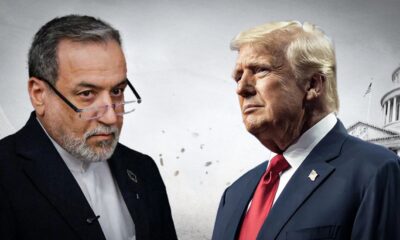
Iran Had Detailed Intel on Trump’s Location Before Secret Turkey Escape
-

 metro2 days ago
Nigeria Needs Competent, Ethical Young Leaders, Says HAVEK Leadership Academy
-

 Auto3 days ago
Omoda, Jaecoo Shake Global Auto Market, Hit One Million Sales in Three Years
-
 metro19 hours ago
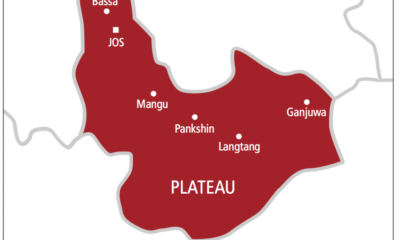
Seven Miners Killed in Plateau Mining Pit Collapse, Renewing Urgent Calls for Safety Reform