

metro
35-yr-old fake doctor nabbed during job interview at Covenant University

35-yr-old fake doctor nabbed during job interview at Covenant University
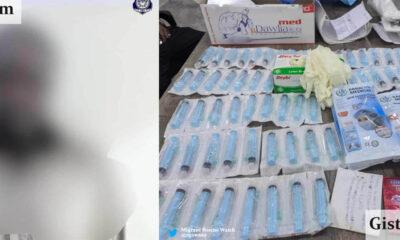
A fake doctor identified as Abawulor Omenka has been caught by the Association of Nigerian Private Medical Practitioners while trying to apply as a medical officer at the Covenant University Medical Centre, Ota, in the Sango area of Ogun State.
It was learnt that Omenka had applied for the position of a Medical Officer and reportedly presented fake credentials, which included a photocopy of the Medical and Dental Council of Nigeria registration certificate issued in 2015.
The 35-year-old suspect also presented a certificate from the Benue State University where he claimed to have obtained a Bachelor of Medicine and Surgery, and graduated with a Second Class Upper Division.
It was gathered that the suspect, who works as an auxiliary nurse at some private hospitals, was caught during a job interview held at the Covenant University Medical Centre while being scrutinised by three doctors about his credentials.
Omenka’s cover was blown after he failed to justify why his MDCN registration number was the same as those who got the certificate four decades ago.
According to Punch, a source disclosed that the suspect during interrogation confessed to having obtained the fake certificates from racketeers at Oluwole in Lagos State.
The source said, “The man first went to Covenant University Health Centre last week to apply for the post of Medical Officer.
“The MD of the centre, Dr. Ademola Adebanjo, suspected foul play and scheduled him for an interview this week.
READ ALSO:
-
Niger’s military rulers kick out Nigerian, US, two other ambassadors
-
Groom faints as Bride dies during bridal shower a day to wedding in Oyo
-
Ronaldo scores hat-trick, Mane twice for Al-Nassr
“He then reached out to Dr. Kayode Oyelade, the Chairman of ANPMP, Ogun State chapter about his suspicions. So Dr. Oyelade and Dr. Akin Oyejoko, an executive of the association sat in the interview panel yesterday to be able to get to the root of the matter. That was how he was nabbed.”
The Chairman, Association of Private Medical Practitioners in Ogun State, Dr. Kayode Oyelade confirmed that Omenka was caught after doctors who conducted the interview discovered he did not have full knowledge of the profession.
He said the doctors that drilled the suspect during the job interview, discovered many discrepancies in the credentials presented.
Oyelade revealed that when some of the hospitals where the suspect claimed to have worked were contacted, Omenka was identified as a health assistant by his former employees.
He said, “The man actually applied to work as a medical officer at Covenant University Medical Centre where students, staff and some residents of the community go for medical treatment.
“Immediately they got his application, and the medical director discovered that the CV and certificates presented were questionable, being a medical doctor himself, he contacted me. I told him to invite the guy for an interview. The interview was scheduled and it was conducted on Wednesday at the office of the MD.
“We made the guy very comfortable and we started asking him a series of questions. He gave us a background history of himself and all the places he had worked. We now asked him if he attended a university, and he said he went to Benue State University.
“We asked him about the courses he did in the university, and he was just saying things he knew nothing about. We discovered in the course of our interview that he has an idea because he has worked in some hospitals as an auxiliary nurse.
READ ALSO:
-
Abducted pastor mistaken for kidnapper, killed in Ogun forest by ‘security agents’
-
President Tinubu appoints Dekalu-Thomas electricity coy boss, director
-
Protest rocks FUTA as final-year student slumps, dies few days to exam
“In fact, he had worked at the hospital owned by some of our colleagues that we know. We put a call across to them and two of them actually confirmed that they knew him very well. I told them he was trying to apply as a medical officer, and they told me he worked with them as an auxiliary nurse or better put, as a hospital assistant.”
On how he was caught, Oyelade explained, “ What gave him up were the certificates he presented. Omenka presented a photocopied certificate he claimed to have obtained from the university with a Second Upper Division in Medicine and Surgery.
“If you are conversant with a medical certificate, you will know there is nothing like grade. When you are given a certificate as a doctor, it will just be specified that you have passed when you certify the examiner. There is nothing like first class or second class. Our certificate is not graded. Immediately, he presented that, and we knew it was fake.
“He also presented a certificate he claimed to have got from MDCN, we saw that one and we just laughed. The registration number is 11,641. I graduated 32 years ago from Obafemi Awolowo University, Ile-Ife and my number is 20, 815. And someone who claimed to have graduated in 2015 is 11,000, which means he graduated before me. I am sure that some of the people with that number are dead now.
“We called one of the doctors again and he told us that this is not the first time he would be involved in such a thing.”
Oyelade further revealed that the suspect had been handed over to the police at Onipanu Police Station, Ota in Ogun State.
He added that the association would ensure the suspect is charged to court and made to face the full wrath of the law to serve as a deterrent to others.
Reacting, the Chairman of the Nigerian Medical Association, Ogun State Chapter, Dr. Azim Kunle Ashimi advised heads of hospitals, both private and public to be very vigilant when employing doctors, adding that proper background checks should be carried out.
He also reiterated the commitment of the ANPMP and Nigerian Medical Association in Ogun State to collaborate with the state ministry of health to stamp out quackery in the state.
35-yr-old fake doctor nabbed during job interview at Covenant University





metro
DSS moves to halt Sowore’s cybercrime trial until after 2027 election

DSS moves to halt Sowore’s cybercrime trial until after 2027 election
The Department of State Services (DSS) has directed its private counsel, Akinlolu Kehinde, SAN, to seek an adjournment of the ongoing cybercrime case against Omoyele Sowore until after the 2027 presidential election.
Sowore, the presidential candidate of the African Action Congress (AAC), is scheduled to contest the presidential election on January 16, 2027.
The proposed move would allow Sowore to participate fully in the 2027 election campaign without the pending court proceedings becoming an obstacle to his political activities.
The DSS has not withdrawn the case, and the proposed suspension has not yet been granted by the court. Rather, the agency is expected to formally ask the Federal High Court to defer further proceedings until after the election.
The development followed a reported meeting on August 20 between DSS Director-General Tosin Ajayi, Kehinde and senior officials of the agency’s legal directorate.
According to a source familiar with the meeting, the DSS leadership considered the implications of the commencement of the presidential campaign on the case and concluded that Sowore should be allowed to exercise his constitutional right to contest the election without the pending proceedings hindering his campaign.
The meeting reportedly took place shortly after the Independent National Electoral Commission (INEC) lifted the ban on campaigns for the 2027 presidential election.
The source said the DSS considered the case to have already been before the court for almost a year and believed that postponing further proceedings for several months would not materially affect the matter.
The DSS is expected to formally communicate its position to the Federal High Court when regular proceedings resume following the annual judicial vacation.
READ ALSO:
- Kogi Abduction: Kidnappers Demand ₦20m Ransom for Each NYSC Member
- Deadly Ikola clash: Lagos demolishes shanties beneath high-tension lines
- Benue varsity student arrested after allegedly pouring hot water on colleague
Kehinde subsequently confirmed the proposed move, saying the decision reflected what he described as the “civilised approach” of the current DSS leadership.
He said the agency was committed to providing a level playing field for political candidates and confirmed that the legal team would seek the court’s indulgence to adjourn the proceedings.
The case originated from social media posts made by Sowore on August 25, 2025, on his X account and Facebook page.
In the posts, Sowore referred to President Bola Tinubu as a “criminal”, prompting the DSS to challenge the publications.
The security agency subsequently demanded that Sowore remove the posts.
When he declined to do so, the DSS approached the Federal High Court in September 2025, asking the court to determine whether the publications amounted to cyber-bullying and whether describing the President or another individual as a criminal without a court conviction was legally permissible.
The agency maintained that its action was intended to obtain judicial clarification rather than simply restrict Sowore’s political activities.
The DSS also argued that its statutory responsibilities include protecting the President from threats beyond physical attacks.
In a September 6, 2025 communication to Meta, the agency reportedly argued that its mandate extended to protecting the President from what it described as psychological attacks.
The security agency approached the court without initially arresting or inviting Sowore for questioning, seeking judicial determination of the issues raised by the publications.
The case has since generated controversy over freedom of expression, cybercrime laws and political rights, particularly because Sowore is a prominent opposition figure and presidential candidate.
Sowore has consistently denied wrongdoing and criticised the prosecution, while the DSS has maintained that the case raises legitimate legal questions surrounding online publications and the protection of public institutions.
The proceedings have also experienced several delays.
In May 2026, the Federal High Court dismissed Sowore’s no-case submission, holding that the prosecution had presented sufficient evidence for him to enter a defence.
The ruling paved the way for the defence stage of the trial.
The proceedings subsequently became subject to further disagreements between the prosecution and defence over adjournments and other procedural matters.
The proposed DSS request therefore represents a significant development in the case because it would effectively place the proceedings on hold during the crucial months of the 2027 presidential campaign.
The agency is also reportedly reviewing other cases involving candidates contesting elective positions.
The review is expected to determine whether similar considerations should apply where ongoing prosecutions could interfere with candidates’ participation in the electoral process.
The development comes as political parties and presidential candidates intensify preparations for the 2027 election.
Sowore is expected to campaign on the platform of the AAC and challenge President Tinubu and other presidential contenders.
The decision to seek an adjournment could consequently remove an immediate legal distraction for the AAC candidate during the campaign period.
However, the proposed adjournment does not amount to an acquittal, dismissal or withdrawal of charges.
If the Federal High Court grants the application, the case would remain pending and could resume after the presidential election.
This means the underlying legal dispute over Sowore’s social media posts would remain unresolved until the proceedings recommence.
The case has also renewed debate over the appropriate treatment of political candidates facing criminal proceedings during election campaigns.
Supporters of a postponement may argue that candidates should be allowed to participate fully in elections without avoidable legal distractions, while critics could question whether election participation should affect the normal progression of a criminal case.
The DSS’s position is that allowing the case to continue after the election would not prejudice the prosecution, particularly given that the matter has already spent considerable time before the court.
The final decision, however, rests with the court.
The Federal High Court will determine whether the circumstances justify postponing further proceedings until after the 2027 presidential election.
Until that ruling is made, the Sowore cybercrime case remains active and pending before the court.
The next stage will therefore depend on the formal application by the DSS and the response of Sowore’s defence team.
If granted, the adjournment would give Sowore a temporary legal reprieve as he campaigns for the presidency, while leaving the substantive issues raised by the DSS to be determined after the election.
DSS moves to halt Sowore’s cybercrime trial until after 2027 election
metro
Kogi Abduction: Kidnappers Demand ₦20m Ransom for Each NYSC Member
metro
Deadly Ikola clash: Lagos demolishes shanties beneath high-tension lines
Deadly Ikola clash: Lagos demolishes shanties beneath high-tension lines
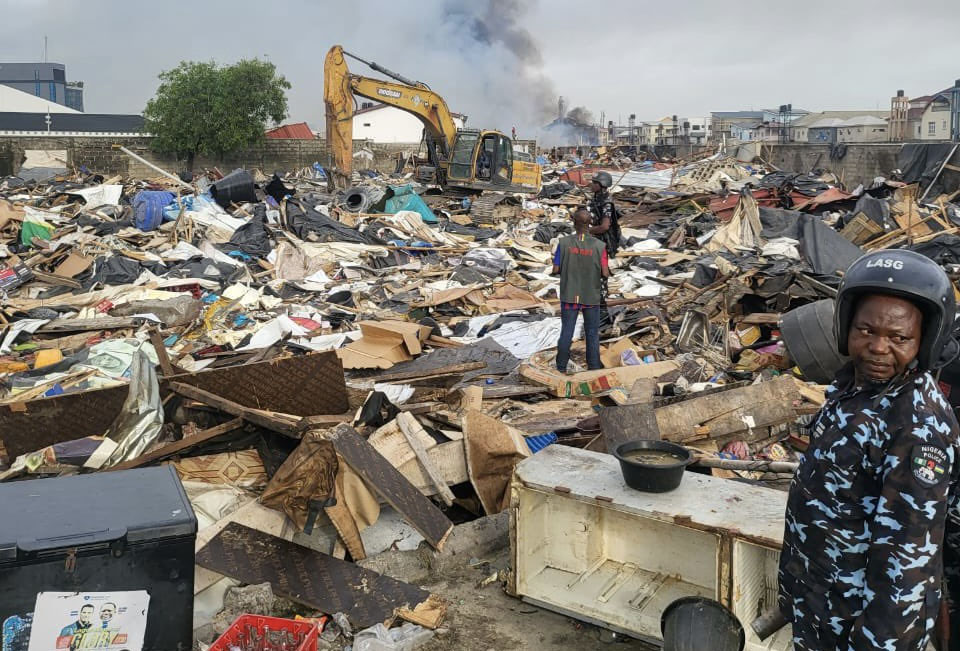
The Lagos State Government has commenced the controlled demolition of shanties and informal structures built beneath high-tension electricity lines in the Ikola community, Agbado Oke-Odo Local Council Development Area, following a violent clash that left four people dead.
The exercise is being coordinated by the Lagos State Emergency Management Agency (LASEMA) in collaboration with the Lagos State Police Command and the Rapid Response Squad (RRS).
The government said the operation is aimed primarily at removing structures located within the statutory right-of-way of high-voltage transmission lines, describing the settlements as a serious threat to public safety.
The intervention followed a violent incident at Power Line Bus Stop, Ikola, on Thursday, August 27, after a disagreement reportedly escalated into communal unrest.
Four adult men were killed during the violence, while several other people were reportedly injured.
The unrest also resulted in the destruction of several makeshift structures in the area, with a fire breaking out as the situation deteriorated.
LASEMA said emergency responders were alerted to the fire at about 1:52pm and arrived at the scene approximately 25 minutes later.
The Lagos State Fire and Rescue Service subsequently worked to contain the fire and prevent it from spreading further, including carrying out damping-down operations after the flames were brought under control.
Emergency medical responders, including personnel from the Agbado Oke-Odo Ambulance Service and Nigerian Red Cross Society, also attended to people affected by the incident.
READ ALSO:
- Benue varsity student arrested after allegedly pouring hot water on colleague
- Anambra Police Arrest 28-Year-Old Suspected Drug Dealer, Recover ₦5.8m Illicit Consignment
- You Can’t Reopen What Is Already Open — Tunji-Ojo Fires Back at Atiku
Security agencies, including the Nigeria Police Force, Nigerian Army, Nigeria Security and Civil Defence Corps and Lagos Neighbourhood Safety Corps, were deployed to the area to restore order and prevent further violence.
Authorities later reported that calm had returned to the community, although security personnel remained deployed to maintain peace.
The precise circumstances that triggered the confrontation remain subject to investigation.
LASEMA said the unrest brought renewed attention to the environmental and security challenges associated with the large number of structures located directly beneath high-voltage electricity infrastructure.
The agency’s Permanent Secretary, Dr Olufemi Oke-Osanyintolu, said the structures contravened applicable safety standards and exposed residents to potentially serious dangers.
According to the government, people living beneath high-tension power lines face risks including electrocution, fire outbreaks and structural collapse.
The government said the location of the structures also presents challenges for emergency response, particularly when fires or other emergencies occur in densely populated areas.
Following the unrest, LASEMA and other agencies commenced the controlled removal of structures within the designated power-line corridor.
Officials said affected residents were given adequate notice and time to evacuate the structures and retrieve their belongings before demolition commenced.
Heavy recovery equipment was subsequently deployed to clear the structures from the statutory right-of-way.
The government said the demolition was being conducted under security supervision and that personnel involved in the operation remained safe.
Oke-Osanyintolu stressed that the exercise was not directed at any ethnic group or community.
The clarification followed reports linking the recent violence to tensions between members of different ethnic communities living in the area.
The government maintained that the demolition was based on the location and safety risks associated with the structures, rather than the ethnicity, religion or background of the people occupying them.
“This intervention is therefore not targeted at any ethnic group or community, but at a dangerous structural reality that threatens everyone living in its path,” Oke-Osanyintolu said.
The state government acknowledged the importance of shelter and livelihoods but argued that these needs must be balanced against the responsibility to protect lives.
It maintained that no form of development can be considered sustainable where residents are exposed to avoidable and potentially fatal risks.
The Ikola operation has also highlighted the broader challenge of informal settlements in Lagos, where rapid urbanisation, population growth and housing pressures have contributed to the development of structures in locations originally reserved for infrastructure and public services.
Structures beneath electricity transmission lines are particularly sensitive because of the potential consequences of accidents involving high-voltage infrastructure.
The government has therefore maintained that removing buildings from such areas is necessary to protect residents and reduce the likelihood of preventable disasters.
However, the demolition also raises concerns about the effect of enforcement actions on residents who may have limited housing alternatives and whose livelihoods are tied to the affected locations.
The Lagos State Government said it would continue engaging community leaders, traditional rulers and other stakeholders in Ikola as part of efforts to restore confidence and promote peaceful coexistence.
Authorities have also appealed to residents to cooperate with security and emergency officials and avoid actions that could reignite tensions.
The government said its objective is to create a safer and more orderly community while preventing further loss of life.
The Ikola incident has consequently evolved into both a security and public safety issue, with the deadly clash exposing tensions within the community and the demolition highlighting the dangers of informal settlements beneath high-voltage power lines.
As investigations continue into the circumstances surrounding the deaths, authorities are expected to maintain security in the area and work with community representatives to address any remaining tensions.
For affected residents, attention is now likely to turn to issues of shelter, livelihoods and the future of the demolished structures.
For the government, however, the removal of the structures remains necessary to eliminate what it considers a significant and preventable threat to human life.
The situation in Ikola remains under monitoring as Lagos authorities combine security operations, emergency response and urban-planning enforcement in an effort to prevent further violence and improve public safety.
Deadly Ikola clash: Lagos demolishes shanties beneath high-tension lines
-

 News2 days ago
Tinubu, APC governors set October 1 target for cheaper transport fares nationwide
-
 Education2 days ago
2026 WAEC results: Official raises fresh concerns over irregularities, glitches
-
 metro3 days ago
Police Arrest Seven Over ₦3.6 Billion Crypto Fraud, Romance Scams
-
 metro1 day ago
Police Bust Organ Harvesting Syndicate in Nasarawa: Two Doctors, Two Others Arrested
-
 News2 days ago
This Is Not Christian Genocide – NSCIA, Says Borgu Attacks Show Nigeria Bleeds from All Sides
-
 metro18 hours ago
IMAX Lekki Attack: Two Dead as Machete-Wielding Man Storms Cinema in Lagos
-
 metro1 day ago
My love for my wife affected my work, earnings — Husband begs court to save marriage
-

 metro2 days ago
EFCC extradites two Nigerians to US over alleged sextortion linked to teen deaths