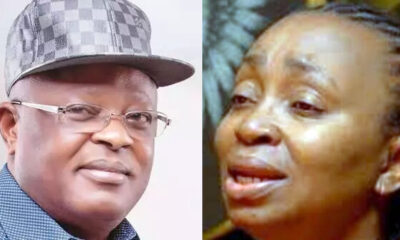
We inherited over 2,600 road projects worth N14tn, says Umahi
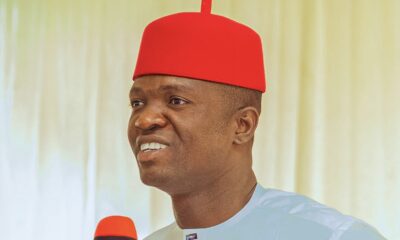
The minister of works, Dave Umahi, has put the the budget for road projects inherited from past administration at around N14 trillion, covering 18,000 kilometers.
The minister disclosed this while addressing journalists at the Presidential Villa, Abuja, after a meeting with President Bola Tinubu over the weekend.
Umahi, who said the roads included are 2,604 in number, further disclosed that the administration had paid N4 trillion out of the N14 trillion owed in contracts, adding that government had already identified funding sources to offset N4 trillion more of its outstanding debts, leaving N6 trillion funding gap.
However, some road projects that have lingered for about two decades were never appropriated and will, therefore, be terminated.
He said: “The ministry inherited a total of 2,604 projects, worth N14 trillion and for 18,000 kilometers of road, that’s what we had. Between when we came on board and now, about N4 trillion has been paid and so that is a balance of N10 trillion remaining.
“Now, in this N10tn, we have defined sources that could fund up to N4tn. So, we have a funding gap of about N6tn. That is what is there now.
“We have a number of programs for road development under the previous administration. We inherited all the projects; we have not dropped any of them. But curious to know that some of these projects have lasted for 20 years, some 10 years. In fact, in most cases, they were never appropriated throughout every tenure.
“So I went to seek Mr. President’s nod so that I will be able to terminate some of the projects that have stayed up to 10 years without any defined source of funding.”
He, however, lamented the current appropriation system for federal road projects, saying the piecemeal disbursement of funds to contractors is frustrating delivery, adding that he had already appealed to the President to engage with the National Assembly to prioritise projects.
“Just look at over 2600 projects, 18,000 kilometers of roads, and N14tn. That is huge! And the worrisome part of this is that even the ones that are being funded properly, the roads hardly last up to five years,” Umahi complained.
He noted that the short lifespan of roads necessitated his recent proposal to the President to redesign and construct yet-to-be-completed federal roads using reinforced concrete.
Umahi noted: “So I briefed Mr. President on what we are doing by introducing reinforced concrete technology for our road pavements.
However, Umahi vowed to “fight” entities poised to frustrate this plan, saying, “I know that there are a lot of fights from contractors, but I’m David, I’m known for fight and I will fight this because I’ve reported myself to Mr. President.”
Meanwhile, the minister said he had received the president’s blessings to adopt the concrete reinforced pavements for roads across the country.
He said: “Incidentally, Mr. President is also an infrastructure guru and he fully supports that we should use reinforced concrete for our road pavements.
“So there is no other place you can report me other than to report me to God. So Mr. President is supporting me that way. We’ll redesign our roads in reinforced concrete pavement.
“I’m aware that the contractors have been quarreling and arguing. So, I want to declare that I’m open to any kind of blackmail, but my eyes are on the ball. And my eyes are on how we can get Nigerians to have value for the money. That is the assignment President Bola Tinubu gave to me and I’m going to do that with the fear of God”, he said.
The minister also revealed that he had written the NNPC to release monies for the East-West Road, saying, “I know that’s what the Rivers people mentioned when they came to see Mr. President. So that road is going to be on concrete.”
Having toured the southeast and parts of the Northwest and Northcentral, he said he would now focus on the Southwest, particularly Lagos State, where works are ongoing on the Third Mainland Bridge, Carter Bridge, Liverpool Bridge, the Eko Bridge and Marine Bridge.
He stated: “I want to see things for myself and appraise the ongoing projects. I want to see who is doing a good job and who is doing a bad job. So I briefed Mr. President about that.”
We inherited over 2,600 road projects worth N14tn, says Umahi
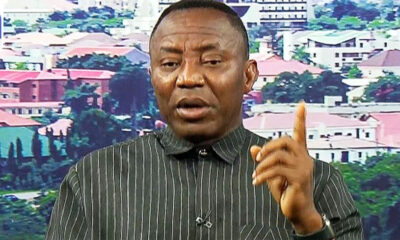
Chief Superintendent of Police (CSP) Iniedu Okokon, Force Public Relations Officer (FPRO)
Police Name CSP Iniedu Okokon New Force Spokesperson
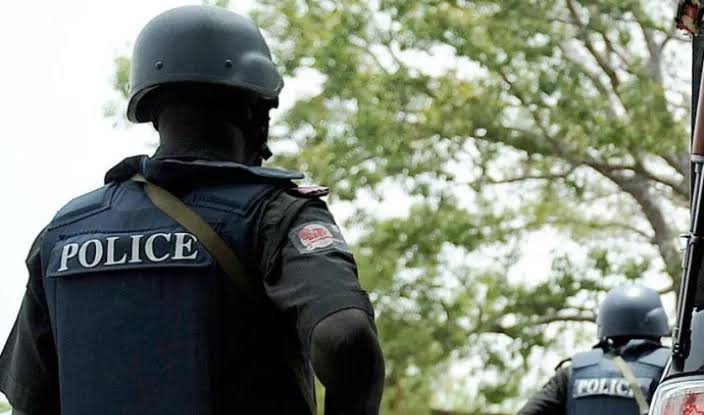
LAGOS — The Nigeria Police Force has appointed Chief Superintendent of Police (CSP) Iniedu Okokon as its new Force Public Relations Officer (FPRO), in a fresh reorganization that has seen another change in the Force’s communication leadership barely three months after the last appointment.
Okokon replaces Deputy Commissioner of Police (DCP) Anthony Placid, who was appointed police spokesperson shortly after the assumption of office of the 23rd Inspector-General of Police, Kayode Egbetokun’s successor, IGP Olatunji Disu.
The development has generated interest within security and policing circles due to the brief tenure of Placid as Force spokesperson. As of the time of filing this report, the police authorities had not issued an official statement explaining the reasons behind the latest change.
When contacted, Placid confirmed the development, acknowledging that he had been relieved of his duties as Force Public Relations Officer. However, he declined to provide further details on the circumstances surrounding the decision.
Sources at the Force Headquarters disclosed that Placid has been redeployed to the Lagos State Police Command, where he is expected to assume responsibility as head of the Finance and Administration Department.
The redeployment is believed to be part of ongoing restructuring efforts within the Nigeria Police Force under the leadership of Inspector-General of Police Olatunji Disu.
The office of the Force spokesperson had witnessed changes following the death of former Force Public Relations Officer, DCP Khan Salihu, who reportedly died after a brief illness. His passing created a vacuum in the police communication architecture, prompting a series of appointments and subsequent adjustments.
As the new Force spokesperson, Okokon is expected to immediately assume responsibility for the management of the Force’s public communication, media relations, and engagement with citizens across the country.
Prior to his appointment, Okokon served as head of the Police Complaint Response Unit (CRU), where he was credited with strengthening public complaint resolution mechanisms and enhancing accountability within the Force.
Meanwhile, the recently established Force New Media Unit will continue to operate under the leadership of CSP Aliyu Giwa, who is expected to maintain oversight of the police’s digital communication platforms and online engagement strategy.
Observers say the latest reshuffle underscores the determination of the police leadership to reposition strategic departments as the new administration consolidates its operational and administrative agenda.
Further clarification from the Force Headquarters is expected in the coming days regarding the rationale behind the changes.
Police Name CSP Iniedu Okokon New Force Spokesperson
JUST IN: Iran Reimposes Strait of Hormuz Blockade, Suspends Nuclear Talks With US
Tehran announced a renewed closure of the strategic Strait of Hormuz on June 19, accusing Washington of violating a newly signed ceasefire agreement as Israeli forces continue military operations in southern Lebanon, casting doubt over a fragile diplomatic breakthrough. In a statement broadcast through maritime radio channels, Iran’s Islamic Revolutionary Guard Corps declared that the waterway would remain shut until three key conditions are met: Israel’s complete withdrawal from Lebanon, the full lifting of the US naval blockade, and the withdrawal of American forces from the Persian Gulf and the region. The IRGC warned all commercial and private vessels to avoid the strait, stating that “any vessel that defies this directive will be targeted.” The dramatic escalation came just hours after the planned first round of US-Iran nuclear negotiations in Switzerland was cancelled, with hardline elements within Iran reportedly opposing participation until Israel withdraws from southern Lebanon. A regional source claimed that hardliners insisted on Israel’s complete withdrawal before any diplomatic engagement could proceed.
The reimposed blockade appears to stem from ambiguities in the 14-point Islamabad Memorandum of Understanding, signed electronically on June 17 by US President Donald Trump and Iranian President Masoud Pezeshkian. The agreement committed both sides to an “immediate and permanent termination of military operations on all fronts, including in Lebanon,” while also requiring the US to “begin the removal of its naval blockade” immediately, with a full end within 30 days. This phased approach has allowed Iran to argue that the blockade has not yet been “completely” lifted. Simcha Brodsky, president of the open-source intelligence organization OSINT613, told the New York Post: “What we’re seeing is a direct result of the wording in the US-Iran MoU. The deal lifts the US blockade in phases, fully within 30 days, so the US is still in the middle of that process by design.” Brodsky added: “Iran has now linked the Israel-Lebanon conflict to that justification, effectively halting the agreement and drawing Israel into a deal it neither approved nor negotiated.” On June 18, the US Central Command had formally announced it had lifted the two-month blockade of Iranian ports. However, it remains unclear why the IRGC believes the lifting is not yet “complete.”
Despite the ceasefire provisions in the US-Iran memorandum calling for an end to all hostilities in Lebanon, Israeli forces have continued military operations against Hezbollah. Lebanese authorities reported that nearly 50 people were killed and close to 100 wounded in a wave of Israeli airstrikes across southern Lebanon and the eastern Bekaa Valley on Friday. The southern towns of Harouf and Haboush suffered the highest death tolls, with nine and seven fatalities respectively, while at least two children were reported killed. Earlier reports from the Health Ministry’s Emergency Operations Center confirmed at least 24 deaths and 33 wounded from intensive strikes across 11 towns. Israeli Prime Minister Benjamin Netanyahu insisted that Israeli forces “will remain in southern Lebanon for as long as security requires,” directly contradicting the memorandum’s call for an immediate end to hostilities. The Israel Defense Forces have also published a new map showing an expanded zone of occupation, with troops deployed more than 6 miles across the Lebanese border, including areas north of the Litani River. Lebanese President Joseph Aoun condemned the latest strikes, saying they undermined efforts to consolidate the ceasefire and represented a “dangerous escalation.” Lebanon’s Parliament Speaker Nabih Berri reaffirmed Lebanon’s commitment to the ceasefire agreement, provided that Israel fully complies with its terms.
US President Donald Trump responded to the developments by claiming the conflict had significantly weakened Iran’s military capabilities. In a post on Truth Social, he wrote: “The War has diminished Iran! It doesn’t, any longer, have an Air Force, a Navy, Antiaircraft Equipment, Radar, or practically anything else.” Trump dismissed criticism from Democrats over his administration’s handling of the conflict, stating: “We didn’t meet out of desperation, Iran did. They are FINISHED! We’ll play out the 60 days. They get no money, not ten cents!” He also described Iran’s signing of the memorandum as “unconditional surrender” in an interview with Axios.
Despite Iran’s announcement of a blockade, maritime traffic through the Strait of Hormuz showed signs of recovery following the signing of the US-Iran agreement. Data from analytics firm AXS Marine showed 25 commercial vessel crossings on June 18—the highest single-day count since mid-April and more than five times the average recorded during the first ten days of June. Four supertankers alone carried at least 8 million barrels of crude oil through the strait, with shipments headed primarily to Japan, South Korea, Pakistan, Singapore, India, and China. The French-flagged LNG tanker Mraikh transported 169,000 cubic meters of LNG from Qatar to Pakistan. However, traffic remains well below the pre-conflict level of about 120 daily crossings, and the US navy-led Joint Maritime Information Center advised vessels to avoid the Traffic Separation Scheme because of mine risks as clearance operations continue. Ship broker Braemar noted in a statement: “Risks range from the danger of mines… to that of getting stuck in the Mideast Gulf should tempers flare and Iran block Hormuz once again.”
JUST IN: Iran Reimposes Strait of Hormuz Blockade, Suspends Nuclear Talks With US
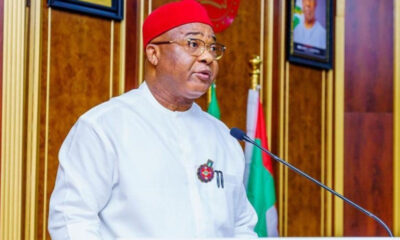
Minister of Information and National Orientation, Mohammed Idris
Take Terrorists Off Front Pages, FG Tells Nigerian Media Outlets
Minister Mohammed Idris calls for responsible journalism at NUJ-DSS National Security Summit in Abuja
ABUJA, Nigeria – The Federal Government has appealed to Nigerian media organisations to stop giving prominent coverage to terrorists, bandits and other criminal groups, warning that such publicity inadvertently amplifies their activities and undermines national security efforts.
Minister of Information and National Orientation, Mohammed Idris, made the appeal on Thursday during a two-day National Security Summit organised by the Nigeria Union of Journalists (NUJ) in collaboration with the Department of State Services (DSS) in Abuja. The summit, themed “Media and Security Agencies as Partners in Nation Building,” brought together media practitioners, security officials and communication experts to discuss the role of journalism in strengthening national security.
Idris said while the administration of President Bola Tinubu remains committed to press freedom, journalists must exercise responsibility in reporting security-related issues. “Yes, we have to do our work; we have to report whatever happens, but you must know that the best reporter, the best editor, is the one who knows what not to report in the interest of nation-building,” he stated. The minister urged editors to reduce the prominence given to reports of attacks and criminal activities, arguing that terrorists often seek publicity through media coverage. “Please, take these terrorists and criminals off your front pages. This is what they crave, free of charge. It saddens me when I see our front pages reporting the activities of these criminals while underplaying the achievements of our security agencies,” he added.
According to Idris, a secure and peaceful nation is essential for the survival and growth of the media industry. He called on journalists to highlight the sacrifices and successes of security personnel who continue to risk their lives to protect the country. “We must have a Nigeria to report first before we can even have a union or any other media organisation. It is our collective responsibility to ensure that this nation survives,” he said.
The minister noted that Nigeria continues to face complex security threats, including terrorism, banditry, cybercrime, organised crime, misinformation and separatist agitations, all of which require coordinated responses. He stated that sustained operations have weakened terrorist networks in the North-East, while intensified efforts against banditry and kidnapping in the North-West and North-Central have produced positive results. According to him, the government has invested in modern equipment, surveillance systems, intelligence infrastructure and capacity building to enhance the effectiveness of security operations. Beyond military measures, the administration is addressing underlying causes of insecurity through economic reforms, youth empowerment initiatives, infrastructure development, education and social intervention programmes.
On education, Idris said more than 1.3 million Nigerian students have benefited from the National Education Loan Fund (NELFUND) , which was introduced to ensure that financial difficulties do not prevent young Nigerians from accessing higher education. Reports indicate that over ₦161.97 billion has been disbursed in 2026, including ₦89.94 billion paid directly to public tertiary institutions and ₦72.03 billion transferred into students’ bank accounts as monthly upkeep stipends. He further disclosed that the government is working on improved welfare packages for media professionals to enhance their productivity and well-being.
The minister commended the media industry’s support for the country’s digital broadcasting transition, describing the recent launch of the Digital Switch Over (DSO) as a major milestone achieved through collaboration between government and stakeholders. The platform was officially launched on Wednesday, June 17, 2026, at the NIGCOMSAT headquarters in Abuja, marking a significant step in the modernisation of Nigeria’s broadcasting industry after over a decade of lapsed deadlines. The initiative is projected to serve about 40 million households and generate more than N600 billion in economic value. Idris described the DSO as part of a broader national effort to build a more connected and competitive Nigeria, noting that the government is pursuing a hybrid broadcasting model combining Digital Terrestrial Television, Direct-to-Home satellite delivery, and digital application-based platforms.
In his remarks, NUJ National President Alhassan Yahya said the summit was designed to strengthen cooperation between journalists and security agencies in the interest of democracy and national development. Yahya praised the leadership of the DSS, stating that relations between the agency and the media have improved significantly in recent years. “It may interest you to know that in the last one and a half years, there has been no record of intimidation or harassment by state services in this country,” he said.
Also speaking, President and Chairman of Council of the Nigerian Institute of Public Relations (NIPR) , Dr Ike Neliaku, described the media and security institutions as critical pillars of Nigeria’s democracy. Neliaku announced that Nigeria had secured the hosting rights for the World Public Relations Forum scheduled for November 2026, marking the first time the event will be hosted in Sub-Saharan Africa. The forum is expected to bring communication professionals from 126 countries to Nigeria.
Meanwhile, President of the Nigeria Chapter of the International Press Institute (IPI) , Musikilu Mojeed, stressed that national security and press freedom should not be viewed as competing interests. According to him, democratic societies require both values to thrive, warning that security without accountability could encourage abuse, while freedom without security cannot be sustained. “National security and press freedom are not opposing goals; they are mutually reinforcing pillars of democratic governance,” Mojeed said. He noted that tensions between journalists and security agencies are inevitable because both institutions pursue different objectives, but argued that the task of democratic institutions is not to eliminate such tension but to manage it responsibly through dialogue, professional accountability structures and judicial processes.
The summit was attended by representatives of major security agencies, senior media executives, former NUJ presidents and public relations practitioners from across the country.
Take Terrorists Off Front Pages, FG Tells Nigerian Media Outlets