

Opinion
Rise of right-wing economic populism in Nigeria – Farooq Kperogi
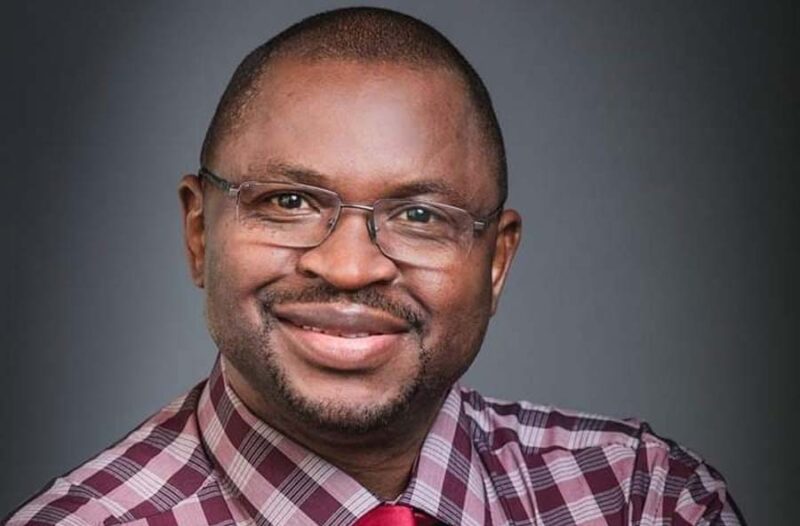
Rise of right-wing economic populism in Nigeria – Farooq Kperogi
Over the last few months, I have unconsciously transitioned from keyboard diarrhea to mental constipation and have pulled back from social media engagements. I even struggle to write my weekly columns.
It’s precisely because toxic, unthinking, IMF-manufactured, right-wing economic populism has become hegemonic and taken firm roots in Nigeria. Blaming Tinubu for his right-wing economic policies while ignoring the fact that his opponents subscribe to the same policies is the kind of hypocrisy my mental, emotional, or ideological constitution is incapable of tolerating.
Right-wing or conservative economic populism manifests differently in different countries, but its core lies in weaponizing the general population’s concerns and frustrations, particularly around economic issues, to advocate poisonous, anti-people, market-centric, neoliberal economic policies while blaming an invisible elite or establishment class that supposedly controls power and resources to the detriment of the majority.
In Nigeria, conservative economic populism consists of the intentionally deceitful and absurd but nonetheless successful (at least for now) demonization of subsidies, especially petrol subsidies.
Nigeria’s elite-created economic woes are fraudulently attributed to the dispensation of subsidies. The masses of unsuspecting chumps in the country are then whipped into a senseless frenzy about an invisible, unidentified class of “subsidy thieves” who putatively suck up our commonwealth through petrol subsidies and who would wither and perish when subsidies are removed.
READ ALSO:
- Naira drops further to N1,620/$
- Just in: Ruthless Anthony Joshua knocks out Francis Ngannou in round two
- First Lady recommends death penalty for kidnappers
That’s classic right-wing economic populism. Well, experience is showing that it’s actually the masses that are withering and perishing after petrol subsidies have been removed. An acquittance who passionately opposed my recommendation to Tinubu to not remove petrol subsidies in my April 29, 2023, column by regurgitating the banal talking points of hard-hearted neoliberal hawks reached out to me a few days ago to admit that he was a gormless fool to believe the propaganda that petrol subsidies didn’t benefit the masses.
It took the collapse of his small transportation business and the descent of his previously thriving relatives into the dark depths of despair and poverty in less than one year after the removal of petrol subsidies for him to come to the realization that citizens of every country need subsidies.
Another central plank of Nigerian right-wing economic populism is the advocacy for the devaluation of the naira. It’s also known by the fancy name of “floating the naira.” The idea that the naira is “over-valued” and should be allowed to find its true worth in the crucible of demand and supply is a standard arsenal in the rhetorical armory of conservative economic populists in Nigeria.
Yet another favorite shtick of the treacherous tribe of neoliberal vampires in Nigeria is to capitalize on the well-known inefficiency of civil service bureaucracies to advocate the privatization of everything and the mass retrenchment of workers.
Yet these are really old, discredited Structural Adjustment Program policies that the IMF and the World Bank imposed on developing countries, which devastated national economies, caused the untimely deaths of hundreds of thousands of people, which the IMF was compelled to slyly apologize for amid mounting evidence of their tragic failure.
The same rotten and venomous policies have been repackaged, aromatized, and re-presented to developing countries as new and effective elixirs. Every developing country that has embraced them is now coping with potentially explosive internal turmoil.
Like Nigeria, Egypt recently accepted to devalue its currency by more than 68 percent and remove subsidies that lighten the burden of existence for ordinary folks in exchange for an $8 billion loan from the IMF.
READ ALSO:
- Man, 80, commits suicide in Lagos
- Bodies of Wigwe, wife, son arrive ahead of burial in PH today
- Gunmen open fire on Kaduna worshippers during Friday prayer, kill two
Everyone within striking distance of becoming president in Nigeria in 2023 subscribed—and still subscribes—to the consensus that the IMF and the World Bank are inviolable economic oracles that must not be disobeyed, that subsidies must be eliminated and the poor be left to fend for themselves, and that the market is supreme and should be left to determine the value of everything.
In fact, the other day, PDP presidential candidate Atiku Abubakar put out a press statement titled “Argentina’s Javier Milei approach to reforms should serve as a lesson for Tinubu” where he extolled the dangerously right-wing Argentinian president Javier Milei whose rightwing economic populist policies are destroying the fabric of his country.
“I read a recent report in Reuters titled: ‘Argentina’s market double down on Milei as investors ‘start to believe’,” he wrote.
Well, the same Western financial establishment is already praising the outcome of Tinubu’s economic policies. A March 8, 2024, report from Bloomberg, for instance, has said that “Foreign investor demand for Nigerian assets surges as reforms instituted by President Bola Tinubu’s administration starts paying off.”
Similarly, one David Roberts, identified as a former British Council Director in Abuja, bragged the other day that Nigeria’s economy “posted a GDP growth of 3.46% in quarter 4” as a result of Tinubu’s economic reforms.
He wrote: “Why would a country with a severe infrastructural deficit invest more money on a wasteful expenditure such as cheap petrol, instead of building schools, hospitals, dams and a national railway system? It is evident that it had to go.
“We joined the World Bank and the International Monetary Fund in saying as much to the Nigerian government. And at long last, it is gone.”
People outside Nigeria reading about Nigeria in the Western financial press would think Nigerians are now living in El- Dorado as a result of Tinubu’s “reforms”—just like Atiku thinks a favorable Reuters story about the anti-people economic policies of Milei, who is called the “Madman of Argentina,” is already yielding excellent outcomes.
If you do the bidding of the Western establishment, they will always make up statistics to show that your economy has grown. I called attention to this in my June 28, 2023, column titled, “Why Tinubu’s Hiring and Firing Frenzy Excites Nigerians.”
I wrote: “What shall it profit a country when it pursues policies that cause the economy to ‘grow’ but cause the people to growl? After the economy has ‘grown’ but the people still groan, where is the growth? The most important growth isn’t the rise in abstract, disembodied, World Bank/IMF-created metrics but in the improvement of the quality of life of everyday folks.”
Milei’s Argentina that Atiku is praising is almost in the same right-wing economic hellscape as Nigeria is. Like Tinubu, Milei began his presidency by removing subsidies for petrol and transportation and devaluing the Argentinian peso by more than 50 percent. In addition, he threw scores of workers into unemployment when he reduced the number of ministries in the country.
He is so market-centric he scrapped a whole host of rules designed to reign in the greed and exploitation of private enterprises. He did this by getting the parliament to approve the principle of “delegated powers” to the executive for one year, which allows him to rule by decree like a military dictator in the name of “economic urgency.”
The result? Like in Nigeria, most Argentinians are having a hard time finding food to eat. A February 1, 2024, CNN story captures it: “‘I don’t know how I will eat.’ For the workers behind Argentina’s national drink, Milei’s reforms are turning sour.”
Argentinian workers periodically go on strike to protest Milei’s punishing right-wing policies. On February 28, all flights were cancelled in the country because air travel workers went on a crippling 24-hour strike.
A March 4, 2024, Bloomberg report said Milei’s policies had caused spending to plunge at shops in Argentina, that firms were seeing double-digit sales declines for third straight month, that the worth of salaries had plummeted amid a paralyzing 250% inflation, and that recession was deepening in the country.
The lead to the story says it all: “Consumers in Argentine are running out of options to shield themselves from runaway price increases as President Javier Milei’s austerity measures send the country deeper into recession.”
That’s Atiku’s exemplar for Nigeria. Peter Obi is, of course, no different. Tinubu, Atiku, Obi, and in fact Yemi Osinbajo are united in their love for rightwing economics, which invariably leads to an increase in poverty, suffocation of workers, rolling back of welfare for common people, etc.
In a perverse way, they are actually worse than Buhari because they are self-conscious conservative economic ideologues. Buhari is merely a know-nothing, bungling, kakistocratic power monger.
The real tragedy is that the vast majority of Nigerians who are ensconced in the narrow ethno-religious political silos built around the personalities of the major 2023 presidential candidates don’t realize that on economic policies, which is what really matters, Tinubu, Atiku, Obi, and Osinbajo are more alike than unlike.
Sadly, Nigerian leftists, who used to be the bulwark against the dangers of conservative economic totalitarianism, have either been coopted or silenced. Only Femi Falana, Majeed Dahiru, I, and a few others consistently stand up to the forces of economic conservatism.
This state of affairs will ensure that Tinubu’s successor will be another neoliberal ideologue who will bludgeon his way to the presidency using religion and ethnicity as cudgels. When he deepens the misery he inherits, he will blame his predecessor for not being a faithful practitioner of the neoliberal gospel. His own successor will replicate his template.
After three terms of this right-wing baloney, Nigeria will be irretrievably gone. The time to pivot from the IMF and the World Bank and to reject everyone who is their poodle is now.
Farooq Kperogi is a renowned Nigerian newspaper columnist and United States-based Professor of Journalism.
Rise of right-wing economic populism in Nigeria – Farooq Kperogi







Opinion
2027: Competence, Not Zoning, Should Decide Nigeria’s Next President — Imasuagbon
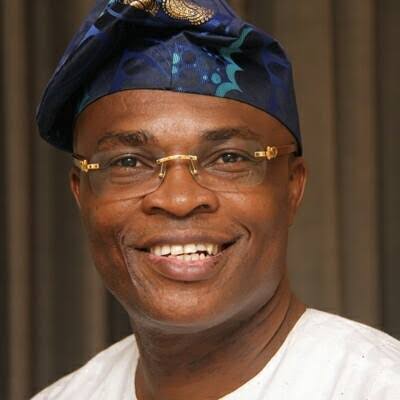
Nigerians should look beyond ethnicity, region and the longstanding debate over rotational presidency when choosing the country’s next leader, according to a chieftain of the African Democratic Congress (ADC), Kenneth Imasuagbon.
The former Edo State governorship aspirant said the priority ahead of the 2027 election should be finding a president with the ability to confront Nigeria’s economic, security and infrastructure challenges.
Speaking to journalists in Benin, Imasuagbon argued that presidential rotation is not a requirement of the Nigerian Constitution and should therefore not outweigh the question of competence.
He said voters should be more concerned about replacing poor schools with better ones, improving healthcare and addressing hardship than debating where the next president comes from.
Imasuagbon specifically appealed to voters in the South to support former Vice President Atiku Abubakar, who is contesting the 2027 presidency on the ADC platform.
According to him, Atiku has demonstrated the experience and determination needed to improve the country, describing the former vice president as someone capable of promoting national unity and fairness.
He also accused the Bola Tinubu administration of worsening economic pressure through policies including the removal of fuel subsidy, while expressing concern about the condition of roads, electricity and other infrastructure.
Imasuagbon argued that the next administration must focus on practical improvements in areas such as power, transportation, employment, security and public services.
The ADC chieftain also dismissed the idea that the ruling All Progressives Congress (APC) would automatically benefit from its incumbency advantage in 2027.
He maintained that the electorate ultimately determines the outcome of an election, arguing that voters could change the political direction of the country if they were determined to do so.
Imasuagbon further criticised what he described as regional and ethnic considerations in the distribution of political appointments and opportunities, insisting that the next president should give Nigerians across different parts of the country a sense of belonging.
His comments come as political parties and their candidates intensify preparations for the 2027 presidential election.
Opinion
Lesson from Dotun Oladipo’s Brave Daughters, by Bamidele Johnson
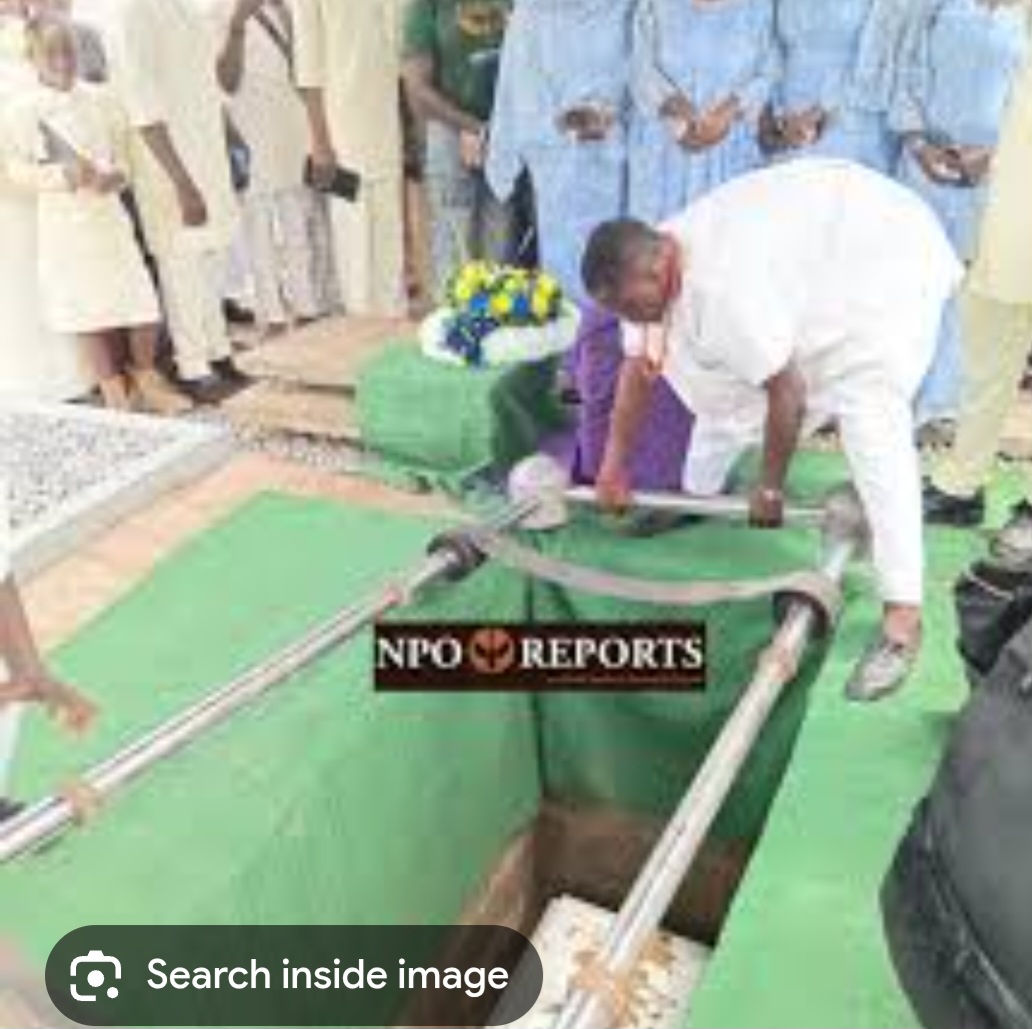
Lesson from Dotun Oladipo’s Brave Daughters, by Bamidele Johnson
I hope to grow old. I want to see my kids become real adults, find their own feet, make mistakes, recover from them, and perhaps one day complain that their own children are giving them grey hairs. I want that plainly stated before anything else, as everything that follows might read as a man agreeing to an early exit rather than a man simply being honest about the odds.
I want the decades. I want to become the grandfather who repeats the same stories until nobody bothers correcting him anymore. But wanting a thing and being granted are different things. The last year has made that difference harder to ignore than I would like. I have lost many friends recently to keep thinking that optimism is my natural resting state. Some of these men had better blood pressure than mine, better habits, better everything that is supposed to count. It did not save them.
There is no formula I know that reliably separates the men who make it to 70 from those who do not. Anyone who says he knows one is selling something. So, I do not assume that old age is an already booked destination. Even if I once did, which I doubt, the last three years have cured me of such an illusion. As such, I treat it as a hope rather than an expectation, and I have found that a more honest way to live.
It is exactly why I want something placed on record now, while I am still able to place things on record, rather than leave it for people to guess what my wishes were in the fog of a funeral week. If I do not make old bones, my children are not to be asked to read tributes at my funeral. Not one line, however short, however lovingly written.
This, for me, was settled today rather than re-opened. At Dotun Oladipo’s funeral service, his three daughters took turns to read their tributes to their dad, and I found myself watching them with awe. There was a kind of strength in them that I do not possess. It is the strength needed to stand in front of a hall brimming with grieving adults and speak about a man they have just lost. Forever. Strength, however, is not the same as ease. I could see plainly what that strength was costing them as they read. Their voices caught. Their composure held and then did not hold and then held again through sheer will.
In front of them, in the pews, men and women considerably older than them came undone in ways the girls themselves were somehow managing to resist. I went mightily close. Some of the sobbing was quiet, the type people try to fold into a handkerchief. Some of it was not quiet at all, the kind that announces itself whether or not you want it.
Those young women honoured their father with a grace that is beyond me. What they did was astonishing. So, what I am attempting is an observation of a custom I have now watched wound people. This was not the first time I had watched this particular ritual extract more than it should from people already running on fumes. I saw an earlier and harder version of it at a friend’s wake back in 2015.
The first son was called forward to read his father’s tribute, and he could not do it. He tried, but the words would not come, and he stood there in front of a crowd of mourners, with his grief simply refusing to organise itself into sentences. The officiating minister, rather than releasing him from the task, urged him to continue. I sat fizzing with sorrow and ire. He could not go on and, eventually, the minister accepted, but not before insisting a while longer than it should have reasonably taken. His younger brother was called up next, presumably on the theory that if one grieving son could not manage it, maybe another one could. He flunked it in the same way. Grief does not distribute itself more conveniently among siblings just because a programme has been printed and needs to be followed.
I have turned that memory over many times since, trying to work out why this part of the rites is treated as mandatory in the first place. I have not found a satisfying answer. Maybe it comes from a belief that a child’s words carry more weight than anyone else’s, which may even be true, but weight is exactly the problem when those carrying it are struggling to hold themselves together with nothing but adrenaline and the fear of dissolving in public.
Maybe it is simply inertia, the reason we still do a hundred things at funerals that nobody can explain the original purpose of. Either way, I have stopped looking for the justification. I no longer think one exists that is good enough to weigh against what I watched happen to that boy in 2015.
So, let this stand as my instruction rather than my preference, the kind of thing I would rather state plainly now than leave for my children to infer later from how uncertain I sound when the subject comes up in passing. If I do not get the old age I am hoping for, my children will not be asked to read a single word over my body. Someone else can speak for me. A friend, a stranger with a steadier voice and a smaller stake in the loss, anyone whose grief will not be quite so total that standing upright becomes almost impossible.
My children, of course, will sit in front and fall apart if that is what the day requires of them, but without the microphone. That, at least, is one small mercy I intend to arrange for them while I am still here to arrange it.
Dotun deserved every bit of the send-off his daughters gave him today, and I suspect he would have been the first to tell them to sit down and let someone else carry the weight for a while. He did not get a say in that, as none of us ever do once we are the ones being spoken of rather than the ones speaking. Rest well, Dotun. You raised three young women whose strength I will not soon forget. That alone says everything worth saying about the man you were.
Opinion
‘Tinubu Will Win Again in 2027’ — Charismatic Bishops’ Secretary
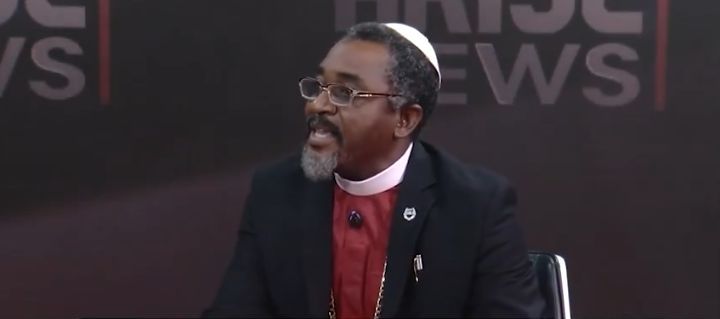
‘Tinubu Will Win Again in 2027’ — Charismatic Bishops’ Secretary
A senior Nigerian cleric, Archbishop Chivir Chianson, has declared that President Bola Tinubu will retain the presidency after the 2027 general election, attributing the prediction to a message he said came from God.
Chianson, who serves as Secretary General of the Charismatic Bishops’ Conference of Nigeria, made the statement while appearing on Arise Television on Saturday.
Rather than basing his prediction on political calculations, the archbishop said his confidence came from what he described as the prophetic role of bishops.
He maintained that the conference had previously spoken about Tinubu’s political future based on what he said was divine revelation and that the President would return for another term.
Chianson also predicted that Tinubu’s performance would improve if he wins the 2027 election.
READ ALSO:
- DSS warns Osun churches, mosques, markets over alleged terrorist attack plot ahead of 2027
- ‘Tinubu Will Win Again in 2027’ — Charismatic Bishops’ Secretary
- Fake miracles, bogus grants: How clerics allegedly fleece Nigerians of millions
Addressing the political opposition, the cleric said the bishops could not be blamed if rival parties failed to unite or organise themselves effectively ahead of the election.
He also sought to clarify the position of the bishops when dealing with government, saying their role in speaking truth to power did not mean they should approach political leaders with hostility or disrespect.
According to him, the Constitution, alongside their religious convictions, should guide how they engage the President and the country.
Chianson said he was sufficiently confident in his prediction to promise that he would return to the Arise TV studio after the 2027 election, when he expects the result to demonstrate that the bishops’ prophecy was correct.
His comments add a religious dimension to the increasingly active political conversation surrounding the 2027 presidential race.
‘Tinubu Will Win Again in 2027’ — Charismatic Bishops’ Secretary
-

 International2 days ago
Islamic Council Condemns Attempted Attack on Holy City of Mecca
-

 metro3 days ago
Lagos Power Outage: Ikeja Electric Blames TCN as Businesses, Homes Groan
-
 News2 days ago
Keep Politics Out of My Office — Ogbomoso Grand Chief Imam Warns Politicians, Bloggers
-

 metro2 days ago
Niger Mosque Abductions: Terrorists Execute 30 of 500 Captive Muslim Worshippers
-

 International3 days ago
US Court Blocks Trump Visa Rule Limiting Stay of Foreign Students, Journalists
-

 Entertainment2 days ago
BREAKING: Olu Jacobs Dies at 84, Atiku Mourns Cultural Icon
-
 metro3 days ago
Fatal NURTW Leadership Clash in Osun Leaves Two Dead; State Orders Park Shut Down
-

 Business1 day ago
Fuel Prices Climb to ₦1,500 per Litre Across Nigeria, Sparking Calls for Urgent Action