

News
SERAP sues Wike, 36 govs over N5.9tn, $4.6bn loans
SERAP sues Wike, 36 govs over N5.9tn, $4.6bn loans
Socio-Economic Rights and Accountability Project (SERAP) has filed a lawsuit against Nigeria’s governors and the Minister of the Federal Capital Territory, Abuja, Mr Nyesom Wike “over their failure to account for N5.9 trillion and $4.6 billion loans obtained by their states and the FCT, and to publish copies of the loan agreements, including details and locations of projects executed with the loans.”
The suit followed the disclosure last month by Governor Uba Sani of Kaduna State that the immediate past administration of Nasir El-Rufai left $587m, N85bn debt and 115 contractual liabilities, making it impossible for the state to pay salaries.
In the suit number FHC/ABJ/CS/592/2024 filed last Friday at the Federal High Court, Abuja, SERAP is asking the court to “direct and compel the governors and Mr Wike to account for N5.9trn and $4.6bn loans obtained by their states and the FCT and to publish copies of the loan agreements, location of projects executed with the loans.”
SERAP is also asking the court to “direct and compel the governors and Mr Wike to invite the Economic and Financial Crimes Commission (EFCC) and the Independent Corrupt Practices and Other Related Offences Commission (ICPC) to investigate the spending of all the loans obtained to date by their states and the FCT.”
In the suit, SERAP is arguing that “It is in the public interest to grant the reliefs sought. Nigerians have the right to see and scrutinise the loan agreements and know the details of how the domestic and external loans obtained by the governors and FCT minister are spent.”
According to SERAP, “Opacity in the spending of the loans obtained by the governors and Mr Wike would continue to have negative impacts on the fundamental interests of the citizens.”
SERAP is also arguing that, “Many states and the FCT are reportedly spending public funds which may include the loans obtained by them to fund unnecessary travels, buy exotic and bulletproof cars and generally fund the lavish lifestyles of politicians.”
READ ALSO:
- Chelsea thrash West Ham to stay on track for Europe
- Poor power supply: Your cup is full, IPOB tells Enugu DisCo
- Nigerian soldier accused of sleeping with colleague’s wife dismissed
SERAP is also arguing that, “Many states and the FCT are also allegedly mismanaging public funds which may include domestic and external loans obtained from bilateral and multilateral institutions and agencies.”
According to SERAP, “Many states and the FCT reportedly owe civil servants’ salaries and pensions. Several states are borrowing to pay salaries. Millions of Nigerians resident in the state and FCT continue to be denied access to basic public goods and services such as quality education and healthcare.”
According to SERAP, “Transparency in the spending of the loans obtained by the states and FCT is fundamental to increase accountability, prevent corruption, and build trust in democratic institutions with the ultimate aim of strengthening the rule of law.”
The suit filed on behalf of SERAP by its lawyers Kolawole Oluwadare, Kehinde Oyewumi and Ms Valentina Adegoke, read in part: “States and the FCT should be guided by transparency and accountability principles and proactively account for the loans obtained and publish copies of the loan agreements.”
“Widely publishing copies of the loan agreements and spending details of the loans obtained would ensure that persons with public responsibilities are answerable to the people for the performance of their duties in the management of public funds.”
“State governors and Mr Wike cannot hide under the excuse that the Freedom of Information Act is not applicable to their states and the FCT. The legal obligations to publish the information sought are also imposed by the provisions of the Nigerian Constitution and the African Charter on Human and Peoples’ Rights.”
“According to Nigeria’s Debt Management Office, the total public domestic debt portfolio for the country’s 36 states and the Federal Capital Territory is N5.9 trillion. The total public external debt portfolio is $4.6 billion.”
“The domestic and external loans obtained by the states and the FCT are vulnerable to corruption and mismanagement. The states and FCT have a responsibility to ensure transparency and accountability in how any loans obtained by the states and FCT are spent, to reduce vulnerability to corruption and mismanagement.”
“Directing and compelling the states and FCT to publish copies of the loan agreements would allow Nigerians to scrutinise them, and promote transparency and accountability on the spending of public funds including the loans obtained.”
READ ALSO:
- Just in: List of ex-governors under probe over N2.187tn fraud fabricated, says EFCC
- Nollywood veteran Shan George weeps as fraudster clears ₦3.6m from her account (VIDEO)
- Haaland four goals propel Man City to 5-1 victory against Wolves
“Providing and widely publishing the details of the spending of the domestic and external loans obtained by the states and FCT would enable Nigerians to effectively and meaningfully engage in the management of the loans.”
“The constitutional principle of democracy also provides a foundation for Nigerians’ right to know the details of loan agreements and how the loans obtained are spent. Citizens’ right to know promotes openness, transparency, and accountability that is in turn crucial for the country’s democratic order.”
“The effective operation of representative democracy depends on the people being able to scrutinize, discuss and contribute to government decision making, including on the spending of loans obtained by the states and FCT.”
“To do this, they need information to enable them to participate more effectively in the management of public funds by their state governments and the FCT.”
“The public interest in obtaining information about expenditures relating to the loans obtained by the states and FCT outweighs any privacy or other interest.”
“The oversight afforded by public access to such details would serve as an important check on the activities of the states and FCT and help to prevent abuses of the public trust.”
“There is a significant risk of mismanagement or diversion of funds linked to loans obtained by state governments and the FCT. The accounts of Nigeria’s 36 states and the FCT are generally not open to public scrutiny.”
“The Nigerian Constitution, human rights and anticorruption treaties to which Nigeria is a state party also impose obligations on the states and FCT to prevent mismanagement or diversion of public funds including the loans obtained.”
“Many years of allegations of corruption and mismanagement of public funds including the loans obtained by the states and FCT have contributed to widespread poverty, underdevelopment and lack of access to public goods and services.”
No date has been fixed for the hearing of the suit filed by SERAP.
SERAP sues Wike, 36 govs over N5.9tn, $4.6bn loans








News
Court remands alleged ‘fake PFIPC DG’ Adeyemi in Kuje over forgery
Court remands alleged ‘fake PFIPC DG’ Adeyemi in Kuje over forgery
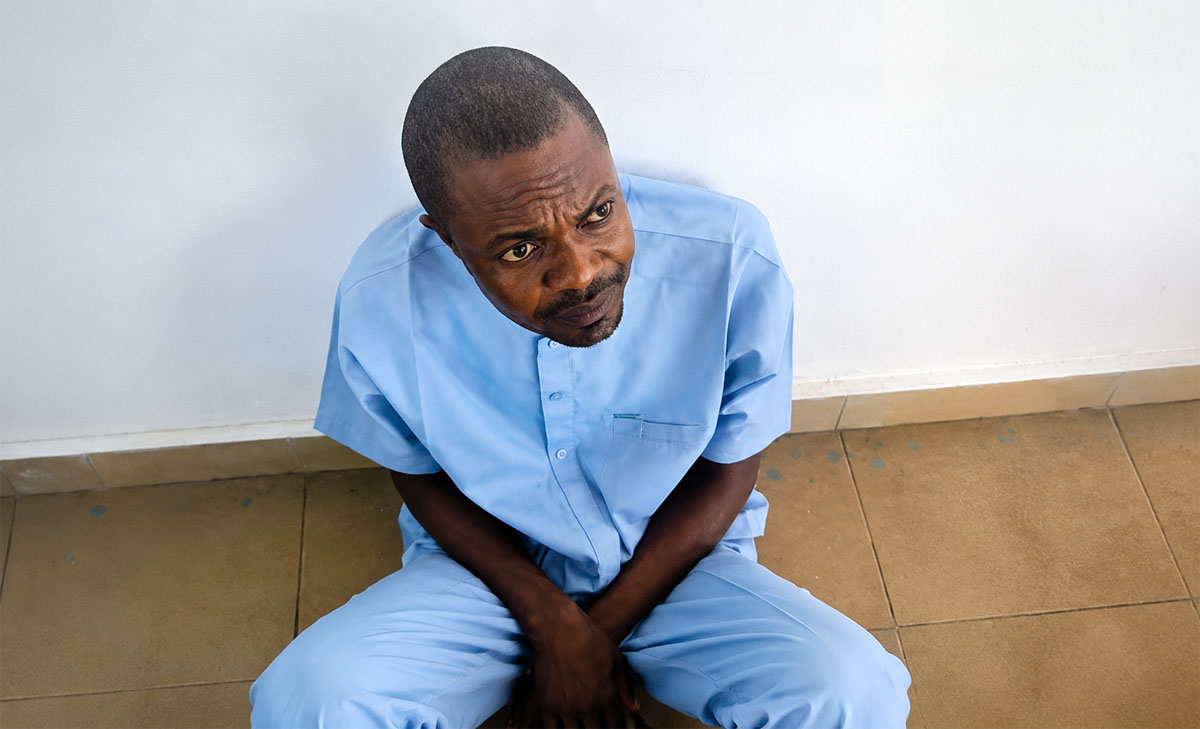
A Federal High Court sitting in Abuja has ordered the remand of Adeniyi Adeyemi Matthew, who allegedly presented himself as the Director-General of the Presidential Foreign Intervention Promotion Council, PFIPC, at the Kuje Correctional Centre over alleged forgery.
Justice Muhammed Umar reportedly made the order on Wednesday after Adeyemi was arraigned on an eight-count charge bordering on alleged forgery.
Adeyemi pleaded not guilty to the charges.
The court also fixed October 12, 2026, for the hearing of his bail application and directed that the case be given accelerated hearing.
One of the allegations against Adeyemi relates to the alleged forgery of presidential letterhead paper on March 8, 2024.
He was also accused of allegedly forging a request for collaboration with the Ministry of the Area Councils, as well as documents requesting land allocation and office accommodation across the 36 states of the federation.
The documents were allegedly presented as having emanated from the State House in Abuja.
The case is connected to the controversy surrounding the purported Presidential Foreign Intervention Promotion Council, an organisation the Federal Government has said was never established as a government agency.
The Presidency had earlier disowned the organisation and warned members of the public and foreign missions against dealing with Adeyemi on the basis of his alleged claim to have been appointed by the Presidency.
The government subsequently said investigations had established that the purported agency was fictitious and alleged that Adeyemi used forged appointment letters and other government documents to present himself as a presidential appointee.
The authorities further alleged that documents associated with the purported organisation were used to seek official recognition and diplomatic assistance.
The controversy also attracted the attention of the House of Representatives, which investigated the activities of the organisation and the circumstances surrounding Adeyemi’s alleged appointment.
During the investigation, lawmakers were told that the appointment letter allegedly presented by Adeyemi had been confirmed to be fake by relevant government authorities.
The case has also raised questions over how the purported organisation was able to operate and obtain correspondence with some government institutions before the Presidency publicly disowned it.
Adeyemi, however, has denied the allegations against him and previously made counter-allegations concerning the circumstances surrounding his purported appointment. He has also questioned references to the PFIPC in government documents.
Those claims remain part of the wider controversy and have yet to be determined by the court.
With the latest order, Adeyemi will remain at the Kuje Correctional Centre pending further proceedings.
His bail application is expected to come up on October 12, 2026.
The allegations against him remain unproven until determined by the court.
Court remands alleged ‘fake PFIPC DG’ Adeyemi in Kuje over forgery
News
FG Opens Nationwide Youth Registration, Targets Nigerians Aged 15–35

FG Opens Nationwide Youth Registration, Targets Nigerians Aged 15–35
The Federal Government has commenced nationwide registration of Nigerians aged 15 to 35 under the National Youth Data Bank (NYDB), a new initiative designed to build a reliable database of young people and support access to jobs, skills training, internships, entrepreneurship and other opportunities.
Minister of Youth Development, Ayodele Olawande, announced the commencement of the exercise as the government launched the National Youth Data Bank, saying accurate youth data would help improve the planning, targeting and delivery of government programmes.
The NYDB is designed to capture information on young Nigerians, including their education, skills, employment, entrepreneurship and other demographic characteristics. The official platform says the database is intended to provide a centralised and continuously updated picture of Nigeria’s youth population.
The government said the initiative is not an electoral registration exercise but a youth development programme aimed at improving how government identifies young people and connects them with relevant opportunities.
The registration covers young Nigerians in different sectors and settings, including those in schools, the informal sector, agriculture, sports, creative industries and technology.
READ ALSO:
- Dangote Draws Battle Lines as Fuel Import Fight Heads Back to Court
- Tinubu Returns After 30 Days in Europe, Says ‘I’m Healthy and Ready to Work’
- NMDPRA Moves Against Fuel Pump Fraud, Threatens Licence Revocation
A key part of the exercise is the establishment of approved NYDB registration centres or cluster points. According to the official NYDB platform, young Nigerians can register at approved locations within their state, Local Government Area (LGA), school or other specially designated locations.
This means that not every school, LGA office or public facility is automatically a registration centre. Applicants are expected to use approved NYDB cluster points, where trained registration personnel will guide them through the process.
The exercise is being extended across Nigeria’s 36 states and the Federal Capital Territory, with the programme designed to reach young people in rural and underserved communities as well as those in urban areas.
The registration process begins with a visit to an approved NYDB cluster point, followed by an eligibility check and the creation of a youth profile. Participants are then required to confirm the information provided before completing the registration.
The 15 to 35 age bracket is the target population for the data-bank exercise. The database is expected to be updated continuously to maintain current information on eligible young Nigerians.
The Federal Ministry of Youth Development says the information gathered will help government understand where young people are located, what qualifications and skills they have, whether they are employed or seeking opportunities, and what forms of support may be required.
The NYDB platform identifies education, skills, employment, entrepreneurship, civic participation and health among the key areas of information being developed to strengthen youth-focused planning and interventions.
The initiative is also expected to improve the ability of government and authorised partners to identify young people who may be missing from existing datasets, particularly those in rural communities and underserved groups.
The Federal Ministry of Youth Development has separately announced plans for a National Youth Confab 2026, scheduled to begin in October, with participation expected from young Nigerians across the country’s 360 federal constituencies.
For Nigerians within the 15–35 age bracket, the government is therefore encouraging participation through the approved NYDB registration centres as the nationwide exercise expands.
FG Opens Nationwide Youth Registration, Targets Nigerians Aged 15–35
News
Tinubu Returns After 30 Days in Europe, Says ‘I’m Healthy and Ready to Work’
Tinubu Returns After 30 Days in Europe, Says ‘I’m Healthy and Ready to Work’
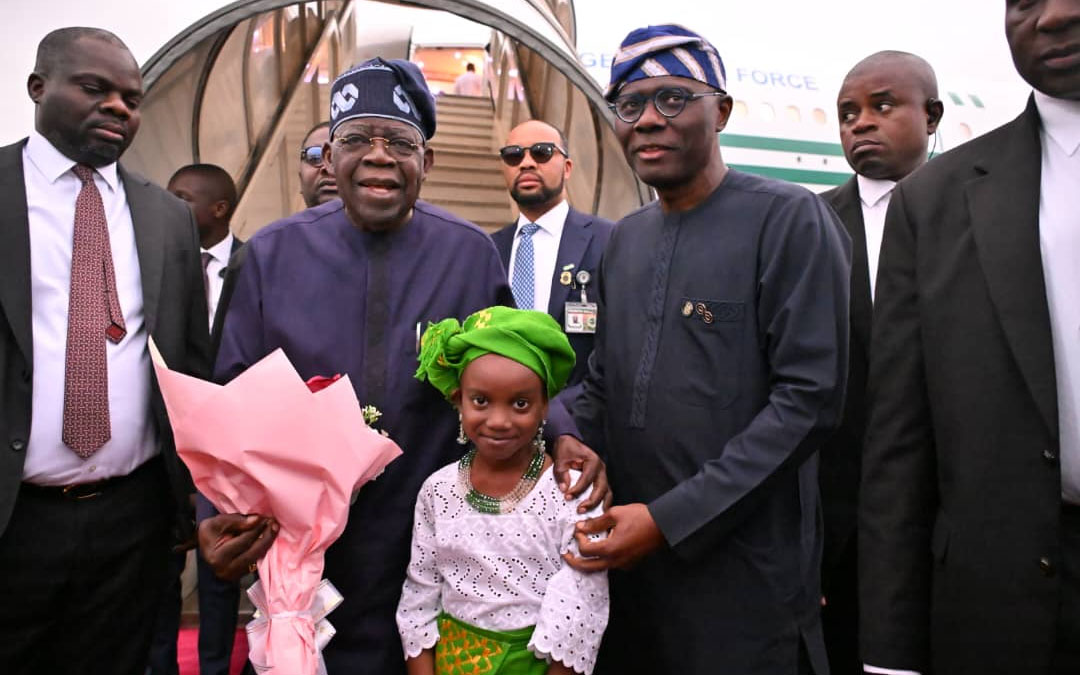
President Bola Ahmed Tinubu has returned to Nigeria after spending about 30 days in Europe, declaring that he is healthy, sound and ready to work after his extended working vacation.
Tinubu arrived at the Presidential Wing of the Murtala Muhammed International Airport, Lagos, at about 6:22pm on Tuesday after departing Paris, France, where he spent the final part of his trip.
Speaking briefly after his arrival, the President said he had enjoyed his time abroad and dismissed concerns about his health.
“I enjoyed myself,” Tinubu said when asked about his trip.
Asked whether he was ready to resume work, he replied: “Ready to kick. Ready to work. There’s nothing wrong.” He also described himself as “healthy, sound and ready to go.”
Tinubu left Nigeria on August 30 for what was initially announced as a three-week working vacation. He spent time in London before travelling to Paris, with the Presidency later announcing an extension of his stay.
During the European trip, Tinubu maintained contact with Nigerian officials and continued to receive updates on government affairs, according to the Presidency.
READ ALSO:
- NMDPRA Moves Against Fuel Pump Fraud, Threatens Licence Revocation
- $2.1m Land Suit: Court Orders Wike’s Son to Produce American Passport
- Two Nigerians Jailed 15 Years Over $2.4m US Cyber Fraud
While in Paris, he held a private dinner with French President Emmanuel Macron at the Élysée Palace and met French businessman Vincent Bolloré and executives of the Bolloré Group.
He also witnessed the signing of an agreement involving the Ogun State Government and DP World for the proposed development of the Gateway Deep Sea Port and Blue Marine Economic Zone. The Presidency has described the proposed project as a $7 billion investment.
Tinubu’s extended stay abroad attracted public debate, particularly after he did not personally attend the 81st United Nations General Assembly (UNGA) in New York.
Vice President Kashim Shettima represented Nigeria at the UNGA and delivered the country’s national statement.
The Presidency defended the arrangement, maintaining that Tinubu remained in charge of government and continued to direct affairs while abroad.
His return to Nigeria through Lagos also comes ahead of the country’s 66th Independence Day celebrations on October 1.
Tinubu is expected to attend the premiere of MKO, a documentary on the life of the late businessman and pro-democracy campaigner MKO Abiola, at the Wole Soyinka National Theatre in Iganmu, Lagos.
The film features archival material and interviews with prominent Nigerians, including former military leaders Ibrahim Babangida and Abdulsalami Abubakar, former President Olusegun Obasanjo, Nobel laureate Wole Soyinka and Tinubu.
Tinubu’s return brings his extended European working vacation to an end, with the President expected to resume his regular official engagements as the administration enters the final quarter of 2026.
Tinubu Returns After 30 Days in Europe, Says ‘I’m Healthy and Ready to Work’
-

 metro2 days ago
Osogbo Food Bonanza Turns Nightmare as Discount Vendor Vanishes With Customers’ Millions
-

 metro2 days ago
24 Hours in Darkness: Iju Ishaga Residents, Businesses Count Losses as Ikeja Electric Fails to Restore Power
-

 News3 days ago
Agbede Mourns Baba Alado, Says Mushin Has Lost Pillar of Peace
-
 Education2 days ago
FG Releases 2026–2028 Approved Textbooks, Introduces QR Codes for Tracking
-

 Sports1 day ago
Nigeria XI vs Guinea-Bissau: Awoniyi, Lookman, Adams Lead Super Eagles Attack
-
 News2 days ago
Breaking: Tinubu Ends Extended European Vacation, Departs Paris for Nigeria
-

 Politics3 days ago
Why I Can No Longer Defend Peter Obi’s Lifestyle – Okonkwo
-

 metro1 day ago
Hamzat Clarifies Lagos Traffic ‘Lifestyle’ Remark After Backlash