

News
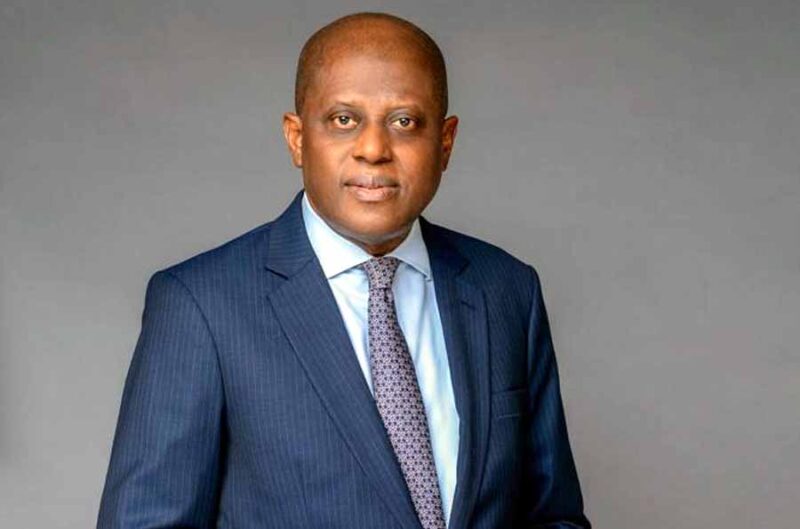
CBN will implement bold economic reforms, says Cardoso
CBN will implement bold economic reforms, says Cardoso
Governor, Central Bank of Nigeria, CBN, Mr. Olawale Cardoso said the apex bank will continue to implement bold reforms that makes the economy works for everyone
He spoke at the 2024 Annual Vanguard Economic Discourse with the theme: “Reform in an era of Global Economic Uncertainty: Whither Nigeria”, in Lagos.
According to Cardoso, the recent measures introduced by the CBN to reform are already bearing fruit.
He said: “The theme, Reforms in the Era of Global Economic Uncertainties: Whither Nigeria, embodies for me the tough challenges and the trade-offs that policymakers worldwide are having to make or are having to navigate in response to the terrible headwinds and economic turbulence we all face.
In this era that has been aptly captured as a vocal era, which is the era of volatility, uncertainty, is characterized by choppiness of the headwinds that are dreaming by the unending stream of shocks in the global and the regional sphere.
Global Uncertainty
This has led to what we tag today as an elevated level of global uncertainty. It is true.
There is an index called the World Uncertainty Index that measures how uncertain the world is today. And the last report of that index says that, and I like the way it summarizes it, so let me read it for you. It says, the shocks that have shaken the global economy in recent years have introduced a new normal for turbulence.
These episodes, the turbulence driven in some cases by political fragmentation between countries, these episodes also lifted uncertainty to exceptionally high levels, which in turn caused economic growth. And I think that’s the part that we are particularly interested in today. The uncertainties that we are seeing globally are having a significant impact on the economic growth and economic outcomes.
READ ALSO:
- 200 babies born one month in Benue IDP camp – Report
- US sanctions Palestinian group under decree used to target Israeli settlers
- Five suspected internet fraudsters arrested in Abuja
On its part, the IMF said recently that we are expecting a growth rate of about 3.2% globally. However, it was true to mention that there are clear risks to the achievement of this economic growth level, and it names those risks as including tight financial conditions, disruptions to global supply chains, geopolitical tension and economic fragmentations.
The economic market, or the financial market tightening that we have seen globally has been as a result of monetary authorities taking steps to rein in inflation. And as the market is tighten, that has had impact on developing the economy like ours because we have seen flights of investment leaving developing economy back to safety as they worry about risk and uncertainties.
Energy and financial markets as well as world trade foods have also been impacted significantly by conflicts especially the crisis in the Middle East and the conflict between Russia and Ukraine which we have seen impacting on trade and other markets. This impact has resulted in a drag on economic growth and has caused significant inflationary pressure.






News
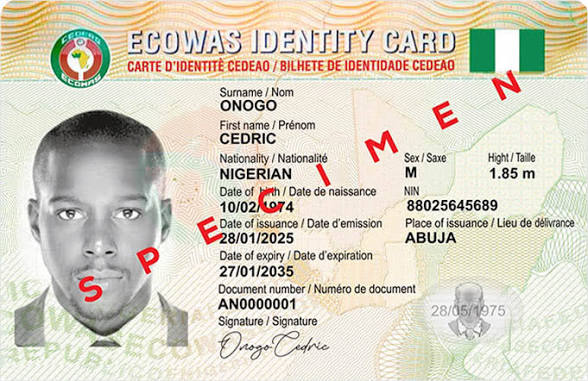
ECOWAS Biometric Card Expands as Seven Countries Begin Rollout
ECOWAS Biometric Card Expands as Seven Countries Begin Rollout
Cross-border travel within West Africa could become quicker and more secure with the growing rollout of the ECOWAS National Biometric Identity Card (ENBIC).
The card allows immigration officials to electronically verify a traveller’s identity through a biometric chip, reducing some of the delays associated with checking paper documents.
According to ECOWAS and migration officials, the system will also improve cooperation between immigration authorities across member states.
Nigeria joined six other ECOWAS countries already deploying the card: Senegal, Guinea-Bissau, Ghana, Benin, The Gambia and Sierra Leone.
Nigeria began its rollout through the Nigeria Immigration Service (NIS) in November 2025.
90-Day Rule Still Applies
Despite the new travel document, the ENBIC does not automatically give holders the right to live indefinitely in another ECOWAS country.
Citizens of member states can enter another country without a visa and stay for up to 90 days under the ECOWAS free-movement protocol.
Travellers who want to stay beyond that period must meet the host country’s residence requirements.
NIS official Bennett Chiagoro said the card also contains security features that can expose attempts to alter its data.
Application Process
Nigerians can apply through the NIS online portal. The process includes verification, biometric enrolment, validation, production and issuance.
The portal also provides services for tracking applications, checking payment information, correcting certain application details and reporting misplaced cards.
Meanwhile, officials urged travellers to rely on accurate information about the card as implementation continues, particularly regarding eligibility, requirements and fees.
ECOWAS Biometric Card Expands as Seven Countries Begin Rollout
International
Ninth Body Discovered in South Africa: Nigeria Issues Urgent Safety Alert to Nationals
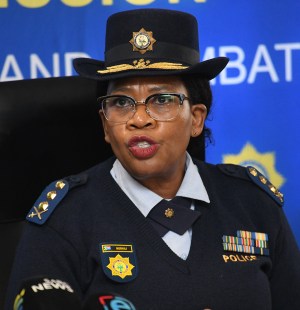
Ninth Body Discovered in South Africa: Nigeria Issues Urgent Safety Alert to Nationals
Police cordon off Kempton Park and post a $56,000 combined bounty as the Nigerian Consulate warns citizens to exercise heightened vigilance.
South African police recovered the body of a ninth woman on Thursday along a roadside in Dawn Park, intensifying public alarm and prompting the Nigerian Consulate-General in Johannesburg to issue an emergency safety advisory to its citizens.
In response to the discoveries, law enforcement teams placed Kempton Park in the Ekurhuleni municipality under lockdown and established roadblocks to inspect vehicles and restrict suspect movement.
Deputy Police Chief Tebello Mosikili declared during a press conference that authorities will deploy specialized investigative units to track down those responsible.
To accelerate breakthroughs, police offered a 400,000 rand ($25,000) reward for credible tips, while South Africa’s Democratic Alliance provided an additional $31,000, establishing a combined bounty of $56,000.
Detectives are now evaluating forensic evidence to determine whether one perpetrator committed the murders or whether independent offenders copied earlier attacks.
Meanwhile, the Nigerian Consulate-General urged Nigerian residents, especially women and young people who commute, exercise, or study around Ekurhuleni, to take deliberate personal precautions.
The mission advised community members to travel in groups, stay clear of isolated trails, and share real-time travel details with trusted family members.
Furthermore, diplomatic officials emphasized that safety precautions must not shift the burden of crime prevention onto women, calling on South African authorities to ensure thorough investigations and justice for every victim.
Ninth Body Discovered in South Africa: Nigeria Issues Urgent Safety Alert to Nationals
News
Anambra Debt Row: Presidency Challenges Peter Obi as State Releases N127.4bn Loan Records
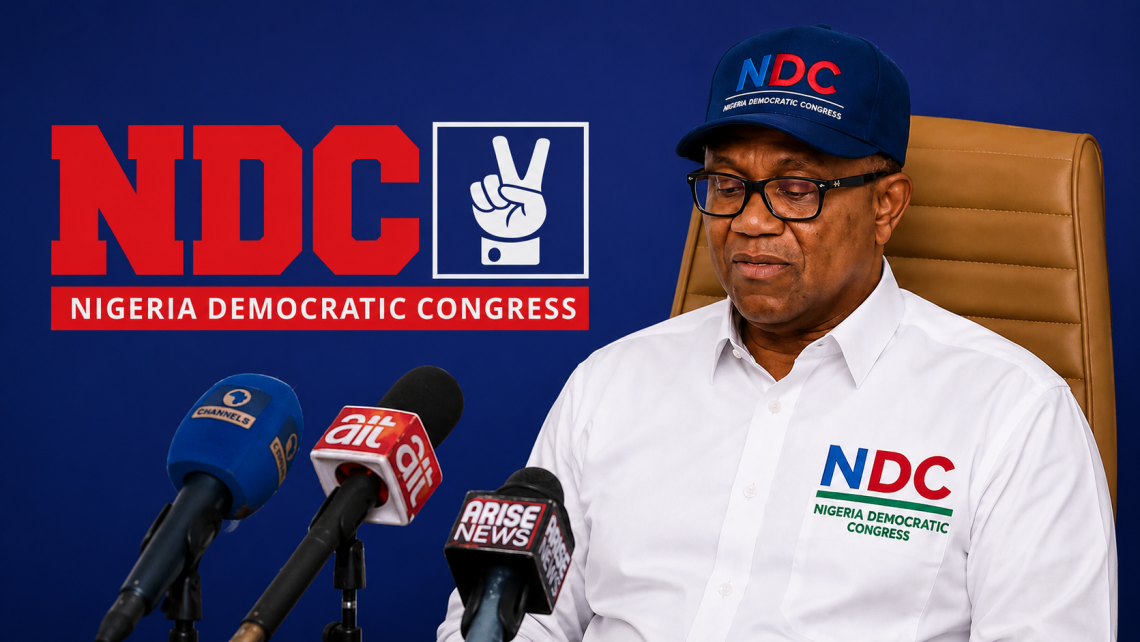
Anambra Debt Row: Presidency Challenges Peter Obi as State Releases N127.4bn Loan Records
The controversy over the financial record of former Anambra State Governor Peter Obi has intensified after the Anambra State Government released details of eight external loans it said were contracted during his tenure, prompting a fresh challenge from the Presidency.
The dispute centres on whether Obi left Anambra State with outstanding financial obligations when he handed over power to Willie Obiano on March 17, 2014, with the former governor maintaining that his administration cleared the liabilities for which it was responsible.
The latest figures released by the state government put the total external loans contracted during Obi’s administration at $123.77 million, with $92.35 million still outstanding as of June 30, 2026. The state valued the outstanding balance at approximately ₦127.4 billion using the applicable official exchange rate.
The figures were contained in a statement by the Anambra State Commissioner for Information and Value Reorientation, Law Mefor, following Obi’s rejection of claims that his administration left behind unpaid debts, salaries, pensions, gratuities and other liabilities.
The state government said the eight external borrowings were associated with projects covering malaria control, healthcare, education, erosion management, community development and agricultural value-chain development. It also said the current administration continues to make payments towards servicing the loans.
The breakdown released by the state showed that the loans included the Malaria Control Booster Project, the Third National Fadama Development Project, the Health System Development Project II, the State Education Programme Investment Project, the Community and Social Development Project, the Nigeria Erosion and Watershed Management Project and the Value Chain Development Project.
READ ALSO:
- South African Woman Jailed 25 Years for Smuggling 5.75kg Heroin into Nigeria
- Adunni Ade Reveals Christian Fans Unfollowed Her After Publicly Identifying as Muslim
- Jetour Set to Storm Abuja Show with Rugged Luxury T2
The state said the largest outstanding balances were associated with the State Education Programme Investment Project and the Nigeria Erosion and Watershed Management Project, which together accounted for a substantial portion of the reported balance.
The Anambra Government has stressed that its position is not that borrowing by a government is inherently improper. Rather, it said the issue was the identification of financial obligations incurred during previous administrations and the extent to which such obligations remained outstanding and were subsequently serviced by later governments.
The state has also challenged Obi’s account of an alleged ₦2.13 billion ecological fund which he said was available when he left office.
Obi had maintained that the money was released shortly before the end of his tenure for the Oko/Umuchiana erosion project and was deliberately left untouched because it was tied to the project. He also said his administration left more than ₦75 billion in savings and investments.
The Anambra Government, however, disputed the former governor’s description of the account. Mefor said a certified statement from First Bank showed that the account identified by Obi was an Internally Generated Revenue Consolidated Account, and that the records did not contain an inflow or balance corresponding to the ₦2.13 billion ecological fund claimed by the former governor.
The state government also raised issues concerning salary arrears, pensions and gratuities.
Mefor alleged that workers of the former Water Corporation had outstanding salary claims dating back to the period of Obi’s administration and that the current government had been dealing with the obligations through instalment payments.
The state further said Obi’s administration had verified 16 months of salary arrears owed to primary school teachers but paid only five months before leaving office. It said the present administration had subsequently paid about ₦22 billion in inherited gratuity arrears owed to retired state and local government workers and teachers.
Obi has rejected those allegations.
The former governor said his administration cleared more than ₦35 billion in historical gratuities and arrears and handed over the state without outstanding salary, pension or gratuity obligations.
He has also maintained that there were no unpaid liabilities to contractors for projects that had been properly executed and certified before his departure from office. Obi challenged the Anambra Government to provide evidence to support its allegations and said he would withdraw from the 2027 presidential race if it could establish that he left the state with the liabilities being attributed to him.
As the controversy deepened, the Obidient Movement released a copy of what it described as Obi’s 2014 financial handover report.
The document, dated March 17, 2014, reportedly summarised Anambra’s financial position at the end of Obi’s tenure. According to reports on the document, it listed ₦27 billion in local investments, $156 million in foreign-currency investments valued at about ₦26.5 billion, and ₦28.166 billion in certified state and ministry, department and agency balances.
The three figures were reported to total about ₦91.666 billion. After an estimated liability of ₦5 billion was deducted, the document arrived at a reported net balance of ₦86.666 billion.
The release of the handover document has added another layer to the dispute because the document describes the state’s financial position at the point of handover in 2014, while the current Anambra Government is highlighting loans that originated during Obi’s tenure but remained outstanding years after he left office.
The two positions therefore address different aspects of the state’s finances: Obi’s camp is relying on the financial position recorded at handover, while the state government is pointing to the subsequent outstanding balances on external loans and other obligations it says were inherited.
The Presidency has now entered the dispute.
Bayo Onanuga, Special Adviser to President Bola Ahmed Tinubu on Information and Strategy, said the Anambra Government had presented figures and records challenging Obi’s claim that he left the state without outstanding liabilities.
Onanuga asked whether Obi would honour his earlier statement about withdrawing from the 2027 presidential race if evidence emerged contradicting his account of Anambra’s finances.
The Presidency’s intervention has turned the dispute into a broader political issue ahead of the 2027 presidential election, in which Obi is the Nigeria Democratic Congress (NDC) presidential candidate.
Obi’s camp has, however, maintained that the matter should be resolved through documentary evidence rather than political exchanges. His representatives have continued to point to the 2014 handover document and his administration’s account of the financial position it left behind.
At the centre of the controversy is an important distinction between the original amount borrowed and the amount currently outstanding. The Anambra Government says the eight loans totalled $123.77 million when contracted, while $92.35 million remained outstanding as of June 30, 2026. The approximately ₦127.4 billion figure is therefore the reported naira value of the outstanding balance as of that date, not the original amount borrowed.
The dispute remains unresolved publicly, with the Anambra State Government maintaining that it has released records showing outstanding obligations linked to the period of Obi’s administration, while Obi maintains that he handed over the state without the unpaid liabilities alleged against him.
Further clarification will depend on how the underlying loan agreements, debt-servicing records, handover documents and other financial records are interpreted and reconciled.
Anambra Debt Row: Presidency Challenges Peter Obi as State Releases N127.4bn Loan Records
-

 International2 days ago
Islamic Council Condemns Attempted Attack on Holy City of Mecca
-

 metro3 days ago
Lagos Power Outage: Ikeja Electric Blames TCN as Businesses, Homes Groan
-
 News2 days ago
Keep Politics Out of My Office — Ogbomoso Grand Chief Imam Warns Politicians, Bloggers
-
 Politics3 days ago
2027: APC Governors Reject Wike’s Rainbow Coalition, Insist on Party Loyalty
-

 metro1 day ago
Niger Mosque Abductions: Terrorists Execute 30 of 500 Captive Muslim Worshippers
-

 International3 days ago
US Court Blocks Trump Visa Rule Limiting Stay of Foreign Students, Journalists
-

 metro3 days ago
A Son Wouldn’t Have Done Better — Dangote Speaks on Daughters, Succession
-

 Entertainment2 days ago
BREAKING: Olu Jacobs Dies at 84, Atiku Mourns Cultural Icon