

News
Jega panel’s proposal on open grazing unconstitutional – Group

Jega panel’s proposal on open grazing unconstitutional – Group
The recommendation on open grazing by the Presidential Committee on Implementation of Livestock Reforms, chaired by Prof. Attahiru Jega, has been described as unconstitutional, discriminatory, and illegal.
Civil rights group, Human Rights Writers Association of Nigeria (HURIWA), which rubbished the recommendation in a statement on Friday, said the committee’s proposal on coexistence of open grazing and ranching as a solution to the farmer-herder crisis was faulty.
The statement signed by HURIWA national coordinator, Emmanuel Onwubiko, also said the committee’s foundation is unconstitutional, citing Section 42(1) of the Nigerian Constitution, which prohibits laws or executive actions that impose restrictions based on ethnicity, community, or profession.
The group insisted that the establishment of the committee inherently favours herders at the expense of farmers, who have suffered violent attacks by armed pastoralists.
“It is unconstitutional for the government to form a committee that prioritizes one profession over another. Section 42(1) expressly prohibits subjecting citizens to laws that discriminate based on ethnicity, profession, or community. By promoting policies that favor herders while marginalizing farmers—who are the primary victims of these conflicts—President Tinubu’s administration is engaging in unconstitutional actions,” HURIWA stated.
The association also criticized the recommendations for disregarding state laws that have already banned open grazing. “In several states across Nigeria, laws have been enacted to outlaw open grazing due to the destruction of farmland and conflicts caused by herders. A national panel advocating for open grazing not only undermines these state laws but also sets a dangerous precedent where federal policies override state legislation. These recommendations are not just unconstitutional; they are illegal,” HURIWA added.
READ ALSO:
- Ukraine bans Telegram for officials over security threats
- Teenage housewife kills three-year-old stepson
- US officer arrested over killing of judge in court
HURIWA further condemned the Jega panel for favoring cattle rearers while ignoring the plight of farmers, who have been the primary victims of armed herder violence. “Farmers who have lost their livelihoods and lives in this ongoing crisis are being sidelined by recommendations that placate the herders. This approach fails to address the root causes of the conflict and may even exacerbate tensions,” the group noted.
HURIWA called for the immediate rejection of the panel’s recommendations by President Tinubu, labeling them an affront to state laws and legal frameworks established to protect citizens from the violence associated with open grazing. “We urge President Tinubu to reject these recommendations outright. They are unconstitutional and illegal, disregarding the rule of law in states that have banned open grazing,” the group demanded.
The rights group emphasized the need for a more balanced approach to resolving the farmer-herder conflict, advocating for the establishment of a presidential committee focused on farmers’ concerns. “For a lasting resolution, the government must ensure that farmers’ voices are heard. It is inconceivable to craft policies that cater to herders while ignoring the farmers who have been terrorized, displaced, and impoverished by the conflict. A balanced approach is essential for any resolution to be just and legitimate,” HURIWA stressed.
HURIWA warned that addressing only one side of the conflict would deepen the divide and prolong violence. “No government can settle one side of a conflict and expect peace. If the President is serious about resolving this crisis, he must give equal consideration to farmers’ concerns,” the group added.
Additionally, HURIWA highlighted international legal frameworks that bolster its stance. The rights group noted that Article 2 of the International Covenant on Civil and Political Rights (ICCPR) requires state parties to “respect and ensure to all individuals within its territory and subject to its jurisdiction the rights recognized in the present Covenant, without distinction of any kind, such as race, colour, sex, language, religion, political or other opinions, national or social origin, property, birth, or other status.”
Similarly, the association informed that Article 2 of the African Charter on Human and Peoples’ Rights mandates that the rights guaranteed by the Charter’s provisions must be respected “without distinction of any kind such as race, ethnic group, color, sex, language, religion, political or any other opinion, national and social origin, fortune, birth, or other status.”
In light of these international legal principles, HURIWA urged the President and his administration to adhere to both national and global legal frameworks, ensuring that all Nigerians are treated equally under the law, without favoritism or discrimination.
In conclusion, HURIWA reiterated its opposition to the Jega-led committee’s recommendations, calling them unconstitutional and a violation of the rights of Nigerian citizens. The group urged President Tinubu to reject the report and focus on inclusive, lawful, and balanced solutions to the ongoing farmer-herder crisis.
“The Jega report is unconstitutional, illegal, and ill-advised. We demand that the President reject these recommendations and work towards a solution that protects the rights of all Nigerians, especially the farmers who have suffered the most in this crisis,” HURIWA concluded.
Jega panel’s proposal on open grazing unconstitutional – Group









News
Tinubu appoints Enitan as Head of Civil Service
Tinubu appoints Enitan as Head of Civil Service
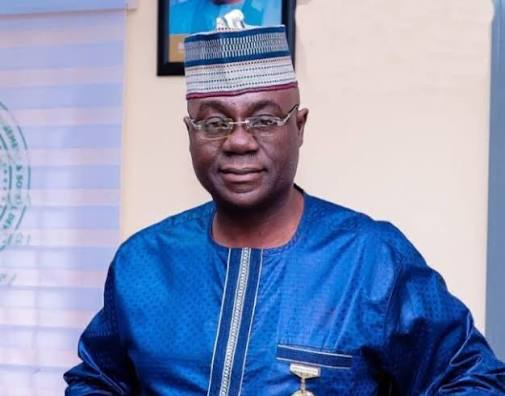
President Bola Ahmed Tinubu has appointed the Permanent Secretary in the Federal Ministry of Education, Abel Olumuyiwa Enitan, as the new Head of the Civil Service of the Federation.
Enitan, who is the most senior Permanent Secretary in the Federal Civil Service, will assume office on August 27, 2026, following the retirement of the incumbent Head of Service, Mrs Didi Esther Walson-Jack.
The appointment was announced in a statement by the Special Adviser to the President on Information and Strategy, Bayo Onanuga, on Wednesday.
A native of Osun State, Enitan has spent more than seven years as a Permanent Secretary, serving in the Ministry of Police Affairs, Ministry of Humanitarian Affairs and the Office of the Vice President before his current posting to the Federal Ministry of Education.
With seven years and seven months of experience at the Permanent Secretary level, Enitan is expected to bring extensive institutional knowledge and experience to the leadership of the Federal Civil Service.
Onanuga said President Tinubu appreciated Walson-Jack for her “distinguished service” to the nation, particularly her contributions to reforms, innovations and improved performance within the Civil Service during her tenure.
The President wished the outgoing Head of Service a fulfilling post-retirement life and expressed the nation’s gratitude for her years of dedicated public service.
Tinubu charged Enitan to sustain and build on the reforms and innovations already introduced in the Civil Service, while deepening professionalism, efficiency and responsiveness across the system.
The President also urged the incoming Head of Service to promote a Civil Service that is merit-driven, accountable, innovative and capable of responding effectively to the needs and aspirations of Nigerians.
The administration said the appointment was part of efforts to strengthen the Federal Civil Service and improve its capacity to deliver on the Renewed Hope Agenda.
News
FCCPC probes cement price manipulation as Nigerians pay more than African peers

FCCPC probes cement price manipulation as Nigerians pay more than African peers
The Federal Competition and Consumer Protection Commission (FCCPC) has launched a deeper investigation into the Nigerian cement industry following preliminary findings that the rising price of cement may not be fully explained by legitimate production and market costs.
The commission said its three-month inquiry raised concerns about possible manipulation of cement prices after receiving widespread complaints over the soaring cost of the building material despite Nigeria’s substantial limestone deposits and large installed production capacity.
The investigation was carried out by the FCCPC’s Anticompetitive Practices Department (ACP) and included a cross-border comparison of Nigeria’s cement market with those of Kenya, Tanzania, South Africa, Egypt, Morocco, Algeria and Togo.
The study examined factors including limestone availability, population, production capacity, domestic consumption and retail prices to determine whether prevailing prices in Nigeria were consistent with market conditions.
According to the commission, the findings showed a notable disparity between cement prices in Nigeria and those in some other African markets.
A 50kg bag of cement that sold for between ₦9,300 and ₦9,700 in January 2026 rose to between ₦10,500 and ₦13,000 by the middle of the year. By July, prices of between ₦13,000 and ₦15,000 were reported in some parts of the country.
The FCCPC said its comparison found that a 50kg bag sold for about $5.40, equivalent to ₦7,344, in Kenya, while the same quantity was around $4.80, or ₦6,528, in Tanzania.
READ ALSO:
- Sokoto APC suffers fresh setback as over 700 members reportedly defect to ADC
- US Court Grants Four-Day Extension for Release of Tinubu Drug-Trafficking Records
- Osun Poll: Fayose Says Federal Might Could Have Swayed Result If Deployed
In Togo, where the commission noted the absence of significant limestone deposits, a 50kg bag sold for approximately $6.75, equivalent to ₦9,180.
The price disparity has prompted the regulator to question why Nigeria’s substantial natural-resource base and production capacity have not resulted in stronger downward pressure on domestic prices.
The FCCPC estimates that Nigeria has installed cement production capacity of between 60 million and 65 million metric tonnes annually, compared with domestic consumption of approximately 25 million to 30 million metric tonnes.
The commission also noted that Nigeria is a net exporter of cement and clinker, making the continued high domestic prices a key issue in its investigation.
However, the FCCPC stressed that it has not concluded that any cement manufacturer has violated competition laws. The preliminary findings, it said, only provide sufficient grounds for further investigation.
The commission is examining whether prevailing prices can be justified by legitimate costs or whether there is evidence of coordinated conduct, abuse of market power, restriction of domestic supply or anti-competitive distribution practices.
Cement producers and other industry participants have cited several factors behind the higher prices, including energy costs, naira depreciation, imported machinery and spare parts, transportation and logistics expenses.
The FCCPC said it was testing those explanations against verified information on production costs, pricing, capacity utilisation, exports and broader market conditions.
READ ALSO:
- NAICOM revokes Universal Insurance licence over ₦15bn capital shortfall
- US indicts 17 Iranians over $20m cyber-theft campaign targeting 322 global institutions
- Police Nab 49-Year-Old With Pump-Action Rifle, 50 Ammunition Rounds In Anambra
As part of the investigation, the commission has issued Notices of Commencement of Investigation and Summons to Produce to key industry participants.
The companies are expected to provide information covering their pricing methodologies, production levels, capacity utilisation, exports and commercial relationships.
FCCPC Executive Vice Chairman and Chief Executive Officer Tunji Bello said the investigation was necessary because cement plays a strategic role in the Nigerian economy.
According to Bello, the cost of cement directly affects housing, commercial property development, public infrastructure and the wider cost of doing business.
The probe also comes amid repeated calls from the Federal Government for cement manufacturers to reduce prices.
In June 2026, Minister of Works David Umahi urged cement producers to reduce prices, arguing that the high cost of the material was increasing the cost of government infrastructure projects and contributing to demands for contract variations.
The government had previously reached an understanding with major cement producers, including Dangote Cement, BUA Cement and HBM Nigeria, that cement should generally sell within the ₦7,000 to ₦8,000 range per 50kg bag, depending on location.
Despite those discussions, retail prices have remained considerably higher in several parts of Nigeria.
Industry financial results also show that major cement producers have continued to record strong revenues amid sustained construction demand and higher prices. The development, however, does not by itself establish that any company has engaged in anti-competitive conduct.
The FCCPC must now determine whether the high cost of cement in Nigeria is primarily the result of legitimate economic pressures or whether unlawful practices are contributing to the price disparity.
The outcome of the investigation could have significant implications for consumers, builders, contractors, property developers and the construction industry, particularly as high building-material costs continue to affect housing affordability and infrastructure development.
For now, the commission has emphasised that its findings remain preliminary and that the investigation is ongoing. Any regulatory or enforcement action will depend on the evidence gathered during the process.
FCCPC probes cement price manipulation as Nigerians pay more than African peers
News
Adeleke withdraws EFCC suit after Tinubu’s intervention
Adeleke withdraws EFCC suit after Tinubu’s intervention
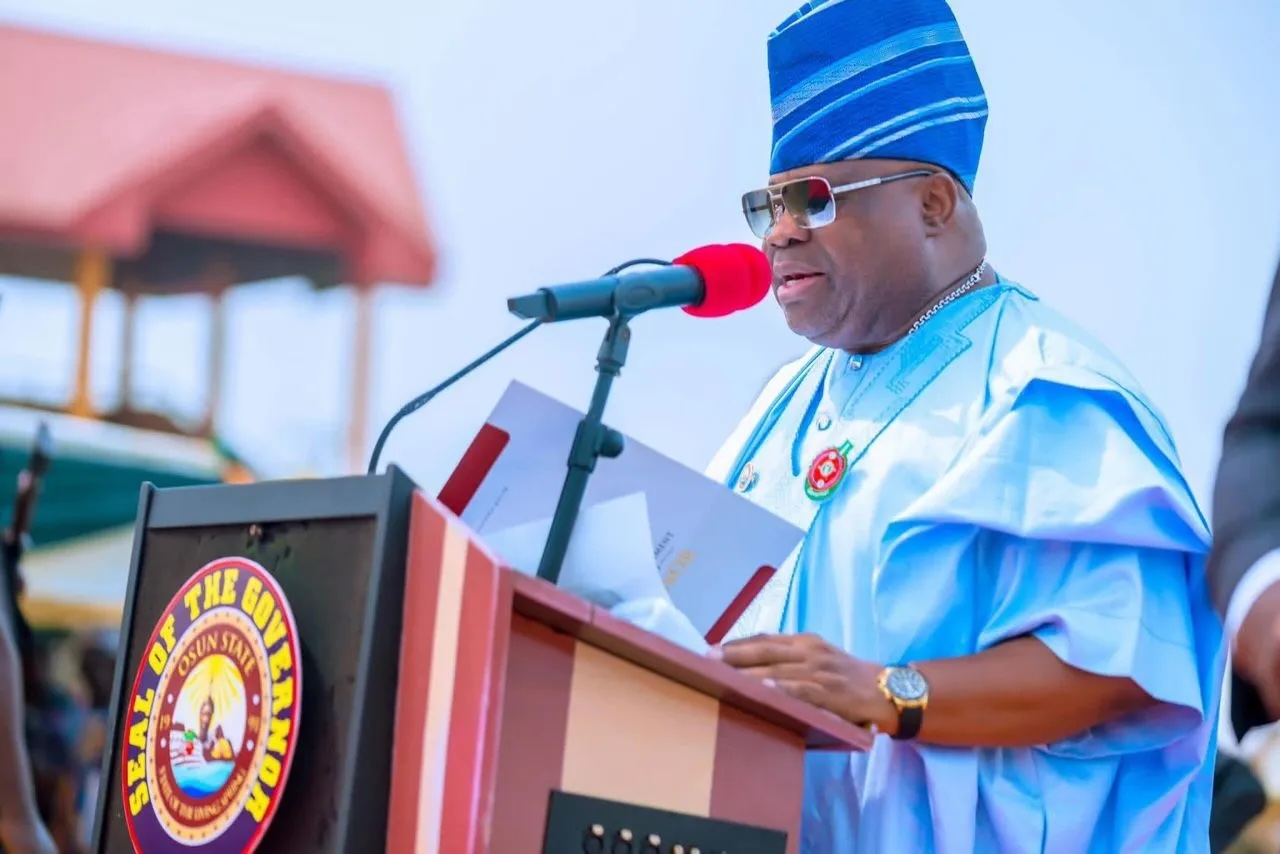
Osun State Governor, Ademola Adeleke, has directed the state Attorney-General to withdraw the lawsuit filed against the Economic and Financial Crimes Commission (EFCC) over the restriction placed on a state government account.
Adeleke disclosed this in an interview with Channels Television on Sunday, shortly after he was declared the winner of the Osun State governorship election, saying he was no longer interested in pursuing the case following President Bola Tinubu’s intervention.
The governor said Tinubu personally intervened in the matter and contacted him, adding that he considered the President’s intervention sufficient reason to discontinue the legal action.
“What else do I want? I’ve instructed my Attorney-General to drop it. Mr President has done well; he called me. What more do I want?” Adeleke said.
The dispute followed the decision by the EFCC to place a Post-No-Debit restriction on an Osun State Government account as part of an investigation into the alleged handling of about ₦11 billion in Ecology Funds, Intervention Funds and allocations from the Federation Account.
The anti-graft agency said its investigation had been ongoing since March 2026. It said the restriction became necessary after it detected what it described as the “precipitate and unwarranted movement of funds” from the account into several corporate entities.
The EFCC maintained that the restriction was connected to its investigation and was aimed at preventing further movement of funds while the probe continued.
READ ALSO:
- Osun Woman Found Dead With Severed Wrist Inside Church
- BREAKING: Edo Assembly leadership shake-up: Agbebaku out, Idaiyi emerges new Speaker
- Kebbi Woman Arrested for Allegedly Stealing Newborn to Deceive Husband
Adeleke had strongly opposed the action, directing the state Attorney-General and Commissioner for Justice to challenge the restriction in court.
The governor had described the EFCC’s action as unlawful and politically motivated, particularly because it occurred shortly before the Osun governorship election.
The legal dispute subsequently became a major point of contention between the Osun State Government and the anti-graft agency, with the state seeking judicial intervention over the restriction on its account.
However, Adeleke has now opted to discontinue the case after Tinubu’s intervention.
The governor also addressed reports concerning some of his aides who had been invited or detained by the EFCC in connection with the investigation.
He said his lawyers were engaging with the commission and had been directed to visit the agency to address the matter.
“Well, we are… we’ve been talking. I’ve been calling all my lawyers to go there,” Adeleke said.
The governor also questioned the decision to invite some of his aides, particularly his spokesperson, for questioning by the anti-graft agency.
“Can you imagine my spokesperson? You are inviting my spokesperson to EFCC. Is my spokesperson a finance minister or accountant? So I told him, ‘Go,’” he said.
Adeleke, however, said his aides had complied with the invitations because they had nothing to hide.
The governor further clarified that his renewed support for Tinubu should not be interpreted as an indication that he intends to return to the All Progressives Congress (APC).
When asked whether he would return to the APC, Adeleke said, “I’m not even thinking about it right now.”
He nevertheless stressed that remaining outside the APC would not prevent him from supporting Tinubu ahead of the 2027 presidential election.
“But that doesn’t mean I can’t express my support… Mr President,” Adeleke said.
The governor, who previously contested political positions under the APC before moving to the Peoples Democratic Party (PDP) and later the Accord Party, said his support for Tinubu was independent of his party affiliation.
Adeleke also alleged that some individuals had been using Tinubu’s name in connection with the EFCC matter without the President’s knowledge.
His comments came after he defeated the APC candidate, Bola Oyebamiji, in Saturday’s governorship election to secure a second term as Osun governor.
According to the Independent National Electoral Commission (INEC), Adeleke polled 511,067 votes, while Oyebamiji secured 444,815 votes.
The governor’s decision to withdraw the lawsuit is expected to ease the immediate legal confrontation between the Osun State Government and the EFCC, although the anti-graft agency’s investigation into the alleged handling of public funds remains a separate matter.
The development also comes at a significant political moment for Adeleke, who is preparing to begin his second term after another closely contested election in the state.
Adeleke withdraws EFCC suit after Tinubu’s intervention
-
 metro2 days ago
Customs Names Importers of 399 Pump-Action Rifles, Hands Over Weapons to NSA Office
-

 metro3 days ago
Police to prosecute Kogi man for allegedly setting wife ablaze
-

 Sports3 days ago
Arsenal thrash Man City 3-0 to win Community Shield
-

 metro3 days ago
NDLEA arrests businessman with cocaine, seizes N3.6bn drugs in Lagos
-

 metro1 day ago
Palliative Care, Not Abandonment: Doctor Clears the Air on Ogogo’s Stage-Four Cancer Treatment
-

 Insurance18 hours ago
NAICOM revokes Universal Insurance licence over ₦15bn capital shortfall
-

 Education2 days ago
WAEC 2026 results: Schools raise alarm over alleged grading anomalies
-
 metro1 day ago
Lagos Pensioners Give Sanwo-Olu 19-Day Ultimatum: Implement Wage Award or Face ‘Mother of All Protests’