

Entertainment
Anger as Harry, Meghan interview sparks new race debate in UK
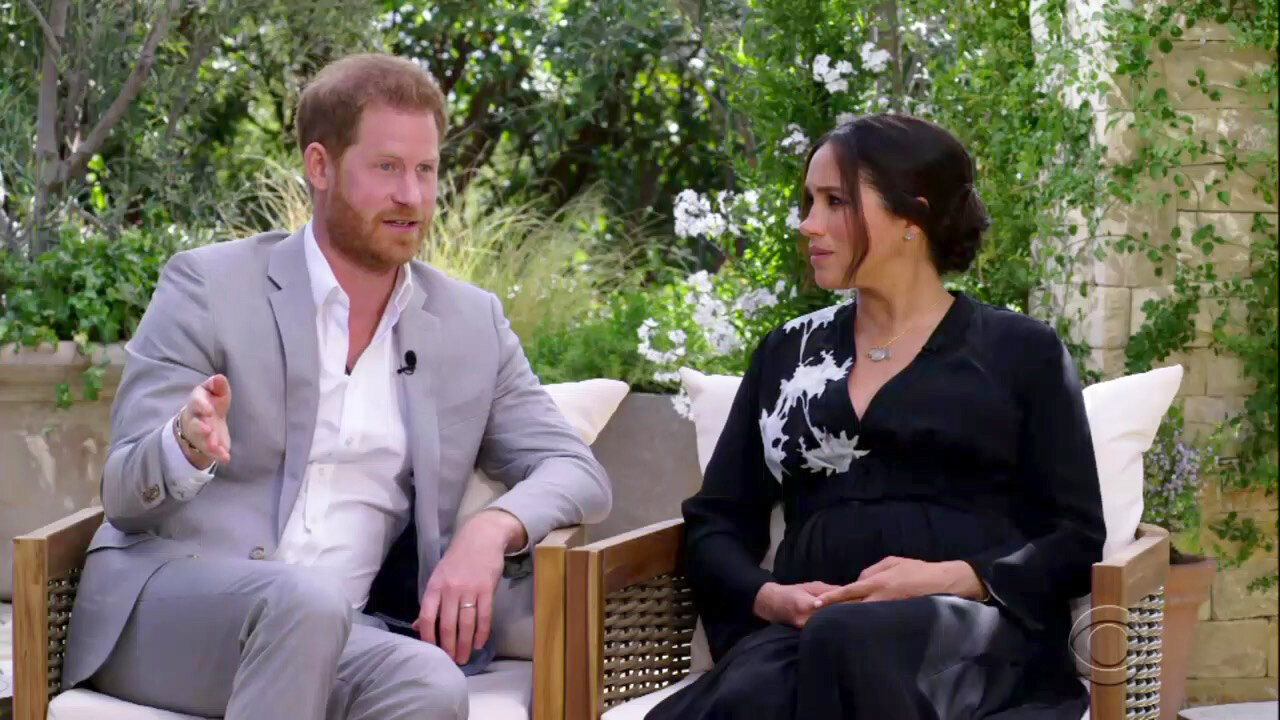
Prince Harry has come a long way in educating himself about race since his youthful days, when he used an offensive slur against a fellow army cadet from Pakistan and dressed up as a Nazi soldier at a party.
In an explosive interview with Oprah Winfrey, Queen Elizabeth II’s grandson explained that his mixed-race wife Meghan had helped him on his journey of awareness, and he wanted his family, the media and Britain at large to educate themselves too.
“I’ve spent many years doing the work and doing my own learning,” the 36-year-old said, noting his privileged background meant “I wasn’t aware of” racial issues on the whole.
“But my God, it doesn’t take very long to suddenly become aware of it,” Harry said, reflecting years on from his early 20s, when the details emerged of the fancy-dress party and his calling the fellow cadet a “Paki”.
The interview has certainly sparked new debate about race in Britain, but there is little common ground between white commentators and black voices following Harry’s assertion that racism was a “large part” of the reason why he and Meghan quit the UK for North America.
“America has a long and profoundly tragic history when it comes to racism. But they acknowledge it and they know it,” Lola Adesioye, a British commentator on race based in New York, told AFP. “I still feel that the UK has a sort of delusion about its racial standing, and the idea that racism is not a really a thing in the UK, ‘that’s an American problem’, and that the UK is much more integrated,” she said.
“So when you hear someone like Meghan Markle who’s clearly a modern woman talking about some of the racial issues that she confronted in the royal family… people asking about what colour will your son be, is something that is very hard for people in America to get their heads around.”
Buckingham Palace said the queen took the claims of racism “very seriously” and they would be addressed by the family privately, even if “some recollections may vary”.
Historian David Olusoga, author of the book “Black and British: A Forgotten History”, said the allegations should force a reckoning for both the royal family and the UK.
“Yet rather than use this moment to embark upon an honest national conversation about race and racism there will, I fear, be further demonisation of Meghan and Harry,” he wrote in The Guardian newspaper on Tuesday.
“Trapped in denial — about everyday racism, structural racism, slavery and empire — there are parts of British society that appear incapable not just of change but even of its necessary precursor: honest self-reflection.”
Journalist Piers Morgan — one figurehead of the anti-Meghan, “anti-woke” camp — stormed out of his own TV studio Tuesday as a black presenter dissected the racial tinge to the UK press coverage of Meghan before and after her 2018 wedding to Harry.
Morgan returned later for a painful interview with Meghan’s estranged father Thomas Markle, who said the couple’s claims that an unidentified royal wanted to know the likely skin tone of their unborn son were “bullshit”.
There is deep divide between those who believe Meghan’s remarks on race and self-harm, and others who view her as a publicity-seeking Hollywood export who by her own admission failed to learn anything about her future role before the wedding.
The debate is all the fiercer coming after nearly a year of Black Lives Matter protests sparked by the death of George Floyd as he was held by the US police.
Prime Minister Boris Johnson is refusing to get involved, other than to laud the queen’s “unifying role” for Britain and the 54-nation Commonwealth she heads, most of whose 2.4 billion people are not white.
But his government set out its stall in new policing legislation introduced Tuesday that would raise the maximum penalty for criminal damage of a memorial from three months to 10 years.
That followed the government’s stated intention to prosecute BLM protesters in Britain who last year toppled a statue of a 17th century slave merchant and defaced another of Winston Churchill. Politicians from Johnson’s ruling Conservative party have also railed against organisations such as the BBC and National Trust, which manages more than 500 stately homes, for seeking to educate the public more about Britain’s colonial and slaving past. – Press ‘not racist’ – Those supporting Meghan can produce many examples of double standards, including side-by-side comparisons of newspaper headlines on coverage of Meghan and her white sister-in-law Kate.
One notorious jibe came in 2016, soon after the couple started dating. “Harry’s girl is (almost) straight outta Compton,” the Daily Mail wrote of the Los Angeles native, describing her upbringing close to a district known for its gang violence.
Prince Harry told Winfrey that the UK press, especially tabloid newspapers, were “bigoted”. That sparked an angry denial from the Society of Editors, a guild of senior British newspaper journalists, some of whose members have faced lawsuits from the royal couple.
The UK media has a responsibility to hold people to account, it said.
“If sometimes the questions asked are awkward and embarrassing, then so be it, but the press is most certainly not racist.” That prompted bafflement on social media from many journalists, noting the bigotry they themselves had witnessed in newsrooms and the lack of racial diversity in the UK media as a whole.
Marcus Ryder, a professor in media diversity at Birmingham City University, said the editors’ claim was “utterly bizarre”.
“To say the press is not racist is like saying society is not racist,” he told AFP, adding: “The idea that race doesn’t play a part in (Meghan’s) coverage is naive.”
-AFP

Entertainment
Omotola: I get Hollywood royalties but nothing from 30 years in Nollywood
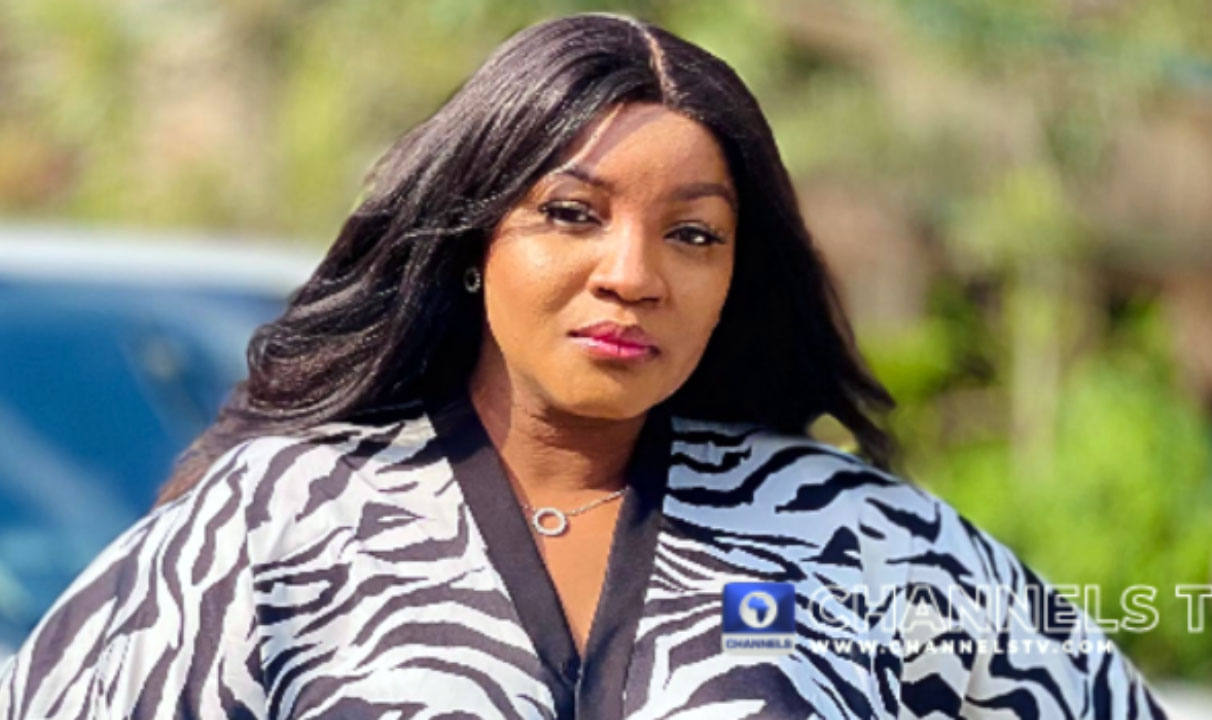
Omotola: I get Hollywood royalties but nothing from 30 years in Nollywood
Veteran Nollywood actress Omotola Jalade-Ekeinde has renewed concerns about the payment structure in Nigeria’s film industry, revealing that she receives royalties and residual payments from Hollywood despite spending far less time working there, but has received no similar payments from her three-decade career in Nollywood.
Omotola said she has worked in Hollywood for about five years and continues to receive payments from her past projects, while her roughly 30 years in Nollywood have yielded no royalty payments.
“I’ve only worked in Hollywood for five years, yet I constantly receive envelopes containing my residuals and royalties. I’ve worked in Nollywood for 30 years and have never received a single envelope. Maybe they don’t know where I live,” the actress said.
Her remarks have reignited the debate over actors’ royalties, residual payments and contractual rights in Nollywood, particularly as Nigerian films increasingly generate revenue through cinemas, television, streaming platforms and international distribution.
Omotola had previously raised similar concerns in 2025, when she disclosed that she had featured in more than 310 Nollywood projects over three decades without receiving residuals.
At the time, she contrasted that experience with her Hollywood work, saying she had received monthly residual payments from two test projects completed during her relatively brief time in the American film industry.
She also shared images of payment envelopes from SAG-AFTRA, the American union representing film and television performers, to illustrate the system under which performers can receive continuing payments from qualifying uses of their work.
The actress used the comparison to call for greater structure within Nollywood’s compensation system, arguing that performers should be able to benefit financially when their work continues to generate value.
READ ALSO:
- Adeleke’s re-election faces tribunal battle as APC, PDP file petitions
- I always think I’m the best – Mbappé speaks on Ballon d’Or chances
- My husband is a secure man – Mo Bimpe claps back at critics
Residual payments are generally payments made to performers when films or television productions are reused or distributed through qualifying channels, such as television broadcasts, reruns or streaming, depending on contractual and industry arrangements.
Royalties can also arise from agreements that give performers or other rights holders a continuing share of revenue generated from the use or exploitation of their work.
Omotola’s latest comments therefore highlight a distinction between a one-time acting fee and continuing financial participation in the commercial life of a production.
Her concerns have also brought renewed attention to the structures supporting Nollywood actors and filmmakers, including contracts, copyright, rights management, distribution and revenue tracking.
The issue comes at a time when Nollywood has expanded significantly beyond the traditional home-video and cinema markets.
Nigerian films are now distributed through international streaming services and other digital platforms, giving productions longer commercial lives and access to audiences around the world.
However, Omotola’s experience has also prompted questions about whether the industry’s financial and contractual systems have developed at the same pace as its global reach.
In 2025, the Chairman of the Audio Visual Rights Society of Nigeria (AVRS), Mahmood Balogun, acknowledged the challenges surrounding residual collection in Nigeria while noting that the country was still developing the infrastructure required for effective royalty administration.
Balogun said AVRS had distributed royalties to members but explained that actors and other rights holders who are not members of relevant collecting structures may not receive such payments.
He also pointed to challenges involving copyright awareness, compliance and the collection of royalties from broadcasters, hotels and other commercial users of audiovisual content.
The debate has consequently moved beyond whether actors are paid enough for individual film appearances to the broader question of whether they can benefit from the continuing commercial use of their performances.
READ ALSO:
- After two decades, Tinubu approves Cabotage fund for Nigerian shipowners
- Hate Speech, Threats During Campaigns Attract ₦10m Fine, 12 Months Jail – INEC
- Market Fire in Indonesia Kills 11, Including Six Children
Omotola’s lengthy career makes her intervention particularly significant. She has been one of the most recognisable faces of Nollywood since emerging as a major actress in the 1990s and has featured in hundreds of productions.
She has also transitioned into filmmaking and production, giving her experience on both sides of the industry’s financial structure.
Her recent film, Mother’s Love, provided another insight into the economics of Nigerian filmmaking.
The movie reportedly grossed more than N103 million during its cinema run, but Omotola disclosed that only about N22.28 million accrued to the producers after deductions including exhibitor and distributor shares, advertising and production-related costs, as well as various taxes.
She subsequently disclosed that the amount accruing to her production company from the film was donated to Slum2School Africa, fulfilling a pledge made by her production outfit.
The disclosure offered a glimpse into the gap between a film’s headline box-office figure and the amount ultimately available to producers after industry deductions.
Omotola’s royalty concerns highlight another side of that financial equation: what happens to performers and other creatives after their initial fees have been paid and their films continue to circulate.
The actress has previously indicated that she wants royalty clauses included in her Nollywood contracts, arguing that her work should continue to provide value for her and her family.
Her position reflects a wider push among some Nigerian creatives for stronger contractual protections and clearer mechanisms for tracking revenue generated by films after their initial release.
For an industry that now has a substantial international audience, the issue of Nollywood royalties is increasingly tied to questions of professionalism, transparency and sustainability.
The growth of streaming platforms has made the subject even more important because films can remain available to viewers for years, potentially generating revenue long after their cinema or television premieres.
Whether actors receive additional compensation in such circumstances depends on the contracts governing individual productions, ownership arrangements and applicable rights-management systems.
Omotola’s comments do not necessarily represent the experience of every Nollywood performer, but they have once again placed the industry’s royalty structure at the centre of public discussion.
Her message is ultimately a call for a more organised system in which actors and other creatives can benefit from the long-term commercial value of their work.
As Nollywood continues to expand internationally, the debate over royalties, residuals, actors’ rights and film revenue is likely to remain an important part of conversations about the future of Nigeria’s entertainment industry.
For Omotola, however, the disparity remains personal: after about five years of work in Hollywood, she says she continues to receive royalty and residual payments, while three decades and hundreds of projects in Nollywood have produced none.
Omotola: I get Hollywood royalties but nothing from 30 years in Nollywood
Entertainment
My husband is a secure man – Mo Bimpe claps back at critics
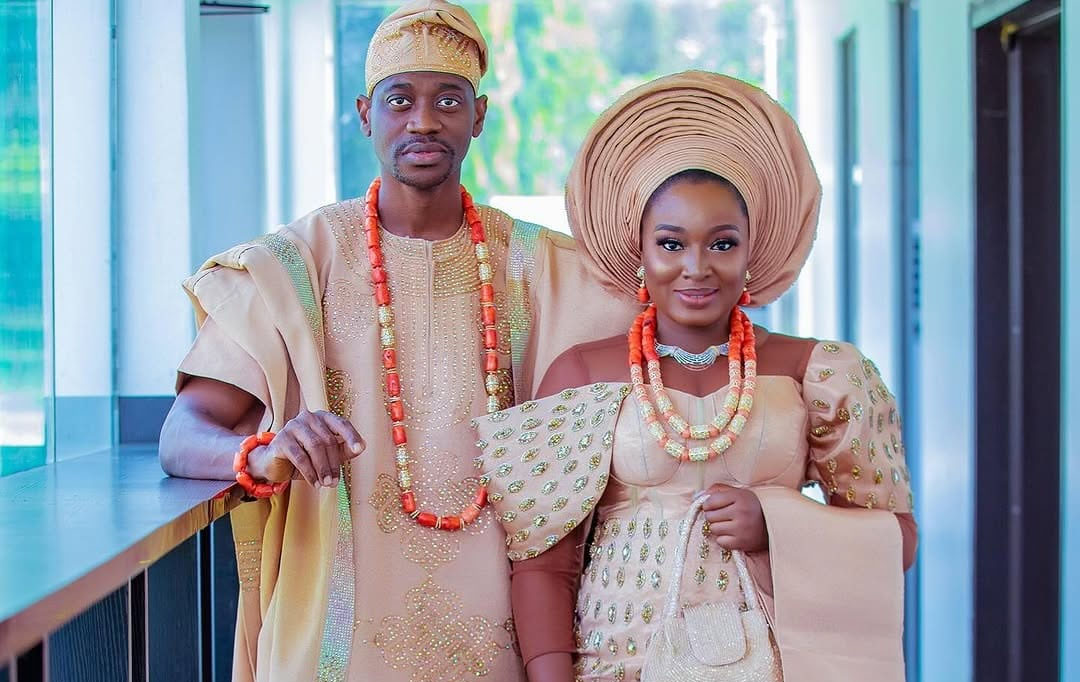
My husband is a secure man – Mo Bimpe claps back at critics
Nollywood actress Mo Bimpe has responded to social media criticism following a viral video showing her interacting with fellow actor Jide Awobona at the premiere of A Mama Deola Wedding Story in Lagos.
The video, recorded at the September 2, 2026 movie premiere, showed Mo Bimpe seated between Awobona and her husband, actor Lateef Adedimeji.
In the clip, Mo Bimpe was seen leaning towards Jide Awobona and resting on his shoulder while they appeared to look at something on her phone.
The brief interaction quickly attracted attention on social media, with some users questioning the nature of the relationship between the two actors and debating whether the moment crossed expected marital boundaries.
Some commentators also scrutinised Lateef Adedimeji’s reaction, with viewers suggesting that he appeared uncomfortable during the interaction. However, neither Lateef nor Mo Bimpe has confirmed that he was upset by the incident.
The growing online discussion eventually prompted Mo Bimpe to address the criticism.
In a statement shared on her Instagram Story on Sunday, September 6, the actress said she found it surprising that an ordinary conversation between friends had been interpreted as something suspicious.
She explained that the viral clip represented only a brief interaction and should not be used to draw conclusions about her marriage.
Mo Bimpe stressed that marriages can be built on trust, friendship, respect and confidence, rather than fear, jealousy or constant monitoring.
“Not every marriage is built on fear, insecurity, and constant monitoring. Some marriages are built on trust, friendship, respect, and confidence,” she said.
The actress further suggested that the strong reactions to the video may reflect the kind of relationships some of the critics are familiar with rather than the reality of her own marriage.
READ ALSO:
- After two decades, Tinubu approves Cabotage fund for Nigerian shipowners
- Hate Speech, Threats During Campaigns Attract ₦10m Fine, 12 Months Jail – INEC
- Market Fire in Indonesia Kills 11, Including Six Children
“The fact that so many of you found that interaction strange says more about the relationships you’re used to than it does about mine,” she added.
Mo Bimpe also rejected the suggestion that every unusual-looking interaction between a married person and a member of the opposite sex should automatically be interpreted as evidence of problems within the marriage.
“Not every marriage is toxic, there are still healthy marriages but I understand if you can’t relate,” she said.
Addressing her husband’s attitude towards her friendships, Mo Bimpe described Lateef Adedimeji as a secure partner who trusts her.
“My husband is a secure man, a brief conversation with a family friend does not threaten our marriage, or require anyone’s concern,” she stated.
The actress’s response has generated further reactions online, with some social media users praising her for defending her marriage and others continuing to discuss the boundaries that should exist between married people and their friends or colleagues.
The controversy has also reignited conversations about celebrity marriages and social media scrutiny, particularly the way short clips can be taken out of context and become subjects of widespread speculation.
Mo Bimpe and Lateef Adedimeji have been married since December 2021 and remain one of the better-known couples in the Nigerian entertainment industry.
Both actors have established careers in Nollywood, and their relationship has frequently attracted public attention.
Jide Awobona is also a colleague within the Nigerian film industry, and Mo Bimpe described him as a family friend while explaining the viral interaction.
The incident occurred during the premiere of A Mama Deola Wedding Story, a wedding-themed entertainment event that attracted several Nollywood stars and generated considerable attention on social media.
For Mo Bimpe, however, the viral video does not indicate a problem in her marriage.
Her response was aimed at making it clear that she and Lateef operate their relationship on a foundation of mutual trust and confidence, and that ordinary interactions with friends should not automatically become a source of suspicion.
The actress’s comments have therefore shifted the focus from the viral clip itself to broader discussions about trust in marriage, relationship boundaries, celebrity privacy and online criticism.
While social media users continue to debate the video, Mo Bimpe has made her position clear: she believes her marriage is secure, and she does not consider a brief conversation with a family friend a threat to her relationship with Lateef Adedimeji.
My husband is a secure man – Mo Bimpe claps back at critics
Entertainment
Veteran Actor Jude Chukwuka Reveals Eight-Year Battle With Undiagnosed Depression After Wife Left
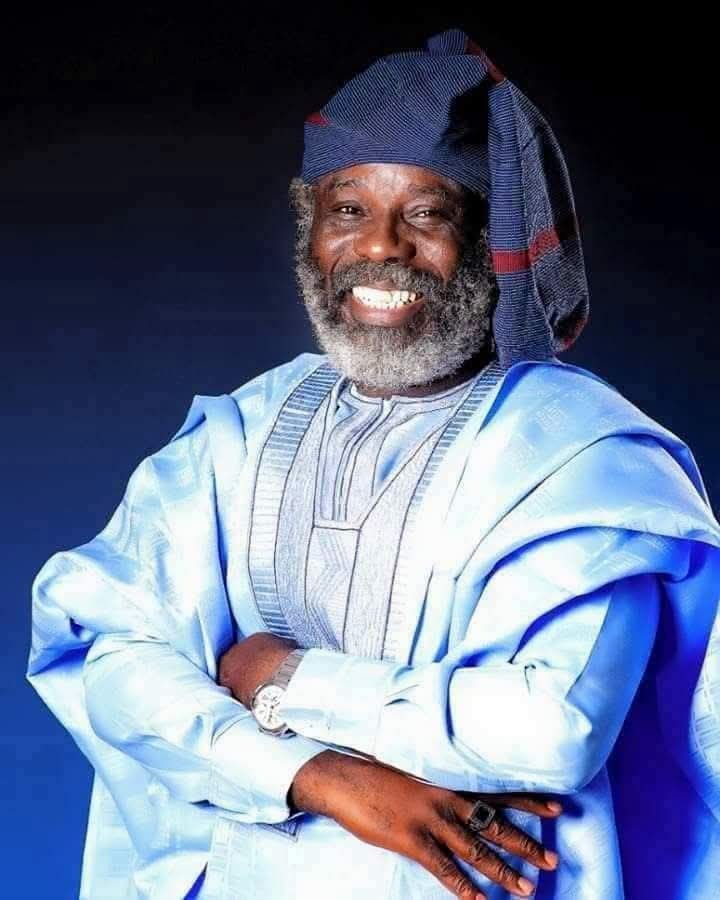
Veteran Actor Jude Chukwuka Reveals Eight-Year Battle With Undiagnosed Depression After Wife Left
Veteran Nollywood actor, Jude Chukwuka, has opened up about a difficult chapter of his life, revealing that he unknowingly battled depression for about eight years following the collapse of his marriage.
Chukwuka made the disclosure during an interview with African A-List on Friday, September 5, 2026, while reflecting on the emotional impact of his failed marriage and how it affected his outlook on life.
The actor said he initially did not realise that the changes in his behaviour and emotions were symptoms of depression.
According to him, he simply continued with his life without understanding why he had lost interest in many things.
“My wife left me for eight years. I didn’t know I had depression,” he said. “I was just living my life like I’m not interested in all of these things for about eight years.”
Chukwuka explained that his emotional withdrawal and lack of interest persisted for years after the breakdown of his marriage, but he was unable to identify the underlying problem at the time.
The veteran actor’s revelation offers an insight into the emotional struggles that can follow the breakdown of a marriage, particularly when the affected person does not recognise the psychological effects of the experience.
Chukwuka had previously disclosed that his first marriage ended in 2011. He described his subsequent marriage as a “second chance” after experiencing heartbreak from the earlier failed relationship.
His latest revelation highlights the prolonged emotional consequences of the experience and the difficulty he faced in recognising what he was going through.
The actor’s account also underscores the importance of paying attention to prolonged emotional withdrawal, loss of interest and other significant changes in behaviour, which can sometimes be associated with depression.
Chukwuka has remained active in Nollywood over the years and is known for his appearances in numerous Nigerian films and television productions.
Veteran Actor Jude Chukwuka Reveals Eight-Year Battle With Undiagnosed Depression After Wife Left
-

 Business2 days ago
BREAKING: OPay Warns Customers Against Viral Shutdown Message, Threatens Legal Action
-

 Politics2 days ago
15 northern states may collapse if fuel subsidy returns, OAU professor warns Atiku
-

 Business3 days ago
Dangote Refinery IPO approved at ₦525 per share, targets ₦2.15trn
-
 metro2 days ago
Osinbajo raises alarm over chemicals in fruits, recalls wife’s orange juice experience
-

 metro1 day ago
APC rally: Suspected thugs attack journalists, smash Radio Nigeria vehicle in Kano
-
 metro2 days ago
NSCDC Rescues 15 Trafficked Minors Sold for ₦2m Each by Fake NGO Official
-

 Auto2 days ago
NAJA 19th Auto Awards: Industry’s best to battle for honours December 3
-

 Politics2 days ago
‘It’s a lie’ – Wike’s aide challenges Peter Obi’s ‘I don’t give shishi’ claim