

Politics
APC Governors Still Divided Over Zoning of Party Offices

*Buni expected to come up with list of offices across board
*Party names Buni, Abiodun, Sanwo-Olu, Abdulrahman, others in convention sub-committees
*Governors meet tomorrow, likely to deliberate on election timetable
Adedayo Akinwale in Abuja and Peter Uzoho
A prominent governor of the ruling All Progressives Congress (APC), yesterday, said division has continued to plague the party over the zoning formula that was made public last week.
Some of them argued the list was sprung on them and the party never adopted it before it was announced. They have, therefore, argued that it could not stand, thus dismissing the zoning arrangement in circulation as mere suggestion.
They also argued that it was not governors who should announce zoning of party offices; that it should be the function of the party and not governors.
However, while they have agreed that the next chairman of the APC should come from the north and the party’s presidential candidate from the southern part of the country, its leaders, mostly governors, were not comfortable with the zoning formula for other positions in the party, THISDAY learnt yesterday.
“It is the issue of the deputy chairman and others that they are dealing with. Under the current arrangement, they want to retain John James Akpanudoedehe as secretary; Ken Nnamani as Deputy National Chairman and make Farouk Aliu Deputy Chairman, north, which is where the conflict is, because the north-west governors don’t want him to be deputy chairman,” the source explained yesterday.
The acting Chairman of the Caretaker/Extraordinary National Convention Planning Committee (CECPC) of the party, Mai Mala Buni, was expected to come up with a zoning arrangement of offices across board to deliberate upon and perhaps adopt, but that is yet to happen.
But, with the release of INEC timetable, which has left little room for any further machination, there is renewed urgency to get things done quickly. Between the March 26 date for the party’s convention and beginning of primary season on April 4, according to INEC timetable released on Saturday, there is no enough time for the expected new NWC of the party to prepare for the primaries.
However, APC governors would be meeting tomorrow, and their meeting is not be unconnected to the election timetable recently released by the Independent National Electoral Commission (INEC), and the unusual duration between primaries and the general election.
The governors are also likely to deliberate on the contentious zoning list that is receiving a lot of pushback from party stakeholders.
READ ALSO:
- Bad fuel: Petrol scarcity persists in Abuja, Lagos, others, despite govt’s assurances
- Nigerians get visa-free access to Romania, Hungary from Ukraine
According to the THISDAY source with knowledge of the happenings in APC, who preferred anonymity, the division in the party was telling, adding that some three governors from the north had usurped the powers of the CECPC.
He said what was widely circulated as zoning formula was no more than a proposal by some elements in the party, which was yet to be approved by the Caretaker/Extraordinary National Convention Planning Committee (CECPC) of APC.
The source claimed that, contrary to the impression being created by those promulgating the unofficial zoning formula, it was just an idea mooted by some people and sold to the party leadership.
He contended that the zoning arrangement had not undergone proper review by critical stakeholders, let alone getting the approval of the APC leadership led by Buni.
According to the source, who was not pleased with some of the recent happenings in the party, the three governors, also from the north, have literally seized the powers of the caretaker committee and were driving the affairs of the party, thereby undermining Buni, for obvious self-interest.
The source said some of the meetings of the party leadership last week agreed on a new convention date, adding that President Muhanmadu Buhari, might have settled for a former governor of Nasarawa State, Abdullahi Adamu, from North Central, as the consensus choice for national chairman.
The source, thus, noted that the next president of the country would come from the south for the purpose of geo-political and ethnic balancing, stressing that anything short of this basic understanding could spell doom for the party.
These, nonetheless, the APC, last night, named the Deputy Senate President Ovie Omo-Agege; Mai Mala Buni, Prince Dapo Abiodun, Abdulrasaq Abdulrahmnan, Governor of Lagos State, Babajide Sanwo-Olu; and Governor of Cross River State, Ben Ayade, as Chairmen of the national convention sub-committees amongst others, ahead of the party’s convention slated for March 26.
But in further explaining the involvement of his three northern colleagues in issues relating to the national convention, the source said, Buni had never taken any decision without consulting Buhari, whom he said was Chairman of the National Executive Council (NEC) of the party.
The three governors, he claimed, had been railroading the party’s leadership into taking many decisions without consulting other members. He contended that this did not augur well for the APC, as these actions had been mostly driven by personal ambition rather than the overall interest of the party.
The governor said, “Obviously, a few governors are trying to usurp the powers of the party. For instance, the postponement of the national convention and the zoning list announced to the press, the governors and other stakeholders of the party never discussed or agreed on it; we just heard it in the media.
“As far as some of us are concerned, that zoning list making the rounds is only a proposal by those few governors. The party may well adopt it or may set up a zoning committee, which to some of us is the right thing to do. The ideal thing was for us to have set up a zoning committee that would agree on the zones to allocate the party positions to.
“So, by announcing a list that was not agreed on as the party’s position, was more like an imposition. No decision was taken. The president only said all he wanted was to make sure we have a consensus. No decision and they just went and organised a press conference with a zoning list.
“The proper thing is for the party to have a zoning committee that would consult and arrive at the zoning formula. Even if they are going to arrive at the same answer, they must be seen to have consulted with members of the party. That is very important so that our party is not seen as a party in confusion, like the Peoples Democratic Party (PDP), would like to make Nigerians believe.
“There was a meeting to announce the postponement of the convention and some governors were unhappy that the convention was being postponed and they were not aware and that really got the governors upset.”
The governor also disclosed that based on the decision to zone the APC national chairman to the north, the party’s presidential candidate must come from the south.
His words, “The presidential candidate is going to come from the south and it is likely going to be a Christian presidential candidate. You cannot have the chairman of the party to be a Muslim and a presidential candidate a Muslim, it is not possible.
“And if the presidential candidate is a Christian, the vice is going to be a Muslim from the north, invariably, you cannot have a Christian vice president from the north, when the presidential candidate is a Christian.”
The source, who further buttressed his position with the setting up of zoning committee by the party, contended that he had been vindicated by that development, adding that the route earlier taken was synonymous with placing the cart before the horse.
While condemning the activities of the three northern governors, he said the Buni-led committee should be commended for the stability it brought to the party. He claimed that a lot of the APC governors were happy with Buni, because of how he had been able to resolve the disputes in the APC states without undermining the governors.
He stressed, “But some have remained antagonistic and have been scheming to have their way obviously, because of their selfish political interests and despite benefiting immensely from Buni’s decision to recognise the excos.
“The truth is that Buni didn’t betray the governors, because this same man, if not for him, most of the governors would not have had their excos as the recognised party structures in their states. He made sure every governor got what he wanted, which is unprecedented.
“The governors would have been battling with their contenders or the former governors in their states. But Buni made it favourable for the governors by making sure that right from the ward to the state EXCO levels, the governors have those they wanted in charge.
“This same man (Buni) was also able to bring in the Zamfara, Ebonyi and Cross River governors, to the party. So, Buni has helped in stabilising the party. That was why when some persons were accusing him of misconduct and were making noise, the man said he would resign if they continued the noise and everybody calmed down.”
The source, however, reiterated that Buhari wanted the chairman of the party to come from North-central and has settled for Adamu as the next party chairman as well as the deputy chairmen, a decision he said the president had communicated to the CECPC.
“However, Buni told the president that he wants to retain the Secretary of the CECPC as the party’s secretary, which he has agreed to, but when some governors heard it, they were up in arms, because everybody as you know has different interest.
“Everybody wants to have party leadership that they feel would do their bidding, because we all have our different ambitions,” he said.
On sub-committee membership for national convention, the party, in a short statement, named other members of the sub-committees as Governor of Ebonyi State, Dave Umahi, and the Minister of Foreign Affairs, Geoffrey Onyeama, among others.
National Secretary of the party, Senator John Akpanudoedehe said the 20 sub-committees constituted by the party were in line with the schedule of activities for the National Convention as resolved by the caretaker committee.
The party noted that each of the committees, except the Central Planning Committee, had a 12-man team with all Caretaker Committee as members.
The party added that the Secretariat Support Committee had a seven-man team, while the Accreditation Committee has 41 members and other committees were made up of 40 members each.
According to APC, the Central Planning Committee is chaired by Yobe State Governor, Mai Mala Buni; Screening Committee is chaired by Kwara State Governor, Abdulrasaq Abdulrahmnan; while the Election Committee is chaired by Ogun State Governor, Prince Dapo Abiodun.
Mr. Emmanuel Emeka is the secretary.
Governor Hope Uzodima heads the Screening Appeal Committee, Governor of Kastina State, Aminu Bello Masari would serve as Election Appeal Committee chairman, while the Legal Committee is headed by the Attorney General of the Federation, Abubakar Malami.
Governor of Zamfara State, Bello Matawalle heads Accommodation Committee, while Venue/Decoration/Site Servicing Committee has Governor David Umahi of Eboyin State as its chairman, and Governor Simon Bako Lalong of Plateau State heads Transport/Logistics Committee.
Governor of Gombe State Inuwa Yahaya will chair Budget Committee, and Finance Committee is headed by Governor Abubakar Badaru of Jigawa State, while Digital Committee has Kashifu Inuwa as chairman, and Convention Legacy and Rapporteur Committee has Borno State Governor, Prof. Babagana Zulum as chairman.
Other committees are: Media/Publicity headed by Sanwo-Olu, Governor Yahaya Bello of Kogi State heads the Security/Protocol Committee, while Entertainment/Welfare Committee has Deputy Speaker, Hon Ahmed Wase, as chairman. THISDAY was reliably informed that some alterations may still be effected on the list.
APC had earlier fixed February 26 for its national convention before it was rescheduled last week after a meeting of the party’s governors with Buhari.
At the meeting, the party also agreed to zone the national chairmanship position to the North-central, while the north would swap other party positions with the south as obtained in the Adams Oshiomhole National Working Committee (NWC).
Thisday









Politics
‘Join the Hunt’ — Soludo Urges Igbos to Strategically Align Ahead of 2027

‘Join the Hunt’ — Soludo Urges Igbos to Strategically Align Ahead of 2027
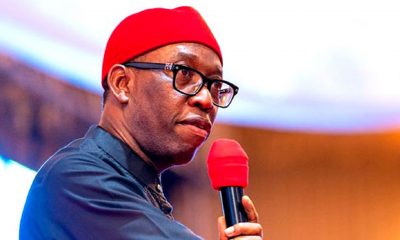
Anambra State Governor Chukwuma Soludo has urged the Igbo people to adopt a more strategic approach to politics, arguing that stronger engagement with the political centre is necessary for the South-East to secure a greater share of national opportunities.
Soludo made the call while speaking to residents of Ekwusigo Local Government Area of Anambra State, where he commissioned the three-kilometre Ozu-Inyaba-Ozubulu-Ihembosi Road and other projects executed in the area.
Speaking largely in Igbo, the governor used a hunting analogy to explain his argument, saying those who want a share of the national “inheritance” must participate in the process through which decisions and resources are determined.
He said the 2027 elections should not be approached solely through emotions or political sentiments, urging voters to consider what their political choices would deliver for the region.
Soludo also questioned the records of politicians who, according to him, return to the South-East during election periods to seek votes but have not adequately addressed longstanding problems affecting the people.
He cited the persistent erosion crisis in Ekwusigo as an example and questioned what politicians who had been involved in public affairs for years had done to resolve it.
Although he did not name anyone in the reported remarks, the comments were seen as a reference to former Anambra State governor Peter Obi, who has remained a prominent figure in the political debate over the South-East’s future.
The governor said the Igbo people should no longer waste their votes without considering the practical benefits that could accrue to the region from their political choices.
He argued that the South-East needed to participate more directly in national political structures rather than remaining isolated and subsequently complaining about marginalisation.
Using his hunting analogy, Soludo said that if others joined a hunt and returned with an elephant, those who stayed away could not reasonably expect to determine how the proceeds were shared.
He linked the argument to the political strategy of the All Progressives Grand Alliance (APGA), saying the party was positioning itself to secure what he described as the rightful inheritance of the Igbo people and Anambra State.
READ ALSO:
- 18 Suspects Transferred to US Over 2021 Killing of Haitian President Moïse
- My Heart Has Always Been Home With You — Tinubu’s Powerful Message to Oluremi at 66
- Tinubu’s UNGA Absence Fuels Questions Over Planned Trump Meeting
“This is where APGA is; Igboland will be better. Anambra will get its right,” he said.
Soludo has consistently promoted closer cooperation between APGA and the Federal Government led by President Bola Ahmed Tinubu.
APGA has declared support for Tinubu’s bid for a second term in the 2027 presidential election, with the party arguing that strategic partnerships could give the South-East greater influence at the national level.
Soludo had earlier said APGA adopted Tinubu as its preferred presidential candidate for 2027, citing what he described as strategic and ideological considerations.
The governor has subsequently presented the relationship between APGA and the Federal Government as a practical political partnership aimed at securing development opportunities for Anambra and greater influence for the South-East.
However, the political alignment has generated disagreement, including within the opposition space and among some APC members in Anambra.
The Anambra APC has previously disputed claims of a broad political partnership between APGA and APC, maintaining that the two parties remain separate political organisations.
Soludo’s latest comments also included a defence of APGA’s relevance in Igbo politics.
He described APGA as a platform through which several Igbo politicians rose to prominence and criticised politicians who benefited from the party before moving to other political organisations.
The governor said APGA intended to retain its political strength in Anambra while supporting Tinubu at the presidential level in 2027.
His position effectively places APGA’s 2027 strategy around retaining political control in Anambra while backing Tinubu’s presidential bid.
Meanwhile, Soludo’s comments about political participation and the region’s development have attracted criticism from some commentators, who have questioned whether the governor’s strategy has produced sufficient benefits for Anambra.
Critics have also raised questions about the state’s continuing erosion crisis, infrastructure and the extent of federal support received by the state under the current political arrangement.
The latest remarks come as political parties and prominent politicians intensify preparations for the 2027 general elections, with the political strategy of the South-East increasingly featuring in debates over regional representation, federal influence and access to national resources.
Soludo’s argument is that the region can improve its bargaining position by engaging strategically with the political centre rather than remaining outside national power structures.
‘Join the Hunt’ — Soludo Urges Igbos to Strategically Align Ahead of 2027
Politics
APC Wins Four of Five By-Elections as APM Takes Bauchi Seat
APC Wins Four of Five By-Elections as APM Takes Bauchi Seat
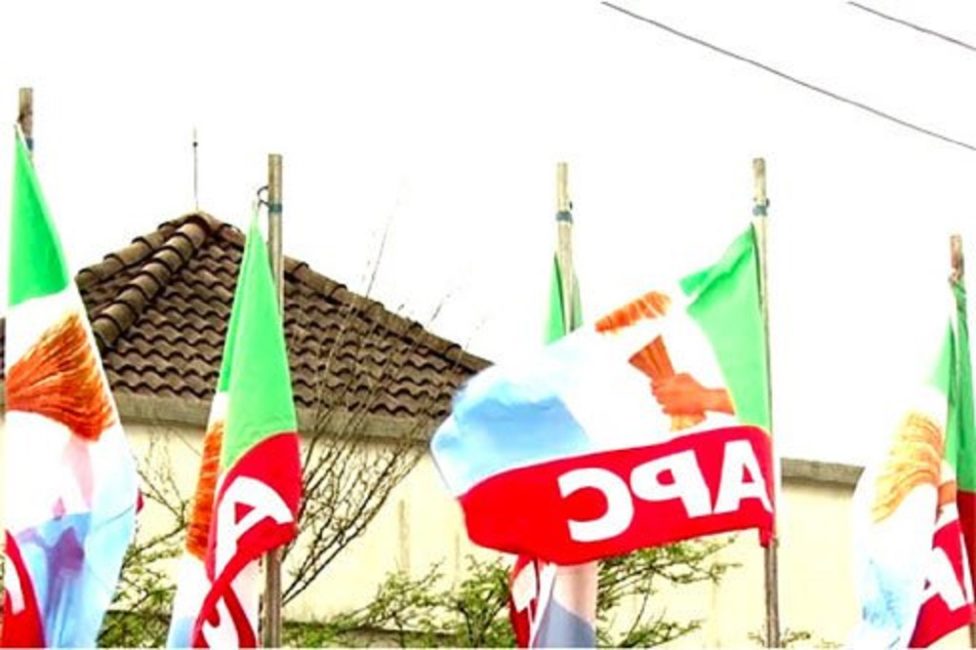
The All Progressives Congress (APC) won four of the five legislative by-elections conducted across Gombe, Kano, Bauchi and Delta states, while the Allied Peoples Movement (APM) secured the remaining seat in Bauchi.
The elections, conducted by the Independent National Electoral Commission (INEC) on Saturday, September 19, 2026, were held to fill one vacant federal constituency seat and four vacant state assembly seats.
The APC victories came in the Gombe/Kwami/Funakaye Federal Constituency of Gombe State, Dawakin Kudu State Constituency in Kano, Udu State Constituency in Delta and Disina State Constituency in Bauchi.
The APM won the Sakwa State Constituency in Zaki Local Government Area of Bauchi State.
In Gombe, APC candidate Kallamu Usman MaiJama’a won the Gombe/Kwami/Funakaye Federal Constituency election with 41,121 votes. The Labour Party candidate polled 3,553 votes, while the APM candidate received 872 votes.
In Kano, APC candidate Husseini Datti emerged winner of the Dawakin Kudu State Constituency election with 22,890 votes. The Peoples Redemption Party scored 270 votes, while the Peoples Democratic Party recorded 108 votes. Other parties recorded lower figures.
In Delta State, APC candidate Okolosi Ator won the Udu State Constituency seat with 8,724 votes, while the PDP candidate polled 214 votes.
The APC also secured the Disina State Constituency seat in Bauchi, where its candidate, Yakubu Ali, obtained 5,846 votes. The APM candidate scored 5,225 votes, while the PRP candidate received 3,701 votes.
The second Bauchi contest produced a different result, with Adamu Yakubu of the APM winning the Sakwa State Constituency seat with 8,515 votes. The APC polled 3,771 votes, the PDP 2,076, and the PRP 727.
The results followed INEC’s conduct of the five polls across the four states after the seats became vacant through different circumstances, including death, resignation and defection.
READ ALSO:
- Atiku Offers Scholarship to Viral Niger Teen Miner After 37 Miners’ Deaths
- NDLEA Seizes N3.4bn Drugs, Arrests Fake Police Officer in Nationwide Crackdown
- Oyo: Police Arrest Serving Air Force Personnel Over Alleged Robbery, Abduction
The Gombe/Kwami/Funakaye federal seat became vacant following the death of the former lawmaker, Yaya Bauchi Tongo, in June 2026. In Bauchi, the Sakwa seat became vacant following the death of its former occupant, while the Disina seat became vacant after the lawmaker resigned to pursue another political position.
The Udu seat in Delta became vacant following the defection of its former occupant, Collins Egbetamah, from the APC to the Nigeria Democratic Congress. The Dawakin Kudu seat in Kano became vacant after its former occupant, Rabiu Shuaibu, left the state assembly to contest the Dawakin Kudu/Warawa Federal Constituency election.
Ahead of the polls, INEC deployed sensitive materials and electoral personnel to the affected constituencies, while security agencies announced deployments aimed at maintaining order before, during and after voting.
INEC Chairman, Professor Joash Amupitan, monitored the elections from the commission’s National Situation Room in Abuja and described the exercise as an important operational test ahead of the 2027 general elections.
Amupitan said the five by-elections would provide the commission with lessons on logistics, technological deployment and the readiness of field personnel.
He stressed that bye-elections should not be treated as routine exercises because each poll provides an opportunity for INEC to assess and improve its electoral processes ahead of larger elections.
Reports from the four states indicated that voting was generally peaceful, although some operational challenges were recorded.
In parts of Gombe and Kano, reports indicated relatively low voter turnout, while some Bimodal Voter Accreditation System (BVAS) challenges were reported during the Delta election.
The Bauchi election also recorded a security incident, with the state police command reporting the arrest of 47 suspects in parts of Shira Local Government Area.
According to the police, the suspects allegedly posed as members of a state-owned security outfit and were found in possession of items including guns, cutlasses and sticks. The arrests were made in connection with the election security operation.
The results have also drawn attention because of their timing ahead of the 2027 general elections, although the outcome of five constituency-level by-elections does not by itself determine the outcome of the wider 2027 elections.
APC National Chairman, Professor Nentawe Yilwatda, congratulated the party’s candidates who won the four seats and commended APC members, campaign teams and party leaders involved in the contests.
Yilwatda also acknowledged voters, INEC, security agencies and other stakeholders who participated in the elections, while urging the successful candidates to remain committed to their constituents.
President Bola Ahmed Tinubu also congratulated the successful candidates. He urged the newly elected lawmakers to justify the confidence placed in them by their constituents and called on unsuccessful candidates to accept the results in good faith.
The INEC election results portal continued to receive result sheets from the five constituencies after the polls, providing an electronic record of results uploaded from polling units.
The commission is scheduled to conduct the next nationwide presidential and National Assembly elections on January 16, 2027, followed by governorship and state House of Assembly elections in participating states on February 6, 2027.
The September 19 by-elections therefore provide INEC and participating political parties with an opportunity to review electoral logistics, voter participation, technology deployment and election security before the larger 2027 electoral cycle.
APC Wins Four of Five By-Elections as APM Takes Bauchi Seat
Politics
2027: NDC Predicts Wider Obi Victory Over Tinubu in Lagos
2027: NDC Predicts Wider Obi Victory Over Tinubu in Lagos
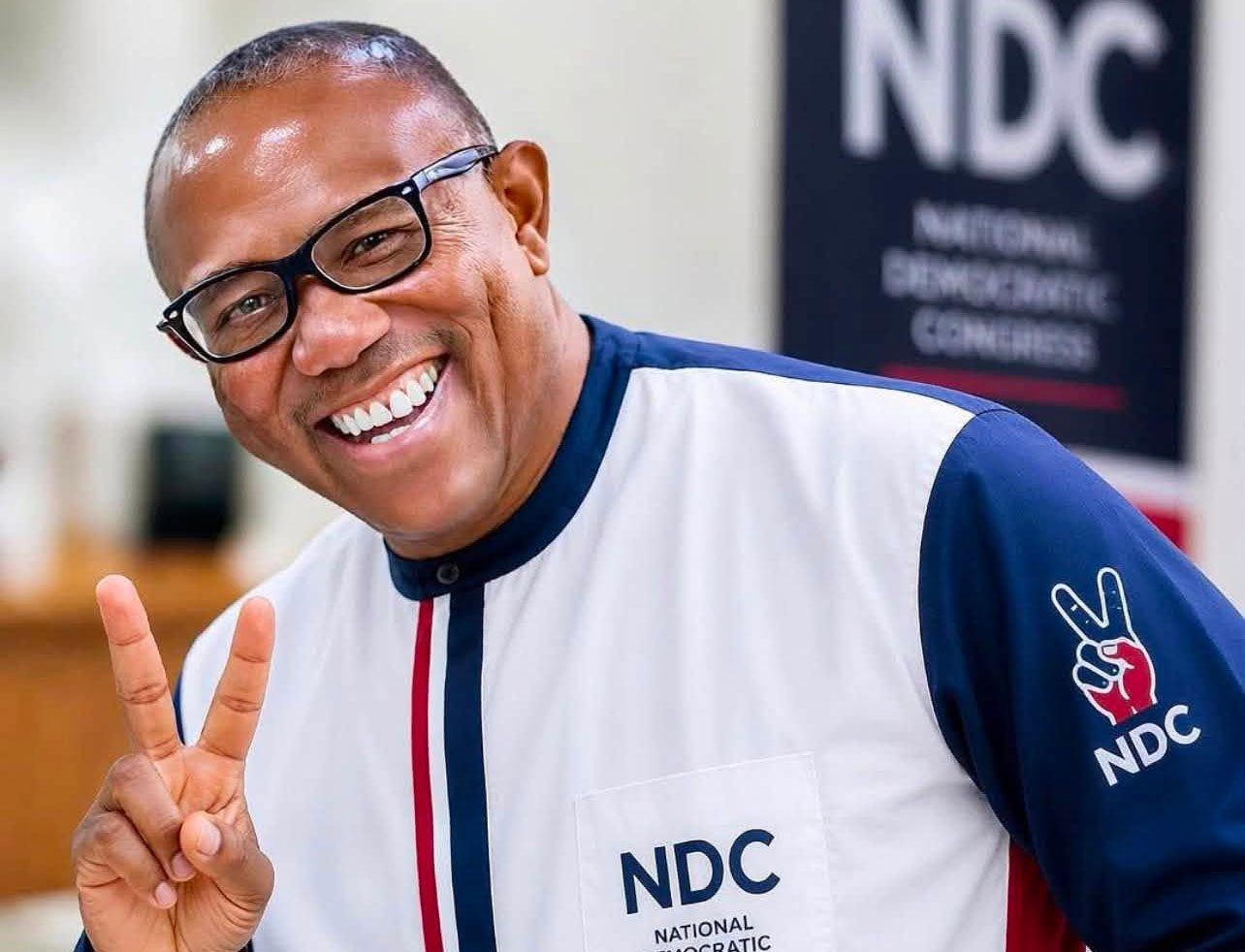
The Nigeria Democratic Congress (NDC) has expressed confidence that its presidential candidate, Peter Obi, will defeat President Bola Ahmed Tinubu in Lagos State in the 2027 presidential election, predicting that the former Anambra State governor will win by a wider margin than he did in 2023.
The party’s National Publicity Secretary, Osa Director, said Obi’s victory over Tinubu in Lagos during the 2023 presidential election was not accidental, describing it as a reflection of the political mood in the state.
Director said the NDC expected Obi to build on his previous performance if the 2027 election was conducted under conditions the party considers free and fair.
He also challenged the All Progressives Congress (APC) and its supporters to allow voters to determine the outcome of the election without intimidation, violence, inducement or other forms of electoral malpractice.
According to him, the NDC has studied the lessons of the 2023 election and is preparing to strengthen its structures and protect its votes across the country.
Director said the party was prepared to confront any challenges that could arise during the election, including alleged attempts to intimidate voters or disrupt the electoral process.
Another NDC candidate in Lagos, Ladipo Johnson, also expressed confidence in Obi’s prospects in the state, attributing the expected improvement to what he described as dissatisfaction with the Tinubu administration.
Johnson said Obi would win Lagos again and by a wider margin, adding that the NDC had become stronger following the realignment of opposition politicians and political groups ahead of the 2027 election.
READ ALSO:
- Olawepo-Hashim: My Political Ideology Differs From Obi, Atiku
- Ortom and His 23 Cars’ ‘Bonus’, by Dele Sobowale
- Abuja Demand Rises as Jetour Brings X70 Plus Experience to FCT
He also raised concerns about possible voter intimidation, harassment and vote buying, urging Nigerians to protect their votes and ensure that electoral choices are respected.
However, the claims by Director and Johnson about Obi’s expected performance in Lagos are political predictions by NDC officials and do not constitute an established election outcome.
The 2023 presidential election remains the latest completed presidential contest in Lagos. Obi won the state with 582,454 votes, narrowly ahead of Tinubu, who polled 572,606 votes, according to results declared by the Independent National Electoral Commission (INEC).
Obi won nine of Lagos State’s 20 local government areas, including Ajeromi-Ifelodun, Amuwo-Odofin, Eti-Osa, Ikeja, Kosofe, Oshodi-Isolo, Somolu, Ojo and Alimosho.
Tinubu won the remaining 11 local government areas: Agege, Apapa, Badagry, Epe, Ibeju-Lekki, Ifako-Ijaiye, Ikorodu, Lagos Island, Lagos Mainland, Mushin and Surulere.
The result made Lagos one of the closely watched states in the 2023 presidential contest, particularly because Tinubu had previously served as governor of the state and maintained a significant political structure there.
The political landscape has since changed considerably ahead of the 2027 election.
INEC has published its final list of presidential candidates, with 18 candidates cleared to contest the January 16, 2027 presidential election.
Tinubu is listed as the APC presidential candidate, while former Vice President Atiku Abubakar is contesting under the African Democratic Congress (ADC). Obi is listed as the presidential candidate of the NDC, with former Kano State Governor Rabiu Musa Kwankwaso as his running mate.
The changes mean that the party alignments and political structures involved in the 2027 contest are different from those that shaped the 2023 election.
Obi’s move from the Labour Party to the NDC has also changed the political platform through which he is seeking the presidency, while Kwankwaso’s emergence as his running mate has brought another major political bloc into the NDC structure.
For the NDC, Lagos remains an important target as it seeks to expand Obi’s support beyond the areas where he performed strongly in 2023.
The party’s argument is based partly on the margin by which Obi won Lagos in 2023 and its assessment of the current political environment in the state.
The APC, meanwhile, remains a major political force in Lagos, where it has maintained a strong organisational structure over several election cycles.
The 2027 contest will therefore take place against a different political backdrop, with new party alliances, candidates and campaign structures competing for the support of Lagos voters.
Beyond Lagos, the NDC is seeking to build a nationwide campaign around Obi’s candidacy, while the APC and other parties are also working to consolidate their respective support bases.
Issues likely to shape the campaign include the economy, cost of living, security, employment, governance, electoral credibility and the performance of the federal government.
The NDC has continued to emphasise the need for a credible electoral process, with its officials urging security agencies, electoral authorities and political parties to ensure that voters can cast their ballots without intimidation.
For now, the prediction that Obi will defeat Tinubu by a wider margin in Lagos remains the stated expectation of the NDC and its candidates.
The actual result will depend on the votes cast and officially declared in the 2027 presidential election.
2027: NDC Predicts Wider Obi Victory Over Tinubu in Lagos
-
 metro2 days ago
Oyo Police: Student Who Died by Suicide Was Charged With Assault, Not ₦8,000 Debt
-

 metro3 days ago
Niger Miners’ Deaths: Families Demand Compensation, Justice for Victims
-

 metro3 days ago
Mambilla: ICC Raises Questions Over $500,000 Payment to Atiku’s Former Wife
-

 Entertainment3 days ago
“She Wanted to Stay Single”: Rema Opens Up About Rejection That Inspired Hit Song ‘Oh No’
-
 International20 hours ago
18 Suspects Transferred to US Over 2021 Killing of Haitian President Moïse
-

 Auto2 days ago
Abuja Demand Rises as Jetour Brings X70 Plus Experience to FCT
-

 metro2 days ago
Irreconcilable Developments: Wedding Cancelled 24 Hours Before Ceremony
-

 metro3 days ago
Niger Miners’ Deaths: Survivor Alleges Substance Was Sprayed in Cell as Probe Intensifies