

Opinion
Borgu, Northern Nigeria and Yoruba history, By Farooq Kperogi
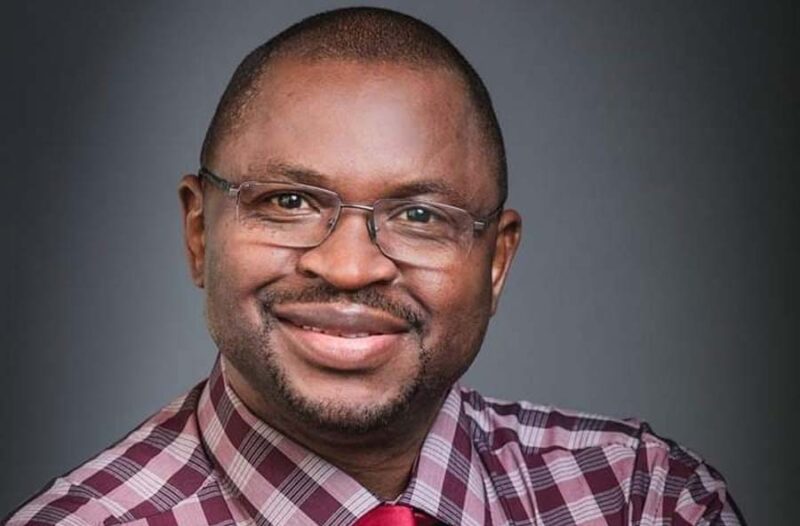
Borgu, Northern Nigeria and Yoruba history, By Farooq Kperogi
My December 21, 2024, column titled “Kemi Badenoch’s Yoruba Identity Meets Inconvenient Truths,” where I set out to show that, contrary to Kemi Badenoch’s claim, the Yoruba and the “North” have had and still have a lot in common, hurt the ethnic susceptibilities of many Yoruba nationalists who misunderstood me as creating a hierarchy of historical and cultural dominance in which the Yoruba are inferior.
That was not what my column was about. If it comes across that way, it’s because people are gazing at the past with the lenses of the present. Historians call that presentism. Presentism animates the sort of defensive, ahistorical, knee-jerk, decontextualized, and emotive reactions that some people gave to my column.
Notions of collective identity with definite ethnographic boundaries are relatively new all over the world. I made this clear to Dr. Lasisi Olagunju who wrote a 3,526-word response to my column last Monday in which he cherry-picked evidence from the self-comforting presentist fantasies of certain Yoruba historians to countermine my arguments. Here’s my response to his response.
Dr. Olagunju took issue with my restating of a well-known, uncontested socio-historical fact: that “Yoruba,” the collective name for the people of western Nigeria, is an exonym that traces etymological provenance from what is now called northern Nigeria and that it originally referred only to people from Oyo, not other subgroups such as Ijebu, Ondo, Ijesa, Egba, etc.
It explains why Oba Sikiru Adetona, the Awujale of Ijebuland, still says the Ijebu are not Yoruba and are not even descendants of Oduduwa. It also explains why, as I pointed out in my October 26, 2019 column titled “Fulani and Origin of the Names ‘Yoruba’ and ‘Yamuri’,” Nigeria’s first modern newspaper, called Iwe Irohin fun awon Egba ati Yoruba (Yoruba for “newspaper for the Egba and Yoruba people”) indicated from its name that the Egba and the Yoruba were different ethnic groups who nonetheless belonged to the same linguistic group.
In other words, as of 1859 when the newspaper was set up, the Egba didn’t call themselves “Yoruba.”
READ ALSO:
- Ogun moves against reported bandits’ invasion of South-West
- Bandit kingpin, Bello Turji, reportedly kills 2 hostages despite ransom payment
- Police to begin enforcement of third-party motor insurance Feb 1 – IGP
That the name Yoruba is an exonym from the North of Nigeria for the people of Oyo is so settled in the literature that I am befuddled that anyone would contest it with mere implausible conjectures and self-created oral histories.
For example, in his 1984 article titled “Yoruba Ethnic Groups or a Yoruba Ethnic Group? A Review of the Problem of Ethnic Identification” published in África: Revista do Centro de Estudos Africanos, Professor Biodun Adediran argued that the term Yoruba wasn’t native to Yoruba and was, in fact, a word first used for Oyo people by northerners.
He said, “the term first appeared in Arabic sources and in European accounts based on information from the Hausa country,” arguing “It was probably the Hausa who first gave the name ‘Yarribah’ to their Yoruba-speaking neighbours. Since the Oyo were the sub-group the Hausa came most frequently in contact with, the name easily became synonymous with ‘Oyo’” (p. 62).
Adeniran also argued that the term “Yoruba” initially remained confined to “the dictionary of those who invented it” (p. 63) and gained broader use only in the early 19th century due to increased interactions between the Yoruba and their northern neighbors. During this period, local wars fostered sub-group pride, leading many non-Oyo groups to reject “Yoruba” as a foreign name.
It was only toward the end of the century, when Europeans insisted on its use and referred to the Alaafin as the King of the Yoruba, that even the Oyo (to whom the name originally referred) began to embrace the term (p. 63).
In his 2019 book, Partitioned Borgu: State, Society and Politics in a West African Border Region, Dr. Hussaini Abdu investigated it further and found that the Hausa themselves borrowed the term Yariba (or versions of it) from the Baatonu people of Borgu, known to the Yoruba as Bariba, Baruba, or Ibariba, who are Oyo’s northwestern neighbors. The Baatonu, as I argued before, refer to the Oyo people as “Yoru” (singular) and “Yorubu” (plural), with “Yoruba” used in third-person references.
Abdu traces the name’s spread to Songhai-Borgu interactions, later reinforced by interviews with Baatonu slaves in Sierra Leone and popularized through European travelers and missionary records, such as Samuel Johnson’s 19th-century writings. This theory aligns with the historical and cultural links between Songhai, Borgu, and Oyo, including the spread of Islam to both Borgu and Yoruba land by Songhai-speaking Mande from ancient Mali, reflected in the Yoruba term for Islam, “imale.”
This is consistent with collective naming practices all over the world. Immediate neighbors typically name each other, which others then adopt. Olagunju cited the examples of “Hausa” (which came from the Songhai) and “Fulani,” which came from the Hausa.
The older Hausa name for Yoruba people was Ayagi (see my August 19, 2022, article titled “‘Ayagi’”: Earliest Nupe-Influenced Hausa Name for Yoruba People” based on my review of Professor Rasheed Olaniyi’s work), not Yariba, which strengthens Abdu’s research about the Borgu origins of the name Yoruba.
READ ALSO:
- Sunday Igboho dismisses death rumour, says he’s alive and well
- Troops eliminate 109 terrorists, arrest 81 suspects
- South-East govs hijacked Ohanaeze Ndigbo elections, group alleges
Of course, Katanga, the name of the old capital of the Oyo Empire was, according to Professor Stefan Reichmuth, the “Hausa name for Old Qyo,” adding, “This term which might even be originally a stranger’s name of northern origin was in the late nineteenth century coming to be accepted as an overall ‘national’ name not only by the Oyo themselves but by other related groups as well.” (p.157).
However, in his 1934 book titled A Hausa-English Dictionary and English-Hausa Vocabulary, G.P. Bargery defined Katanga as the Hausa word for a “wall of a house or compound” (p. 583).
Well, in their 2015 article titled “’Lucumi, ‘Terranova’, and The Origins of the Yoruba Nation,” published in The Journal of African History, Henry B. Lovejoy and Olatunji Ojo point out that all the collective names by which the Yoruba people were known are exonyms. They also agree that “Yoruba” came from the North.
Most importantly, they found that the term “Yoruba” does not appear in European slave records, slave-owner documents, or early self-references by the Yoruba people themselves before the 19th century. So, Olagunju’s argument that Baatonu people might have imitated the name from Oyo people whose Alaafin sought refuge in their land seems highly unlikely.
Yoruba isn’t the only exonym by which the “Yoruba” people were known. A common name in slave records that historians have found is “Lucumi” (or Lukumi). Lovejoy and Ojo found that while the term could mean “my friend” in Yoruba, or “female lover” or “concubine” in the Owo dialect, it was the name Bini people called people in eastern Yorubaland.
They said it originated as a pejorative Edo term for foreigners, likely slaves, who spoke unintelligible languages, including Yoruba. In Edo, they pointed out, oluku means “young animal,” while mi or mie translates as “that” or “to have.” The term’s dual meanings in Yoruba and Edo, they said, suggest an ironic basis for its later identity formation.
“Nagô,” a self-appellation of the Anago subgroup of Yoruba, became the dominant term in Brazil for enslaved Yoruba speakers. Fon-speaking Dahomeans adapted this term as “Anagonu” to refer broadly to Yoruba-speaking groups (p. 355).
“Aku,” derived from the Yoruba greeting “eku,” was also used to identify Yoruba-speaking recaptives in Sierra Leone following British anti-slavery efforts in the early 19th century.
Nonetheless, as I pointed out in my 2019 column, which Lovejoy and Ojo supported with more scholarly evidence, the people of Western Nigeria aren’t called “Yoruba” today because the Borgu people called them so, or because they were identified by a version of that name by Songhai, Hausa, and Fulani people.
READ ALSO:
- Sex worker stabs barman to death over N200 debt
- Police arrest key suspect of fake news in Edo
- Young gays can become Catholic priests – New Vatican guidelines
They self-identify as “Yoruba” precisely because returnee slaves of Yoruba descent chose the name, popularized it, and encouraged people in the region to embrace it. More significantly, though, it was because colonialists insisted on it even when other subgroups protested its imposition.
To put it cheekily for Kemi Badenoch, the same Europeans who stitched the North and South together to form Nigeria were the ones who insisted on calling her Ondo and Ijebu kin “Yoruba,” a northern label originally meant for the Oyo, a group her people weren’t even part of. Oh, the irony!
Dr. Olagunju reproduced passages from his favorite Yoruba nationalist historians to dispute specific claims about Borgu’s immersion in Oyo’s history but dismissed the claims of the well-regarded Akinwumi Ogundiran’s well-received book, The Yoruba: A New History, which supported some of my claims, as suspect because he “did not cite any authority to back this claim.”
Never mind Dr. Olagunju’s unsupported claim that I. A. Akinjogbin said Borgu was under Oyo “until 1783.” Well, he made no such statement. What he actually wrote was that Oyo’s “tributaries included at least parts of the Nupe and the Bariba countries” (p. 450). How “parts of” a territory paying tribute translates to the entire country being under Oyo’s rule is beyond me.
Nonetheless, later Yoruba historians have challenged the exaggerated narratives of Oyo’s rule and reach and undermined claims such as Akinjogbi’s and the predecessors that inspired him. For example, Professor Olayemi Duro Akinwumi, in a 1992 article titled “The Oyo-Borgu Military Alliance of 1835: A Case Study in the Pre-Colonial Military History published in Transafrican Journal of History wrote:
“The extent of the Old Oyo Kingdom had been a subject of debate among the professional and non-professional historians. Crowder, for example, had given the impression that Oyo at its peak of glory extended far and wide to cover north, south, west and east of the kingdom…. Among the states incorporated into the Kingdom was Benin on the east, and Dahomey on the west. Samuel Johnson (1960:179) went further by including a portion of Nupe, Borgu and Dahomey. It is now certain that the Kingdom did not embrace all the Yoruba and the non-Yoruba states as claimed by many authors” (p. 160).
Dr. Olagunju doubted that the bashoruns of the Oyo empire were of Borgu origins even when Professor Ogundiran pointed it out in his book. Well, they were more than bashoruns. According to Professor Babatunded Agiri, whom Dr. Olagunju quoted in his response to me, “This process, by which the earliest Yoruba dynasties lost their political power to an invading Borgawa group, is also found in the Save area (now in Dahomey).
“Here the invasion probably took place sometime in the seventeenth century or slightly earlier. That the ruling dynasty in Old Oyo was non-Yoruba is also supported by the existence of a relic of an extinct (and probably Yoruba) dynasty in the lineage of the Basorun” (see “Early Oyo History Reconsidered” by Babatunde Agiri, History in Africa, 1975, p.7).
Agiri also pointed out that, “The Oranyan dynasty was from Borgu and the traditions of its origin in Old Oyo emphasize this link. The conquest of Old Oyo by the Borgawa dynasty must have occurred well before the fifteenth century” and that Borgu “established satellite dynasties in the Yoruba towns in the area, including Oyo, replacing the former Nupe influence there” (p. 10).
He said Alaafin Abipa owed his success in reestablishing his dynasty at Old Oyo to the large following of warriors from Borgu who accompanied him and that some of these warriors were rewarded for their services by being permitted to replace the rulers of some former Yoruba settlements such as Kishi, Igboho, and Igbeti.
“Others became rulers of new settlements like Ogbomoso, located in strategic areas to guard the state against further Nupe incursions. Thus, the post-Igboho period witnessed another influx of Borgu men and blood among the Oyo but, as with the earlier conquerors, their descendants have been absorbed completely into Yoruba culture-a culture which probably expressed a broad continuity with the earliest inhabitants,” he wrote (p. 10).
However, in his 1985 article, “How Many Times Can History Repeat Itself,” Professor Robin Law argued that the Alaafins of Oyo were of Borgu origin. He dismissed the idea that these rulers were returning Oyo refugees, labeling it a stereotypical narrative used to legitimize foreign rule.
Instead, Law suggested a Borgu conquest, noting that several northern Yoruba towns, including Saki, Kisi, Igbeti, Igboho, and Ogbomoso, had royal dynasties of Borgu descent. He linked the foundation of Igboho to a significant influx of Borgu settlers, who likely introduced cavalry, enabling them to dominate northern Yorubaland despite their small numbers.
Law also questioned the traditional timeline, proposing that the Borgu dynasty’s arrival at Igboho could predate the 16th century (p. 47), which annihilates the notion that Borgu could ever be a tributary state of Oyo, especially because there is not a single ruling dynasty in all of Borgu that traces ancestry to Yoruba.
All that this shows is that the Yoruba and the North have always been intertwined since precolonial times. That’s not a reason to force a union of the people or to deny anyone the prerogative to take pride in their ethnic or regional identity. It’s merely to set the records straight.
Borgu, Northern Nigeria and Yoruba history, By Farooq Kperogi
Farooq Kperogi is a renowned Nigerian columnist and United States-based Professor of Journalism








Opinion
Nigeria — My Country of Destiny
Nigeria — My Country of Destiny
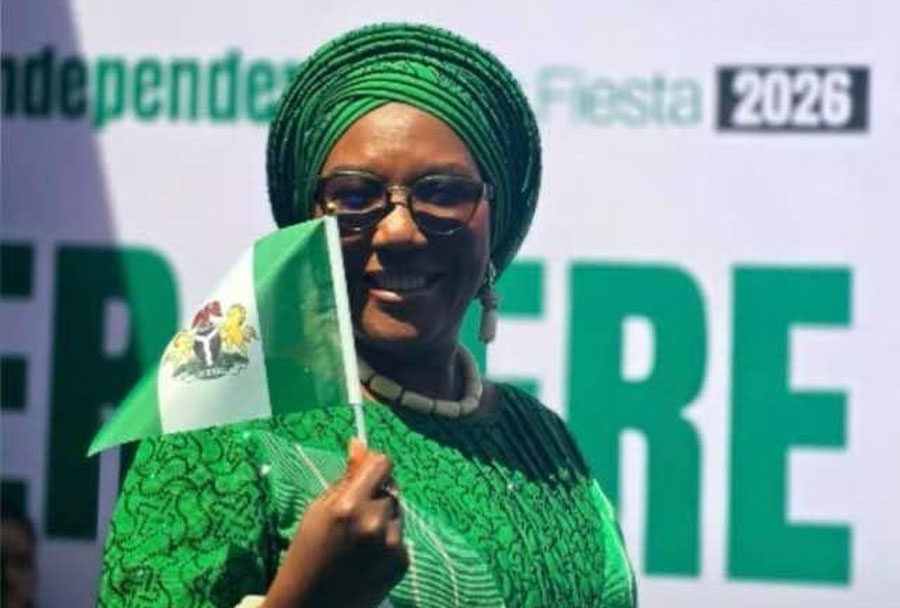
A speech delivered by Mrs Bolatito Ajibode, Convener, Independence Day Fiesta, at Landmark Events Centre, to mark Nigeria’s 66th Independence Anniversary
Nigeria is my country of destiny.
It is not a coincidence that I was born here. God had me in mind when He blessed this land.
It is not a coincidence that this prosperous land is populated by people of different cultures; hence, our tongues and tribes differ. We call it PRODIVA — Prosperity in Our Diversity.
The Lord finished the work of creation and should be praised for loading us with the benefits of arable soil, mineral-rich land, solid minerals, oil and gas, and a market of over 200 million people. Many are yearning for these endowments and have come to our land to explore and exploit them.
Our endowments are beckoning on us for exploration. The few who have taken up the challenge, like Dangote, are smiling to the bank by converting our huge deposits of limestone into cement and refining our crude oil into petroleum products. He has taken Nigeria to the global stage, and we are all proud of him as our brother.
We, however, need more Dangotes.
Last year, we had our maiden edition at Muri Okunola Park, where we challenged ourselves to do more by building a side hustle in addition to our 9-to-5 jobs.
We urged ourselves to:
- Start small from where we are and grow.
- Explore the vast resources of this country to create wealth.
I am happy to say that we have positive testimonies from those who have started their side hustles, making extra income and contributing to the total income of Nigeria.
READ ALSO:
- Ex-APC Women Leader Found Dead With Throat Slit in Bauchi
- Supreme Court Ruling: INEC Moves to Clarify Fate of 2027 Candidates
- Omokri Defends Tinubu Over Pension Record, Faults Linking President to 89-Year-Old’s Death
Having laid a solid foundation last year, our goal this year is to cement it and contribute, individually and collectively, to the per capita income of Nigeria.
The desired growth of Nigeria can only come as we add value to the wealth of the nation in our own little corners.
That is the only variable we can control because the other variable — population — is outside our control.
We are typically excited about our young population and proudly rejoice that Nigeria is projected to become one of the five most populous countries in the world by 2050.
The question we need to ask is: How do we house, feed and clothe this growing population?
Certainly, having a young population is good, but it can also become an easy path to poverty and insecurity if we are not deliberate about growing national wealth and baking a bigger national cake.
Yes, our business environment is tough and unstructured. It raises the entry barrier because many are not ready to weather the storm. Those who are able to stay and thrive in this tough business environment have overcome the challenges, and some of them are here with us today.
A deep appreciation to our keynote speaker, Mrs Chinwe Ezenwa, the Managing Director of Lee Look Bags, who has been in the business of Ankara and Aso-Oke fabric bags for four decades. We look forward to drinking from her fountain of knowledge this morning.
Also in our midst is our brother, Mr Ola Awakan, the Director-General of the Nigerian Tourism Development Authority, who has used literature and poetry to deliver compelling indigenous stories from the heart. He has come with his team all the way from Abuja to honour us.
During the panel session today, we will hear the success stories of our panelists and also interact with them during the networking session.
In line with the theme of the year, we would like us to consider:
- Low-hanging fruits in our business environment;
- Low-technology business ideas;
- Businesses that are authentic and unique to us;
- Commercialising our indigenous values and ideas in food, clothing, arts and drama.
We need to own and dominate this space!
Today, we have in this room great men and women who have taken these indigenous values and ideas to the global stage.
They will share their PRODIVA stories and inspire us.
I believe their insightful stories will also challenge the invited students from Yaba College of Technology, the University of Lagos and Lagos State University.
The idea is to catch them young. 😍
Please note: the Independence Day Fiesta is not about storytelling alone. We are also going to have fun.
We have about four performances, including spoken-word poetry, drama, drumming, music performances and Naija music with good lyrics.
We will also break out for lunch to enjoy various Naija cuisines.
It is my prayer that, at the end of the session, we will all have our takeaways and begin to water the seed of prosperity in our diversity.
Once again, thank you for coming. Please relax and have fun.
Nigeria — My Country of Destiny
Opinion
Fifty Years After “Africa Has Come of Age”: A Personal Reflection on Nigeria’s Silence at the United Nations
By Disu Kamor, Executive Chairman, Muslim Public Affairs Centre (MPAC)
There are moments when a nation’s silence says more than its speeches. Last week at the United Nations was one of them. For years, I have introduced myself in rooms around the world as a Nigerian, and I have done so with a certain inherited pride. Not pride in our perfection, but pride in our posture. We were the country that once told the world, at great cost to itself, where it stood. We were the country that severed ties, nationalised oil companies, lost contracts and risked isolation because we believed that freedom in Southern Africa and freedom in Palestine were not foreign causes, but our own.
So when the organisation I chair, the Muslim Public Affairs Centre, issued a press release last week asking why Nigeria’s address to the 81st United Nations General Assembly could not find a single sentence for Palestine, I felt it personally, not just institutionally. Because twelve months earlier, at UNGA 80, Nigeria had not whispered. It had spoken, and spoken clearly. It spoke about the devastation in Gaza. It condemned violence and aggression against innocent civilians. It looked the world in the eye and declared, “without stuttering and without doubt,” that a two-state solution remained the path to lasting peace, and that the people of Palestine are not collateral damage but human beings, equal in worth, entitled to the same freedoms we take for granted. MPAC’s release laid out the record: last year’s clarity, this year’s erasure, the Security Cooperation Agreement with Israel signed quietly in August 2025 in between, the Joint Commission, the intelligence deals, and our three demands — join South Africa’s genocide case at the ICJ, make security cooperation conditional on accountability, and next time nations walk out when Netanyahu speaks, let Nigeria walk with them. I stand behind every word.
But this article is not that press release. This is what that silence has weighed on me as a Nigerian who was raised on the memory of a different Nigeria, and who fears we are now spending down a moral inheritance we did not earn, and will struggle to recover once it is gone.
Fifty years ago this January, a young Nigerian Head of State stood before his fellow African leaders in Addis Ababa and said four words that outlived him by half a century. General Murtala Mohammed, addressing an Extraordinary Session of the Organisation of African Unity convened to decide where Africa would stand on Angola’s liberation, rejected a letter from the American government pressuring Nigeria to side with apartheid South Africa. “Africa has come of age,” he told them. Thirty-four days later, he was dead, assassinated in a coup attempt, having spent the last months of his life turning that declaration into policy rather than leaving it as a line for historians to admire.
READ ALSO:
- Family seeks N10m to free kidnapped newlywed, other victims
- Trump launches ‘Super Intelligence Force’ to keep US ahead in AI race
- NDLEA intercepts N5bn worth of drugs at ports, arrests Milan-bound businessman
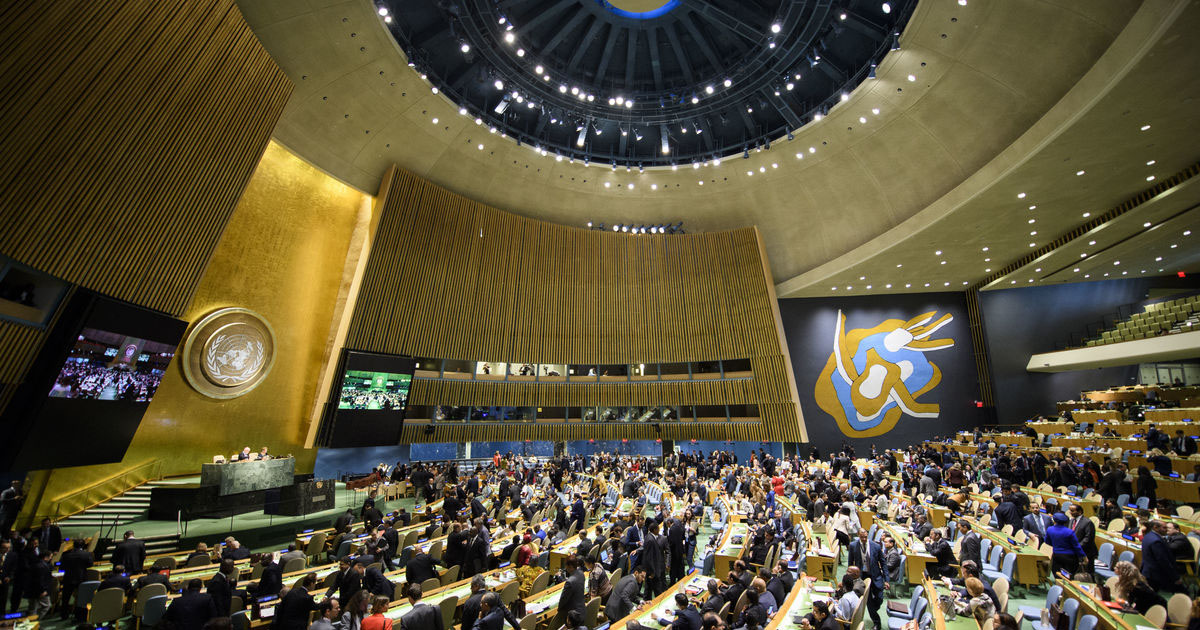
This year, the fiftieth anniversary of that declaration, I watched Nigeria’s national statement at the United Nations General Assembly run to twenty-four paragraphs — Security Council reform, climate finance, artificial intelligence, debt architecture, counter-terrorism in the Sahel — without once naming Gaza, or Palestine, or the two-state solution Nigeria itself had insisted on just a year before. I do not think that is a small thing. I think it is a rupture. I grew up understanding Nigeria as a country that put its resources where its convictions were, not merely its rhetoric. This is not nostalgia. It is documented history, and it deserves to be told again because too few Nigerians under fifty have ever been taught it.
Under Murtala and his successor, Olusegun Obasanjo, Nigeria funnelled oil revenue to liberation movements across the continent — the MPLA in Angola, ZANU and ZAPU in Zimbabwe, the ANC and PAC in South Africa, SWAPO in Namibia. Nigeria led the rejection of South Africa’s Bantustan system at the UN General Assembly in 1975 and donated $500,000 to SWAPO, granting it office space in Lagos. When Obasanjo’s government discovered that Nigerian crude, sold through British Petroleum, was indirectly reaching apartheid South Africa’s refineries, Nigeria nationalised BP’s entire Nigerian operation in 1979 rather than let its oil serve a racist regime even by accident. When Margaret Thatcher’s government moved to ease sanctions on Rhodesia, Obasanjo pulled British contracts from Lagos’s Apapa port and threatened to leave the Commonwealth, pressure credited with contributing to Robert Mugabe’s election victory in 1980. Nigeria went on to chair the UN’s Special Committee Against Apartheid until 1994.
And on Palestine specifically, Nigeria did not merely speak. It paid a real, sustained cost. When the Yom Kippur War broke out in 1973, Nigeria, in solidarity with the Organisation of African Unity and the Arab world, severed diplomatic relations with Israel entirely. That severance held for nearly two decades, across multiple changes of government, before ties were restored in 1992. An entire generation of Nigerian diplomats came of age in a country that had decided that Palestinian self-determination was worth nineteen years of severed ties.
That history is what makes this year’s silence so difficult to bear, because what Nigeria was silent about is not abstract. It is a living catastrophe now in its eighth decade. It began with the Nakba in 1948, when some 750,000 Palestinians were expelled from their homes during the creation of the State of Israel. What followed in 1967, after the Six-Day War, was a military occupation of the West Bank, including East Jerusalem, and the Gaza Strip that has never ended. For fifty-eight years, Palestinians in those territories have lived under military law while Israeli settlers in the very same land live under civil law, their settlements expanding, their roads segregated, their movement controlled by checkpoints and walls. In July 2024, the International Court of Justice declared that this occupation itself is unlawful, that it amounts to racial segregation and apartheid, and that it must end.
Within that occupation, violence has never been episodic. Palestinians remember Deir Yassin and Tantura in 1948, Khan Younis and Rafah in 1956, Sabra and Shatila in 1982, when Israeli forces encircled Palestinian refugee camps in Beirut while allied militias slaughtered thousands, the Ibrahimi Mosque in Hebron in 1994, Jenin in 2002, and the successive wars on Gaza in 2008-09, 2012, 2014 and 2021, each leaving thousands dead, overwhelmingly civilian.
READ ALSO:
- Madonna University expels final-year nursing student, suspends 14 over dance video
- JUST IN: WAEC appoints Suleiman Kum as new Nigeria National Office head
- Ojudu Reveals How Tinubu, He Narrowly Escaped Death In Third Mainland Bridge Crash
But what has happened in the last three years has no parallel. Since October 2023, Gaza has endured a war that UN agencies and courts now describe in terms of genocide. In less than three years, more than 65,000 Palestinians have been killed, the majority women and children, and more than 120,000 wounded. Almost the entire population of 2.3 million has been forcibly displaced, many ten times over. The United Nations has documented the systematic destruction of hospitals, of every university in Gaza, of schools sheltering displaced families, of mosques, churches, bakeries and water plants. UN experts, Amnesty International, Human Rights Watch and Israeli human rights groups have documented the blocking of food, water, medicine and fuel as a weapon of war. It is this record that led South Africa to bring its case under the Genocide Convention to the International Court of Justice in December 2023.
And for the first time, accusation has moved to indictment. On November 21, 2024, the International Criminal Court issued arrest warrants for Prime Minister Benjamin Netanyahu and former Defence Minister Yoav Gallant for war crimes and crimes against humanity, including using starvation as a method of warfare, murder, persecution and intentionally directing attacks against civilians. The sitting prime minister of a state with which our government signed a Security Cooperation Agreement in August 2025 is now wanted in 125 member states.
I cannot reconcile the Nigeria under Murtala and Obasanjo with the one that could not find a single sentence for Palestine this year while, rather unbothered, it got busy signing discreet pacts and agreements with an apartheid and genocidal state as recently as March 2026. I cannot reconcile it with the fact that when dozens of nations walked out of the General Assembly hall this year as Netanyahu spoke, Nigeria’s delegation remained seated.
And it was not just any walkout. When the footage came out, it was Africa itself that stood up. South Africa, Senegal, Botswana, Uganda, Namibia, Kenya, Ghana, Angola, Niger, Madagascar, Mozambique, Chad, Central African Republic, Liberia, Eritrea, Lesotho, Eswatini, Equatorial Guinea, both Congos — the Republic of the Congo and the Democratic Republic of the Congo — were among the African countries that walked out or refused to sit through that speech. These are not marginal states. They include countries that fought apartheid alongside us, countries we trained, funded and housed. If Africa has come of age, as Murtala said fifty years ago, then Africa showed it last week. Nigeria, the country that once taught the continent how to stand, chose to remain seated.
I do not say this to manufacture hostility toward any state. Murtala’s generation did not act out of hostility either. They acted out of principle, and they paid whatever price principle demanded. What troubles me is the gap between the courage that generation had when the cost was real, and the caution my generation has settled for now that the cost is merely inconvenient. MPAC’s press release said what needed to be said institutionally. But I wanted to say this as one Nigerian to others: I was raised on the memory of a country that told the most powerful nation on earth it would no longer take orders from anyone. Fifty years later, having watched genocide beamed live on our screens, at the world’s most powerful podium, we managed silence instead.
Let me be clear about what this article is not calling for. It is not a call for Nigeria to once again funnel its oil revenue into the Palestinian cause of self-determination, as we did for Southern Africa five decades ago. The world has changed, and Nigeria’s burdens at home are heavy enough. What this article calls for is simpler and more urgent: that Nigeria remembers that its moral standing is diminishing due to its romance with a state that is considered a pariah by the vast majority of the world’s nations, and finds the courage to re-earn it. A nation does not inherit its moral standing and build on it through immoral dealings with a state openly engaged in war crimes and genocide, and then react with silence on the world stage. It re-earns it, decision by decision, generation by generation. Murtala’s generation earned theirs at real cost — with severed ties, nationalised assets, lost contracts and, ultimately, blood. They did not do it for applause. They did it because they understood that justice could not be seasonal. They did it also for the simple reason that, as Rev. Dr. Martin Luther King Jr. wrote in his “Letter from Birmingham Jail”, “Injustice anywhere is a threat to justice everywhere.” I am not yet ready to accept that my generation should spend that inheritance in silence. And I do not believe most Nigerians are either, if they are given the full record and asked to judge for themselves.
Lastly, what is at stake here is bigger than Palestine alone. It is the independence of Nigeria’s foreign policy itself. That policy must never be outsourced, subcontracted, or dictated by any foreign capital, however powerful. It must be independent of foreign control and influence, and must reflect, first and foremost, the interests, the vision and the values of the Nigerian people. It must draw from the long history of our nation’s reputation — not as a follower of convenience, but as a champion of just causes.
What worries many Nigerians today is the growing impression that our foreign policy is no longer guided by that long, principled history, but is now at the mercy of a few individuals who have prioritised personal friendship and the influence of Israel over Nigeria’s reputation and historical values. When private affinities and lobbying networks begin to shape national statements at the United Nations, when security deals are signed quietly while the National Assembly and the public are kept in the dark, we have departed from the Murtala doctrine. Foreign policy ceases to be Nigerian policy; it becomes the project of a few. Murtala understood this danger when he tore up that letter from Washington. Obasanjo understood it when he chose principle over BP. That is the tradition I am now calling on us to honour, not abandon. Nigeria must return to a foreign policy that is truly Nigerian — independent, people-centred, and anchored in justice.
Opinion
Ortom and His 23 Cars’ ‘Bonus’, by Dele Sobowale
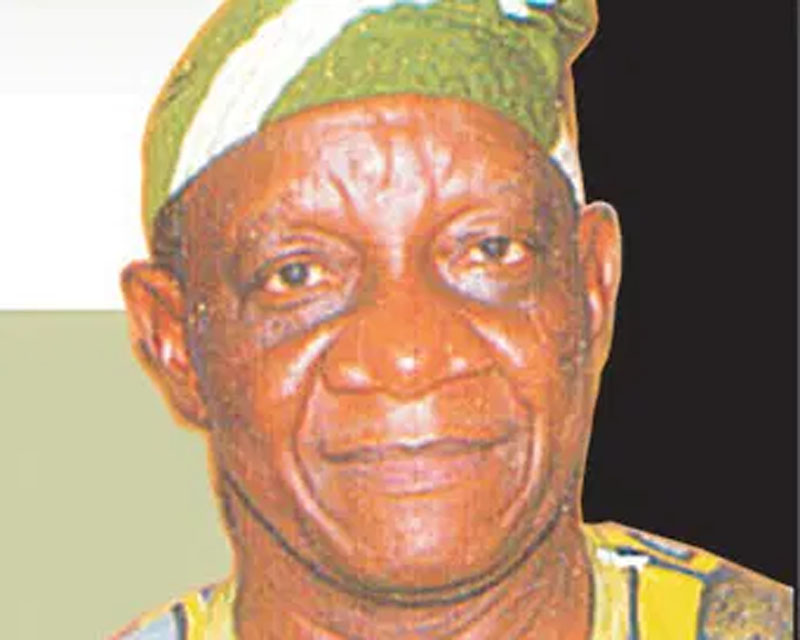
Ortom and His 23 Cars’ ‘Bonus’, by Dele Sobowale
“As I talk to you, after I left office, vehicles that were given to me legitimately by government, this government went and seized them in a manner that was not befitting.” – Former Governor Samuel Ortom of Benue State
Last week, former Governor Donald Duke of Cross River declared that military rule was, in many respects, better than civil rule since 1999.
I cannot agree more.
I had the privilege of visiting about seven former military governors before 1999.
No military governor had up to 23 cars assigned to the Governor’s Office or residence.
By contrast, since 1999, a civilian governor with only 23 cars in the office alone would be regarded as extremely prudent.
Many have 50 or more.
Ortom’s 23 cars have triggered a dispute. Governors, on their way out of office, routinely take what they deem as their entitlements and thus render their states poorer than they met them.
Most commentaries on Ortom’s 23 cars have been superficial.
The impression they have created is that only 23 cars were taken away.
Nothing can be further from the truth.
Ortom was not the only beneficiary of that largesse.
It is quite possible that over 100 cars were taken away as parting gifts – with Ortom’s approval – as I will explain shortly.
Ortom revealed the hidden truth by saying, with a straight face, that the vehicles were allocated to him and other members of his administration through the State Executive Council, SEC, after they had been used for more than four years.
It was the worst defence for an assault on public funds ever uttered by a former official.
It provided a window into the minds of top government officials everywhere – irrespective of political party affiliation.
Every State Executive Council, SEC, comprises the governor, the deputy governor, the Secretary to the State Government and commissioners.
All the others are selected or appointed by the governor and, with the exception of the deputy governor, can be removed from office.
In other words, the SEC is created by the governor and can take no independent decision of its own.
READ ALSO:
- Abuja Demand Rises as Jetour Brings X70 Plus Experience to FCT
- Enough Is Enough: Muslim Supporters Demand New Man United Owners
- Stray Bullet Kills 400-Level IBBU Student During Land Dispute in Niger
It is not an autonomous body.
Stripped of the subterfuge surrounding it, the decision to allocate 23 cars to Ortom amounted to the governor deciding to go home with the cars and getting his echoes in the SEC to endorse it.
Ortom, inadvertently, disclosed that more cars than 23 were driven home by his government officials when he claimed that the SEC allocated the vehicles in dispute to him “and other members of his administration”.
Since “the other members of his administration” start with the SEC, it stands to reason that the deputy governor, the Secretary to the State Government, all the commissioners, the Chief of Staff, several Special Advisers, heads of state agencies, etc., were also allowed to go home with cars declared over four years old – even if by one day.
Nobody has documented the number of cars Ortom and “the other members of his administration” took away. Over 100 vehicles might be involved.
That leads to the next question because it strikes at the heart of why poverty is increasing in Nigeria.
IS A CAR FOUR YEARS OLD READY FOR THE JUNKYARD?
Most Nigerians known to me, including those driving corporate official cars, are driving vehicles more than five years old.
Mine is 12 years old and can still break the speed limit anywhere in the world.
I also own a LAGRIDE taxi, now four years old.
The Chinese-made car was offered four years ago at N4.8 million, with a down payment of N1.82 million and the balance to be paid in instalments. Today, the car costs N25 million new, and offers have been made to buy my used one for N11–N13 million.
Obviously, when any government gives away, at far less than market value, to departing officials, the public loses.
Ortom’s 23 cars, as well as the others allocated to members of his administration, would have fetched almost five times what the officials paid for them.
To put the matter in perspective, Benue State would have to pay nothing less than N6 trillion just to replace the vehicles.
Left untouched is the question: What else was taken away – furniture, generators, air-conditioners, borehole pumps?
Outgoing officials are never satisfied with taking cars with them.
“Laws grind the poor, and rich [as well as powerful] men rule the law.” – Oliver Goldsmith, 1728–1774
The other half of his self-defence concerns the legality of the allocations.
That the law is an ass has been well established; so is the fact that what we often call law might be injustice codified.
Strictly speaking, everything Abacha did was supported by laws passed as decrees. Justice was never considered.
Civilian governments also make laws which are inherently unjust to the masses.
READ ALSO:
- Oyo Police: Student Who Died by Suicide Was Charged With Assault, Not ₦8,000 Debt
- Delta Police Intercept Sienna With Military Uniforms, Suspected Drugs
- Jehovah’s Witnesses Adjust Blood Transfusion Rules, Allow Personal Choice
The regulation allowing some public servants appointed by the governor to take away very useful public properties cannot be regarded as equitable, given the fact that those who served for 30 or 35 years cannot take away a single pin without being prosecuted.
What exactly does an outgoing governor want to do with 23 cars?
MEANWHILE, GOVERNOR ALIA SETS BACK DEMOCRACY IN BENUE
Governor Hyacinth Alia, a Catholic cleric, honourably fought for justice by having the 23 cars taken away by Ortom retrieved.
It is not clear whether other cars allocated by Ortom’s SEC members were also seized.
If not, the measure would appear personal and discriminatory.
It would appear to be partial justice and tainted with vendetta.
Frequently, individuals transiently invested with near-absolute power, like Nigerian governors, cross the thin line between the divine and the ridiculous within a short time.
When Alia, for the second time, blocked Peter Obi from moving freely about in Benue State, he betrayed democracy and the Constitution of Nigeria he swore to uphold.
He failed the democracy test. He even failed the test of advanced education.
His tenure is limited by the Constitution. Obviously, he will become an ex-governor one day – without armed escorts to protect him and clear the way.
He has established a precedent which will make it legitimate for any governor in Nigeria to block his right of passage.
Two examples in Nigerian history should serve as a warning to Alia.
Military Head of State Obasanjo passed the decree under which General Gowon would have been executed in 1976 – if Britain had not granted the deposed leader political asylum.
The same decree, with slight amendment, was used by Abacha to nail his former boss.
He was saved by divine intervention.
Malam El-Rufai, as governor of Kaduna State, had critics living in other states arrested, brought to Kaduna State and detained without bail for days – before media protests got them released on bail.
Today, El-Rufai is in detention by the DSS and ICPC, without bail for almost six months.
The same media, held in contempt by El-Rufai, has now undertaken the campaign to get him released.
As one of our founding fathers, Dr Nnamdi Azikiwe, reminded us before passing to eternal life: “No condition is permanent.”
Governor Alia should climb down from his high horse and apologise to Obi and Nigerians.
Ortom and His 23 Cars’ ‘Bonus’, by Dele Sobowale
-

 metro2 days ago
NYSC Kidnap: Abductors Demand N950m for 19 Prospective Corps Members in Imo
-

 Politics2 days ago
2027: Oshiomhole Dares Opposition Over ₦500 Petrol Promise, Says APC Will Take Argument to Nigerians
-
 Entertainment3 days ago
Olu Jacobs Laid to Rest in Lagos as Dignitaries, Nollywood Stars Honour Screen Icon
-
 metro2 days ago
N500 Petrol, Wage Award: Public Sector Workers Begin Warning Strike
-
 metro2 days ago
Amaechi: Tinubu’s Policies Made My Mother’s Drugs Unaffordable
-

 metro1 day ago
‘I Thought I Was Dead’ — Hairstylist’s Daring Escape From Kidnappers After Benin-Ore Ambush
-

 Entertainment2 days ago
Less Than Four Months After Wedding, Jarvis Threatens Peller With Lawsuit Over Second-Wife Plan
-

 Politics2 days ago
Wike to Amaechi: What Did You Bring to Rivers After 24 Years in Power?