
International
Bowen: UK move to recognise Palestinian state is a diplomatic crowbar to revive peace process
Bowen: UK move to recognise Palestinian state is a diplomatic crowbar to revive peace process
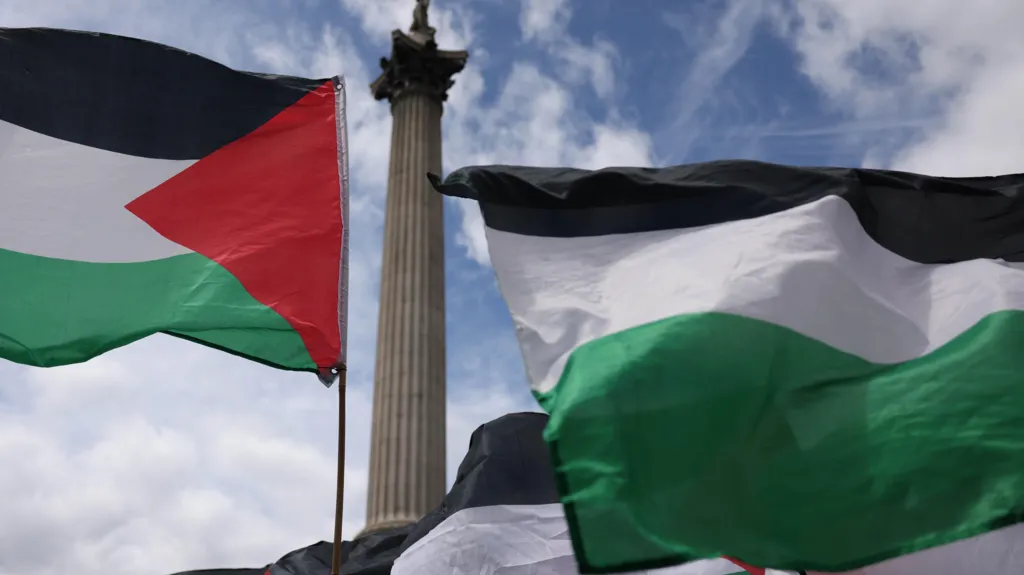
Prime Minister Sir Keir Starmer’s announcement that Britain will recognise Palestinian statehood is a major change in UK foreign policy.
He offered to postpone recognition if Israel took “substantive steps to end the appalling situation in Gaza, agree to a ceasefire and commit to a long-term, sustainable peace, reviving the prospect of a two-state solution.”
Israel’s immediate rejection of his statement meant that Starmer’s speech writers can start work now on what he will say at the UN General Assembly in September. UK recognition of Palestine looks “irreversible,” according to a senior British official.
Starmer won’t be expecting Britain’s change of policy to produce an independent Palestinian state any time soon – from the perspective of many Israelis, the best time for it would be never – but the intention, diplomatic sources say, is to empower moderates on both sides, Israelis and Palestinians. The British hope they can jolt them into believing that peace might be possible.
It won’t be easy, not just because of the way Hamas killed around 1,200 people, including hundreds of Israeli civilians, and took hostages on 7 October 2023, followed by Israel’s vengeful response that has killed tens of thousands civilians and left Gaza in ruins.
It is also because every attempt to make peace has failed. Years of peace talks in the 1990s ended in bloodshed. Every attempt to revive them since then has collapsed.
Israel’s rejection came minutes after Keir Starmer finished speaking in Downing Street. Later in the evening, Israel’s prime minister Benjamin Netanyahu posted a fiercely worded denunciation on social media.
“Starmer rewards Hamas’s monstrous terrorism and punishes its victims. A jihadist state on Israel’s border TODAY will threaten Britain TOMORROW.”
“Appeasement towards jihadist terrorists always fails. It will fail you too. It will not happen.”
READ ALSO:
- Senate issues three-week ultimatum to NNPCL over N210tn audit queries
- Nigeria auto industry stakeholders hold crucial summit in Lagos Thursday
- Modu Sheriff: Peter Obi will run for president under PDP in 2027
Netanyahu denies Israel has caused starvation and catastrophe in Gaza. Had he accepted Britain’s conditions for a postponement, his government would have disintegrated. He depends on the support of ultra nationalist extremists who want to annex the occupied territories and force Palestinians out, not grant them independence.
But Netanyahu is not their prisoner. He built a career opposing the two-state solution, the idea that peace can be built by creating an independent Palestinian state alongside Israel. Earlier this month he said a Palestinian state would be a ‘launchpad’ for more 7 October style attempts to destroy Israel.
Netanyahu will be hoping for the strong backing of the US government. Its position is that recognising a Palestinian state now rewards Hamas terrorism.
Donald Trump told reporters as he flew back to the US after his golfing interlude in Scotland that he didn’t support Britain’s move.
The issue of Palestinian sovereignty could become another factor cracking apart transatlantic relations.
Until the last few weeks Keir Starmer was not convinced the time was right to recognise Palestine. But pictures of Palestinian children in Gaza starving to death were the last straw after so much killing and devastation.
Attitudes hardened in Downing Street and the Foreign Office, as well as in the Labour party and more widely in the UK.
Britain’s decision to join France in recognising Palestine is another sign of Israel’s increasing diplomatic isolation. Two of its major western allies, the UK and France, both permanent members of the UN Security Council, have dismissed Israel’s attempt to block their recognition of Palestine when the General Assembly meets in New York in September.
In New York just after Starmer’s statement, David Lammy, the UK foreign secretary, was given a big round of applause when he announced Britain’s decision at the UN’s conference on a two-state solution and recognition of a Palestinian state.
READ ALSO:
- Ebonyi gov suspends 25 commissioners, 62 others for absence from state function
- We won’t give visa to Nigerians travelling for birth purpose — US
- Industry minister, AfDB president to visit SAGLEV electric vehicle assembly plant in Lagos
His dismissed the accusation that Palestinian independence could be lethal for Israel.
“There is no contradiction between support for Israel’s security and support for Palestinian statehood. Indeed, the opposite is true.”
“Let me be clear: the Netanyahu government’s rejection of a two-state solution is wrong – it’s wrong morally and it’s wrong strategically.”
A British official said the atmosphere was electric as Lammy told the delegates that the UK’s announcement was being made “with the hand of history on our shoulders.” Lammy went on to delve into Britain’s imperial past in Palestine which is deeply intertwined with the roots of the conflict between Jews and Arabs for control of the land Britain once ruled.
Britain captured Jerusalem from the Ottoman Empire in 1917 and controlled Palestine until in 1948, exhausted and out of ideas to deal with what was then a full-scale war between Arabs and Jews, it handed over responsibility to the UN and left Palestine. Immediately, Israel’s first prime minister David Ben Gurion declared independence, and Israel defeated an invasion by Arab armies.
At the UN David Lammy recalled how Arthur Balfour, his predecessor as foreign secretary had in 1917 signed a typewritten letter promising to ‘view with favour the establishment in Palestine of a national home for the Jewish people.’
But the document, known as the Balfour Declaration, also stated “that nothing shall be done which may prejudice the civil and religious rights of non-Jewish communities in Palestine.” It did not use the word Arab, but that is what was meant.
Lammy said Britain can be proud of the way it helped lay Israel’s foundations, But the promise to Palestinians, Lammy said, was not kept, and that “is a historical injustice which continues to unfold.”
Britain’s conflicting promises fuelled and shaped the conflict. A time traveller going back a century to Palestine in the 1920s would find the tension and violence depressingly familiar.
The way the UK hopes to end the misery in Gaza, create peace in the Middle East and remedy the historical injustice Lammy described is to revive the two-state solution.
The conference in New York at which he was speaking was chaired by France and Saudi Arabia. It has produced a seven-page document aimed at creating a way ahead to revive the two-state solution, which includes condemnation by Arab states of Hamas and its 7 October attacks on Israel.
The window for peace through the two-state solution appeared to be locked shut after the collapse of the peace process that started with real hope in the 1990s.
Britain’s decision to recognise Palestine is a diplomatic crowbar to try to reopen it.
Bowen: UK move to recognise Palestinian state is a diplomatic crowbar to revive peace process







International
Trump Imposes 15% Global Tariff Hours After Supreme Court Blocks Previous Tariffs
Trump Imposes 15% Global Tariff Hours After Supreme Court Blocks Previous Tariffs
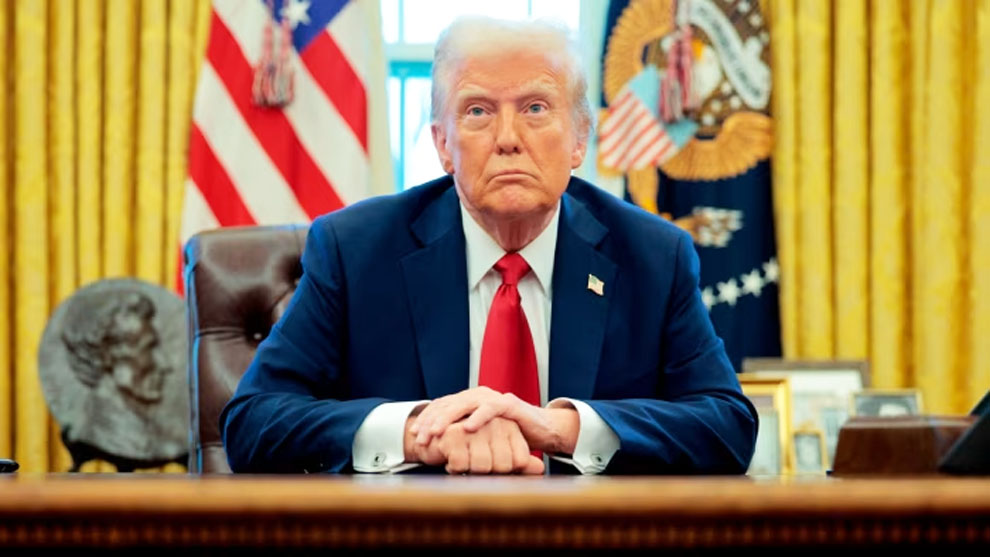
President Donald Trump has announced a 15 % global tariff on imported goods just hours after the U.S. Supreme Court struck down his earlier tariff programme as unconstitutional. The decision marks a major escalation in U.S. trade policy and signals potential disruptions for global markets.
The Supreme Court, in a 6‑3 ruling, found that Trump overstepped his authority by using emergency powers under the International Emergency Economic Powers Act (IEEPA) to impose sweeping tariffs. The Court ruled that only Congress has the power to levy broad import taxes, effectively invalidating the president’s previous tariffs on most trading partners.
In response, Trump moved swiftly to raise tariffs under Section 122 of the Trade Act of 1974, which allows temporary import duties of up to 15 % for 150 days without congressional approval. Trump described the increase as “fully allowed and legally tested” and indicated his administration will explore additional legally permissible tariffs in the coming months.
READ ALSO:
- APC Wins Rivers Ahoada East State Constituency II Bye‑Election
- Opposition Weakens as Another Governor Eyes APC Move
- ₦13.7bn Payroll Fraud Claim Pits Audit Firm Against Osun Government
Official statements confirmed that the new tariff takes immediate effect, covering imports from all countries. The White House framed the move as a measure to protect U.S. workers and industries from unfair foreign competition, even as analysts warn it could increase costs for consumers and invite retaliatory trade measures from other nations.
Economic and Political Reactions
The Supreme Court decision and Trump’s rapid tariff escalation drew mixed reactions. Business groups and economists cautioned that higher tariffs could disrupt supply chains, increase inflation, and slow economic growth. Some companies have already filed legal claims seeking refunds for previously collected tariffs.
Meanwhile, global trading partners are monitoring the situation closely, warning that the 15 % tariff could strain diplomatic and trade relations. Supporters of Trump’s trade stance argue that tougher tariffs are necessary to address U.S. trade deficits and protect domestic manufacturing.
Section 122 authority expires after 150 days unless Congress extends it, meaning the long-term enforcement of the 15 % tariff may require legislative backing. Analysts say the move highlights the tension between executive authority, judicial oversight, and congressional power in U.S. economic policymaking.
Global Implications
Markets around the world have reacted cautiously to the announcement. Some trading partners may implement retaliatory tariffs, while global supply chains could face disruptions, particularly in consumer electronics, automotive, and industrial sectors. Analysts predict that ongoing uncertainty will affect trade flows and investment decisions in the short term.
Trump’s announcement comes at a politically charged moment, with midterm elections and international trade negotiations influencing domestic and global economic strategies. The move underscores the complex interplay of law, politics, and economics in U.S. trade policy.
Trump Imposes 15% Global Tariff Hours After Supreme Court Blocks Previous Tariffs
International
UK Court Hands Life Sentence to Nigerian Teen for Knife Attack Killing
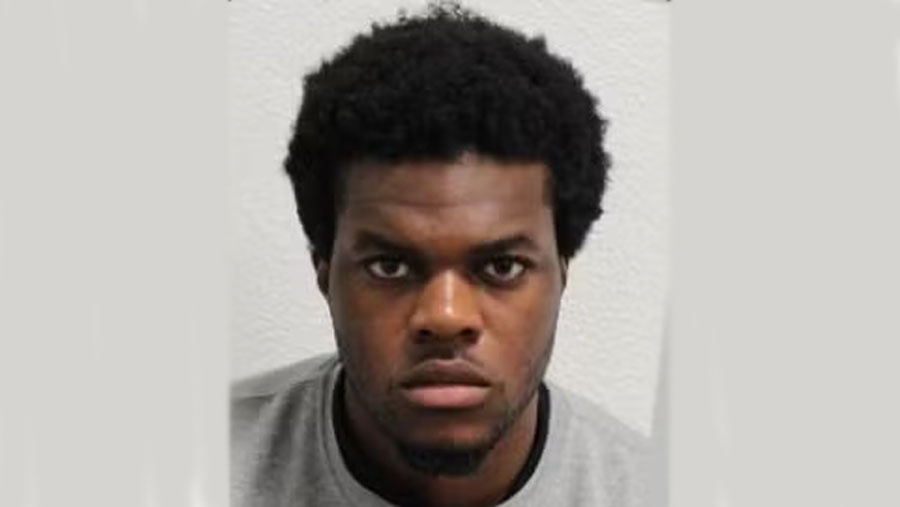
UK Court Hands Life Sentence to Nigerian Teen for Knife Attack Killing
A Nigerian teenager residing in the UK, Jackson Uwagboe, has been sentenced to life imprisonment for the murder of 21-year-old Robert Robinson, following a brutal knife attack in Lewisham, London. The sentencing was delivered at the Old Bailey on Wednesday.
The Metropolitan Police confirmed that 19-year-old Uwagboe of Hamilton Street, Lewisham, was found guilty of murder on Tuesday, 10 February 2026, in a case stemming from a dispute over a stolen bicycle. The court ruled that Uwagboe must serve a minimum of 21 years before he can be considered for parole.
Uwagboe’s co-defendant, Eromosele Omoluogbe, 24, was earlier convicted of perverting the course of justice after assisting Uwagboe in attempting to flee to Nigeria via Heathrow Airport.
READ ALSO:
- Ogun Gov Rewards Nigeria’s Best Primary School Teacher with Car, Bungalow
- Police Bust Gang Armoury, Arrest Two Suspects in Delta
- Peter Obi Launches ‘Village Boys Movement’ to Rival Tinubu’s City Boys Ahead of 2027
Prior to this sentencing, two other men, Ryan Wedderburn, 18, and Kirk Harris, had already been convicted and handed life sentences in May 2025 for their roles in the same murder.
Detective Inspector Neil Tovey, who led the investigation, described the incident as a “brutal and sustained attack”. He said, “Robert was subjected to a brutal and sustained attack by a group of men armed with knives. He was unarmed, already wounded, and on the ground when Uwagboe attacked him. Today’s verdict brings justice for Robert Robinson and his family.”
The case has drawn attention to youth violence, knife crime, and gang-related activity in London, as well as the challenges faced by law enforcement in preventing violent disputes over seemingly minor disputes such as bicycle theft.
The sentencing underscores the UK judicial system’s approach to serious violent crimes, ensuring that perpetrators face long-term incarceration while providing a clear minimum term before parole consideration.
UK Court Hands Life Sentence to Nigerian Teen for Knife Attack Killing
International
UK-Based Nigerian Gets 13-Year Jail Term for Forcing Girlfriend to Abort Pregnancy
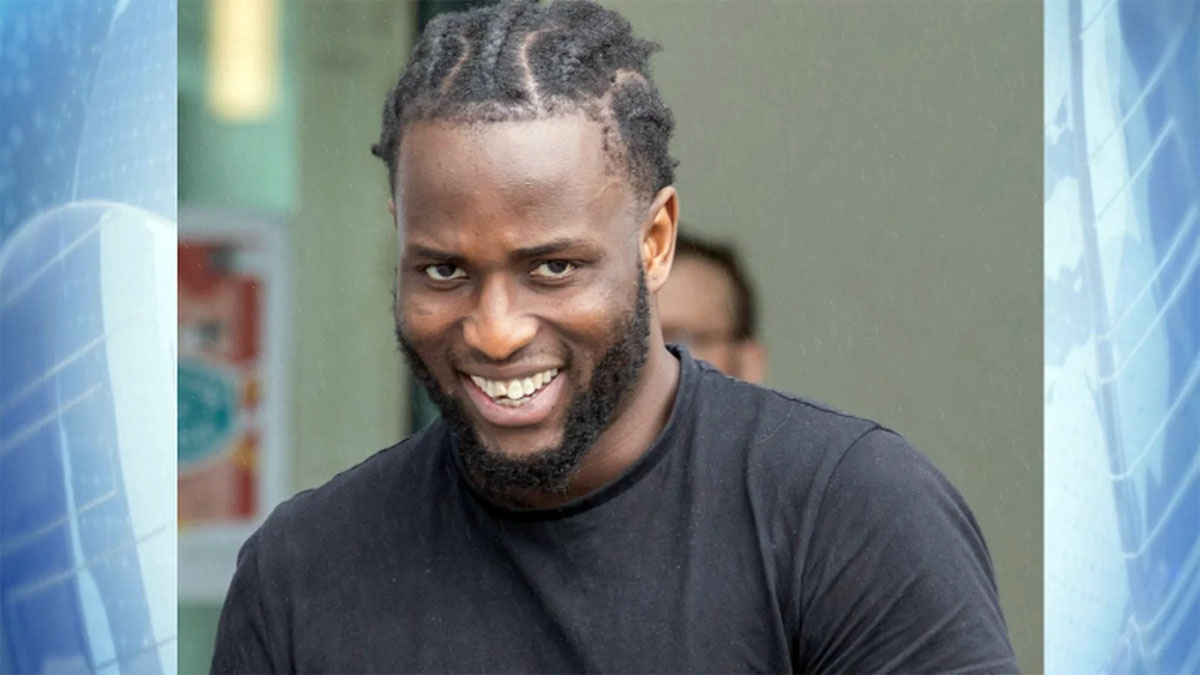
UK-Based Nigerian Gets 13-Year Jail Term for Forcing Girlfriend to Abort Pregnancy
A UK-based Nigerian man, Adeleke Adelani, has been sentenced to more than 13 years’ imprisonment for unlawfully aborting the pregnancy of his former partner after coercing her to take abortion medication on Valentine’s Day.
The offence occurred in 2020 when Adelani, then 28 years old, deceptively invited the woman — whose identity is legally protected — to his residence in Letterkenny under the guise of discussing the future of her pregnancy. Evidence before the court showed that the victim was nine weeks pregnant at the time of the incident.
Prosecutors told the court that upon her arrival, Adelani threatened the woman with violence and forced her to ingest five tablets of misoprostol, a drug used for medical abortions, thereby causing the unlawful termination of the pregnancy. The court heard that the defendant had researched the medication in advance and acted deliberately. The victim later contacted authorities, leading to Adelani’s arrest by Irish police.
READ ALSO:
- Lawmaker Jailed for Mocking President in Facebook Post
- Police to Arrest TikToker Mirabel After She Recants False Rape Claim
- Tinubu Reduces Reliance on U.S, Strengthens Defence Partnerships With Turkey, EU
At the time of the sentencing, Adelani was already serving a separate seven-year prison sentence for an unrelated offence. He had initially been due to stand trial last year but pleaded guilty before jury selection began, accepting responsibility for the charges brought against him.
During the sentencing hearing at the Letterkenny Circuit Court, the victim delivered a powerful impact statement, explaining that although she had chosen to forgive Adelani, the consequences of his actions would remain with her for life.
“I have forgiven the defendant,” she told the court. “That forgiveness does not mean what he did was acceptable. It means I refuse to let what he did continue to control my heart and my life. When he wrongfully imprisoned me and caused the termination of my nine-week pregnancy, he took far more than my freedom. He took my child. He took my sense of safety. He took a future that I had already begun to plan and love.”
In a letter read aloud in court, Adelani apologised to the victim, accepted full responsibility for his actions, and expressed remorse for the pain and trauma he caused.
Delivering judgment, John Aylmer described the crime as deliberate, premeditated, and deeply traumatic, stressing that it involved coercion, abuse, and a serious violation of trust. The judge sentenced Adelani to 11 years in prison, with the final two years suspended, for causing the unlawful termination of a pregnancy, and an additional five years, with the last 12 months suspended, for assault causing harm.
The sentences are to run concurrently, adding to Adelani’s existing term and resulting in an overall prison sentence exceeding 13 years. The case has reignited debate in Ireland and internationally about reproductive coercion, domestic abuse, and violence against women, with legal observers describing it as one of the most serious cases of its kind in recent years.
UK-Based Nigerian Gets 13-Year Jail Term for Forcing Girlfriend to Abort Pregnancy

-

 Politics2 days ago
Peter Obi Launches ‘Village Boys Movement’ to Rival Tinubu’s City Boys Ahead of 2027
-

 International3 days ago
Canada Opens New Express Entry Draw for Nigerian Workers, Others
-

 News2 days ago
Police to Arrest TikToker Mirabel After She Recants False Rape Claim
-

 International2 days ago
Epstein, Ex-Israeli PM Named in Alleged Profiteering From Boko Haram Crisis
-

 Education11 hours ago
UTME: JAMB Clarifies Position on Hijab During Biometric Capture
-

 metro3 days ago
Osun Awards 55.6km Iwo–Osogbo–Ibadan Road Project to Three Contractors
-
 Politics3 days ago
Updated: Rivers Senator Mpigi Barinada dies at 64
-

 metro3 days ago
Ondo Monarch Killed as Bandits Strike Akure North