Breaking: Ex-Anambra Gov Obiano arraigned on nine courts, pleads not guilty  - Newstrends
Connect with us

News

Breaking: Ex-Anambra Gov Obiano arraigned on nine courts, pleads not guilty 
Published

on

Breaking: Ex-Anambra Gov Obiano arraigned on nine courts, pleads not guilty 

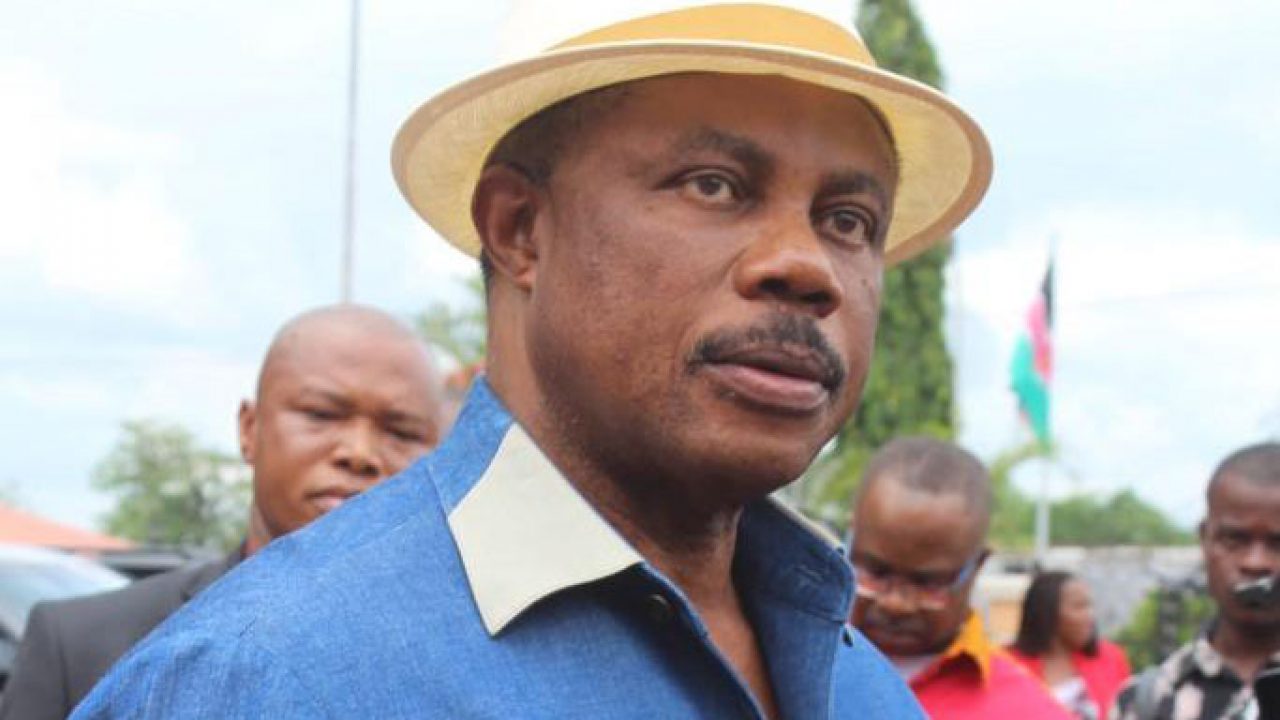
The Economic and Financial Crimes Commission on Wednesday arraigned an ex-Governor of Anambra State, Willie Obiano, on nine counts of money laundering.

He was arraigned before Justice Inyang Ekwo of the Federal High Court in Abuja. He pleaded not guilty after the charge was read to him.

He was subsequently allowed to go home based on the terms of an administrative bail the anti-graft agency earlier granted to him.

Terms of the conditions included the seizure of his international passport, even as he was warned not to travel outside the country without the permission of the court.

Besides, the court directed the EFCC to forward to it details of those that stood as his surety.

The case was adjourned till March 4 for the commencement of his trial.

The former governor was first arrested at the Murtala Muhammad International Airport, Lagos, on March 17, 2022 as he was preparing to board a flight to Houston, the United States of America.

The arrest took place a few hours after he left office as governor.

Some of the charges against him, read: “That you, Chief Willie Maduabuchi Obiano, whilst being the executive governor of Anambra State of Nigeria between March 2014 – March 2022, sometime between 7th February, 2018 and 18th February, 2019 in Abuja …within the jurisdiction of this Honourable Court, indirectly transferred through Mr Willie Nwokoye, your then principal private secretary, the sum of N156,800.00 only from the Anambra State Government Security Vote Account No: 5030050875 domiciled in Fidelity Bank Pic into the Fidelity Bank Ple Account No: 6060018819 belonging to C.I. Patty Ventures Nigeria Limited (an entity that had no business relationship with the Anambra State Government);

“…which funds were dissipated for purposes unrelated/unconnected with the security affairs of Anambra State, which you reasonably ought to have known that such funds formed part of the proceeds of your unlawful act, to wit: (Stealing and Corruption) and you thereby committed an offence contrary to Section 15 (2) (b) of the Money Laundering (Prohibition) Act, 2011 (as amended) in 2012 and punishable under Section 15 (3) of the same Act.

“That you, Chief Willie Maduabuchi Obiano, whilst being the executive governor of Anambra State of Nigeria between March 2014 — March 2022, sometime between 9th August, 2017 to 4th March, 2020 in Abuja;

“…within the jurisdiction of this Honourable Court, indirectly transferred through Mr Willie Nwokoye, your then principal private secretary, the sum of N261,268,585.00 only from the Anambra State Government Security Vote Account No: 5030050875 domiciled in Fidelity Bank Plc into the Fidelity Bank Plc Account No: 5600062873 belonging to Easy Diamond Integrated Link (an entity that had no business relationship with the Anambra State Government);

“…which funds were dissipated for purposes unrelated/unconnected with the security affairs of Anambra State, which you reasonably ought to have known that such funds formed part of the proceeds of your unlawful act, to wit: (Stealing and Corruption) and you thereby committed an offence contrary to Section 15 (2) (b) of the Money Laundering (Prohibition) Act, 2011 (as amended) in 2012 and punishable under Section 15 (3) of the same Act.”

Loading

News

SERAP Urges UN to Invoke Article 99 Over Nigeria Insecurity

Published

on

SERAP Urges UN to Invoke Article 99 Over Nigeria Insecurity
United Nations Secretary-General, António Guterres

SERAP Urges UN to Invoke Article 99 Over Nigeria Insecurity

ABUJA – The Socio-Economic Rights and Accountability Project (SERAP) has called on United Nations Secretary-General António Guterres to urgently invoke Article 99 of the UN Charter, warning that Nigeria’s escalating insecurity—marked by mass abductions, killings, attacks on civilians, mass displacement, and other grave human rights violations—now constitutes a threat to international peace and security that demands the attention of the UN Security Council.

In an open letter dated May 30, 2026, and signed by SERAP deputy director Kolawole Oluwadare, the rights organisation said that the scale, persistence, and regional implications of the insecurity and human rights crisis in Nigeria risk aggravating existing threats across West Africa. SERAP explained that Article 99 of the UN Charter is designed precisely for situations in which emerging or ongoing crises require urgent preventive diplomacy, sustained international scrutiny, and coordinated international action. The article provides that the Secretary-General “may bring to the attention of the Security Council any matter which in his opinion may threaten the maintenance of international peace and security.”

According to the organisation, placing Nigeria’s escalating insecurity and grave human rights violations on the Security Council’s formal agenda would strengthen the credibility and effectiveness of the United Nations system in fulfilling its primary responsibility for the maintenance of international peace and security. It would also ensure sustained international attention to attacks on civilians, including abductions, killings, and displacement. SERAP noted that several years of violence and conflicts across multiple states have created appalling human suffering, physical destruction, and collective trauma across Nigeria. The organisation stressed that its appeal is grounded in the preventive mandate of the UN Charter and the urgent need to address a rapidly deteriorating situation in the country.

The rights group argued that the crisis in Nigeria is not merely a domestic law-enforcement issue. Its effects increasingly implicate regional peace and security through the cross-border movement of armed groups and weapons, large-scale displacement, growing instability extending beyond Nigeria’s borders, and weakening human rights protection and rule-of-law institutions. “There is no effective protection of people and communities, with frequent reports of a pattern of large-scale violence across multiple states,” the letter stated.

READ ALSO:

Nigeria is facing a grave and worsening security crisis marked by repeated mass abductions of schoolchildren, teachers, women, commuters, and rural residents; attacks on villages and farming communities; killings by armed groups and criminal networks; and widespread displacement. Communities in Oyo, Benue, Borno, and across Nigeria continue to suffer repeated attacks with devastating consequences for civilian life, dignity, and security. The recent abductions of pupils and teachers in Oyo State illustrate the severity of the crisis facing civilian populations.

On or about May 15, 2026, armed men reportedly attacked multiple schools in the Ahoro Esinele community in Oriire Local Government Area of Oyo State, including Community Grammar School, Baptist Nursery and Primary School, and L.A. Primary School. During the coordinated attacks, at least 25 pupils and seven teachers were abducted. An assistant headmaster was reportedly killed, while another teacher later died in captivity. According to the Oyo State Police Command, the attackers, numbering about 12, came on motorcycles and simultaneously attacked the schools. The incident occurred at about 9:30 a.m. in Yawota and Esiele communities, with the attackers also abducting the principal of one of the schools and taking her vehicle into the forest before abandoning it. Security operatives have since launched a massive manhunt in collaboration with other security agencies, including Amotekun operatives and local vigilantes.

Distressing videos later circulated showing one abducted teacher, the vice principal of Community Grammar School, pleading publicly with President Bola Tinubu, Governor Seyi Makinde, and Nigerians to secure the release of the victims. Abductees were reportedly being held in harsh conditions, exposed to extreme weather, and called for urgent dialogue to save their lives. This incident highlights the devastating human consequences of recurring abductions targeting schools, children, and education workers, and underscores the urgent need for strengthened civilian protection, accountability, and prevention measures.

Available information also indicates that gunmen recently abducted secondary school students and other travellers in Benue State while they were travelling to sit university entrance examinations. The Benue State Police Command and the Joint Admissions and Matriculation Board (JAMB) later clarified that the victims were not UTME candidates but participants in an ongoing police recruitment exercise who were returning to Otukpo at the time of the abduction. Seven suspects were arrested following a joint security operation in Amla Forest and adjoining areas, with some victims rescued.

There are also reports of escalating attacks by non-state armed groups in the North-East, North-West, and North-Central regions. Recent bomb explosions in Maiduguri, Borno State, reportedly killed at least 23 people and injured over 100 others. According to the Borno State Police Command, preliminary investigations revealed that the incidents were carried out by suspected suicide bombers who struck at three locations: the Maiduguri Monday Market, the gate of the University of Maiduguri Teaching Hospital (UMTH), and the Post Office Flyover area. Witnesses and survivors recounted scenes of chaos and devastation. One survivor, Abacha Mustapha, who sustained neck injuries, described hearing a loud sound before realizing he was bleeding. Another survivor, Mohammed Jubril, said the blast deafened him immediately, and he could no longer hear anything. The Chief Medical Director of UMTH confirmed 25 deaths at the hospital alone, while the police put the death toll at 23 with 108 injured. Following the attacks, President Bola Tinubu ordered service chiefs to relocate to Maiduguri to take charge of the situation.

READ ALSO:

These attacks have been accompanied by repeated assaults on military formations, attacks on internally displaced persons’ camps, abductions of women and children, and killings of civilians in rural communities.

In Katsina State, gunmen recently killed at least 10 people, including women and children. However, according to Daily Trust, at least 16 villagers are feared dead following an attack on Kiliya village near Bagagadi in Dutsinma Local Government Area on May 29, 2026. The attack occurred shortly after residents had concluded Juma’at prayers. An eyewitness recounted that after the Friday prayers, villagers were sitting together when two bandits on a motorcycle arrived. People began running, but the bandits opened fire indiscriminately. The witness hid in a house and later emerged to find the lifeless bodies of about 16 people, including relatives. More than 400 people have since sought refuge in Bagagadi village, while many others have relocated to Radda village for safety. Sources indicated the attack may have been a reprisal after two suspected bandits were killed by villagers a few days earlier. In separate incidents, coordinated raids left at least 20 people dead and resulted in abductions of residents. The Nigerian Army had earlier neutralized three suspected terrorists in an ambush operation in Dutsin-Ma Local Government Area of Katsina State on May 9, 2026, recovering weapons and motorcycles.

In Adamawa State, another attack reportedly killed at least 29 people. Taken together, these incidents reflect an intensifying security crisis characterised by mass killings, abductions, and sustained attacks on rural communities.

SERAP warned that the situation is rapidly deteriorating into a humanitarian and security crisis with potentially far-reaching consequences for Nigerians as a whole and for peace, security, and stability across the West African subregion. This outcome must be urgently prevented.

Recent statements by United Nations officials have underscored the growing international concern about the worsening insecurity and grave human rights violations in Nigeria. In June 2025, Guterres condemned the killing of people in Benue State and called for those responsible to be found and apprehended. In February 2026, he also condemned a terrorist attack in Kwara State, reaffirmed the solidarity of the United Nations with Nigeria, and stressed the need to bring perpetrators to justice.

In November 2025, the Office of the United Nations High Commissioner for Human Rights expressed shock at the surge in mass abductions in Nigeria and urged authorities at all levels to take all lawful measures to halt such attacks, ensure accountability, and secure the safe return of victims.

READ ALSO:

The United Nations has also warned that insecurity in Nigeria is generating wider humanitarian and regional consequences. The UN Resident and Humanitarian Coordinator in Nigeria has noted that violence across multiple regions has displaced millions, disrupted livelihoods, and deepened one of the country’s most severe humanitarian crises in recent years. UN agencies have also raised concerns that persistent attacks and instability are worsening food insecurity and increasing pressure on communities within Nigeria and across the wider region.

SERAP argued that these repeated warnings confirm that the crisis is not merely a domestic concern, but one with serious human rights, humanitarian, and regional peace and security implications.

The Secretary-General’s recent invocation of Article 99 in relation to the Gaza crisis reaffirmed the importance of this role in situations involving large-scale human suffering, humanitarian emergency, and risks of wider regional destabilisation. It demonstrated the importance of timely action where national crises have cross-border consequences, including displacement and insecurity.

Under international human rights law, state responsibility extends beyond refraining from direct violations. Nigerian authorities may incur responsibility where they fail to exercise due diligence to prevent, investigate, punish, and remedy abuses by non-state actors where risks are known or reasonably foreseeable. The recurring pattern of abductions, attacks, enforced disappearances, killings, and violence across Nigeria demonstrates that these risks are well known, repeatedly documented, and foreseeable. Where such threats persist without adequate preventive protection, effective investigation, or accountability, serious concerns arise under international human rights law, including the UN Charter.

“The continuing insecurity across Nigeria has resulted, and continues to result, in devastating loss of life, destruction of communities, and widespread fear affecting millions. The persistence of these attacks, their humanitarian consequences, and their implications for regional stability require urgent international attention,” the letter stated.

SERAP therefore urged António Guterres to take the following actions: exercise his authority under Article 99 and bring the situation in Nigeria to the attention of the Security Council without delay; encourage regular and public Security Council briefings on insecurity, abductions, and humanitarian consequences in Nigeria; request systematic reporting by relevant UN bodies on attacks, displacement, and humanitarian impacts; call on Nigerian authorities to take urgent measures to prevent attacks, protect civilians, and secure the release of abducted persons; urge prompt, independent, and effective investigations into all incidents and ensure accountability for perpetrators and enablers; publicly call on Nigerian authorities to uphold their human rights obligations and strengthen civilian protection measures; support measures to end impunity and ensure remedies and reparations for victims and affected communities; and encourage the international community to use all available influence to prevent further escalation and protect people’s lives.

As of the time of reporting, neither the United Nations nor the Federal Government had officially responded to SERAP’s request.

SERAP Urges UN to Invoke Article 99 Over Nigeria Insecurity

Loading

Continue Reading

News

NANS Declares Monday Protest Over Abducted Oyo Students

Published

on

NANS Declares Monday Protest Over Abducted Oyo Students

NANS Declares Monday Protest Over Abducted Oyo Students

IBADAN, Nigeria – The National Association of Nigerian Students (NANS) has announced plans to stage a solidarity protest in Oyo State following the abduction of dozens of students and teachers in Oriire Local Government Area, as the victims mark 14 days in captivity without rescue. NANS President, Comrade Akinteye Babatunde Afeez, disclosed this in a statement issued on Friday, saying the association had begun mobilising its members and allied groups across the country for what he described as a major advocacy movement against insecurity and the continued captivity of the victims. The protest is expected to hold on Monday, June 1, 2026, in Ibadan, the Oyo State capital.

Akinteye said the action became necessary after the victims spent two weeks in captivity without rescue efforts yielding results. He described the situation as painful and unacceptable, insisting that Nigerian students would no longer remain silent while pupils and teachers remained in the hands of kidnappers. According to him, the rally will involve visits to schools affected by the attack, including Community High School/Grammar School, Ahoro-Esiele; L.A. Primary School, Ahoro-Esiele; and Yawota Baptist Nursery and Primary School. The NANS leadership also plans to visit the Oyo State Commissioner of Police and the Director of the Department of State Services during the protest. After the visits, students and activists are expected to embark on a peaceful walk within Ibadan to demand stronger security measures and immediate rescue operations.

“I write at this critical and defining juncture to invite all NANS structures, sister unions, stakeholders, and leaders to a solidarity movement in Oyo State. This solidarity movement is premised on the continuous hostage situation involving our students and teachers following the gruesome and inhumane attack in Oriire Local Government Area. It has been two weeks since this cruel act was perpetrated, and it is appalling that, till this day, the abducted students and teachers are yet to be rescued. At this critical crossroads, silence is no longer golden; we must act decisively and forthwith,” Akinteye stated.

READ ALSO:

The abduction occurred after heavily armed gunmen invaded Community High School, Ahoro-Esiele, and Yawota Baptist Nursery and Primary School in Oriire Local Government Area on May 15, 2026. During the attack, seven teachers and 39 students were reportedly kidnapped by the assailants. A teacher identified as Michael Oyedokun was said to have been killed during the invasion, while a two-year-old child, Christianah Akanbi, was also abducted alongside the victims. Further reports indicate that an assistant headmaster, Joel Adesiyan (also identified as Adesiyan Adegboye) , and a commercial motorcyclist were also killed during the attacks. Governor Makinde later confirmed that seven students were abducted from Community Secondary School, while 18 children and seven teachers were kidnapped from First Baptist Primary and Nursery School. The Oyo State Government subsequently ordered the closure of schools in four local government areas as security agencies intensified rescue operations.

Following the attack, the Inspector-General of Police, Olatunji Rilwan Disu, visited the affected communities in Oriire Local Government Area on May 16, 2026. During the visit, the IGP expressed deep concern over the incident and extended heartfelt condolences to the families of those who lost their lives. He met with the Commissioner of Police of the Oyo State Command, Abimbola Ayodeji Olugbenga, alongside other security stakeholders, where he received detailed operational briefings on ongoing rescue efforts and security deployments across the affected communities. The IGP assured residents, parents, and guardians that the Nigeria Police Force, in collaboration with other security agencies, has intensified a well-coordinated search-and-rescue operation, intelligence gathering, and tactical deployments aimed at securing the safe return of all abducted victims. He further directed the deployment of additional tactical and intelligence assets to reinforce ongoing operations within the area and adjoining forests. Accompanying the IGP were the Commissioner of Police, Kwara State Command, Ojo Adekimi, due to the strategic proximity of the Oriire axis to border communities in Kwara State, as well as the Commissioner of Police, Schools Protection Squad, Abayomi Shogunle.

Governor Seyi Makinde, while addressing journalists at his Kolapo Ishola residence in Ibadan on May 18, 2026, confirmed the government’s readiness to listen to the demands of the abductors to secure the safe release of the victims. He, however, maintained that while the government would not capitulate to criminal elements, it remained open to dialogue to save the victims. “To the group, all I can say is that as a government, we will not give in to terror. We will do everything to ensure that our children and their teachers are returned safely. Whatever it is they demand, we are ready to listen to them and address the ones that we can address as a state government. But the children and their teachers must be released,” Makinde stated. The governor disclosed that the government had established an operational centre at the state Police Headquarters to coordinate information relating to the rescue mission. He described the security situation as “fluid and difficult” and appealed to journalists and the public to avoid sensationalising the incident, noting that lives were at stake. In a later message marking the dual celebration of Eid-el-Kabir and National Children’s Day on May 27, 2026, Makinde expressed solidarity with the affected families. “As we mark this year’s Eid and Children’s Day, our thoughts are with every family awaiting the return of their loved ones, and with security agencies working to keep our communities safe. We are working to ensure the safe return of those who were kidnapped in Oriire LGA. May this holy season fill our State with peace,” the governor wrote on his official X handle.

READ ALSO:

Reports indicate that the suspected terrorists who abducted the schoolchildren and teachers have opened communication channels with the state government. However, it remains unclear whether any engagement is being conducted directly by the governor or through intermediaries acting on behalf of the administration. Authorities have not officially confirmed the structure or status of any negotiations.

The Oyo State Police Command has confirmed that the abducted students, pupils, and teachers are yet to be released, dismissing reports circulating on social media claiming that the victims have been rescued. In a statement issued on May 22, 2026, the Command’s Police Public Relations Officer, DSP Ayanlade Olayinka, described such reports as false and misleading. “The Oyo State Police Command wishes to inform the general public that the abducted students, pupils, and teachers in Orire Local Government Area are yet to be released, as intensive efforts by security agencies continue to ensure their safe rescue and the arrest of those responsible for the criminal act. The Command hereby debunks the rumour currently circulating that the victims have been rescued,” the statement read. The police urged members of the public to remain calm, support the ongoing efforts of the joint security team, and verify every piece of information before sharing it, warning that the spread of fake news and misinformation creates unnecessary panic, heightens tension, and diverts limited security resources critically needed for ongoing operations.

In a tragic development, it was confirmed that one of the abducted teachers, Michael Oyedokun, was beheaded while in captivity. The family of the late teacher described his death as a devastating and irreplaceable loss, lamenting that he died childless after more than 10 years of marriage. The attack also claimed the lives of assistant headmaster, Joel Adesiyan, and a commercial motorcyclist.

In a separate development, the leadership of NANS, South-West Zone D, on Friday called on Nigerian First Lady, Oluremi Tinubu, to use her state visit to Ekiti to influence the immediate release of the kidnapped teachers and students. In a statement issued by the Coordinator of NANS South-West Zone D, Kayode Adeyemo, in Ibadan, the association lamented that the incident had left families of abductees devastated, communities traumatized, and many Nigerians anxiously awaiting the safe return of the victims. The statement read in part: “NANS South-West remains deeply concerned about the continued captivity of abducted students and teachers following the tragic attack on schools in Oriire Local Government Area of Oyo State. The incident has left families devastated, communities traumatised, and many Nigerians anxiously awaiting the safe return of the victims. We acknowledge the efforts already being undertaken by security agencies and relevant authorities. Nevertheless, the gravity of the situation demands sustained attention and intensified action until every victim is safely reunited with their families.” NANS urged the Federal Government to continue prioritising the security of students nationwide, insisting that the safety of Nigerian students must remain a national priority. The student body also called on security agencies to intensify rescue efforts and ensure those responsible for the attack are brought to justice. NANS appealed to civil society organisations, student leaders, and concerned Nigerians to join the demonstration and put pressure on authorities to tackle the worsening insecurity affecting schools and communities.

NANS Declares Monday Protest Over Abducted Oyo Students

Loading

Continue Reading

News

Xenophobia: 105 Nigerians Killed in South Africa in 7 Years

Published

on

Xenophobia: 105 Nigerians Killed in South Africa in 7 Years

Xenophobia: 105 Nigerians Killed in South Africa in 7 Years

The Nigerian community in South Africa has raised fresh concerns over the safety of Nigerians living in the country, revealing that no fewer than 105 Nigerians have been killed in the last seven years amid recurring xenophobic violence and attacks on migrants . Leaders of the community said the deaths were linked to mob attacks, shootings, alleged police brutality, vigilante violence, and other unresolved incidents involving foreign nationals .

The concerns were contained in a statement jointly signed by Smart Nwobi of the Nigerian Union South Africa (NUSA) and Frank Onyekwelu of the Nigerian Citizens Association South Africa (NICASA) . The group was reacting to reports credited to South Africa’s Department of International Relations and Cooperation (DIRCO) , which reportedly suggested that migrants were not being deliberately targeted or killed in the country . However, the Nigerian community strongly rejected the claim, insisting that several incidents involving Nigerians had either been ignored or downplayed over the years .

“Denying or minimising the concerns raised by migrant communities risks discouraging victims and witnesses from reporting abuses and undermines efforts toward justice, reconciliation, and social cohesion,” the statement said . The community noted that Nigerians have allegedly been victims of fatal mob attacks, extrajudicial killings, unlawful shootings, violent raids, and deaths in police custody . It stated that community records and reports gathered from civil society groups, media publications, and migrant associations showed disturbing patterns of violence against Nigerians between 2019 and 2026 .

The statement recalled that in 2019, several Nigerian-owned businesses, vehicles, and shops were destroyed during widespread xenophobic unrest in Johannesburg and other areas, with at least 12 Nigerians losing their lives during the attacks through mob violence and brutal assaults . It added that in 2022, over 17 Nigerians reportedly died in separate incidents involving criminal attacks, alleged security brutality, and vigilante-style killings . The Nigerian community further claimed that more than 40 Nigerians lost their lives in 2023 alone under what it described as “troubling and unresolved circumstances,” ranging from mob violence to alleged police misconduct and violent confrontations that were never fully investigated .

READ ALSO:

The group also disclosed that eight Nigerians reportedly died in 2024, while another eight deaths were recorded in 2025 through shootings, violent clashes, and incidents in police custody . Most alarmingly, from January 2026 to date, the community claimed that over 20 Nigerians had allegedly died during encounters involving security operatives, criminal gangs, and suspected extrajudicial actions . While acknowledging that some investigations were ongoing, the Nigerian community expressed dissatisfaction over what it described as the absence of accountability and justice in many of the cases, stating that the failure to secure prosecutions or transparent outcomes had increased fear and anxiety among Nigerians and other migrants living in South Africa .

“It is important to emphasise that our position is not intended to undermine South Africa’s democratic institutions, law enforcement agencies, or judicial system,” the statement added . The community also acknowledged that many South Africans continued to support peaceful coexistence and reject xenophobia . Despite this, the group urged the South African government to take stronger steps to protect the lives and rights of all residents, regardless of nationality or immigration status, and called for transparent and impartial investigations into all reported cases involving violent attacks, deaths in custody, and alleged extrajudicial killings .

The latest concerns come just weeks after the Nigerian government demanded investigations into the deaths of two Nigerians, Amaramiro Emmanuel and Ekpenyong Andrew, who were allegedly assaulted by security personnel in South Africa . In response to the escalating crisis, the Federal Government summoned South Africa’s Acting High Commissioner to Nigeria, Lesoli Machele, for urgent talks following renewed unrest . The Nigerian government also began making arrangements for the voluntary evacuation of its citizens from South Africa, with 130 citizens already registered for repatriation as of early May 2026, a number expected to rise .

The National Assembly has also condemned the xenophobic attacks, with the Senate resolving to send a high-level delegation led by Senate President Godswill Akpabio to South Africa to find lasting solutions to the crisis . The House of Representatives called for a review of bilateral relations, including the possible suspension of business permits for South African companies operating in Nigeria and temporary restrictions on trade and aviation agreements . Lawmakers further demanded that the Ministry of Foreign Affairs establish a round-the-clock emergency help desk and a legal support fund for Nigerians affected by the attacks .

Diplomatic pressure on South Africa is mounting as more African countries threaten retaliatory measures over renewed xenophobic attacks targeting foreign nationals . While no government has officially announced a total closure of borders, threats of blockades, trade suspensions, and heightened security checks are gaining traction across the region in what analysts describe as the most serious diplomatic fallout since the end of apartheid . Neighbouring states such as Lesotho, Zimbabwe, and Mozambique, which account for the majority of South Africa’s migrant population, are on high alert, with many citizens seeking to return home as tensions escalate .

Ghana has also summoned South Africa’s acting High Commissioner, Thando Dalamba, to protest the harassment and intimidation of Ghanaian citizens after viral videos surfaced showing a Ghanaian man in KwaZulu-Natal being confronted by a vigilante group and ordered to leave the country . Nigeria’s government, beyond immediate evacuations, is leveraging regional and bilateral channels to press Pretoria for lasting solutions, with officials reminding South Africa of Nigeria’s significant sacrifices during the anti-apartheid struggle and arguing that the current hostility betrays the solidarity that defined the liberation era .

South Africa’s DIRCO has rejected accusations that the country is xenophobic, describing recent incidents involving foreign nationals as isolated while reaffirming openness to diplomatic engagement . DIRCO Minister Ronald Lamola has engaged counterparts from several African countries, including Ghana and Nigeria, to brief them on developments and reaffirm South Africa’s commitment to protecting the rights of all people living in the country . The department dismissed social media claims that Ghanaian and Nigerian nationals had been killed during recent protests, saying there was “no credible evidence” to support such allegations .

Lamola stated that law enforcement agencies had been instructed to ensure the safety of citizens, residents, and visitors, and to hold perpetrators accountable in accordance with the law . He also noted that South Africa was reviewing its immigration policy framework to better address migration challenges and remained open to “continued diplomatic engagement and constructive dialogue” with African countries on issues of mutual concern . “South Africa will continue to lead with a Pan-African heart,” Lamola said . “Our commitment is to solidarity, the rule of law, and the safety of all who reside within our borders. Migration must be managed through cooperation, compassion and continental responsibility” .

According to DIRCO, about 3 million migrants currently reside in South Africa, approximately 90 percent of whom are from other African countries . The government acknowledged that migration pressures, unemployment, and irregular migration had at times contributed to tensions between local communities and foreign nationals . South African authorities have condemned the attacks as criminal and unlawful, with President Cyril Ramaphosa stating that no one has the right to take the law into their hands . However, with over 118 Nigerians reportedly killed in xenophobic incidents between 2015 and 2026, the Nigerian government insists that rhetoric must now be matched with action .

The Nigerian community urged South African authorities to intensify efforts to protect the lives and rights of all residents, irrespective of nationality or immigration status . It also called for thorough, transparent, and impartial investigations into all reported cases involving violent attacks, deaths in custody, and alleged extrajudicial killings . The group further urged authorities to strengthen measures against xenophobic violence, vigilantism, mob justice, and unlawful conduct by individuals or security personnel, while promoting community dialogue, social integration, and public education to discourage hatred, stereotyping, and violence against foreign nationals .

“No society can thrive where fear, mob justice, or unlawful violence become normalised,” the statement said . “Everyone remains innocent in the eyes of the law until proven guilty in a competent court of justice. We firmly believe that both South Africans and foreign nationals deserve equal protection under the law” . The Nigerian community said it remained committed to peaceful coexistence and constructive engagement with South African authorities in pursuit of a safer society .

Xenophobia: 105 Nigerians Killed in South Africa in 7 Years

Loading

Continue Reading

Trending