

metro
“Can Anybody Stop Me?” — Ahmad Gumi Fires Back Over Ibadan Visit, Islamisation Claims
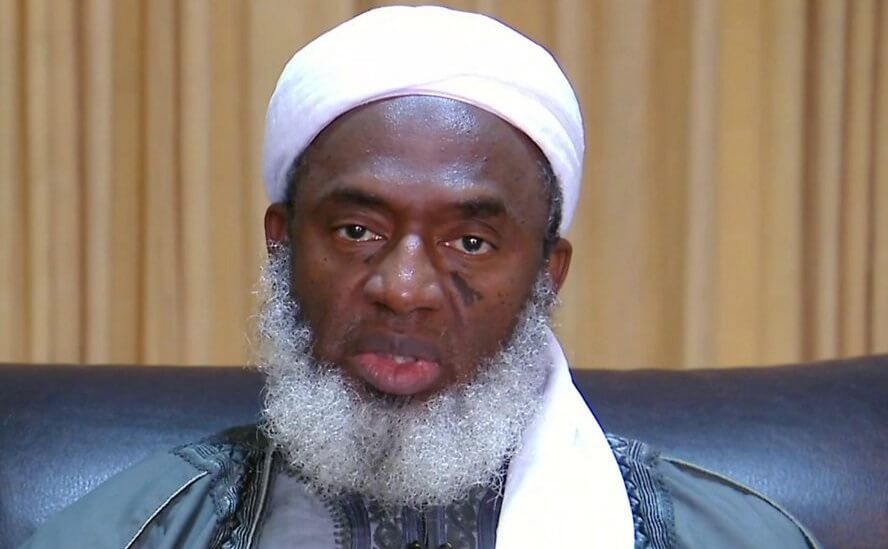
“Can Anybody Stop Me?” — Ahmad Gumi Fires Back Over Ibadan Visit, Islamisation Claims
Popular Islamic cleric, Sheikh Ahmad Gumi, has responded forcefully to criticisms surrounding his visit to Ibadan last year, dismissing allegations that he was promoting the Islamisation of Oyo State or advancing northern religious ideologies in the South-West region of Nigeria. The cleric insisted that no individual or group could prevent him from travelling to any part of the country, stressing that his visit to Ibadan was not at the invitation of any Muslim organisation or individual in the South-West.
In a Facebook post on Tuesday, Gumi explained that he attended the event in his capacity as a representative of a coalition of northern Islamic scholars. He wrote, “I now understand how Islamophobia is shaping politics in the South-West and why I was dragged into local political controversies. I was in Ibadan not at the invitation of any South-West Muslim individual or group, but as a representative of the Coalition of Northern Muslim Ulama.” Gumi then posed a direct rhetorical question to his critics: “Can anybody stop me from going anywhere in Nigeria? ” Describing the reactions to his visit as surprising, Gumi added, “It’s strange how some people think!” He further alleged that the controversy surrounding his visit was being orchestrated to deepen divisions within the country, stating, “I believe the whole saga is tele-guided by both foreign and local interests to promote a narrative and polarise the country.”
Sheikh Ahmad Gumi visited Ibadan on November 19, 2025, as a guest speaker at the Southern Nigerian Ulama Summit held at the University of Ibadan. During the visit, he also participated in a courtesy meeting attended by prominent Muslim scholars from both the northern and southern parts of the country. The visit sparked controversy in Oyo State, with critics questioning its purpose and expressing concerns about its religious and political implications. Some accused Gumi of attempting to promote northern Islamic ideologies and advance the Islamisation of Oyo State, allegations he has now dismissed as baseless.
READ ALSO:
- FG Unveils New Measures to Tackle School Abductions as Lagos Boosts School Security
- Platini Sues FIFA, Infantino Over Alleged Plot to Block His FIFA Presidency Bid
- Nigeria-US Joint Strikes Eliminate 21 ISWAP Fighters in Borno – Presidency
Gumi’s comments came a day after one of the victims abducted in Oriire Local Government Area of Oyo State refuted reports that the kidnappers had demanded the introduction of Sharia law in the state as a condition for their release. The victim, Mrs. Rachael Alamu, principal of Community High School, Esiele, who spoke from captivity in a video that later went viral, said the abductors neither demanded Sharia law nor a N1 billion ransom. According to her, the kidnappers sought the release of their associates currently in government custody. In the video recorded while in captivity, Mrs. Alamu stated: “Everyone, please I have come to make some clarifications. Today makes it the 24th day that we have been in this place and it seems that some people are making our problems complicated already.” She further clarified: “We have been here and we have not been forced to worship in an Islamic way. They have not troubled us concerning that. They are not asking for Sharia law. They are not asking for money.” She made an emotional appeal to Nigerians, saying: “Please, we are begging you. Don’t play politics with our lives. Nigerians, please help us circulate this. Let it go viral. They are not asking for Sharia law. It is not true. They are not asking for weapons. They are not asking for money.” According to her, the abductors’ only demand is “the release of some of their people” currently in government custody.
The claim regarding Sharia law demands was also rejected by the Muslim Rights Concern (MURIC) , which described reports linking the abduction to demands for Sharia law as false. MURIC described the report as “a lie from the pit of Jahannam (hell)” and argued that the so-called demand was inserted by enemies of Islam in the negotiation team to tarnish the image of Islam. The organisation insisted that kidnapping, terrorism and extortion are contrary to the teachings of Islam and should not be justified under any religious guise. “Terrorists do not represent Islamic values and cannot speak for Muslims,” the organisation stated.
READ ALSO:
- NRC counters Transport ministry on Warri-Itakpe train crash passenger list, casualties
- Okonkwo Releases Evidence Against Peter Obi as ₦5bn Defamation Battle Looms
- 2027: Babachir Lawal Reveals Why He Prefers Tinubu’s ‘Devil’ to Atiku’s Presidency
The Muslim community in Oyo State has also strongly condemned the Sharia-related demands reportedly made by the abductors, stressing that the criminals do not represent Islam or the values of the Muslim faithful. In a statement jointly signed by its Chairman, Alhaji Ishaq Sanvni, and Secretary-General, Alhaji Murisiku Siyanbade, the community described the kidnappers’ actions as criminal, inhumane, and completely contrary to the teachings of Islam. According to the statement, Islam unequivocally condemns kidnapping, terrorism, violence, and the exploitation of innocent people for personal gain. It noted that genuine Sharia principles promote justice, peace, compassion, and the sanctity of human life—values that stand in direct opposition to the actions of criminal groups. The community further emphasized that the protection of human life remains a fundamental principle of Islam, citing relevant teachings from the Holy Qur’an that uphold the dignity and security of every individual.
Aligning himself with MURIC’s position, Gumi suggested that the controversy surrounding both the abduction and his Ibadan visit reflected growing attempts to marginalise Islamic influence in South-West politics. His comments came amid renewed debate over his November 2025 visit to Ibadan, which drew criticism from some quarters that accused him of attempting to promote northern Islamic ideologies in the South-West. Gumi said he now understood “how Islamophobia is shaping politics” in the region and suggested that he had been unnecessarily drawn into local political disputes. He expressed confidence that his constitutional right to free movement across all 36 states of the federation remains protected, regardless of religious or regional considerations. His assertion — “Can anybody stop me from going anywhere in Nigeria?” — underscores the constitutional guarantee of movement that cannot be abridged by religious or regional considerations.
The controversy surrounding Gumi’s Ibadan visit and the Oriire abduction allegations highlights the broader debate about the role of religious figures in national discourse and the extent to which regional sensitivities should influence movement and engagement across Nigeria’s diverse ethnic and religious landscape. Gumi’s allegations of Islamophobia shaping South-West politics suggest a growing perception among some northern Muslim leaders that their presence and activities in the region are being viewed with increasing suspicion. Nigeria’s constitution guarantees every citizen the right to freedom of movement — a right Gumi has firmly asserted he will continue to exercise regardless of criticism. As the cleric himself put it, his position on the matter remains unchanged: no individual or group has the authority to determine where he can or cannot go within the borders of his own country.
“Can Anybody Stop Me?” — Ahmad Gumi Fires Back Over Ibadan Visit, Islamisation Claims









metro
Tinubu Rewards Qur’anic Champion Maryam Dan’Azumi With N20m
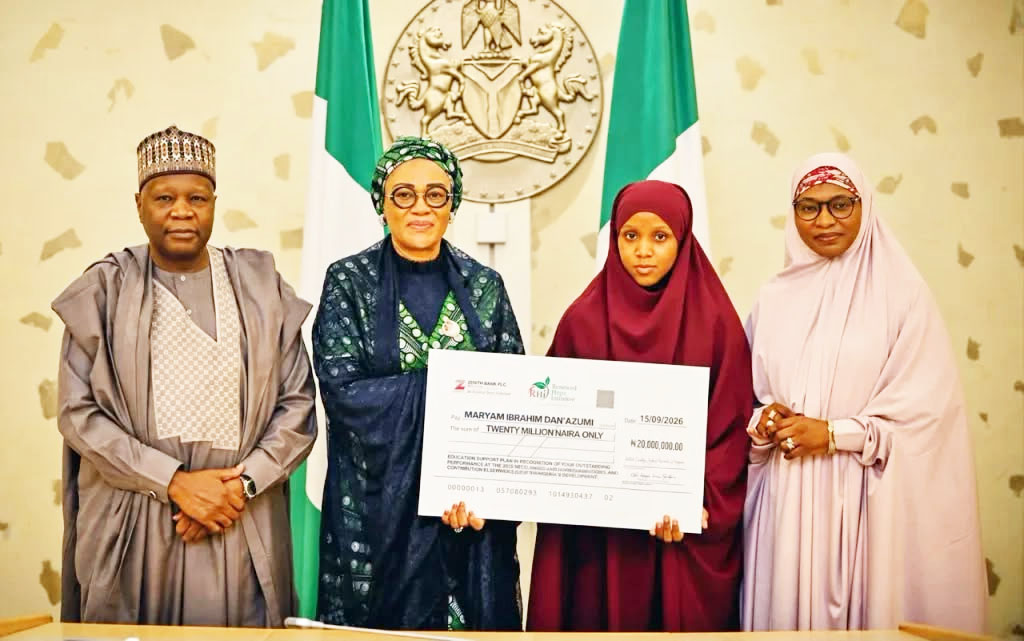
Tinubu Rewards Qur’anic Champion Maryam Dan’Azumi With N20m
Nigeria’s First Lady, Senator Oluremi Tinubu, has rewarded 19-year-old Gombe State Qur’anic scholar Maryam Ibrahim Dan’Azumi with N20 million following her outstanding performance at the 46th King Abdulaziz International Qur’anic Competition in Makkah, Saudi Arabia.
Oluremi Tinubu presented the cash award to Maryam at the Presidential Villa, Abuja, on Tuesday after the young Qur’anic scholar was formally presented to her by Gombe State Governor Muhammadu Inuwa Yahaya.
The governor was accompanied by Maryam’s father, teachers and other members of the Gombe State delegation during the visit.
In addition to the N20 million reward, the First Lady expressed her willingness to support Maryam in pursuing a master’s degree, encouraging the young scholar to continue her academic development alongside her Qur’anic studies.
Tinubu described Maryam’s achievement as a source of pride for Nigeria and an example of what young Nigerians, particularly girls, can accomplish through dedication, discipline and education.
Maryam attracted international attention in August after emerging winner of the second category of the women’s division at the prestigious King Abdulaziz International Qur’an Competition in Saudi Arabia.
She scored 97.70 marks to take first position in a category that required participants to demonstrate mastery of the entire Holy Qur’an, together with excellence in recitation and interpretation of Qur’anic vocabulary.
The 46th edition of the international competition reportedly attracted 334 contestants from 133 countries, with participants competing across various categories covering Qur’anic memorisation, recitation and interpretation.
Maryam’s victory also earned her a prize of 300,000 Saudi Riyals, widely reported at about N120 million, making the N20 million presented by the First Lady a separate recognition of her achievement.
READ ALSO:
- ASUU Crisis Deepens: Lagos Universities Join UNIBEN, Taraba on Indefinite Strike
- Lagos Power Outage: Ikeja Electric Blames TCN as Businesses, Homes Groan
- US Court Blocks Trump Visa Rule Limiting Stay of Foreign Students, Journalists
Receiving Maryam at the State House, Oluremi Tinubu praised the teenager’s commitment to Qur’anic scholarship and her determination to excel in both religious and formal education.
She also acknowledged the contribution of Maryam’s parents, teachers and mentors, noting that sustained support from families and educators remains important in nurturing young talents.
The First Lady encouraged Maryam to remain committed to her education and to embrace mentorship as she progresses in her academic and personal development.
Maryam’s international success is also part of a remarkable family record in Qur’anic competitions.
Her elder sister, Hajara Ibrahim Dan’Azumi, won the 18th Hashemite Jordan International Qur’anic Competition for Females in Jordan in 2024.
The achievements of the two sisters have drawn attention from Nigerian leaders and stakeholders in Islamic education, with President Bola Ahmed Tinubu previously congratulating Maryam on her international victory and recognising the role played by her family, teachers and mentors.
According to Governor Inuwa Yahaya, Maryam’s success followed years of participation in Qur’anic competitions at different levels.
She reportedly distinguished herself in local and state competitions before progressing to national contests and eventually representing Nigeria at the international competition in Saudi Arabia.
Maryam is a Physics Education student at Gombe State University and also studies at the Abubakar Siddiq Community School for Qur’anic Memorisation in Gombe.
Speaking after her reception at the Presidential Villa, Maryam expressed appreciation to the First Lady for the recognition and financial support.
She said her participation in the Saudi Arabian competition enabled her to interact with contestants from different parts of the world and gain broader exposure.
The young scholar also expressed hope that her achievement would inspire other Nigerian youths to remain committed to education, develop their talents and pursue excellence in their chosen fields.
With the latest N20 million award, Maryam has received substantial financial recognition following her historic performance in Saudi Arabia.
Her 300,000 Saudi Riyal prize came from the King Abdulaziz International Qur’an Competition, while the N20 million reward from Oluremi Tinubu was presented during her visit to the Presidential Villa.
The First Lady’s offer to support Maryam’s postgraduate studies could further strengthen the young scholar’s ability to pursue higher education while continuing her development in Qur’anic scholarship.
Tinubu Rewards Qur’anic Champion Maryam Dan’Azumi With N20m
metro
Kaduna APC Calls for Probe Into Alleged Attacks, Vandalism

Kaduna APC Calls for Probe Into Alleged Attacks, Vandalism
The Kaduna State chapter of the APC has appealed for calm after reporting alleged attacks, vandalism and intimidation involving its members and party-related facilities.
The party wants the police and other security agencies to determine what happened and identify those responsible for any offences established by the evidence.
APC Publicity Secretary Sani Dan Azare said vehicles were allegedly damaged during an incident at party premises, while some members and supporters were reportedly assaulted or intimidated elsewhere in the state.
Rather than draw conclusions from the competing claims, the party asked security agencies to examine all credible leads and evidence before taking action.
The appeal comes as political activities intensify in Kaduna ahead of the 2027 elections. The state has already recorded a separate dispute involving ADC supporters and security operatives during a campaign-related walk, with the parties giving different accounts of the confrontation.
The APC said such incidents should not undermine what it described as progress made in reducing political, ethnic and religious tensions in the state.
It therefore urged political parties, candidates and supporters to conduct their activities peacefully and within the law.
Dan Azare also asked APC members and support groups to avoid retaliation, warning against any form of self-help.
“Let the facts be established. Let due process prevail. Let the law take its course” the party said.
The APC added that anyone with relevant information should make it available to security agencies to help establish what happened and determine whether anyone should face legal action.
Kaduna APC Calls for Probe Into Alleged Attacks, Vandalism
metro
Fatal NURTW Leadership Clash in Osun Leaves Two Dead; State Orders Park Shut Down
Fatal NURTW Leadership Clash in Osun Leaves Two Dead; State Orders Park Shut Down
As Olalekan Oyeyemi is buried in Osogbo, authorities transfer murder probe to the State Criminal Investigation Department.
-

 News3 days ago
SERAP Threatens Legal Action Over ₦126bn INEC Electoral Funds
-
 Politics2 days ago
2027: Northern Lecturers Back Tinubu, ASUU Disowns Endorsement
-

 metro3 days ago
Mother ‘sold daughter’s abuse videos for $300’: Nigeria child pornography case shocks nation
-

 News3 days ago
Adeleke Orders Arrests After Associate Ajagungbade Is Reportedly Killed in Ife
-

 News3 days ago
Petrol Subsidy: Presidency Rejects Atiku’s Plan, Says No Going Back
-

 metro2 days ago
Police Arrest Mother Over Alleged Brutal Abuse of 7-Year-Old Girl in Anambra
-

 Sports1 day ago
‘I Was Never the Chosen One’ — Dembele Responds to Mbappe
-

 Education3 days ago
JAMB Takes Over HND Admissions in Polytechnics, Health Institutions Nationwide