
Business
CBN Forecasts ₦950 Petrol Price in 2026 Amid FX Stability, Lower Oil Prices

CBN Forecasts ₦950 Petrol Price in 2026 Amid FX Stability, Lower Oil Prices
The Central Bank of Nigeria (CBN) has projected that the pump price of petrol will average about ₦950 per litre in 2026, according to its 2026 Macroeconomic Outlook for Nigeria.
The projection is based on a set of baseline assumptions, including a moderation in global crude oil prices, relative stability in the foreign exchange market, and improved domestic oil production and refining capacity.
According to the apex bank, its outlook assumes an average crude oil price of $60 per barrel in the fourth quarter of 2025 and $55 per barrel in 2026, in line with forecasts by the US Energy Information Administration (EIA) that rising inventories and global supply glut would weigh on prices.
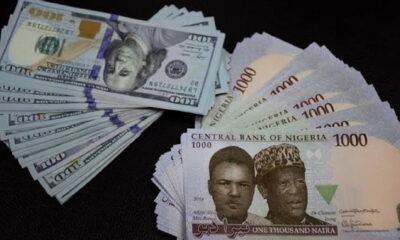
The CBN also projected an average Nigerian Foreign Exchange Market (NFEM) rate of ₦1,451.63 per dollar in Q4 2025 and ₦1,400/$ in 2026, supported by improved FX efficiency, increased capital inflows, a current account surplus and broader economic activity.
Domestic crude oil production is expected to average about 1.5 million barrels per day, excluding condensates, throughout the forecast period. Within this framework, the bank said the price of premium motor spirit (PMS) is expected to “hover around ₦950 per litre in 2026,” slightly above current retail levels.
READ ALSO:
- Doctor Debunks ‘Detox Abroad’ Claims as Regina Daniels’ Negative Drug Test Fuels Online Debate
- Nwoko Questions Credibility of Regina Daniels’ Drug Test Amid Ongoing Custody Dispute
- Kano Assembly Backs Gov. Yusuf’s Possible Exit from NNPP as Party Crisis Deepens
“The baseline projections are predicated on crude oil prices, exchange rate stability, improved FX market efficiency, higher capital inflows, a current account surplus and stronger investor sentiment,” the CBN stated, adding that government spending would follow the 2025–2027 Medium-Term Expenditure Framework (MTEF) in line with an expansionary fiscal stance.
The outlook comes amid recent fluctuations in fuel prices following significant price cuts by the Dangote Petroleum Refinery, which reduced its gantry price from ₦828 to ₦699 per litre in December. The refinery’s retail partner, MRS Oil, subsequently sold petrol at ₦739 per litre, forcing other marketers to lower prices to remain competitive.
Despite the reductions, industry players note that the price cuts have come at a significant cost to refiners and importers. Earlier this week, the Dangote refinery warned that petrol prices could rise to as much as ₦1,400 per litre if Nigeria relies solely on fuel imports, describing domestic refining as a stabilising force in the downstream market.
The CBN acknowledged this role, noting that increased private sector investment in refining, improved security around oil assets and stable energy prices are expected to support stronger economic growth in 2026.
The bank also projected that headline inflation would decline to 12.94 per cent in 2026, from an estimated 21.26 per cent in 2025, driven by easing food prices and moderation in PMS prices as competition among midstream operators intensifies.
Globally, the CBN forecast a 5.52 per cent decline in commodity prices in 2026, with global energy prices expected to fall by 6.99 per cent, as Brent crude averages around $61 per barrel. Prices of metals and agricultural commodities are also projected to ease on weaker demand and improved supply conditions.
CBN Forecasts ₦950 Petrol Price in 2026 Amid FX Stability, Lower Oil Prices
Punch






Business
Naira Appreciates to ₦1,382/$ in Parallel Market as Official Rate Softens
Naira Appreciates to ₦1,382/$ in Parallel Market as Official Rate Softens
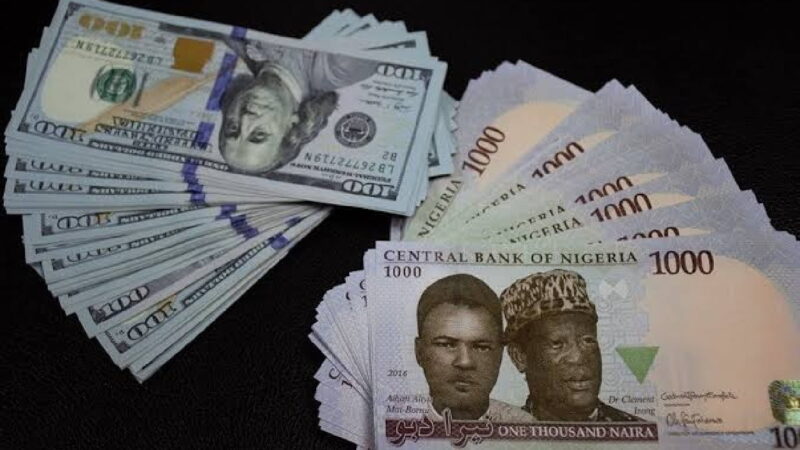
The Nigerian naira showed mixed performance yesterday, appreciating to ₦1,382 per US dollar in the parallel market from ₦1,391 recorded on Wednesday. This rise reflects renewed confidence among traders in the informal foreign exchange market, even as the currency slightly depreciated in the official Nigerian Foreign Exchange Market (NFEM).
Data from the Central Bank of Nigeria (CBN) showed that the indicative official exchange rate moved to ₦1,361 per dollar, up from ₦1,359.5 per dollar on Wednesday — a ₦1.5 depreciation for the naira. Consequently, the margin between the parallel and official rates narrowed to ₦21 per dollar, down from ₦31.5 per dollar previously, indicating a reduction in the spread between formal and informal FX markets.
Experts say the parallel market gains were supported by improved dollar liquidity, steady remittance inflows, and robust external reserves, which recently reached levels not seen in over a decade. Analysts note that a narrowing spread between the black market and official rates typically signals growing market confidence and stability, even as structural challenges in Nigeria’s FX landscape persist.
READ ALSO:
- Presidency, APC Reject Opposition Claims on Electoral Act 2026
- Shariah Council Tells US No Foreign Power Can Force Nigerian Muslims to Abandon Shariah
- FCCPC Finds Evidence of Airfare Manipulation by Domestic Airlines
“While the naira is stronger in the parallel market, pressure remains on the official segment due to high demand for foreign currency by importers and businesses,” said a currency analyst. “The recent movements show optimism but highlight the ongoing volatility across exchange segments.”
The parallel market rate, often called the black market rate, responds quickly to dollar demand and supply at street level, while the official NFEM rate reflects CBN interventions and regulated forex flows. Observers say continued policy measures, remittance growth, and export receipts will be critical in maintaining naira stability ahead of the 2027 election period.
Despite the mixed trends, the recent appreciation in the parallel market is being viewed as positive for consumer confidence, though analysts caution that structural issues, including trade imbalances and uneven forex distribution, could still pressure the naira in coming weeks.
Naira Appreciates to ₦1,382/$ in Parallel Market as Official Rate Softens
Aviation
FCCPC Finds Evidence of Airfare Manipulation by Domestic Airlines

FCCPC Finds Evidence of Airfare Manipulation by Domestic Airlines
The Federal Competition and Consumer Protection Commission (FCCPC) says it has uncovered credible evidence of airfare manipulation by domestic airlines in Nigeria, revealing that some carriers may have artificially inflated ticket prices during the December 2025 festive travel season beyond what market forces would justify. In an interim report released on Thursday, the FCCPC said its extensive forensic review of airfare data collected directly from airlines across key domestic routes shows striking irregularities in pricing patterns that appear inconsistent with normal seasonal demand, fuel costs, foreign exchange movements, or other operational variables.
The review by the Commission’s Surveillance and Investigations Department, led by Director of Corporate Affairs Ondaje Ijagwu, compared peak-season fares in December 2025 against ticket prices in the post-holiday period of January 2026. In many cases — notably on high-traffic corridors such as Abuja–Port Harcourt, Lagos–Calabar, and Lagos–Enugu — the difference in fares reached as high as ₦405,000 for a single ticket, even though essential cost drivers remained relatively stable. “These fare differences appear to reflect airlines’ arbitrary pricing decisions, yield management strategies, and capacity allocation practices rather than any variation in regulated fees or significant changes in operating conditions,” Ijagwu said, suggesting that multiple domestic carriers might have engaged in tacit coordination rather than true competition.
The report also showed that during the peak period, reduced seat availability paired with clustered price ranges across multiple operators raised further competition concerns, lending weight to potential violations of Nigeria’s Federal Competition and Consumer Protection Act (FCCPA) 2018. The interim findings flagged possible breaches of provisions governing restraint of competition, abuse of dominant positions, price-fixing, conspiracy, unfair contract terms, and consumers’ right to fair dealings — signalling that airlines may have breached multiple competition and consumer protection rules.
READ ALSO:
- US Lawmaker Says Christians in Nigeria Bear Brunt of Violence, Calls on Trump to Act
- Eric Chelle Explains $130,000 Salary Proposal, Reaffirms Loyalty to Super Eagles
- Suspected Arsonists Set St. Mary’s Catholic Church Ablaze in Cross River
The Airline Operators of Nigeria (AON) swiftly pushed back against the FCCPC’s report. AON spokesman Prof. Obiora Okonkwo said the Commission lacks the specialised expertise to analyse aviation pricing, warning that the probe could harm Nigeria’s fragile airline sector. “They don’t understand the economics of airlines or how ticket prices are set based on yield, load factors, aircraft utilisation and revenue management systems,” Okonkwo said. “This action is very detrimental to the survival of domestic operators.”
Independent aviation analysts in Nigeria say pricing behaviour in the sector has long lacked transparency. Dr. Uche Okoro, a transport economist, told news editors that while peak-season travel normally pushes fares up, the consistency of spikes across multiple airlines on the same dates and routes — even where there was no significant change in fuel or exchange rates — suggests coordinated pricing behaviour. “Market competition should push airlines to differentiate prices based on service levels and actual costs,” Okoro said. “When several carriers raise prices almost in unison, especially on predictable peak travel dates, it warrants scrutiny.”
The Nigerian Civil Aviation Authority (NCAA) acknowledged the FCCPC’s interim report and pledged to support the broader probe, noting that the aviation sector must balance airline financial sustainability with fair market practices. An NCAA spokesperson said: “We are engaging with the FCCPC and industry stakeholders to promote a transparent pricing environment. While airlines need to remain viable, consumers must also be protected from exploitative fare regimes.” The NCAA emphasised that factors such as fleet size limits, airport slot restrictions, seasonal demand patterns, and infrastructure capacity do affect pricing, but agreed that unusually steep price spikes merit investigation.
According to the FCCPC, the route-by-route analysis showed that on Abuja–Port Harcourt, average peak-period fares were far higher than post-peak levels, with many tickets in December priced well above the typical seasonal range. On Lagos–Calabar and Lagos–Enugu, similar patterns of clustered fare bands across airlines suggested pricing behaviour broadly aligned among competitors rather than differentiated by market forces. Across sampled routes, median fares during the festive period were significantly elevated compared with post-peak benchmarks, despite stable fuel price trends, unchanged airport taxes, and no major exchange rate shocks. The FCCPC noted that while predictable seasonal demand surges can justify higher fares, the magnitude and pattern of the increases observed in December 2025 are not fully explained by ordinary market conditions.
FCCPC Executive Vice Chairman and CEO Tunji Bello stressed that the interim report is not an enforcement action, but a step toward deeper investigation. “The Commission’s role is to ensure that market outcomes reflect competition and consumer protection principles,” he said, adding that full findings and possible enforcement measures will follow after the ongoing review. Bello also signalled that foreign airlines operating international routes involving Nigeria will soon be probed, following complaints that Nigerian passengers are often charged significantly higher fares on similar international distances. “No operator — domestic or foreign — will be shielded if evidence confirms fare-fixing or consumer exploitation,” Bello said. The FCCPC has asked both airlines and consumers to assist in the investigation by providing additional data, while warning airlines that violations of the FCCPA could result in regulatory sanctions, fines, or mandatory corrective orders once the full review is concluded.
FCCPC Finds Evidence of Airfare Manipulation by Domestic Airlines
Auto
Carloha shakes up pickup market with launch of heavy-duty Chery Himla

Carloha shakes up pickup market with launch of heavy-duty Chery Himla
Carloha Nigeria has officially unveiled the Chery Himla pickup in Nigeria, marking the brand’s entry into the country’s highly competitive pickup segment with a bold focus on productivity, durability and business efficiency.
The launch, held at Orange Island, Lekki, Lagos on February 19, 2026, positions the Himla not merely as a utility vehicle but as a high-performance mobile business asset tailored for commerce, agriculture, logistics, security operations and regional trade.
Speaking at the event, Managing Director of Carloha Nigeria, Mr. Sola Adigun, described the unveiling as a significant milestone for the company and Nigerian entrepreneurs.
“Today’s launch represents a key milestone, with Himla engineered to enhance efficiency and productivity for security outfits, farmers, logistics operators, entrepreneurs and others,” he said.

Built for Bigger Load, Fewer Tripsĺ
At the heart of the Himla’s appeal is its class-leading 1,276-litre cargo bed (1,530 mm × 1,620 mm × 515 mm), designed to accommodate standard industrial pallets and enable what the company describes as “one-trip loading.”
Its optimised chassis and suspension design minimise wheel arch intrusions, creating a flatter and more practical loading surface.
Integrated side and rear steps simplify loading and unloading, helping businesses improve turnaround time in demanding work environments.
READ ALSO:
- Suspected Bandits Use IED to Blow Up Cement Trailer in Zamfara
- How Nigerian Ex-Naval Officer Allegedly Tricked Into Russia’s Army via Fake Job Offer
- MURIC Demands Suspension of Olubi School Principal, VPs Over Alleged Religious Discrimination
Built on a high-strength ladder frame with reinforced rear-spring suspension, the Himla offers a rated payload exceeding 1,000 kg while maintaining stability under heavy loads.
It also boasts a 3-ton towing capacity, positioning it as a strong contender for hauling equipment, refrigerated containers and other heavy-duty applications across logistics, construction and agriculture.
Engineered for Nigerian Terrain

Designed with Nigeria’s diverse road conditions in mind, the Himla features advanced 4×4 capability and 265 mm ground clearance to tackle rough job sites and rural terrain with confidence.
Carloha says the pickup is engineered for durability in high temperatures and humid environments, incorporating wear-resistant and anti-corrosion materials, galvanised steel components and high-strength body panels. Multiple heavy-duty anchoring points ensure cargo stability even on uneven surfaces.
The vehicle is available in ICE variants and comes equipped with premium leather seats, a 15.6-inch central touchscreen, a 9.2-inch digital dashboard display and enhanced rear-seat comfort. Higher-end models feature advanced driver assistance systems.
Real-World Test Drive
Motoring journalists, customers and automobile enthusiasts at the launch event had the opportunity to test-drive the Himla across simulated terrains.

The demonstration highlighted its 4×4 capability, hill approach and descent angles, towing strength, load stability, water-wading ability, in-cabin quietness and overall ride comfort.
General Manager, Marketing at Carloha Nigeria, Mr. Felix Mahan, described the Himla as a cornerstone of Chery’s global pickup strategy.
He said the model combines “class-leading cargo capacity, hardcore load capability, advanced technology and climate-adapted engineering” to serve Nigerian entrepreneurs as a reliable business partner.
Backed by a class-leading six-year warranty, the Himla enters the Nigerian market with a strong value proposition.
With its unveiling, Carloha is betting that Nigeria’s evolving economy will increasingly demand pickups that do more than transport goods — vehicles designed to power productivity, cut operational costs and drive enterprise growth.
Carloha shakes up pickup market with launch of heavy-duty Chery Himla

-

 Entertainment2 days ago
Nollywood Actor Okemesi Confirmed Dead After Brief Illness
-

 News3 days ago
BREAKING: IGP Kayode Egbetokun Steps Down as Tinubu Names Tunji Disu as New Police Chief
-

 metro2 days ago
Frank Mba, Senior DIGs to Exit Police Service After Disu’s Appointment
-

 metro2 days ago
African Virologists Elected to Lead World Society for Virology
-

 News2 days ago
BREAKING: Tinubu Decorates Tunji Disu as Acting Inspector‑General of Police
-

 News3 days ago
Mother of Three Dies by Suicide After Fiance’s Family Rejects Marriage in Ijebu-Ode
-

 metro2 days ago
Abroad-Based Nigerian Woman Kneels with Children in Emotional Tribute to Husband (VIDEO)
-

 metro2 days ago
Osogbo Youths Confer Award of Excellence on Federal Polytechnic Offa Rector, Dr. Kadiri Kamoru