
Opinion
Christian genocide and the conspiracy against Nigeria, By Femi Fani-Kayode
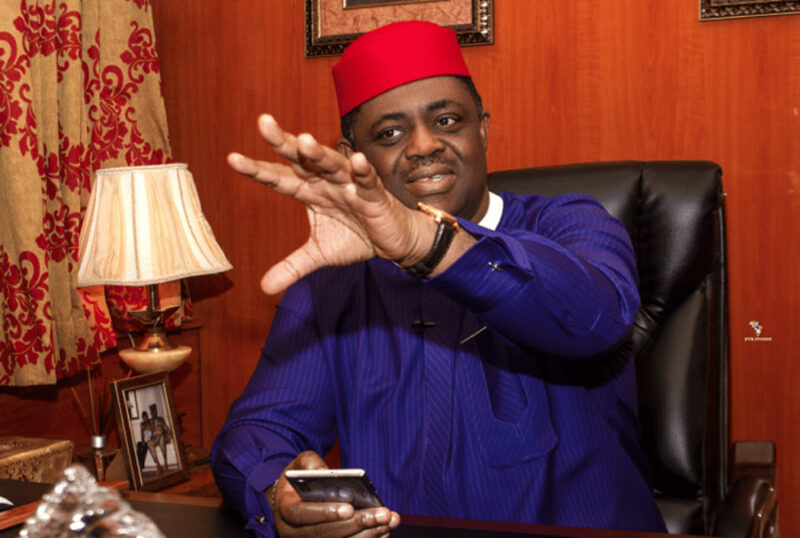
Christian genocide and the conspiracy against Nigeria, By Femi Fani-Kayode
I listened attentively to the words of Bill Maher & CNN’s Van Jones who have both accused Nigeria of indulging in “Christian genocide” and pondered on them deeply.
If, as a Nigerian, their words and narrative do not concern you or scare you then, as Donald Trump would say, you cannot be a very bright bulb.
When one adds their words to the recent contribution of Senator Ted Cruz, the greatest defender of Israel and advocate of ‘Christian Zionism’ in the American Senate, where he accused Nigeria of the same and where he said that he was introducing a Bill in the Senate to do “something about it” and “protect Christians in Nigeria” then you will get an even clearer picture of what is unfolding and the horrendous agenda those behind it have in store for us.
To add to that is the alarming resolution, passed two days ago, by the Canadian Parliament that Nigeria is one of the most dangerous places in the world for Christians to live and that Christians are targetted and slaughtered here all over the country on a daily basis.
The first question that needs to be answered is since when have the Americans and the West generally cared about anyone but themselves, least of all the Christians in our country.
How come they have suddenly started mouthing this fake battle cry and how come the same rhetoric is suddenly coming out of places like the Canadian Parliament and other western capitals?
The sooner those in power in Nigeria and the Nigerian people themselves get a clear grasp of what is really going on the better.
More importantly we need to do something to counter the narrative and we need to do it fast. This is because it is spreading like wildfire all over the world and sadly people are buying into it.
The truth is that the Americans, their allies and their local collaborators are carefully and craftily preparing the ground for a religious war in our country and they want us to tear ourselves apart.
There can be no doubt that Christians have been targetted and killed in Nigeria in huge numbers by Islamist terrorists, whether they be Boko Haram or ISWAP, over the last 14 years but it is also a fact that as many Muslims have been targetted and killed by the same Islamist terrorists over the same period of time.
READ ALSO:
- I never said Buhari was connected to Boko Haram – Jonathan
- Sheikh Gumi urges Hamas to release Isreali civilian hostages
- Omisore declares bid for Osun 2026 governorship election
There are two points that need to be made and properly understood.
Firstly the terrorists that have plagued our nation and slaughtered our people, both Christian and Muslim, for the last 14 years were established, armed, funded and protected by the very same Americans and their western and Israeli allies that are crying more than the bereaved today.
Worse still they refused to sell arms to us or allow us to buy arms from anywhere in our attempt to resist the terrorists ourselves. Remember that?
They even refused to designate Boko Haram as a terrorist organisation for many years and did not do so until it suited their purpose.
The second point to grasp is that the reason that they are now all talking about Nigeria and what they have labelled as “Christian genocide” is not because they love Nigeria or care about Nigerian Christians but because they want to shift the world’s attention away from Gaza and focus it on Nigeria.
They also want to punish us for taking a bold stand at the United Nations against the genocide that the Israelis have unleashed on Gaza which they are supporting and funding.
Standing up for humanity: that is our “crime” and I for one, as a Nigerian, make no apology for it.
In my view it was indeed our proudest moment and finest hour when our Vice President stood before the world at the United Nations and boldly proclaimed that we were against the genocide that was being unleashed on the Palestinian people, condemned what was going on in Gaza and insisted on a two state solution to resolve the conflict.
Unlike others we did not sit on the fence or buckle and sadly we are now paying the price for it.
This is the reason for their sudden venom, subversion and malice and we must not for one moment think otherwise or delude ourselves into believing that they really care.
Let me be clear: there is nothing wrong with them wanting to help our country fight the terrorists and neither is there anything wrong in them showing concern.
As a matter of fact that would be a welcome development.
What is wrong and unacceptable is the false narrative that they are peddling that it is Christians alone that are being killed.
The question that needs to be answered is why is it being framed in this way?
Yes Christian lives matter but do Muslim ones not matter too? If we are counting Christian bodies should we not count Muslim ones too?
READ ALSO:
- Injured Lamine Yamal out of Spain World Cup qualifiers
- Tinubu heads to Jos for funeral of APC chair Yilwatda’s mother
- Gas explosion injures three Gombe varsity students
If they had said that terrorists were killing Nigerians of all faiths their concern would have been welcome.
But when they say only Christians are being killed and they are attempting to stir up the hearts and souls of Christians from all over the world to unleash a crusade on us in the name of defending Nigerian Christians that gives cause for concern and the perpetuation and sustenance of such a wicked and distorted narrative and agenda which will not end well for our country.
As a matter of fact it would tear us apart, swell the ranks of Boko Haram and ISWAP, alienate the Muslim population in our country, divide our ranks, encourage more violence and conflict, exacerbate both religious and ethnic tensions and eventually lead to chaos and carnage in our nation the likes of which we have never seen before.
Brother will kill brother and we will end up fighting a never-ending civil war which is precisely what they want.
This is why this new-found rhetoric from the West is so dangerous.
We must join hands as Nigerians and re-emphasise our unity, our plurality of faith and our pride in our nation and we must resist this insidious attempt to divide us with a false narrative that, if we do not manage carefully, will push us over the cliff.
If there was a Christian genocide going on in Nigeria I would be the first to expose, oppose, resist and fight against it because my faith is EVERYTHING to me.
The reality is that it is not a Christian genocide that is going on in our country but rather a genocide against all Nigerians, both Christian and Muslim, and it is being perpetuated by a heinous, evil ISIS-inspired and Al Qaeda-like group of barbaric and savage terrorists and criminals that take pleasure in killing people of all faiths.
They do not represent Muslims but rather satan. And in other countries that have been afflicted in a similar way both Muslims and Christians have joined forces to fight them.
That is what we need to do here and we must not allow the Americans or anyone else to divide our ranks and make us think otherwise.
We cannot win the war against terror by turning on ourselves.
We welcome the concern of our detractors but we reject their false narrative and their attempt to divide and destroy us.
Permit me to end this contribution with the following.
A number of years ago I was amongst those that erroneously believed that only Christians were being targetted and subjected to genocide by the terrorists in Nigeria.
READ ALSO:
- UNN denies issuing degree certificate to Minister Nnaji
- Death toll rises in shooting by Osun Amotekun, Adeleke orders probe
- Malami’s convoy attacked again by suspected APC thugs in Kebbi
This was the case until 2020 when I went on a tour of the North West and North East and discovered that as many, if not more, Muslims and Muslim communities had been targetted and subjected to mass murder, ethnic cleansing and genocide as the Christian ones in that area.
What I witnessed in Zamfara, Sokoto, Katsina, Kaduna, Yobe, Borno, Bauchi, Adamawa, Gombe and other parts of the majority Muslim core North shocked and shattered me and constrained me to accept the assertion that this was not an onslaught against Christians and Christian communities alone but rather an attack on Nigerians of every faith.
And it is the same in the Middle Belt where these evil demon-possesed barbarians are targetting and slaughtering Christians and Muslims in equal measure.
For example I discovered that they attacked Niger, Kwara, Nassarawa and Kogi states and their predominantly Muslim communities as much and as frequently as they attacked Benue, Plateau and Taraba which are predominantly Christian states.
From the day I came to appreciate all this I took an oath before God and man that I would speak out against the atrocities being perpetuated against not just Christians but also Muslims.
I also accepted the fact that to do anything other than that would not only be inherently intellectually dishonest but also would add to the problem and make it worse rather than solve it.
The sooner we accept the fact that we are all victims of the same evil and heartless beasts the better it will be for us all.
What we must never do is accept the bogus narrative or harbor the perfidious notion that the West is trying to establish that only Christians are being killed in our country.
As Christians we are, after all, meant to be our brothers keeper and as human beings we are meant to feel the same degree of pain and I daresay shame when either innocent and defenceless Christian or Muslim men, women and children are murdered in cold blood in our shores.
When the barbarians drop their bombs, wield their machetes, fire their RPG’s and shoot their AK47’s they do not ask their victims what faith they belong to.
The notion that they do is as asinine and far-fetched as it is ignorant and mischevous.
Beasts don’t care whether you are Christian or Muslim when they knock at your door: they only care about spilling your blood and taking your life.
May God guide us all, may He grant us peace and may He bless, defend and protect the Federal Republic of Nigeria.
Christian genocide and the conspiracy against Nigeria, By Femi Fani-Kayode
Femi Fani-Kayode is a renowned social commentator and Nigeria’s former Minister of Aviation.









Opinion
El Rufai’s Arise News mind game with Ribadu, By Farooq Kperogi

El Rufai’s Arise News mind game with Ribadu, By Farooq Kperogi
El Rufai’s Arise News mind game with Ribadu, By Farooq Kperogi
Opinion
Oshiomhole: Behold the 13th disciple of Christ
Oshiomhole: Behold the 13th disciple of Christ
Opinion
AFCON 2025: Flipping Content Creation From Coverage to Strategy

AFCON 2025: Flipping Content Creation From Coverage to Strategy
By Toluwalope Shodunke
The beautiful and enchanting butterfly called the Africa Cup of Nations (AFCON) emerged from its chrysalis in Khartoum, Sudan, under the presidency of Abdelaziz Abdallah Salem, an Egyptian, with three countries—Egypt, Sudan, and Ethiopia—participating, and Egypt emerging as the eventual winner.
The reason for this limited participation is not far-fetched. At the time, only nine African countries were independent. The remaining 45 countries that now make up CAF’s 54 member nations were either pushing Queen Elizabeth’s dogsled made unique with the Union Jack, making supplications at the Eiffel Tower, or knocking at the doors of the Palácio de Belém, the Quirinal Palace, and the Royal Palace of Brussels—seeking the mercies of their colonial masters who, without regard for cultures, sub-cultures, or primordial affinities, divided Africa among the colonial gods.
From then until now, CAF has had seven presidents, including Patrice Motsepe, who was elected as the seventh president in 2021. With more countries gaining independence and under various CAF leaderships, AFCON has undergone several reforms—transforming from a “backyard event” involving only three nations into competitions featuring 8, 16, and now 24 teams. It has evolved into a global spectacle consumed by millions worldwide.
Looking back, I can trace my personal connection to AFCON to table soccer, which I played alone on concrete in our balcony at Olafimihan Street—between Mushin and Ilasamaja—adjacent to Alafia Oluwa Primary School, close to Alfa Nda and Akanro Street, all in Lagos State.
Zygmunt Bauman, the Polish-British sociologist who developed the concept of “liquid modernity,” argues that the world is in constant flux rather than static, among other themes in his revelatory works.
For the benefit of Millennials (Generation Y) and Generation Z—who are accustomed to high-tech pads, iPhones, AI technologies, and chat boxes—table soccer is a replica of football played with bottle corks (often from carbonated drinks or beer) as players, cassette hubs as the ball, and “Bic” biro covers for engagement. The game can be played by two people, each controlling eleven players.
I, however, enjoyed playing alone in a secluded area, running my own commentary like the great Ernest Okonkwo, Yinka Craig, and Fabio Lanipekun, who are all late. At the time, I knew next to nothing about the Africa Cup of Nations. Yet, I named my cork players after Nigerian legends such as Segun Odegbami, Godwin Odiye, Aloysius Atuegbu, Tunji Banjo, Muda Lawal, Felix Owolabi, and Adokiye Amiesimaka, among others, as I must have taken to heart their names from commentary and utterances of my uncles resulting from sporadic and wild celebrations of Nigeria winning the Cup of Nations on home soil for the first time.
While my connection to AFCON remained somewhat ephemeral until Libya 1982, my AFCON anecdotes became deeply rooted in Abidjan 1984, where Cameroon defeated Nigeria 3–1. The name Théophile Abéga was etched into my youthful memory.
Even as I write this, I remember the silence that enveloped our compound after the final whistle.
It felt similar to how Ukrainians experienced the Battle of Mariupol against Russia—where resolute resistance eventually succumbed to overwhelming force.
The Indomitable Lions were better and superior in every aspect. The lion not only caged the Eagles, they cooked pepper soup with the Green Eagles.
In Maroc ’88, I again tasted defeat with the Green Eagles (now Super Eagles), coached by the German Manfred Höner. Players like Henry Nwosu, Stephen Keshi, Sunday Eboigbe, Bright Omolara, Rashidi Yekini, Austin Eguavoen, Peter Rufai, Folorunsho Okenla, Ademola Adeshina, Yisa Sofoluwe, and others featured prominently. A beautiful goal by Henry Nwosu—then a diminutive ACB Lagos player—was controversially disallowed.
This sparked outrage among Nigerians, many of whom believed the referee acted under the influence of Issa Hayatou, the Cameroonian who served as CAF president from 1988 to 2017.
This stroll down memory lane illustrates that controversy and allegations of biased officiating have long been part of AFCON’s history.
The 2025 Africa Cup of Nations in Morocco, held from December 21, 2025, to January 18, 2026, will be discussed for a long time by football historians, raconteurs, and aficionados—for both positive and negative reasons.
These include Morocco’s world-class facilities, the ravenous hunger of ball boys and players (superstars included) for the towels of opposing goalkeepers—popularly dubbed TowelGate—allegations of biased officiating, strained relations among Arab African nations (Egypt, Algeria, Tunisia, and Morocco), CAF President Patrice Motsepe’s curt “keep quiet” response to veteran journalist Osasu Obayiuwana regarding the proposed four-year AFCON cycle post-2028, and the “Oga Patapata” incident, where Senegalese players walked off the pitch after a legitimate goal was chalked off and a penalty awarded against them by DR Congo referee Jean-Jacques Ndala.
While these narratives dominated global discourse, another critical issue—less prominent but equally important—emerged within Nigeria’s media and content-creation landscape.
Following Nigeria’s qualification from the group stage, the Super Eagles were scheduled to face Mozambique in the Round of 16. Between January 1 and January 3, Coach Eric Chelle instituted closed-door training sessions, denying journalists and content creators access, with media interaction limited to pre-match press conferences.
According to Chelle, the knockout stage demanded “maximum concentration,” and privacy was necessary to protect players from distractions.
This decision sparked mixed reactions on social media.
Twitter user @QualityQuadry wrote:
“What Eric Chelle is doing to journalists is bad.
Journalists were subjected to a media parley under cold weather in an open field for the first time in Super Eagles history.
Journalists were beaten by rain because Chelle doesn’t want journalists around the camp.
Locking down training sessions for three days is unprofessional.
I wish him well against Mozambique.”
Another user, @PoojaMedia, stated:
“Again, Eric Chelle has closed the Super Eagles’ training today.
That means journalists in Morocco won’t have access to the team for three straight days ahead of the Round of 16.
This is serious and sad for journalists who spent millions to get content around the team.
We move.”
Conversely, @sportsdokitor wrote:
“I’m not Eric Chelle’s biggest supporter, but on this issue, I support him 110%.
There’s a time to speak and a time to train.
Let the boys focus on why they’re in Morocco—they’re not here for your content creation.”
From these three tweets, one can see accessibility being clothed in beautiful garments. Two of the tweets suggest that there is only one way to get to the zenith of Mount Kilimanjaro, when indeed there are many routes—if we think within the box, not outside the box as we’ve not exhausted the content inside the box.
In the past, when the economy was buoyant, media organisations sponsored reporters to cover the World Cup, Olympics, Commonwealth Games, and other international competitions.
Today, with financial pressures mounting, many journalists and content creators seek collaborations and sponsorships from corporations and tech startups to cover sporting events, who in turn get awareness, brand visibility, and other intangibles.
As Gary Vaynerchuk famously said, “Every company is a media company.” Yet most creators covering AFCON 2025 followed the same playbook.
At AFCON 2025, most Nigerian journalists and content creators pitched similar offerings: on-the-ground coverage, press conferences, team updates, behind-the-scenes footage, analysis, cuisine, fan interactions, and Moroccan cultural experiences.
If they were not interviewing Victor Osimhen, they were showcasing the stand-up comedy talents of Samuel Chukwueze and other forms of entertainment.
What was missing was differentiation. No clear Unique Selling Proposition (USP). The result was generic, repetitive content with little strategic distinction. Everyone appeared to be deploying the same “Jab, Jab, Jab, Hook” formula—throwing multiple jabs of access-driven content in the hope that one hook would land.
The lesson is simple: when everyone is jabbing the same way, the hook becomes predictable and loses its power.
As J. P. Clark wrote in the poem “The Casualties”, “We are all casualties,” casualties of sameness—content without differentiation. The audience consumes shallow content, sponsors lose return on investment, and creators return home bearing the “weight of paper” from disappointed benefactors.
On November 23, 1963, a shining light was dimmed in America when President John F. Kennedy was assassinated.
As with AFCON today, media organisations sent their best hands to cover the funeral, as the who’s who of the planet—and if possible, the stratosphere—would attend. Unconfirmed reports suggested that over 220 VVIPs were expected.
While every newspaper, radio, and television station covered the spectacle and grandeur of the event, one man, Jimmy Breslin, swam against the tide. He chose instead to interview Clifton Pollard, the foreman of gravediggers at Arlington National Cemetery—the man who dug John F. Kennedy’s grave.
This act of upended thinking differentiated Jimmy Breslin from the odds and sods, and he went on to win the Pulitzer Prize in 1986.
Until journalists and content creators stop following the motley and begin swimming against the tide, access will continue to be treated as king—when in reality, differentiation, aided by strategy, is king.
When every journalist and content creator is using Gary Vaynerchuk’s “Jab, Jab, Jab, Hook” template while covering major sporting events, thinkers among them must learn to replace one jab with a counterpunch—and a bit of head movement—to stay ahead of the herd.
Toluwalope Shodunke can be reached via tolushodunke@yahoo.com

-
 Education24 hours ago
Check Your Name: UNILORIN Releases Updated NELFUND Refund List for 2024/2025 Students
-

 News15 hours ago
Osogbo Sons and Daughters Mark 5th Anniversary with Awards, Political Undertones
-

 metro2 days ago
Woman Arrested Over Murder of Nigerian E-Hailing Driver in South Africa
-

 metro2 days ago
Boko Haram Terrorists Release Video of 176 Abducted Kwara Residents
-

 News1 day ago
Afenifere Calls for Immediate Take-Off of State Police as Terror Threats Rise in Yorubaland
-
 metro3 days ago
Court Orders DIA to Produce Cleric Accused of Coup Plot by February 18
-
 metro1 day ago
US Military Boosts Support for Nigeria’s Fight Against Insurgency With Ammunition, Troop
-

 metro1 day ago
Argungu Festival 2026 Highlights Peace, Stability, Economic Growth — Tinubu