Dangote: 27 Staff Shot During Closure Of Our Factory By Kogi Govt - Newstrends
Connect with us

metro

Dangote: 27 Staff Shot During Closure Of Our Factory By Kogi Govt

Published

on

Dangote Cement Plc has disclosed that 27 workers of the company were shot at when armed thugs suspectdly acting on the order of Kogi state government invaded its Obajana cement plant.

The company in a statement by its Group Managing Director, Michel Pucheros, said that the invasion was carried out by armed vigilantes, led by some officials of the state government acting on the resolution of the Kogi state House of Assembly on controversial tax claims.

“In the process of forcefully evicting workers to enforce the shutdown, the vigilantes shot at 27 of our workers and also destroyed some of the company’s property at the plant,” he said.

While reiterating that Obajana cement plant is 100% owned by Dangote Cement Plc, Pucheros said steps have been taken to arrest the vigilantes who carried out the invasion.

Meanwhile Organised Private Sector (OPS) under the aegis of National Association of Chambers of Commerce, Industries, Mines and Agriculture (NACCIMA) have berated the Kogi State government over the closure of Dangote Cement, Obajana Plant, describing the action as being hasty.

READ ALSO:

This is just as Lagos and Abuja branches of the Chamber in separate statements described the action of the state governor, Yahaya Bello as “shocking and disappointing” at the least, regretting that for every day the factory is shut, millions of naira are lost and the reputation of Kogi state takes a negative hit.

NACCIMA expressed regret that the issues between the company and the state over tax dispute ought not to have led to sealing of the company but should have been resolved in a conciliatory and amicable atmosphere.

The body, in a statement signed by its Director-General, Olusola Obadimu and issued in Lagos, said the state government should have trodden a path of caution, and called for the immediate reopening of the factory for normal production activities to resume.

Obadimu stated that NACCIMA’s position was based on some key considerations bordering on the impact of the factory’s closure on the economy and thousands of people whose means of livelihood depend on the production activities of the factory.

“It is vital to note that it is a huge production plant that supplies key domestic input (cement) into the economy and employs hundreds of thousands of Nigerians, directly and indirectly. This is aside from its substantial budget for corporate social responsibility outside of taxes.

“Shutting off the factory does not necessarily help the controversial issue of compliance on tax remittable to Kogi state government. Rather a continuous operation of the plant would more likely facilitate a faster resolution of the dispute,” he said.

The LCCI, in its statement signed by its Director General, Dr. Chinyere Almona said the attack on the cement factory reflected the poor handling of investment protection issues in the country.

The Chamber said it believed there are more decent ways to handle regulatory and legislative matters concerning businesses in Nigeria than resorting to violence. According to the Chamber, the invasion of the Dangote Cement Factory by youths that led to the shooting of factory workers is unfortunate and avoidable.

READ ALSO:

“We advocate a win-win situation for businesses and the government. We will therefore call on all parties to exercise caution and be protective of jobs, assets of production, and government revenues from corporate organisations like Dangote Cement Factory,” she added.

The LCCI boss noted that the Federal Government and Kogi State Government had hitherto benefited from business revenues and social investments, and added that, “It is therefore expected that the government would be interested in creating an enabling business environment that can attract both local and foreign investors. And where there are infractions, handling such should be in accordance with best practices and the rule of law that protect investors’ rights and human lives.”

The Abuja Chamber of Commerce and Industry in a statement signed by its Director General, Ms. Victoria Akai urged the state government to employ dialogue in resolving whatever differences it has with the cement company so as to protect the image of the state as an investment destination.

The Kogi government on Wednesday sealed the plant, formerly owned by the state government, on the allegation that it was improperly acquired by Dangote Industries Limited, the parent company of the cement giant.

The state Commissioner for Information and Communication, Kinsley Fanwo, in a statement, said the state government sealed the factory in Obajana following agitations by Kogi indigenes on the questionable circumstances surrounding the acquisition of the company.

Daily Trust

Loading

Business

NCAA Moves Against Airlines Over Rising Flight Delays

Published

on

NCAA Moves Against Airlines Over Rising Flight Delays

Thousands of Nigerian air passengers faced delays in August as domestic airlines struggled to keep to their scheduled flight times.

Now, the Nigerian Civil Aviation Authority (NCAA) says it is taking regulatory steps that could lead to sanctions against airlines responsible for persistent delays.

The regulator’s August data showed that 4,765 of 7,961 scheduled domestic flights were delayed. In other words, nearly 60 per cent of the flights did not leave as scheduled.

Air Peace and United Nigeria Airlines recorded some of the highest delay rates, with 71 per cent and 76 per cent of their flights respectively affected.


NCAA Warns Airlines

NCAA Director of Public Affairs and Consumer Protection, Michael Achimugu, said that the regulator had already engaged some of the airlines involved.

According to him, the NCAA met with Air Peace, United Nigeria Airlines and Max Air and issued stern warnings over their operations.

The authority is now weighing further regulatory measures as the problem continues to affect passengers.

Achimugu also urged travellers to consider other airlines when repeated delays make a particular carrier unreliable.

When one airline is continuously misbehaving, buy tickets on another airline and make your flight” he said.


Passenger Rights Put Enforcement Under Spotlight

However, aviation consultant Capt. John Ojikutu believes the recurring problem exposes a wider weakness in the sector.

Ojikutu said Nigeria has regulations intended to protect air travellers, but questioned how consistently those rules are enforced.

The regulation is there to protect the customer. What is the enforcement?” he said.

He noted that passengers can report violations to the appropriate authorities. But, in his view, regulators must follow up on those complaints with meaningful action.

The aviation expert also recalled experiencing severe delays himself.

He said he once travelled to Abuja and passengers had to board an aircraft three times before another plane was brought in to complete the journey.

The disruption, he said, left him returning to Lagos considerably later than expected.


Are Airlines Planning Their Routes Properly?

Ojikutu also linked the industry’s problems to the way some airlines plan their operations.

He questioned the number of carriers competing on the Lagos-Abuja route, particularly when several airlines operate multiple flights each day.

His argument is that airlines should first establish the level of passenger demand before selecting routes, aircraft sizes and flight frequencies.

According to him, deploying aircraft capable of carrying more than 100 passengers without sufficient demand can put additional financial pressure on an airline.

He therefore advised carriers to consider routes with enough passengers but less competition.


Smaller Aircraft Could Serve Regional Routes

Ojikutu said the industry could also learn from the operational model used by the former Nigerian Airways.

He recalled that the airline used larger aircraft on major routes while smaller planes connected regional destinations to major airports.

He suggested that modern carriers could adopt a similar approach by connecting cities such as Sokoto, Kaduna, Jos and Minna to larger aviation hubs.

Rather than having every airline compete directly on major routes, he said carriers could develop regional networks that feed passengers into bigger airports.

He also called for more airlines to establish bases outside Lagos.

According to him, encouraging operations in other parts of the country could reduce the heavy concentration of airlines in Lagos and create stronger regional connections.


Concern Over Airline Survival

Ojikutu further questioned the short lifespan of many Nigerian airlines.

He attributed part of the problem to weak business planning and argued that airlines should present credible, sustainable plans before receiving regulatory approval to operate.

The latest development therefore puts both airlines and the aviation regulator under scrutiny, as passengers continue to deal with delays despite existing rules designed to protect them.

NCAA Moves Against Airlines Over Rising Flight Delays

Loading

Continue Reading

metro

Fuel Prices Climb to ₦1,500 per Litre Across Nigeria, Sparking Calls for Urgent Action

Published

on

Fuel Prices Climb to ₦1,500 per Litre Across Nigeria, Sparking Calls for Urgent Action

Workers’ unions and fuel sellers appeal to the government to protect families from soaring transportation and food costs.

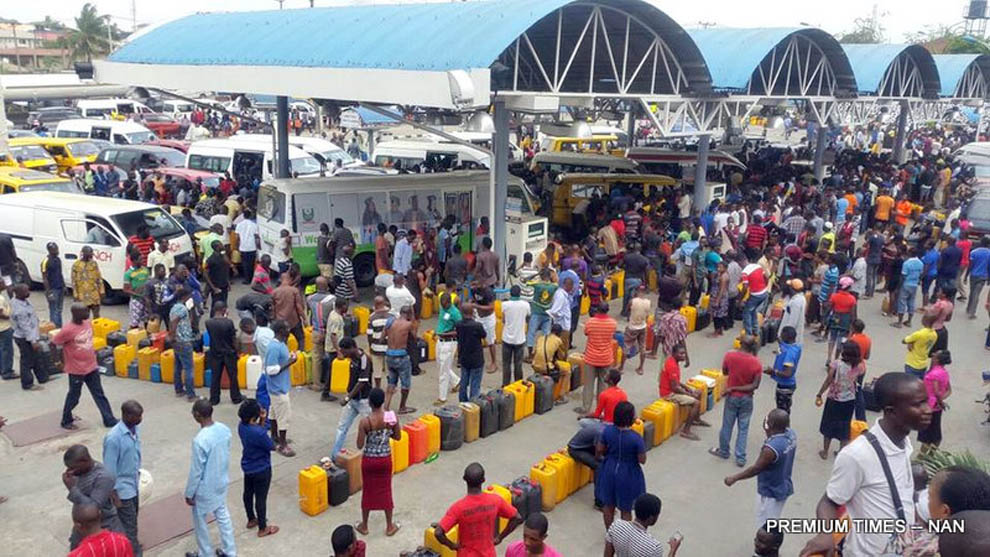
Fuel stations across Nigeria have raised the price of petrol to as high as ₦1,500 per litre, creating fresh financial strain for working people, small business operators, and families. Across cities such as Kano, Maiduguri, Damaturu, and Sokoto, drivers and commercial riders now pay higher rates at the pump, while stations in central and southern communities also report steady increases.

Because transportation costs directly influence the price of everyday essentials, bus drivers and tricycle operators have raised passenger fares to cover their fuel bills. As a result, parents and commuters face steeper daily travel expenses and rising grocery bills.

To address this pressure, the Nigeria Labour Congress urged federal authorities to step in quickly with practical relief measures. These proposals include providing cost-of-living allowances to workers, ensuring local refineries can purchase crude oil directly in local currency, and using surplus oil earnings to keep pump prices affordable.

At the same time, fuel sellers warned that pump prices could rise even further if international oil markets remain volatile. Retail associations noted that recent wholesale adjustments from local refineries have increased costs for station owners, who must pay more to restock their tanks.

To keep fuel affordable for the general public, union leaders and station operators are encouraging the government to reduce shipping and regulatory fees, helping ensure that reliable energy remains accessible to every community across the country.


Fuel Prices Climb to ₦1,500 per Litre Across Nigeria, Sparking Calls for Urgent Action

Loading

Continue Reading

metro

Kaduna Troops Rescue Two-Year-Old Boy From Kidnappers, Search for Mother Continues

Published

on

Kaduna Troops Rescue Two-Year-Old Boy From Kidnappers, Search for Mother Continues

A two-year-old boy is back with his family after troops rescued him from suspected kidnappers in Kaduna State.

Jafaru Baba was abducted with his mother from Ungwan Nungu village in Sanga Local Government Area. Troops later recovered the child after tracking the kidnappers to an area around Tayu Village.

The rescue followed intelligence received by security forces about the movement of the abductors and their victims.

According to security sources cited by security analyst Zagazola Makama, troops launched the operation at about 4pm on Wednesday, September 16.

READ ALSO:

They searched Tayu High Grounds, Tayu Village and surrounding parts of Sanga LGA. The operation later brought the troops into contact with the suspected kidnappers.

A gunfight followed, forcing the abductors to retreat into the bush. In the process, they left the toddler behind.

The troops quickly secured Jafaru and later handed him over to his father.

Security sources said the troops fired 17 rounds of 7.62mm ammunition during the confrontation.

Meanwhile, the search has not ended. Security personnel are still combing the area for the child’s mother, who remains in the kidnappers’ custody.

They are also pursuing the suspects who fled after the encounter, as efforts continue to rescue the woman and bring those responsible for the abduction into custody.

Kaduna Troops Rescue Two-Year-Old Boy From Kidnappers, Search for Mother Continues

Loading

Continue Reading

Trending