
Business
Dangote mounts pressure on Tinubu to ban fuel import
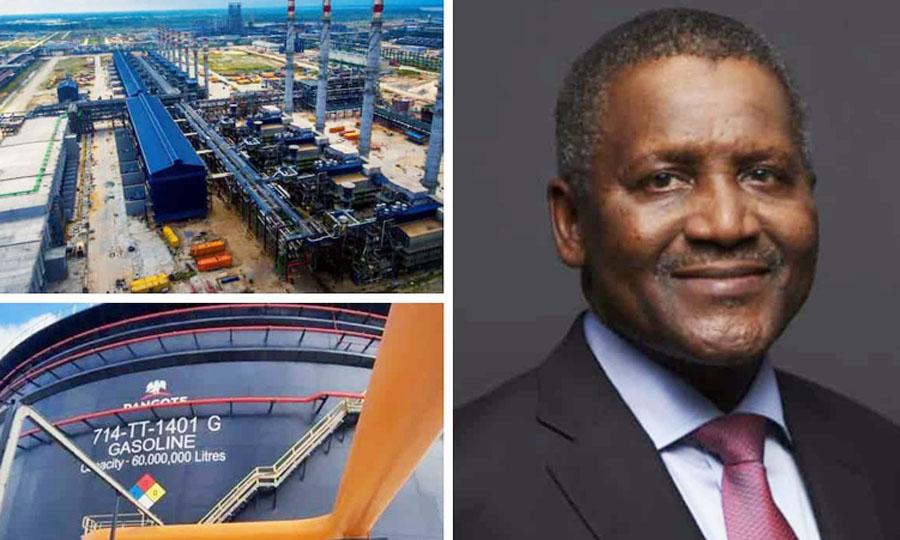
Dangote mounts pressure on Tinubu to ban fuel import
Africa’s richest man, Alhaji Aliko Dangote, has called on President Bola Tinubu to include refined petroleum products in the list of items restricted under the Federal Government’s ‘Nigeria First’ policy a proposal that has sparked sharp criticism from oil marketers and industry analysts.
The policy, announced in May, aims to prioritize local production by banning government agencies from importing goods or services that can be sourced within Nigeria. It mandates that any foreign procurement must be justified and approved by the Bureau of Public Procurement.
Speaking over the weekend, Dangote said refined fuel should be among the restricted imports, as Nigeria now has domestic refining capacity with the Dangote Refinery and other local facilities coming online. He argued that continued reliance on fuel imports undermines local investments and sabotages national economic goals.
Speaking at the just concluded Global Commodity Insights Conference on West African Refined Fuel Markets hosted by the Nigerian Midstream and Downstream Petroleum Regulatory Authority in partnership with S&P Global Insights, Dangote requested in clear terms that petrol, diesel, and other refined petroleum products be added to the items banned by the policy.
According to him, the importation of fuel into Nigeria is killing local refining and discouraging further investments in the sector and even the economy. To remain viable, he urged governments across Africa to take deliberate steps as the United States, Canada, and the European Union have done to protect domestic producers from what he called unfair competition.
Dangote did not mince words when he said that the Nigeria First policy announced by Tinubu should apply to the petroleum products sector. “The Nigeria First policy announced by His Excellency, President Bola Tinubu, should apply to the petroleum product sector and all other sectors,” he stated.
This request by Dangote seeks to place a ban on the importation of petrol, diesel, and other products being produced locally. He argued that local refiners were finding it difficult to sell their products because of what he called dumping. The billionaire businessman alleged that importers were dumping toxic fuel that would never be allowed in Europe.
READ ALSO:
- 2027: South East group raises N200m to buy APC presidential form for Tinubu
- Ohanaeze rejects bill to make Ooni, Sultan co-chairs of traditional rulers council
- Stop playing ethnic card, Arewa group warns Kwankwaso
“And to make matters worse, we are now facing increased dumping of cheap, often toxic petroleum products, some of which are blended to substandard levels that would never be allowed in Europe or North America,” he said.
Dangote mentioned that some of the importers bring into Nigeria fuel or crude oil subsidised in Russia. This, he said, affects local pricing, forcing refiners to drop prices below their costs.
“Due to the price caps on the Russian petroleum products, discounted petroleum products produced in Russia or with discounted Russian crude find their way to Africa, severely undercutting our local production, which is based on full crude pricing. This has created an unlevel playing field in most African countries. Petrol and diesel are sold for about a dollar net of taxes.
“In Nigeria, due to this unfair competition, this price is just about 60 cents, even cheaper than Saudi Arabia, which produces and refines its own oil. This is due to the fact that we are having too much dumping. To remain viable, we urge the governments across Africa to take deliberate steps as the United States, Canada, and the European Union have done to protect domestic producers from unfair competition,” he stated.
The richest man in Africa said this was not to monopolise the sector but to produce local investments. He noted that those who have the resources to invest in Nigeria keep taking their resources outside the country while they criticise local investors.
“Let me take this opportunity to address concerns around monopoly and dominance. The reality is that too many people who have the means and the opportunity to contribute meaningfully to our nation’s growth choose instead to criticise from the sidelines while investing their wealth abroad,” Dangote said.
To prove that his $20bn refinery can satisfy local fuel needs, Dangote disclosed that Nigeria has become a net exporter of petroleum products, having exported approximately 1.35 billion litres of petrol to other countries worldwide in 50 days.
According to Dangote, between June and July 2025, the refinery exported up to 1 million tonnes of petrol, which is approximately 1.35 billion litres when converted.
“Today, Nigeria has actually become a net exporter of refined products. Before I came on the podium, I asked my people how many tonnes of PMS we have actually exported. From June beginning to date, we have exported about 1 million tonnes of PMS, within the last 50 days,” he said.
Marketers tackle Dangote
However, marketers disagreed with Dangote, urging the Federal Government not to consider adding petroleum products to the list of items banned from importation.
READ ALSO:
- You can’t appoint SLGs, Sanwo-Olu tells newly elected LG chairmen
- Famine spreads in Gaza, UN to host two-state solution conference
- Charlie Boy does not deserve a bus stop in Lagos
Speaking with our correspondent on Sunday, the National Publicity Secretary of the Independent Petroleum Marketers Association of Nigeria, Chinedu Ukadike, said independent marketers would not support that idea as it would spell doom for the sector.
“We independent marketers will depart from that request. If the government does that, that means we will not be able to check inflation and monopoly, since it is the only refinery operating in the country now. We should continue to import even as we buy locally.
“I heard that the NMDPRA stated clearly that Dangote cannot produce all the fuel that the country needs. We will appreciate it if the country allows importation to continue since we are not paying subsidy,” Ukadike said.
Reacting to Dangote’s claim that importation would kill businesses and local refineries, Ukadike differed. “Importation won’t kill local businesses or refineries; it will strengthen them. It will ensure local refineries step up their game. I don’t agree with Dangote on this,” he said.
Also, the National President of the Petroleum Products Retail Outlet Owners Association of Nigeria, Billy Gillis-Harry, kicked against the call to ban fuel Importation. He said no one company should be allowed to dominate the downstream sector in a free economy.
While admitting that there is a need to ban the importation of some goods, he said these should not include fuel, stressing that Nigeria needs multiple sources of energy. “I don’t agree with Dangote. We are running a free economy. There’s no reason why any one company should have an overarching value on the entire industry.
“Importation is not killing the economy. Importation is stabilising the sources of petroleum products. Importation of all products is useful. However, those that can be produced in Nigeria, like toothpicks, garri, egusi soup, cassava, and others like that, should be banned.
“But importation of refined petroleum products should not be banned because it helps to ensure that there are multiple sources of energy and replenishment,” Gillis-Harry stated.
Expert reacts
An energy expert at the University of Lagos, Professor Dayo Ayoade, also warned against banning fuel Importation, saying this would promote monopolistic tendencies.
READ ALSO:
- More governors to join APC, says Gov Sule
- 2025 budget funding under pressure as oil output under-performs in half year
- Survivors narrate how bandits killed scores of captives in Zamfara
“No, we cannot have a ban on petroleum imports. It’s not a legal ban. That would not be acceptable because we don’t have diverse sources for petroleum products. We can’t rely solely on the Dangote refineries. That would give a monopoly to a private individual.
“And for the reasons of energy security and national security, that would be completely unacceptable. The government should continue to encourage, liberalise, and ensure other refineries come upstream. NNPC may want to privatise or sell off its refineries, then that’s fine. But we need to have a better base of product market before we now start to say we want to ban imports,” he said.
He queried what the local and international laws say about banning products.
“And you know, when we talk about bans, we have to look at international trade. International trade law does not really sit well with banning things. So, we have to be clever about how we do it. But if the market is ripe, it will be more expensive to bring in things from other countries than our own products, provided they are of sufficient quantity and the quality is fine,” the don submitted.
More refineries
During the NMDPRA conference, Dangote called on the regulator to encourage building more refineries. He charged the agency to withdraw dormant refinery licences from those holding on to them.
The IPMAN spokesman supported Dangote on this, saying, “On that side, I agree with him. You can’t obtain a licence to build a refinery and use it to decorate your house. The nation needs more refineries to do more exports.”
Dangote has repeatedly stated that his refinery has more than enough fuel to satisfy local fuel needs, wondering why some marketers insist on “sabotaging” his investment with importation. He disclosed recently that the refinery would produce hit 700,000 barrels per day capacity in December, an update from the current 650,000 BPD capacity.
On Friday, Dangote announced his retirement as a Director and the Chairman of the Board of Directors of Dangote Cement. According to a statement Friday by the Group Chief Branding & Communications Officer, Anthony Chiejina, Dangote is relinquishing his position as chairman and retiring from the board to focus more attention on the $20bn refinery, petrochemicals, fertiliser, and government relations.
Our correspondent gathered that the refinery is still taking delivery of the 4,000 compressed natural gas-powered trucks for its free fuel delivery scheme scheduled to commence on August 1.
The scheme will see the delivery of petrol, diesel and aviation fuel directly to filling stations and bulk consumers like telecommunication companies.
Dangote mounts pressure on Tinubu to ban fuel import
(Punch)









Business
Naira Strengthens to ₦1,359.31/$ as CBN Data Shows Further Gain in Official Market
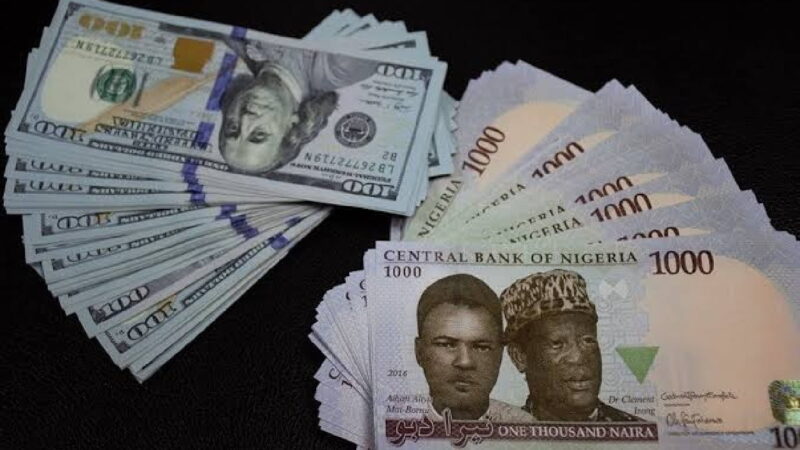
Naira Strengthens to ₦1,359.31/$ as CBN Data Shows Further Gain in Official Market
The Naira continued its positive performance on Thursday, appreciating further in the official foreign exchange market to close at ₦1,359.31 per US dollar, according to data published by the Central Bank of Nigeria (CBN).
The latest figure represents an improvement of ₦12.50 compared to the previous trading day, reflecting a 0.9 percent gain from Wednesday’s closing rate of ₦1,371.82/$.
The appreciation highlights continued stability in the official foreign exchange window, where recent policy measures have helped improve liquidity and reduce pressure on the local currency.
Market analysts attribute the naira’s relative strength to ongoing foreign exchange reforms by the CBN, increased dollar supply in official channels, and tighter regulation aimed at narrowing the gap between official and parallel market rates.
READ ALSO:
- Nigeria May Face ₦2,000 Petrol Price Without Intervention, TUC Warns FG
- US Embassy Suspends Abuja Visa Appointments Over Security Concerns
- ADC Crisis: Mark-Led Faction Sues INEC Over Party Leadership Removal
The CBN has in recent months intensified efforts to stabilise the currency through measures such as improved FX market transparency, better coordination with market participants, and steps to attract foreign portfolio inflows.
Despite the gains in the official market, traders note that the parallel market remains more volatile, with rates still influenced by strong demand for foreign currency from importers, travellers, and businesses outside official allocation channels.
Economists say the recent appreciation could help ease short-term inflationary pressure, particularly on imported goods, fuel pricing, and manufacturing inputs, although they caution that sustained stability will depend on broader macroeconomic fundamentals.
These include stronger foreign reserves, improved export earnings—especially from crude oil—and continued investor confidence in Nigeria’s economic policy direction.
The naira’s performance also comes amid renewed attention on Nigeria’s broader economic outlook, with stakeholders closely monitoring the impact of monetary tightening and ongoing fiscal reforms.
As of the latest trading sessions, market participants expect the CBN to maintain its current policy stance in the near term as it works to consolidate recent gains in the foreign exchange market in Nigeria.
Naira Strengthens to ₦1,359.31/$ as CBN Data Shows Further Gain in Official Market
Business
Nigeria May Face ₦2,000 Petrol Price Without Intervention, TUC Warns FG
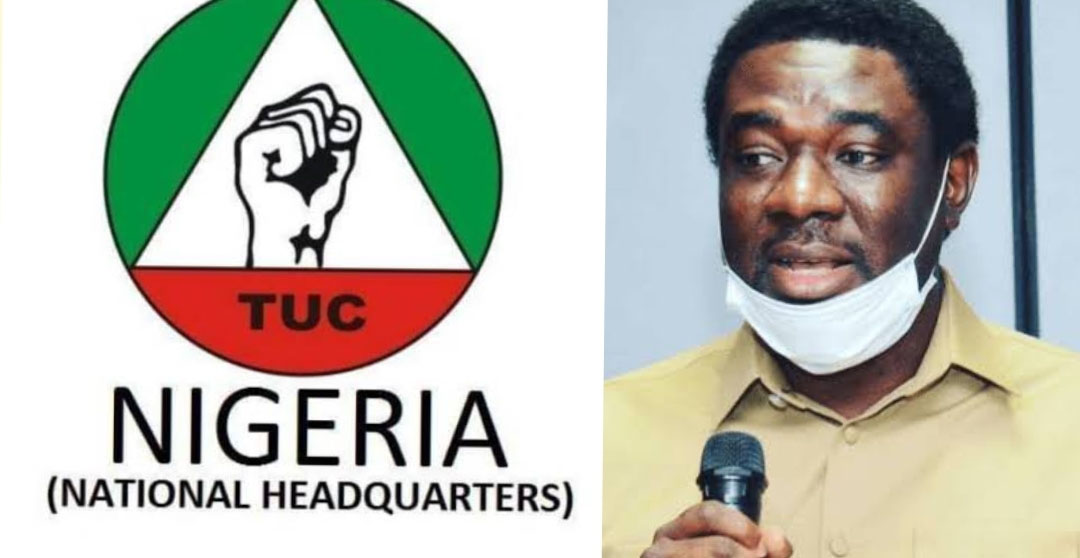
TUC Warns Petrol May Hit ₦2,000/Litre, Proposes Crude Revenue Subsidy Plan to FG
DETAILS:
The Trade Union Congress of Nigeria (TUC) has warned that petrol prices in Nigeria could rise to as high as ₦2,000 per litre if urgent economic measures are not introduced to stabilise the country’s energy and currency markets.
TUC President, Festus Osifo, issued the warning during a press briefing in Abuja, citing the combined impact of rising global crude oil prices and continued depreciation of the naira as major drivers of worsening fuel costs.
Osifo said Nigerian workers are already under severe economic pressure, noting that in some parts of the country, fuel pump prices are already approaching the ₦2,000 threshold due to market volatility and transportation differentials.
He explained that the 2026 national budget benchmarked crude oil at about $64.85 per barrel, while current international prices hover around $100 per barrel, creating what he described as significant “excess revenue” for the government.
The TUC is proposing that the Federal Government allocate about 60% of this excess crude revenue to support local production by subsidising crude supply to domestic refineries, including the Dangote Refinery and other modular refineries.
According to Osifo, this approach would be more transparent and harder to manipulate than the previous fuel subsidy regime, while also helping to reduce the cost of petrol, diesel, and aviation fuel within a short period.
READ ALSO:
- US Embassy Suspends Abuja Visa Appointments Over Security Concerns
- ADC Crisis: Mark-Led Faction Sues INEC Over Party Leadership Removal
- Dangote Sugar Warns Staff Over Chewing Sugarcane, Threatens Arrest
He argued that targeted support at the refinery level could reduce pump prices within two weeks if implemented, stressing that the current cost structure is unsustainable for households and businesses.
The TUC president also criticised the slow expansion of Compressed Natural Gas (CNG) infrastructure, noting that although CNG adoption is being promoted as an alternative to petrol, the absence of refuelling stations along major highways limits its practicality for long-distance transport.
Beyond economic issues, Osifo also raised concerns over worsening insecurity in parts of the country, particularly recent killings in Plateau State, urging the government to strengthen military response capabilities with modern technology and intelligence tools.
He warned that failure to address rising fuel costs could reverse recent gains in inflation control, arguing that high petrol prices directly impact inflation, transport fares, and food costs across Nigeria.
Osifo further suggested that the naira’s fair value should ideally be within the ₦800–₦900 per dollar range to ease pressure on fuel pricing and broader economic stability.
The TUC stated that it will formally present its proposal to the Federal Government ahead of upcoming federation revenue distributions, insisting that urgent intervention is necessary to prevent further economic hardship.
As of the time of filing this report, the Federal Government has not issued an official response to the proposal or the ₦2,000-per-litre warning.
Nigeria May Face ₦2,000 Petrol Price Without Intervention, TUC Warns FG
Business
Dangote Sugar Warns Staff Over Chewing Sugarcane, Threatens Arrest
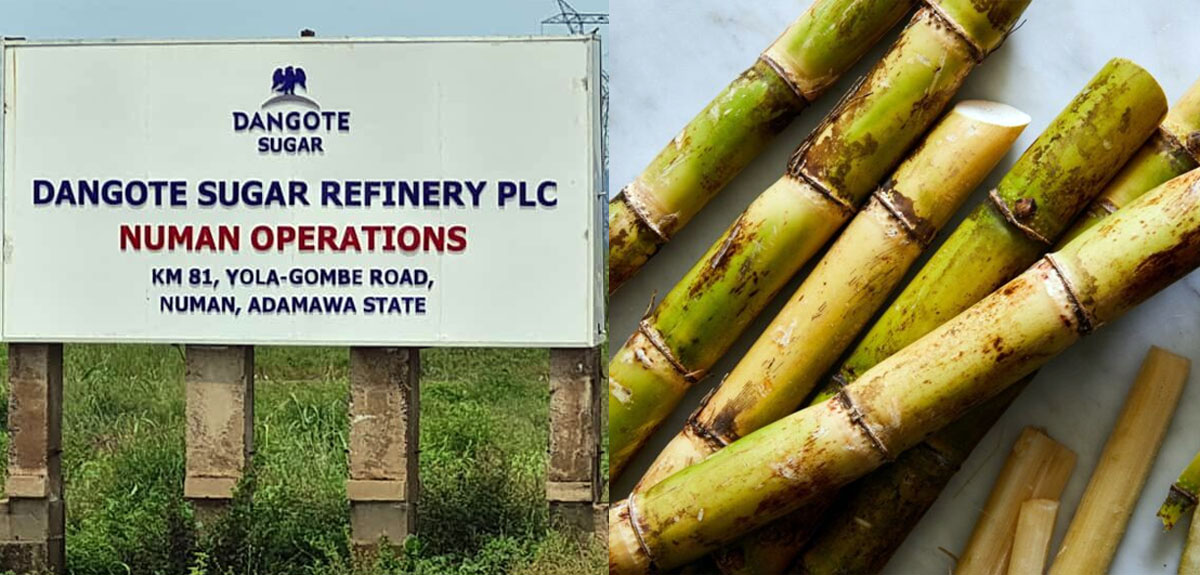
Dangote Sugar Warns Staff Over Chewing Sugarcane, Threatens Arrest
Dangote Sugar Refinery Plc has issued a stern and final warning to employees at its Numan operations in Numan, banning the chewing of company sugarcane within its premises and threatening severe disciplinary actions, including arrest and prosecution, for defaulters.
The directive, contained in an internal memo dated April 7, 2026, and signed by the Head of Human Resources, Ikechukwu Okorie, categorised the act as “gross misconduct”. The company stressed that any staff caught engaging in the practice risks summary disciplinary measures, which may extend to legal consequences.
According to the memo, the sugarcane cultivated and processed at the facility is a valuable company asset, and unauthorised consumption amounts to misuse of resources. Management noted that beyond the economic implications, the habit of chewing cane and discarding chaff indiscriminately undermines hygiene and sanitation standards required in a food processing environment.
The circular further emphasised that maintaining strict housekeeping is critical to operations at the Numan plant, warning that littering the premises with cane residue violates established workplace standards. As part of enforcement, security personnel have been placed on high alert and directed to apprehend any employee found violating the directive, with offenders facing both internal disciplinary action and possible prosecution aimed at recovering losses.
READ ALSO:
- Jetour set to ignite Lagos with four-day automotive experience
- Making Up for Lost Sleep Might Be Healthier Than Experts Once Believed — What Science Says
- Sleeping Positions: How They Affect Your Health and Which Ones to Avoid
The strongly worded memo ended with a clear warning — “BE WARNED FOR THE LAST TIME!!!” — underscoring the company’s zero-tolerance stance on the issue.
The development comes amid ongoing expansion efforts by Dangote Sugar, particularly under its backward integration programme designed to boost local sugar production. The company is scaling up operations through large-scale cultivation and processing projects across multiple states.
As part of its broader financial strategy, Dangote Sugar recently announced a proposed ₦500 billion rights issue to reduce debt, strengthen its balance sheet, and fund expansion projects. These include upgrades at its Numan facility and new developments in Nasarawa State and Taraba State.
Since the memo surfaced online, it has sparked mixed reactions on social media, with some supporting the company’s strict stance on discipline and hygiene, while others consider the threat of arrest excessive for what appears to be a minor infraction. As of the time of filing this report, the company has not released an official public statement addressing the leaked circular.
Dangote Sugar Warns Staff Over Chewing Sugarcane, Threatens Arrest

-

 Entertainment3 days ago
Veteran Nollywood Actor Davis Ofor ‘Clarus’ of New Masquerade Dies at 85
-
 Africa1 day ago
ECOWAS Recruitment 2026: Over 30 Job Vacancies Open for Nigerians (How to Apply)
-

 metro2 days ago
2026 NYSC Batch A Stream II: Registration, Swearing-In Dates Announced
-

 Entertainment2 days ago
Saheed Osupa Defends Juju Use Amid Backlash From Islamic Clerics
-

 Politics1 day ago
Court Stops ADC Congress, Orders Status Quo in Leadership Row
-

 metro1 day ago
Boko Haram Attack in Borno: Brigadier-General, Soldiers Killed as ISWAP Overruns Military Base
-
 metro1 day ago
US Evacuates Embassy Staff in Nigeria, Lists 23 States as ‘Do Not Travel’
-

 Health23 hours ago
Sleeping Positions: How They Affect Your Health and Which Ones to Avoid