
Business
Despite N4trn Investment, Hope Dims For Ajaokuta Steel Take-Off

The completion of the remaining two per cent of work on the 43-year-old Ajaokuta Steel Rolling Mill, as promised by the federal government, has been ruled out this year, despite a $10 billion (about N4.155 trillion) worth of investment, Daily Trust reports.
A geologist, Professor Ibrahim Garba, said the plant’s chances of taking off are slim because it was predicated on a low-grade iron ore, an important raw material needed for the smooth operation of the rolling mill.
Prof. Garba, who served as the 14th vice-chancellor of the Ahmadu Bello University, Zaria, and also former vice chancellor of the Kano State University of Science and Technology, Wudil said it is doubtful if the steel plant will work for Nigeria.
Our correspondent reports that the professor had worked on secondment at the Federal Ministry of Mines and Steel Development, Abuja as Director-General, Nigeria Mining Cadastre Office.
He spearheaded the development and implementation of the Mining Cadastre System in Nigeria.
Prof. Garba’s verdict on the Ajaokuta Steel Mill came in the wake of renewed efforts by the federal government to salvage the plant which is almost completed.
Recall that the Minister of Mines and Steel Development, Olamilekan Adegbite, had said that the project was thwarted by the outbreak of the COVID-19 pandemic and the ongoing Russia-Ukraine war.
The minister, who disclosed this to State House reporters recently, said President Muhammadu Buhari had approved the release of $2m for the conduct of a technical audit to ascertain the condition of the facility before restarting the work.
READ ALSO:
- Consensus: Northern Elders Deny Endorsing Saraki, Mohammed
- 2023: North divided over power shift to South
- Fury beats Whyte to retain world boxing heavyweight title
- Osinbajo avoids Tinubu, sends rep to Aisha Buhari’s dinner
He said as demanded by Russian contractors, “Arrangements were being made to commence the process but COVID-19 came and put a halt to all activities, causing a force majeure.”
However, the force majeure (unforeseeable circumstances that prevent someone from fulfilling a contract) that the minister attributed as the reason for the project’s delay has been described by experts as a weak defence for the many years the project has taken without being completed.
‘Plant unlikely to function’
Prof. Garba in an interview with Daily Trust warned that the Ajaokuta plant may never work because the quality of iron ore in Nigeria is very low.
Because of this, Nigeria had to rely on Guinea’s high-grade iron ore to blend before milling the steel.
He said, “People keep saying that for every government that comes, the minister will collect billions and put it there, the money will disappear and nothing worked.
“This is because Ajaokuta was conceived at the time when we knew little about the issues. The main iron ore deposit for Ajaokuta is at Okene, in one place called Itakpe and the entire deposit is only 300 million tons, which is small and of very low quality of like 35 per cent, when you need about 50 – 60 per cent to have very efficient steel production.
“At that time, what the Nigerian government did was, having known that the Russians built it for us knowing that the iron ore was poor, they went to Guinea and arranged with one big mine in Guinea that produces very high-grade iron ore.
“In fact, Nigeria took up shares in that mine, so that they can be bringing high-grade iron ore into Nigeria to blend with our low grade to produce the steel,” the professor said.
“That is why they constructed the Alaja in Warri, by the seaside so that when importing the iron ore from there, you come to Alaja and use gas through one technology they called Direct Production and produce steel.”
According to him, this product could then be moved by rail from Itakpe to Warri, which explained the purpose of that railway line between the two towns.
“You bring the iron ore from Guinea, bring it up to Ajaokuta and blend with our own. You see, what it means is that if you need about 50 – 60 per cent iron ore, which means if the rock that contains the iron ore is 60 per cent, you have to remove all the remaining 40 per cent. And, if you have 40 per cent, you have to remove about 65 per cent as waste, and you are going to use the same energy to process these two grades of iron ore.
“So, that means you will not be making money because the people that are producing the steel are producing it from higher-grade iron ores, which means your cost of production will be very high, so you cannot compete.
“That is why for iron ore, we know we have vast amounts of it, but of low grade. We have some that are of high grade around Lokoja, but they have some components that are not wanted and very difficult to remove,” he further explained.
Only advanced technology will save the day
According to Prof. Garba, the Chinese have developed a technology of eliminating unwanted things in that iron ore.
READ ALSO:
- [JUST IN] Alaafin: Gbajabiamila’s installation as Aare Baasofin suspended
- ISWAP claims responsibility for police killing in Kogi
- NIN-SIM: SERAP drags Buhari to court over 72m blocked lines
“So we are hoping that if we get some sense, we can actually develop those iron ores through the new technology and begin to produce steel.
“But, as of now, we cannot list iron ore as a comparative advantage in Nigeria because of this low-grade issue and so on.”
Ministry upbeat
But a source in the ministry debunked the claim on low-grade iron ore, claiming that Nigeria has high-grade iron ore to make the industry work at full capacity when completed.
The source, who did not want to be quoted, declared that if there are people who “Have evidence that Nigeria imports iron ore from Guinea, they should tender it.”
Daily Trust recalled that in the second week of this month, the minister of mines said that a local company in partnership with a British firm had offered to execute the technical audit of the Ajaokuta Steel plant at no cost to Nigeria without preconditions.
He disclosed this in a press release signed by his Special Assistant on Media, Ayodeji Adeyemi in response to claims that the Ajaokuta steel plant had been handed over to a British company for rehabilitation.
Minister Adegbite explained that when the technical audit is completed, the result would be shared with all interested investors and potential partners interested in Ajaokuta Steel Plant resuscitation, which they would use to enter their submission bids.
How FG invested over $10bn in 3 decades
While some experts argued that the billions of dollars spent on the project could have been used to develop industries for other minerals with more comparative advantage, others felt that Nigeria has been losing billions of dollars in revenue and job creation for the last 35 years.
Findings revealed that for the period that the project has lingered, the federal government had sunk over $10bn to start milling.
The project, which as far back as 1994 had reached 98 per cent completion, has the capacity to provide direct employment for 10,000 technical staff and indirectly 500,000 unskilled upstream and downstream employment, when in operation.
Sadly, till date, with all these huge investments, the multi-billion-dollar project has not produced a single steel product that can contribute to the development of Nigeria.
The integrated plant was envisaged to have multiplier effects on all sectors of the Nigerian economy such as the industrial, agriculture, transport and construction sectors, among others.
The steel plant was designed to produce 1.3 million tons of liquid steel per annum in phase one, with a built-in capacity to expand its production to 2.6 million tons of flat iron and steel products in its second phase. The plan for phase three was to produce 5.2 million tons of various types of steel products, including heavy plates.
The steel plant complex also has a highly sophisticated assemblage of 43 different plants made up of a web of complex iron, cable and machinery of different sizes and functions. Findings revealed that out of the 43 plants, 40 are already completed and can produce independently.
Also, Ajaokuta Steel has the capacity to become a major producer of industrial machinery, auto-electrical spare parts, shipbuilding, railways and carriages.
How much is Nigeria losing?
Despite these facts, the moribund company had continued to receive regular budgetary allocations and disbursements in the past six years, despite being idle.
READ ALSO:
- Couples who kiss regularly are less likely to get depressed – Study
- Blinken and Austin to visit war-battered Ukraine, Zelensky says
- FG to Boost Crude Oil Production in Two Weeks
Reports say the government allocated a total of N20bn to the idle steel company between 2015 and 2021. Also, based on the 2022 budget details, the federal government had allocated N4.2bn to the Ajaokuta Steel Company Limited for the fiscal year.
The details show that N3.9bn was allocated to cover personnel costs, N186.9m for capital projects implementation, while N75.3m will be expended on overhead.
Under personnel costs, the federal government allocated N3bn to salaries and wages, while N924.6m was designated for allowances and social contributions.
Similarly, the sum of N97.2m was allocated for the provision of water facilities, N59.3m for the maintenance of power facilities and N30.5m for lighting, safety and security.
Nigeria’s peers making billions from steel
The foundation stone of the Ajaokuta Integrated Steel plant was laid in 1980 by a former President of Nigeria, Shehu Shagari, on 24,000 hectares of sprawling green-field landmass. It was envisaged to serve as the bedrock of Nigeria’s industrialisation.
The steel company, built by a Russian company called TyazhpromExport on 800-hectares has four different types of rolling mills inside the plant.
South Korea, which started its steel construction around the same time as Ajaokuta Steel, now has a revenue base of over $60bn per annum and employed over 65,000 staff. According to a World Steel Association (WSA) report, South Africa and Egypt produced 6.1 and 5m tons of steel in 2016. And while South Africa is the 22nd on the list of countries on steel production, Egypt is the 27th.
China, the world’s largest steel producer, topped the chart with a production of 808.4m tons, representing about 50 per cent of global steel output for 2016.
Why successive govts attempt to concede Ajaokuta
In an attempt to revamp the company, in June 2003, former President Olusegun Obasanjo conceded Ajaokuta Steel to Messrs SOLGAS ENERGY of the USA on a 10-year tenure; in August 2004, the federal government terminated the SOLGAS agreement due to non-performance.
Again, an Indian company, Global Steel Holdings Limited, won the concession of the Ajaokuta Steel Mill for a 10-year period but the agreement was revoked after the federal government accused the firm of asset stripping, a development that led to a court case between the two parties.
The federal government announced in 2016 that the legal dispute had been resolved, after it reportedly ceded the National Iron Ore Mining Company, Itakpe, to Global Steel for the remaining concession period, in line with an agreement reached during mediation talks. However, the resolution has since turned contentious. In 2016, President Muhammadu Buhari fulfilled his campaign promise on Ajaokuta Steel by settling out of court the legal bottleneck surrounding the companies.
However, the federal government signed a modified concession agreement with GINL to enable the firm to retain the National Iron Ore Mining Company, Itakpe. The modified seven-year concession agreement was signed on August 1, 2016, while the federal government took over Ajaokuta Steel.
While the federal government was planning to re-concession Ajaokuta Steel again, stakeholders in the Nigerian Metallurgical Society urged it to complete the remaining two per cent and operate the plant for a few years before concessioning it.
DAILY TRUST






Insurance
Lasaco Assurance Launches N18.47bn Rights Issue to Strengthen Capital Base
Lasaco Assurance Launches N18.47bn Rights Issue to Strengthen Capital Base
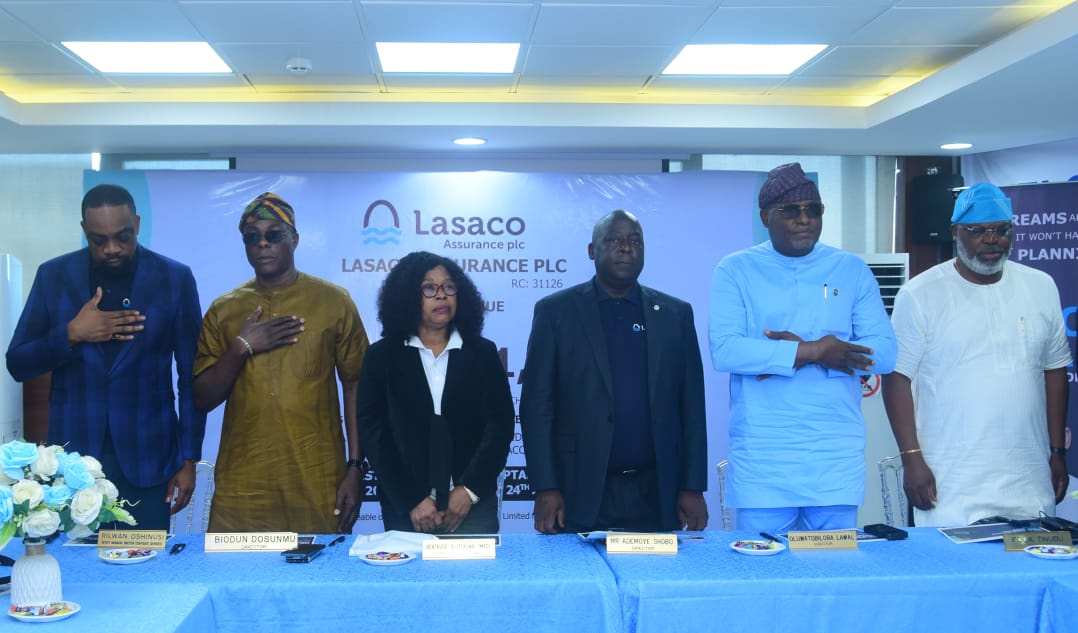
Lasaco Assurance Plc has unveiled a ₦18.47 billion rights issue, announcing plans to offer 9,236,321,546 ordinary shares as part of efforts to reinforce its capital base and drive future growth.
The announcement was made during a signing ceremony held at the company’s head office in Lagos, following approvals from the Nigerian Exchange Group (NGX) and the Securities and Exchange Commission (SEC).

Lasaco Assurance Plc
Prior to this development, the company had secured shareholder backing at an extra general meeting, where investors approved the move to raise fresh capital through a rights issue.
Under the terms of the offer, shares are priced at ₦2.00 per share, with each share having a nominal value of 50 kobo. The rights issue is structured on the basis of five new shares for every six existing shares held by shareholders.
According to details released by the insurer, eligibility is limited to shareholders whose names appeared on the company’s register as of the close of business on February 20, 2026. The acceptance list opened on April 2, 2026, and will close on April 24, 2026.
READ ALSO:
- ADC Crisis Deepens as Bala Denies Resignation, Insists on Chairmanship
- Ghana Sweeps Top Three Positions in 2025 WASSCE, Outshining Nigeria, Others
- Tinubu Approves 1,000 Forest Guards, Orders 5,000 CCTV Cameras to Boost Security in Plateau
The capital raise is expected to generate approximately ₦18.47 billion, which will be used to strengthen the company’s underwriting capacity and position it for expansion within Nigeria’s highly competitive insurance industry.
In addition, the rights offered will be tradable on the floor of the Nigerian Exchange Limited, allowing shareholders the flexibility to either subscribe to their allotted shares or sell their rights during the offer period.
Financial advisers to the transaction include Meristem Capital Limited as the Lead Issuing House and PAC Capital as Joint Issuing House.
The move aligns with broader efforts across the insurance sector to meet regulatory capital requirements, enhance balance sheets, and improve capacity to underwrite large-ticket risks across various sectors of the economy.
Speaking on the development, the Managing Director of Lasaco Assurance Plc, Mr. Ademoye Shobo, stated:
“At Lasaco, we will continue to ensure that our capital is always robust, so that we’re able to deliver on the mandates to the general public.”
Lasaco Assurance Launches N18.47bn Rights Issue to Strengthen Capital Base
Auto
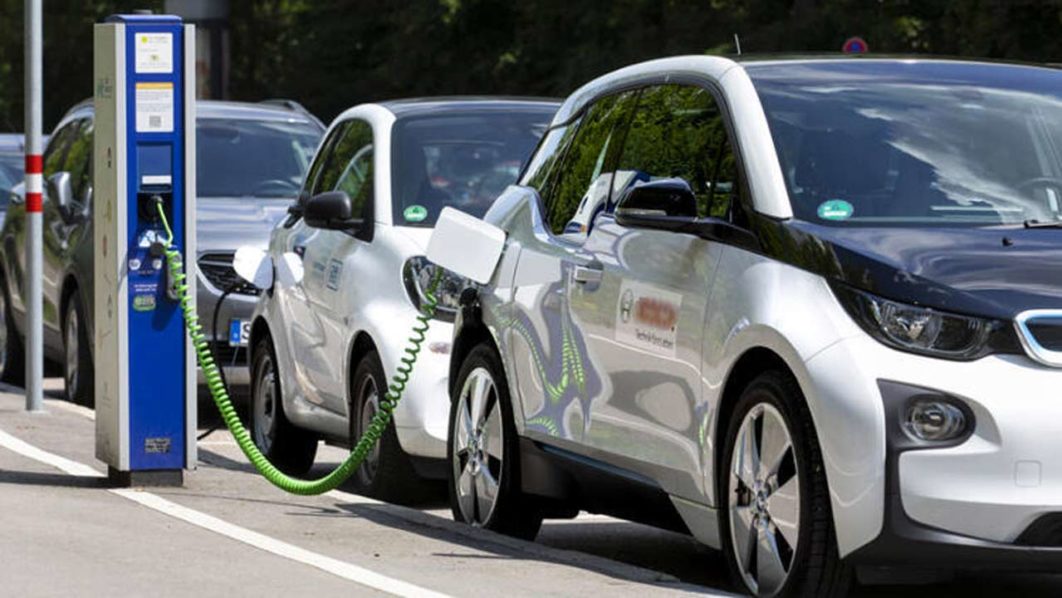
Soaring Fuel Prices Drive Nigerians Toward Electric Vehicles
Soaring Fuel Prices Drive Nigerians Toward Electric Vehicles
Rising fuel prices in Nigeria are accelerating interest in electric vehicles (EVs) as households, transport operators, and businesses seek cost-effective alternatives to petrol- and diesel-powered cars. Experts say the spike in petrol costs is no longer just an economic concern but a turning point, pushing electric mobility from a futuristic idea into a practical solution for everyday commuting and commercial use.
At the Abuja Compact on Electric Mobility Roundtable, stakeholders highlighted how increasing transport expenses are reshaping decisions, especially among commercial drivers and small business owners. Rising fuel costs are prompting many Nigerians to see EVs as a survival strategy rather than a luxury option.
Chairman of the Presidential Initiative on Compressed Natural Gas and Electric Vehicles (Pi-CNG & EV), Ismaeel Ahmed, explained that the removal of fuel subsidies has widened the cost gap between petrol-powered vehicles and EVs. Charging an EV for a 200-kilometre journey costs around ₦4,500, compared to roughly ₦22,500 for petrol vehicles — a difference that offers a “strong economic incentive” influencing consumer choices. Ahmed added that the federal government is pursuing a balanced transition strategy supporting both compressed natural gas (CNG) and electric vehicles to encourage sustainable energy alternatives.
Financial solutions are helping Nigerians overcome the high upfront costs of EVs. Mohammed Abdul, Divisional Head at Alternative Bank, noted that lease-to-own, pay-as-you-go, and partnership schemes are making EVs accessible to drivers in the informal transport sector. These financing models allow gradual adoption while easing financial burdens.
READ ALSO:
- Ogun Partners with NAHCON, Names Key Hajj Leadership Team
- Timi Frank: INEC Actions Threaten Democracy, Calls on Trump to Support Nigeria
- ADC Defies INEC, Moves Ahead with Congresses, Convention
Industry leaders also see wider economic benefits from EV adoption. Yusuf Suleiman, CEO of Bankrol Camel EV and Blue Camel Energy Ltd, said EV investments could improve energy access, boost industrial growth, and reduce Nigeria’s reliance on imported fossil fuels. Ahmed Garba Ahmed, COO of Bankrol Camel EV, added that EVs can cut energy costs per kilometre by up to 60%, benefiting ride-hailing drivers, logistics companies, and fleet operators.
Dapo Adesina, President of the Electric Mobility Promoters Association of Nigeria (EMPAN), explained that EV adoption can strengthen Nigeria’s power sector. Solar-powered charging hubs can simultaneously power vehicles and supply electricity to nearby communities, particularly in underserved areas. Private sector initiatives are also supporting Nigeria’s EV transition. Companies like SolarCity Gas are deploying superfast EV charging stations across key urban hubs and petrol stations, expanding the country’s charging infrastructure to meet growing demand.
Despite growing adoption, electric mobility in Nigeria faces challenges such as limited electricity infrastructure and inconsistent power supply. Analysts warn that significant investments in charging networks and supportive policies are necessary for sustainable EV growth. Nevertheless, with fuel prices remaining high, EVs are increasingly viewed as economically smart and environmentally friendly alternatives, offering Nigerians a viable solution to rising transport costs.
Soaring Fuel Prices Drive Nigerians Toward Electric Vehicles
Business
Rite Foods, BJAN champion consumer safety at Ososa factory tour

Rite Foods, BJAN champion consumer safety at Ososa factory tour
By Daphne Uduneje
To commemorate World Consumer Rights Day 2026, the Brand Journalists’ Association of Nigeria (BJAN) partnered with Rite Foods Limited to host a high-level stakeholder engagement at the company’s ultra-modern manufacturing plant in Ososa, Ogun State.
Under the theme “Safe Products, Confident Consumers,” the event combined rigorous policy discourse with a firsthand look at the cutting-edge technology behind one of Nigeria’s leading indigenous brands.
The journey began at Rite Foods’ Lagos office, transitioning from the city’s urban bustle to the expansive, scenic greenery of the Ososa facility. For the journalists in attendance, the factory’s exterior—a sprawling, sophisticated complex—signalled a facility capable of competing on a global scale.
Inside, the hum of precision machinery served as the backdrop for the day’s discussions. Olufemi Ajileye, General Manager for Operations at Rite Foods, welcomed guests by emphasizing that safety is the bedrock of their market strategy.
Since breaking into the carbonated soft drink sector, Rite Foods has leveraged advanced technology and stringent quality controls—including international laboratory testing for water purity—to earn and maintain public trust.
Despite improvements in legislation, speakers noted a persistent gap in consumer awareness. Sola Salako-Ajulo, founder of the Consumer Advocacy Foundation of Nigeria (CAFON), described consumer confidence as the “oxygen of any market.”
To empower the public, she unveiled the CAFON Consumers Companion (3C), an AI-powered platform designed to educate Nigerians on their rights and provide a roadmap for dispute resolution.
“Consumers often feel powerless,” she noted, “but technology can bridge the gap between grievance and redress.”
The Regulatory Stance
The Federal Competition and Consumer Protection Commission (FCCPC) and NAFDAC reaffirmed their commitment to enforcement:
FCCPC: Executive Vice Chairman Tunji Bello (represented by Olubunmi Dorcas Otti) urged businesses to maintain transparency, noting that economic participation thrives only when safety is guaranteed.
NAFDAC: Director-General Mojisola Adeyeye (represented by Tinuola Akinnubi) reminded attendees that consumer rights are legally enforceable obligations, highlighting the importance of “technological traceability” in the modern market.
BJAN Chairman Daniel Obi emphasized that the association had sustained this initiative for over a decade because consumer protection is a collective burden.
“It is not the responsibility of regulators alone,” Obi stated. “Businesses, media, and civil society must work in harmony.”
The event concluded with a guided tour of the production floor. Journalists observed a seamless, automated “dance” of technology where drinks were corked, labeled, and packaged with surgical precision.
As the delegation departed Ososa, the takeaway was clear: building a “confident consumer” requires more than just marketing—it requires the transparency of the factory floor and the accountability of the boardroom.



-

 Railway2 days ago
Easter train: NRC increases Lagos-Ibadan trips, offers free Osun holiday transit
-

 Education3 days ago
JAMB Releases 2026 UTME Mock Results, Delists Over 20 CBT Centres
-

 Entertainment3 days ago
Iyabo Ojo Quits Mediation Between Funke Akindele, Toyin Abraham
-

 metro1 day ago
VeryDarkMan Dares Sowore Over Blord’s Kuje Prison Remand
-

 metro1 day ago
Nigerians to Enjoy Four-Day Break as FG Declares Easter Holidays
-

 Politics3 days ago
Adebayo Adelabu Resigns as Power Minister to Run for Oyo State Governorship
-
 Business1 day ago
NNPC Boosts Crude Supply to Dangote Refinery to Address Rising Fuel Prices
-
 metro2 days ago
Power Crisis Looms as NLC Shuts AEDC, Protests Sack of 900 Workers