

metro
Doctor kills Edo cabman, steals car, abandons corpse

The Edo State Police Command on Wednesday paraded a medical doctor, Abass Adebowale, for allegedly injecting a cab driver, Emmanuel Agbovinuere, to death in the Benin City area of the state.
Adebowale, after perpetrating the crime, allegedly dumped Agbovinuere’s corpse in a bush, and stole the victim’s Toyota Voltron car.
He was said to have driven the car to the Osogbo area of Osun State where policemen arrested him on Monday.
The state Police Public Relations Officer, Chidi Nwabuzor, while addressing the press at the police command’s headquarters in Benin City, Edo State, said Adebowale, was a graduate of the University of Ilorin, Kwara State, and works with the Kaiama General Hospital as a medical officer.
He said, “The Edo State Police Command in an attempt to rid the state of crime and criminality arrested a medical doctor, Abass Adebowale, 36, for killing Emmanuel Agbovinuere, 39, a cab driver.
“The victim and the suspect met in July this year at an undisclosed hotel in Benin and that is where their relationship started. On Sunday, September 4, the suspect came from Kwara State and they met at the same hotel, where as a customer, he took him around to where he was to do his business.
READ ALSO:
- FG warns foreign airlines against selling tickets in dollars
- Why MDAs, govt contractors must buy Nigeria-assembled vehicles – NADDC DG, Jelani
- Abuja-Kano train hostage negotiator, Tukur Mamu, arrested in Egypt
“The cab man complained of leg pain and the doctor promised to help and injected some poisonous drugs in his system. That was what killed him instantly. For him to conceal the crime, he left the corpse in the man’s Toyota Voltron car, but later took the corpse to Ondo Road, Oluku, Edo State, and dumped the corpse there.
“When the Anti-Kidnapping Unit got notice of what happened, they mobilised and he was arrested in Osogbo, Osun State, with the deceased car.”
Adebowale, during the parade, said the victim’s death was not deliberate, adding, “I pray that the family find a place in their hearts to forgive me.”
Agbovinuere was said to have been survived by his wife, Mary, 27, and two children.
Meanwhile, the Osun State Police Command’s spokesperson, Yemisi Opalola, in a statement, confirmed Adebowale’s arrest.
Opalola said, “The suspect in the course of his stay in Benin after selling his car, injected his friend with a substance suspected to have killed him on September 03, 2022.
“He subsequently dumped his corpse in a nearby bush and took away his white Toyota Camry muscle. Luck, however, ran out on him when the vehicle driven by the suspect was intercepted by police operatives along Ejigbo/Ogbomoso Road. The police operatives were working on information from the Benin command.”
Punch










metro
Xenophobia: Nigeria Evacuates 111 More Citizens From South Africa as Returnees Hit 2,037

The Federal Government of Nigeria has evacuated another 111 distressed citizens from South Africa amid concerns over xenophobic and Afrophobic attacks, bringing the total number of Nigerians repatriated under the ongoing exercise to 2,037.
The latest batch, comprising 44 men, 23 women and 44 children, arrived in Lagos aboard South African Airways Flight SA060 on Thursday, October 8, 2026, according to the Ministry of Foreign Affairs.
The returnees were received by officials of the ministry, the Nigerians in Diaspora Commission (NiDCOM), the National Agency for the Prohibition of Trafficking in Persons (NAPTIP), the National Emergency Management Agency (NEMA) and other relevant federal government agencies.
In a statement issued on Sunday, October 11, the ministry’s spokesperson, Oluwafemi Adeniyi, said the evacuation was fully funded by the Redeemed Christian Church of God (RCCG) through its $265,854 donation to support the repatriation of 500 distressed Nigerians from South Africa.
READ ALSO:
- Russia-Ukraine Truce in Doubt as Zelenskyy Questions Trump’s Ceasefire Announcement
- Djibouti Boat Disaster: 139 Migrants Dead, Dozens Missing
- US Names 24 More Nigerians in Fresh Fraud, Money Laundering Crackdown
The latest arrival brings to 318 the number of Nigerians whose one-way tickets have been funded by the church, leaving 182 tickets under its commitment yet to be covered.
The ministry said the latest flight was the 15th consular evacuation from South Africa since the exercise began on June 10, 2026.
Of the 2,037 Nigerians evacuated so far, 1,388 had their repatriation costs fully covered by the Federal Government, according to the ministry.
The government expressed appreciation to the RCCG, led by Pastor Enoch Adejare Adeboye, for its financial contribution towards bringing distressed Nigerians home.
The evacuation programme follows concerns over xenophobia and Afrophobia in South Africa, where Nigerians and other African nationals have faced reported hostility and attacks. The Nigerian government said it would continue engaging relevant stakeholders, including South African authorities, to address the situation and promote the safety and dignity of Nigerians living in the country.
The ministry also urged Nigerians still residing in South Africa to obey local laws, remain vigilant and prioritise their personal safety.
It advised citizens who require assistance to maintain contact with the Nigerian High Commission in Pretoria and the Consulate General in Johannesburg for consular support.
The government reiterated its commitment to protecting the welfare of Nigerians in the diaspora and providing timely assistance to citizens who find themselves in distress abroad.
With more Nigerians still undergoing verification and clearance for possible repatriation, the authorities are expected to continue coordinating with relevant agencies and partners to facilitate further evacuations.
Xenophobia: Nigeria Evacuates 111 More Citizens From South Africa as Returnees Hit 2,037
metro
How Bauchi Court Jailed Three 21 Years Each for Abducting Seven Children

How Bauchi Court Jailed Three 21 Years Each for Abducting Seven Children
A Bauchi State High Court has sentenced three defendants to 21 years’ imprisonment each for criminal conspiracy, kidnapping and the abduction of seven children who were allegedly given new identities after being taken from their families.
The judgment was delivered on Wednesday, October 7, 2026, by Justice Farouq Sarki, following a trial involving 11 defendants. The case attracted attention because of allegations that the children, some of whom were as young as three years old, were taken from their biological families and given different names.
According to reports by Channels Television, the three defendants sentenced to prison terms were identified as Ruth Yarima, Chika Izuegbu and Abner Samuel. Each was sentenced to 21 years’ imprisonment without the option of a fine.
Two of the defendants were reportedly convicted on all 21 counts against them, while the third was found guilty on three counts. The court, however, discharged and acquitted the remaining eight defendants standing trial in the case.
The prosecution followed investigations into a suspected child-trafficking network whose activities reportedly involved children who disappeared from Bauchi State at different times between 2016 and 2023.
The investigation reportedly recorded a breakthrough in December 2023, when the Bauchi State Police Command arrested suspected members of the network. The arrests paved the way for the prosecution, which commenced in March 2024.
The children were subsequently rescued and reunited with their families, bringing relief to relatives who had spent years searching for them.
READ ALSO:
- Fresh Oil Discovery Sparks Tension in Delta Community as Family Rejects Land Lease Deal
- Riyadh Airport Attack: 12 Killed, 309 Injured as Saudi Arabia Faces Escalating Strikes
- NDC Blames Computer Glitch as INEC Omits Kano Governorship Candidate From Final List
The case drew particular attention over allegations that the abducted children were assigned new names after being taken from their biological families. The children were identified in reports as Usman Adamu, Mahmud Bilyaminu, Muhammad Iliyasu, Aisha, Hafizu Hassan, Abdulmudanlib Sa’adu and Asiya Mukhtar.
According to the reports, their names were changed to Chibuke, Chibunna, Chibere, Chi’amaka, Ukechukwu, Ifeanyi Chukwu and Chioma, respectively. The children were reportedly between infancy and five years old when they were abducted.
The alleged renaming of the children was a particularly disturbing aspect of the case, as changing a child’s identity can complicate efforts by relatives and law enforcement agencies to establish the child’s origins and trace missing family members.
The Bauchi State Government welcomed the convictions, describing the judgment as an important step towards securing justice for the victims and their families.
The State Solicitor-General, Sabi’u Gumba, said the families had endured considerable emotional distress while trying to establish the whereabouts of their missing children. He highlighted the anguish parents experience when they do not know where their children are or whether they are safe.
Gumba also defended the sentences in view of the seriousness of the offences and the suffering allegedly caused by the abductions. The government urged parents, guardians and communities to remain vigilant and take appropriate measures to protect children against abduction, trafficking and other forms of exploitation.
Despite the convictions, the case may proceed to another stage of litigation, as defence lawyers indicated plans to challenge the judgment.
Ogbuchi Ben, counsel to the third defendant, said the defence intended to appeal the conviction, arguing that there was insufficient basis for the court’s decision against his client.
Florence Bwala, counsel to the second defendant, also noted that her client had the right to challenge the judgment at the Court of Appeal.
Any appeal would give the appellate court an opportunity to examine the grounds raised by the affected defendants in accordance with the law.
The Bauchi case highlights the challenges associated with child abduction and trafficking, as well as the importance of prompt reporting when a child goes missing. It also underscores the need for effective investigations, cooperation among law enforcement agencies and sustained efforts to protect minors from exploitation.
Parents and guardians are encouraged to report missing children promptly to the police and provide relevant identifying information that could assist investigations.
The convictions mark a significant development in the prosecution of those found guilty in the case, while the acquittal of the other defendants and the announced intention to appeal underline the importance of due process in the administration of criminal justice.
How Bauchi Court Jailed Three 21 Years Each for Abducting Seven Children
metro
Tension in Kano as Phone Traders Confront Chinese Sellers Over Cheaper Phones
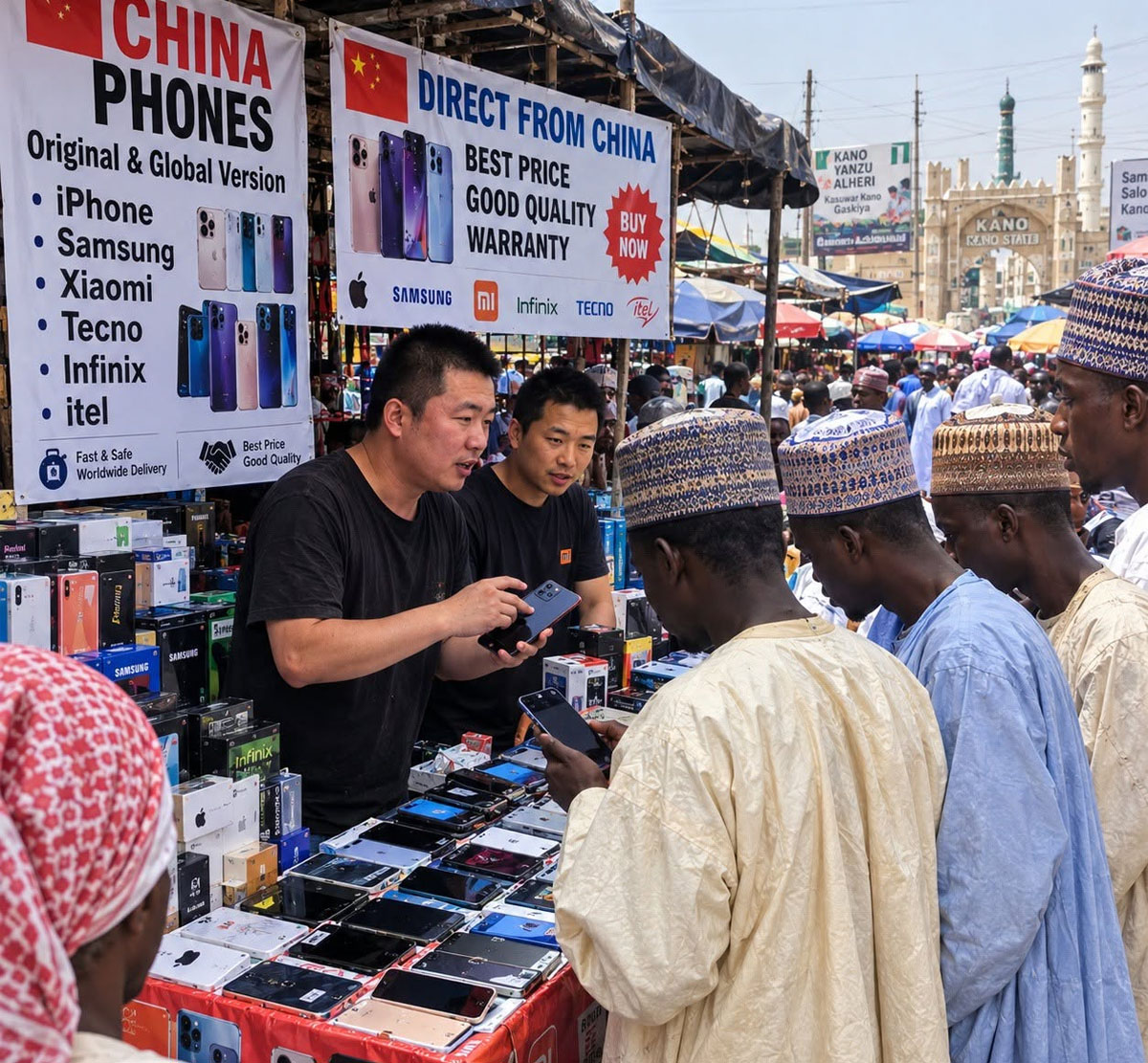
Phone traders in Kano State have confronted Chinese nationals accused of selling mobile phones directly to consumers at lower prices, reigniting concerns over foreign competition and the survival of local retail businesses in Nigeria.
The confrontation, reportedly captured in a video circulating on social media on Saturday, October 10, 2026, saw aggrieved traders challenge a Chinese national over alleged direct sales in a local market.
In the footage, some traders warned the foreign sellers against continuing the disputed business activities, insisting that their presence and pricing practices were undermining local dealers.
The traders alleged that Chinese sellers were bypassing established distribution channels by selling phones directly to consumers rather than supplying Nigerian retailers, who traditionally buy from importers and wholesalers before reselling to the public.
They argued that foreign suppliers with direct access to manufacturers could offer lower prices, making it difficult for local dealers to compete and maintain their businesses.
The traders expressed concern that the alleged practice could reduce their sales, threaten jobs and undermine the livelihoods of people who depend on the mobile phone retail business.
However, the circumstances surrounding the confrontation remain unclear. The identities of those involved, the precise location of the incident and whether any formal complaint was filed have not been independently established. There was also no confirmed information about arrests or police intervention.
The Kano dispute comes amid growing tensions between Nigerian traders and Chinese business operators over the boundaries between wholesale distribution and direct retail sales.
READ ALSO:
- NNPC Petrol Discount: Motorists Must Download App to Save ₦66 Per Litre
- Panama Earthquake: 27 Injured as Powerful 7.7-Magnitude Tremor Damages Hundreds of Buildings
- EFCC Wins ₦132m Money Laundering Case as Court Orders Forfeiture of Lagos Properties
A similar disagreement emerged in September at the Lagos International Trade Fair Complex, where members of the Auto Spare Parts and Machinery Dealers Association of Nigeria (ASPMDA) protested against what they described as direct retail activities by Chinese business operators.
The Lagos traders alleged that some foreign businesses were selling goods directly to consumers, putting local retailers at a disadvantage because of differences in purchasing power, supply chains and access to manufacturers.
The disagreement prompted discussions involving market representatives, the trade fair management board and security officials, who sought to prevent the dispute from escalating.
During efforts to resolve the Lagos disagreement, stakeholders called for clearer rules defining the respective roles of wholesalers and retailers. Representatives of the Chinese business community also indicated that businesses found engaging in prohibited activities should be reported for appropriate action.
The dispute has since highlighted wider concerns about foreign investment, fair competition and the protection of Nigerian small businesses.
Local traders argue that they need a level playing field to compete with businesses that source products directly from manufacturers. They also want authorities to clarify the conditions under which foreign operators can participate in Nigeria’s retail sector.
However, selling products at lower prices does not automatically establish wrongdoing. Determining whether a business has breached the law requires evidence of the relevant activities and the regulations governing its operations.
Consumers, meanwhile, may benefit from lower prices and greater choice when competition increases. The challenge for regulators is to ensure that competition remains lawful and fair while protecting consumers and supporting sustainable local enterprise.
The Kano confrontation has renewed calls for government agencies and market authorities to clarify Nigeria’s foreign trade and retail regulations, investigate credible complaints and provide mechanisms for resolving commercial disputes peacefully.
Authorities will also need to ensure that disagreements over business practices do not lead to intimidation, threats or violence against traders of any nationality.
For now, the central issue remains whether the alleged direct sales in Kano violate applicable regulations or market rules. An official response clarifying the circumstances of the incident would help establish the facts and determine whether further action is necessary.
Tension in Kano as Phone Traders Confront Chinese Sellers Over Cheaper Phones
-
 metro2 days ago
How Parents Raised Millions to Free 20 Abducted NYSC Members
-

 metro2 days ago
[UPDATED] Lagos Train Crash: 55-Year-Old Motorist Survives as Honda Car Is Wrecked at PWD Crossing
-

 metro10 hours ago
Tension in Kano as Phone Traders Confront Chinese Sellers Over Cheaper Phones
-

 metro3 days ago
Man Allegedly Caught Using Old Tyres to Scam POS Operator
-

 metro3 days ago
BREAKING: FG Unveils 10 Measures to Cushion Fuel Price, Inflation Pressures
-
 Health1 day ago
NAFDAC Raises Alarm Over Toxic Pesticides in Beans, Seizes ₦800m Banned Chemicals
-

 metro1 day ago
Police Launch Manhunt After Fresh Attacks, Kidnappings Rock Four Nigerian States
-

 Sports2 days ago
Ronaldo Breaks Silence on Portugal Row as Pelé, Maradona Comparison Sparks Meme Frenzy