

metro
EFCC secures final forfeiture of N775m, luxury apartments linked to ex- Accountant General, Otunla, Fadile

The Economic and Financial Crimes Commission (EFCC) has secured the final forfeiture of N775million traced to ex-Accountant General Jonah Otunla and retired Colonel Bello Fadile.
Justice D. U. Okorowo of the Federal High Court in Abuja gave the order on Monday.
Properties forfeited include; No. 8 Ajayi Crowther Street, Asokoro, Abuja, and Plot 1960 Cadastral Zone A05 Maitama, Abuja.
Others include a hotel under construction at Plot 621, Road 37, Gwarimpa, and a twin 4-bedroom duplex at Plot 736, 7th Avenue, Gwarimpa, Abuja.
READ ALSO:
- Nigeria’s Bukayo Saka grabs brace in England’s eight goal fest
- Principal, teachers, nurse abducted, community launches rescue
- Fixing economy, poverty reduction key to solving Nigeria‘s insecurity — Obi
EFCC counsel Christopher Mshelia moved a motion for the final forfeiture of the assets today
Mshelia said the assets recovered during the probe of the Office of the National Security Adviser (ONSA) were proceeds of unlawful activities.
The N775million was refunded by Otunla and the late Otunba Ade Adelakun in the course of the investigation.
The EFCC secured an interim forfeiture order in July 2020 and published it on August 11, 2022.
Justice Okorowo said the court was satisfied with the evidence and directed that the Federal Government take over the assets.









metro
MURIC Raises Alarm Over Alleged Religious Imbalance in NDA 78RC Admission
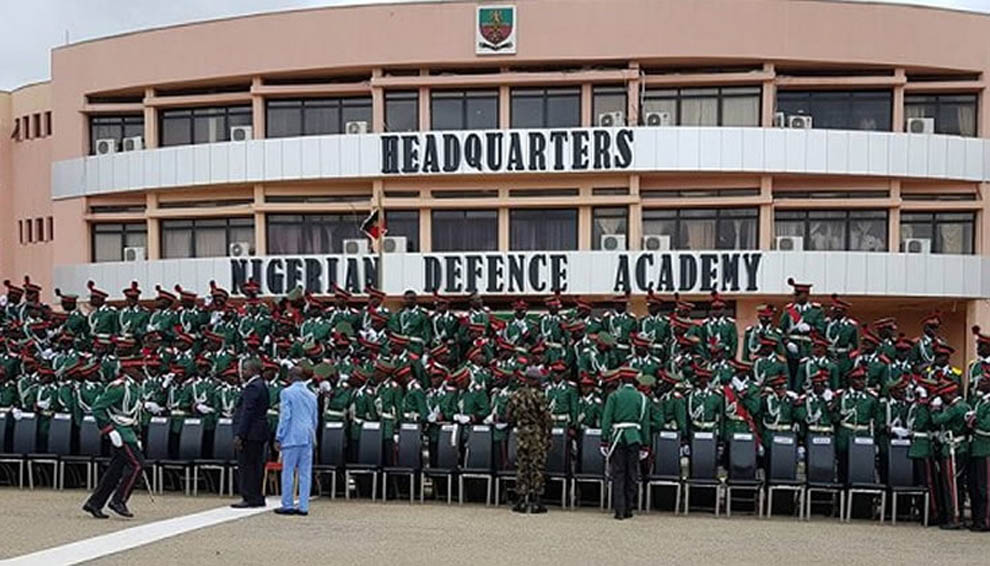
MURIC Raises Alarm Over Alleged Religious Imbalance in NDA 78RC Admission
The Muslim Rights Concern, MURIC, Abuja Chapter, has called on President Bola Ahmed Tinubu to urgently review the recently released admission list for the 78th Regular Course of the Nigerian Defence Academy (NDA), alleging religious imbalance in the selection of successful candidates.
MURIC, in a statement dated September 10, 2026, signed by its Abuja Chapter Chairman, Ustaz Yunus Salahudeen, and the chapter’s Publicity Secretary, Lukman Babalola Laleye, said its preliminary analysis of the admission list revealed what it described as “disturbing patterns” in the distribution of Muslim and Christian candidates across several states.
The group also expressed concern over the religious composition of key officers involved in the NDA admission process.
According to MURIC, the Chief of Defence Staff, the Chairman of the NDA Selection Board, the Commandant of the NDA, the NDA Registrar and the NDA Provost are all Christians.
The organisation argued that the concentration of the key positions in the hands of people of one faith raised questions about balance, fairness and objectivity in the admission process.
It also linked its concerns to the Federal Character principle provided for under Section 14(3) of the 1999 Constitution.
MURIC said its analysis showed significant disparities in the religious composition of successful candidates from a number of states.
For instance, the group claimed that six of the 10 candidates listed for Adamawa were Christians, while all three reserve candidates were also Christians.
It alleged that Benue had only one Muslim among 10 candidates, with all three reserve candidates being Christians.
In Ebonyi, MURIC said only one Muslim was listed and that the candidate was placed on the reserve list, while Edo allegedly had no Muslim among the admitted and reserve candidates.
The organisation also claimed that Ekiti had only three Muslims among the 10 candidates, including reserves, while the Federal Capital Territory had two Muslims among six candidates.
In Gombe, MURIC alleged that five of the 10 candidates were Christians and all three reserve candidates were Christians.
The group further cited Imo, where it claimed there was only one Muslim among 13 candidates, including the reserve list, and Ondo, where it alleged that no Muslim was among the 13 candidates, including reserves.
Other states cited by MURIC included Kaduna, where it claimed six out of 10 candidates were Christians; Kebbi, with one Christian among 10; Kogi, with four Muslims among 10; Kwara, with four Muslims among 10; Lagos, with five Muslims among 10; Nasarawa, with four Muslims; Niger, with four Muslims; Ogun, with two Muslims; Oyo, with three Muslims; Plateau, with three Muslims compared with 10 Christians; and Taraba, with two Muslims among 10.
The organisation also alleged that Borno had three Christians among 10 candidates, with one Christian on the reserve list, while Yobe had two Christians among the 10 candidates.
MURIC stressed that its observations were based on a preliminary analysis of the published list and said the disparities warranted clarification from the NDA.
The group consequently urged President Tinubu to intervene immediately and direct a review of the 78 Regular Course admission list to ensure what it described as fairness and balance.
It also called for the reconstitution of key admission and appointment positions within the NDA to better reflect Nigeria’s religious and ethnic diversity.
In addition, MURIC demanded that the NDA publish the criteria used in selecting the successful candidates, including the cut-off marks and quota allocated to each state.
“As the saying goes, ‘a problem identified is a problem half solved,’” the organisation stated, expressing confidence that the Presidency would act promptly to address the issue.
MURIC said such action was necessary to promote unity, equity and national cohesion.
The group concluded by praying for leaders who would uphold justice and fairness.
MURIC Raises Alarm Over Alleged Religious Imbalance in NDA 78RC Admission
metro
Warri Lawyer, Wife Arrested Over Sale of Baby Declared Dead at Birth

Warri Lawyer, Wife Arrested Over Sale of Baby Declared Dead at Birth
Delta State Police rescue child after mother discovers newborn allegedly alive three years after being told she died during delivery
A Warri lawyer, Barrister Solomon Igbiaye, and his wife, Abigail Igbiaye, have been arrested by the Delta State Police Command over the alleged sale of a newborn baby three years after the child’s mother was reportedly told that she had died. The couple were arrested and taken to the Ekpan Police Station on Wednesday after the mother lodged a complaint upon discovering that the child she was told had died in 2023 was allegedly still alive. The couple were allegedly working with a woman identified as Mary, also known as Bridget, in the suspected baby-selling scheme.
According to a source familiar with the case, the mother became pregnant in 2023 after returning to her village in Jos, Plateau State, but was allegedly abandoned by the man who fathered the pregnancy. The source said a woman from her village noticed her condition and offered to take her to Warri, where she was allegedly received by Igbiaye’s wife, who assured her that she would be cared for until she delivered the baby. The source noted that the mother was allegedly unaware of any plan involving her unborn child. According to the account, the woman had previously lived in Sapele before returning to her village in Jos. She later became pregnant after entering into a relationship with a man who allegedly denied responsibility after she informed him of the pregnancy. The source said the man subsequently left her as the pregnancy progressed. “After hearing her story, the woman promised to take her to Warri for help. Upon arriving in Warri, she was approached by the lawyer’s wife, who assured her that she would be taken care of until she gave birth. Unknown to her, there were ulterior motives at play,” the source said.
Days before her delivery, the mother was reportedly taken to Vicar Clinic, where labour was allegedly induced. According to the source, after her water broke, she was taken into the operating room for a Caesarean section and delivered a baby girl. A nurse reportedly showed her the newborn shortly after the delivery, but she allegedly never saw the child again. The source said Bridget later informed the mother that the baby had died. The mother reportedly became suspicious and demanded to be taken to the place where her child had allegedly been buried, but Bridget allegedly refused.
READ ALSO:
- FG Releases Eight-Month CATA Allowance to Lecturers Across Federal Tertiary Institutions
- Remi Tinubu Appeals To South-East Voters, Says She Wants To ‘Enjoy Nigeria’ In Old Age
- Police Arrest Woman Over Fake OPay Shutdown Notice
Four days after the delivery, the mother was reportedly taken in a vehicle by Igbiaye’s wife and Bridget and abandoned in a dilapidated building in the Shaguolo area of Ekpan. Her condition subsequently deteriorated as her Caesarean-section wounds became infected, while she allegedly had no money or means of caring for herself. She reportedly survived by begging for food before eventually securing transportation back to Jos in a truck. The source alleged that Igbiaye’s wife paid Bridget N166,000 in connection with the arrangement, while the mother was allegedly not given any money. The source further alleged that a housemaid identified as Kindness, who reportedly worked at the lawyer’s residence and was from the same village as the mother, later told her that the baby had been brought to the lawyer’s home. Kindness allegedly sent her a photograph of the baby and told her that the child strongly resembled her.
The alleged revelation prompted the mother to question the circumstances surrounding the reported death of her daughter. According to the source, the photograph and information provided by Kindness raised suspicions that the child may not have died as she had been told, but could have been unlawfully transferred or sold. The lawyer, his wife and Bridget have been accused of conspiring in the alleged transaction. However, the circumstances surrounding the child’s birth, disappearance and subsequent whereabouts remain subject to police investigation. The suspects were subsequently taken to the Effurun Area Command for further investigation. The source told THE WHISTLER on Thursday that the baby had been rescued. “The child is with the police. Police rescued the baby this afternoon (Wednesday) upon the arrest of the duo,” the source said. The police are expected to establish what happened to the baby following the Caesarean delivery and determine whether anyone was involved in an alleged attempt to sell or unlawfully transfer the child.
When contacted, the Delta State Police Public Relations Officer, Bright Edafe, did not respond to messages seeking confirmation of the arrests and rescue of the child. The Delta State Police Command has previously demonstrated commitment to tackling child trafficking and related crimes in the state. In December 2025, the command arrested a woman for allegedly faking the abduction of her two-month-old baby and selling the child for N1.5 million to a pastor in Effurun, Uvwie Local Government Area. The woman had alleged that gunmen forcefully took her baby from her while she was in a tricycle and pushed her out. However, investigations revealed that the mother had staged the abduction and sold the child to the cleric.
The case bears similarities to other reported incidents of babies being declared dead at birth only to be discovered alive later. In June 2026, the Nigeria Police Force uncovered an alleged child trafficking operation at a private medical facility in Port Harcourt, Rivers State, leading to the arrest of several suspects, including the hospital’s Chief Medical Director. Investigators alleged that live babies delivered at the hospital were taken away and trafficked, while some mothers were falsely informed that their newborns had died during childbirth. The investigation took a more disturbing turn following the discovery of a dead infant allegedly recovered from the doctor’s office, which was reportedly embalmed for preservation. Investigators alleged that the deceased infant was sometimes presented to mothers as evidence that their babies had died. In 2014, police in Delta State arrested a couple accused of buying and selling children, including a day-old girl. The couple, a midwife and her husband, were accused of running a baby-buying scheme out of a medical store they operated in Warri. The scheme was allegedly discovered when a man desperate for cash to buy a tricycle agreed to sell his newborn child to the couple without telling his wife. When the mother awoke and asked to see her child, her husband told her the baby had died and already been buried.
The police have advised expectant mothers to ensure a trusted relative is present during delivery and urged hospitals to maintain adequate security measures in maternity wards to prevent the theft of newborns.
Warri Lawyer, Wife Arrested Over Sale of Baby Declared Dead at Birth
metro
One Killed, Two Rescued as Two-Storey Building Collapses During Demolition in Lagos

-

 metro2 days ago
El-Rufai Demands ₦10bn from Defence Minister Over Southern Kaduna Killings Allegation
-
 metro3 days ago
Oyoland Grand Chief Imam Celebrates Dr Sharafudeen Raji for Service to Islam
-

 Politics2 days ago
Why Did Peter Obi Attend Seyi Makinde’s Campaign Launch? Here’s What He Said
-

 News2 days ago
Lagos Moves to Slash Agency Fees, Curb Rent Hikes With New Tenancy Bill
-
 metro2 days ago
Catholic priest leaves priesthood, weds Kenyan woman after 12 years in Kenya
-

 metro2 days ago
Osun Police Arrest Woman After Vigilante Member Dies During Sexual Encounter in Ile-Ife
-

 Politics2 days ago
JUST IN: Tension in Benue as Suspected Thugs Attack Peter Obi’s Convoy, Block Access
-

 Education2 days ago
FG opens six-month teacher certification for BSc, HND, ND holders – How to Apply