Politics
Election Tribunal: Tinubu, INEC, APC object to Channels TV witness on subpoena
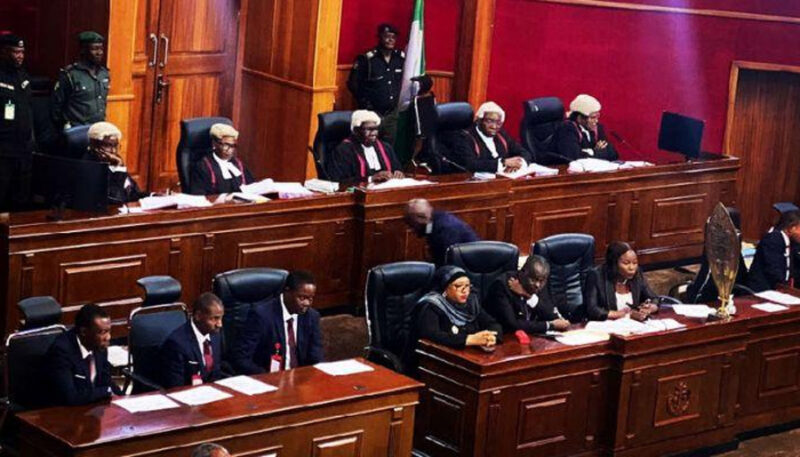
Livy Uzoukwu, lead counsel to Peter Obi, presidential candidate of Labour Party, and Labour Party, LP, told the court, “the intend to start today by calling a witness, who is on subpoena and I would hand over to J.S. Okutepa, SAN while PIN Ikwueto, SAN will lead the technical team and software presentation.”
Okutepa introduced the witness, recorded as PW3 and led Lucky Obewo Isawode, senior reporter/editor from Channels Television, who swore an oath and climbed the witness stand.
He said he was in court to adopt his earlier written deposition and present a video recording of statements made by the INEC Chairman, Prof Mahmood Yakubu and national Commissioner, Festus Okoye.
Then objections start flying from respondents counsels…
Akin Olujimi, SAN (Tinubu and Shettima) is the first off the blocks, saying the witness and his testimony was not pre-listed and front-loaded in time, according to electoral law. The first Respondent (INEC) and Fourth Respondent (APC) follow suit with similar reasons for objections.
READ ALSO:
- Lagos lawmakers will reverse all reversible laws to protect interest of indigenes – Obasa
- NAFDAC seals shop for allegedly selling unregistered aphrodisiacs
- I Could Have Slapped Kwankwaso At Aso Rock – Ganduje
Okutepa urged the court to dismiss the objections. After characteristic banters of fireworks, the Haruna Tsammani-led panel reserves ruling on the objections till final address and orders PW3 to proceed with his adoption of deposition and subsequent video presentation.
It was a fierce session of objections from the Respondents in Obi vs Tinubu June 9† as the defendants succeeded in stopping a witness on subpoena from giving evidence.
Immediately the witness, Lucky Obewo Isawode, senior reporter/editor, Channels Television was recorded as PW3 and sworn for him to adopt his deposition, Kemi Pinhero, SAN, leading the first Respondents (INEC) team objected, saying it was against the Electoral Act to present evidence without pre-listing and front-loading in the petition. The other members of the defense tag team – Tinubu, Shettima and APC – chorused in support of INEC.
This drew JS Okutepa, SAN, leading the Petitioners’ witness in evidence to respond by urging the court to dismiss the objections and allow the witness proceed.
After real fierce exchanges and citations, the Haruna Tsammani-led panel ordered that the witness should go ahead while objections will be ruled on during presentations of final addresses.
READ ALSO:
- We don’t envy Tinubu, says Sultan during monarchs visit to State House
- DSS arrests Emefiele
- Just in: CBN Governor Godwin Emefiele suspended
Having wasted over 30 minutes, Okutepa resumed with his witness. Immediately PW3 brought out the enclosed flash drive to replay on the large screen television that had been waiting for use, the Tinubu and Shettima counsel stepped out again, objecting this time that the flash drive should not be played since they were not served before hand, calling it an ambush.
Another series of legal fireworks and citations took over.
By the time the Tribunal decided that the PW3 should go ahead and play the video, it was already 6.00 pm that the court was forced to adjourn to tomorrow, Saturday, June 10.
Ironic, isn’t it, that INEC is quoting the Electoral Act? Their reckless disregard to the Electoral Act while conducting the election in dispute gave birth to this Tribunal in the first place.
Tomorrow is another day, for whatever will be will certainly be.
Election Tribunal: Tinubu, INEC, APC object to Channels TV witness on subpoena
![]()
Politics
Mass Defection Hits Bauchi APC as Senators, Reps, Aspirants Dump Ruling Party
The aftermath of the All Progressives Congress (APC) primaries in Bauchi State has sparked growing discontent, leading to the mass defection of both prominent chieftains and their supporters across the state, with two serving senators, a House of Representatives member, former Inspector General of Police, and scores of aspirants resigning from the ruling party. Lawmaker representing Bauchi South Senatorial District, Senator Shehu Buba Umar, has resigned from the APC and declared his membership of the Peoples Redemption Party (PRP). This comes days after his withdrawal from the APC governorship primary election, citing irregularities and violations of electoral guidelines. Also, the Senator representing Bauchi North, Samaila Kaila Dahuwa, has resigned from the APC after losing his return ticket, joining the PRP.
Buba cited the “absence of internal democracy, lack of fairness, marginalisation of genuine party members, and increasing disregard for the opinions and aspirations of grassroots supporters within the APC.” He said his decision to join the PRP came after extensive consultations with political associates, youths, women groups, party stakeholders, and supporters across Bauchi South Senatorial District and Bauchi State at large. Buba said the PRP remains a political platform built on the principles of justice, transparency, accountability, inclusiveness, and people-oriented leadership, with strong commitment to the democratic values enshrined in the 1999 Constitution of the Federal Republic of Nigeria. Buba explained that his movement to the PRP is aimed at strengthening democratic governance, protecting the interests of the common people, and providing effective and responsive representation for the citizens.
“Our people deserve better governance, better opportunities, and leadership that truly listens to their concerns. Politics should be about service to humanity, justice, development, and improving the living conditions of the masses,” Buba said. The Senator urged his supporters and political allies to join him in the PRP to continue the “collective struggle” for good governance, social justice, accountability, and sustainable development across Bauchi State. Barely 24 hours after parting ways with the APC, Buba clinched the PRP governorship ticket, with the PRP Deputy National Vice Chairman (North), Haruna Buhari, announcing him as the party’s sole cleared aspirant for the ticket.
READ ALSO:
- It’s My Job to Weaken Opposition, APC Chairman Declares
- Police Arrest Abuja Chef Over Alleged N150m Robbery, Recover Victim’s iPhone
- Gov Yusuf Approves N20,000 Eid-ul-Adha Goodwill Package for Civil Servants
However, Buba’s defection and swift emergence as the PRP governorship candidate have not gone unchallenged. A Bauchi governorship aspirant on the PRP platform, Barrister Safiyanu Garba Idris, has questioned the eligibility and political status of Senator Shehu Buba following his recent defection from the APC. Addressing newsmen on Monday in Bauchi, Idris alleged that Buba remained actively involved in APC activities even after publicly announcing his resignation from the ruling party. According to him, the senator attended meetings of the APC after the date he reportedly claimed to have defected to the PRP. “Somebody who said he left the APC was still participating in APC meetings and activities,” he alleged. The aspirant further questioned how Buba emerged as the sole governorship candidate of the PRP shortly after withdrawing from the APC governorship contest, arguing that the development raised constitutional and procedural concerns regarding party membership and eligibility. Idris also accused some officials within the PRP of manipulating internal processes to favour selected individuals ahead of the 2027 governorship election. According to him, the situation could deepen internal divisions within the party if not properly addressed.
Among those who departed is the incumbent member representing the Jama’are/Itas-Gadau federal constituency in the House of Representatives, Hon. Rabilu Bala Kashuri, who announced his resignation with immediate effect. Kashuri, who sought reelection ticket but was unsuccessful, tendered his resignation from the ruling party in a letter addressed to the APC Chairman of Kashuri Ward in the Itas/Gadau Local Government Area. Similarly, the 2023 deputy governorship candidate and former member of the House of Representatives, Hon. Shehu Aliyu Musa, also resigned from the APC. Musa, who contested the APC ticket for the Bauchi South Senatorial District, cited “lack of purposeful leadership, unfair treatment of party members and lack of cohesion among leaders of the party.” Since the announcement of the results of the APC gubernatorial primaries, several aspirants and stakeholders have resigned from the APC, citing a lack of transparency and violations of internal democracy.
In a related development, former majority leader of Bauchi House of Assembly and aspirant for the Katagum Federal Constituency, Hon. Tijjani Mohammed Aliyu, resigned from the party, alleging that the primaries were marred by predetermined results, vote allocation, and gross violations of party guidelines. According to him, the exercise undermined the principles of internal democracy upon which the APC was founded. In a letter addressed to the Ward Chairman of the APC in Madangala Ward, Katagum Local Government Area, he wrote: “I write to formally notify you of my intention to resign my membership of the party (Membership No. APC 051203000049) in your ward, with immediate effect. This decision follows recent developments regarding party activities, particularly the conduct of the 2026 primaries for various elective positions. After careful observation and review, I am convinced that the process was marred by predetermined results, the outright allocation of votes, and non-compliance with the guidelines for the conduct of said primaries.”
READ ALSO:
- ‘INEC-Level Logistics’ – ADC Admits It Wasn’t Ready for 2027 Nationwide Primaries
- JAMB Sets Date for 2026 UTME Mop-Up, Directs Candidates to Reprint Slips
- DR Congo: Gunmen Storm Ebola Treatment Hospital, Demand Relatives’ Bodies
Another chieftain, Hon. Abubakar Dahuwa Abdulkadir, who holds the traditional title of Sarkin Yamman Katagum, also withdrew his membership from the party. He described the primaries as unfair, discriminatory, and contrary to democratic ethics. He alleged that the APC failed to conduct the planned direct primary election for the Azare/Madangala State Assembly constituency. Hon. Sulaiman Sunusi Lalaye, an aspirant who sought to represent the Bauchi Constituency in the State House of Assembly, announced his resignation from the APC. In a letter addressed to the Chairman of the APC in Makama/Sarkin Baki Ward, Bauchi Local Government Area, dated May 22, 2026, Lalaye stated that although he had been a member of the party since its formation, he decided to leave due to persistent irregularities and injustice within the organization. He formally notified the party of his decision to withdraw his candidacy for the State House of Assembly on the APC platform. Hon. Rabi’u Abubakar Bishi announced his resignation in a letter addressed to the APC Chairman of the Kangere/Turum Ward. “I am writing to inform you of my decision to resign from the All Progressives Congress. I have taken this step due to internal crises and injustice, among other issues, which I can no longer bear. This resignation will enable me to remain committed to my principles of fighting for good governance in our state,” Bishi said. Many aggrieved members alleged that no direct primaries were conducted in the state, insisting that candidates were merely handpicked through what they described as “selection and imposition.”
The crisis has been further inflamed by the outright rejection of the APC governorship primary results by the Bauchi Progressives Forum. The group has rejected the results announced by the Chairman of the Committee for the APC Governorship Primaries in Bauchi State, insisting that no election was conducted and that aspirants were instead pressured to step down. In a statement signed by its Chairman, Mallam Ibrahim Abdullahi, the group described the figures announced by the Primaries Committee as fictitious and an insult to the people of Bauchi State.
“There was no governorship primary election in Bauchi State. Let us not attempt to deceive Nigerians. The aspirants were invited by certain individuals and asked to step down for former Governor Muhammad Abubakar. They reluctantly agreed because they were not given the opportunity of a credible direct primary,” the statement said. “It is distasteful for the Chairman of the Primaries Committee to announce figures of votes that were neither cast nor counted.” The group further challenged the Committee to produce evidence that voting took place in any ward or local government area across the state. “We had agents across the state, and there was not a single vote cast or counted anywhere. There were no queues and no accreditation of voters. So where did these figures come from? We challenge the Committee to produce a single photograph showing party members queueing to vote anywhere in Bauchi State. Such evidence does not exist,” the group queried.
READ ALSO:
- Troops Rescue 92 Kidnapped Civilians, Defuse 3 IEDs in Borno
- Police Reject ₦500m Bribe, Seize 425 Bags of Suspected Canadian Loud Worth ₦7.8bn
- NSCDC Seals Chinese-Linked Steel Company, Arrests 12 Over Railway Track Vandalism
Speaking further, Mallam Abdullahi said the development raised serious questions about the democratic credentials of the APC. “No APC member in Bauchi State who watched the video of those figures being announced would believe that the party truly represents democracy or progressive ideals. This is far removed from the principles upon which the party was founded, and it is deeply insulting to the people of Bauchi State,” he said. The Forum clarified that it was not disputing the emergence of Muhammad Abubakar as the APC governorship candidate, but rather the claim that he emerged through an election. “Muhammad Abubakar emerged as the ‘consensus’ candidate. Some aspirants initially opposed the arrangement and preferred a direct primary, but two eventually agreed, albeit reluctantly, to his emergence. What we expected was for the party to openly state that he emerged through ‘a forced consensus’, not to falsely claim that an election was conducted. That narrative is simply untrue,” the statement added.
The fallout from the APC primaries has extended beyond Bauchi State. A former Inspector General of Police, Abubakar Adamu, resigned his membership of the APC over his loss during the APC governorship primaries in Nasarawa State. Adamu formally submitted his letter of resignation on Monday to the executives of the Makama ward in Lafia, the state capital. He said, “Today I address my letter to you, the ward executives, especially the ward chairman, of my decision to resign from the All Progressives Congress with immediate effect. This decision was not taken lightly. However, recent developments within the party, especially the conduct of the governorship primary election processes in Nasarawa State, have made it difficult for me to continue with my political activities under the platform of the party.”
Adamu explained that internal democracy, fairness, transparency and equal opportunity for aspirants and members, which guided the affairs of any democratic political party, did not reflect the party’s principles. “I strongly believe that internal democracy, fairness, transparency and equal opportunity for aspirants and members guide the affairs of any democratic political party. Unfortunately, the events surrounding the primary election did not reflect this principle and have led to a loss of confidence in the party’s leadership and the processes in the state. After wide consultations with supporters, political associates and family members, I have decided to withdraw my membership to pursue my political aspirations through another platform,” he noted. His resignation sparked protests among his supporters, with many seen in viral videos online burning the broom, the symbol of the APC.
In Kano State, a similar defection from the ruling APC was witnessed as Mustapha Dawaki, a former member of the House of Representatives and erstwhile Chief of Staff to the APC National Chairman, Prof Nentawe Yilwatda, moved to the National Democratic Congress (NDC). Dawaki was officially received on Monday by a leader of the NDC and founder of the Kwankwasiyya movement, Rabiu Kwankwaso, during a meeting held at Kwankwaso’s Miller Road residence in Kano. The development comes barely one week after Dawaki reportedly lost his bid to secure the APC consensus ticket for the Dawakin Kudu/Warawa Federal Constituency seat. Confirming the defection in a statement on Monday, Kwankwaso’s media aide, Saifullahi Hassan, said the former APC stalwart had formally joined the NDC alongside his supporters. “Leader has today accepted the former Chief of Staff to the APC National Chairman, Mustapha Bala Dawaki, popularly known as Mai Gidan Ruwa, into the NDC Kwankwasiyya movement,” Hassan wrote in a Facebook post. Political observers described the defection as another major shake-up within Kano politics, especially as opposition parties and ruling party blocs intensify consultations and consensus arrangements ahead of the 2027 elections.
In Zamfara State, protests have continued to trail the outcome of the APC primaries. A Zamfara State senatorial aspirant for Zamfara North District, Aliyu Shinkafi, has petitioned the National Chairman of the party, Professor Nentawe Yilwatda, over what he termed as “imposition of Sahabi Alhaji Yau, as the sole candidate for the district.” Shinkafi described the exercise as an injustice and a flagrant disregard for the Constitution of the Federal Republic of Nigeria 1999 as Amended, Electoral Act 2026 and the constitution of the APC. He warned that Governor Dauda Lawal will be the major loser in what he called “conspiracy to exclude already cleared Senatorial aspirants from participating in the senate primaries in Zamfara State as the chances of APC winning the elections in the state is minimal.”
The mass defections sweeping through the APC in Bauchi, Nasarawa, Kano, and Zamfara States signal a significant political crisis for the ruling party ahead of the 2027 general elections. The loss of two serving senators, a former Inspector General of Police, a former House of Representatives member turned Chief of Staff to the APC National Chairman, and scores of aspirants across various levels represents a substantial erosion of the party’s grassroots political structures. The defectors’ allegations of “no direct primaries,” “selection and imposition,” “predetermined results,” and “outright allocation of votes” strike at the heart of the APC’s claim to internal democracy. The Bauchi Progressives Forum’s assertion that no election was conducted and that figures announced were “fictitious” is particularly damaging to the party’s democratic credentials. The fact that many defectors have found a ready home in the PRP and NDC suggests that opposition parties are capitalising on the APC’s internal crisis to strengthen their own structures ahead of 2027. For the APC leadership, the challenge now is whether it can contain the fallout, address the grievances of aggrieved members, or risk further defections that could weaken the party’s electoral prospects in key states.
Mass Defection Hits Bauchi APC as Senators, Reps, Aspirants Dump Ruling Party
![]()
Politics
It’s My Job to Weaken Opposition, APC Chairman Declares
The National Chairman of the ruling All Progressives Congress (APC), Nentawe Yilwatda, has declared that he would be happy to cause implosion and division within opposition political parties, admitting that weakening the opposition through political strategy is part of his job. Speaking during a live appearance on Channels Television’s Politics Today programme on Monday, May 25, 2026, Yilwatda made the remarks while responding to questions about the state of opposition parties ahead of the 2027 general elections. In a particularly striking admission, Yilwatda revealed that he actually derives entertainment from watching opposition parties exchange insults and attack one another publicly. “In the last three weeks, the APC is not fighting ADC or NDC. It is NDC versus ADC or ADC versus NDC,” Yilwatda said during the interview. “Actually, I watched with fun all the insults that the ADC is raining on the NDC and the NDC is returning those fireworks on the ADC. I watched the videos, and I laughed.”
According to Yilwatda, the APC is not actively fighting opposition parties such as the African Democratic Congress (ADC) or the Nigeria Democratic Congress (NDC). Instead, he argued that these parties are battling internal crises of their own making. “You see, the APC is not fighting the African Democratic Congress, ADC, or the Nigeria Democratic Congress, NDC. They are the ones fighting each other. The self-implosion is in the opposition rather than in the APC.”
When pressed further on whether he was orchestrating the crises rocking opposition parties, Yilwatda offered a candid response that has drawn both criticism and praise from different quarters. “No, I can’t. But I will be happy if I can do it. That’s my job,” Yilwatda stated. He framed his approach as a legitimate political response to opposition activities, arguing that any political party in power would naturally seek to counter those trying to unseat it. “If you are opposing me, should I be happy? If you oppose me because you are in the opposition, what’s my job? Of course, to stop the opposition,” he said. Yilwatda further suggested that the opposition parties are more focused on internal rivalries and conflicts than challenging the APC for the 2027 presidency. “APC is not fighting ADC or NDC. It is NDC vs ADC or ADC vs NDC. The self-implosion is in the opposition rather than in the APC,” he reiterated.
READ ALSO:
- Police Arrest Abuja Chef Over Alleged N150m Robbery, Recover Victim’s iPhone
- Gov Yusuf Approves N20,000 Eid-ul-Adha Goodwill Package for Civil Servants
- ‘INEC-Level Logistics’ – ADC Admits It Wasn’t Ready for 2027 Nationwide Primaries
Beyond his comments about opposition implosion, Yilwatda used the interview to showcase the APC’s internal stability and organisational strength ahead of the 2027 elections. He argued that no political party in Nigeria currently possesses a stronger internal dispute resolution system than the APC. The APC chairman revealed that the party currently has about 12.9 million verified registered members submitted to the Independent National Electoral Commission (INEC), a figure he said reflects the party’s reach, organisation and staying power. “We have about 12.9 million registered voters that we submitted to INEC. If you put all the political parties together, they don’t add up to APC’s registered members,” he stated. According to Yilwatda, the Peoples Democratic Party (PDP) has about 2.4 million registered members, while the African Democratic Congress (ADC) has 1.6 million, the Labour Party has 1.3 million, and the Nigeria Democratic Congress (NDC) has about 700,000.
Yilwatda further emphasised that the APC is the only political party in Nigeria operating a fully verified membership register through the National Identity Management Commission (NIMC). “To register as a member of the APC, your name and primary data are sourced from NIMC. That’s the same primary data that is used across the country to open a bank account, get a driver’s licence and secure an international passport,” he explained. “So we’re the only political party that sources our primary data from NIMC. This is why people have seen the APC as one of the most politically viable and stable parties. We are a data-driven political party,” he stated.
Yilwatda argued that the APC’s internal stability sets it apart from opposition parties that are “breaking into pieces.” He pointed to the peaceful conduct of the party’s recent primaries as evidence of the APC’s organisational strength. “See how organised the primaries were; almost near rancour-free, no crisis, almost zero incidences in terms of crisis in communities. It shows APC is organised,” Yilwatda stated, referring to the party’s recent presidential primaries. “There’s no party that has a better mechanism for conflict resolution more than our party,” he added. He described the APC as “one of the most prepared political parties” in the country, noting that the party’s congresses and primaries were conducted with almost zero incidences across communities nationwide. “We have one of the most prepared machinery, a political machine that’s prepared for war and can tackle any political opponent at any given time,” he said.
READ ALSO:
- JAMB Sets Date for 2026 UTME Mop-Up, Directs Candidates to Reprint Slips
- DR Congo: Gunmen Storm Ebola Treatment Hospital, Demand Relatives’ Bodies
- Troops Rescue 92 Kidnapped Civilians, Defuse 3 IEDs in Borno
Yilwatda argued that the APC’s growing electoral strength is evident in the increasing number of governors, lawmakers and political stakeholders who have aligned with the ruling party since the 2023 general elections. “Today, the South-South that was purely with PDP and Obi, all of them are now APC. Even in the North-West, where NNPP and PDP were strong, today they are near zero,” he claimed. He also noted that despite the charges facing some APC members, people were still coming in large numbers to purchase nomination forms. “We did not increase our fees; we maintained them, yet people are coming in droves. We opened up our party. People are not hiding forms—everyone is buying, including the presidential ticket. We have a sitting President, yet people are buying forms to contest against him. We allowed it,” he said.
This is not the first time Yilwatda has made dismissive remarks about opposition parties. In earlier comments reported on May 7, 2026, he taunted opposition parties for “breaking into pieces” and declared that victory for APC in the forthcoming elections would be a landslide. “We are not belittling the opposition, but check what they are doing. Just yesterday, I listened to the fight between opposition leaders—they are breaking into pieces, and I’m sure they will blame us for their internal crisis,” he had said.
Yilwatda’s admission that he would be happy to cause implosion in opposition parties signals a potentially aggressive political strategy by the APC ahead of the 2027 general elections. His comments suggest that the ruling party may adopt tactics aimed at exploiting and deepening existing divisions within opposition ranks. For opposition parties already grappling with leadership crises and logistical challenges, Yilwatda’s remarks add another layer of concern about the fairness of the political playing field as Nigeria approaches the 2027 elections. However, the APC chairman maintains that the party’s stability, data-driven membership system, and internal conflict resolution mechanisms position it as the undisputed frontrunner for the 2027 presidency.
It’s My Job to Weaken Opposition, APC Chairman Declares
![]()
Politics
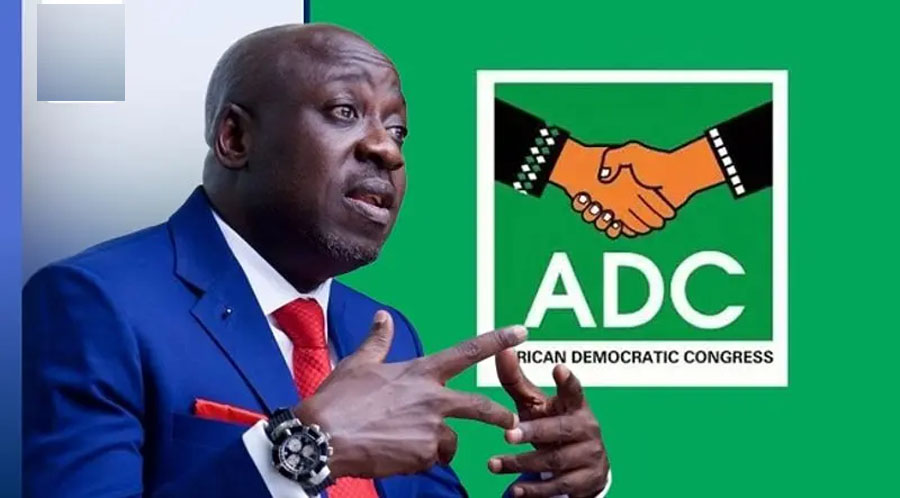
‘INEC-Level Logistics’ – ADC Admits It Wasn’t Ready for 2027 Nationwide Primaries
The African Democratic Congress (ADC) has openly admitted that it was caught off guard by the sheer scale of logistics required to conduct nationwide primaries ahead of the 2027 elections, describing the process as demanding what it calls “INEC-level logistics.”
In a candid interview on ARISE News, the party’s National Publicity Secretary, Bolaji Abdullahi, confessed that while the ADC anticipated difficulties, the reality of organising a primary election across all 36 states and the Federal Capital Territory proved far more daunting than initial preparations had accounted for.
“We always knew it was going to be a challenge because it requires an INEC-level logistics to be able to do a nationwide election,” Abdullahi said. “And I must admit that it came to us more or less as a curveball; we weren’t prepared to do this. But when INEC imposed it on us as the only option aside from the consensus, then we had no choice but to brace up for it.”
The Independent National Electoral Commission (INEC) has revised its electoral guidelines ahead of the 2027 general elections, mandating that all political parties conduct direct or indirect primaries to nominate candidates—leaving consensus as the only alternative. According to Abdullahi, the ADC had hoped to lean heavily on internal consensus-building to avoid the logistical nightmare of a nationwide vote. However, when those consensus talks among the party’s presidential aspirants failed to produce a unanimous agreement, the ADC was forced to pivot to a full-scale primary. This shift, Abdullahi admitted, exposed significant gaps in the party’s organisational capacity. “It came to us more or less as a curveball,” he repeated for emphasis, underscoring how unprepared the opposition party was for the magnitude of the task.
READ ALSO:
- JAMB Sets Date for 2026 UTME Mop-Up, Directs Candidates to Reprint Slips
- DR Congo: Gunmen Storm Ebola Treatment Hospital, Demand Relatives’ Bodies
- Troops Rescue 92 Kidnapped Civilians, Defuse 3 IEDs in Borno
Rejecting suggestions that the party’s consensus arrangement had completely collapsed, Abdullahi provided a more nuanced explanation. He noted that even when a consensus is reached among aspirants, the Electoral Act still requires a national convention to formally affirm the outcome. “I would not use the word ‘collapse’ because it has its own dynamics. When you broker a consensus, it would still require you to do a convention to affirm the outcome of the consensus,” he stated. But he added a critical complication: “Some of the court situations that we have at the moment do not allow us to hold a convention.”
That court situation refers to the ongoing leadership crisis that has plagued the ADC. INEC had previously withdrawn recognition of the party’s leadership factions, citing a subsisting court order. The Commission refused to recognise either the faction led by Senator David Mark or the rival Nafiu Bala Gombe faction, leaving the party in a state of legal limbo. Despite this, Abdullahi maintained faith in the judiciary. “Regardless of what has happened in Nigeria, we still have confidence in the judiciary. We believe we have a slam-dunk case,” he told Channels Television’s Politics Today.
The ADC’s 2027 presidential primary has reportedly drawn three heavyweight contenders: former Vice President Atiku Abubakar, former Minister of Transportation Rotimi Amaechi, and prominent businessman and economist Hayatu-Deen Mohammed. What initially appeared to be a quiet attempt by influential stakeholders to produce a consensus candidate has since evolved into a full-scale political battle. Multiple meetings aimed at persuading one or two aspirants to step down have ended without resolution, forcing the party into the very nationwide primary it had hoped to avoid. Nevertheless, Abdullahi dismissed fears that the outcome could tear the African Democratic Congress apart. He noted that all three aspirants had committed to submitting themselves to the process. “The three gentlemen have committed to submit themselves to the primaries. We pride ourselves in the systems that we have put in place. And so far, we’ve not received any serious complaints about anything untoward,” he said.
Abdullahi took time to explain the ADC’s internal political culture, positioning it as fundamentally different from Nigeria’s dominant parties. He said the ADC deliberately avoids imposition, preferring persuasion, negotiation and debate. “The ADC is a party that prides itself in contestation, internal contestation of ideas, of positions. We don’t impose. In the ADC, we don’t direct, we don’t tell people what to do. We discuss, we negotiate, and we argue until we agree,” he explained. He acknowledged that this approach can make the party’s processes more difficult and time-consuming, but insisted it reflects the kind of political culture the ADC wants to present to Nigerians—one built on internal democracy rather than top-down directives.
READ ALSO:
- Police Reject ₦500m Bribe, Seize 425 Bags of Suspected Canadian Loud Worth ₦7.8bn
- NSCDC Seals Chinese-Linked Steel Company, Arrests 12 Over Railway Track Vandalism
- Atiku, Amaechi in Fierce Contest as ADC Picks Presidential Candidate Today
According to Abdullahi, the ADC should not be judged solely by the individual ambitions of its aspirants, but by its manifesto, ethical code, and internal principles. He revealed that all aspirants were required to sign up to the party’s ethical standards during screening. “The ADC is being deliberately designed as a party that is able to impose its authority on its members at all levels. We have our manifesto, we have our ethical principles and philosophy that each of these leaders, each of these aspirants at the point of screening had to sign, committing themselves to the ethical principles of the ADC,” he said. He also dismissed claims of a faction within the party, arguing that the term ‘faction’ carries specific legal and technical requirements that have not been met. “Faction is a technical term. For you to call a group of people a faction within a whole, certain qualities, certain qualifications, certain criteria have to be met,” Abdullahi said.
Looking beyond the primary process, Abdullahi outlined the party’s governance vision for 2027 and beyond. He said an ADC-led government would place citizens, not market forces, at the centre of governance. “We will put the people first. Every single policy of our government would be guided by one single question: How does it improve the livelihood of the people? How does it protect the people, and how does it make them live a better life? That’s the difference,” he assured. This vision aligns with a comprehensive governance blueprint recently unveiled by the ADC, which includes a “zero-impunity” governance model built on the rule of law, accountability, and performance audits; a shift away from Nigeria’s oil-reliant structure toward a production-driven economy; treating food security as a national security priority; declaring a state of emergency in education; and a multi-layered security framework combining local intelligence, decentralised policing, and national coordination.
Despite the ongoing leadership crisis and logistical challenges, Abdullahi reaffirmed the party’s determination to participate in the 2027 general election. He insisted that INEC’s derecognition of the party’s leadership will not derail its plans. “One thing I can guarantee is that we will contest the 2027 election on the ADC platform,” he said. He then levelled a sharp accusation against the ruling All Progressives Congress (APC) and President Bola Ahmed Tinubu, alleging they are attempting to weaken opposition parties in pursuit of a one-party state. “We in the African Democratic Congress (ADC) are saying that Nigeria will not become a one-party state in our generation. We will do everything within the law to resist it,” he said.
‘INEC-Level Logistics’ – ADC Admits It Wasn’t Ready for 2027 Nationwide Primaries
![]()
-
metro19 hours agoBandits Storm Kwara Emir’s Palace, Abduct Wives, Children in Midnight Raid
-
metro2 days agoBBNaija’s Phyna Exposes Alleged WhatsApp Chats, Accuses VeryDarkMan of Sexual Advances, Retaliation
-
metro18 hours agoFG Declares Two-Day Public Holiday for Eid-ul-Adha Celebration
-
metro3 days agoOdunlade Adekola Surprises Mother With Brand New Car On Her Birthday
-
Business3 days agoGoogle Unveils Gemini Omni AI Video Creation Tool to Rival OpenAI, Meta
-
Opinion3 days agoDon’t Label Oyo Kidnappers as ‘Islamic Jihadists’ – Saudi-Based Nigerian Scholar Warns
-
Politics1 day agoADC Dissolves David Mark-Led NWC, Picks Kachikwu as Presidential Candidate
-
News1 day agoOsogbo United Youth Forum Lauds FEDPOFFA for Employing Outstanding Indigene as Lecturer