

Opinion
Farooq Kperogi: Jonathan’s entry will radically shake 2027 election







Opinion
OPINION: Who Still Needs the NYSC? — By Bola Bolawole
OPINION: Who Still Needs the NYSC? — By Bola Bolawole
The recent abduction of National Youth Service Corps (NYSC) members travelling from Ibadan, Oyo State, to orientation camps in the South-East and South-South has once again raised a difficult question: does Nigeria still need the NYSC in its present form?
The question is not new, but the latest incident has made it more urgent.
On October 1, two buses conveying NYSC members and other passengers from Ibadan to Uyo, Akwa Ibom State, and Bende, Abia State, were attacked by suspected armed men in Imo State. The police subsequently reported that 10 victims had been rescued, while efforts continued to establish the exact number of people still in captivity.
If the abducted young Nigerians travelled from Ibadan, some of them could be from Oyo and neighbouring South-West states, although victims may also have come from other parts of the country. The incident should therefore concern Nigerians collectively.
Governors whose citizens are affected should not leave the matter entirely to the Federal Government. Even where they do not directly control the police or military operations, they can support affected families, communicate with them and provide whatever assistance falls within their powers.
Questions over police handling
There are also serious questions about how information concerning the operation was handled.
The Imo State Commissioner of Police, CP Audu Bosso, disclosed that security operatives had located the kidnappers’ camp but were unable to immediately advance because intelligence indicated that the area had been mined with explosives. He also spoke about the use of drones and preparations for further operations.
That raises an important question about the disclosure of sensitive operational information while a rescue operation is still ongoing.
Security agencies must communicate with the public, but such communication should not inadvertently expose operational strategies, locations or vulnerabilities that could assist criminals.
The media, too, must exercise responsibility. The desire to break news or attract traffic should never override the safety of victims or security personnel.
Why was NYSC established?
The National Youth Service Corps was established by Decree No. 24 of May 22, 1973, following the Nigerian Civil War.
According to the NYSC, the scheme was created to promote national unity and develop common ties among Nigerian youths. Its broader purpose was to encourage young Nigerians to serve communities outside their immediate cultural and geographical environments.
The idea was understandable.
Nigeria had just emerged from a devastating civil war. The wounds were still fresh, distrust among different sections of the country was considerable, and there was an urgent need to rebuild bridges.
READ ALSO:
- Ondo High Chief Shot Dead During Colleague’s Burial, One Arrested
- ‘We Are Ignorant, We Don’t Read’ — NAFDAC DG Raises Food Safety Concerns
The NYSC was therefore conceived as an instrument of reconciliation, integration and national development.
But more than five decades later, we must ask whether the circumstances that gave birth to the scheme still exist in the same form — and whether the scheme is achieving its original objectives.
Fifty-three years later, what has changed?
The NYSC has undoubtedly produced benefits.
Millions of young Nigerians have lived and worked outside their home states, interacted with people from different ethnic and religious backgrounds and contributed to communities through their primary assignments and community development projects.
For many Nigerians, NYSC remains one of the few institutions where young people from different parts of the country experience Nigeria beyond their immediate environments.
But the challenges have also become enormous.
Over the years, corps members have died in road accidents while travelling to their places of primary assignment or during their service year. More recently, insecurity, terrorism, banditry and kidnapping have introduced an additional and frightening dimension to the risks confronting young Nigerians serving their country.
The latest abduction therefore forces us to ask:
For how long should young graduates be compelled to travel long distances and serve in places where their safety cannot be guaranteed?
And more importantly:
Is the present structure of the NYSC still the best way to promote national unity?
Has the NYSC achieved its central objective?
After more than five decades of the NYSC, Nigeria continues to struggle with ethnic suspicion, regional grievances and demands for greater autonomy or restructuring.
The emergence of groups such as MASSOB and IPOB in the South-East, alongside various self-determination and restructuring movements in other parts of the country, suggests that the challenge of national cohesion has not disappeared.
The South-West, too, has witnessed the emergence of different groups advocating varying forms of restructuring and self-determination.
These developments do not necessarily mean that the NYSC has failed. National integration is far more complicated than a single government programme.
But they should compel policymakers to examine whether the original model remains adequate for today’s Nigeria.
Reform rather than sentiment
The answer may not necessarily be to abolish the NYSC overnight.
There may be a strong case for fundamentally reforming it.
A modern national service programme could place greater emphasis on skills acquisition, technology, entrepreneurship, healthcare, education, disaster response and community development.
The compulsory nationwide posting system could also be reviewed, particularly where security conditions make deployment dangerous.
Nigeria should not continue doing something simply because it has been done for 53 years.
At the same time, we should not discard an institution simply because it has weaknesses. The real question should be: what works, what no longer works, and what should replace it?
Time to rethink government agencies
The NYSC debate should also be part of a broader conversation about the cost and effectiveness of government institutions.
Nigeria has numerous Ministries, Departments and Agencies whose functions sometimes overlap, while some institutions have become largely ineffective.
The Federal Government should therefore revisit recommendations on restructuring and rationalising government agencies, including the Oronsaye reforms.
The objective should not merely be cutting institutions for the sake of cutting them. It should be about creating a leaner, more efficient government that delivers better services to Nigerians.
Who still needs the NYSC?
That is ultimately the question.
The NYSC was born out of the circumstances of post-Civil War Nigeria. Its founders wanted young Nigerians to develop common bonds and a stronger sense of national identity. Those objectives remain desirable.
But the Nigeria of 2026 is not the Nigeria of 1973.
Our security challenges are different. Our population is different. Our economy is different. Our young people face different challenges. Technology has transformed communication and interaction.
The government must therefore have the courage to ask whether the NYSC should continue unchanged, be radically reformed, or eventually replaced with a more effective national service framework.
What we cannot continue to do is expose young Nigerians to avoidable danger simply because a policy was created more than half a century ago.
National unity is important. But so is the safety and dignity of the young Nigerians who are expected to serve the nation.
Bola Bolawole, a former Editor of PUNCH Newspapers, Chairman of its Editorial Board and Deputy Editor-in-Chief, writes columns for Nigerian newspapers.
Source note: The opinion is adapted for Newstrends.ng from Bola Bolawole’s October 7, 2026 article. The NYSC’s official account confirms that the scheme was established by Decree No. 24 of May 22, 1973, principally to promote national unity and common ties among Nigerian youths.
OPINION: Who Still Needs the NYSC? — By Bola Bolawole

Opinion
Nigeria — My Country of Destiny
Nigeria — My Country of Destiny
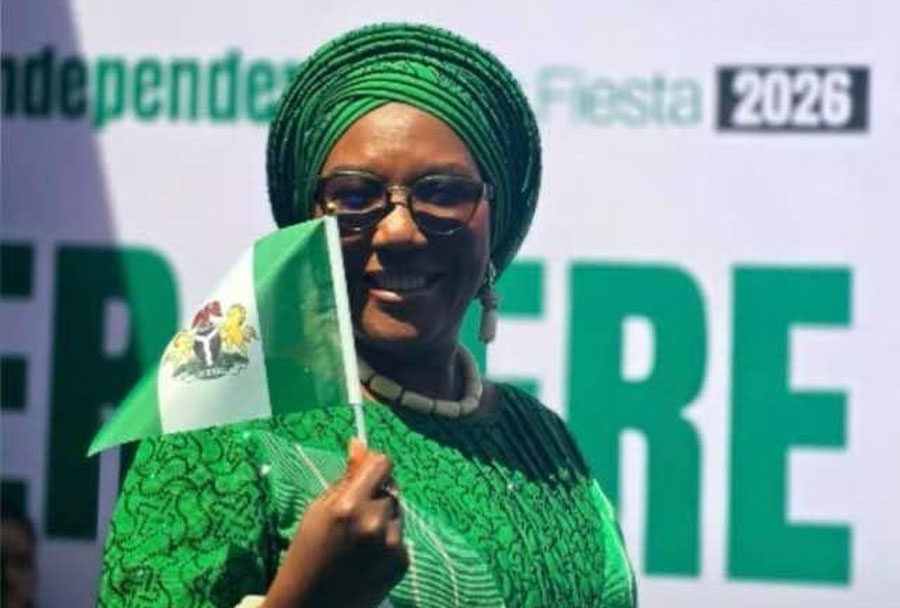
A speech delivered by Mrs Bolatito Ajibode, Convener, Independence Day Fiesta, at Landmark Events Centre, to mark Nigeria’s 66th Independence Anniversary
Nigeria is my country of destiny.
It is not a coincidence that I was born here. God had me in mind when He blessed this land.
It is not a coincidence that this prosperous land is populated by people of different cultures; hence, our tongues and tribes differ. We call it PRODIVA — Prosperity in Our Diversity.
The Lord finished the work of creation and should be praised for loading us with the benefits of arable soil, mineral-rich land, solid minerals, oil and gas, and a market of over 200 million people. Many are yearning for these endowments and have come to our land to explore and exploit them.
Our endowments are beckoning on us for exploration. The few who have taken up the challenge, like Dangote, are smiling to the bank by converting our huge deposits of limestone into cement and refining our crude oil into petroleum products. He has taken Nigeria to the global stage, and we are all proud of him as our brother.
We, however, need more Dangotes.
Last year, we had our maiden edition at Muri Okunola Park, where we challenged ourselves to do more by building a side hustle in addition to our 9-to-5 jobs.
We urged ourselves to:
- Start small from where we are and grow.
- Explore the vast resources of this country to create wealth.
I am happy to say that we have positive testimonies from those who have started their side hustles, making extra income and contributing to the total income of Nigeria.
READ ALSO:
- Ex-APC Women Leader Found Dead With Throat Slit in Bauchi
- Supreme Court Ruling: INEC Moves to Clarify Fate of 2027 Candidates
- Omokri Defends Tinubu Over Pension Record, Faults Linking President to 89-Year-Old’s Death
Having laid a solid foundation last year, our goal this year is to cement it and contribute, individually and collectively, to the per capita income of Nigeria.
The desired growth of Nigeria can only come as we add value to the wealth of the nation in our own little corners.
That is the only variable we can control because the other variable — population — is outside our control.
We are typically excited about our young population and proudly rejoice that Nigeria is projected to become one of the five most populous countries in the world by 2050.
The question we need to ask is: How do we house, feed and clothe this growing population?
Certainly, having a young population is good, but it can also become an easy path to poverty and insecurity if we are not deliberate about growing national wealth and baking a bigger national cake.
Yes, our business environment is tough and unstructured. It raises the entry barrier because many are not ready to weather the storm. Those who are able to stay and thrive in this tough business environment have overcome the challenges, and some of them are here with us today.
A deep appreciation to our keynote speaker, Mrs Chinwe Ezenwa, the Managing Director of Lee Look Bags, who has been in the business of Ankara and Aso-Oke fabric bags for four decades. We look forward to drinking from her fountain of knowledge this morning.
Also in our midst is our brother, Mr Ola Awakan, the Director-General of the Nigerian Tourism Development Authority, who has used literature and poetry to deliver compelling indigenous stories from the heart. He has come with his team all the way from Abuja to honour us.
During the panel session today, we will hear the success stories of our panelists and also interact with them during the networking session.
In line with the theme of the year, we would like us to consider:
- Low-hanging fruits in our business environment;
- Low-technology business ideas;
- Businesses that are authentic and unique to us;
- Commercialising our indigenous values and ideas in food, clothing, arts and drama.
We need to own and dominate this space!
Today, we have in this room great men and women who have taken these indigenous values and ideas to the global stage.
They will share their PRODIVA stories and inspire us.
I believe their insightful stories will also challenge the invited students from Yaba College of Technology, the University of Lagos and Lagos State University.
The idea is to catch them young. 😍
Please note: the Independence Day Fiesta is not about storytelling alone. We are also going to have fun.
We have about four performances, including spoken-word poetry, drama, drumming, music performances and Naija music with good lyrics.
We will also break out for lunch to enjoy various Naija cuisines.
It is my prayer that, at the end of the session, we will all have our takeaways and begin to water the seed of prosperity in our diversity.
Once again, thank you for coming. Please relax and have fun.
Nigeria — My Country of Destiny
Opinion
Fifty Years After “Africa Has Come of Age”: A Personal Reflection on Nigeria’s Silence at the United Nations
By Disu Kamor, Executive Chairman, Muslim Public Affairs Centre (MPAC)
There are moments when a nation’s silence says more than its speeches. Last week at the United Nations was one of them. For years, I have introduced myself in rooms around the world as a Nigerian, and I have done so with a certain inherited pride. Not pride in our perfection, but pride in our posture. We were the country that once told the world, at great cost to itself, where it stood. We were the country that severed ties, nationalised oil companies, lost contracts and risked isolation because we believed that freedom in Southern Africa and freedom in Palestine were not foreign causes, but our own.
So when the organisation I chair, the Muslim Public Affairs Centre, issued a press release last week asking why Nigeria’s address to the 81st United Nations General Assembly could not find a single sentence for Palestine, I felt it personally, not just institutionally. Because twelve months earlier, at UNGA 80, Nigeria had not whispered. It had spoken, and spoken clearly. It spoke about the devastation in Gaza. It condemned violence and aggression against innocent civilians. It looked the world in the eye and declared, “without stuttering and without doubt,” that a two-state solution remained the path to lasting peace, and that the people of Palestine are not collateral damage but human beings, equal in worth, entitled to the same freedoms we take for granted. MPAC’s release laid out the record: last year’s clarity, this year’s erasure, the Security Cooperation Agreement with Israel signed quietly in August 2025 in between, the Joint Commission, the intelligence deals, and our three demands — join South Africa’s genocide case at the ICJ, make security cooperation conditional on accountability, and next time nations walk out when Netanyahu speaks, let Nigeria walk with them. I stand behind every word.
But this article is not that press release. This is what that silence has weighed on me as a Nigerian who was raised on the memory of a different Nigeria, and who fears we are now spending down a moral inheritance we did not earn, and will struggle to recover once it is gone.
Fifty years ago this January, a young Nigerian Head of State stood before his fellow African leaders in Addis Ababa and said four words that outlived him by half a century. General Murtala Mohammed, addressing an Extraordinary Session of the Organisation of African Unity convened to decide where Africa would stand on Angola’s liberation, rejected a letter from the American government pressuring Nigeria to side with apartheid South Africa. “Africa has come of age,” he told them. Thirty-four days later, he was dead, assassinated in a coup attempt, having spent the last months of his life turning that declaration into policy rather than leaving it as a line for historians to admire.
READ ALSO:
- Family seeks N10m to free kidnapped newlywed, other victims
- Trump launches ‘Super Intelligence Force’ to keep US ahead in AI race
- NDLEA intercepts N5bn worth of drugs at ports, arrests Milan-bound businessman
This year, the fiftieth anniversary of that declaration, I watched Nigeria’s national statement at the United Nations General Assembly run to twenty-four paragraphs — Security Council reform, climate finance, artificial intelligence, debt architecture, counter-terrorism in the Sahel — without once naming Gaza, or Palestine, or the two-state solution Nigeria itself had insisted on just a year before. I do not think that is a small thing. I think it is a rupture. I grew up understanding Nigeria as a country that put its resources where its convictions were, not merely its rhetoric. This is not nostalgia. It is documented history, and it deserves to be told again because too few Nigerians under fifty have ever been taught it.
Under Murtala and his successor, Olusegun Obasanjo, Nigeria funnelled oil revenue to liberation movements across the continent — the MPLA in Angola, ZANU and ZAPU in Zimbabwe, the ANC and PAC in South Africa, SWAPO in Namibia. Nigeria led the rejection of South Africa’s Bantustan system at the UN General Assembly in 1975 and donated $500,000 to SWAPO, granting it office space in Lagos. When Obasanjo’s government discovered that Nigerian crude, sold through British Petroleum, was indirectly reaching apartheid South Africa’s refineries, Nigeria nationalised BP’s entire Nigerian operation in 1979 rather than let its oil serve a racist regime even by accident. When Margaret Thatcher’s government moved to ease sanctions on Rhodesia, Obasanjo pulled British contracts from Lagos’s Apapa port and threatened to leave the Commonwealth, pressure credited with contributing to Robert Mugabe’s election victory in 1980. Nigeria went on to chair the UN’s Special Committee Against Apartheid until 1994.
And on Palestine specifically, Nigeria did not merely speak. It paid a real, sustained cost. When the Yom Kippur War broke out in 1973, Nigeria, in solidarity with the Organisation of African Unity and the Arab world, severed diplomatic relations with Israel entirely. That severance held for nearly two decades, across multiple changes of government, before ties were restored in 1992. An entire generation of Nigerian diplomats came of age in a country that had decided that Palestinian self-determination was worth nineteen years of severed ties.
That history is what makes this year’s silence so difficult to bear, because what Nigeria was silent about is not abstract. It is a living catastrophe now in its eighth decade. It began with the Nakba in 1948, when some 750,000 Palestinians were expelled from their homes during the creation of the State of Israel. What followed in 1967, after the Six-Day War, was a military occupation of the West Bank, including East Jerusalem, and the Gaza Strip that has never ended. For fifty-eight years, Palestinians in those territories have lived under military law while Israeli settlers in the very same land live under civil law, their settlements expanding, their roads segregated, their movement controlled by checkpoints and walls. In July 2024, the International Court of Justice declared that this occupation itself is unlawful, that it amounts to racial segregation and apartheid, and that it must end.
Within that occupation, violence has never been episodic. Palestinians remember Deir Yassin and Tantura in 1948, Khan Younis and Rafah in 1956, Sabra and Shatila in 1982, when Israeli forces encircled Palestinian refugee camps in Beirut while allied militias slaughtered thousands, the Ibrahimi Mosque in Hebron in 1994, Jenin in 2002, and the successive wars on Gaza in 2008-09, 2012, 2014 and 2021, each leaving thousands dead, overwhelmingly civilian.
READ ALSO:
- Madonna University expels final-year nursing student, suspends 14 over dance video
- JUST IN: WAEC appoints Suleiman Kum as new Nigeria National Office head
- Ojudu Reveals How Tinubu, He Narrowly Escaped Death In Third Mainland Bridge Crash
But what has happened in the last three years has no parallel. Since October 2023, Gaza has endured a war that UN agencies and courts now describe in terms of genocide. In less than three years, more than 65,000 Palestinians have been killed, the majority women and children, and more than 120,000 wounded. Almost the entire population of 2.3 million has been forcibly displaced, many ten times over. The United Nations has documented the systematic destruction of hospitals, of every university in Gaza, of schools sheltering displaced families, of mosques, churches, bakeries and water plants. UN experts, Amnesty International, Human Rights Watch and Israeli human rights groups have documented the blocking of food, water, medicine and fuel as a weapon of war. It is this record that led South Africa to bring its case under the Genocide Convention to the International Court of Justice in December 2023.
And for the first time, accusation has moved to indictment. On November 21, 2024, the International Criminal Court issued arrest warrants for Prime Minister Benjamin Netanyahu and former Defence Minister Yoav Gallant for war crimes and crimes against humanity, including using starvation as a method of warfare, murder, persecution and intentionally directing attacks against civilians. The sitting prime minister of a state with which our government signed a Security Cooperation Agreement in August 2025 is now wanted in 125 member states.
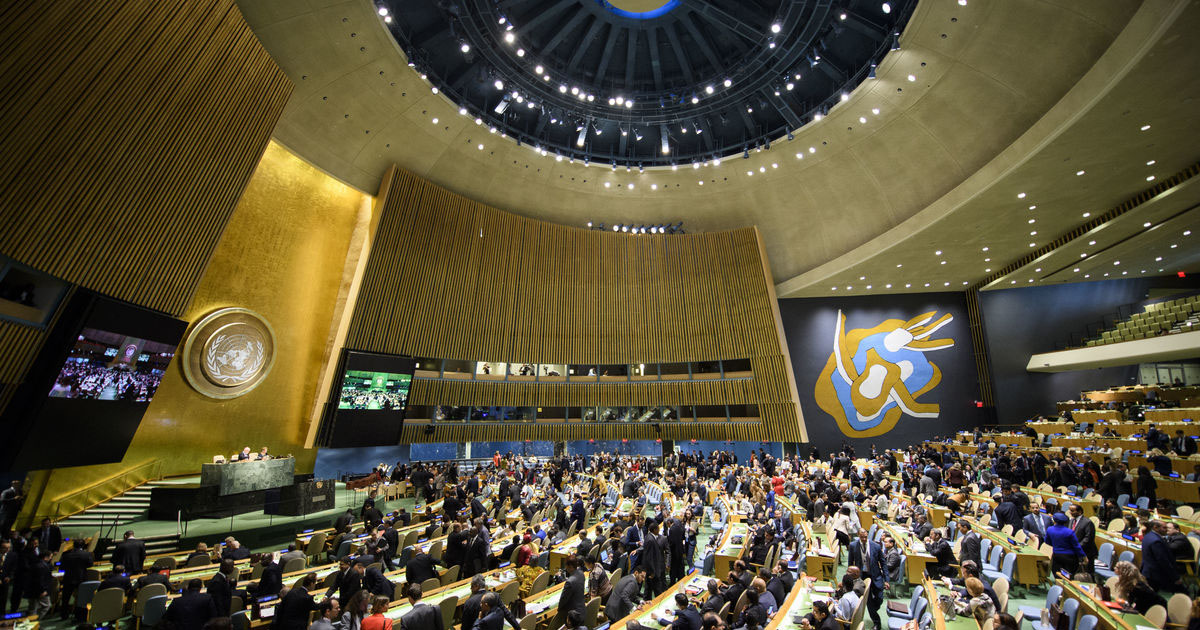
I cannot reconcile the Nigeria under Murtala and Obasanjo with the one that could not find a single sentence for Palestine this year while, rather unbothered, it got busy signing discreet pacts and agreements with an apartheid and genocidal state as recently as March 2026. I cannot reconcile it with the fact that when dozens of nations walked out of the General Assembly hall this year as Netanyahu spoke, Nigeria’s delegation remained seated.
And it was not just any walkout. When the footage came out, it was Africa itself that stood up. South Africa, Senegal, Botswana, Uganda, Namibia, Kenya, Ghana, Angola, Niger, Madagascar, Mozambique, Chad, Central African Republic, Liberia, Eritrea, Lesotho, Eswatini, Equatorial Guinea, both Congos — the Republic of the Congo and the Democratic Republic of the Congo — were among the African countries that walked out or refused to sit through that speech. These are not marginal states. They include countries that fought apartheid alongside us, countries we trained, funded and housed. If Africa has come of age, as Murtala said fifty years ago, then Africa showed it last week. Nigeria, the country that once taught the continent how to stand, chose to remain seated.
I do not say this to manufacture hostility toward any state. Murtala’s generation did not act out of hostility either. They acted out of principle, and they paid whatever price principle demanded. What troubles me is the gap between the courage that generation had when the cost was real, and the caution my generation has settled for now that the cost is merely inconvenient. MPAC’s press release said what needed to be said institutionally. But I wanted to say this as one Nigerian to others: I was raised on the memory of a country that told the most powerful nation on earth it would no longer take orders from anyone. Fifty years later, having watched genocide beamed live on our screens, at the world’s most powerful podium, we managed silence instead.
Let me be clear about what this article is not calling for. It is not a call for Nigeria to once again funnel its oil revenue into the Palestinian cause of self-determination, as we did for Southern Africa five decades ago. The world has changed, and Nigeria’s burdens at home are heavy enough. What this article calls for is simpler and more urgent: that Nigeria remembers that its moral standing is diminishing due to its romance with a state that is considered a pariah by the vast majority of the world’s nations, and finds the courage to re-earn it. A nation does not inherit its moral standing and build on it through immoral dealings with a state openly engaged in war crimes and genocide, and then react with silence on the world stage. It re-earns it, decision by decision, generation by generation. Murtala’s generation earned theirs at real cost — with severed ties, nationalised assets, lost contracts and, ultimately, blood. They did not do it for applause. They did it because they understood that justice could not be seasonal. They did it also for the simple reason that, as Rev. Dr. Martin Luther King Jr. wrote in his “Letter from Birmingham Jail”, “Injustice anywhere is a threat to justice everywhere.” I am not yet ready to accept that my generation should spend that inheritance in silence. And I do not believe most Nigerians are either, if they are given the full record and asked to judge for themselves.
Lastly, what is at stake here is bigger than Palestine alone. It is the independence of Nigeria’s foreign policy itself. That policy must never be outsourced, subcontracted, or dictated by any foreign capital, however powerful. It must be independent of foreign control and influence, and must reflect, first and foremost, the interests, the vision and the values of the Nigerian people. It must draw from the long history of our nation’s reputation — not as a follower of convenience, but as a champion of just causes.
What worries many Nigerians today is the growing impression that our foreign policy is no longer guided by that long, principled history, but is now at the mercy of a few individuals who have prioritised personal friendship and the influence of Israel over Nigeria’s reputation and historical values. When private affinities and lobbying networks begin to shape national statements at the United Nations, when security deals are signed quietly while the National Assembly and the public are kept in the dark, we have departed from the Murtala doctrine. Foreign policy ceases to be Nigerian policy; it becomes the project of a few. Murtala understood this danger when he tore up that letter from Washington. Obasanjo understood it when he chose principle over BP. That is the tradition I am now calling on us to honour, not abandon. Nigeria must return to a foreign policy that is truly Nigerian — independent, people-centred, and anchored in justice.
-

 metro2 days ago
Tragedy Strikes FMC: Medical Director Loses Two Daughters—A Doctor and a Pharmacist—Within 48 Hours
-
 metro2 days ago
Transporters Urge IGP Disu to Arrest Illegal Highway Tax Collectors
-
 Politics2 days ago
2027: Soludo Govt Accuses Peter Obi Of Plot To Destroy APGA
-
 metro2 days ago
Army, DSS, Amotekun Kill ISWAP Commander Planning Attacks in Southern Nigeria
-
 metro3 days ago
Kidnappers torture abducted corps members, slash ransom to N100m
-
 News2 days ago
BREAKING: Many Feared Dead as Helicopter Crashes in Ondo Community
-
 metro2 days ago
Ondo Air Tragedy: Soldiers, Families Among 32 Killed In NAF Crash
-

 metro2 days ago
Grand Chief Imam of Oyoland Urges Rabitah 1964 to Regulate ‘Yorubaland’ Islamic Titles