

Opinion
Wasiu Ayinde: The shame of a nation (2)
Wasiu Ayinde: The shame of a nation (2)
Tunde Odesola
(Published in The PUNCH, on Friday, August 22, 2025)
Welcome, the ancient Land of Akoko beckons, where man lived in peace with nature until the day when the king, OlúfimoÀkókó, decided to let his wife into the secrets of Orò, forgetting the stern warning, “A woman is free to partake in Egúngúnfestival, she is free to partake in Gèlèdé festival, but the day she sets her eyes on Orò, she’s doomed!” Juju music legend, King Sunny Ade, amplifies this forewarning in his 1974 chart-bursting album, ‘E Kilo F’omo Ode’, crooning, “Awo egúngúnl’obirin le se, awo gèlèdé l’obirin le mo, b’obirin f’oju d’oro, oro a gbe! E kilo f’omo ode…”
Anyone who commits an unprecedented abomination, his eyes will witness an unexampled calamity, goes a Yoruba proverb captured thusly, ‘Eni ba se ohun ti enikan o se ri, oju re a ri ohunti enikan o ri ri’. Wasiu Ayinde’s ignominy at the Nnamdi Azikiwe International Airport, Abuja, was not a solitary case in the history of infamy. By its sheer repulsiveness, Wasiu’s àsàkasà ranks alongside the desecration of royalty by Oba Olúfimo Àkókó, a long time ago, when the eyes were at the knees.
But let’s be clear; the eyes were never located on the knees, literally. ‘When the eyes were at the knees’ is an imagery that explains the limited view, the eyes can see if they are embedded in the knees, as opposed to how far they can see when they are socketed in the head. ‘When the eyes were at the knees’ is a Yoruba expression which means ‘when there was little awareness’.
So, the story of Olúfimo Àkókó and his clingy wife, as documented in the Ifa corpus by Orunmila, dates back to ‘time immemorial’, with ‘time immemorial’ being the white man’s equivalent of ‘when the eyes were at the knees’.
According to the story rendered to me by the one and only Awise Agbaye, Prof. Wande Abimbola, the wife of Oba Olúfimo Àkókó knelt before the throne, saying, “My lord, I wish to know how the egúngún metamorphoses in the grove.” The bewildered king screamed, “Ha! No! Never! No woman sees the robing and the derobing of the egúngún. Èwò! Abomination!”
But the queen won’t take no for an answer. “Please, my lord,” she begged, cringing on her knees and blinking tears away from her eyes. For a minute, time and air froze between the king and the queen. “Uhmm!,” the kabiyesi exhaled, tilting his head to the left in thought as his horsetail sashayed in his right hand.
READ ALSO:
- EFCC hunts for Atiku’s son-in-law over money laundering
- Femi Otedola: I lost N200bn to oil crash, missed bets
- Court restrains police from summoning Nedu Wazobia over business dispute
“Okay, my queen. You will hide in my footstool. From there, you can watch the egúngún metamorphosis,” the king said. “Thank you, my king,” the happy queen rolled on the floor to the right and the left, in gratitude.
As planned, the ruler hid his queen in the footstool and placed his feet on it. The atmosphere was charged as different shades and sizes of egúngún sprouted in the grove and stormed out to the delight of the ‘moríwo’, egúngún adherents. The queen watched how the ‘visitors from heaven’ chanted and sang in guttural voices while performing the rites of passage from the grove to the outer world.
Paje-Polobi is an amazing egúngún in Oyo. Its chief priest, the Alagbaa, shouted, “Paje-Polobi o o o o!” The egúngún burst forth in its colourful attire, running and jumping, chasing and dancing…out of the grove. One after the other, various egúngúnemerged from the grove. Alapansanpa was resplendent, so also was Oloolu, followed by Ologbojo, a most fearsome egúngún.
No matter how long the egúngún festival lasts, the child of the Alágbáà will eventually return to eating cornmeal. So, the festival came and went. And, Akokoland looked forward to the egúngún festival next year, even as the incoming Oro festival looms around the corner.
The Akoko queen had long fancied the Oro festival. So, she went to the king and poured out her heart’s desire, cooing in soft tones the sagas that mythify Akoko in honour and glory. “Impossible!” the king boomed, “No woman sees the Oro!” The queen whimpered, “My lord, no one saw me in the grove of egúngún; how can anyone see me in the grove of Oro when I’m inside the protection of your footstool?”
“Woman, pray, this endeavour won’t kill you,” the king blurted out, “Ok, we’ll repeat the egúngún tactics.” “Thank you, my lord,” the daredevil smiled, eyed the king flirtatiously and sang his panegyrics.
The Oro deity is chauvinistic and patriarchal. On the first night of the Oro festival, spirits and gods are evoked to commune with the sons of man. In the custom of the grove, young oros engage in call-and-response chants. The first oro booms, “Ewe meje-meje ni ege ni! (Cassava has seven leaves)” But, instead of the chant reverberating in and outside the grove, it hardly left the mouth of the oro. “What is going on?” Oro disciples began to wonder. A second oro chants, “Ewe meje-meje ni…,” but the second oro couldn’t finish the chant. Clearly, something was amiss. The third Oro burst into the chant, “Ewe me…,” and stopped abruptly like a rat caught in a gum trap.
READ ALSO:
- 50 bodies recovered after Katsina mosque attack, search continues
- Nigeria’s FX reserves at $41bn highest in four years
- Israel pounds Gaza City ahead of ‘intolerable’ new offensive
The gods are angry. The chief priest rose, looked up and down, and brought out his kola nuts for divination. He threw them on the ground. None looked up. “There’s an intruder in the grove,” he declared. Wizened with age and wisdom, the chief priest sang, “Baye ba ye won tan, iwa ibaje ni won n wu. O difa fun Olufimo Akoko ti o fi aya re mo oro, a pe ita, ita o je, a pe oro, oro o mi titi; e jeka ye inu apere oba wo, e je a ye inu apere oba wo. Translation: When they become successful, they begin to misbehave. This is the Ifa tale of Olufimo Akoko, who showed the secret of Oro to his wife; we called ‘ita’, ita didn’t respond, we called oro, oro didn’t vibrate – let’s look into the footstool of the king!)
Therefore, the footstool was flung open. The queen was brought out. A sword was unsheathed before her eyes, but she never lived to see it sheathed – ‘won ti oju e yo ida, won ti eyin e kiibo’.
Abimbola, a former vice chancellor of Obafemi Awolowo University, concludes in Yoruba, “Wasiu has become successful; he is now misbehaving. When you become successful, you should be careful. The plane would have cut his head off like the wife of Olufimo Akoko was beheaded. May our land not witness evil. Wasiu should be careful.”
What is in a name? Wasiu calls himself Arabambi, a name similar to Olubambi, the name of Sango, the Yoruba god of thunder and lightning, whose death was wrapped in mystery and controversy. Some say Sango committed suicide by hanging, but some say he never did. Abimbola said, “It’s a lie. Sango never committed suicide. It’s not in the Ifa corpus. The lie that he committed suicide was spun by the Anglican Mission to malign the memory of Sango. Sango’s name was not Arabambi; he was Olubambi.”
Well, Wasiu is a music icon and cultural asset to Nigeria, but may he not use his hands to undo himself, I pray. I say this prayer because a psychoanalysis of Wasiu’s actions reveals an expert in the art and science of arrogance and bootlicking. In the video of his disrespectful telephone conversation with President Tinubu, Wasiu put his left hand behind him – a sign of respect – when he talked to the President respectfully, using the pronoun ‘e’, but he put the same hand in his pocket when he talked to the President disrespectfully, using the pronoun ‘o’, like he was talking to his band boy.
READ ALSO:
- Saudi Foreign Ministry accuses Israel of ‘genocide’ in Gaza
- US court overturns $464m civil fraud penalty against Trump
- Ooni: Britain recognised Alaafin as head of Yoruba, says Oba Owoade
In his unbashful character, Wasiu, in an old video, boasted on stage that he could stop a traveller from landing at the Murtala Muhammed International Airport, Lagos: “Emi gangan, walahi, ti n ba ni o ni de Murtala, o le wo Murtala; eniti o mo oba lo n fi oba sere o.” Jatijati.
The conciliatory way the police, NCAA, FAAN and Keyamohandled Wasiu’s case, in contrast to the way authorities hurriedly bundled the daughter of a nobody, Emmanson, into prison, paints the picture of tigers tearing at the godfatherlessand a pride of lions caressing a bull. The Federal Government’s appointment of Ayinde as aviation security ambassador without the conclusion of the investigation amounts to an abuse of justice.
Some argue that Wasiu should not be brought to justice because he had tendered an apology. If an apology were the price for freedom for offenders, there would be no convicts in Nigerian prisons. R. Kelly and P. Diddy, by music achievements and success, are far better than Wasiu. But they are behind bars in the US today for criminal offences. If ‘I’m sorry’ could fetch them freedom, both would churn out Grammy-winning monster hits. If ‘I’m sorry’ could fetch ex-CBN Governor, Godwin Emefiele, freedom, the 64-year-old banker would use numbers to write “I’m sorry”. Despite saying sorry, the troublemaking singer, Portable, was arrested and made to pay fines when he beat up Ogun State environmental officials. He also corrected the building infraction he committed.
With a brand of Fuji relying more on beats than pearls of wisdom, Wasiu has endeared Fuji to the younger generation who prefer form to substance, but with his airport show of shame, he has dragged Fuji into the mud of shame.
Can Wasiu ever change? I doubt it. In his first show after the meltdown, Wasiu, in a most unrepentant manner, referenced the airport saga as ‘isele kekere’ (a minor incident), in a song in which he was begging for forgiveness. To say Wasiu cannot replicate his Abuja dishonourable display in countries such as the US, UK, Canada, etc., is far-fetched. He cannot do such in the Republic of Benin. I doubt if he could do that in Anambra, Abia, Rivers, etc. Cowards bully in their areas of influence.
One thing still beats me in all of this Fuji House of Commotion; it is the shocking realisation that some passengers on the Value Jet plane have not come together to file a class action lawsuit against Wasiu for endangering their lives. If I were on that plane, I would personally and jointly sue Wasiu, who needs to be taught a lesson.
Can Wasiu ever change? Yes, when the cock grows teeth.
* Concluded.
Email: tundeodes2003@yahoo.com
Facebook: @Tunde Odesola
X: @Tunde_Odesola
////////////////////////////////////////
NB: This column goes on a break from next week.
See you!
…
Wasiu Ayinde: The shame of a nation (2)




Opinion
2027: Competence, Not Zoning, Should Decide Nigeria’s Next President — Imasuagbon
Nigerians should look beyond ethnicity, region and the longstanding debate over rotational presidency when choosing the country’s next leader, according to a chieftain of the African Democratic Congress (ADC), Kenneth Imasuagbon.
The former Edo State governorship aspirant said the priority ahead of the 2027 election should be finding a president with the ability to confront Nigeria’s economic, security and infrastructure challenges.
Speaking to journalists in Benin, Imasuagbon argued that presidential rotation is not a requirement of the Nigerian Constitution and should therefore not outweigh the question of competence.
He said voters should be more concerned about replacing poor schools with better ones, improving healthcare and addressing hardship than debating where the next president comes from.
Imasuagbon specifically appealed to voters in the South to support former Vice President Atiku Abubakar, who is contesting the 2027 presidency on the ADC platform.
According to him, Atiku has demonstrated the experience and determination needed to improve the country, describing the former vice president as someone capable of promoting national unity and fairness.
He also accused the Bola Tinubu administration of worsening economic pressure through policies including the removal of fuel subsidy, while expressing concern about the condition of roads, electricity and other infrastructure.
Imasuagbon argued that the next administration must focus on practical improvements in areas such as power, transportation, employment, security and public services.
The ADC chieftain also dismissed the idea that the ruling All Progressives Congress (APC) would automatically benefit from its incumbency advantage in 2027.
He maintained that the electorate ultimately determines the outcome of an election, arguing that voters could change the political direction of the country if they were determined to do so.
Imasuagbon further criticised what he described as regional and ethnic considerations in the distribution of political appointments and opportunities, insisting that the next president should give Nigerians across different parts of the country a sense of belonging.
His comments come as political parties and their candidates intensify preparations for the 2027 presidential election.
Opinion
Lesson from Dotun Oladipo’s Brave Daughters, by Bamidele Johnson
Lesson from Dotun Oladipo’s Brave Daughters, by Bamidele Johnson
I hope to grow old. I want to see my kids become real adults, find their own feet, make mistakes, recover from them, and perhaps one day complain that their own children are giving them grey hairs. I want that plainly stated before anything else, as everything that follows might read as a man agreeing to an early exit rather than a man simply being honest about the odds.
I want the decades. I want to become the grandfather who repeats the same stories until nobody bothers correcting him anymore. But wanting a thing and being granted are different things. The last year has made that difference harder to ignore than I would like. I have lost many friends recently to keep thinking that optimism is my natural resting state. Some of these men had better blood pressure than mine, better habits, better everything that is supposed to count. It did not save them.
There is no formula I know that reliably separates the men who make it to 70 from those who do not. Anyone who says he knows one is selling something. So, I do not assume that old age is an already booked destination. Even if I once did, which I doubt, the last three years have cured me of such an illusion. As such, I treat it as a hope rather than an expectation, and I have found that a more honest way to live.
It is exactly why I want something placed on record now, while I am still able to place things on record, rather than leave it for people to guess what my wishes were in the fog of a funeral week. If I do not make old bones, my children are not to be asked to read tributes at my funeral. Not one line, however short, however lovingly written.
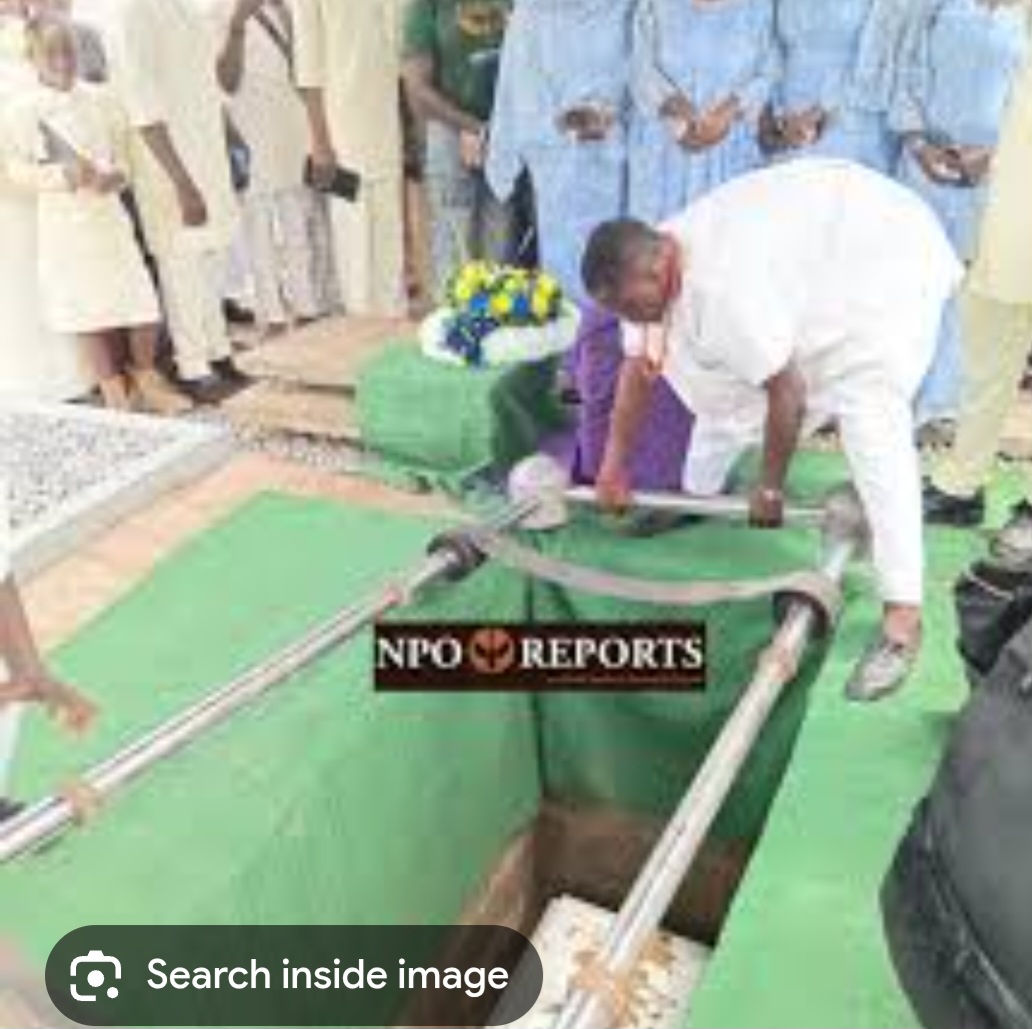
This, for me, was settled today rather than re-opened. At Dotun Oladipo’s funeral service, his three daughters took turns to read their tributes to their dad, and I found myself watching them with awe. There was a kind of strength in them that I do not possess. It is the strength needed to stand in front of a hall brimming with grieving adults and speak about a man they have just lost. Forever. Strength, however, is not the same as ease. I could see plainly what that strength was costing them as they read. Their voices caught. Their composure held and then did not hold and then held again through sheer will.
In front of them, in the pews, men and women considerably older than them came undone in ways the girls themselves were somehow managing to resist. I went mightily close. Some of the sobbing was quiet, the type people try to fold into a handkerchief. Some of it was not quiet at all, the kind that announces itself whether or not you want it.
Those young women honoured their father with a grace that is beyond me. What they did was astonishing. So, what I am attempting is an observation of a custom I have now watched wound people. This was not the first time I had watched this particular ritual extract more than it should from people already running on fumes. I saw an earlier and harder version of it at a friend’s wake back in 2015.
The first son was called forward to read his father’s tribute, and he could not do it. He tried, but the words would not come, and he stood there in front of a crowd of mourners, with his grief simply refusing to organise itself into sentences. The officiating minister, rather than releasing him from the task, urged him to continue. I sat fizzing with sorrow and ire. He could not go on and, eventually, the minister accepted, but not before insisting a while longer than it should have reasonably taken. His younger brother was called up next, presumably on the theory that if one grieving son could not manage it, maybe another one could. He flunked it in the same way. Grief does not distribute itself more conveniently among siblings just because a programme has been printed and needs to be followed.
I have turned that memory over many times since, trying to work out why this part of the rites is treated as mandatory in the first place. I have not found a satisfying answer. Maybe it comes from a belief that a child’s words carry more weight than anyone else’s, which may even be true, but weight is exactly the problem when those carrying it are struggling to hold themselves together with nothing but adrenaline and the fear of dissolving in public.
Maybe it is simply inertia, the reason we still do a hundred things at funerals that nobody can explain the original purpose of. Either way, I have stopped looking for the justification. I no longer think one exists that is good enough to weigh against what I watched happen to that boy in 2015.
So, let this stand as my instruction rather than my preference, the kind of thing I would rather state plainly now than leave for my children to infer later from how uncertain I sound when the subject comes up in passing. If I do not get the old age I am hoping for, my children will not be asked to read a single word over my body. Someone else can speak for me. A friend, a stranger with a steadier voice and a smaller stake in the loss, anyone whose grief will not be quite so total that standing upright becomes almost impossible.
My children, of course, will sit in front and fall apart if that is what the day requires of them, but without the microphone. That, at least, is one small mercy I intend to arrange for them while I am still here to arrange it.
Dotun deserved every bit of the send-off his daughters gave him today, and I suspect he would have been the first to tell them to sit down and let someone else carry the weight for a while. He did not get a say in that, as none of us ever do once we are the ones being spoken of rather than the ones speaking. Rest well, Dotun. You raised three young women whose strength I will not soon forget. That alone says everything worth saying about the man you were.
Opinion
‘Tinubu Will Win Again in 2027’ — Charismatic Bishops’ Secretary
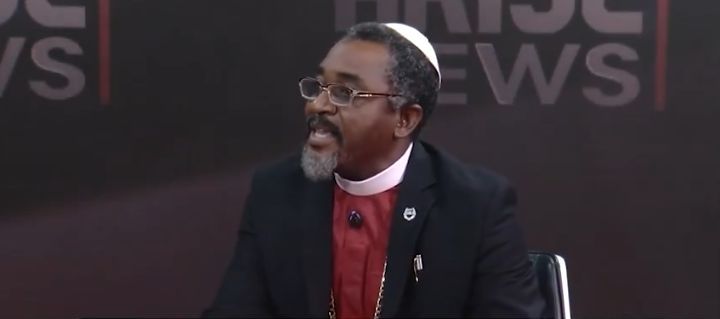
‘Tinubu Will Win Again in 2027’ — Charismatic Bishops’ Secretary
A senior Nigerian cleric, Archbishop Chivir Chianson, has declared that President Bola Tinubu will retain the presidency after the 2027 general election, attributing the prediction to a message he said came from God.
Chianson, who serves as Secretary General of the Charismatic Bishops’ Conference of Nigeria, made the statement while appearing on Arise Television on Saturday.
Rather than basing his prediction on political calculations, the archbishop said his confidence came from what he described as the prophetic role of bishops.
He maintained that the conference had previously spoken about Tinubu’s political future based on what he said was divine revelation and that the President would return for another term.
Chianson also predicted that Tinubu’s performance would improve if he wins the 2027 election.
READ ALSO:
- DSS warns Osun churches, mosques, markets over alleged terrorist attack plot ahead of 2027
- ‘Tinubu Will Win Again in 2027’ — Charismatic Bishops’ Secretary
- Fake miracles, bogus grants: How clerics allegedly fleece Nigerians of millions
Addressing the political opposition, the cleric said the bishops could not be blamed if rival parties failed to unite or organise themselves effectively ahead of the election.
He also sought to clarify the position of the bishops when dealing with government, saying their role in speaking truth to power did not mean they should approach political leaders with hostility or disrespect.
According to him, the Constitution, alongside their religious convictions, should guide how they engage the President and the country.
Chianson said he was sufficiently confident in his prediction to promise that he would return to the Arise TV studio after the 2027 election, when he expects the result to demonstrate that the bishops’ prophecy was correct.
His comments add a religious dimension to the increasingly active political conversation surrounding the 2027 presidential race.
‘Tinubu Will Win Again in 2027’ — Charismatic Bishops’ Secretary
-

 metro3 days ago
Ondo Herbal Drink Tragedy: Survivor Vows Never to Drink Again as Death Toll Tops 30
-

 Business3 days ago
Dangote: ₦525 Refinery Shares Could Rise to ₦10,000
-

 metro3 days ago
Sokoto Cleric Stabbed Twice in Neck After Juma’at Prayer, Attacker Killed
-

 News1 day ago
SERAP Threatens Legal Action Over ₦126bn INEC Electoral Funds
-

 metro3 days ago
MURIC fires back at Peter Obi: Forget Sallah ceremony, free Nigerian Muslims
-

 metro3 days ago
Abia Police Arrest Father, Three Others Over Alleged Attempt to Sell 16-Month-Old Daughter
-

 International3 days ago
Trump Tells Supporters to ‘Cheat Like Hell’ Ahead of US Election
-

 metro3 days ago
FG Targets 2 Million Creative Jobs by 2030