

Opinion
Farooq Kperogi : October surprise in American presidential elections
Farooq Kperogi : October surprise in American presidential elections
Several faithful readers of this column who have followed it from the mid-2000s in the Weekly Trust have asked me to spice up my columns with occasional commentaries on American politics and culture, which was the column’s dominant thematic preoccupation in its earliest incarnation.
This year’s presidential election offers an opportunity to do that. This week I want to explore a phenomenon called the “October Surprise” in American presidential elections about which I had written 16 years ago when Barack Obama and John McCain squared off.
An “October Surprise” is any dramatic last-minute event, typically in October but occasionally a little later than October, that swings the election to the disadvantage of a leading candidate. Such dramatic events are believed to have the potential to influence the outcome of the election by swaying public opinion or shifting the narrative around the candidates.
October surprises symbolize the unpredictable nature of the final stretch of the presidential campaign and the high stakes involved in influencing the electorate.
Before talking about what this presidential election year’s October Surprise will be, I want to reference previous notable “October Surprises” and how they influenced the outcome of past elections.
The term “October Surprise” was coined during the 1980 presidential election between Ronald Reagan and Jimmy Carter (the only president my state of Georgia has produced). A year before Election Day, radical Iranian students had invaded the U.S. Embassy in Tehran, Iran, and held the Americans they found there hostage.
President Carter worked throughout the campaign to secure the release of the American hostages during which eight American servicemen were killed.
READ ALSO:
- Nigerian pastor dies during ‘fasting and prayer’ on Abuja mountain
- Hacker takes over Tinubu’s minister WhatsApp number
- Court grants N5m bail to whistleblower, PIDO
According to the Associated Press, “Critics say the Reagan team was so concerned that Carter would gain a boost by winning their release just before the election, that his campaign manager and others negotiated privately with the Iranians to ensure that did not happen.” This cost Carter the 1980 election.
But before October Surprise became entrenched in America’s political lexicon beginning in 1980, it happened eight years earlier. In 1972, according to American presidential historians, President Richard Nixon’s administration announced a potential breakthrough in the Vietnam peace talks, which bolstered Nixon’s re-election prospects. The war was a sticking point in the country.
During the 2000 presidential election, the October Surprise was a damning revelation that George W. Bush had been arrested for driving while he was drunk. It’s called DUI (i.e., driving under the influence of alcohol or drugs) here. It negatively impacted his image among voters, which probably caused him to lose the popular vote—and only narrowly win the Electoral College vote.
Bush became president only because of America’s strange, archaic, and convoluted system of electing presidents, which deprives voters of the opportunity to directly elect their presidents. He was declared president because he won the then battleground state of Florida by 537 votes out of nearly six million cast, which gave him the state’s Electoral College votes.
In the final weeks of the 2004 election, all the major polls predicted that John Kerry would defeat Bush. He was a bumbling, incompetent president who was very unpopular.
Then Osama bin Laden allegedly issued a videotape that criticized Bush and warned U.S. voters that “your security is in your own hands” in the election.
“It changed the entire dynamic of the last five days,” Kerry told newsmen in 2008. “We saw it in the polling. There was no other intervening event. We saw the polls freeze and then we saw them drop a point, because all the security moms, it agitated people over 9/11.”
There was also an October Surprise in the 2008 presidential election that nearly torpedoed Obama’s lead and punctured his campaign’s overweening confidence. On October 30, 2008, conservative British newspaper TimesOnline broke the news of Obama’s late father’s half-sister, identified as Zeituni Oyango, living in the United States illegally and that she first came to the U.S. on the invitation of Obama.
The woman was mentioned in Obama’s best-selling autobiography Dreams From My Father.
She was invited by Obama to the United States to witness his swearing-in as a U.S. senator. She returned to Kenya after Obama’s inauguration and came back again on her own. She applied for asylum, but her application was rejected and was ordered to be deported back to Kenya.
READ ALSO:
- 87 new SANs to be sworn in Monday
- Proprietor’s 3 children die after eating suspected poisoned beans
- Why Bobrisky was given special accommodation – Prison experts
But she somehow escaped and had been living in the slums of Boston. The TimesOnline story initially did not gain traction in the United States until the Associated Press pounced on it and added a fresh dimension: that Obama’s aunt was not only here illegally but had contributed money to the Obama campaign, which violates America’s campaign laws, which stipulate that only U.S. citizens and legal permanent residents can contribute to political campaigns.
The news dramatized Obama’s “otherness” in more concrete ways than the McCain camp had tried vainly to do. Because AP’s reporting showed that the woman contributed up to $265 to the Obama campaign even though she was neither a U.S. citizen nor a lawful permanent resident, she helped to feed the Republican Party-inspired allegations that Obama’s unprecedented financial buoyancy was consequent on his receiving illegal donations from non-Americans.
What saved Obama was that Sarah Palin, McCain’s running mate, fell for a cheap prank by two well-known Canadian comedians by the names of Marc-Antoine Audette and Sebastien Trudel who go by the stage name “the Masked Avengers.”
They put a call through to Sarah Palin, which she picked. One of the comedians pretended to be then French president Nicholas Sarkosky. Palin believed him. And she went on for over 5 minutes discussing inane issues with the “French president.” The conversation further betrayed her shallowness and ignorance of foreign policy issues.
This dominated the news cycle days before the election. Sarah Palin’s inability to detect that she was being tricked even in the face of so many red flags during the conversation had the effect of canceling out the scandal of Obama’s aunt living illegally in the US and making illegal donations to Obama’s campaign. (Obama’s aunt later became a legal permanent resident in 2010 but died four years later).
Finally, in the 2016 presidential election, FBI Director James Comey announced that a renewed investigation had been launched into Hillary Clinton’s email practices. This became a major talking point just 11 days before the election, which some argued influenced the final vote. Although she defeated Donald Trump by three million votes, America’s Electoral College system caused her to lose the presidency.
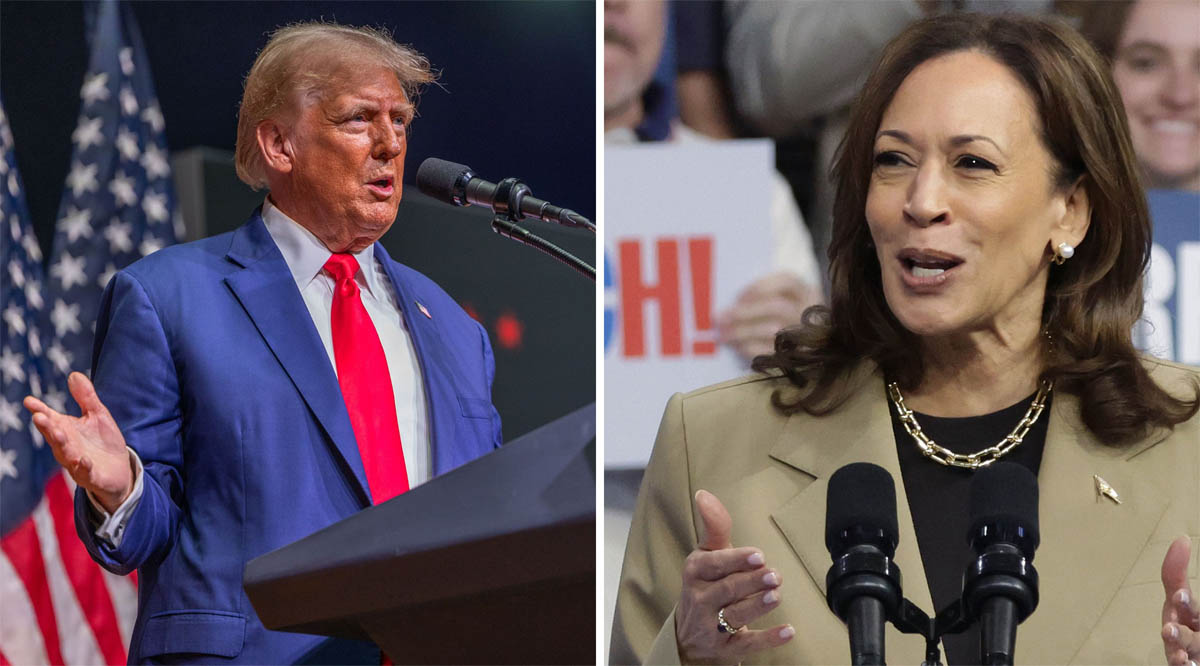
So what might be the October Surprise in this year’s presidential election? It’s hard to tell, particularly because Donald Trump is not a conventional candidate. He is the most morally flawed, most openly racist, and most explicitly psychologically damaged presidential candidate America has had in recent memory. Yet nothing seems to stick to him.
He once boasted that he could murder someone in broad daylight in the streets of New York and nothing would happen to him. He is what Americans call a “Teflon candidate.” Teflon is a substance used to cover the surface of cooking utensils, etc. in order to prevent extraneous substances from sticking to them).
If any candidate should be fearful of an October Surprise, it should be Vice President Kamala Harris, whom polls favor to win both the popular vote and the Electoral College vote and make history as the first woman to be president of the United States.
Had the attempt on Trump’s life taken place in October, that would have been the October Surprise that would hand him the presidency. Some people think it may happen again next month.
Farooq Kperogi : October surprise in American presidential elections
Farooq Kperogi is a renowned Nigerian columnist and United States-based professor of journalism.






Opinion
2027: Competence, Not Zoning, Should Decide Nigeria’s Next President — Imasuagbon
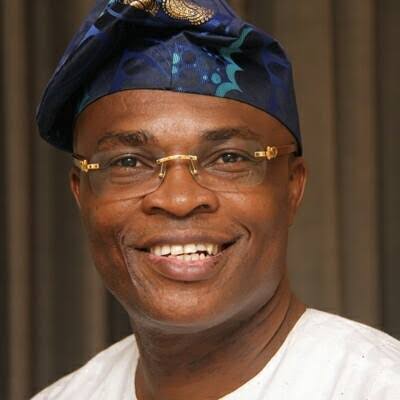
Nigerians should look beyond ethnicity, region and the longstanding debate over rotational presidency when choosing the country’s next leader, according to a chieftain of the African Democratic Congress (ADC), Kenneth Imasuagbon.
The former Edo State governorship aspirant said the priority ahead of the 2027 election should be finding a president with the ability to confront Nigeria’s economic, security and infrastructure challenges.
Speaking to journalists in Benin, Imasuagbon argued that presidential rotation is not a requirement of the Nigerian Constitution and should therefore not outweigh the question of competence.
He said voters should be more concerned about replacing poor schools with better ones, improving healthcare and addressing hardship than debating where the next president comes from.
Imasuagbon specifically appealed to voters in the South to support former Vice President Atiku Abubakar, who is contesting the 2027 presidency on the ADC platform.
According to him, Atiku has demonstrated the experience and determination needed to improve the country, describing the former vice president as someone capable of promoting national unity and fairness.
He also accused the Bola Tinubu administration of worsening economic pressure through policies including the removal of fuel subsidy, while expressing concern about the condition of roads, electricity and other infrastructure.
Imasuagbon argued that the next administration must focus on practical improvements in areas such as power, transportation, employment, security and public services.
The ADC chieftain also dismissed the idea that the ruling All Progressives Congress (APC) would automatically benefit from its incumbency advantage in 2027.
He maintained that the electorate ultimately determines the outcome of an election, arguing that voters could change the political direction of the country if they were determined to do so.
Imasuagbon further criticised what he described as regional and ethnic considerations in the distribution of political appointments and opportunities, insisting that the next president should give Nigerians across different parts of the country a sense of belonging.
His comments come as political parties and their candidates intensify preparations for the 2027 presidential election.
Opinion
Lesson from Dotun Oladipo’s Brave Daughters, by Bamidele Johnson
Lesson from Dotun Oladipo’s Brave Daughters, by Bamidele Johnson
I hope to grow old. I want to see my kids become real adults, find their own feet, make mistakes, recover from them, and perhaps one day complain that their own children are giving them grey hairs. I want that plainly stated before anything else, as everything that follows might read as a man agreeing to an early exit rather than a man simply being honest about the odds.
I want the decades. I want to become the grandfather who repeats the same stories until nobody bothers correcting him anymore. But wanting a thing and being granted are different things. The last year has made that difference harder to ignore than I would like. I have lost many friends recently to keep thinking that optimism is my natural resting state. Some of these men had better blood pressure than mine, better habits, better everything that is supposed to count. It did not save them.
There is no formula I know that reliably separates the men who make it to 70 from those who do not. Anyone who says he knows one is selling something. So, I do not assume that old age is an already booked destination. Even if I once did, which I doubt, the last three years have cured me of such an illusion. As such, I treat it as a hope rather than an expectation, and I have found that a more honest way to live.
It is exactly why I want something placed on record now, while I am still able to place things on record, rather than leave it for people to guess what my wishes were in the fog of a funeral week. If I do not make old bones, my children are not to be asked to read tributes at my funeral. Not one line, however short, however lovingly written.
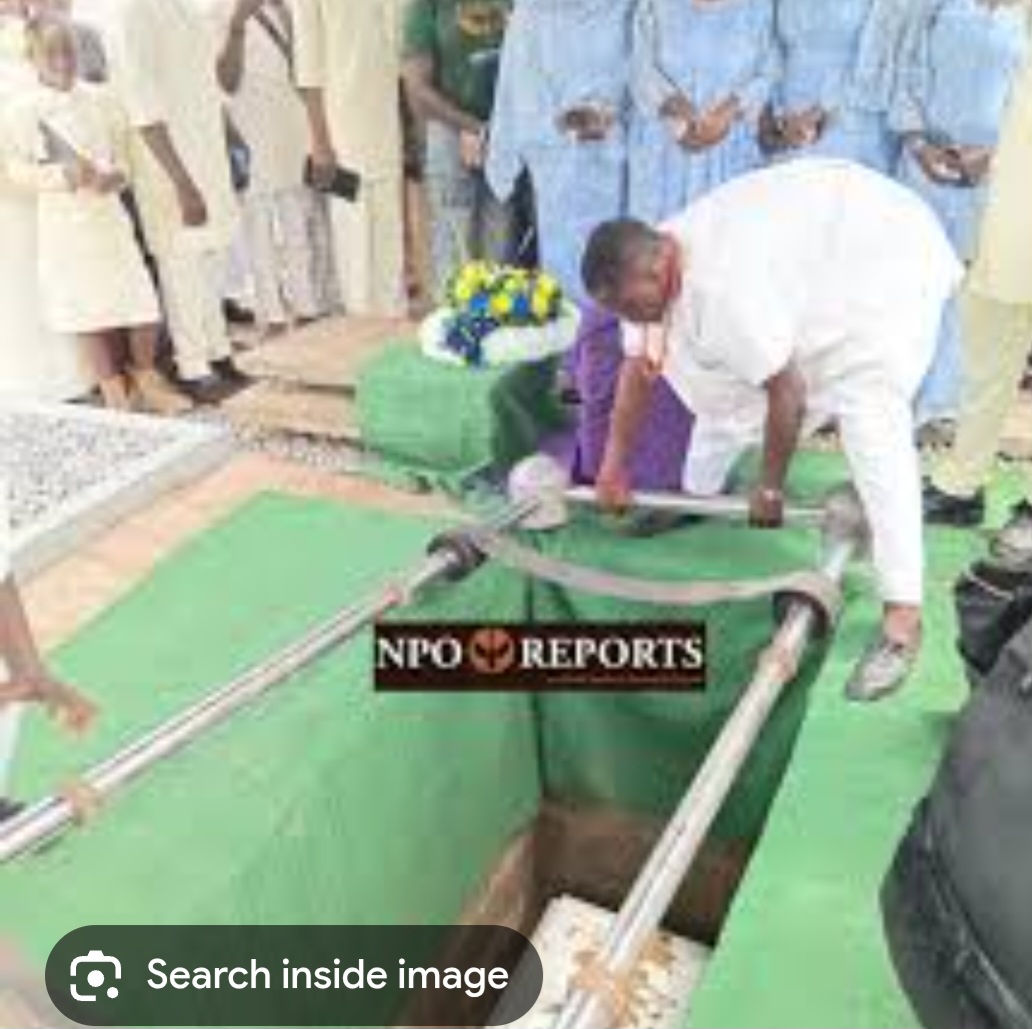
This, for me, was settled today rather than re-opened. At Dotun Oladipo’s funeral service, his three daughters took turns to read their tributes to their dad, and I found myself watching them with awe. There was a kind of strength in them that I do not possess. It is the strength needed to stand in front of a hall brimming with grieving adults and speak about a man they have just lost. Forever. Strength, however, is not the same as ease. I could see plainly what that strength was costing them as they read. Their voices caught. Their composure held and then did not hold and then held again through sheer will.
In front of them, in the pews, men and women considerably older than them came undone in ways the girls themselves were somehow managing to resist. I went mightily close. Some of the sobbing was quiet, the type people try to fold into a handkerchief. Some of it was not quiet at all, the kind that announces itself whether or not you want it.
Those young women honoured their father with a grace that is beyond me. What they did was astonishing. So, what I am attempting is an observation of a custom I have now watched wound people. This was not the first time I had watched this particular ritual extract more than it should from people already running on fumes. I saw an earlier and harder version of it at a friend’s wake back in 2015.
The first son was called forward to read his father’s tribute, and he could not do it. He tried, but the words would not come, and he stood there in front of a crowd of mourners, with his grief simply refusing to organise itself into sentences. The officiating minister, rather than releasing him from the task, urged him to continue. I sat fizzing with sorrow and ire. He could not go on and, eventually, the minister accepted, but not before insisting a while longer than it should have reasonably taken. His younger brother was called up next, presumably on the theory that if one grieving son could not manage it, maybe another one could. He flunked it in the same way. Grief does not distribute itself more conveniently among siblings just because a programme has been printed and needs to be followed.
I have turned that memory over many times since, trying to work out why this part of the rites is treated as mandatory in the first place. I have not found a satisfying answer. Maybe it comes from a belief that a child’s words carry more weight than anyone else’s, which may even be true, but weight is exactly the problem when those carrying it are struggling to hold themselves together with nothing but adrenaline and the fear of dissolving in public.
Maybe it is simply inertia, the reason we still do a hundred things at funerals that nobody can explain the original purpose of. Either way, I have stopped looking for the justification. I no longer think one exists that is good enough to weigh against what I watched happen to that boy in 2015.
So, let this stand as my instruction rather than my preference, the kind of thing I would rather state plainly now than leave for my children to infer later from how uncertain I sound when the subject comes up in passing. If I do not get the old age I am hoping for, my children will not be asked to read a single word over my body. Someone else can speak for me. A friend, a stranger with a steadier voice and a smaller stake in the loss, anyone whose grief will not be quite so total that standing upright becomes almost impossible.
My children, of course, will sit in front and fall apart if that is what the day requires of them, but without the microphone. That, at least, is one small mercy I intend to arrange for them while I am still here to arrange it.
Dotun deserved every bit of the send-off his daughters gave him today, and I suspect he would have been the first to tell them to sit down and let someone else carry the weight for a while. He did not get a say in that, as none of us ever do once we are the ones being spoken of rather than the ones speaking. Rest well, Dotun. You raised three young women whose strength I will not soon forget. That alone says everything worth saying about the man you were.
Opinion
‘Tinubu Will Win Again in 2027’ — Charismatic Bishops’ Secretary
‘Tinubu Will Win Again in 2027’ — Charismatic Bishops’ Secretary
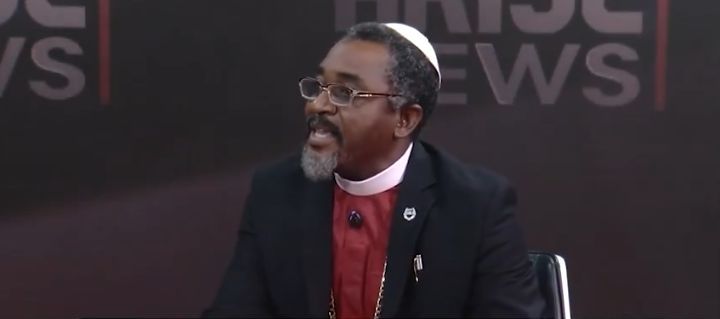
A senior Nigerian cleric, Archbishop Chivir Chianson, has declared that President Bola Tinubu will retain the presidency after the 2027 general election, attributing the prediction to a message he said came from God.
Chianson, who serves as Secretary General of the Charismatic Bishops’ Conference of Nigeria, made the statement while appearing on Arise Television on Saturday.
Rather than basing his prediction on political calculations, the archbishop said his confidence came from what he described as the prophetic role of bishops.
He maintained that the conference had previously spoken about Tinubu’s political future based on what he said was divine revelation and that the President would return for another term.
Chianson also predicted that Tinubu’s performance would improve if he wins the 2027 election.
READ ALSO:
- DSS warns Osun churches, mosques, markets over alleged terrorist attack plot ahead of 2027
- ‘Tinubu Will Win Again in 2027’ — Charismatic Bishops’ Secretary
- Fake miracles, bogus grants: How clerics allegedly fleece Nigerians of millions
Addressing the political opposition, the cleric said the bishops could not be blamed if rival parties failed to unite or organise themselves effectively ahead of the election.
He also sought to clarify the position of the bishops when dealing with government, saying their role in speaking truth to power did not mean they should approach political leaders with hostility or disrespect.
According to him, the Constitution, alongside their religious convictions, should guide how they engage the President and the country.
Chianson said he was sufficiently confident in his prediction to promise that he would return to the Arise TV studio after the 2027 election, when he expects the result to demonstrate that the bishops’ prophecy was correct.
His comments add a religious dimension to the increasingly active political conversation surrounding the 2027 presidential race.
‘Tinubu Will Win Again in 2027’ — Charismatic Bishops’ Secretary
-

 International3 days ago
Islamic Council Condemns Attempted Attack on Holy City of Mecca
-
 News3 days ago
Keep Politics Out of My Office — Ogbomoso Grand Chief Imam Warns Politicians, Bloggers
-
 metro2 days ago
Niger Mosque Abductions: Terrorists Execute 30 of 500 Captive Muslim Worshippers
-

 Business2 days ago
Fuel Prices Climb to ₦1,500 per Litre Across Nigeria, Sparking Calls for Urgent Action
-

 News2 days ago
Blue Line Rail, Hospitals Get Boost as Lagos Approves ₦200bn Bond and Budget Reordering
-
 Entertainment3 days ago
BREAKING: Olu Jacobs Dies at 84, Atiku Mourns Cultural Icon
-

 News2 days ago
OAU Investigates Death of Final-Year Student as Police Begin Probe
-

 News17 hours ago
ECOWAS Biometric Card Expands as Seven Countries Begin Rollout