

Opinion
Farooq Kperogi: Why we should stop renaming well-established universities

Farooq Kperogi: Why we should stop renaming well-established universities
In Nigeria, there’s a disturbingly haunting temporariness in the appellative identity of every university that derives its name from its location. If the current trend holds, they will sooner or later be renamed after a dead or living politician.
The University of Ibadan; the University of Nigeria, Nsukka; the University of Lagos; the University of Calabar; the University of Port Harcourt; the University of Benin; the University of Ilorin; the University of Jos; the University of Uyo; and the federal universities in Lafia, Wukari, Dutse, Gusau, Gashua, Dutsin-Ma, Kashere, Birnin Kebbi, Lokoja, and Otuoke would be wise not to be too cocky in the stability of their onomastic and institutional identities.
I often joke that those of us who graduated from Nigerian universities that were named after cultural or political figures from their very beginning or in the inchoate stages of their existence are the true “first-generation” universities because our alma maters are not in danger of a sudden, unwelcome onomastic and institutional rebirth in the image of a dead or living politician.
Seriously, though, we need to have an honest, soul-searching national conversation about the violent disrespect for institutional identity that the abrupt, top-down renaming of well-established universities represents.
Renaming a university that already has a strong institutional identity to honor a dead politician is problematic for historical, academic, political, and emotional reasons.
Although people in government may not know this, universities are repositories of tradition, intellectual heritage, and regional identity. They are expected to represent knowledge, critical thinking, and universal values, not the legacy of an individual whose contributions to society may be narrow, contested, or politically motivated.
READ ALSO:
- Galatasaray hit jackpot on Osimhen Youtube broadcast
- More trouble for ADC defectors, faction confronts David Mark
- Atalanta reject Inter £36.5m for Lookman, Garnacho gun for Chelsea
Take the University of Abuja that has now been arbitrarily renamed Yakubu Gowon University. It’s the first university to be located in our capital. Its old name communicates its locational identity, which is central to its uniqueness.
It has been known by that name for more than three decades. Renaming it after a person, however historically significant that person may be, erases the core of its identity, especially after several decades.
The name University of Maiduguri, now renamed Muhammadu Buhari University, connects the institution to a geographic and cultural region. The school even has a catchy slogan that derives from its informal short form that I absolutely love: “If you want to be made, come to UNIMAID.”
It’s a powerfully poetic yet irresistibly persuasive marketing slogan. It signalizes the message that the university is the laboratory for churning out successful people. Replacing the school’s name with a political name robs it of this unique promotional poetry. It also erases and rewrites its institutional memory.
That’s not the only damage. Renaming well-established universities after politicians also risks turning the universities into political monuments. It suggests that universities are mere tools for political patronage or historical revisionism, not neutral centers of learning and research.
Renaming universities that already have a healthy, time-honored institutional profile also creates branding anarchy. Certificates issued by the universities, research papers written by their faculty and archived in global databases, their international rankings, alumni associations, and legal documents suddenly become inconsistent or outdated.
This can hurt global recognition and academic reputation, especially for our first- and second-generation universities that already have decades of international visibility. That was why the students, staff, and alumni of the University of Lagos resisted the renaming of their school to Moshood Abiola University Lagos with all that they had.
Most UNILAG people had no problems with the late MKO Abiola. In fact, I would hazard a guess that most UNILAG people loved (still love) and voted for him on June 12, 1993. But they also cherish and want to protect their institutional identity.
READ ALSO:
- I’m no longer a Nigerian by identity – Kemi Badenoch
- We haven’t called off strike – Nurses disown minister’s claim
- Lagos taskforce clears Agege under bridge, impounds 55 vehicles
Those are not mutually exclusive sentiments. You can love a political and cultural figure but never want him or her to supplant the identity of the school you love or are associated with.
When the University of Ife was renamed Obafemi Awolowo University in 1987, there was resistance, which wasn’t as successful as the resistance to the renaming of UNILAG was because it was during a military regime.
Yet, we all know that Chief Awolowo was and is a widely respected figure at the university who, in fact, founded it and resisted naming it after himself like his counterpart in the North was compelled to do.
The students, faculty, and alumni of the university resented the renaming of the former University of Ife (fondly known as Great Ife by its students and alumni) because they felt it was an unsolicited political decision that altered the university’s original vision.
That is why students, lecturers, and graduates of the University of Maiduguri are appealing to President Bola Tinubu to reverse his renaming of their university after the late Muhammadu Buhari. “UNIMAID is more than a name; it is a brand and a beacon of hope in the Northeast,” they said in a statement on July 18.
Like previous resistance to the renaming of universities, this wasn’t about the person of Buhari (although many university lecturers can’t easily forget that he withheld their salaries when they were on strike for several months), but about history, identity, and even emotional attachment to an institutional identity.
Buhari’s mother was Kanuri, and he was governor of North-East State and later Borno (which includes present-day Yobe State), but the issue transcends him as a person. Stakeholders of universities, including the host communities, often feel a deep emotional and symbolic attachment to the name of their university. A top-down renaming can come across as insensitive and can ignite deep resentment.
Most well-established universities that changed their names did so within the first few years of their existence. For example, Harvard University wasn’t always known by that name. It was originally known as “New College” or sometimes “the college at New Towne” when it was founded in 1636.
READ ALSO:
- Sermon: The reality of death!
- School principal, others arrested over killing of pupil, nurse
- IHRC seeks presidential pardon for Super Cop Abba Kyari
- Group alleges plot to sabotage reforms at NNPC
It was renamed to Harvard College in 1639, three years later, in honor of John Harvard, a young minister who died of tuberculosis and left his library and half of his estate to the school.
Yale University also underwent a name change in its early history. It was founded in 1701 as the Collegiate School. The name changed to Yale College in 1718 after a significant donation from Elihu Yale, a wealthy merchant and former governor of the British East India Company settlement at Fort St. George in Madras (now Chennai, India).
But Oxford, Cambridge and other well-known universities have retained their geographic names from the time of their founding.
Interestingly, Nigeria is different from its neighbors in its oversized fondness for naming and renaming universities after politicians. For example, the one time that the Republic of Niger renamed a university (from the University of Niamey to Abdou Moumouni University), it was to honor a prominent, consequential academic. Most other public universities bear geographic names.
This is also true of Senegal. Its universities either bear geographic names or are named after intellectuals, but never politicians. The University of Dakar was notably renamed Cheikh Anta Diop University in 1987 after the prominent Senegalese historian, physicist, and anthropologist.
In short, Niger’s and Senegal’s university naming practice emphasizes institutional neutrality, professional merit, and geographic inclusion. But Ghana is witnessing a more contested shift, in which political figures increasingly lend their names to public universities amid criticism about academic independence, reputation, and public trust.
A university’s name is a vessel of history, identity, and collective memory. When we rename well-established universities after political figures, no matter how revered, we disfigure their symbolic architecture and turn them into contested monuments rather than enduring institutions of learning.
The integrity of a university should rest on its academic tradition and its connection to place, not on the whims of transient political power. If we must honor our heroes, let us do so in ways that elevate without erasing, that celebrate without displacing, and that remember without rewriting.
Farooq Kperogi is a renowned Nigerian columnist and United States-based Professor of Journalism
Farooq Kperogi: Why we should stop renaming well-established universities









Opinion
2027: Competence, Not Zoning, Should Decide Nigeria’s Next President — Imasuagbon
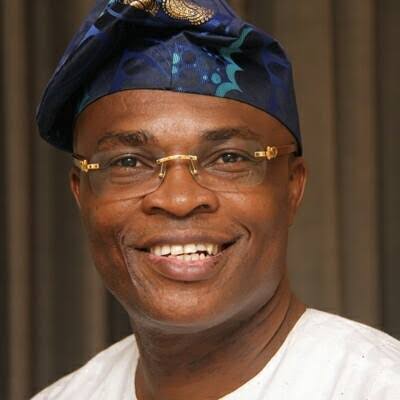
Nigerians should look beyond ethnicity, region and the longstanding debate over rotational presidency when choosing the country’s next leader, according to a chieftain of the African Democratic Congress (ADC), Kenneth Imasuagbon.
The former Edo State governorship aspirant said the priority ahead of the 2027 election should be finding a president with the ability to confront Nigeria’s economic, security and infrastructure challenges.
Speaking to journalists in Benin, Imasuagbon argued that presidential rotation is not a requirement of the Nigerian Constitution and should therefore not outweigh the question of competence.
He said voters should be more concerned about replacing poor schools with better ones, improving healthcare and addressing hardship than debating where the next president comes from.
Imasuagbon specifically appealed to voters in the South to support former Vice President Atiku Abubakar, who is contesting the 2027 presidency on the ADC platform.
According to him, Atiku has demonstrated the experience and determination needed to improve the country, describing the former vice president as someone capable of promoting national unity and fairness.
He also accused the Bola Tinubu administration of worsening economic pressure through policies including the removal of fuel subsidy, while expressing concern about the condition of roads, electricity and other infrastructure.
Imasuagbon argued that the next administration must focus on practical improvements in areas such as power, transportation, employment, security and public services.
The ADC chieftain also dismissed the idea that the ruling All Progressives Congress (APC) would automatically benefit from its incumbency advantage in 2027.
He maintained that the electorate ultimately determines the outcome of an election, arguing that voters could change the political direction of the country if they were determined to do so.
Imasuagbon further criticised what he described as regional and ethnic considerations in the distribution of political appointments and opportunities, insisting that the next president should give Nigerians across different parts of the country a sense of belonging.
His comments come as political parties and their candidates intensify preparations for the 2027 presidential election.
Opinion
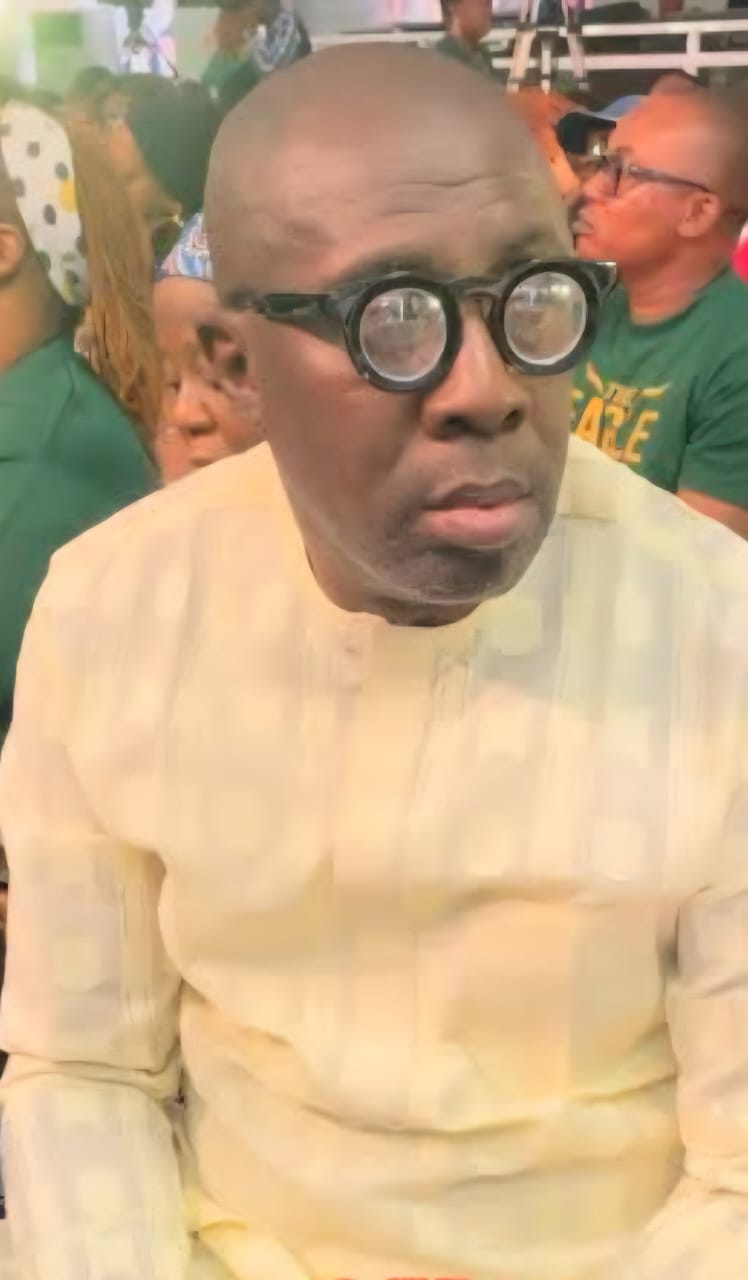
Lesson from Dotun Oladipo’s Brave Daughters, by Bamidele Johnson
Lesson from Dotun Oladipo’s Brave Daughters, by Bamidele Johnson
I hope to grow old. I want to see my kids become real adults, find their own feet, make mistakes, recover from them, and perhaps one day complain that their own children are giving them grey hairs. I want that plainly stated before anything else, as everything that follows might read as a man agreeing to an early exit rather than a man simply being honest about the odds.
I want the decades. I want to become the grandfather who repeats the same stories until nobody bothers correcting him anymore. But wanting a thing and being granted are different things. The last year has made that difference harder to ignore than I would like. I have lost many friends recently to keep thinking that optimism is my natural resting state. Some of these men had better blood pressure than mine, better habits, better everything that is supposed to count. It did not save them.
There is no formula I know that reliably separates the men who make it to 70 from those who do not. Anyone who says he knows one is selling something. So, I do not assume that old age is an already booked destination. Even if I once did, which I doubt, the last three years have cured me of such an illusion. As such, I treat it as a hope rather than an expectation, and I have found that a more honest way to live.
It is exactly why I want something placed on record now, while I am still able to place things on record, rather than leave it for people to guess what my wishes were in the fog of a funeral week. If I do not make old bones, my children are not to be asked to read tributes at my funeral. Not one line, however short, however lovingly written.
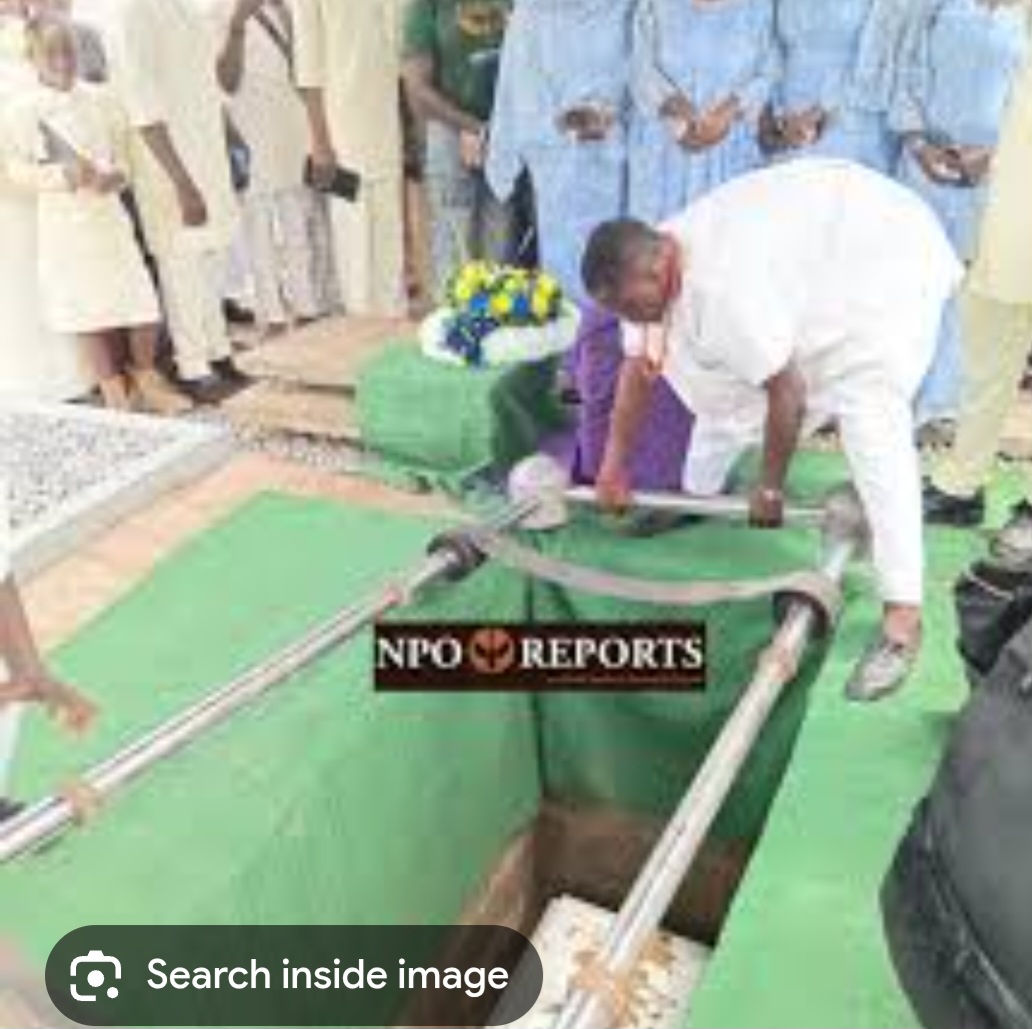
This, for me, was settled today rather than re-opened. At Dotun Oladipo’s funeral service, his three daughters took turns to read their tributes to their dad, and I found myself watching them with awe. There was a kind of strength in them that I do not possess. It is the strength needed to stand in front of a hall brimming with grieving adults and speak about a man they have just lost. Forever. Strength, however, is not the same as ease. I could see plainly what that strength was costing them as they read. Their voices caught. Their composure held and then did not hold and then held again through sheer will.
In front of them, in the pews, men and women considerably older than them came undone in ways the girls themselves were somehow managing to resist. I went mightily close. Some of the sobbing was quiet, the type people try to fold into a handkerchief. Some of it was not quiet at all, the kind that announces itself whether or not you want it.
Those young women honoured their father with a grace that is beyond me. What they did was astonishing. So, what I am attempting is an observation of a custom I have now watched wound people. This was not the first time I had watched this particular ritual extract more than it should from people already running on fumes. I saw an earlier and harder version of it at a friend’s wake back in 2015.
The first son was called forward to read his father’s tribute, and he could not do it. He tried, but the words would not come, and he stood there in front of a crowd of mourners, with his grief simply refusing to organise itself into sentences. The officiating minister, rather than releasing him from the task, urged him to continue. I sat fizzing with sorrow and ire. He could not go on and, eventually, the minister accepted, but not before insisting a while longer than it should have reasonably taken. His younger brother was called up next, presumably on the theory that if one grieving son could not manage it, maybe another one could. He flunked it in the same way. Grief does not distribute itself more conveniently among siblings just because a programme has been printed and needs to be followed.
I have turned that memory over many times since, trying to work out why this part of the rites is treated as mandatory in the first place. I have not found a satisfying answer. Maybe it comes from a belief that a child’s words carry more weight than anyone else’s, which may even be true, but weight is exactly the problem when those carrying it are struggling to hold themselves together with nothing but adrenaline and the fear of dissolving in public.
Maybe it is simply inertia, the reason we still do a hundred things at funerals that nobody can explain the original purpose of. Either way, I have stopped looking for the justification. I no longer think one exists that is good enough to weigh against what I watched happen to that boy in 2015.
So, let this stand as my instruction rather than my preference, the kind of thing I would rather state plainly now than leave for my children to infer later from how uncertain I sound when the subject comes up in passing. If I do not get the old age I am hoping for, my children will not be asked to read a single word over my body. Someone else can speak for me. A friend, a stranger with a steadier voice and a smaller stake in the loss, anyone whose grief will not be quite so total that standing upright becomes almost impossible.
My children, of course, will sit in front and fall apart if that is what the day requires of them, but without the microphone. That, at least, is one small mercy I intend to arrange for them while I am still here to arrange it.
Dotun deserved every bit of the send-off his daughters gave him today, and I suspect he would have been the first to tell them to sit down and let someone else carry the weight for a while. He did not get a say in that, as none of us ever do once we are the ones being spoken of rather than the ones speaking. Rest well, Dotun. You raised three young women whose strength I will not soon forget. That alone says everything worth saying about the man you were.
Opinion
‘Tinubu Will Win Again in 2027’ — Charismatic Bishops’ Secretary
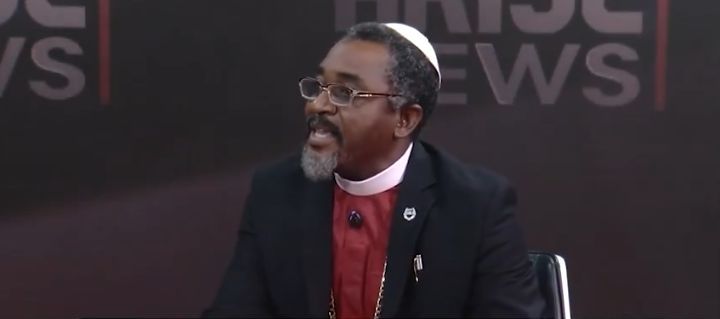
‘Tinubu Will Win Again in 2027’ — Charismatic Bishops’ Secretary
A senior Nigerian cleric, Archbishop Chivir Chianson, has declared that President Bola Tinubu will retain the presidency after the 2027 general election, attributing the prediction to a message he said came from God.
Chianson, who serves as Secretary General of the Charismatic Bishops’ Conference of Nigeria, made the statement while appearing on Arise Television on Saturday.
Rather than basing his prediction on political calculations, the archbishop said his confidence came from what he described as the prophetic role of bishops.
He maintained that the conference had previously spoken about Tinubu’s political future based on what he said was divine revelation and that the President would return for another term.
Chianson also predicted that Tinubu’s performance would improve if he wins the 2027 election.
READ ALSO:
- DSS warns Osun churches, mosques, markets over alleged terrorist attack plot ahead of 2027
- ‘Tinubu Will Win Again in 2027’ — Charismatic Bishops’ Secretary
- Fake miracles, bogus grants: How clerics allegedly fleece Nigerians of millions
Addressing the political opposition, the cleric said the bishops could not be blamed if rival parties failed to unite or organise themselves effectively ahead of the election.
He also sought to clarify the position of the bishops when dealing with government, saying their role in speaking truth to power did not mean they should approach political leaders with hostility or disrespect.
According to him, the Constitution, alongside their religious convictions, should guide how they engage the President and the country.
Chianson said he was sufficiently confident in his prediction to promise that he would return to the Arise TV studio after the 2027 election, when he expects the result to demonstrate that the bishops’ prophecy was correct.
His comments add a religious dimension to the increasingly active political conversation surrounding the 2027 presidential race.
‘Tinubu Will Win Again in 2027’ — Charismatic Bishops’ Secretary
-

 News3 days ago
SERAP Threatens Legal Action Over ₦126bn INEC Electoral Funds
-

 Politics2 days ago
2027: Northern Lecturers Back Tinubu, ASUU Disowns Endorsement
-

 metro3 days ago
Mother ‘sold daughter’s abuse videos for $300’: Nigeria child pornography case shocks nation
-

 News3 days ago
Petrol Subsidy: Presidency Rejects Atiku’s Plan, Says No Going Back
-

 News3 days ago
Adeleke Orders Arrests After Associate Ajagungbade Is Reportedly Killed in Ife
-

 metro2 days ago
Police Arrest Mother Over Alleged Brutal Abuse of 7-Year-Old Girl in Anambra
-

 Sports1 day ago
‘I Was Never the Chosen One’ — Dembele Responds to Mbappe
-

 Education3 days ago
JAMB Takes Over HND Admissions in Polytechnics, Health Institutions Nationwide