
News
FBI begins manhunt for two Nigerians in $13m fraud

FBI begins manhunt for two Nigerians in $13m fraud
The United States has charged two Nigerian nationals, Shoidia Babatunde and Jamiu Ahmed, in connection with a fraudulent email scheme that allegedly defrauded healthcare companies of over $13 million.
In a statement released on Thursday by the US Attorney’s Office for the District of Minnesota, it was revealed that the suspects redirected more than $13 million in payments intended for Fairview Health from several Minnesota-based healthcare firms to accounts under their control and those of their associates.
US Attorney Andrew Luger stated that Babatunde, 43, and Ahmed, 31, deceived employees at multiple healthcare organizations in Minnesota, persuading them to transfer funds to fraudulent bank accounts.
According to court records, the fraudulent activities carried out by the pair and their collaborators spanned from October 2020 to 2024.
After an investigation led by the Federal Bureau of Investigation, the two suspects are currently on the run.
“As part of the scheme, Babatunde and Ahmed created a fake ‘spoofed’ internet domain designed to appear as though it was controlled by Fairview Health,” the statement from the US Attorney’s Office detailed.
READ ALSO:
- Adamawa man arrested for impersonating officer, extorting tricycle operators
- Seaman ejected from barracks, after six-year detention, wife cries out
- Those that will rescue Nigeria not yet born – Joe Igbokwe
The duo is said to have set up fraudulent email accounts, making it seem as if they belonged to Fairview Health executives, including high-ranking officials such as the CEO, executive vice president, general counsel, and a business analyst.
“Babatunde and Ahmed used the fake emails to carry out a ‘phishing’ scheme to fraudulently obtain names, passwords, and access to payment accounts,” the release further explained.
Using these counterfeit accounts, they allegedly communicated with other Minnesota-based health insurance companies, offering new banking details where payments meant for Fairview Health should be transferred.
“Unbeknownst to the vendor companies, the new accounts were actually controlled by Babatunde and Ahmed and their co-conspirators, not Fairview Health,” the statement added.
The fraudulent redirection of payments totaled more than $13 million. Babatunde and Ahmed, both Nigerian citizens, remain fugitives.
FBI begins manhunt for two Nigerians in $13m fraud









News
FG Seals Plateau Mine After 37 Killed in Toxic Gas Tragedy
FG Seals Plateau Mine After 37 Killed in Toxic Gas Tragedy
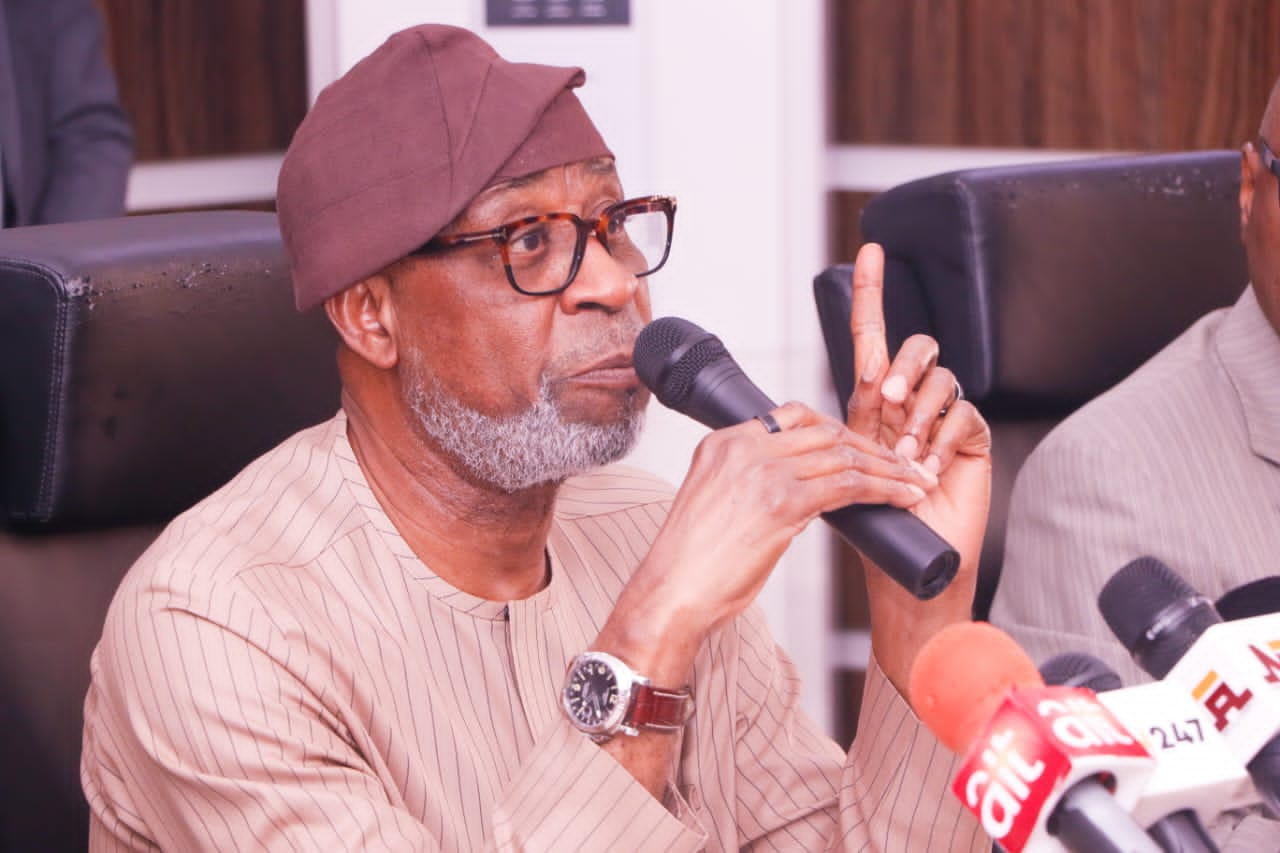
The Federal Government has ordered the immediate closure of a mining site in Zuraq, Wase Local Government Area of Plateau State, following the death of 37 miners in a suspected toxic gas exposure.
Minister of Solid Minerals Development, Dr. Dele Alake, directed that the site be sealed to prevent further casualties and pave the way for a comprehensive investigation into the tragedy.
According to local authorities, the victims were exposed to poisonous gaseous emissions in the early hours of Tuesday while working in an underground pit. At least 25 other miners are currently receiving treatment in hospital.
In a statement issued in Abuja by his Special Assistant on Media, Segun Tomori, the minister disclosed that the affected site falls under Mining Licence 11810, operated by Solid Unit Nigeria Limited and owned by Abdullahi Dan-China.
READ ALSO:
- Troops Kill Five Kidnappers, Rescue Abducted Woman in Plateau
- Sowore Condemns Electoral Act 2026 as Threat to Nigeria’s Democracy
- DSS Takes El-Rufai into Custody After Two Nights at EFCC Headquarters
Alake said a high-level investigative team led by the ministry’s Permanent Secretary, Yusuf Yabo, has been deployed to the area to determine both the immediate and remote causes of the disaster and recommend appropriate sanctions. The team comprises mining engineers, environmental compliance officers and experts in artisanal mining operations.
Preliminary findings indicate that the licensed operator allegedly ceded the pit to members of the host community following agitation for economic empowerment. The area, reportedly an abandoned lead site, contained stored minerals capable of emitting sulphuric oxide — a hazardous substance.
Unaware of the danger, villagers engaged in mining activities and were exposed to the toxic fumes.
The minister described the incident as a tragic loss of innocent Nigerians striving to make a living and extended condolences to Plateau State Governor Caleb Mutfwang and families of the victims.
He assured that further updates would be provided as investigations progress, stressing the government’s commitment to enforcing safety and environmental standards in the mining sector.
FG Seals Plateau Mine After 37 Killed in Toxic Gas Tragedy
News
Tinubu Ends NNPCL Oil Revenue Deductions, Orders Full FAAC Remittance

Tinubu Ends NNPCL Oil Revenue Deductions, Orders Full FAAC Remittance
President Bola Ahmed Tinubu has signed a sweeping executive order mandating the direct remittance of all oil and gas revenues into the Federation Account Allocation Committee (Federation Account Allocation Committee), in what is regarded as one of the most significant fiscal reforms since the enactment of the Petroleum Industry Act (PIA).
The directive, announced by presidential spokesperson Bayo Onanuga, requires that all proceeds from royalty oil, tax oil, profit oil, and profit gas be paid in full into the federation account without deductions, before statutory distribution to the federal, state, and local governments.
A central element of the order strips Nigerian National Petroleum Company Limited (NNPCL) of its long-standing 30 per cent management fee on profit oil and profit gas, a deduction that has repeatedly drawn criticism for significantly reducing funds available for sharing among the three tiers of government. The presidency said the practice undermined constitutional revenue entitlements and weakened public finances.
In addition, the president directed that the 30 per cent Frontier Exploration Fund created under the PIA will no longer be retained or managed by NNPCL. Instead, all funds previously set aside under the arrangement will now flow directly into the federation account for FAAC distribution, altering the financing structure for frontier basin exploration activities.
READ ALSO:
- Lagos DSVA Confirms Mirabel Assault Happened in Ogun, Transfers Case
- Arsenal Blow Two-Goal Lead as Bottom Club Wolves Hold Gunners to 2–2 Draw
- Two Killed, Five Injured as Violence Erupts at APC Ward Congress in Ondo
The executive order also affects the handling of gas flare penalties. Payments into the Midstream and Downstream Gas Infrastructure Fund have been suspended, with all proceeds from gas flaring penalties now to be paid directly into the federation account. Officials said existing environmental remediation frameworks already cover such obligations, making the additional fund unnecessary.
According to the presidency, the reforms are aimed at blocking overlapping deductions, including management fees and profit retentions, which collectively divert more than two-thirds of potential oil and gas revenues before they reach FAAC. President Tinubu warned that shrinking net oil revenues pose serious risks to national budgeting, debt sustainability, and overall economic stability.
The president emphasised that the new framework will reposition NNPCL strictly as a commercially driven national oil company, removing quasi-fiscal responsibilities while strengthening transparency, accountability, and oversight in Nigeria’s oil and gas revenue management.
To ensure effective implementation, Tinubu approved the establishment of an inter-ministerial committee comprising senior officials from the economic management team, justice sector, and relevant regulatory agencies. The committee is expected to coordinate legal, financial, and operational steps required for immediate compliance.
The president also signalled plans for a broader review of the Petroleum Industry Act, indicating that further amendments may be pursued to address structural and fiscal concerns raised by stakeholders, particularly state governments.
With oil and gas revenues remaining central to Nigeria’s fiscal health, the executive order represents a decisive move to tighten revenue flows, strengthen FAAC allocations, and reinforce fiscal federalism across the country.
Tinubu Ends NNPCL Oil Revenue Deductions, Orders Full FAAC Remittance
News
BREAKING: Tinubu Assents to 2026 Electoral Act, Sets Stage for 2027 Elections
BREAKING: Tinubu Assents to 2026 Electoral Act, Sets Stage for 2027 Elections
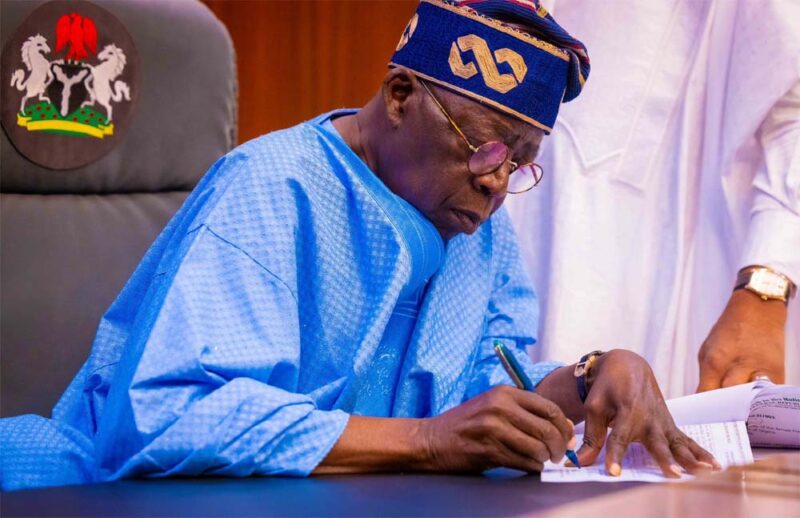
President Bola Ahmed Tinubu has signed the 2026 Electoral Act Amendment into law, setting the legal framework for Nigeria’s 2027 general elections.
The signing ceremony took place on Wednesday at the Presidential Villa in Abuja, with Senate President Godswill Akpabio and Speaker of the House of Representatives Tajudeen Abbas in attendance.
The new law, formally known as the 2026 Electoral Act (Amendment) Bill, was recently harmonised and passed by both chambers of the National Assembly amid debate and opposition from minority lawmakers.
The legislative process leading to the signing saw intense deliberations in both the Senate and the House of Representatives. Lawmakers constituted a joint conference committee to reconcile differences between their respective versions of the bill before transmitting the harmonised document to the President for assent. Earlier, Senate President Akpabio had indicated during an emergency plenary session that the President was expected to sign the amended bill before the end of February. That projection materialised within days.
One of the most significant changes introduced by the 2026 Electoral Act is the reduction of the mandatory notice period for general elections from 360 days to 300 days. Lawmakers explained that the adjustment is intended to give the Independent National Electoral Commission (INEC) greater operational flexibility in planning and conducting elections without breaching statutory timelines.
READ ALSO:
- Korope Drivers Shut Down Lekki–Epe Expressway Over Lagos Ban (Video)
- Kano Closes Entertainment Centres Ahead of Ramadan
- Asari Dokubo Warns Igbo Groups Against Sparking Religious Conflict in Rivers
The issue of electronic transmission of election results generated considerable debate throughout the amendment process. Under the new law, electronic transmission is permitted, while manual collation remains legally recognised, particularly in areas where technical or connectivity challenges arise. INEC retains the authority to issue detailed regulations and guidelines governing how results are transmitted and managed. Supporters argue the compromise reflects operational realities, while critics maintain that the changes may weaken transparency safeguards introduced in previous reforms.
Beyond these headline issues, the amended Act also makes adjustments to party primary timelines, candidate nomination processes, and collation procedures. It includes technical corrections across multiple clauses to improve clarity, reduce ambiguities, and strengthen administrative consistency ahead of the 2027 polls.
With presidential assent now secured, the 2026 Electoral Act becomes the binding legal framework governing presidential, National Assembly, governorship, and state House of Assembly elections. INEC is expected to review and align its regulations and operational guidelines with the new provisions as preparations intensify for the 2027 general elections.
The signing marks a pivotal moment in Nigeria’s democratic process, with political parties, civil society groups, and voters closely watching how the revised electoral framework will shape the next election cycle.
BREAKING: Tinubu Assents to 2026 Electoral Act, Sets Stage for 2027 Elections

-

 News2 days ago
Saudi Arabia Confirms Sighting of Ramadan Crescent, Fasting Begins Wednesday
-

 metro2 days ago
Lagos Woman Shares Ordeal After Alleged Rape, Sparks Nationwide Outcry
-

 News2 days ago
Ramadan Begins in Nigeria as Sultan Confirms Crescent Sighting
-

 metro2 days ago
Seven Killed in Horrific Crash at Ota Toll Gate
-

 International10 hours ago
Canada Opens New Express Entry Draw for Nigerian Workers, Others
-
 metro3 days ago
Deadlock at National Assembly as House Snubs Electoral Act Bill Meeting on E-Transmission Clause
-

 News1 day ago
Korope Drivers Shut Down Lekki–Epe Expressway Over Lagos Ban (Video)
-

 Health1 day ago
Ramadan Health Tips: Six Ways to Stay Hydrated While Fasting