

Education
FG has not scrapped JSS, SSS – Education minister

FG has not scrapped JSS, SSS – Education minister
Minister of Education, Dr Tunji Alausa, has debunked media reports indicating that the Federal Government had scrapped the Junior Secondary School (JSS) and Senior Secondary School (SSS) and replaced them with a new 12-year education model.
The minister, who insisted that the reports were not true, explained that he only submitted a proposal seeking to migrate to 12 years of compulsory education while retaining the current 6-3-3-4 structure.
The minister had on Thursday during the 2025 Extraordinary National Council of Education, a meeting of the highest policymaking body, held in Abuja, proposed a 12-year basic education model in Nigeria.
He said it was prudent to transition from the 6-3-3-4 to the 12-4 system of education.
His proposal was misrepresented by a section of the media which reported that the government had scrapped JSS and SSS and replaced them with a new 12-year uninterrupted basic education model.
But addressing the media on Friday, the minister debunked the reports, saying he merely “presented a proposal for discussion—not an immediate policy change”.
He “The proposal seeks to migrate to 12 years of compulsory education while retaining the current 6-3-3 structure.”
“The attention of the Federal Ministry of Education has been drawn to misleading reports suggesting that the Federal Government has scrapped Junior Secondary School (JSS) and Senior Secondary School (SSS) and replaced them with a new 12-year uninterrupted basic education model. We wish to categorically state that this is not true.
“At the Extraordinary National Council on Education (NCE) Meeting held on February 6, 2025, in Abuja, I presented a proposal for discussion—not an immediate policy change. The proposal seeks to migrate to 12 years of compulsory education while retaining the current 6-3-3 structure.
“A key aspect of this proposal is to eliminate the examination barrier between JSS and SSS, allowing for a seamless transition of students without the hurdles of an external assessment at that stage. However, this is still a subject of consultation and deliberation.
“To ensure a well-informed decision, the Ministry will undertake extensive stakeholder engagements over the next eight months, consulting widely with education policymakers, state governments, teachers, parents, and other key players.
“The final decision on whether to adopt this reform will be made at the October 2025 National Council on Education Meeting.”
He urged the public to disregard the false claim that JSS and SSS have been scrapped.
“The Federal Government remains committed to policies that enhance access to quality education while aligning with global best practices,” he said.



Education
10 Things to Know About Amos Dangut, Nigerian Appointed WAEC Registrar
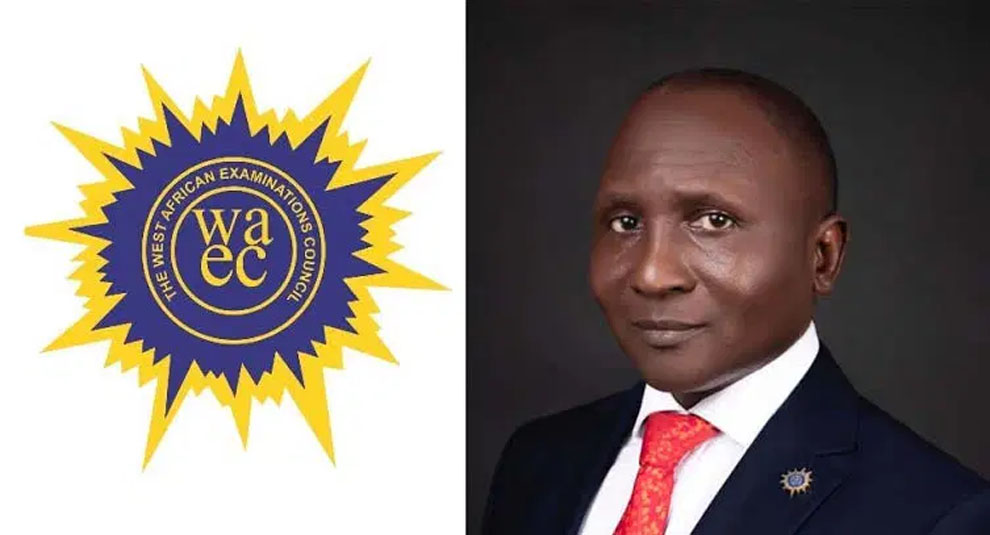
10 Things to Know About Amos Dangut, Nigerian Appointed WAEC Registrar
Dr Amos Josiah Dangut has assumed office as the new Registrar and Chief Executive Officer of the West African Examinations Council (WAEC), becoming the 14th person to occupy the position.
The Nigerian education administrator took over from Alhaji Pateh Bah of The Gambia and will serve a five-year tenure running from October 2026 to September 2031.
Dangut previously served as Head of WAEC’s Nigeria National Office, where he was involved in examination administration and the council’s transition towards greater use of digital technology.
Here are 10 things to know about the new WAEC Registrar.
1. He is from Plateau State
Dangut was born on October 2, 1967, in Mbar District of Bokkos Local Government Area, Plateau State.
He attended Government Secondary School, Riyom, between 1981 and 1983 before proceeding to Government Science School, Kuru, where he studied from 1983 to 1986 and obtained his WASC/SC.
2. His first degree was in Agriculture
Dangut obtained a Bachelor of Agriculture in Animal Production from the University of Agriculture, Makurdi, Benue State, in 1991.
His academic training initially centred on agriculture and animal science before his professional career moved into teaching, examination administration and educational management.
3. He has three postgraduate qualifications
Dangut continued his education after his first degree, obtaining an MSc in Animal Science from the University of Ibadan in 1994.
He later earned a PhD in Animal Science from Abubakar Tafawa Balewa University, Bauchi, in 2017 and a Master of Education in Administration and Planning from the National Open University of Nigeria in 2020.
READ ALSO:
- Olu Jacobs Laid to Rest in Lagos as Dignitaries, Nollywood Stars Honour Screen Icon
- Court Remands Man Accused of Impersonating JAMB Registrar in Kuje Prison
- Lagos Coastal Road Crash: One Killed, Three Seriously Injured
4. His career started in teaching
Dangut began his professional career in education after his NYSC programme in 1991/1992.
He worked at St Louis College, Jos, and had earlier received recognition during his NYSC service for innovative teaching and efforts to improve farmers’ productivity.
He received Meritorious Service Awards from the Ondo State Government and Akoko South-West Local Government.
5. He joined WAEC in 1998
Dangut joined the West African Examinations Council in 1998 as an Assistant Registrar II.
He rose through the ranks and became a Deputy Registrar in April 2018, building a career at WAEC that has lasted nearly three decades.
6. He has held several positions within WAEC
His career at WAEC has taken him through various departments and offices.
He served as an Assistant Registrar and Subject Officer in the Test Development Division in Lagos between 1998 and 2005. He later worked in Uyo and Bauchi, where he was involved in examination security and served as Deputy to the Branch Controller.
He subsequently became Branch Controller in Yola, Deputy Registrar/Controller of the Post Examinations Department and Deputy Registrar/Zonal Coordinator at the Ikeja Zonal Office.
7. He received commendation for transparent examination conduct
Dangut received a commendation from the Nigeria Examinations Committee for the transparent conduct of examinations between 2000 and 2006.
His early responsibilities included test development and examination security, areas that became important parts of his subsequent career at the council.
8. He headed WAEC Nigeria from 2023 to 2026
Dangut became Head of the Nigeria National Office of WAEC on October 2, 2023, succeeding Patrick Areghan.
He remained in the position until his elevation to the regional leadership of WAEC in October 2026.
During his tenure, WAEC expanded its use of technology in examination administration. The council introduced innovations including Computer-Based WASSCE, serialisation of question papers and a Digital Electronic Marking System.
9. He played a role in WAEC’s digital transformation
Information and Communications Technology became a significant part of Dangut’s work at WAEC.
READ ALSO:
- Military Personnel Begin Receiving FG-Approved Salary Increase
- Trump Threatens Iran With ‘Very Hard’ Response Over Flydubai Attack
- Phyna Knocks Out Nkechi Blessing in Fourth Round, Wins ₦50m, New Car
The council said he leveraged ICT to improve test development, test administration and post-examination activities.
Under his leadership at the Nigeria National Office, WAEC also operated digital services including the Digital Certificate Portal, WAEC E-Study Platform and Digital Records Archive, alongside digital systems for examination logistics and monitoring examiners.
The transition to computer-based examinations has become particularly significant for WAEC’s Nigerian operations, with the council conducting Computer-Based WASSCE for school candidates in 2026.
10. He now leads WAEC at regional level
Dangut assumed office as the 14th WAEC Registrar and CEO on October 1, 2026.
His five-year tenure will run until September 2031, following the ratification of his appointment by WAEC’s international governing board at its 74th Annual Meeting in Accra, Ghana, in March 2026.
As Registrar and CEO, Dangut moves from heading WAEC’s Nigerian operations to overseeing the council at its international headquarters in Accra.
Beyond his WAEC career, he has served on the boards of organisations including the Nigerian Educational Research and Development Council (NERDC), Joint Universities Preliminary Examinations Board (JUPEB) and Joint Admissions and Matriculation Board (JAMB).
He has also represented WAEC at education policy platforms including the Joint Consultative Committee on Education and the National Council on Education.
Dangut has published academic works in national and international journals and presented papers at professional conferences. He is a member of the Science Teachers Association of Nigeria (STAN) and the Nigeria Institute of Management (NIM) and serves as the West African sub-region’s representative on the Executive Board of the Association for Educational Assessment in Africa.
Outside his professional work, his listed interests include swimming, tennis and farming.
10 Things to Know About Amos Dangut, Nigerian Appointed WAEC Registrar
Education
FG Orders National Ranking of Nigerian Tertiary Institutions on 22 Indicators
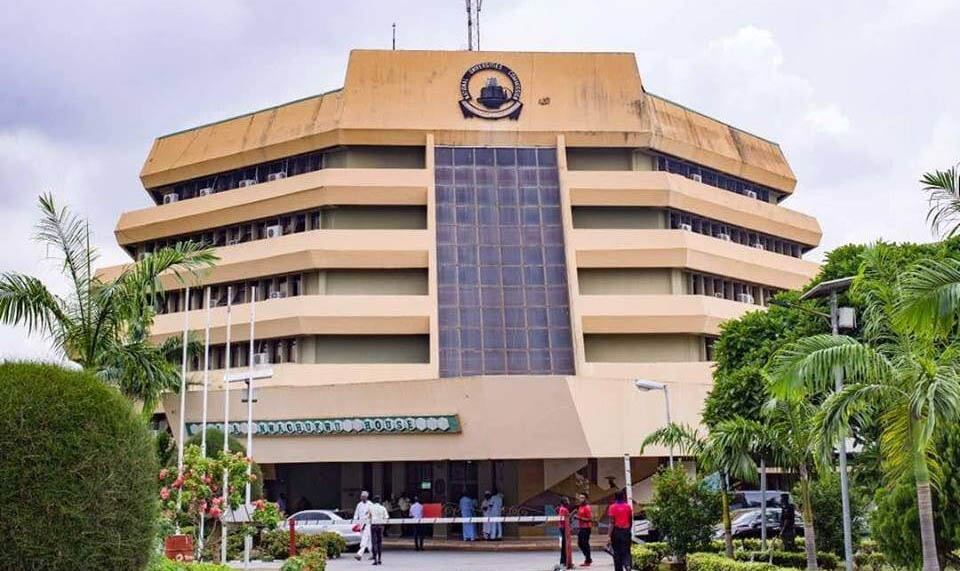
FG Orders National Ranking of Nigerian Tertiary Institutions on 22 Indicators
The Federal Government has commenced a 2026 national ranking of Nigerian tertiary institutions, with Education Minister Tunji Alausa directing the Nigerian Tertiary Education Ranking Advisory Committee (NiTERAC), chaired by Professor Peter Okebukola, to assess universities, polytechnics and colleges of education across the country.
Okebukola disclosed the development in a presentation on Nigeria’s performance in the 2027 Times Higher Education World University Rankings, saying the three subsector rankings are expected to be completed by December 15, 2026.
Under the framework, Nigerian universities will be assessed using 22 indicators, with the weightings agreed with the League of Directors of Academic Planning.
The exercise is intended to establish a national benchmark for measuring institutional performance, identifying areas that need improvement and encouraging healthy competition among public and private tertiary institutions.
According to Okebukola, the initiative is also aimed at positioning Nigeria’s tertiary education system for stronger performance in international rankings.
The expansion of the exercise beyond universities means that polytechnics and colleges of education will also be covered under the 2026 assessment. This will provide a broader national picture of performance across the major categories of tertiary education.
READ ALSO:
- Edo Police Arrest 37-Year-Old Man Over Alleged Rape of 70-Year-Old Woman
- Why Ronaldo Left Portugal Camp Ahead of Denmark Clash
- 2027: Amaechi Vows to Resign If Nigeria Fails to Change Within One Year
The development comes against the backdrop of Nigeria’s improved representation in the latest Times Higher Education World University Rankings.
A total of 29 Nigerian universities featured in the 2027 global ranking, compared with 24 in the previous edition, giving Nigeria the highest number of ranked institutions in sub-Saharan Africa.
The University of Ibadan, University of Lagos and Covenant University were placed in the global 801–1,000 band, while Ahmadu Bello University, Bayero University, Landmark University and the University of Ilorin were placed in the 1,001–1,200 category.
Another 32 Nigerian universities were listed in the Reporter category. Reporter status applies to institutions that submitted data but did not meet one or more requirements for inclusion in the ranked tables.
Okebukola’s assessment noted that only 29 of the 328 universities listed by the National Universities Commission (NUC) appeared in the ranked category.
It also identified areas including research funding, publication output, institutional data management and international collaboration as requiring sustained attention across the sector. Differences in teaching, research quality, industry engagement and international outlook were also highlighted.
The national ranking is expected to give institutions a domestic framework for assessing their performance and identifying gaps, while providing policymakers with data that can support decisions on tertiary education development.
The committee is expected to undertake data collection and validation before finalising the rankings for the three subsectors ahead of the December 15 deadline.
The outcome will provide a new national reference point for assessing Nigerian universities, polytechnics and colleges of education and tracking their performance over time.
FG Orders National Ranking of Nigerian Tertiary Institutions on 22 Indicators
Education
FG Releases 2026–2028 Approved Textbooks, Introduces QR Codes for Tracking
FG Releases 2026–2028 Approved Textbooks, Introduces QR Codes for Tracking
The Federal Government has released the final list of approved and ranked textbooks for use in Nigerian schools from 2026 to 2028, covering selected classes in primary and secondary education.
The Federal Ministry of Education said the release followed the completion of the first phase of the National Textbook Ranking System, a new framework designed to improve the quality, relevance, transparency and accountability of instructional materials used in schools.
The first phase covers Primary 1, Primary 4, Junior Secondary School 1 (JSS 1) and Senior Secondary School 1 (SS 1).
The ministry said every textbook on the approved list has been assigned a unique Ranking/QR Tracking Code, alongside details such as the book title, author, publisher and year of publication.
The QR-based system is intended to make it easier for education authorities and other stakeholders to identify approved textbooks and monitor their use, while helping to curb the circulation of materials that have not passed the required assessment and ranking processes.
The exercise was carried out under the supervision of the Minister of Education, Maruf Tunji Alausa, and the Minister of State for Education, Suwaiba Sa’id Ahmad.
The government said the new system represents a shift from the previous approach, which focused primarily on textbook approval, to a process that also ranks books according to established quality and curriculum standards.
Under the new arrangement, only nationally ranked and approved textbooks are to be used in public schools for the affected classes.
The Federal Government has also indicated that the number of titles approved for individual subjects will be controlled, generally ranging from six to 10 textbooks, depending on curriculum requirements.
The policy is intended to reduce the proliferation of textbooks of varying quality and give schools a more manageable pool of materials from which to select.
READ ALSO:
- 24 Hours in Darkness: Iju Ishaga Residents, Businesses Count Losses as Ikeja Electric Fails to Restore Power
- TCAN Honours Dangote Cement Transport for Safety, Logistics Excellence
- Osogbo Food Bonanza Turns Nightmare as Discount Vendor Vanishes With Customers’ Millions
The government has further stated that ranked textbooks are expected to remain valid for at least three years, providing greater stability for schools, parents and learners and reducing the frequency with which families may be required to purchase new textbooks.
The Nigerian Educational Research and Development Council (NERDC) is responsible for the assessment and ranking process.
NERDC had earlier explained that textbooks submitted for the affected classes would undergo assessment against prescribed standards. Previously assessed textbooks were also required to be resubmitted because the new process incorporates ranking in addition to approval.
The 2026 textbook ranking exercise is being implemented in three phases. While the first phase covers Primary 1, Primary 4, JSS 1 and SS 1, the second phase will cover Primary 2, Primary 5, JSS 2 and SS 2.
The third phase will cover Primary 3, Primary 6, JSS 3 and SS 3, completing the ranking process across the major class levels.
The government has also announced measures aimed at reducing the cost of participation for publishers. The textbook assessment fee was reduced from ₦2,000 to ₦1,500 per page, while the ranking fee was reduced from ₦1 million to ₦750,000 per title.
The textbook reforms are also linked to a broader government policy encouraging the production of more durable instructional materials.
The Federal Ministry of Education has promoted textbooks that can be reused over several academic sessions and discouraged the practice of bundling disposable workbooks with textbooks where this would increase costs for families.
The ministry has said the durability policy is aimed at making educational materials more affordable and sustainable, particularly for households with children in multiple school classes.
The introduction of QR tracking codes is also expected to improve traceability and accountability within the textbook supply chain.
The Universal Basic Education Commission (UBEC), through the HOPE-EDU programme, is separately implementing a book supply-chain Track ‘N’ Trace system designed to improve monitoring of the distribution of learning materials from procurement to schools and learners.
The Federal Government has urged publishers, schools, education authorities and procurement agencies to consult the official 2026–2028 approved textbook list before selecting or purchasing books for the affected classes.
The ministry said the overall objective is to ensure that learners and teachers have access to quality, curriculum-aligned and properly assessed textbooks, while improving transparency in textbook selection, procurement and distribution across Nigeria’s education system.
FG Releases 2026–2028 Approved Textbooks, Introduces QR Codes for Tracking
-

 metro3 days ago
Workers to Begin Nationwide Warning Strike Over Petrol Price, Wage Award
-

 metro3 days ago
[UPDATED] Imo Highway Attack: 10 Rescued after Gunmen Abducted NYSC Prospective Members
-

 Entertainment2 days ago
Phyna Knocks Out Nkechi Blessing in Fourth Round, Wins ₦50m, New Car
-

 metro2 days ago
2027 Hajj: Nigeria Secures 10,000 Extra Slots, Allocation Hits 60,000
-

 metro23 hours ago
NYSC Kidnap: Abductors Demand N950m for 19 Prospective Corps Members in Imo
-

 metro3 days ago
Nigeria at 66: MURIC Urges Unity, Peace, Justice Ahead of 2027 Elections
-
 News3 days ago
Atiku Challenges Tinubu’s Prosperity Claim, Says Nigerians Can Barely Afford to Live
-

 metro3 days ago
Bandits Kill Man, Abduct Wife, Children, Seven Others in Kaduna Community