

News
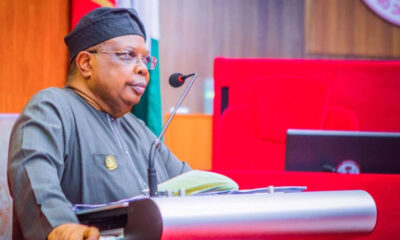
FG rejects U.S religious freedom blacklist, says Nigeria not targeting Christians

FG rejects U.S religious freedom blacklist, says Nigeria not targeting Christians
The Federal Government has dismissed the decision by the United States to reinstate Nigeria on its list of “Countries of Particular Concern” (CPC) over alleged violations of religious freedom, insisting that insecurity in the country is not directed at any ethnic or religious group.
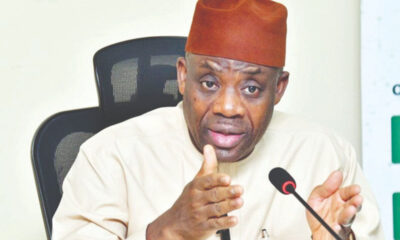
Minister of Information and National Orientation, Mohammed Idris, made the government’s position known on Wednesday during a press briefing in Abuja.
“The security situation in Nigeria is not targeted at a particular ethnic or religious minority,” Idris said, describing the U.S. designation as a product of misinformation being spread by individuals with links to foreign lobbyists.
‘Misinformation Sponsored by Foreign Lobbies’
The minister alleged that some Nigerians with political or criminal motives are collaborating with lobbyists in the U.S. to misrepresent the country’s security challenges.
He cited records from the U.S. Foreign Agents Registration Act (FARA), which he said showed links between “influencers of criminal activities” in Nigeria and lobby groups abroad.
“These are people who go around spreading falsehood about religious persecution. It is not true. Nigerian security agencies protect every citizen, whether in the minority or majority,” he maintained.
Idris explained that difficulty in accessing remote communities sometimes delays security response, but the government is investing heavily in infrastructure and community policing to improve safety nationwide.
READ ALSO:
- Zamfara community guard intercepts vehicle loaded with weapons for bandits
- Tiwa Savage retracts ‘second wife’ comment, says it was made out of frustration
- Osun Muslim stakeholders condemn CAN, PFN’s call for Christian governor
Trump’s Threat of Military Action
The latest controversy follows former U.S. President Donald Trump’s directive to the Pentagon to prepare “fast, vicious and sweet” strikes in Nigeria over alleged killings of Christians.
The Nigerian government, however, said it maintains cordial relations with Washington and dismissed claims that the absence of ambassadors contributed to the U.S. stance.
‘Narrative Driven by Defeated Politicians’ – Solid Minerals Minister
Minister of Solid Minerals Development, Dele Alake, also alleged that some politicians who lost elections are fuelling claims of “Christian genocide” abroad.
He warned that amplifying such narratives could worsen insecurity “in a way that no one can predict.”
Keyamo: Tinubu’s Record Proves Nigeria Not Anti-Christian
Minister of Aviation and Aerospace Development, Festus Keyamo, also faulted Trump’s allegation, describing it as “false and unfair.”
Keyamo said he had spent over 30 years defending human rights and would never serve in a government that targeted Christians.
He noted that most of Nigeria’s current security chiefs are Christians and highlighted President Bola Tinubu’s religiously diverse family as proof of tolerance.
“Tinubu is a moderate Muslim. His wife is a pastor, and many of his children are practising Christians. He will be the last person to approve the killing of Christians,” Keyamo said.
He added that insecurity in Nigeria affects “both Muslims and Christians,” and urged the U.S. to support Nigeria’s counter-terrorism efforts rather than rely on “distorted reports.”
FG rejects U.S religious freedom blacklist, says Nigeria not targeting Christians







News
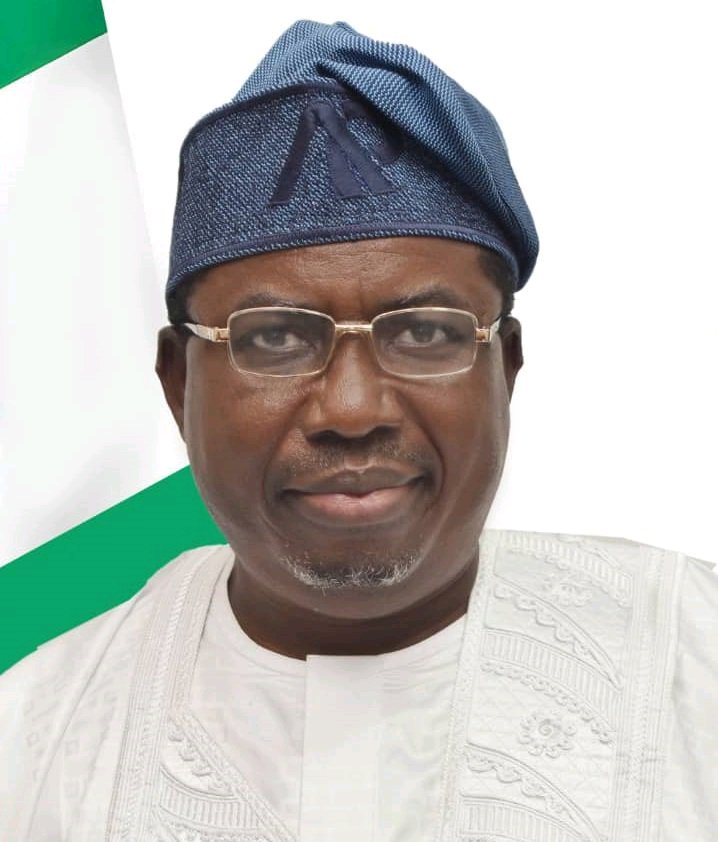
Chatham House Protest: UK-Based Lawyer Alleges Anti-Amupitan Demonstrators Were Paid Actors
Chatham House Protest: UK-Based Lawyer Alleges Anti-Amupitan Demonstrators Were Paid Actors
LONDON — Fresh controversy has emerged over the protest against the Chairman of the Independent National Electoral Commission (INEC), Professor Joash Amupitan, outside Chatham House in London, following allegations by a United Kingdom-based Nigerian lawyer, Otunba Dayo Babalola, that the demonstrators were allegedly paid to stage the confrontation.
Babalola dismissed the demonstration as an attempt by a small group of individuals to create a misleading impression about the position of Nigerians living in the United Kingdom on the leadership of the electoral commission.
The controversy followed Amupitan’s engagement at Chatham House, where he reportedly discussed electoral reforms and measures being considered by INEC to strengthen the credibility and integrity of Nigeria’s electoral process ahead of the 2027 general elections.
However, shortly after the engagement, a group of protesters reportedly confronted the INEC chairman outside the venue, surrounding his vehicle, chanting slogans and demanding his resignation over allegations of compromised electoral integrity.
The demonstrators, estimated by eyewitnesses to number between 10 and 15, reportedly attempted to block the chairman’s movement as they expressed dissatisfaction with his leadership of the electoral commission.
Reacting to the incident, Babalola argued that the demonstration should not be presented as the collective position of Nigerians in the United Kingdom.
According to him, nearly 200 Nigerian stakeholders and members of the diaspora attended the formal engagement inside Chatham House, making it misleading to portray the actions of a relatively small group outside the venue as representative of the wider Nigerian community.
The lawyer further alleged that the protesters were not necessarily acting out of genuine civic concerns but had allegedly been mobilised and paid to disrupt the event and attract public attention.
He also reportedly drew attention to political memorabilia worn by some of the demonstrators, suggesting that their appearance raised questions about possible political affiliations and the motivation behind the protest.
Babalola maintained that the formal engagement inside Chatham House and the demonstration outside the building were two separate events which should not be conflated.
He warned against using the actions of a handful of protesters to suggest that the wider Nigerian diaspora had collectively rejected the INEC chairman.
The allegations, however, have not been independently established, and the protesters’ account of the circumstances surrounding the demonstration remains important to a complete understanding of the incident.
The confrontation comes amid growing political disagreements over the preparedness of INEC for the 2027 general elections, particularly concerning the credibility of the voters’ register, electoral transparency, institutional independence and the security of the voting process.
Opposition figures and other critics have continued to scrutinise the commission’s activities, while INEC and its supporters have maintained that the electoral body should be allowed to carry out its constitutional responsibilities without undue political interference.
The London protest has consequently added another dimension to the debate over public confidence in Nigeria’s electoral institutions.
As of the time of filing this report, no independent evidence had been presented to establish Babalola’s allegation that the demonstrators were paid, while no formal response from the protest organisers addressing the claim was available.
The incident has also generated renewed discussions about the role of Nigerians in the diaspora in holding public institutions accountable and the need to distinguish genuine civic protests from demonstrations allegedly organised for political purposes.
Chatham House Protest: UK-Based Lawyer Alleges Anti-Amupitan Demonstrators Were Paid Actors
News
Tinubu-Aregbesola Rift: ‘They Still Have Deep Affection for Each Other’ — Adeyeye

Tinubu-Aregbesola Rift: ‘They Still Have Deep Affection for Each Other’ — Adeyeye
ABUJA — A chieftain of the All Progressives Congress (APC), Professor Sola Adeyeye, has disclosed that President Bola Ahmed Tinubu and former Osun State Governor, Rauf Aregbesola, have met about three times since their political relationship deteriorated.
Adeyeye, who is the Director of Electioneering Planning of the APC 2027 Presidential Campaign Council in the South-West, said efforts were ongoing to reconcile the two former political allies, expressing optimism that their relationship could eventually be restored.
The former senator made the disclosure in an interview published by The Punch on Sunday, November 15, 2026.
According to him, Tinubu and Aregbesola had enjoyed a close personal and political relationship before their disagreement, making the breakdown of their relationship particularly painful.
“I know that they’ve met about three times since the rift between them started,” Adeyeye said.
He added that the two men must take responsibility for resolving their differences, although he remained hopeful that reconciliation was possible.
Adeyeye, however, declined to disclose further details about the meetings or the circumstances surrounding the former allies’ disagreements.
READ ALSO:
- OPay Faces ₦994m Regulatory Fines Over Money Laundering, Terrorism Financing Breaches
- 2027: Atiku, Makinde Move Closer to Alliance Deal to Unseat Tinubu
- Bandits Kill Two Abducted Victims After Collecting ₦6m Ransom in Niger State
He said he did not know exactly what went wrong between Tinubu and Aregbesola, but maintained that both men had previously shared a strong personal bond.
“Honestly, I don’t know. They both liked each other. I just pray that the time will come when they will be together again. That’s my prayer,” he said.
When asked about his efforts to reconcile them, the APC chieftain replied that he had done everything expected of him but would not reveal further details.
He also dismissed suggestions that a conspiracy might be frustrating the reconciliation process, saying the responsibility ultimately rested with Tinubu and Aregbesola.
According to Adeyeye, disagreements between close friends can produce deeper emotional wounds, but he believes time could help heal their differences.
The political disagreement between Tinubu and Aregbesola has attracted considerable attention within the APC, particularly in Osun State, where their political camps have remained divided.
Aregbesola, who served as Osun governor from 2010 to 2018 and later as Minister of Interior, was previously a key political ally of Tinubu. Their relationship subsequently deteriorated amid disagreements over the control and leadership of the APC in Osun.
Adeyeye’s disclosure of three meetings between the two politicians offers a fresh indication that communication has continued despite their publicly known political differences. However, he did not disclose when the meetings took place or whether they produced any concrete agreement.
The professor also discussed efforts to bring other influential South-West politicians into the APC’s 2027 re-election campaign.
He disclosed that he met former Ogun State Governor Ibikunle Amosun on Wednesday, November 4, and former Ekiti State Governor Kayode Fayemi the following day.
Adeyeye described Fayemi as a brilliant politician and said personal disagreements should not overshadow the larger political contest ahead.
He expressed confidence that the APC would work towards securing victory in the January 16, 2027 election, stressing the importance of defending the party’s right to seek the people’s mandate through a free and fair electoral process.
The APC chieftain also defended Tinubu’s political strategy, including his adoption of a broad-based coalition involving politicians from different backgrounds, arguing that building alliances was necessary to win elections and form a government.
He maintained that political differences should not prevent politicians from working together when they share common objectives.
Tinubu-Aregbesola Rift: ‘They Still Have Deep Affection for Each Other’ — Adeyeye
News
Troops Rescue 119 Kidnap Victims, Eliminate Terrorists in Nationwide Crackdown – DHQ

Troops Rescue 119 Kidnap Victims, Eliminate Terrorists in Nationwide Crackdown – DHQ
ABUJA — Nigerian troops have rescued 119 abducted civilians and neutralised several terrorists during a week-long series of military operations across the country, the Defence Headquarters (DHQ) has announced.
The operations, conducted between November 6 and November 12, reportedly dealt significant blows to insurgents, kidnappers and other criminal groups operating in different parts of the country.
The latest military breakthrough comes amid growing concerns over insecurity, particularly attacks on motorists, abductions and terrorist activities along major highways and communities.
According to updates from the military high command, troops recorded significant successes across several operational theatres, with Borno State emerging as one of the major areas where security forces disrupted terrorist activities.
In one of the operations, soldiers reportedly intercepted insurgents attempting to ambush motorists and abduct travellers along major transportation routes in the state.
The intervention prevented the planned abductions and further demonstrated the military’s efforts to secure vulnerable highways and protect commuters.
The DHQ disclosed that 119 kidnapped civilians, including women and children, were rescued during the period under review.
The military also reported the elimination of several terrorists during offensive engagements targeting criminal hideouts, operational bases and suspected supply networks.
Beyond the rescue operations and neutralisation of insurgents, troops recovered eight operational vehicles allegedly seized by terrorists, alongside assorted weapons, ammunition and other logistical equipment.
Security operations were also intensified outside the North-East, with troops and other security agencies carrying out intelligence-led raids, disrupting kidnapping attempts and confronting criminal elements in the Federal Capital Territory, Plateau and Kwara states.
Watch: Nigerian Military Operations Against Terrorists and Rescue of Kidnap Victims
For additional context on the military’s ongoing anti-terrorism campaign and rescue operations, watch the video below:
The military’s nationwide operations were aimed at dismantling criminal networks, preventing further attacks and restoring confidence among residents and travellers using vulnerable routes.
The Defence Headquarters reaffirmed its determination to sustain pressure on terrorist groups and other criminal elements until lasting peace and security are restored across the country.
The latest operational figures represent another major effort by the Nigerian military in its ongoing campaign against terrorism, banditry and kidnapping.
Troops Rescue 119 Kidnap Victims, Eliminate Terrorists in Nationwide Crackdown – DHQ
-
 Politics23 hours ago
Peter Obi, NDC in Fresh Storm as Keyamo Gives Dickson 48 Hours Over Old National Anthem, Raises Secession Alarm
-

 metro1 day ago
“I Cheated Because I’m Human Too” — Divorced Restaurant Owner Accuses Ex-Husband of Sleeping With Over 16 Women
-

 metro1 day ago
Kwankwaso’s Daughter, Kano Governor’s Wife, Files for Divorce, Offers to Refund Dowry
-

 Business9 hours ago
OPay Faces ₦994m Regulatory Fines Over Money Laundering, Terrorism Financing Breaches
-
 metro22 hours ago
Pastor Remanded Over Viral Video of Toluwanisings’ Corpse After Failed Attempt to Raise Singer From Dead
-

 metro10 hours ago
Zamfara Bloodbath: 53 Killed as Vigilantes Ambush Bandits After Kidnapping Spree
-
 Politics9 hours ago
2027: Atiku, Makinde Move Closer to Alliance Deal to Unseat Tinubu
-
 News5 hours ago
Tinubu-Aregbesola Rift: ‘They Still Have Deep Affection for Each Other’ — Adeyeye