

metro
FRSC Revives Annual Lecture Series Under CM Shehu Mohammed, Ushering in New Era of Road Safety Leadership
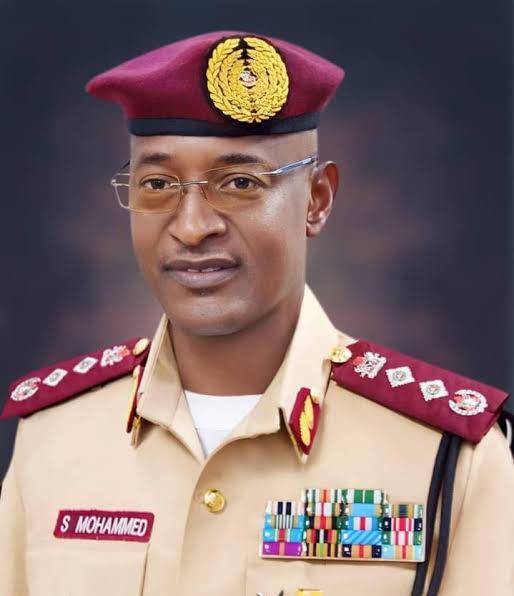
FRSC Revives Annual Lecture Series Under CM Shehu Mohammed, Ushering in New Era of Road Safety Leadership
By Bisi Kazeem
On Wednesday, September 3rd, 2025, the Banquet Hall of the State House, Presidential Villa, Abuja, came alive, not with the formality of ceremony but with the urgency of purpose. It hosted a gathering of some of the finest minds in leadership, law, academia, security, technology, and global road safety, as Nigeria reawakened an important intellectual tradition: the FRSC Annual Lecture Series.
First instituted in 2009, the Annual Lecture Series was designed as a platform for ideas, policy direction, and sustained awareness on the menace of road crashes. Over the years, it attracted distinguished voices, from Chief Emeka Anyaoku, CON, CFR, who spoke on “Capital Waste on Nigeria Roads”, to Prince Michael of Kent and Jean Todt, UN Special Envoy on Road Safety.
These lectures inspired policy shifts and created a knowledge hub for stakeholders across sectors.
Now, after a brief hiatus, the Lecture Series was reintroduced under the visionary leadership of Corps Marshal Shehu Mohammed, mni, a man who has come to symbolise innovation, pragmatism, and unrelenting commitment to safer highways. Since his assumption of office, Corps Marshal Shehu Mohammed has pursued a reformist agenda that aligns road safety not only with enforcement but with technology, research, and inter-agency collaboration.
Representing President Bola Ahmed Tinubu as Special Guest of Honour, the Vice President underscored the Federal Government’s commitment to safer roads. He called on the Federal Road Safety Corps (FRSC) and other relevant stakeholders to recommit themselves to the implementation of the Nigeria Road Safety Strategy.
He noted that while progress has been made, much work is still required to reduce the burden of road crashes across Nigeria. He implored government and private sector stakeholders to pursue homegrown solutions while collaborating with global partners to ensure safer roads and sustainable transport systems.
The event was graced by ministers, legislators, senior security chiefs, members of the diplomatic corps, and representatives of international organisations — all affirming that road safety is not just a transport issue but a matter of national development.
Under his stewardship, the FRSC has:
Gone paperless by introducing an electronic document management system, enhancing transparency and efficiency within the Corps; Strengthened synergy with sister security agencies, recognising that road safety is inseparable from national security; Deepened partnerships with universities, innovators, and ministries to harness digital solutions for smarter traffic management. Reinvigorated drivers’ training and retraining programmes, ensuring that the culture of safe driving is instilled at the grassroot level of governance, as well as; Championed the integration of road safety into national development discourse, ensuring that every crash prevented is treated not just as an enforcement victory, but as a triumph for public health and economic growth.
These milestones are not isolated achievements. They are stepping stones toward a larger vision, one that places Nigeria firmly in the global conversation about emerging transport systems, safe mobility, and sustainable development.
The theme of this year’s Lecture; “Road Safety Management and Emerging Transportation Trends: Global Partnership for Optimal Performance”is both timely and forward-looking.
The keynote was delivered by Mr. Saul Billingsley, Executive Director of the FIA Foundation, London, one of the most respected global advocates for road safety and sustainable transport. His perspectives have set the tone for a multi sectoral dialogue enriched by distinguished discussants, including: Hon. Justice Monica Dongban-Mensem, CFR, President of the Court of Appeal (bringing the justice system’s perspective on road safety and NGOs), General Christopher Gwabin Musa, OFR, Chief of Defence Staff (on national security and safety management), Dr. Bosun Tijani, Minister of Communications, Innovation and Digital Economy (on digitalization and innovation for highway safety), Prof. Patricia Manko Lar, Acting Vice Chancellor, University of Abuja (on education and research in road safety), and Mazi Afam Osigwe, SAN, President of the Nigerian Bar Association (on the role of law and professional bodies). Together, they will interrogate how Nigeria can translate global best practices into homegrown solutions for safer, smarter roads.
For Corps Marshal Shehu Mohammed, the reintroduction of this Lecture Series is not about prestige. It is about people. It is about the countless lives lost daily to preventable crashes; the families torn apart by grief; the economic toll of injuries and fatalities; and the urgent responsibility of government and citizens alike to reverse the tide. He has risen to this challenge because road crashes remain a leading killer of young people worldwide.
In Nigeria, they claim thousands of lives annually, most of them in the most productive age bracket. Every statistic represents a human story, a dream cut short, and a contribution lost to the nation.
Thus, the FRSC Lecture Series is not just another high-level dialogue. It is a clarion call for a national movement: one that brings the government, private sector, academia, civil society, and citizens into a common resolve. A resolve that says our roads must no longer be corridors of tragedy but avenues of opportunity and growth.
Looking back at the roster of past speakers, ranging from His Excellency John Dramani Mahama, former President of Ghana, to Governor Akinwunmi Ambode of Lagos State, the Lecture Series has consistently set the bar high.
Each edition contributed to shaping Nigeria’s journey toward safer highways. But this 8th edition marks more than a continuation. It signals a rebirth. A statement that the FRSC, under its present leadership, is not only guarding the roads but also guiding the nation’s vision of mobility in the 21st century.
As I earlier stated at the beginning of this article, on September 3rd, 2025, when the Banquet Hall doors opened and the Vice President declared the Lecture Series underway, it was not be just another calendar event, it marked the beginning of a renewed national conversation. One that recognises that every crash prevented is a life saved. One that affirms that safe mobility is the foundation of development. One that ignites a movement for safe roads, bright futures, and a Nigeria where journeys end in joy, not grief.
This 8th edition was more than a continuation. It signalled a rebirth, a statement that the FRSC, under its present leadership, is not only guarding the roads but also guiding the nation’s vision of mobility in the 21st century.
The FRSC Annual Lecture Series is back. And with it, a promise: that Nigeria’s road to the future will be safer, smarter, and shared by all.
DCM Bisi Kazeem fsi (rtd)







metro
Lagos Club Robbery: Police Arrest Suspect After N5m Bounty
Lagos Club Robbery: Police Arrest Suspect After N5m Bounty
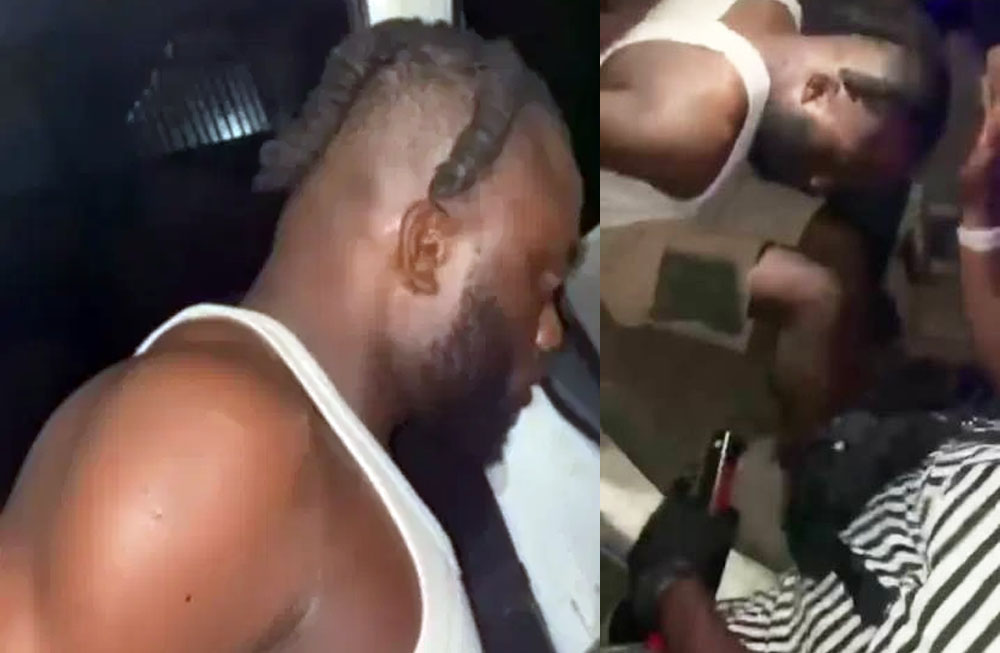
The Lagos State Police Command has arrested a suspected member of the gang that allegedly robbed clubgoers outside Ghost and Spirits Lounge on Ekoro Road, Abule Egba, Lagos.
The suspect was reportedly identified from video footage of the incident, which showed several people being attacked outside the entertainment venue in the early hours of the morning.
The Lagos club robbery reportedly occurred at about 4am on Saturday after some customers had left the lounge and gathered around their vehicles.
Footage from the scene showed several clubgoers sitting around a vehicle when the suspected robbers approached.
READ ALSO:
- Five Arrested Near US-Used RAF Fairford in UK Terror Probe
- Kano Upgrades Five PHCs to General Hospitals, Begins Assessment
- Iran Claims Capture of Second US Underwater Drone in Strait of Hormuz
One of the suspects, reportedly dressed in a green shirt and cap, appeared to move among the people before allegedly targeting one of the victims.
Another member of the group was reportedly seen in an SUV parked across the road before a gunshot was fired, causing some of the people at the scene to run for safety.
The suspect in the green shirt was then allegedly seen taking a wristwatch from one of the victims, while other members of the group reportedly collected valuables before escaping in their vehicle.
Following the incident, the management of the lounge announced a N5 million reward for information leading to the arrest of the perpetrators.
The reward and subsequent investigation helped the police identify and track one of the suspects, who was eventually arrested.
A police source said the suspect was in custody and being interrogated, with investigators seeking information that could lead to the arrest of the other alleged members of the gang.
The Lagos Police Command has also intensified efforts to locate the remaining suspects, who are reportedly still at large.
The incident has raised concerns among residents and nightlife customers in Abule Egba, particularly over the security of people leaving entertainment venues during the early hours.
Police authorities have urged residents with useful information about the suspects or the robbery to assist the investigation.
The arrested suspect remains presumed innocent unless proven guilty in court, while investigations continue into the alleged robbery and the identities and whereabouts of the other suspects.
Lagos Club Robbery: Police Arrest Suspect After N5m Bounty
metro
Passenger Dies After Jumping From Moving Bus In Lagos
Passenger Dies After Jumping From Moving Bus In Lagos
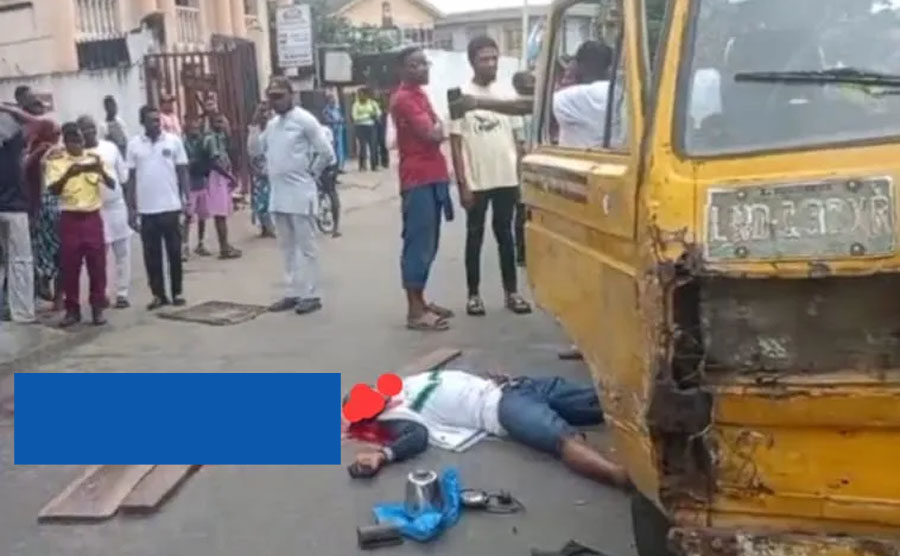
A passenger has died after jumping from a moving commercial bus at Ogunlana Junction, inward Ojuelegba, in the Surulere area of Lagos.
The incident involved a Volkswagen commercial bus with registration number LND 130 XR, which reportedly crashed into a median pole around the Fallout area of Surulere.
The Lagos State Traffic Management Authority (LASTMA) said preliminary security reports indicated that the driver was allegedly under the influence of alcohol and had been driving recklessly shortly before the crash.
According to the agency, motorists approaching the bus from behind had to exercise caution to avoid colliding with the vehicle as it reportedly moved erratically.
Amid the incident, a male passenger reportedly jumped from the moving bus, apparently attempting to escape from the uncontrolled vehicle. He sustained serious injuries after hitting the ground and later died from his injuries.
LASTMA officials conducting routine traffic surveillance along the Ojuelegba axis responded to the scene after noticing the crash. They secured the area, managed traffic and removed the damaged bus and the deceased passenger from the carriageway to reduce the risk of a secondary collision.
READ ALSO:
- Five Arrested Near US-Used RAF Fairford in UK Terror Probe
- Kano Upgrades Five PHCs to General Hospitals, Begins Assessment
- Iran Claims Capture of Second US Underwater Drone in Strait of Hormuz
Police officers from the Area C Police Division, Ojuelegba, provided security at the scene, while officials of the State Emergency Management Agency evacuated the remains of the deceased.
LASTMA General Manager, Olalekan Bakare-Oki, described the incident as a reminder of the dangers associated with driving under the influence of alcohol, reckless driving and operating vehicles that may not be mechanically fit for the road.
Bakare-Oki urged commercial and private motorists to conduct comprehensive checks on their vehicles before every journey, with particular attention to the braking system, tyres, steering mechanism and other critical safety components.
He also commiserated with the family of the deceased and reaffirmed LASTMA‘s commitment to responding promptly to road crashes, managing traffic and clearing accident scenes.
The agency urged motorists and other road users to report accidents, vehicle breakdowns and other traffic obstructions through its toll-free short code, 3367.
Passenger Dies After Jumping From Moving Bus In Lagos
metro
Kubwa Explosion: Vehicle Crashes Into Gas Outlet, Damages Nine Shops
Kubwa Explosion: Vehicle Crashes Into Gas Outlet, Damages Nine Shops
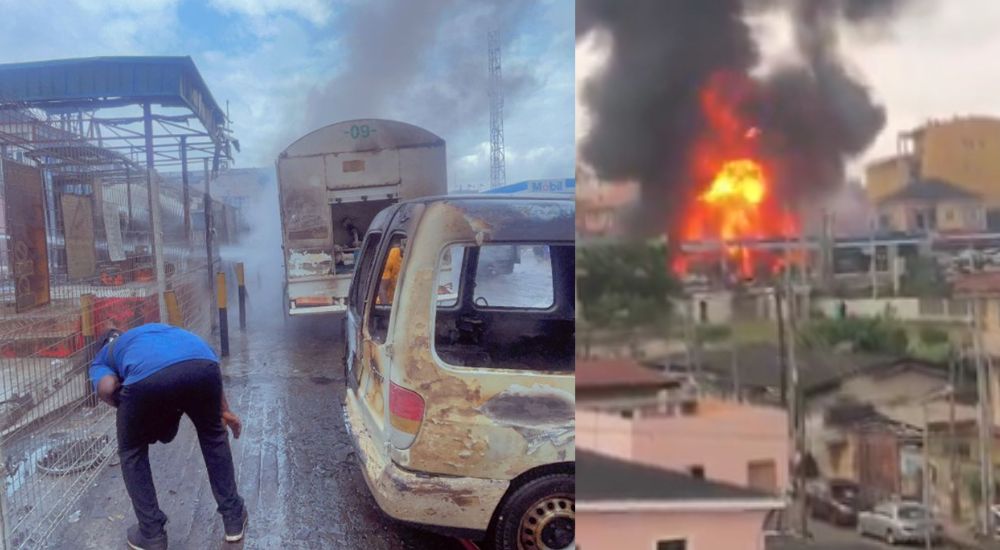
Panic broke out in Kubwa, Abuja, on Sunday morning after a gas explosion rocked the Liberty Junction area, following a vehicle crash into a roadside gas retail outlet.
The incident occurred at about 6:15 a.m., sending a powerful blast through the area and causing nearby buildings to shake, while thick smoke and flames rose from the affected facility.
The vehicle reportedly veered off the road and crashed into the gas outlet, triggering the explosion and subsequent fire.
The impact affected several businesses around the junction, with reports indicating that nine shops were damaged or destroyed by the ensuing fire.
A nearby police traffic post was also reportedly uprooted by the force of the explosion, while other structures and sections of the surrounding area were damaged.
The vehicle involved in the crash was badly burnt in the incident. Emergency responders, however, reportedly rescued the driver and a child from the wreckage.
The injured driver was taken to a medical facility for treatment, while emergency personnel worked to prevent the fire from spreading to other shops and properties in the densely populated area.
READ ALSO:
- Newlywed Arrested After Allegedly Excreting 72 Cocaine Wraps at Enugu Airport
- Bauchi Police Arrest Four Over Alleged Gun-Making, Rape
- Tinubu to Nigerians: We Are Correcting Past Mistakes, Give Us More Time
The explosion triggered panic among residents and commuters, with people reportedly rushing away from the scene as the fire continued to burn.
Emergency response agencies, including the Federal Fire Service, FCT Fire Service, National Emergency Management Agency (NEMA), Nigeria Security and Civil Defence Corps (NSCDC) and the Nigeria Police Force, were deployed to the scene.
Firefighters battled the flames for hours before the situation was brought under control.
The incident also caused significant traffic disruption around Liberty Junction and the Kubwa axis, as motorists slowed down and emergency responders worked at the scene.
Security personnel subsequently moved people away from the immediate area and helped manage traffic while the damaged vehicle and other debris were cleared.
Initial reports did not indicate a confirmed death from the explosion, although the driver was reported to have sustained injuries.
Authorities had yet to provide a detailed official account explaining why the vehicle veered off the road or confirming the full extent of the damage and injuries as of the time of reporting.
The incident has again drawn attention to safety concerns surrounding gas outlets located close to busy roads, shops and residential areas, particularly in densely populated parts of the Federal Capital Territory.
Further assessment by relevant authorities is expected to establish the precise circumstances of the crash, the extent of the property damage and whether any safety breaches contributed to the incident.
Kubwa Explosion: Vehicle Crashes Into Gas Outlet, Damages Nine Shops
-
 News3 days ago
Anambra Releases ₦473m Salary Arrears Document as Obi’s Debt Claim Sparks Fresh Dispute
-
 News2 days ago
Keyamo: ₦70,000 Minimum Wage No Longer Enough as Cost of Living Soars
-
 metro3 days ago
EFCC Chairman Raises Alarm Over Alleged Theft of Nigeria’s Public Funds
-
 Sports2 days ago
AFCON 2027 Qualifier: Nigeria Fight Back to Beat Madagascar 2-1 in Uyo
-
 Politics3 days ago
2027: Otti Explains Why He Supports Tinubu Despite Remaining in Labour Party
-
 metro3 days ago
Umahi Announces First Niger Bridge Reopening Next Week, Orders Tinubu Pictures
-
 metro3 days ago
Anambra Police Arrest 25-Year-Old Suspect Linked to 2023 Kidnap, Murder
-

 Entertainment2 days ago
Jetour Takes Adventure Beyond the Road, Brings Solar-powered Borehole to Ibeju-Lekki community