
metro
How few politicians enjoy Nigeria’s resources – Osinbajo
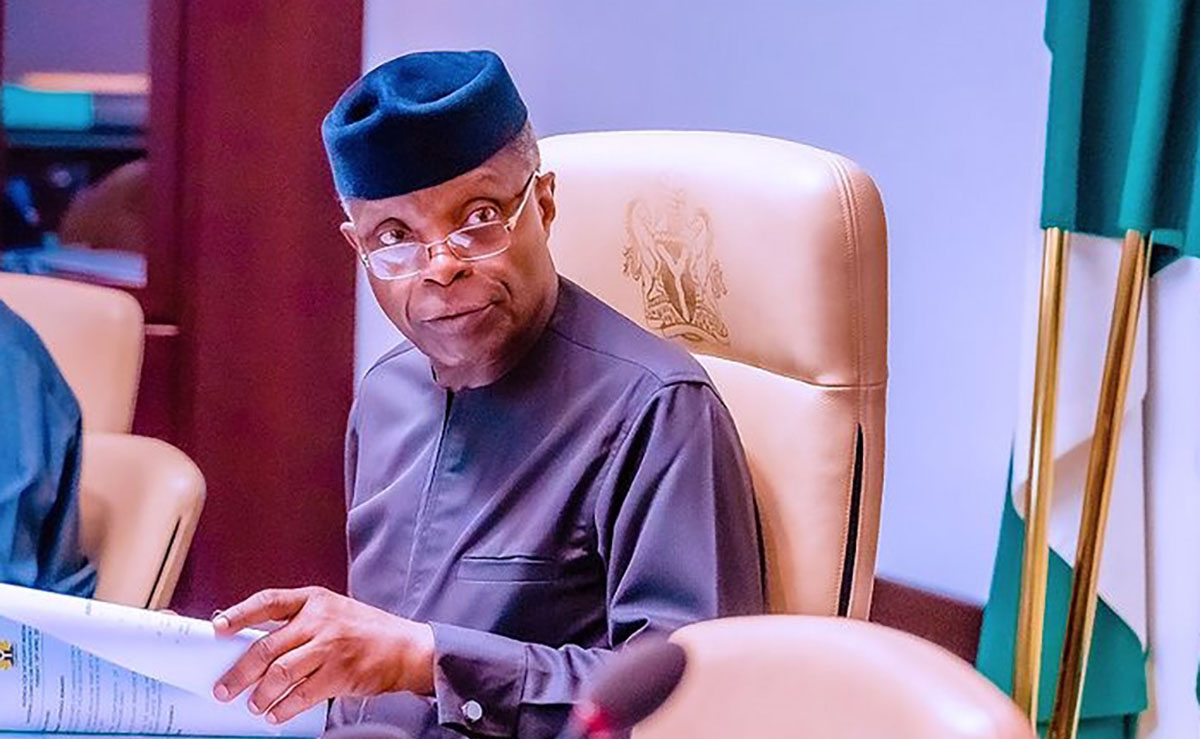
How few politicians enjoy Nigeria’s resources – Osinbajo
Former Vice President Prof. Yemi Osinbajo, SAN, has explained why the country’s resources are concentrated in the hands of a select few, claiming that those in charge of allocating them lack the moral character to act in the best interests of the people and that their enjoyment comes from the rudimentary accumulation of wealth.
Osinbajo, who is also a pastor, gave the keynote address at the 80th birthday celebration of Bishop Mike Okonkwo of The Redeemed Evangelical Mission, or TREM, in Lagos on Thursday.
Osinbajo expressed the opinion that the Nigerian church needs to wake up and preach the same authentic gospel that the Puritans preached in Europe back then, which transformed the continent and the lives of its people.
Osinbajo spoke on “Church as a responsible pathfinder in attaining the Nigeria of our dreams’.
This comes as Major General Ike Nwachukwu, the event’s chairman, and Bishop Okonkwo urged Nigerians to take stock of the country’s accomplishments following nearly 65 years of independence.
Drawing from the Bible, Osinbajo cited Chapter 4 of the Book of Acts of the Apostles, in which the Apostles tasked seven men filled with the Holy Spirit with distributing wealth among the populace.
“In that Bible passage, people on their own sold their properties and put the proceeds at the feet of the Apostles. The truth is that if the proceeds were just put there, the people would still be hungry, but there was a need for equitable distribution among the people. So, seven men full of the Holy Spirit were chosen to do the distribution. If those entrusted with the resources are not godly, then there would be problems.
READ ALSO:
- Nigerians can register for NIN, voter cards at same centres, says INEC
- CBT: WAEC demands 250 computers, CCTV for participating schools
- Tyson, Mayweather agree to exhibition fight in 2026
“So many people wonder what the role of the church is in us realizing the Nigeria of our dream. This is important because the same gospel that many take for granted here is what Europe and America used to change their societies for the better. The gospel tells us that hard work, productivity, integrity, honesty, and other good virtues are the bedrock of the growth and development of any nation.
“When we are hardworking and are productive and we show honesty and integrity in whatever we do, then we won’t be far from the Nigeria of our dream. The gospel does not support corruption and cheating; the Nigeria of our dream stands a chance of emerging if the church turns to preaching that doing honest work is divine and that caring for the poor is true religion,” he stated.
Osinbajo frowned at the situation where many people believe that manna would fall from heaven, when they ought to know that humans have been given divine ability to be productive.
He took the opportunity to express his gratitude to Bishop Okonkwo for allowing him to convince some Christian leaders to support his pick for vice president in 2014.
“I was invited to a meeting with some Christian leaders to explain to them what my choice as a vice presidential candidate would mean. Surprisingly, some of the leaders were really opposed to me talking to them. They did not want me to state my position despite Bishop Okonkwo’s efforts, and I had to leave. Later the bishop called me for another meeting with regional leaders of the Pentecostal Fellowship of Nigeria, where I spoke,” he added.
READ ALSO:
- Troops kill many terrorists, arrest 85 suspects, rescue 66 victims
- Brazilian billionaire passes entire fortune to Neymar
- Palestine: Arab League ministerial talks to hold in Cairo
In his address, Nwachukwu tasked Nigerians and their leaders with responding to the question of what has been accomplished since the country’s independence.
“We really need to ask ourselves what we have got under the belt since 1960. President Bola Tinubu recently came back from a visit to Brazil, but for over 40 years now, Brazil has been producing vehicles, even aircraft, from their own steel factories. What about our own Ajaokuta and others? He asked.
During his speech, Bishop Okonkwo asked the populace to evaluate the state of their nation and honestly determine whether it is where it should be.
“For over a decade now, we have been organizing this annual lecture and bringing men and women of caliber to speak on topical national issues. It is one of the ways we are making our modest contributions to national development. We hope that the Nigeria of our dreams and which our founding fathers put in our care will realize its potential one day.
“The task of getting that done lies with each and every one of us. We all have our roles to play, and we must all do so. If we care for others and we see the corporate wellness of our country as a task that must be done, then things will be okay,” he stated.
How few politicians enjoy Nigeria’s resources – Osinbajo












metro
Jos Attack: Plateau Govt Declares 48-Hour Curfew After Deadly Assault
Jos Attack: Plateau Govt Declares 48-Hour Curfew After Deadly Assault
The Plateau State Government has imposed a 48-hour curfew in Jos North following a deadly terror attack in Jos that claimed several lives and left many others injured.
The curfew, which began at midnight on March 29 and will run until April 1, was announced by the State Commissioner for Information and Communication, Joyce Ramnap, as part of urgent steps to contain the situation and restore order.
The decision comes after suspected terrorists launched a coordinated assault on Gari Ya Waye community in Angwan Rukuba, an area within Jos, on Sunday evening.
Eyewitnesses said the attackers, riding on motorcycles, stormed the area at about 7:30 pm, opening fire indiscriminately on residents who were going about their normal activities. The sudden gunfire caused panic, forcing many to flee, while others were caught in the violence.
Although the exact number of casualties is yet to be officially confirmed, multiple residents were reportedly killed, with several others sustaining injuries. Homes and properties were also affected in the attack.
READ ALSO:
- Motoring World marks 30 years, set to rally industry leaders in Lagos
- Nigeria Police Reform: 222,000 Officers May Move to State Commands
- Iran Threatens US-Linked Universities in Middle East Amid Escalating Tensions
Describing the incident as a “barbaric and unprovoked attack,” the Plateau State Government said the curfew in Jos North is necessary to prevent further violence, enable security agencies to regain control, and protect lives and property.
Under the directive, residents are required to stay indoors throughout the curfew period, except for essential services operating under strict security supervision.
Security has since been reinforced across the area, with the Nigeria Police Force, military, and other agencies deploying additional personnel. Authorities have launched intelligence operations, stop-and-search checks, and patrols to track down those responsible for the attack.
The government has urged residents to remain calm, cooperate with security operatives, and provide credible information that could assist ongoing investigations.
Officials also extended condolences to families of victims, assuring that efforts are underway to ensure justice is served.
The latest incident underscores growing concerns over security in Plateau State, as communities continue to grapple with recurring violence. Analysts say sustained security presence and improved intelligence gathering will be key to preventing further attacks.
Jos Attack: Plateau Govt Declares 48-Hour Curfew After Deadly Assault
metro
Nigeria Police Reform: 222,000 Officers May Move to State Commands
Nigeria Police Reform: 222,000 Officers May Move to State Commands
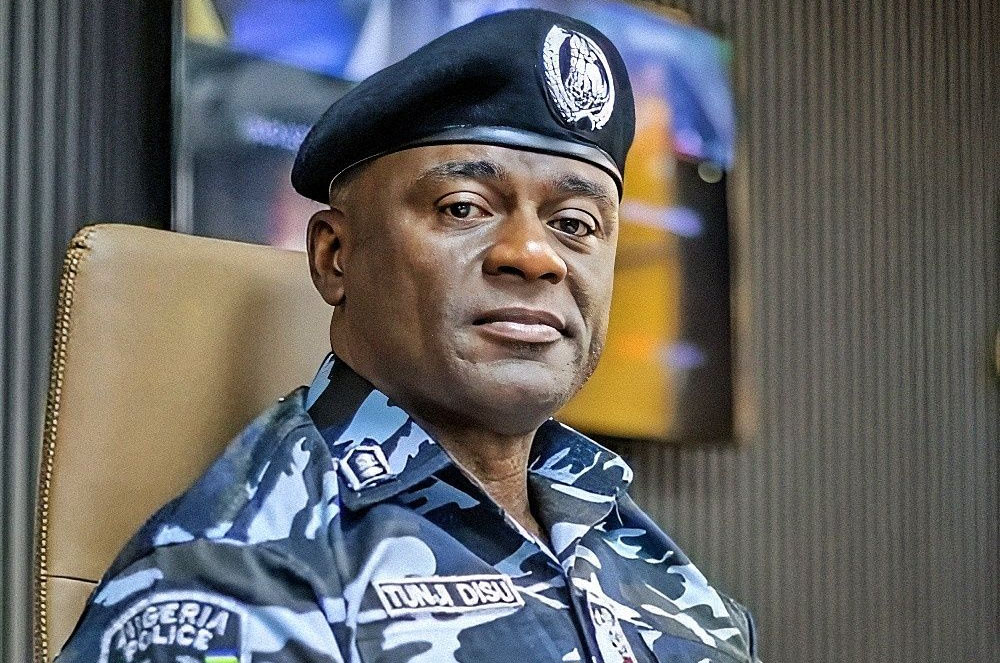
Nigeria is on the verge of a historic overhaul of its policing structure following a recommendation by a committee set up by the Inspector-General of Police, Tunji Disu, proposing that 60% of Nigeria Police personnel be transferred to State Police Services (SPS).
The proposal, submitted to the Senate Committee on the Review of the 1999 Constitution chaired by Barau Jibrin, forms part of a broader plan to decentralise law enforcement and improve grassroots security across the country.
Nigeria currently has an estimated 370,000 police officers serving over 200 million people, translating to a ratio of one officer to about 600 citizens—significantly below the standard recommended by the United Nations. If implemented, the reform would see roughly 222,000 officers redeployed to state police formations, while 40% remain under a restructured federal system.
The 75-page document, presented by committee chairman Olu Ogunsakin, outlines a two-tier policing system consisting of a Federal Police Service (FPS) and 37 State Police Services across the federation and the Federal Capital Territory.
Under the proposed framework, the Federal Police Service would focus on national security, terrorism, and interstate crimes, while the State Police Services would handle local crimes such as armed robbery, homicide, domestic violence, and community policing.
READ ALSO:
- Iran Threatens US-Linked Universities in Middle East Amid Escalating Tensions
- Iranian Strike on Saudi Base Damages US Spy Plane, Injures 12 Troops
- Kwankwaso Resigns from NNPP, Signals Political Realignment
A key component of the transition is the introduction of a Voluntary Transfer Programme (VTP), which allows officers to move to their home states or preferred commands without losing benefits. Incentives include a three-month salary grant, specialised training, and pension continuity guarantees.
The report places strong emphasis on community policing, recommending the establishment of Community Policing Forums in all Local Government Areas, involving traditional rulers, youth groups, women’s organisations, and religious leaders. Officers assigned to communities would be expected to understand local languages and be evaluated based on community feedback.
To prevent abuse—particularly concerns that governors could misuse state police for political purposes—the committee proposed multiple safeguards. These include independent State Police Service Commissions, State Police Ombudsmen, judicial oversight, and criminal sanctions for unlawful orders. It also recommends the use of body-worn cameras and public dashboards to track police conduct and accountability.
At the national level, a National Police Standards Board (NPSB) would be created to regulate recruitment, training, operations, and discipline across both federal and state police systems, ensuring uniform standards nationwide.
Funding for the proposed structure would come from a State Police Fund, backed by a 3% statutory allocation from the Federation Account and a minimum 15% contribution from state governments’ security budgets.
The framework also outlines a five-year (60-month) phased implementation plan, beginning with constitutional amendments, followed by the establishment of state police institutions, gradual transfer of personnel, and eventual full operational consolidation.
Despite the detailed framework, the proposal has generated mixed reactions among security experts. Supporters argue that state police in Nigeria will enhance intelligence gathering and local responsiveness, while critics warn of political interference, funding inequalities, and coordination challenges between federal and state forces.
If adopted, the reform would mark a significant shift from Nigeria’s centralised policing system to a decentralised model aimed at addressing the country’s persistent security challenges.
Nigeria Police Reform: 222,000 Officers May Move to State Commands
metro
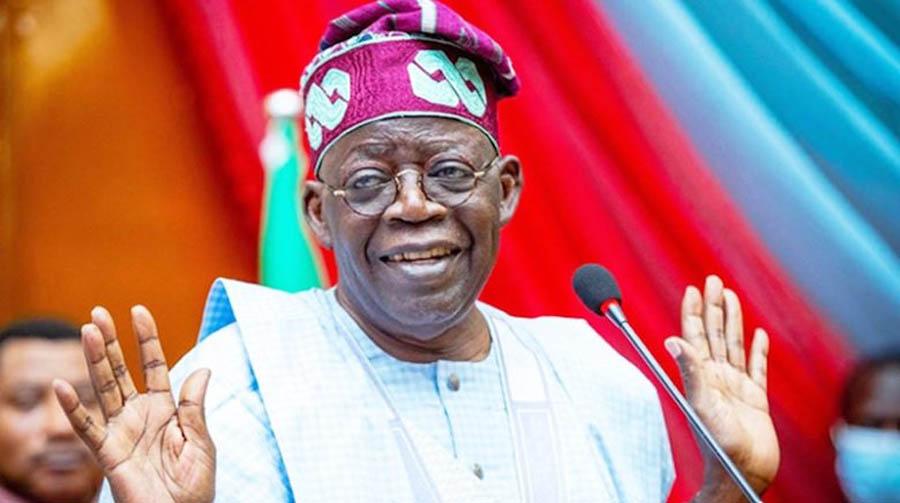
Tinubu Marks 74th Birthday with Special Fund for Soldiers, Fallen Heroes’ Families
Tinubu Marks 74th Birthday with Special Fund for Soldiers, Fallen Heroes’ Families
President Bola Ahmed Tinubu has announced the creation of a special fund to support members of the Nigerian Armed Forces, including personnel wounded in active service and families of soldiers who died defending the nation.
The President made the disclosure in a statement issued on Sunday to commemorate his 74th birthday, describing the initiative as a personal commitment to honour the sacrifices of military personnel.
According to him, he has directed the Accountant-General of the Federation to establish a dedicated account that will serve as the financial base for the intervention.
“On this my 74th birthday, I celebrate the valiant men and women of our Armed Forces,” Tinubu stated, paying tribute to the courage and dedication of Nigeria’s military.
He explained that the fund is designed to cater to soldiers injured in the line of duty as well as dependents of those who lost their lives while serving the country.
“Today, I have directed the Accountant-General of the Federation to establish a special account for a fund dedicated to those who serve, those wounded in the line of duty, and the families of those who have paid the ultimate price,” he said.
In a significant personal gesture, the President also pledged to donate all his salaries since assuming office to serve as seed funding for the initiative. He noted that this contribution would be made irrespective of existing insurance and welfare provisions available to members of the armed forces.
“As a personal commitment, all my salaries since assuming office will be paid into this account as seed funding,” he added.
Tinubu further called on state governors, members of the National Assembly, private sector stakeholders and well-meaning Nigerians to support the initiative in order to strengthen welfare support for military personnel and their families.
The announcement has been widely seen as part of ongoing efforts by the administration to boost morale within the armed forces amid persistent security challenges across the country.
Tinubu Marks 74th Birthday with Special Fund for Soldiers, Fallen Heroes’ Families

-

 metro2 days ago
Tragedy in Aramoko: Trailer Rams Residential Building, Kills 300‑Level Student
-

 Entertainment3 days ago
Tragedy in Music Industry as ‘Show Your Style’ Singer Sabinus Dies
-

 News2 days ago
Final Notice: FG Orders Civil Servants to Complete PASGA Verification by March 31
-
 metro3 days ago
El-Rufai’s Mother, Hajiya Umma, Dies Amid Son’s Legal Battle
-

 Entertainment2 days ago
Nollywood Actress Declares Love for Ibrahim Chatta, Offers to Pay Her Own Dowry
-

 Business3 days ago
Relief in Sight as Dangote Refinery Lowers Petrol Price
-
 Entertainment3 days ago
Gospel Singer Onos Brisibi Dies at 55 After Prolonged Illness
-
 metro3 days ago
Report Reveals Late Herbert Wigwe Owned 106 Prime London Properties