

International
Israel must end financial stranglehold on Occupied Territories: UN experts
Israel must end financial stranglehold on Occupied Territories: UN experts
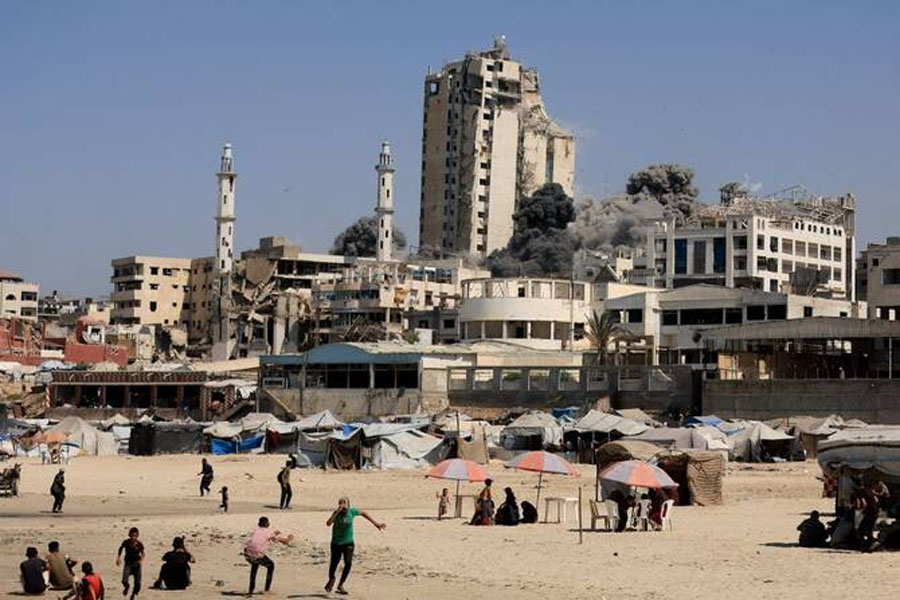
NEW YORK: Israel’s attacks on Gaza and its broader financial control across the Occupied Territories have triggered a severe economic emergency, UN independent experts warned on Monday, calling for an immediate end to measures that are causing “catastrophic harm” to human rights.
“Economic life in Gaza has been decimated by sheer physical destruction, blockade and siege, and repeated forced displacement,” they said in a statement, citing widespread damage to commercial, agricultural and industrial infrastructure in the Palestinian enclave, with unemployment surging above 80 percent, a sharp contraction in gross domestic product, halted trade and endemic poverty. Famine has already been declared.
They said a liquidity crisis across Gaza has been exacerbated by the destruction of banks and ATMs, and Israel’s blocking of new currency inflows.
The scarcity of cash has triggered hyperinflation, with the price of cooking oil increasing by 1,200 percent and flour by 5,000 percent by mid-2025.
Humanitarian workers are losing nearly 40 percent of their salaries just to access cash, while digital payments are frequently disrupted by electricity and telecommunications outages.
“The disproportionate civilian harm caused by Israel’s blockade and siege violates international humanitarian law and the economic and social rights of Palestinians,” the experts said.
READ ALSO:
- Breaking: Tobi Amusan clinches silver at World Championships in Tokyo
- Guinness World Record confirms Hilda Baci’s largest-serving of Jollof Rice
- FCT resident doctors begin indefinite strike
They also highlighted how Israeli legislation restricting the UN Relief and Works Agency, and the US suspension of its funding, have jeopardized thousands of jobs and undermined humanitarian efforts amid Gaza’s economic collapse.
The financial pressure, they said, extends beyond Gaza. In the occupied West Bank, Israel has allegedly withheld and diverted tax revenues owed to the Palestinian Authority in violation of the Oslo Accords, disrupting salary payments and weakening liquidity.
“Israel has threatened not to renew the annual waiver of terrorist financing laws that allows Israeli banks to process transactions with Palestinian banks in November 2025,” the experts warned. “This would cut Palestinians off from the global financial system.”
They also noted the suspension of work permits for 100,000 Palestinian workers, eliminating a vital source of cash inflow that had accounted for nearly a quarter of gross national income.
“These measures exacerbate heavy economic losses from the illegal taking of land and the illegal exploitation of natural resources by Israeli settlers in the occupied West Bank,” the experts said.
They added that since 2023, purported counterterrorism measures have led to “unjustified de-risking” by international banks, resulting in account closures and blocked humanitarian transfers.
“Cumulatively, these measures seriously violate Israel’s obligations to guarantee the human rights to an adequate standard of living, work, food, water, sanitation, health, life, and freedom from torture or cruel, inhuman or degrading treatment,” the experts said.
They added that Israel, as an occupying power, is obligated under international law to sustain Palestinian economic life, not expropriate property or exploit natural resources.
The experts further emphasized that Israel’s economic restrictions impede the Palestinian people’s collective rights to economic self-determination, sovereignty over natural resources, and development.
READ ALSO:
- Abimbola Adebisi named spokesman for Lagos police command
- AFN replies Amusan, says sport kits not inferior
- Arab, Muslim leaders hold emergency talks after Israel’s Qatar attack
The economic rights of Palestinians have been affirmed by multiple international bodies, including the International Court of Justice and the UN General Assembly, most recently at the High-Level International Conference on Palestine in July, which was co-chaired by Saudi Arabia and France.
The experts called on Israel to immediately lift the blockade and siege of civilians in Gaza, end violations of international humanitarian law, remove currency restrictions, restore cash flows, establish secure cash distribution systems and facilitate digital payments.
They added that Israel must also commit to the permanent renewal of the banking waiver in the West Bank and stop holding Palestinian tax revenues to ransom.
They also referred to the ICJ’s 2024 advisory opinion demanding an end to Israel’s “illegal occupation,” and noted that the UNGA has set a deadline of September, 17, 2025, for Israel to comply.
“The international community must act urgently to compel Israel to stop violating fundamental rules of international law, respect the economic rights of the Palestinian people, alleviate the humanitarian crisis and prevent financial collapse,” the experts said.
They include Ben Saul, special rapporteur on the promotion and protection of human rights and fundamental freedoms while countering terrorism; Attiya Waris, independent expert on the effects of foreign debt and other related international financial obligations of states on the full enjoyment of all human rights, particularly economic, social and cultural rights; George Katrougalos, independent expert on the promotion of a democratic and equitable international order; and Carlos Arturo Duarte Torres of the working group on the rights of peasants and other people working in rural areas.
They are part of the UN Human Rights Council’s Special Procedures, the largest body of independent experts in the organization’s human rights system. They work on a voluntary basis and are not paid for their work.
Israel must end financial stranglehold on Occupied Territories: UN experts
ARAB NEWS









International
China Denies Supplying Iran Intelligence Linked to Attack That Killed US Troops
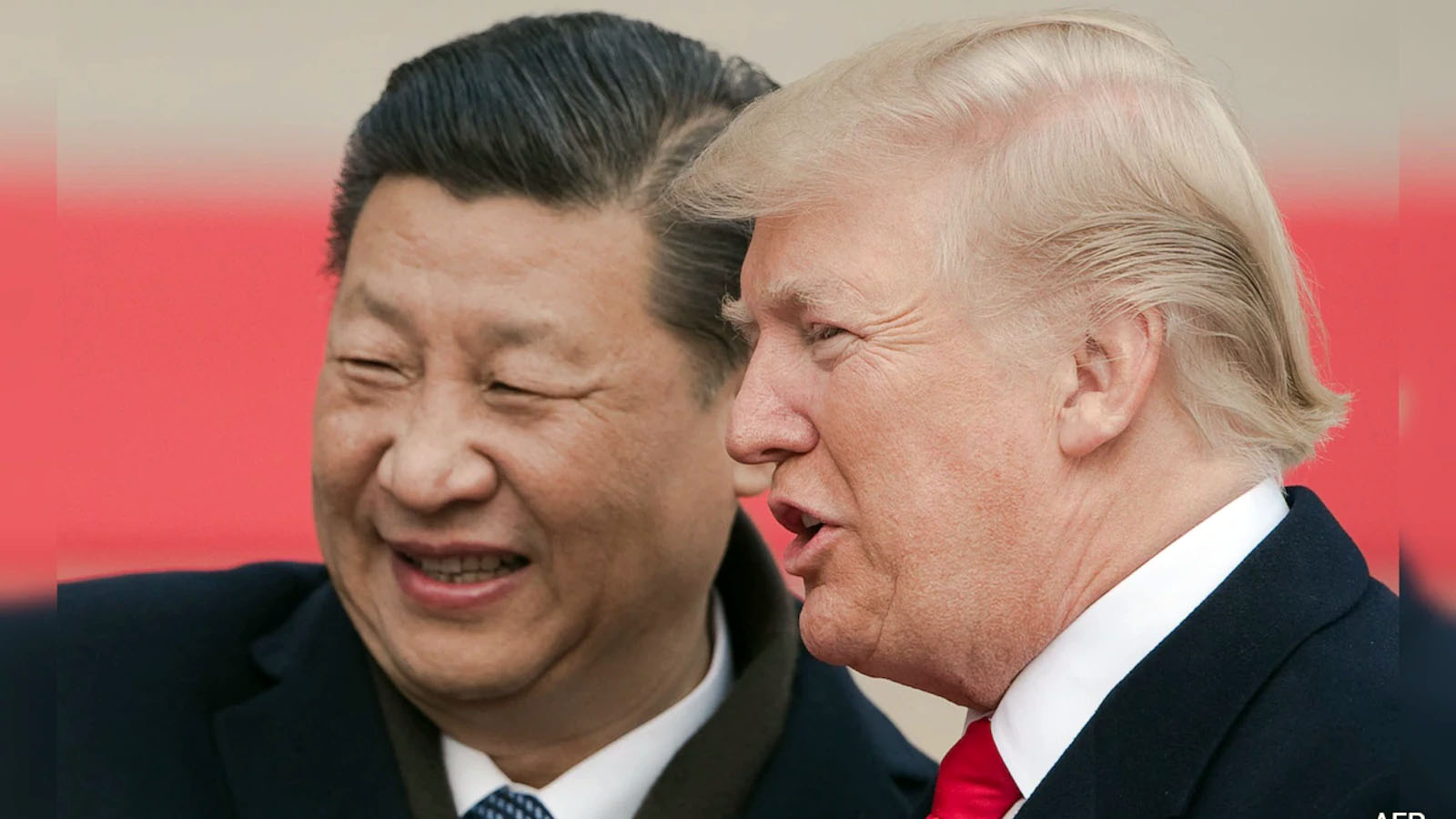
China Denies Supplying Iran Intelligence Linked to Attack That Killed US Troops
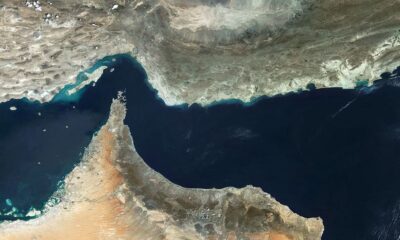
China has rejected as “groundless” reports that Chinese entities supplied Iran with satellite imagery of a US military base in Jordan before and after an Iranian missile attack that killed three American troops in July.
The denial followed a report by The Wall Street Journal, which cited unnamed US officials as saying that Iran obtained high-resolution satellite images of the Muwaffaq Salti Air Base in Jordan, where US forces are stationed, from Chinese entities.
The July 17 Iranian missile attack on the base killed three US Army soldiers and injured four others, according to US officials cited in the report.
The US officials reportedly linked the satellite imagery to the Iranian attack but did not identify the Chinese entities involved. Importantly, the report did not accuse the Chinese government of directly ordering, coordinating or facilitating the strike.
Chinese officials have rejected the allegation and demanded evidence, maintaining that Beijing complies with international law and opposes what it described as unfounded accusations.
The development has nevertheless raised fresh questions in Washington over the growing strategic relationship between China and Iran, particularly amid the wider US-Iran conflict and continuing tensions between Washington and Beijing.
The report said the satellite images were obtained before and after the attack, potentially giving Iran detailed information about the military facility and helping it assess the impact of its strikes.
READ ALSO:
- Police Arrest Mother Over Alleged Brutal Abuse of 7-Year-Old Girl in Anambra
- King’s College Concession: 115 Unity Colleges Shut as Education Workers Defy FG
- Petrol Price Hits N1,450/Litre as Middle East Crisis Pushes Oil Above $108
US officials have previously expressed concern about China’s technological and satellite-related links with Iran. Washington sanctioned three China-based satellite companies in May over allegations that they supported Iran’s military operations.
The latest report has intensified scrutiny of the role of commercial and private Chinese entities in providing technology or imagery that could potentially enhance Iran’s military capabilities.
However, US President Donald Trump has sought to play down the significance of the latest allegations.
Speaking to reporters aboard Air Force One on Sunday, Trump was asked whether he would raise the issue with Chinese President Xi Jinping during their expected meeting in the United States.
Rather than directly addressing whether Beijing should be held responsible, Trump compared Chinese intelligence-gathering activities with those of the United States.
Trump also maintained that he has a good relationship with Xi, saying the Chinese leader had behaved reasonably well and that Washington and Beijing had likewise conducted themselves reasonably.
The comments come as the United States and China attempt to manage several areas of tension, including trade, technology, national security and China’s relationship with Iran.
The allegations are particularly sensitive because the reported transfer of imagery occurred before an attack that resulted in the deaths of American service members.
The Iran missile strike in Jordan was part of the broader conflict involving Iran and the United States, which has increasingly drawn in regional actors and raised concerns about the security of American military personnel and facilities across the Middle East.
The Wall Street Journal report, according to Reuters, could not immediately be independently verified. It also did not establish that Chinese authorities themselves provided the imagery or that Beijing had prior knowledge of the Iranian attack.
The distinction is significant because evidence that individual Chinese companies or entities supplied commercial satellite imagery would not, by itself, establish direct involvement by the Chinese government.
The controversy comes ahead of a potential meeting between Trump and Xi, with the two leaders expected to meet in the United States on September 24, although Beijing had not officially confirmed the meeting as of Monday.
China’s denial and Trump’s decision to downplay the allegation could help prevent the issue from becoming a major diplomatic confrontation ahead of the anticipated meeting.
For now, the central question remains whether Chinese commercial entities provided the imagery to Iran and, if so, what information was transferred and whether it materially contributed to the Iranian operation that killed the three US troops.
The allegations are likely to remain under scrutiny as Washington assesses the extent of Chinese support for Iran and its possible implications for US military operations in the Middle East.
China Denies Supplying Iran Intelligence Linked to Attack That Killed US Troops
International
‘Completely False’ — Moreno Denies Using AI to Prepare Games

Robert Moreno has begun his interim tenure as South Korea’s coach with a denial of one of the more unusual controversies attached to his coaching career, claims that he used ChatGPT to help prepare his teams for matches.
The Spanish coach, who arrived in South Korea this weekend, was asked about the allegation as he began work with the national side.
Moreno was accused by Russian media earlier this year of heavily relying on artificial intelligence during his spell at Sochi, where he left in September 2025 following a poor run of results.
He has consistently rejected the claim.
Moreno said the reports were “completely false” and argued that his use of technology had been misrepresented.
His explanation comes as he takes over a South Korean side attempting to recover from a turbulent World Cup campaign. The team crashed out in the group stage, leading Hong Myung-bo to resign and leaving the Korea Football Association under pressure over both the team’s performance and its previous recruitment process.
The KFA appointed Moreno as a temporary replacement rather than immediately committing to a permanent coach. He is expected to lead the team through six international matches, beginning with September and October friendlies against Ecuador, Uruguay, Venezuela and Uzbekistan.
His first squad includes veteran captain Son Heung-min, who now plays for Los Angeles FC, as well as Lee Kang-in and Kim Min-jae.
Moreno said he wants his tenure to be about more than results, with the immediate goal of rebuilding the relationship between the national team and its supporters.
“I want to make Korean football fans happy,” he said.
For now, however, the AI controversy remains part of the baggage surrounding his appointment, something Moreno appears keen to put behind him as he begins the task of rebuilding South Korea’s national team.
International
Trump Downplays Report of Chinese Satellite Help to Iran

US President Donald Trump has played down a report alleging that Chinese entities supplied Iran with satellite imagery of a US military base in Jordan before and after a deadly Iranian missile strike.
The report, published by The Wall Street Journal, said US officials had linked high-resolution satellite imagery provided by Chinese entities to Iran’s July 17 attack on Muwaffaq Salti Air Base, where three American soldiers were killed and four others injured.
Trump, however, appeared to dismiss the significance of the allegation while speaking to reporters aboard Air Force One on Sunday.
“When they say that China spies on us, I say you’re right, and we spy on them too,” he said, adding that the two countries essentially engage in similar intelligence activities.
The report has not established that Beijing directly authorised or participated in the alleged transfer. US officials cited by the Journal did not identify the Chinese entities involved, while Chinese officials reportedly rejected the allegation and asked Washington to provide evidence.
The development comes as Washington and Beijing prepare for a potentially sensitive meeting between Trump and Chinese President Xi Jinping, expected to take place at the White House on September 24.
The US has previously accused Chinese companies of assisting Iran’s military capabilities. Washington sanctioned three China-based satellite firms in May over alleged support for Iran’s military operations.
Despite the latest dispute, Trump struck a conciliatory tone when discussing Xi, saying the Chinese leader had “behaved reasonably well” and that the US had done the same.
Trump’s response leaves the satellite imagery allegations unresolved, with Beijing denying involvement and Washington yet to publicly identify the companies allegedly involved.
-

 metro3 days ago
Ondo Herbal Drink Tragedy: Survivor Vows Never to Drink Again as Death Toll Tops 30
-
 Business3 days ago
Dangote: ₦525 Refinery Shares Could Rise to ₦10,000
-

 metro3 days ago
Sokoto Cleric Stabbed Twice in Neck After Juma’at Prayer, Attacker Killed
-
 News2 days ago
SERAP Threatens Legal Action Over ₦126bn INEC Electoral Funds
-

 metro3 days ago
MURIC fires back at Peter Obi: Forget Sallah ceremony, free Nigerian Muslims
-

 metro3 days ago
Abia Police Arrest Father, Three Others Over Alleged Attempt to Sell 16-Month-Old Daughter
-
 International3 days ago
Trump Tells Supporters to ‘Cheat Like Hell’ Ahead of US Election
-

 metro3 days ago
FG Targets 2 Million Creative Jobs by 2030