

metro
Lagos corporal beats up senior officer over traffic

There was a mild drama on Saturday at the Simbiat Abiola Way, Ikeja, Lagos State, as a police corporal assaulted his superior during an argument.
PUNCH Metro gathered that the yet-to-be-identified corporal had confronted the superior officer, who was identified as Supol Edgar, for allegedly causing traffic at the junction linking the Awolowo Way.
This led to an argument, as the corporal punched Edgar.
Our correspondent learnt that the policeman did not know Edgar was a police officer who resided in a barracks close to the scene.
During the confrontation, Edgar reportedly reached out to his colleagues in the barracks, who stormed out and bundled the policeman into their premises.
Our correspondent, who was at the scene of the incident, observed as the corporal was forcefully dragged into the police barracks.
An eyewitness, who identified himself only as Stanley for security reasons, said the problem was caused by a tricycle rider, who tried to navigate through some vehicles at the junction.
READ ALSO:
- Just In: Bandits kill three, abduct scores in Taraba
- Oyo denies returning schools to original owners
- Wike alleges politicians recruiting cultists to destabilise Rivers
He said, “The Supol tried to caution a tricycle rider who tried to make his way past some vehicles and that led to the traffic jam. But when the corporal saw what was happening, he angrily rushed out of his car to confront him for causing a delay. That was how the argument started between them and even when the senior officer was telling him that he was also a police officer, he did not hear him out, as he kept on slapping and punching him. That was when the Supol called someone in the barracks and they came to carry him.”
A traffic warden, who was at the spot and begged not to be identified because he was not authorised to speak on the matter, said the officer did not reveal his identity on time before the matter escalated.
He said, “I was controlling traffic when I saw a man arguing with someone in the tricycle. I approached him to know what was happening but he refused to answer me. I left him to continue what I was doing. It was later that I saw that traffic had started building up and by the time I went back to check what caused it, I saw both of them dragging each other.”
Our correspondent also observed that before the corporal was taken into the barracks, he was stripped of his clothes and asked to kneel, while other senior officers in the barracks gathered around him.
Edgar threatened to lock him up at the Area F Police Command.
The Lagos State Police Public Relations Officer, Benjamin Hundeyin, said he was not aware of the incident.
He promised to respond after making enquiries. He had yet to do so as of the time of filing this report.










metro
How Bauchi Court Jailed Three 21 Years Each for Abducting Seven Children
How Bauchi Court Jailed Three 21 Years Each for Abducting Seven Children
A Bauchi State High Court has sentenced three defendants to 21 years’ imprisonment each for criminal conspiracy, kidnapping and the abduction of seven children who were allegedly given new identities after being taken from their families.
The judgment was delivered on Wednesday, October 7, 2026, by Justice Farouq Sarki, following a trial involving 11 defendants. The case attracted attention because of allegations that the children, some of whom were as young as three years old, were taken from their biological families and given different names.
According to reports by Channels Television, the three defendants sentenced to prison terms were identified as Ruth Yarima, Chika Izuegbu and Abner Samuel. Each was sentenced to 21 years’ imprisonment without the option of a fine.
Two of the defendants were reportedly convicted on all 21 counts against them, while the third was found guilty on three counts. The court, however, discharged and acquitted the remaining eight defendants standing trial in the case.
The prosecution followed investigations into a suspected child-trafficking network whose activities reportedly involved children who disappeared from Bauchi State at different times between 2016 and 2023.
The investigation reportedly recorded a breakthrough in December 2023, when the Bauchi State Police Command arrested suspected members of the network. The arrests paved the way for the prosecution, which commenced in March 2024.
The children were subsequently rescued and reunited with their families, bringing relief to relatives who had spent years searching for them.
The case drew particular attention over allegations that the abducted children were assigned new names after being taken from their biological families. The children were identified in reports as Usman Adamu, Mahmud Bilyaminu, Muhammad Iliyasu, Aisha, Hafizu Hassan, Abdulmudanlib Sa’adu and Asiya Mukhtar.
According to the reports, their names were changed to Chibuke, Chibunna, Chibere, Chi’amaka, Ukechukwu, Ifeanyi Chukwu and Chioma, respectively. The children were reportedly between infancy and five years old when they were abducted.
The alleged renaming of the children was a particularly disturbing aspect of the case, as changing a child’s identity can complicate efforts by relatives and law enforcement agencies to establish the child’s origins and trace missing family members.
The Bauchi State Government welcomed the convictions, describing the judgment as an important step towards securing justice for the victims and their families.
The State Solicitor-General, Sabi’u Gumba, said the families had endured considerable emotional distress while trying to establish the whereabouts of their missing children. He highlighted the anguish parents experience when they do not know where their children are or whether they are safe.
Gumba also defended the sentences in view of the seriousness of the offences and the suffering allegedly caused by the abductions. The government urged parents, guardians and communities to remain vigilant and take appropriate measures to protect children against abduction, trafficking and other forms of exploitation.
Despite the convictions, the case may proceed to another stage of litigation, as defence lawyers indicated plans to challenge the judgment.
Ogbuchi Ben, counsel to the third defendant, said the defence intended to appeal the conviction, arguing that there was insufficient basis for the court’s decision against his client.
Florence Bwala, counsel to the second defendant, also noted that her client had the right to challenge the judgment at the Court of Appeal.
Any appeal would give the appellate court an opportunity to examine the grounds raised by the affected defendants in accordance with the law.
The Bauchi case highlights the challenges associated with child abduction and trafficking, as well as the importance of prompt reporting when a child goes missing. It also underscores the need for effective investigations, cooperation among law enforcement agencies and sustained efforts to protect minors from exploitation.
Parents and guardians are encouraged to report missing children promptly to the police and provide relevant identifying information that could assist investigations.
The convictions mark a significant development in the prosecution of those found guilty in the case, while the acquittal of the other defendants and the announced intention to appeal underline the importance of due process in the administration of criminal justice.
How Bauchi Court Jailed Three 21 Years Each for Abducting Seven Children
metro
Tension in Kano as Phone Traders Confront Chinese Sellers Over Cheaper Phones
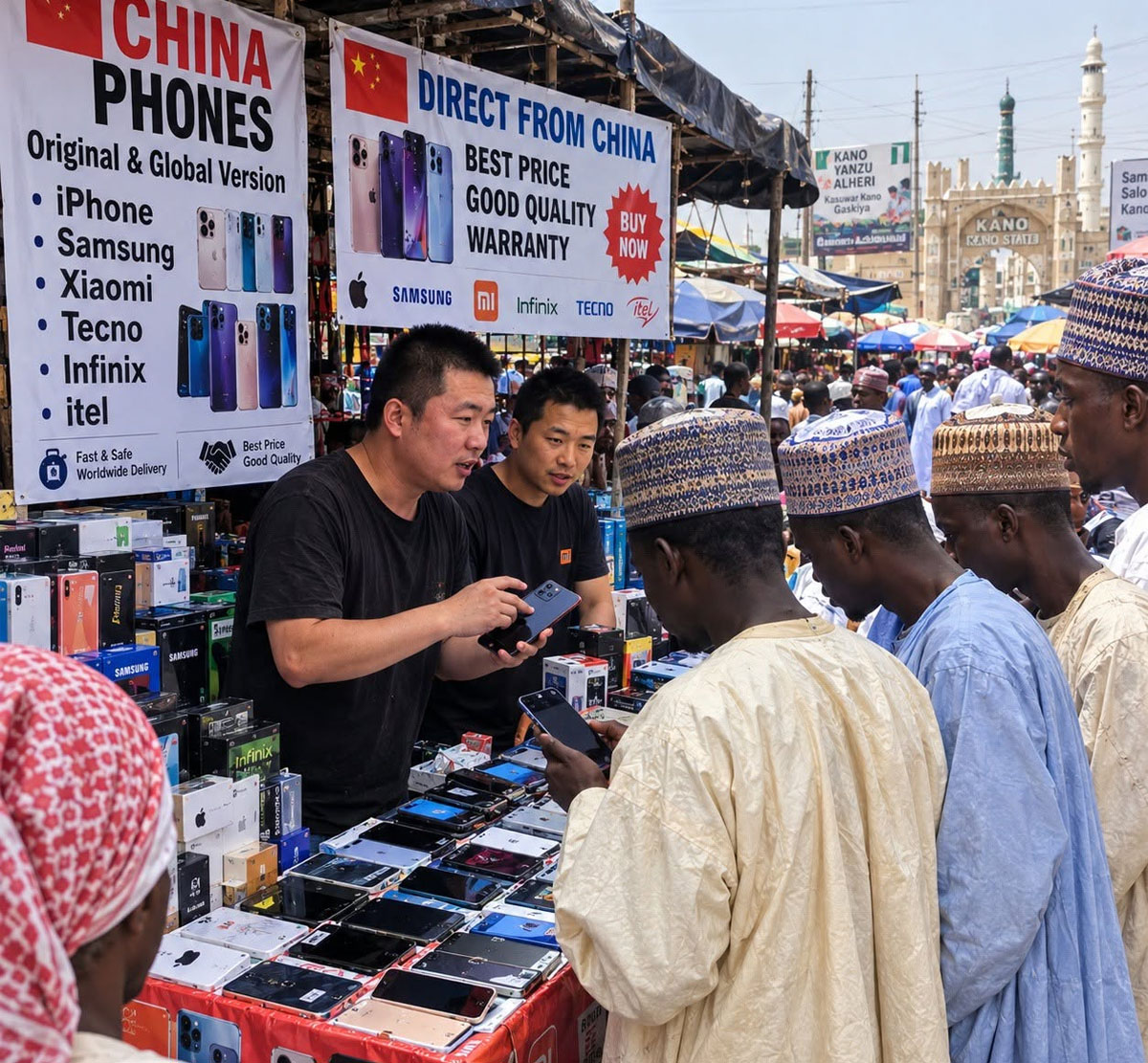
Phone traders in Kano State have confronted Chinese nationals accused of selling mobile phones directly to consumers at lower prices, reigniting concerns over foreign competition and the survival of local retail businesses in Nigeria.
The confrontation, reportedly captured in a video circulating on social media on Saturday, October 10, 2026, saw aggrieved traders challenge a Chinese national over alleged direct sales in a local market.
In the footage, some traders warned the foreign sellers against continuing the disputed business activities, insisting that their presence and pricing practices were undermining local dealers.
The traders alleged that Chinese sellers were bypassing established distribution channels by selling phones directly to consumers rather than supplying Nigerian retailers, who traditionally buy from importers and wholesalers before reselling to the public.
They argued that foreign suppliers with direct access to manufacturers could offer lower prices, making it difficult for local dealers to compete and maintain their businesses.
The traders expressed concern that the alleged practice could reduce their sales, threaten jobs and undermine the livelihoods of people who depend on the mobile phone retail business.
However, the circumstances surrounding the confrontation remain unclear. The identities of those involved, the precise location of the incident and whether any formal complaint was filed have not been independently established. There was also no confirmed information about arrests or police intervention.
The Kano dispute comes amid growing tensions between Nigerian traders and Chinese business operators over the boundaries between wholesale distribution and direct retail sales.
READ ALSO:
- NNPC Petrol Discount: Motorists Must Download App to Save ₦66 Per Litre
- Panama Earthquake: 27 Injured as Powerful 7.7-Magnitude Tremor Damages Hundreds of Buildings
- EFCC Wins ₦132m Money Laundering Case as Court Orders Forfeiture of Lagos Properties
A similar disagreement emerged in September at the Lagos International Trade Fair Complex, where members of the Auto Spare Parts and Machinery Dealers Association of Nigeria (ASPMDA) protested against what they described as direct retail activities by Chinese business operators.
The Lagos traders alleged that some foreign businesses were selling goods directly to consumers, putting local retailers at a disadvantage because of differences in purchasing power, supply chains and access to manufacturers.
The disagreement prompted discussions involving market representatives, the trade fair management board and security officials, who sought to prevent the dispute from escalating.
During efforts to resolve the Lagos disagreement, stakeholders called for clearer rules defining the respective roles of wholesalers and retailers. Representatives of the Chinese business community also indicated that businesses found engaging in prohibited activities should be reported for appropriate action.
The dispute has since highlighted wider concerns about foreign investment, fair competition and the protection of Nigerian small businesses.
Local traders argue that they need a level playing field to compete with businesses that source products directly from manufacturers. They also want authorities to clarify the conditions under which foreign operators can participate in Nigeria’s retail sector.
However, selling products at lower prices does not automatically establish wrongdoing. Determining whether a business has breached the law requires evidence of the relevant activities and the regulations governing its operations.
Consumers, meanwhile, may benefit from lower prices and greater choice when competition increases. The challenge for regulators is to ensure that competition remains lawful and fair while protecting consumers and supporting sustainable local enterprise.
The Kano confrontation has renewed calls for government agencies and market authorities to clarify Nigeria’s foreign trade and retail regulations, investigate credible complaints and provide mechanisms for resolving commercial disputes peacefully.
Authorities will also need to ensure that disagreements over business practices do not lead to intimidation, threats or violence against traders of any nationality.
For now, the central issue remains whether the alleged direct sales in Kano violate applicable regulations or market rules. An official response clarifying the circumstances of the incident would help establish the facts and determine whether further action is necessary.
Tension in Kano as Phone Traders Confront Chinese Sellers Over Cheaper Phones
metro
EFCC Wins ₦132m Money Laundering Case as Court Orders Forfeiture of Lagos Properties

The Economic and Financial Crimes Commission (EFCC) has secured the conviction of Lagos-based businessman Onatayo Pelumi over alleged money laundering involving approximately ₦132 million, with the Federal High Court in Lagos ordering the forfeiture of two properties and ₦8 million to the Federal Government.
Justice Osiagor of the Federal High Court, Lagos, convicted Pelumi on five counts relating to the retention of proceeds of unlawful activities in bank accounts maintained with Guaranty Trust Bank (GTBank) and Zenith Bank.
According to the EFCC, the charges covered various sums allegedly retained in the accounts between January 2023 and June 2026, despite the defendant’s knowledge that the funds were proceeds of unlawful activities.
The commission did not provide further details about the specific unlawful activities from which the money was allegedly derived.
In his judgment, Justice Osiagor sentenced Pelumi to three years’ imprisonment, with an option of a ₦300,000 fine, on the first count.
READ ALSO:
- Hardship: ACF Gives Tinubu Three Months to Deliver Relief, Demands Clear Timelines
- Adamawa Mourns as Fufore Loses Second Council Chairman in 18 Months
- Police Launch Manhunt After Fresh Attacks, Kidnappings Rock Four Nigerian States
For each of the remaining four counts, the court imposed five years’ imprisonment, with an option of a ₦300,000 fine per count.
However, the judge directed that all the prison terms run concurrently, meaning they are served at the same time rather than consecutively.
The court also ordered the forfeiture of two half-plots of land in Lagos and ₦8 million held in Pelumi’s Zenith Bank account to the Federal Government of Nigeria.
The properties covered by the forfeiture order are a half-plot of land at No. 23 Michael Ayorinde Street, Abule-Egba, and another half-plot at No. 1 Yisa Street, Meiran, both in Lagos State.
In addition to the prison sentences and forfeiture orders, Pelumi was directed to undertake seven days of community service.
The conviction followed prosecution by the EFCC’s Lagos Zonal Directorate 1 as part of its efforts to investigate and prosecute financial crimes involving the retention of funds linked to unlawful activities.
The case also highlights the commission’s use of asset-forfeiture proceedings to recover money and property connected to financial crime cases.
The EFCC did not disclose additional details about the source of the funds beyond the allegations contained in the five-count charge.
EFCC Wins ₦132m Money Laundering Case as Court Orders Forfeiture of Lagos Properties
-

 Africa3 days ago
FBI Raids Ghana Scam Centre, Detains Over 130 in $10m Fraud Probe
-
 metro2 days ago
How Parents Raised Millions to Free 20 Abducted NYSC Members
-

 metro2 days ago
[UPDATED] Lagos Train Crash: 55-Year-Old Motorist Survives as Honda Car Is Wrecked at PWD Crossing
-

 metro3 days ago
BREAKING: FG Unveils 10 Measures to Cushion Fuel Price, Inflation Pressures
-

 metro7 hours ago
Tension in Kano as Phone Traders Confront Chinese Sellers Over Cheaper Phones
-

 metro3 days ago
Man Allegedly Caught Using Old Tyres to Scam POS Operator
-

 Sports2 days ago
Ronaldo Breaks Silence on Portugal Row as Pelé, Maradona Comparison Sparks Meme Frenzy
-

 metro2 days ago
2027: Ekiti Driver Takes ₦3.5m Loan to Back Tinubu’s Re-election Bid