

Business
Nigerians, others worry as UK economy falls into recession
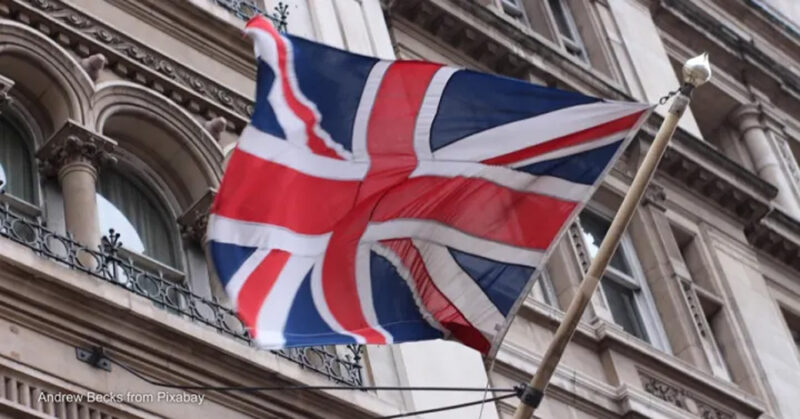
Nigerians, others worry as UK economy falls into recession
There is palpable fear among Nigerians heading for London among other people as the United Kingdom’s economy has fallen into recession.
The was reported as the Gross domestic product (GDP) – a key measure of economic activity – dropped by 0.3 per cent between October and December 2023.
According to the UK’s Office for National Statistics (ONS), the fall in the GDP was due to a decline in all main sectors of the economy.
This is considered the “mildest recession” witnessed in 50 years — unlike the huge drop of over one per cent sometimes seen, according to the BBC.
The ONS confirmed the real GDP fell 0.3 per cent in the fourth quarter (Q4) of 2023.
The UK is considered to be in recession if the GDP falls for two successive three-month periods.
The figure will be a blow to Prime Minister Rishi Sunak, according to economic analysts.
Growing the economy was one of five pledges Sunak made in January 2023.
Chancellor Jeremy Hunt is less than three weeks away from unveiling his latest budget.
Shadow chancellor Rachel Reeves said the data showed that Mr Sunak’s pledge to grow the economy was “in tatters”.
Treasury sources confirmed to the BBC News that the chancellor was looking at a larger pencilled-in squeeze on public spending as a way to deliver tax cuts in the budget on 6 March.
Forecasts for the public finances have materially deteriorated in recent weeks as interest costs on UK government borrowing has increased. Final decisions have not been made.
Commenting on the GDP, Hunt said, “While interest rates are high – so the Bank of England can bring inflation down – low growth is not a surprise.”
He added that there were “signs the British economy is turning a corner”.
But Mr Reeves said: “This is Rishi Sunak’s recession and the news will be deeply worrying for families and business across Britain.”
Figures from the Office for National Statistics showed that during the final three months of last year, there was a slowdown in all the main sectors it measures to determine the health of the economy, including construction and manufacturing.
The figure for the final three months of last year was worse than a 0.1% fall widely forecast by financial markets and economists.
The GDP for the third quarter, between July and September fell by 0.1%.
Ruth Gregory, deputy chief UK economist at Capital Economics, said the latest economic figures “might nudge the Bank of England a little closer to cutting interest rates”.
“But we doubt the Bank will be too worried about what is likely to be a mild and short recession,” she added.
Recent figures showed that inflation – which measures the pace of price rises – remained at 4% in January.
The Bank of England had been lifting interest rates to put the brakes on inflation but has kept them at 5.25% since August last year.
For the year as a whole, the economy grew by 0.1%.
“While it has now shrunk for two consecutive quarters, across 2023 as a whole the economy has been broadly flat,” said Liz McKeown, director of economic statistics at the ONS.







Business
Dangote raises petrol price 6.7% to N1,350/litre
Dangote raises petrol price 6.7% to N1,350/litre
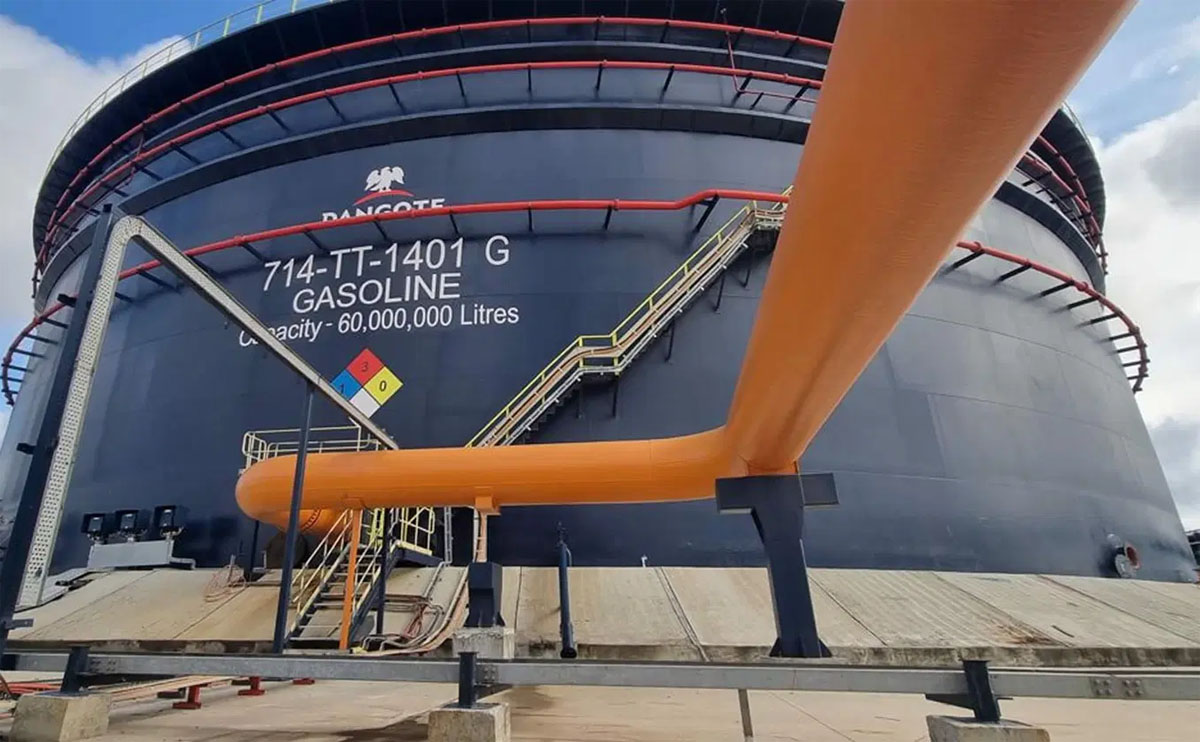
The Dangote Petroleum Refinery has increased its Premium Motor Spirit (PMS), popularly known as petrol, gantry price by 6.7 per cent, raising it from N1,265 to N1,350 per litre, with the new price taking effect from September 12, 2026.
The latest adjustment represents an N85 increase per litre and is the fourth upward review of Dangote Refinery’s petrol price since August 21, further raising concerns about the possible impact on petrol pump prices, transportation costs and the wider cost of living.
The refinery also increased its coastal price from N1,669,543 to N1,783,530 per metric tonne, representing an increase of N113,987, or about 6.8 per cent.
In a memo to customers, Dangote Petroleum Refinery announced the revised prices and directed customers with existing loading arrangements to return their Authority to Collect (ATC) documents for repricing.
The refinery said new volume contracts would subsequently be issued to allow loading to resume under the revised prices.
The latest increase means Dangote’s petrol price has risen by N185 per litre, or about 15.9 per cent, in 22 days.
The refinery had increased its gantry price from N1,165 to N1,185 per litre on August 21. It subsequently raised the price to N1,200 on August 26 and then to N1,265 on August 29, before the latest increase to N1,350.
The development comes amid renewed pressure in the international crude oil market, with Brent crude recently trading above $100 per barrel as geopolitical tensions and disruptions to oil supplies in the Middle East continue to affect global energy markets.
The pressure on global fuel markets is also being felt by refiners and petroleum traders as disruptions to Middle Eastern refining capacity and shipping routes create concerns over the availability of crude and refined petroleum products.
Dangote Refinery’s management recently said global fuel shortages could persist beyond the current Iran conflict because of damage to refining infrastructure, high refinery utilisation rates and the need to rebuild fuel inventories.
READ ALSO:
- Anambra Police Arrest Woman Over Alleged Sexual Abuse of Child, Rescue Four
- MURIC fires back at Peter Obi: Forget Sallah ceremony, free Nigerian Muslims
- Fani-Kayode Condemns Fresh Killing of Two Nigerians in South Africa
For Nigeria, the increase comes as the downstream petroleum market continues to operate under deregulation, meaning petrol prices are largely determined by market conditions rather than a fixed government-controlled price.
The Nigerian Midstream and Downstream Petroleum Regulatory Authority (NMDPRA) recently identified crude oil sourcing, refinery delivery timelines, imported cargoes, transportation, logistics and taxes among the factors influencing movements in petrol prices.
NMDPRA Head of Public Affairs George Ene-Ita said petrol prices are fully deregulated and therefore exposed to fluctuations across the supply chain.
Consequently, the new Dangote price does not necessarily mean motorists across Nigeria will immediately pay exactly N1,350 per litre at filling stations.
The price consumers pay will depend on the cost at which individual marketers obtain their supplies, transportation and distribution expenses, depot charges, operating costs, location, competition and profit margins.
However, the increase in the refinery’s gantry price is expected to put additional pressure on marketers who source petrol from Dangote Refinery, particularly as they replenish existing stocks.
Recent reports indicate that petrol prices in several parts of the country had already moved higher, with pump prices in some locations reaching the N1,310-N1,350 per litre range before the latest Dangote adjustment.
The latest price review could therefore trigger another round of adjustments by petroleum marketers, especially if the higher wholesale acquisition cost persists.
READ ALSO:
- FG Targets 2 Million Creative Jobs by 2030
- Donnarumma: Two Jailed Over Violent Paris Burglary of Man City Goalkeeper, Wife
- Police Clarify IGP Disu’s Position on Recording Officers
The development is also significant because Dangote Refinery has become an increasingly important source of locally refined petrol as Nigeria seeks to reduce its dependence on imported petroleum products.
The refinery has secured at least 16 million barrels of Nigerian crude for October delivery, equivalent to roughly 520,000 barrels per day, according to Reuters. The purchases represent a substantial portion of the refinery’s current 700,000-barrel-per-day capacity and underline its growing role in Nigeria’s domestic fuel supply.
Despite the increase in petrol prices, Dangote Refinery is pursuing plans to expand its capacity significantly. The company announced a $14.3 billion expansion programme that is expected to increase its processing capacity from about 700,000 barrels per day to 1.4 million barrels per day by 2029.
The refinery is also preparing for a major initial public offering (IPO) aimed at raising about N2.15 trillion, with the offer scheduled to run from September 14 to October 13.
For consumers and businesses, the immediate concern remains the potential effect of the latest petrol price increase on transportation, logistics and the cost of goods and services.
Petrol remains a major input for transportation and commercial activities in Nigeria. Any sustained increase in its price can raise the cost of moving people and goods and increase operating expenses for businesses that depend on petrol-powered vehicles and equipment.
The extent of the impact of the new N1,350 per litre Dangote petrol price, however, will depend on how marketers respond and whether international crude prices remain elevated.
For now, the latest adjustment establishes a higher wholesale benchmark for customers buying petrol from Dangote Refinery, while the retail market is expected to respond according to prevailing supply, distribution and competitive conditions.
Dangote raises petrol price 6.7% to N1,350/litre
Auto
Jetour Takes Award-Winning Dashing, Other SUVs to Abuja

Jetour Takes Award-Winning Dashing, Other SUVs to Abuja
Motorists in Abuja are set for a close encounter with Jetour’s award-winning Dashing and other models as Jetour Nigeria moves to deepen its foothold in the nation’s capital with the Jetour Experience Abuja, beginning September 22.
The three-day motoring event, which runs until September 24, is expected to draw prospective buyers and automobile enthusiasts to a hands-on experience featuring test drives, product demonstrations and direct engagement with Jetour’s seven authorised dealers and product specialists.
The participating dealer network comprises Elizade Nigeria Limited, Kojo Motors, Mandilas Autos, Germaine Auto Centre, R.T. Briscoe, Tab Autos and New Era Auto Vehicle Services Limited.
READ ALSO:
- Police Arrest Woman Over Alleged Drug Trafficking in Delta
- Dangote raises petrol price 6.7% to N1,350/litre
- Anambra Police Arrest Woman Over Alleged Sexual Abuse of Child, Rescue Four
The Abuja Experience follows the success of the Lagos edition, which attracted thousands of visitors for test drives and direct engagement with product specialists. According to the organisers, strong demand and inquiries from motorists in Abuja and neighbouring states prompted the expansion of the event to the Federal Capital Territory.
The Dashing has gained attention in Nigeria’s competitive compact SUV segment for its combination of modern styling, technology, performance and competitive pricing.
The SUV is available with 1.5-litre and 1.6-litre turbocharged engines, producing up to 145kW of power and 290Nm of torque, paired with six- or seven-speed dual-clutch transmissions.
Its features include a 15.6-inch central touchscreen infotainment system, panoramic sunroof, wireless charging and smartphone integration.
For safety, the vehicle comes with a 360-degree surround-view camera, automatic emergency braking, lane departure warning, blind-spot detection and multiple airbags.
Beyond vehicle sales, the authorised dealers provide warranty, genuine spare parts and after-sales support to Jetour customers across their respective locations.
The Abuja Experience is expected to strengthen customer engagement and give motorists in the FCT a closer look at Jetour’s growing range of vehicles, while further expanding the brand’s footprint in the northern market.
Jetour Takes Award-Winning Dashing, Other SUVs to Abuja
Business
Dangote: ₦525 Refinery Shares Could Rise to ₦10,000

Dangote: ₦525 Refinery Shares Could Rise to ₦10,000
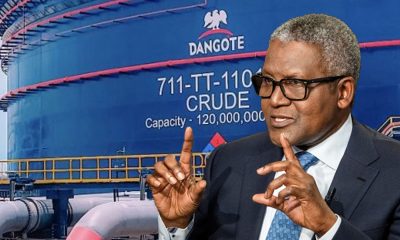
Investors who buy into the Dangote Petroleum Refinery may see the value of their holdings multiply significantly in the years ahead, according to Aliko Dangote.
The businessman said the refinery’s shares, which will be offered at ₦525 each, could eventually climb as high as ₦10,000.
The projection comes ahead of the company’s much-anticipated initial public offering, which is scheduled to open on September 14 and close on October 13.
Dangote used a hypothetical ₦5m investment to illustrate his expectation, saying such an investment could be worth more than ₦50m if the share price eventually reaches his projected target.
The IPO will put 4.1 billion ordinary shares on offer, with investors able to apply for as few as 10 shares, equivalent to ₦5,250.
A major feature of the offer, according to Dangote, is that smaller investors will be given preference when shares are allocated.
He said people investing modest amounts such as ₦50,000 or ₦100,000 would be prioritised ahead of institutional investors seeking much larger allocations.
READ ALSO:
- Police Uncover List of 125 Lagos Traders Marked for Fraud, Kidnapping by Syndicates
- How I Conspired with My Son’s Teacher to Stage His Kidnap for N15m Ransom
- Six Nigerians Extradited to US Over $6m Romance Scam
He also highlighted dividends as another potential attraction, saying shareholders may have the option of receiving their returns in either naira or US dollars.
Dangote argued that receiving dividends in dollars could be particularly useful for Nigerians who have expenses outside the country.
He cited parents with children studying in the United Kingdom as an example, noting that currency fluctuations can significantly increase the cost of foreign expenses.
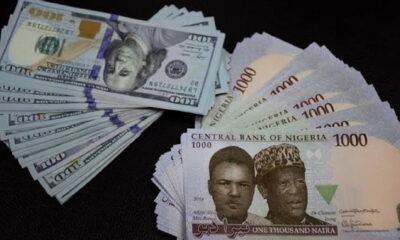
The Dangote Group president recalled the naira’s steep decline against the dollar, saying the exchange rate had moved from around ₦400 to about ₦1,800 to a dollar, creating difficulties for families and businesses with foreign obligations.
Beyond the potential returns for shareholders, the IPO is expected to help finance the refinery’s expansion plans. The company wants to raise its capacity from roughly 650,000–700,000 barrels per day to 1.4 million barrels per day.
However, the ₦10,000 figure should not be interpreted as a guaranteed future share price. Once the company is listed on the Nigerian Exchange, its market value will be influenced by demand and supply, business performance, investor confidence, refining margins and wider economic conditions.
The company expects the proceeds from the share sale to support its expansion and other corporate needs, while investors will only know the exact number of shares allotted to them after the offer closes and applications are processed.
Dangote’s comments therefore offer an optimistic outlook for prospective shareholders, but the eventual performance of the investment will depend on how the refinery and the wider market perform after listing.
Dangote: ₦525 Refinery Shares Could Rise to ₦10,000
-

 metro2 days ago
Woman disguises as Muslim woman in Niqab to steal in Ado-Ekiti market, video sparks outrage
-

 metro3 days ago
Police Arrest Woman Over Fake OPay Shutdown Notice
-
 metro3 days ago
Residents Cry Out Over Poorly Constructed Entrance of Ademola Abiola Street, Demand Urgent Intervention
-

 Politics3 days ago
Remi Tinubu Appeals To South-East Voters, Says She Wants To ‘Enjoy Nigeria’ In Old Age
-

 metro1 day ago
Ondo Herbal Drink Tragedy: Survivor Vows Never to Drink Again as Death Toll Tops 30
-
 Business23 hours ago
Dangote: ₦525 Refinery Shares Could Rise to ₦10,000
-

 metro1 day ago
Sokoto Cleric Stabbed Twice in Neck After Juma’at Prayer, Attacker Killed
-

 News2 days ago
AI on the Roads: LASTMA Turns to China to Fix Lagos Traffic