

News
NIN linkage: Millions to lose access to their money as banks ‘move’ to block accounts
NIN linkage: Millions to lose access to their money as banks ‘move’ to block accounts
Over 70 million bank customers are at risk of losing access to their accounts when the Central Bank of Nigeria’s directive on restricting accounts without Bank Verification Numbers (BVN) and National Identification Numbers (NIN) goes into effect.
The CBN had on December 1, 2023, in a circular directed that a ‘Post no Debit’ restriction be placed on all bank accounts without the BVN and NIN from Friday, March 1, 2024.
‘Post No Debit’ is a term used to describe a restriction imposed by banks on specific accounts, preventing customers from making withdrawals, transfers, or any other debits from such accounts. This measure effectively freezes the funds in the account, rendering them inaccessible for the duration of the restriction.
The circular, jointly signed by the Director, Payments System Management Department, Chibuzo Efobi; and Director, Financial Policy and Regulation Department, Haruna Mustapha, read, “It is mandatory for all Tier-1 bank accounts and wallets for individuals to have BVN and/or NIN. It remains mandatory for Tiers 2 & 3 accounts and wallets for individual accounts to have BVN and NIN.
“For all existing Tier-1 accounts/wallets without BVN or NIN: Effective immediately, any unfunded account/wallet shall be placed on ‘Post No Debit or Credit’ until the new process is satisfied. Effective March 1, 2024, all funded accounts or wallets shall be placed on ‘Post No Debit or Credit’ and no further transactions permitted. The BVN or NIN attached to and/or associated with all accounts/wallets must be electronically revalidated by January 31, 2024.”
The circular went on to warn banks in the country that a “comprehensive BVN and NIN audit shall be conducted shortly and where breaches are identified, appropriate sanctions shall be applied.”
As the deadline approached, some banks sent out messages to their customers to regularise their accounts in line with the new CBN directive. While some asked customers to visit their physical branches, others made provisions for customers to update their accounts online.
READ ALSO:
- Economy Hardship: What Nigeria should do – Dangote
- Ex-Power Minister, Agunloye files N1bn suit against EFCC for declaring him wanted
- Why Nigeria’s best is always in its past – Farooq Kperogi
FirstBank Nigeria in an email to customers said, “Please ensure that your Bank Verification Number and National Identification Number are linked to your account number on or before February 29, 2024.
“You can seamlessly update your account information with your BVN and NIN by visiting any FirstBank branch close to you. Please note that the Central Bank of Nigeria through its circular: PSM/DIR/PUB/CIR/001/053 dated December 1, 2023, has directed that effective March 1, 2024, all funded accounts without BVN shall be placed on ‘Post No Debit or Credit’ and no further transactions permitted.”
Ecobank Nigeria wrote, “Please be informed that the Central Bank of Nigeria through its circular dated December 1, 2023, has announced that all accounts without Bank Verification Number and/or the National Identity Number would not be able to carry out transactions from March 1, 2024.
“Consequently, you will be required to update your account information with your National Identification Number and Bank Verification Number if you have not done so already.” It, however, offered an online solution.
Fintech firm, OPay, also called on its customers to complete the regularisation of their accounts by linking their BVN or their NIN as mandated by the apex bank, offering them both online and offline options.
A Tier-1 account refers to a bank account that can be opened with minimal or no form of documentation. Such an account can be opened with a passport photograph and has a limit of N50,000 deposit and an operating balance of N200,000 and is mostly not linked to the BVN and is targeted at the unbanked population.
This space is dominated by fintech firms and there are concerns that the lax Know Your Customer requirements are loopholes that are being used to perpetuate fraud.
The National President of the Association of Mobile Money and Bank Agents in Nigeria, Sarafadeen Fasasi, who called for an extension of the deadline, said while the policy was a good move to improve banks’ KYC requirements, its implementation was worrisome.
He said, “We are all aware that it is a good policy for the system for us to have good KYC, but unfortunately, what we have a challenge with is the implementation. This is another wrong implementation. Before you give a deadline, you must have provided the access points. As of today, we have about 104 million NINs out of 200 million people expected to have NINs. So, there is a gap of about 100 million.
“It is the same thing with the BVN, which as of the last report was about 59.9 million out of 134 million expected bank accounts. That means we have over 70 million accounts, which will be affected.”
According to data from Statista, as of 2021, the number of active bank accounts in the country was around 133.5 million, with savings accounts making up about 120 million.
READ ALSO:
- Ukraine donates grains to Nigeria amidst food price spike
- Forex: Cardoso dancing around the problem, Bwala asks Tinubu to sack bank execs
- Just in: CBN revokes licences of 4,173 bureau de change operators
Fasasi claimed that the National Identity Management Commission lacked the capacity to deliver 100 million NINs within the required timeframe.
He said, “The question is, can the NIMC deliver the gap of about 100 million NINs within the deadline? The answer is no, so why should this drive Nigerians into another problem? For BVNs, we have a huge gap to deliver and only bank branches can enrol BVN as of today.
“Based on our research, about 300 local government areas out of the 774 LGAs in Nigeria have no bank branches; so, who are those who are going to provide BVN enrolment at those LGAs? It means that people are going to run into trouble.
“Also, the highest that the banks have done is 500,000 enrolment per month. We are not ready for this. Why the rush? Why not plan that every month, this is what we want to achieve based on our capacity and access points?”
He lamented that this was coming at the same time as the National Communications Commission had directed telecom companies to bar mobile lines without the NIN.
“Who is pursuing us in Nigeria in this critical period where everyone is groaning under adverse economic conditions? They want to add extra trauma; I think we need to reconsider this,” he concluded.
The Chairman, Consumer Rights Awareness, Advancement and Advocacy Initiative, Moses Igbrude, said the apex bank ought to assess the level of compliance before wielding the big stick.
He said, “You must check the challenges and the parties who are responsible for the NIN and BVN. What of Nigerians in the Diaspora? They should give more time for this linkage so that they will not disrupt the banking system.
“It is a multifaceted issue involving many players. What is the infrastructure required for them to work? Otherwise, they will use a legal way to disenfranchise a lot of people.”
The President, Bank Customers Association of Nigeria, Dr Uju Ogubunka, called for an extension of the deadline to enable more bank customers regularise their accounts in line with the CBN directive.
Ogubunka said, “We know that some of our members have linked their accounts with the BVN/NIN as directed by the CBN. At this point, I think it will be wise to give an extension, because the telecom network has been a bit inclement and, then of course, you talk about power; some of us were unable to charge our phones for some time because there was no power. And these things are happening almost everywhere.
“People are willing to do what they’re supposed to do, but conditions within the environment are a bit difficult. So, I will personally suggest that we consider what is happening and give some extension.”
He went on to suggest that a test run where restrictions would be placed on some affected accounts might be of help in sensitising people to the importance of the directive.
“Another thing that they can do is maybe do a test run so that people will know that it is something that can be done. Some people may not even believe that it is possible to restrict transactions. So, if you do a test run for one day or even a few hours, you announce that those who have not linked up will be unable to access their accounts temporarily, maybe for 24 hours or 12 hours, then give an extension. That should help,” Ogubunka added.
READ ALSO:
- Hardship: Zaria residents ‘ambush’ BUA truck carrying foodstuffs, loot cartoons of noodles
- ‘Death to Israel’: Pro-Palestine protesters vandalize iconic New York ‘Charging Bull’ sculpture
- Tinubu appoints new FGN power company management team
He stated that there had been no reports that banks had started to restrict bank accounts without the BVN and NIN.
“No one has reported that to us yet. But then, they may not know until they want to make use of the accounts. It is not as if they are using the bank accounts every minute of the day. It is only when they want to make use of it and then see that they can’t get through, that is when they have an issue. So far, we don’t have any report on that,” he said.
Multiple bankers, who spoke on condition of anonymity, said the banks had not yet started to restrict accounts without the BVN and NIN.
They said directives had been issued from their headquarters to create a seamless linking process to avoid account deactivation.
A bank official said, “No one is deactivating accounts yet. They have been sending emails to customers to calm down so that a more seamless linking process will be communicated to customers. They will be reached via text and email. Some people used the NIN to open or update their accounts already so they won’t need to do it again.”
On the number of possible affected customers, the official stated, “We haven’t got the affected number yet. It has to be spooled by our IT team from the backend.”
Another official confirmed the directive to assist more customers via email.
“The deadline still stands; however, not all accounts are blocked because some opened theirs with the national ID from the inception. But we will be reaching out via email and text,” the official wrote to one of our correspondents.
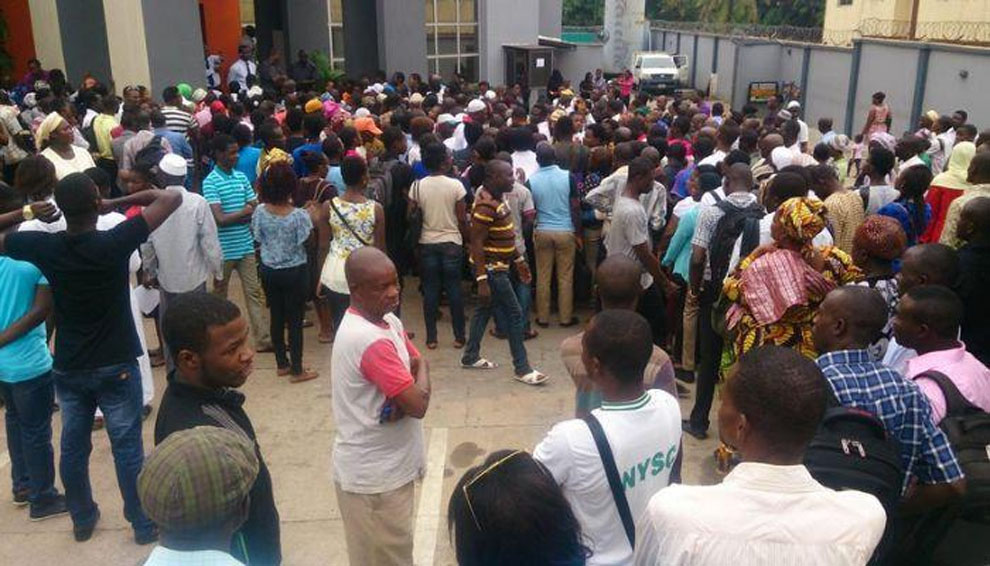
A News Agency of Nigeria report on Friday revealed that customers continued to besiege various bank branches in Lagos to meet the CBN deadline for linking BVN and NIN to their accounts.
The customers also asked the CBN to extend the deadline for them to link their BVNs and NIN with their accounts.
With the implementation of the directive, there was a significant gathering of customers at various banks as early as 8am on Friday to link their NINs with their bank accounts.
A security officer at a Guaranty Trust Bank branch in the Abule Egba area, while addressing customers who were eager to gain entry into the banking hall, said the message sent out by the bank to its customers concerning the directive was a random one.
He said not all customers that got the message were affected by the directive. This got the customers infuriated, as they said the bank should have sent out messages to only those affected. At another GTB branch in Egbeda, the bank advised customers to register online using specified codes displayed on the walls outside the banking hall.
However, at Polaris Bank, the crowd was not allowed to converge, and those who went into the banking hall were told by the customer service desk to produce their NIN slips.
Those without the slips were turned back. Customers who explained their mission to the bank’s security officers before entering the banking hall were told to get the slips.
Two bank employees used mini computers to do the first registration at the entrance before the security guards allowed the customers into the banking hall.
At Providus Bank on Nnamdi Azikiwe Road, customers were given forms and were assisted with registration simultaneously. The situation was similar at Wema Bank on Broad Street and other banks visited on Lagos Island.
Meanwhile, calls and text messages sent to the CBN spokesperson, Hakama Sidi, yielded no response as of the time of filing this report.
NIN linkage: Millions to lose access to their money as banks ‘move’ to block accounts
(PUNCH)






News
Pastor Apologises to Wife, Women Over Past Affairs, Steps Back From Ministry

Pastor Apologises to Wife, Women Over Past Affairs, Steps Back From Ministry
Apostle Sam Adegoke, a newlywed pastor of Elijah Generation Church, Akure, Ondo State, has stepped back from public ministry after apologising over past sexual relationships and allegations surrounding his conduct with women.
Adegoke announced his decision in a statement, saying he had chosen to withdraw from public ministry and social media to reflect on his actions, seek counsel and take steps towards making amends.
The pastor acknowledged that he had been involved in sexual relationships with women before his marriage, describing his conduct as wrong and expressing regret over the consequences of his actions.
He said the fact that the relationships occurred before his marriage did not excuse his behaviour, adding that he was seeking spiritual guidance as well as pastoral and professional counselling.
Adegoke also apologised to the women involved, as well as his wife, family, church members, colleagues and others who had placed their trust in him as a spiritual leader.
He said stepping back from public ministry was necessary to allow him to confront his past, make appropriate changes and demonstrate genuine repentance through his actions.
READ ALSO:
- Troops Take Down Zamfara Bandit Kingpins Baban Love, Mai Zamani, Three Others
- FG Gives N250m To Families Of 37 Miners Who Died In NSCDC Custody
- Tompolo’s PBAT Movement Suspends Campaign Over Ondo Military Crash
The pastor further said he was willing to remain under appropriate spiritual, pastoral and professional accountability during the process.
His decision followed the emergence of leaked WhatsApp conversations in which several women allegedly accused him of having sexual relationships with female church members over several years.
Some of the allegations reportedly concerned relationships that allegedly occurred shortly before his wedding. Adegoke admitted to past sexual relationships but did not publicly address every allegation contained in the leaked conversations.
The women also reportedly raised concerns about the welfare of female members of the church and alleged that some women had left the congregation over the pastor’s conduct.
Adegoke, however, said his immediate focus was on accepting responsibility for his past actions and undergoing the process he considered necessary for genuine change.
He appealed for prayers and said he wanted to approach the situation with humility, integrity and accountability, while making amends where appropriate.
The controversy has drawn significant attention because of its timing, coming shortly after the pastor’s marriage and amid renewed scrutiny of the allegations concerning his past relationships.
The pastor and his wife have reportedly disabled comments on their respective Instagram accounts following the development.
Pastor Apologises to Wife, Women Over Past Affairs, Steps Back From Ministry
News
Iwo Son Becomes Yorubaland’s First Muslim Professor of Arabic Without Secondary School
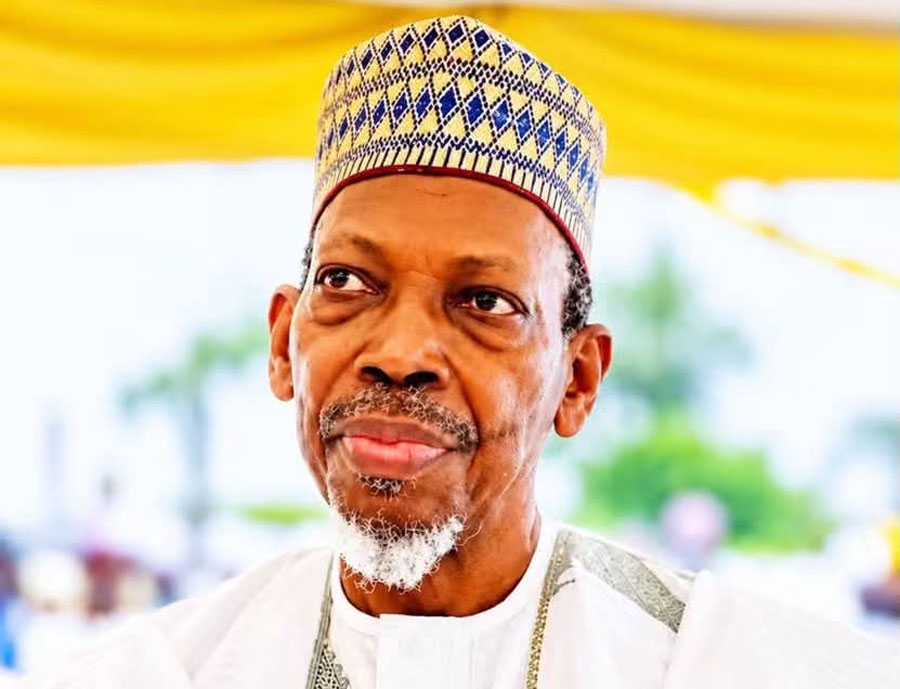
Iwo Son Becomes Yorubaland’s First Muslim Professor of Arabic Without Secondary School
Prof. Razaq Abubakre’s remarkable journey from self-study to academic excellence
The remarkable story of Professor Razaq Deremi Abubakre, an indigene of Iwo, Osun State, has continued to inspire generations, particularly for his extraordinary journey from a humble educational background to the pinnacle of Arabic scholarship in Nigeria.
Born on January 20, 1948, in Iwo, Abubakre rose to become the first Muslim Professor of Arabic in Yorubaland, a feat that established his place among the foremost scholars of Arabic and Islamic studies in the country.
What makes his achievement even more remarkable is the unusual path through which he attained academic excellence.
Available biographical accounts indicate that Abubakre did not attend a conventional secondary school. Instead, he pursued much of his early education through Arabic and Islamic learning, self-study and personal discipline.
His determination eventually paid off when he obtained distinctions that enabled him to proceed to the University of Ibadan, where he studied Arabic and graduated with First Class honours.
In an interview published by The PUNCH, Abubakre recalled how he returned to formal schooling after leaving in 1961 and was placed in Year Three in 1966. He said he subsequently performed exceptionally well, before later taking the University of Ibadan entrance examination for a Certificate in Arabic and Islamic Studies in 1969.
His academic journey later took him to the School of Oriental and African Studies (SOAS), University of London, where he pursued doctoral studies in Arabic Literature under a Commonwealth Scholarship and completed his PhD in 1980.
READ ALSO:
- Troops Take Down Zamfara Bandit Kingpins Baban Love, Mai Zamani, Three Others
- FG Gives N250m To Families Of 37 Miners Who Died In NSCDC Custody
- Tompolo’s PBAT Movement Suspends Campaign Over Ondo Military Crash
In 1989, Abubakre was appointed a Professor of Arabic at the University of Ilorin, at the age of 41, cementing his place in the history of Arabic scholarship in Yorubaland.
But beyond his own academic accomplishments, perhaps the most enduring part of Abubakre’s legacy is the number of scholars and intellectuals he taught and mentored.
Among those associated with him as students are Professor Ishaq Oloyede, former Vice-Chancellor of the University of Ilorin and current Registrar of the Joint Admissions and Matriculation Board (JAMB); Professor Muhammad Shafi’u Abdullahi, former Registrar of the National Board for Arabic and Islamic Studies (NBAIS); and Professor Amidu Olalekan Sanni, former Vice-Chancellor of Fountain University.
Others include Professor Abdul-Rasheed Na’Allah, former Vice-Chancellor of the University of Abuja, as well as Professors K.K. Oloso and Muhibbu-Din Opeloye, who served at different times as commissioners in Oyo and Osun states respectively.
Academic records and scholarly publications also attest to Abubakre’s influence on the development of Arabic and Islamic scholarship in Nigeria. A University of Ibadan research publication, for instance, lists him alongside Professor Ishaq Oloyede and other prominent scholars as products of the Arabic-Islamic educational tradition.
Abubakre’s career has extended beyond the classroom. He served as Vice-Chancellor of Al-Hikmah University, Ilorin, and held several academic and administrative responsibilities, while also contributing extensively to scholarship through books, journal articles and international academic engagements.
His story therefore goes beyond the title of professor.
It is a story of determination, self-education, intellectual discipline and mentorship.
For Iwo, it is also a story of a son of the ancient town who rose from an unconventional educational beginning to become a major figure in Arabic scholarship and a mentor to generations of academics.
Professor Abubakre’s journey demonstrates that the circumstances of one’s beginning do not necessarily determine the height of one’s achievement.
From Iwo to the University of Ibadan, from there to SOAS in London and eventually to professorial leadership in Nigeria, his life remains an enduring testimony to the power of knowledge, perseverance and purposeful mentorship.
At a time when educational opportunities are increasingly available to millions of young Nigerians, the story of the Iwo-born scholar offers another important lesson: great intellectual achievements can emerge from the most unlikely beginnings when determination is matched with discipline and opportunity.
Iwo Son Becomes Yorubaland’s First Muslim Professor of Arabic Without Secondary School
News
President Tinubu Mourns 32 NAF Personnel in Ondo Jet Crash, Orders Immediate Probe
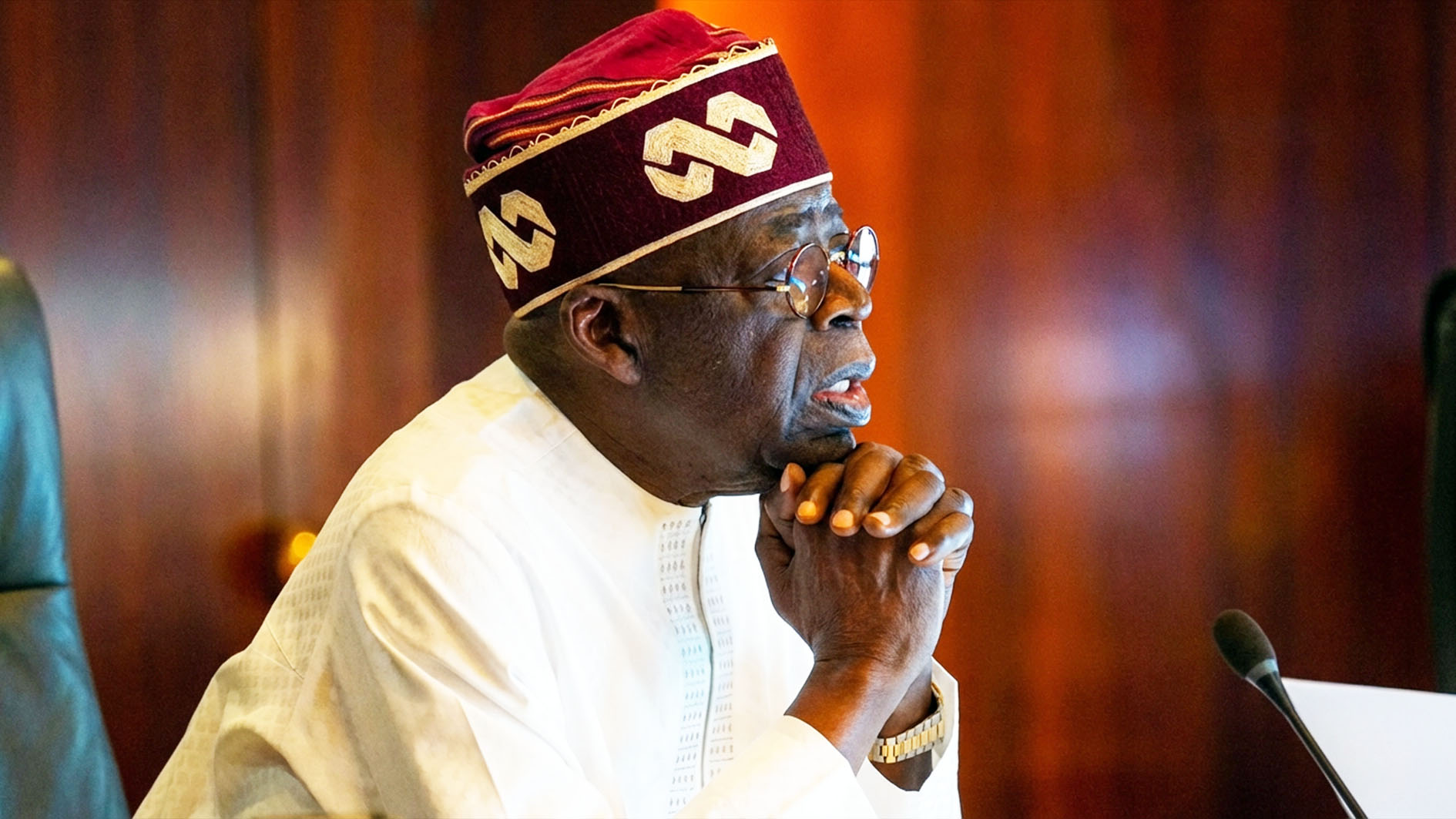
President Tinubu Mourns 32 NAF Personnel in Ondo Jet Crash, Orders Immediate Probe
President Bola Ahmed Tinubu has expressed profound grief over the crash of a Nigerian Air Force ATR-42 aircraft near a naval base in the Igbokoda area of Ondo State, which claimed the lives of all 32 personnel on board.
The tragic incident occurred on Monday morning when the aircraft, on a routine mission from Benin to Lagos, went down shortly before reaching its destination. The victims include 25 passengers and seven crew members.
In a statement released by his Special Adviser on Information and Strategy, Bayo Onanuga, the President described the incident as “a painful moment for our Armed Forces and for the entire nation.”
“Our Air Force personnel put their lives on the line every day to secure Nigeria. Their sacrifice will never be forgotten,” Tinubu said.
The President extended his deepest condolences to the families of the deceased, the Chief of the Air Staff, Air Marshal Sunday Kelvin Aneke, and the entire Nigerian Air Force community.
READ ALSO:
- Benue Boat Mishap: Catholic Priest Among Four Dead, Nine Missing
- Rivers Police Arrest OSPAC Operative Over Alleged Killing, Secret Burial
- Adeleke Signs New Law to Regulate Motor Parks Across Osun
President Tinubu revealed that he had received a briefing from the Chief of Air Staff and has directed an immediate and thorough investigation into the cause of the crash to prevent future occurrences.
“I have directed the Nigerian Air Force to immediately commence a thorough investigation into the cause of the crash to prevent future occurrences,” he stated.
The President commended the Nigerian Air Force for activating an immediate Search and Rescue operation following the accident, as well as the swift response of first responders and the Ondo State Government at the crash site.
“I pray for the repose of the souls of the gallant officers and for Almighty God to grant their families and the Nigerian Air Force the fortitude to bear the unfortunate loss,” Tinubu said.
He further assured the Nigerian Air Force of the continued support of his administration as they continue their vital role in securing the nation.
The crash marks one of the deadliest air disasters involving Nigerian military personnel in recent years, casting a shadow over the nation’s security apparatus. The Nigerian Air Force is expected to release further details as the investigation gets underway.
President Tinubu Mourns 32 NAF Personnel in Ondo Jet Crash, Orders Immediate Probe
-

 metro3 days ago
‘I Thought I Was Dead’ — Hairstylist’s Daring Escape From Kidnappers After Benin-Ore Ambush
-

 metro2 days ago
Tragedy Strikes FMC: Medical Director Loses Two Daughters—A Doctor and a Pharmacist—Within 48 Hours
-

 metro2 days ago
Transporters Urge IGP Disu to Arrest Illegal Highway Tax Collectors
-

 metro3 days ago
Court Restricts Osun Accounts Over $13.9m Arbitration Award
-

 metro2 days ago
Army, DSS, Amotekun Kill ISWAP Commander Planning Attacks in Southern Nigeria
-

 Politics2 days ago
2027: Soludo Govt Accuses Peter Obi Of Plot To Destroy APGA
-

 Entertainment3 days ago
“Sometimes, I Wonder Why I Married My Husband” — Omotola
-

 News2 days ago
BREAKING: Many Feared Dead as Helicopter Crashes in Ondo Community