
metro
Pardon all thieves in Prison, Falana knocks Buhari over Dariye, Nyame

Human rights activist and lawyer, Mr Femi Falana, SAN, has faulted the state pardon granted to former Governors of Plateau and Taraba, Joshua Dariye and Jolly Nyame respectively.
The former governors, who were jailed for corruption, were pardoned alongside 157 others at the Council of State meeting presided over by President Muhammadu Buhari on Thursday.
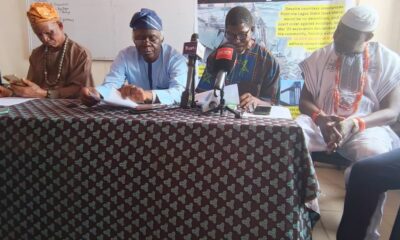
Speaking during the one year remembrance programme for the late Publicity Secretary of the Pan-Yoruba socio-political organisation, Yinka Odumakin, Falana described the release of the politicians as discriminatory.
Falana stressed that it was wrong to grant state pardon to the two of them who were convicted for stealing state funds.
He said under the 1999 constitution, there is equality for all citizens, adding that the state pardon has to be extended to all thieves and criminals serving jail terms in various prisons.
Falana said, “My reaction is that all criminals, all thieves and criminals in our prisons should be released.
“Because section 17 of the constitution says there shall be equality, equal rights for all citizens and section 42 said there shall be no discrimination on the basis of class, gender, whatever, so you can’t take out two people and leave the rest there. It’s illegal.”
READ ALSO:
- Easter: Seminarian dies while acting drama in Imo
- Insecurity: Buhari Has Nothing More To Offer – Kwankwaso
- I don’t know why I stabbed my boss to death, stole his car –Suspect
He said he might be forced to ask lawyers whose clients are still in prison to go to court and challenge the discriminatory treatment.
At the event attended by prominent personalities including the leader of the Afenifere, Pa Ayo Adebanjo, Presiding Pastor of the Citadel Global Community Church (CGCC), Pastor Tunde Bakare, among others, the pro-Democracy activists reiterated their call for genuine restructuring, saying the struggle for restructuring is a struggle for freedom.
Falana suggested that the 1999 constitution should be referred to as decree 24 on 1999 as “it was not duly signed.”
He said: “What the National Assembly has continued to do is to amend illegality. The so-called 1999 constitution is really decree 24 of 1999. When you see the so-called constitution, you will not the signature of the man who signed the law, that’s the fraud.
“When you see a law, the name of the person who signed it should be there with the date.
“Decree 24 of 1999 was promulgated by General Abdulsalam Abubakar on the 5th of May 1999 but today you will not see his name on it. It’s a fraudulent document.
“The decree was imposed on us the last set of military dictators in Nigeria headed by Gen. Abubakar and because that document is okay for members of the ruling class regardless of their political parties, ethic regional or religious inclination, they are all comfortable with the document so they can’t do anything about it including all those we are campaigning today to be President.
“It is to retain the status quo and perhaps adjust it here and there, that is the only thing they are saying, so those who are contesting particularly on the platform of the ruling party are saying we are going to continue the programme of the Buhari administration that has put our country in problem.
“Nigeria has become a huge joke in the committee of nations and so for any set of people to say they want to package his rickety vehicle and begin to panel beat it, it’s not going to move.”
DAILY POST








metro
Fire Engulfs Yaba Market in Lagos, Traders Suffer Huge Losses
Fire Engulfs Yaba Market in Lagos, Traders Suffer Huge Losses
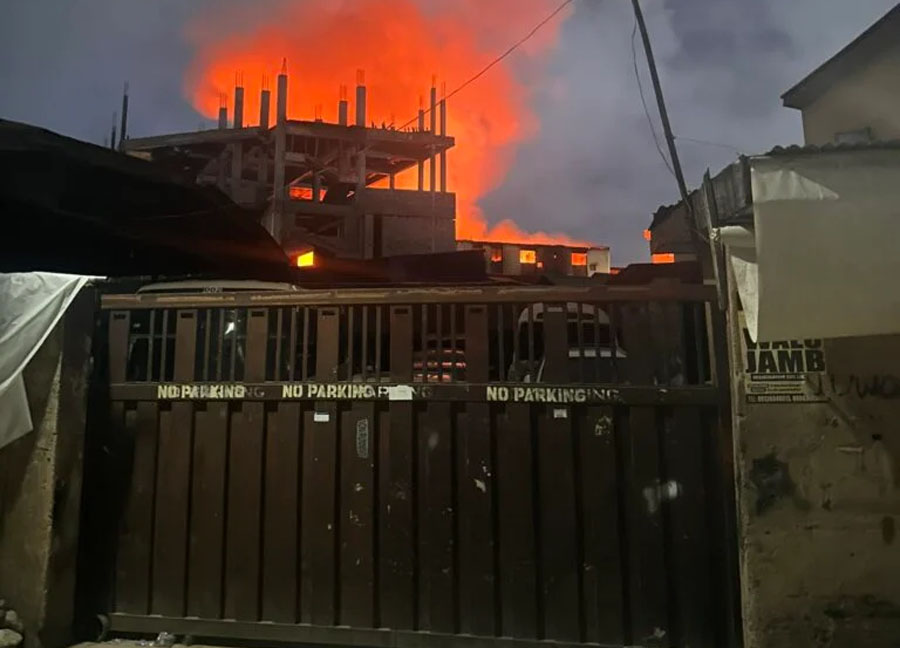
A major fire outbreak has ravaged a popular market in the Yaba area of Lagos State, destroying shops and goods worth millions of naira and causing panic among traders and residents. The blaze reportedly started in the early hours of Saturday around 3 a.m., quickly spreading across several sections of the market.
Eyewitnesses described the scene as chaotic, with thick smoke and flames consuming parts of the market near the Popo section. Traders and locals desperately tried to salvage their belongings, but much of the property was lost in the inferno. Videos circulating on social media captured the intensity of the fire and the frantic efforts of residents to control it.
An eyewitness, identified as Lugar Feliz during a TikTok livestream, said firefighters were on the scene but faced challenges in containing the blaze, with claims that some fire trucks lacked sufficient water. Several social media users on X (formerly Twitter) raised alarms about the incident, sharing videos and updates as the fire spread.
READ ALSO:
- JAMB Debunks 2026 UTME Postponement Rumour, Issues Fraud Warning
- Gunmen Kill Three in Jos Community Hours After Tinubu Visit
- Amnesty International Condemns Wike Over ‘Violent Remark’ Against Journalist
Traders affected by the fire lamented the financial losses. One resident, Adeoluwa, said he woke up to find shops behind his completely razed, estimating that billions of naira worth of goods may have been destroyed. Other reports suggest that hundreds of traders lost merchandise, highlighting the devastating economic impact on small business owners.
As of now, the cause of the fire remains unknown, and authorities, including the Lagos State Fire and Rescue Service, have not released an official statement on the full extent of damage or whether there were casualties. The incident adds to a growing trend of market fires in Lagos, often attributed to poor infrastructure, overcrowded stalls, and inadequate fire safety measures.
Affected traders are now calling for improved emergency response systems, better fire safety protocols, and stricter enforcement of safety regulations to prevent future disasters in crowded commercial hubs like Yaba.
Fire Engulfs Yaba Market in Lagos, Traders Suffer Huge Losses
metro
Gunmen Kill Three in Jos Community Hours After Tinubu Visit

Gunmen Kill Three in Jos Community Hours After Tinubu Visit
Gunmen have again struck in Jos, killing three residents just hours after the visit of Bola Ahmed Tinubu to Plateau State, deepening concerns over rising insecurity in Plateau and the effectiveness of ongoing security measures.
The latest attack occurred in Nyamgo Gyel, a community in Jos South Local Government Area, where residents said the victims were ambushed by armed men while returning home—highlighting a troubling pattern of attacks in Plateau communities.
The victims were identified as Luka Sandu Pam, 36, Samuel Davou, 38, and Deme Saidu, 35. They were reportedly riding on a motorbike when the assailants opened fire on them at close range, killing them instantly and leaving families devastated.
READ ALSO:
- Amnesty International Condemns Wike Over ‘Violent Remark’ Against Journalist
- Pastor Found Dead in Guest House After Night Out With Married Female Church Member
- US Firm to Engage Trump, Congress Over INEC’s Suspension of ADC Leadership
Eyewitness accounts revealed that the victims were among a group of about 15 young men who had earlier gone to a mining site in Gero. Trouble began as they made their way back home and unknowingly walked into an ambush.
The Youth Leader of Gyel community, Dung Davou, confirmed the incident, describing it as sudden and chaotic.
“We started hearing sporadic gunshots, and everyone scattered. Unfortunately, three of our people were killed,” he said.
He alleged that the attackers were suspected armed herdsmen and condemned what he described as repeated and unprovoked attacks on the community. He called on security agencies to act swiftly to prevent further loss of lives.
Security sources in Plateau State have yet to release an official statement on the latest killings, but local residents say fear and tension have intensified, especially in rural settlements where such attacks often occur without warning.
The incident comes shortly after President Tinubu’s visit to the state capital, Jos, where he met with stakeholders and reassured citizens of the federal government’s commitment to restoring peace following a series of deadly attacks.
Despite these assurances, the renewed violence has raised fresh questions about security response effectiveness in Nigeria’s Middle Belt, a region long plagued by farmer-herder clashes, banditry, and communal conflicts.
Community leaders are now calling for increased military deployment, improved intelligence gathering, and stronger collaboration between security agencies and local vigilantes to curb the escalating violence.
In a related development, at least 10 people were reportedly killed and several others injured after gunmen attacked Angwan Rukuba community in Jos North Local Government Area last Sunday—one of several recent incidents underscoring the fragile security situation in the state.
Observers warn that continued attacks could worsen the humanitarian situation and displace more residents if urgent and sustained security interventions are not implemented.
Gunmen Kill Three in Jos Community Hours After Tinubu Visit
metro
Amnesty International Condemns Wike Over ‘Violent Remark’ Against Journalist

Amnesty International Condemns Wike Over ‘Violent Remark’ Against Journalist
Amnesty International has strongly criticised the Minister of the Federal Capital Territory, Nyesom Wike, over what it described as a reckless and violent remark allegedly made against a journalist during a live television interview.
The rights group raised the alarm in a statement posted on its official X (formerly Twitter) account on Saturday, warning that such comments could encourage attacks on journalists and further endanger press freedom in Nigeria.
The controversy followed Wike’s appearance on Channels Television, where he reacted strongly to remarks by journalist Seun Okinbaloye about concerns over Nigeria drifting toward a one-party state.
During the exchange, Wike reportedly said, “If there’s any way to break the screen, I would have shot him…”—a statement that has since sparked outrage among civil society groups and media advocates.
READ ALSO:
- US Firm to Engage Trump, Congress Over INEC’s Suspension of ADC Leadership
- Nasarawa Communal Violence: 11 Killed, 52 Houses Burnt in Reprisal Attack
- Final-Year UNIJOS Student Discovered Dead Following Attack Near Campus
Reacting, Amnesty International described the comment as “reckless and violent language”, warning that such rhetoric from a senior government official could normalise violence against journalists and expose media professionals to danger simply for doing their jobs.
The organisation also pointed out that the statement may violate Nigeria’s broadcasting standards regulated by the Nigerian Broadcasting Commission, which prohibits inciting or harmful speech on air.
According to Amnesty, the remark is “unlawful and unacceptable”, particularly coming from a member of the federal cabinet, and reflects a troubling pattern of hostility toward the media.
The group called on Wike to immediately retract the statement and issue a public apology, stressing that public officials must exercise restraint and responsibility in their public communication.
“Mr Wike must withdraw his violent statement immediately and apologise,” Amnesty said, reiterating the need to protect journalists’ safety and uphold democratic values.
The incident has triggered broader reactions from civil society organisations and media stakeholders, many of whom warn that inflammatory political rhetoric could intimidate journalists, weaken independent reporting, and undermine Nigeria’s democracy if not addressed.
Observers say the development highlights growing concerns over freedom of expression in Nigeria, urging authorities to reaffirm their commitment to safeguarding the media and ensuring journalists can operate without fear of threats or intimidation.
Amnesty International Condemns Wike Over ‘Violent Remark’ Against Journalist

-

 metro2 days ago
VeryDarkMan Dares Sowore Over Blord’s Kuje Prison Remand
-

 Business2 days ago
NNPC Boosts Crude Supply to Dangote Refinery to Address Rising Fuel Prices
-

 metro1 day ago
Tinubu Approves 1,000 Forest Guards, Orders 5,000 CCTV Cameras to Boost Security in Plateau
-

 metro2 days ago
Nigerians to Enjoy Four-Day Break as FG Declares Easter Holidays
-

 International1 day ago
Iran Announces ‘Bounty’ on US Pilots After Claiming Downing of Fighter Jet
-

 International2 days ago
Iran Fires Missiles at Israel After Trump Threatens Weeks of ‘Extremely Hard’ Strikes
-
 metro6 hours ago
Pastor Found Dead in Guest House After Night Out With Married Female Church Member
-

 Politics2 days ago
ADC Defies INEC, Moves Ahead with Congresses, Convention