

Opinion
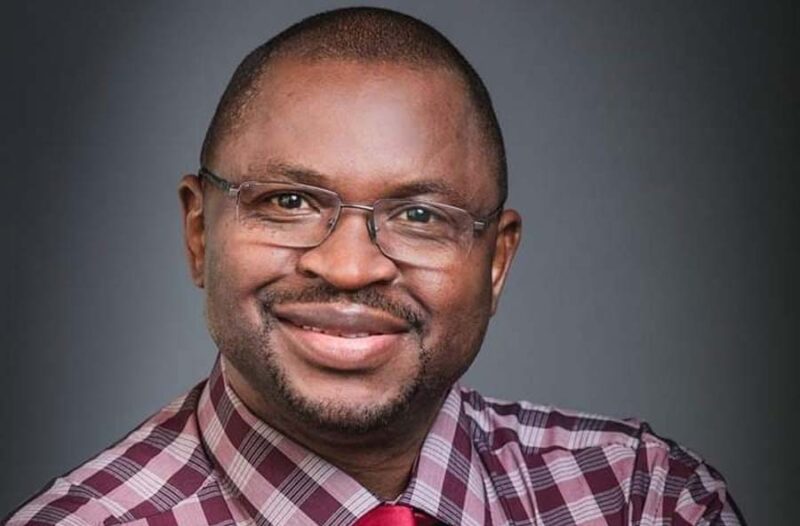
Protests: Tinubu’s real troubles are just beginning, By Farooq Kperogi
Protests: Tinubu’s real troubles are just beginning, By Farooq Kperogi
In light of his planned astronomical hike in petrol prices euphemistically called “subsidy removal” in 2023, which his opponents also promised to implement and caused Nigerians embrace as inevitable and desirable, I foretold the imminent social convulsion that is gathering momentum across Nigeria now.
“I can assure Tinubu that if petrol price hikes deepen people’s misery, he’ll have a tough time governing,” I wrote in my April 29, 2023, column. I followed this up with more than half a dozen columns on the same theme.
When you remove subsidies from an all-important product like petrol that literally regulates every facet of life in a country like Nigeria, which also has the dubious honor of being in perpetual competition with India for the status of the world’s poverty capital, and then follow it up with a massive devaluation of the national currency even when the country is hopelessly import-dependent, you unleash existential demons that compel vast swaths of people to choose between life and death.
False assurances that the mass agony in the country is only temporary, or that the pains people are grappling with are mere precursors to future gains, or even that there is light at the end of the tunnel only aggravate people’s angst. There are two reasons for this.
One, most people know that based on past experiences in Nigeria (notably during IBB’s ruinous SAP, which Tinubu merely repurposed and renamed) and elsewhere in the developing world where the IMF and the World Bank dictate economic policies, there has never been a single example of these sorts of pains ever transforming into gains for the masses of the people.
Second, people outside the circles of power and privilege realize that the pains are being borne only by the poor. Tinubu, for example, bought a new presidential jet worth millions of dollars even before the spineless National Assembly had a chance to rubber-stamp it, as is now their wont, among other profligate expenditures amid a biting economic downturn.
People who are visiting darkness on the poor in the name of a deferred light at the end of the tunnel are glowing in incandescent bulbs of illumination. And the people are intelligent enough to know that what awaits them at the end of this disconsolate tunnel isn’t light. It’s an inferno. It’s a dreary snake pit of doom and gloom.
READ ALSO:
- Fuel queues return to Abuja, Ogun, Lagos, others
- Over 180,000 displaced from Gaza’s Khan Younis in four days – UN
- IGP says foreign mercenaries behind planned mass protest
When people come to this realization, no one needs to “sponsor” them to protest. The pangs of hunger they feel is sufficient to sponsor them to protest. The sensation of hopelessness that overcomes them is a bigger motive force for protest than the political machinations of any politician.
But even if it’s true that opposition politicians are taking advantage of the mass discontent in the country to cripple the government and delegitimize it for their self-interest, that’s not illegal. It’s an intrinsic element of democracies for opposition parties to seize on the missteps of incumbents to displace them.
President Tinubu is in power today precisely because he mastered the art of instrumentalizing the missteps of incumbents to advance his political aspirations. As recently as 2012, he “sponsored” a disruptive protest against former President Goodluck Jonathan that led to the deaths of protesters—for precisely what he is doing to Nigerians now.
No amount of persuasion or financial inducement of traditional rulers, religious clerics, union leaders, or activists will get people to make peace with needless suffering occasioned by a self-centered, hard-hearted implementation of vicious economic policies that snuff the life out of the people. Even if the planned protests are aborted, the predictable is only being postponed.
The only way Tinubu can retain legitimacy and earn the trust of the people is to reverse the deep, stinging hurt his policies have caused to the vast majority of our people. People are no longer interested in progress or the renewal of hope. They just want Tinubu to take them back to where he met them, which was not an enviable state. And that’s not too much to ask.
In a February 10, 2024, column titled “Hunger Protests: Why Tinubu Can’t Govern Like Buhari,” I said the spontaneous, hunger-induced eruption of seething communal anger in Minna, Suleja, Kano, and Osogbo were “a warning sign” that Tinubu couldn’t afford to ignore. He ignored it.
He is probably following the Buhari template of enacting unpopular policies and relying on the blind support of his worshipers to shield him from the consequences of his actions. But Tinubu has no such following, and I am glad he doesn’t, which is why I would hate for someone like Peter Obi or Rabiu Kwankwaso to be president.
They are political cult leaders with unthinking, fanatical followers who lose their damned minds if you as much utter the mildest critical remark about their gods, however factual it may be. Like Buharists, they have abdicated their senses to their political gods.
I reproduce here a portion of the column to remind Tinubu why he can’t benefit from the kind of immunity Buhari enjoyed:
“Had the current president been Muhammadu Buhari and not Bola Ahmed Tinubu, chances are that the worst that would happen amid the adversity people are going through now would be suppressed, barely audible murmurs. It’s because Buhari is a political cult leader with a firm grip on his followers who worship him and surrender responsibility for their lives over to him. Tinubu has no such appeal.
“A psychologist by the name of Steve Taylor came up with a concept he called ‘abdication syndrome,’ which he said disposes people to invest total, child-like trust in a political figure, a cult leader, an opinion molder, etc. in ways that mimic how children idealize and idolize their parents as unblemished paragons of perfection.
READ ALSO:
- Arsenal not giving up on Osimhen yet, make contact
- Bomb explodes in Yobe livestock market
- Let’s solve our problems, not to protest – VP Shettima
“According to Taylor, ‘abdication syndrome stems from the unconscious desire of some people to return to a state of early childhood, when their parents were infallible, omnipotent figures who controlled their lives and protected them from the world. They’re trying to rekindle that childhood state of unconditional devotion and irresponsibility.’
“Buhari is lucky to benefit from abdication syndrome in Muslim northern Nigeria, broadly conceived, which explains why he got away with murder for eight years. When he increased petrol prices by a steep margin in 2016, for instance, there were protests in Kano, Bauchi, and other places in SUPPORT of the increase and AGAINST people who planned to protest the increase. Nigeria had never seen anything like that before.
“Even protests against the unabating descent of northern Nigeria into a theater of bloodshed and abduction on Buhari’s watch provoked counter protests from people who have abdicated the use of their brains in the service of Buhari.
“Tinubu not only does not have the benefit of abdication syndrome anywhere in Nigeria, but he also has the misfortune of having to contend with a peculiar character of Muslim northern Nigeria: we feel the pain of, and react violently to, bad policies only when the policies are hatched and executed by people who have no filiation with our natal region.
“It’s no surprise that the hunger protests against the Tinubu administration started from and spread in the North.
“A powerful indication of Tinubu’s lack of firm emotional support base emerged when Osun, his state of birth where he lost the last presidential election to PDP’s Atiku Abubakar, became the first southern state to join the hunger protests. Should the resistance to his punishingly heartless neoliberal economic policies ignite a nationwide convulsion, the Southwest is unlikely to constitute itself as his bulwark.
“In fact, I hazard a guess that should Tinubu’s unfeeling policies activate the sort of destabilizing national upheaval that we saw in 2012 during Goodluck Jonathan’s administration, the Southwest won’t be aloof. It is likely to join in.
“And, of course, Tinubu is deeply unpopular in the Southeast, the South-south, and Christian northern Nigeria. In other words, Tinubu is essentially floundering into the most treacherous of social quicksands.
“His only fortification against danger is not just good governance but compassionate governance. The release of thousands of metric tons of grains is a good first step, but it’s not nearly enough to stem the tide of mass rebellion that is brewing in the country. At best, it will only delay the inevitable.
“The truth is that Nigeria can’t survive a total withdrawal of petroleum subsidies without an adequate, systematic, well-planned public transportation system. To do away with petrol subsidies, the government must first create conditions where car ownership and patronage of commercial transportation are a luxury.”
Protests: Tinubu’s real troubles are just beginning, By Farooq Kperogi
Farooq Kperogi is a renowned Nigerian columnist and United States-based Professor of Journalism.





Opinion
2027: Competence, Not Zoning, Should Decide Nigeria’s Next President — Imasuagbon
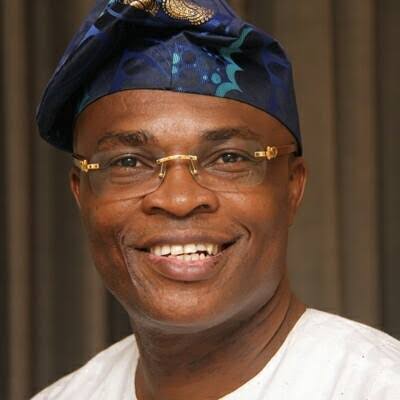
Nigerians should look beyond ethnicity, region and the longstanding debate over rotational presidency when choosing the country’s next leader, according to a chieftain of the African Democratic Congress (ADC), Kenneth Imasuagbon.
The former Edo State governorship aspirant said the priority ahead of the 2027 election should be finding a president with the ability to confront Nigeria’s economic, security and infrastructure challenges.
Speaking to journalists in Benin, Imasuagbon argued that presidential rotation is not a requirement of the Nigerian Constitution and should therefore not outweigh the question of competence.
He said voters should be more concerned about replacing poor schools with better ones, improving healthcare and addressing hardship than debating where the next president comes from.
Imasuagbon specifically appealed to voters in the South to support former Vice President Atiku Abubakar, who is contesting the 2027 presidency on the ADC platform.
According to him, Atiku has demonstrated the experience and determination needed to improve the country, describing the former vice president as someone capable of promoting national unity and fairness.
He also accused the Bola Tinubu administration of worsening economic pressure through policies including the removal of fuel subsidy, while expressing concern about the condition of roads, electricity and other infrastructure.
Imasuagbon argued that the next administration must focus on practical improvements in areas such as power, transportation, employment, security and public services.
The ADC chieftain also dismissed the idea that the ruling All Progressives Congress (APC) would automatically benefit from its incumbency advantage in 2027.
He maintained that the electorate ultimately determines the outcome of an election, arguing that voters could change the political direction of the country if they were determined to do so.
Imasuagbon further criticised what he described as regional and ethnic considerations in the distribution of political appointments and opportunities, insisting that the next president should give Nigerians across different parts of the country a sense of belonging.
His comments come as political parties and their candidates intensify preparations for the 2027 presidential election.
Opinion
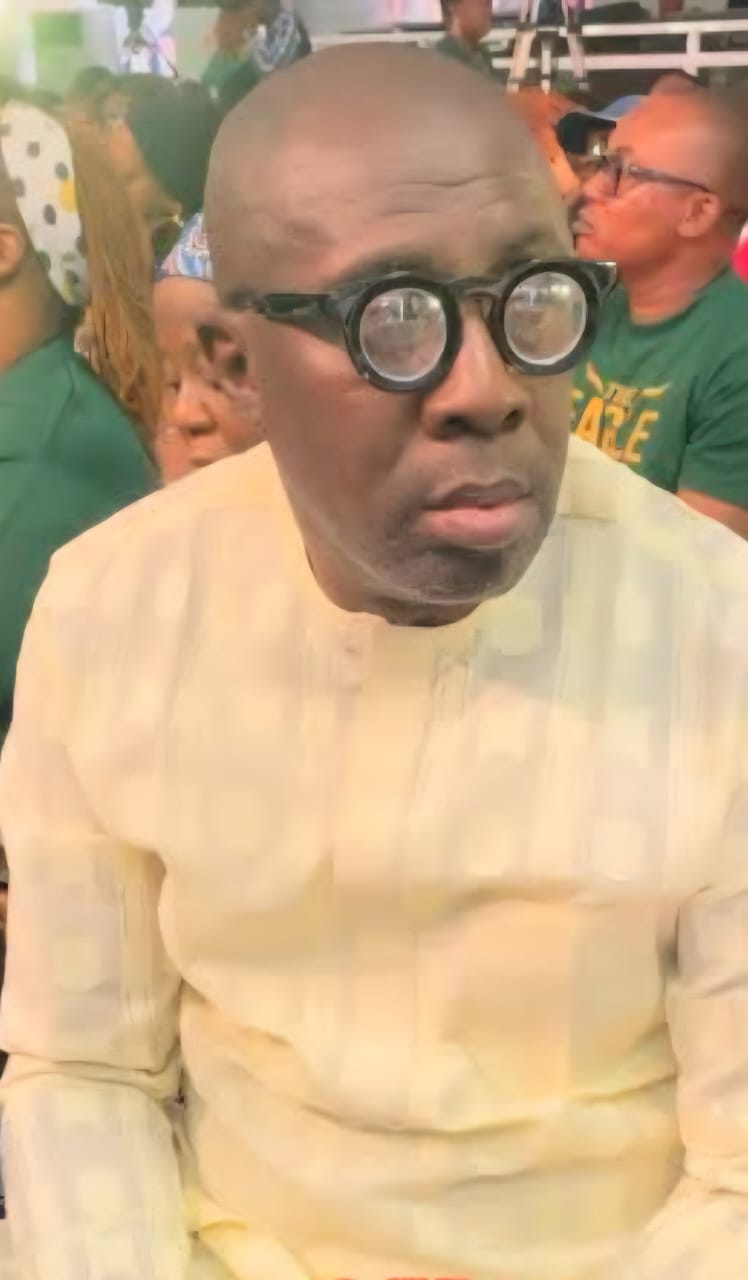
Lesson from Dotun Oladipo’s Brave Daughters, by Bamidele Johnson
Lesson from Dotun Oladipo’s Brave Daughters, by Bamidele Johnson
I hope to grow old. I want to see my kids become real adults, find their own feet, make mistakes, recover from them, and perhaps one day complain that their own children are giving them grey hairs. I want that plainly stated before anything else, as everything that follows might read as a man agreeing to an early exit rather than a man simply being honest about the odds.
I want the decades. I want to become the grandfather who repeats the same stories until nobody bothers correcting him anymore. But wanting a thing and being granted are different things. The last year has made that difference harder to ignore than I would like. I have lost many friends recently to keep thinking that optimism is my natural resting state. Some of these men had better blood pressure than mine, better habits, better everything that is supposed to count. It did not save them.
There is no formula I know that reliably separates the men who make it to 70 from those who do not. Anyone who says he knows one is selling something. So, I do not assume that old age is an already booked destination. Even if I once did, which I doubt, the last three years have cured me of such an illusion. As such, I treat it as a hope rather than an expectation, and I have found that a more honest way to live.
It is exactly why I want something placed on record now, while I am still able to place things on record, rather than leave it for people to guess what my wishes were in the fog of a funeral week. If I do not make old bones, my children are not to be asked to read tributes at my funeral. Not one line, however short, however lovingly written.
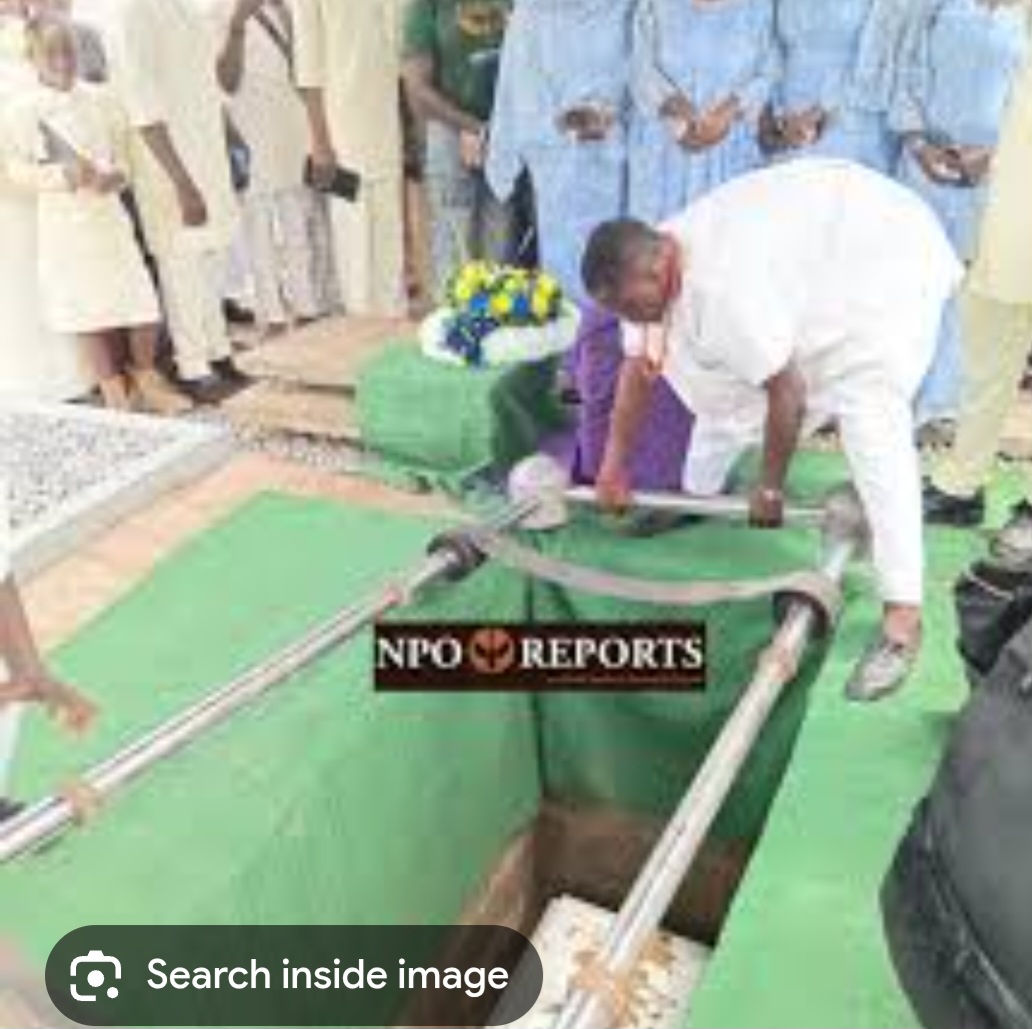
This, for me, was settled today rather than re-opened. At Dotun Oladipo’s funeral service, his three daughters took turns to read their tributes to their dad, and I found myself watching them with awe. There was a kind of strength in them that I do not possess. It is the strength needed to stand in front of a hall brimming with grieving adults and speak about a man they have just lost. Forever. Strength, however, is not the same as ease. I could see plainly what that strength was costing them as they read. Their voices caught. Their composure held and then did not hold and then held again through sheer will.
In front of them, in the pews, men and women considerably older than them came undone in ways the girls themselves were somehow managing to resist. I went mightily close. Some of the sobbing was quiet, the type people try to fold into a handkerchief. Some of it was not quiet at all, the kind that announces itself whether or not you want it.
Those young women honoured their father with a grace that is beyond me. What they did was astonishing. So, what I am attempting is an observation of a custom I have now watched wound people. This was not the first time I had watched this particular ritual extract more than it should from people already running on fumes. I saw an earlier and harder version of it at a friend’s wake back in 2015.
The first son was called forward to read his father’s tribute, and he could not do it. He tried, but the words would not come, and he stood there in front of a crowd of mourners, with his grief simply refusing to organise itself into sentences. The officiating minister, rather than releasing him from the task, urged him to continue. I sat fizzing with sorrow and ire. He could not go on and, eventually, the minister accepted, but not before insisting a while longer than it should have reasonably taken. His younger brother was called up next, presumably on the theory that if one grieving son could not manage it, maybe another one could. He flunked it in the same way. Grief does not distribute itself more conveniently among siblings just because a programme has been printed and needs to be followed.
I have turned that memory over many times since, trying to work out why this part of the rites is treated as mandatory in the first place. I have not found a satisfying answer. Maybe it comes from a belief that a child’s words carry more weight than anyone else’s, which may even be true, but weight is exactly the problem when those carrying it are struggling to hold themselves together with nothing but adrenaline and the fear of dissolving in public.
Maybe it is simply inertia, the reason we still do a hundred things at funerals that nobody can explain the original purpose of. Either way, I have stopped looking for the justification. I no longer think one exists that is good enough to weigh against what I watched happen to that boy in 2015.
So, let this stand as my instruction rather than my preference, the kind of thing I would rather state plainly now than leave for my children to infer later from how uncertain I sound when the subject comes up in passing. If I do not get the old age I am hoping for, my children will not be asked to read a single word over my body. Someone else can speak for me. A friend, a stranger with a steadier voice and a smaller stake in the loss, anyone whose grief will not be quite so total that standing upright becomes almost impossible.
My children, of course, will sit in front and fall apart if that is what the day requires of them, but without the microphone. That, at least, is one small mercy I intend to arrange for them while I am still here to arrange it.
Dotun deserved every bit of the send-off his daughters gave him today, and I suspect he would have been the first to tell them to sit down and let someone else carry the weight for a while. He did not get a say in that, as none of us ever do once we are the ones being spoken of rather than the ones speaking. Rest well, Dotun. You raised three young women whose strength I will not soon forget. That alone says everything worth saying about the man you were.
Opinion
‘Tinubu Will Win Again in 2027’ — Charismatic Bishops’ Secretary
‘Tinubu Will Win Again in 2027’ — Charismatic Bishops’ Secretary
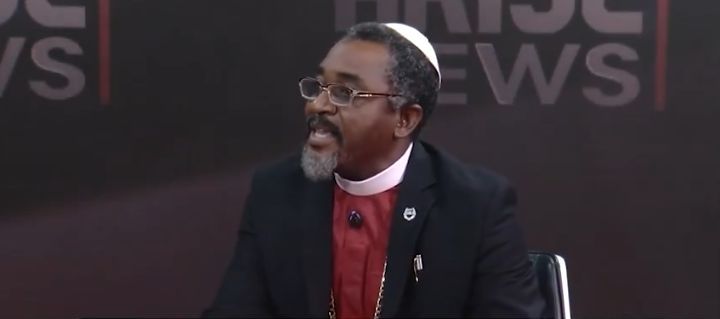
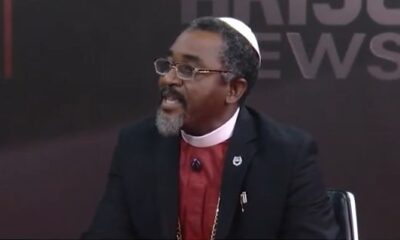
A senior Nigerian cleric, Archbishop Chivir Chianson, has declared that President Bola Tinubu will retain the presidency after the 2027 general election, attributing the prediction to a message he said came from God.
Chianson, who serves as Secretary General of the Charismatic Bishops’ Conference of Nigeria, made the statement while appearing on Arise Television on Saturday.
Rather than basing his prediction on political calculations, the archbishop said his confidence came from what he described as the prophetic role of bishops.
He maintained that the conference had previously spoken about Tinubu’s political future based on what he said was divine revelation and that the President would return for another term.
Chianson also predicted that Tinubu’s performance would improve if he wins the 2027 election.
READ ALSO:
- DSS warns Osun churches, mosques, markets over alleged terrorist attack plot ahead of 2027
- ‘Tinubu Will Win Again in 2027’ — Charismatic Bishops’ Secretary
- Fake miracles, bogus grants: How clerics allegedly fleece Nigerians of millions
Addressing the political opposition, the cleric said the bishops could not be blamed if rival parties failed to unite or organise themselves effectively ahead of the election.
He also sought to clarify the position of the bishops when dealing with government, saying their role in speaking truth to power did not mean they should approach political leaders with hostility or disrespect.
According to him, the Constitution, alongside their religious convictions, should guide how they engage the President and the country.
Chianson said he was sufficiently confident in his prediction to promise that he would return to the Arise TV studio after the 2027 election, when he expects the result to demonstrate that the bishops’ prophecy was correct.
His comments add a religious dimension to the increasingly active political conversation surrounding the 2027 presidential race.
‘Tinubu Will Win Again in 2027’ — Charismatic Bishops’ Secretary
-
 News3 days ago
SERAP Threatens Legal Action Over ₦126bn INEC Electoral Funds
-
 Politics3 days ago
Five Islamic Clerics Abducted After Tinubu Re-Election Prayer At Yari’s Zamfara Residence
-
 Opinion3 days ago
‘Tinubu Will Win Again in 2027’ — Charismatic Bishops’ Secretary
-
 Politics1 day ago
2027: Northern Lecturers Back Tinubu, ASUU Disowns Endorsement
-

 metro3 days ago
Mother ‘sold daughter’s abuse videos for $300’: Nigeria child pornography case shocks nation
-

 Sports3 days ago
‘Unacceptable’ — Arteta Furious Over Sunderland Penalty in Arsenal Win
-

 News3 days ago
Petrol Subsidy: Presidency Rejects Atiku’s Plan, Says No Going Back
-
 News2 days ago
Nwifuru Dismisses Cubana Chief Priest as ‘Attention-Seeker’