

Opinion
[ICYMI] Ilorin and Dan Fodio’s deadstock

[ICYMI] Ilorin and Dan Fodio’s deadstock
By Lasisi Olagunju
(Published in the Nigerian Tribune on Monday, 15 July, 2024)
Justice Ibrahim Kolapo Gambari, JCA became the Emir of Ilorin in August 1995 and decreed the ‘Kolapo’ in his name abolished. He said he should thenceforth be known and called Alhaji Ibrahim Sulu-Gambari; all former documents remain valid. He gave no reason for his decision but not a few of us thought it was his way of hiding the Yoruba content in the bloodstream of the House of Shehu Alimi, his Fulani roots. When Emir Ibrahim Sulu-Gambari took that unusual, surprising step, little did he know that the day would come when his aunt, Hajia Maryam, married to a king of Kano, and her sons would suffer discrimination and be tagged ‘Yoruba’.
It is the way of toads to detour into any available crater whenever it discovers it can no longer find its way to the stream. The chairman of the New Nigeria People’s Party (NNPP) in Kano State, Hashim Dungurawa, a few days ago addressed journalists in Kano and alleged that President Bola Tinubu was working hard to impose the deposed 15th emir of Kano, Aminu Ado Bayero, on the emirate because he shared same Yoruba background with the president. “If the President thinks he will use a few of his kinsmen in Kano and the alleged Bayero’s Yoruba lineage to continue to keep the deposed Emir Aminu Ado Bayero in the state, let him wait for 2027, we will show him that those people will not help him,” Dungurawa warned. When you heard his threats about 2027, you would think that Kano votes mattered in 2023. The votes were like rain water; they were surplus but they were wasted, unhelpful, unuseful to the person they were cast for. The same will happen in 2027.
The Kano NNPP man who spoke is not a lone wolf. He is a member of a preening pack that think themselves special and others of lesser breed. I understand what he voiced out has been in the whispering lips of the sands and boulders of Kano even before the emirship crisis unfolded. They call the deposed emir “son of the Yoruba woman.”
Around here, a child does not claim his father’s compound and disclaim his mother’s homestead. Aminu Ado Bayero is a grandson of the 8th emir of Ilorin; Aminu’s mother was a sister to the mother of the incumbent Ilorin emir. Ordinarily, this long line of Fulani ancestry should be a plus for whoever has it in the Fulani north, but in the peculiar politics of our feudal Nigeria, the Ilorin ruling family would only be recognized as ‘northern’ if they knew their limits. I hope they know now that they are fringe elements and fringe elements can never be allowed to dip their hands into the main bowl of the house.
Hashim Dungurawa, the NNPP chief who said loudly what was being said in whispers, is even said not to be a Fulani himself. He is said to be Hausa – the original owners of Kano before the Dan Fodio Jihad threw them into the sea of the barren street. Did you notice the irony here?
READ ALSO:
- BREAKING: Kano Assembly passes bill to establish second-class emirates
- Court dismisses Emefiele UK medial travel application
- Elon Musk to support Trump’s re-election with $45m a month
There is no ‘pure’ blood anywhere. It is 201 years this year that Afonja lost his ancestral throne of Ilorin to the children of Sheikh Alimi, his spiritual adviser and friend. In those two centuries, the children of Alimi, from generation to generation, have remained Fulani only by name, history and ancestry. Mohammodu Odolaye Aremu was a Dadakuada musical artiste of Ilorin ancestry. He died in 1997. He expended a great deal of his career years effusively singing the cultural and political histories of his city of birth for the careful to note and ponder on. Emir Mohammed Sulu-Gambari reigned in Ilorin from 1959 to 1992. He was the father of the present Emir Ibrahim Gambari. Odolaye waxed a record for the grand old man chanting his oríkì. He serenaded him “Alabi Òpó mo gbádùn oko mi ojo/ Súlú Oba gbogbo wa ní Ilorin…(Alabi Opo, I enjoy my lord / Sulu, our king in Ilorin). ‘Alabi’ is a personal Yoruba oríkì; the ‘Opo’ that follows it is the lineage panegyric (oríkì orílè). That lineage is Òpómúléró, the nearest English translation is ‘mainframe’. That is a lineage that feeds stubborn wine to stubborn child and proceeds to send that recalcitrant, drunk child to war. They proudly say they did it to Afonja who went to war never to come back:
Òpó tí ò gboràn, e kojú è síná
Iná tí ò gboràn, e kojú è sómi
Omi tí ò gboràn, baba wa ní á fi pon’tí
Otí tí ò gboràn, e f’ómo líle mu
Omo líle tí ò gboràn, e rán an rojú Ogun
Sebí Ogun náà l’Àfònjá lo tí ò fi padà wálé mó
Omo kèké ta dídùn, aso lèdìdì ènìyàn.
Emir Mohammed Sulu-Gambari was alive when Odolaye waxed his record and called him Alabi Opo. The emir did not ask the bard to shut up and did not say he wasn’t what he was called. He valued and enjoyed the Yoruba content of his existence so much that his children remained valued additions to the cultural assets of the land they inherited while maintaining their links to their paternal ancestors.
It is interesting that people who lost their ‘critical’ voices in the eight years of Muhammadu Buhari’s ruinous reign are now raising their chords. And, Tinubu, because he is a Yoruba man, is the whipping boy for the years of the Buhari locust. What they do with the successor to their Bayajidda II is what the Germans call “den Hund vor dem Löwen schlagen” – beat a dog before/for a lion. They think their throats should be the only expressway to heaven. Dungurawa’s snide broadside to the Yoruba was vilely divisive, provocative and unfortunate but his Kano and Ilorin victims must thank him (and his masters) for waking them up. They (the victims), at least, should be aware now that the butterfly may be winged and fly like a bird, but it is not a bird and won’t be allowed to enjoy bird privileges. It will be interesting to know how ex-emir Aminu, his brothers and sisters in Kano and their uncles in Ilorin took the statement from those they thought were their kinsmen- the authorities in Kano.
READ ALSO:
- JUST IN: Sanwo-Olu gives N100,000 each to Lagos Batch B Corps members
- Kano State Govt slams new charge on ex-Gov Ganduje
- Osun govt issues warning as scammers hack governor’s phone number
It is very interesting that for the Fulani North, because of the throne of Kano, Ilorin is no longer a Fulani town. God is great. But I commend them. It is always good to drop whatever is not yours no matter how long you’ve held on to it. Ilorin did not start as a settlement of the Fulani; the emirate there is a progeny of conquest. It is a victim of the characteristic Yoruba blind-fight for thrones. They fought and shredded their velvet, the Fulani picked it up and from it sewed an empire. The modern version of how 19th century Yoruba treated their heritage is what you see in Kano and Sokoto today. My friend in Kaduna told me that in Sokoto and Kano after the last elections, deposition of kings was the sole slogan: “Sabon Gwamna, Sabon Sarki” (new governor, new king). And they are working hard at it. That was the Yoruba misadventure that delivered Ilorin to Fulani forces in 1823/24.
There is an irony in some Kano people calling a prince or princess from Ilorin an outsider. The founder of Ilorin emirate, Sheikh Al-Salih (alias Shehu Alimi), was a Fulani who hailed from Tankara in present Niger Republic. It was from there he came to school in Bunza, present Kebbi State in today’s Nigeria. Just like him, Uthman Dan Fodio, the founder of the Sokoto caliphate, and by extension the emirate of Kano, was born in Maratta in the Tahoua region of today’s Niger Republic. An account said Alimi was a contemporary of Uthman Dan Fodio with Jibril bin Umar as their common teacher. But history did not say Alimi started out as a jihadist in the mould of Dan Fodio. He was a simple preacher and itinerant spiritualist who hawked his knowledge and power from one Yoruba town to the other. He was in Old Oyo, Iseyin, Ogbomoso and Kuwo before Afonja, a prince of Oyo, invited him to Ilorin in aid of his independence (rebellion) against his lord, the Alaafin. The rest is well recorded by history.
The more you read Ilorin’s well-documented history, the more you understand the tapestry of its ethnic configuration. There are tomes of materials available to the patient who is also curious to know. There is Ahmad b. Abi’s ‘Talifakhbar al qurun min Umara ‘ balad Ilurin’ (1912) with its critique by H. O. Danmole (1984). There is H.B. Hermon-Hodge’s ‘Gazetteer of Ilorin Province’ (1929). There is H. O. Danmole and Toyin Falola’s ‘The Documentation of Ilorin by Samuel Ojo Bada’. There is J.A. Atanda’s ‘The Fulani Jihad and the Collapse of the Old Oyo Empire’. There is also Stefan Reichmuth’s ‘Imam Umaru’s Account of the Origins of the Ilorin Emirate’ (1993); and then, Ann O’Hear’s ‘Elite Slaves in Ilorin in the 19th and 20th Centuries’ (2006). There are many more from local historians here and there.
READ ALSO:
- Kagame wins fourth term as Rwanda president with 99% votes
- JUST IN: Another Reps member, Ekene Adams, dies
- BREAKING: NECO releases 2024 examination results for Unity schools
Ilorin has the enviable luck of being a melting pot for all races, “tribes and tongues”. You find there people who would proudly say their ancestors were Fulani or Hausa or Kanuri or Dendi, Nupe, Baruba, Wangara, even Arabs. Yet, they are all ‘Yoruba’ today and they are proud to speak the language. You want to ask why the conqueror speaks the language of the conquered? It is because the Yoruba gene is very resistant to assimilation; the conquerors only got the throne, the soul refused to stay in their pouch. The Yoruba culture does what dams do to their surrounding environment. Their backwaters fester and consume their catchment areas. It is arguably the only African culture that survived slavery outside Africa. Go to Brazil, to Cuba and Trinidad and Tobago, Saint Lucia, Guyana, Haiti, Jamaica, about 200 years after slavery, descendants of Yoruba slaves there proudly raise the banner of their fathers. That is the case with the essential Yoruba-Ilorin.
While politicians in Kano are busy making identity nooses to hang their opponents, their street is dead drunk with tears of hunger and want. But the people rarely matter in matters like this. They won’t ever revolt; re-vote of their tormentors is what they will do. So, I have no dog in the bitter contest for the throne of Kano. The same should be our reaction to the machete attacks on the traditional powers and privileges of the Sultan of Sokoto by the state governor. At best, I watch events in those places the way I watched Sunday’s epic final of Euro 2024 football match between England and Spain. The Game of Thrones in the Fulani north, from Kano to Sokoto, is therefore, to me, entertainment. We run commentaries such as this only because, as the Yoruba say, it is always good to show the goopy snail that its eyes are caked with mucus.
Krishna Udayasankar, Singapore-based Indian writer and author of ‘3’ – a novel on the founding of Singapore, believes that “no empire lasts forever, no dynasty continues unbroken” How is the Kano kingship crisis going to end for the ruling class in northern Nigeria? When you combine what is happening in that city with the simmering volcano in Sokoto, would you be wrong if you say the signs portend sundown for the elaborate empire built by Dan Fodio in the first decade of the 19th century? No intervention can save that empire from itself. Maybe that elaborate realm has to die for Nigeria to live and thrive.
While the battle for thrones rages on, the Dan Fodio clan got a whole ministry from Tinubu last week. The president called it the Ministry of Livestock Development. I heard their elites’ happy footfalls. Who told the Fulbe that their problem would be over with a special ministry for their cows? Something tells me they know too that they are only interested in the billions that will be pumped into that loss centre. My dictionary says the opposite of livestock is deadstock. Something tells me that is the fruit from that luxuriant tree unless they change their ways. But they won’t change. For them, it is already past midnight.
[ICYMI] Ilorin and Dan Fodio’s deadstock








Opinion
2027: Competence, Not Zoning, Should Decide Nigeria’s Next President — Imasuagbon
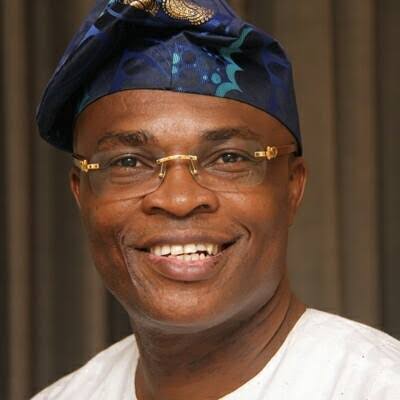
Nigerians should look beyond ethnicity, region and the longstanding debate over rotational presidency when choosing the country’s next leader, according to a chieftain of the African Democratic Congress (ADC), Kenneth Imasuagbon.
The former Edo State governorship aspirant said the priority ahead of the 2027 election should be finding a president with the ability to confront Nigeria’s economic, security and infrastructure challenges.
Speaking to journalists in Benin, Imasuagbon argued that presidential rotation is not a requirement of the Nigerian Constitution and should therefore not outweigh the question of competence.
He said voters should be more concerned about replacing poor schools with better ones, improving healthcare and addressing hardship than debating where the next president comes from.
Imasuagbon specifically appealed to voters in the South to support former Vice President Atiku Abubakar, who is contesting the 2027 presidency on the ADC platform.
According to him, Atiku has demonstrated the experience and determination needed to improve the country, describing the former vice president as someone capable of promoting national unity and fairness.
He also accused the Bola Tinubu administration of worsening economic pressure through policies including the removal of fuel subsidy, while expressing concern about the condition of roads, electricity and other infrastructure.
Imasuagbon argued that the next administration must focus on practical improvements in areas such as power, transportation, employment, security and public services.
The ADC chieftain also dismissed the idea that the ruling All Progressives Congress (APC) would automatically benefit from its incumbency advantage in 2027.
He maintained that the electorate ultimately determines the outcome of an election, arguing that voters could change the political direction of the country if they were determined to do so.
Imasuagbon further criticised what he described as regional and ethnic considerations in the distribution of political appointments and opportunities, insisting that the next president should give Nigerians across different parts of the country a sense of belonging.
His comments come as political parties and their candidates intensify preparations for the 2027 presidential election.
Opinion
Lesson from Dotun Oladipo’s Brave Daughters, by Bamidele Johnson
Lesson from Dotun Oladipo’s Brave Daughters, by Bamidele Johnson
I hope to grow old. I want to see my kids become real adults, find their own feet, make mistakes, recover from them, and perhaps one day complain that their own children are giving them grey hairs. I want that plainly stated before anything else, as everything that follows might read as a man agreeing to an early exit rather than a man simply being honest about the odds.
I want the decades. I want to become the grandfather who repeats the same stories until nobody bothers correcting him anymore. But wanting a thing and being granted are different things. The last year has made that difference harder to ignore than I would like. I have lost many friends recently to keep thinking that optimism is my natural resting state. Some of these men had better blood pressure than mine, better habits, better everything that is supposed to count. It did not save them.
There is no formula I know that reliably separates the men who make it to 70 from those who do not. Anyone who says he knows one is selling something. So, I do not assume that old age is an already booked destination. Even if I once did, which I doubt, the last three years have cured me of such an illusion. As such, I treat it as a hope rather than an expectation, and I have found that a more honest way to live.
It is exactly why I want something placed on record now, while I am still able to place things on record, rather than leave it for people to guess what my wishes were in the fog of a funeral week. If I do not make old bones, my children are not to be asked to read tributes at my funeral. Not one line, however short, however lovingly written.
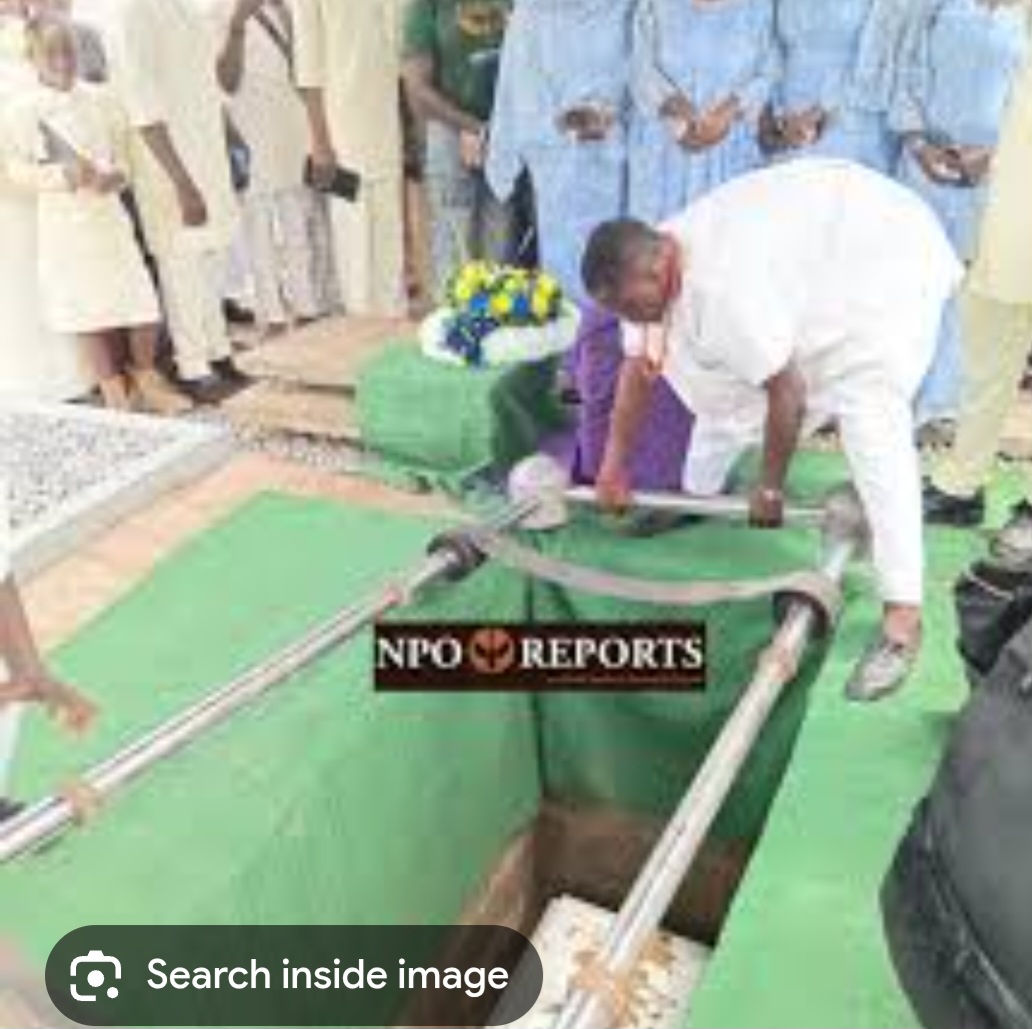
This, for me, was settled today rather than re-opened. At Dotun Oladipo’s funeral service, his three daughters took turns to read their tributes to their dad, and I found myself watching them with awe. There was a kind of strength in them that I do not possess. It is the strength needed to stand in front of a hall brimming with grieving adults and speak about a man they have just lost. Forever. Strength, however, is not the same as ease. I could see plainly what that strength was costing them as they read. Their voices caught. Their composure held and then did not hold and then held again through sheer will.
In front of them, in the pews, men and women considerably older than them came undone in ways the girls themselves were somehow managing to resist. I went mightily close. Some of the sobbing was quiet, the type people try to fold into a handkerchief. Some of it was not quiet at all, the kind that announces itself whether or not you want it.
Those young women honoured their father with a grace that is beyond me. What they did was astonishing. So, what I am attempting is an observation of a custom I have now watched wound people. This was not the first time I had watched this particular ritual extract more than it should from people already running on fumes. I saw an earlier and harder version of it at a friend’s wake back in 2015.
The first son was called forward to read his father’s tribute, and he could not do it. He tried, but the words would not come, and he stood there in front of a crowd of mourners, with his grief simply refusing to organise itself into sentences. The officiating minister, rather than releasing him from the task, urged him to continue. I sat fizzing with sorrow and ire. He could not go on and, eventually, the minister accepted, but not before insisting a while longer than it should have reasonably taken. His younger brother was called up next, presumably on the theory that if one grieving son could not manage it, maybe another one could. He flunked it in the same way. Grief does not distribute itself more conveniently among siblings just because a programme has been printed and needs to be followed.
I have turned that memory over many times since, trying to work out why this part of the rites is treated as mandatory in the first place. I have not found a satisfying answer. Maybe it comes from a belief that a child’s words carry more weight than anyone else’s, which may even be true, but weight is exactly the problem when those carrying it are struggling to hold themselves together with nothing but adrenaline and the fear of dissolving in public.
Maybe it is simply inertia, the reason we still do a hundred things at funerals that nobody can explain the original purpose of. Either way, I have stopped looking for the justification. I no longer think one exists that is good enough to weigh against what I watched happen to that boy in 2015.
So, let this stand as my instruction rather than my preference, the kind of thing I would rather state plainly now than leave for my children to infer later from how uncertain I sound when the subject comes up in passing. If I do not get the old age I am hoping for, my children will not be asked to read a single word over my body. Someone else can speak for me. A friend, a stranger with a steadier voice and a smaller stake in the loss, anyone whose grief will not be quite so total that standing upright becomes almost impossible.
My children, of course, will sit in front and fall apart if that is what the day requires of them, but without the microphone. That, at least, is one small mercy I intend to arrange for them while I am still here to arrange it.
Dotun deserved every bit of the send-off his daughters gave him today, and I suspect he would have been the first to tell them to sit down and let someone else carry the weight for a while. He did not get a say in that, as none of us ever do once we are the ones being spoken of rather than the ones speaking. Rest well, Dotun. You raised three young women whose strength I will not soon forget. That alone says everything worth saying about the man you were.
Opinion
‘Tinubu Will Win Again in 2027’ — Charismatic Bishops’ Secretary
‘Tinubu Will Win Again in 2027’ — Charismatic Bishops’ Secretary
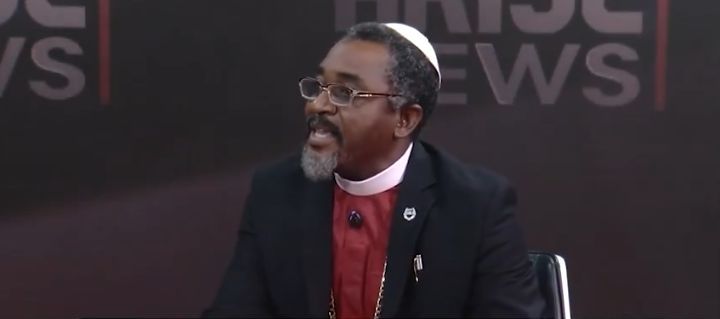
A senior Nigerian cleric, Archbishop Chivir Chianson, has declared that President Bola Tinubu will retain the presidency after the 2027 general election, attributing the prediction to a message he said came from God.
Chianson, who serves as Secretary General of the Charismatic Bishops’ Conference of Nigeria, made the statement while appearing on Arise Television on Saturday.
Rather than basing his prediction on political calculations, the archbishop said his confidence came from what he described as the prophetic role of bishops.
He maintained that the conference had previously spoken about Tinubu’s political future based on what he said was divine revelation and that the President would return for another term.
Chianson also predicted that Tinubu’s performance would improve if he wins the 2027 election.
READ ALSO:
- DSS warns Osun churches, mosques, markets over alleged terrorist attack plot ahead of 2027
- ‘Tinubu Will Win Again in 2027’ — Charismatic Bishops’ Secretary
- Fake miracles, bogus grants: How clerics allegedly fleece Nigerians of millions
Addressing the political opposition, the cleric said the bishops could not be blamed if rival parties failed to unite or organise themselves effectively ahead of the election.
He also sought to clarify the position of the bishops when dealing with government, saying their role in speaking truth to power did not mean they should approach political leaders with hostility or disrespect.
According to him, the Constitution, alongside their religious convictions, should guide how they engage the President and the country.
Chianson said he was sufficiently confident in his prediction to promise that he would return to the Arise TV studio after the 2027 election, when he expects the result to demonstrate that the bishops’ prophecy was correct.
His comments add a religious dimension to the increasingly active political conversation surrounding the 2027 presidential race.
‘Tinubu Will Win Again in 2027’ — Charismatic Bishops’ Secretary
-

 metro3 days ago
Ondo Herbal Drink Tragedy: Survivor Vows Never to Drink Again as Death Toll Tops 30
-
 Business3 days ago
Dangote: ₦525 Refinery Shares Could Rise to ₦10,000
-

 metro3 days ago
Sokoto Cleric Stabbed Twice in Neck After Juma’at Prayer, Attacker Killed
-

 News1 day ago
SERAP Threatens Legal Action Over ₦126bn INEC Electoral Funds
-

 metro3 days ago
MURIC fires back at Peter Obi: Forget Sallah ceremony, free Nigerian Muslims
-

 metro3 days ago
Abia Police Arrest Father, Three Others Over Alleged Attempt to Sell 16-Month-Old Daughter
-
 International3 days ago
Trump Tells Supporters to ‘Cheat Like Hell’ Ahead of US Election
-
 metro3 days ago
FG Targets 2 Million Creative Jobs by 2030