

International
Putin’s Invasion of Ukraine Creating a World Food Security Catastrophe

As Vladimir Putin’s brutal assault on Ukraine presses forward, the devastating impacts of war are rattling the most vulnerable corners of the world, driving millions toward starvation.
In Ukraine, tens of thousands remain trapped without access to food and water. Beyond its borders, millions more are teetering on the edge of famine.
“We are on a countdown to catastrophe,” David Beasley, executive director of the U.N. World Food Programme said, “and we are running out of time to avoid it.”
Ukraine has long been known as ‘the breadbasket of Europe,’ and is one of the top three grain producers in the world, according to Farming Life. Russia and Ukraine together account for nearly one third of the world’s traded wheat and 12% of its calories, National Geographic reported, with some 26 countries relying heavily on both nations for food security.
But as Russia’s attack on its neighbor has all but shut down grain exports from the region, both vital supply chains have been shattered. Without them, food prices and shortages are spiraling, and the world is left to face its greatest food crisis since the last great war.
Beasley said the war in Ukraine has created “a catastrophe on top of a catastrophe,” and will have a global impact “beyond anything we’ve seen since World War II,” according to Time,
READ ALSO:
- Train attack: Five more passengers found safe, 141 others unknown, another coach recovered
- Malami declares intention to contest for Kebbi State governor
- Pastor demolishes church after catching wife kissing his assistant
The ripple effects of this war will devastate already vulnerable countries like Afghanistan, Foreign Policy reported, where millions of people don’t have enough food and babies are dying of malnutrition.
“With each month that goes by, more Afghans are forced to resort to the unimaginable to survive,” Amanda Catanzano, the International Rescue Committee’s acting vice president of policy and advocacy, said, according to USA Today.
“Parents are being forced to make decisions no one should have to consider,” she added, “including selling off young daughters, so they can buy food for the rest of their children.”
In the Middle East, millions of people whose lives have already been turned upside down by violence, displacement and poverty, AP reported, are left wondering where their next meal will come from.
“We can’t forget that these multiple hunger crises are going on at the same time,” Danielle Nierenberg, president of Food Tank, told Newsweek. “One is not more important.”
“Right now,” she added, “the long-term consequences are what I’m most afraid for.”
Experts fear that critical humanitarian aid may be diverted from the Middle East and North Africa in an effort to support the equally dire crisis in Ukraine, the consequences of which could be deadly.
“For the millions of Palestinians, Lebanese, Yemenis, Syrians, and others who live in countries experiencing conflict, catastrophic economic meltdowns, and increasing humanitarian needs,” Carnegie Middle East experts said, “this would be equivalent to shutting down critical life support.”
Joyce Msuya, Assistant Secretary-General for Humanitarian Affairs and Deputy Emergency Relief Coordinator, told the U.N. Security Council that the global impacts of this war are becoming clearer every day.
“Civilians are running out of food, energy and hope,” she added.
Beasley warned the Security Council that the war in Ukraine has turned the country “from a breadbasket to a bread line” for millions of its people, while devastating countries that rely on the region for food security.
His agency was feeding 125 million people around the world before Vladimir Putin’s invasion of Ukraine, Time reported. Due to rising food, fuel and shipping costs increasing the agency’s monthly expenses by $71 million, it has had to start cutting those rations.
In war-torn Yemen, eight million people just had their food allotment cut by 50%, Beasely said, according to Time, “and now we’re looking at going to zero rations.”
READ ALSO:
- How long should vehicle tyres last?
- Tundun MKO-Abiola attacks Hafsat for using their father’s name for Yahaya Bello’s campaign
- FG paid N7.27bn for debt servicing to W’Bank, IMF – Report
In Yemen, 31,000 people are currently facing famine-like conditions, according to data from the WFP, and 161,000 people are expected to be at risk come June.
Because of the ongoing assault against Ukraine, Time reported, the WFP will have to abandon services to four million people in other parts of the world.
On February 24, Ukrainians awoke to the sound of bombs exploding as Russia officially declared war against their homeland. In the weeks that have followed, death and devastation have littered the streets of of their homeland — and their farmland.
The country has largely lost access to heat and electricity and is facing severe shortages of food, water and essential medicine. People are sheltering in basements, the Guardian reported, trying to survive without food and drinking melted snow because the water has been cut off.
As a result, millions are making the painful decision to flee their country. But the journey across the border is no less harrowing, and many Ukrainian families are traveling for days without food.
Amid the terror, strangers are increasingly showing up to support Ukrainians — and humanity.
Within hours of the initial invasion, World Central Kitchen (WCK), a not-for-profit non-governmental organization dedicated to providing meals in the midst of disaster, partnered with Ukrainian restaurants, chefs and volunteers from around the world and began serving warm, nourishing meals to Ukrainian refugees.
“Feeding people is what makes sense,” Jose Andres, founder of WCK, told NPR. “Longer tables, people working together to make sure that one plate of food at a time we can bring hope of a better tomorrow.”
Without hesitation, WCK made a promise to continue helping in the best way it knows, ‘with a freshly prepared plate of food,’ for as long as needed.
“I’m still here,” Marc Murphy, executive chef and restaurateur who is working with WCK in Poland, told Newsweek. “I’ve been here almost three weeks now, and I’m not sure when I’m going back.”
The organization has served five million meals across seven countries as part of the Chefs for Ukraine response, Chloe Mata Crane, executive vice president of Baltz & Co, told Newsweek, and is currently serving over 250 thousand meals per day.
When the war broke out, Murphy knew he couldn’t sit on the sidelines as people suffered.
“Eating a meal is a human right,” he said. “I have the skills to cook. I’ve run large kitchens, I’ve done a lot of this stuff. So I thought, ‘maybe I can lend a helping hand.'”
For Andres, food is about far more than just nutrition.
“Food relief is not just a meal that keeps hunger away,” Andres said. “It’s a plate of hope. It tells you in your darkest hour that someone, somewhere, cares about you.”
On one visit to the border with warm stew and hot chocolate, Murphy met three young girls waiting for a ride from a friend of their parents.
“The mom drove them to the border, they walked across and they were waiting,” Murphy said. “Having some stew and waiting. They didn’t even know where they were going.”
“It’s hard to imagine,” Murphy added. “But that’s one story. And you know there’s thousands a day of those stories. That’s the sad part.”
But the aid givers realize they face a daunting task.
“If we end the conflict, address the needs, we can avoid famine, destabilization of nations and mass migration,” Beasley said. “But if we don’t, the world will pay a mighty price.”
“And the last thing [we] want to do,” he added, “is take food from hungry children to give to starving children.”
NEWSWEEK









International
China Denies Supplying Iran Intelligence Linked to Attack That Killed US Troops
China Denies Supplying Iran Intelligence Linked to Attack That Killed US Troops
China has rejected as “groundless” reports that Chinese entities supplied Iran with satellite imagery of a US military base in Jordan before and after an Iranian missile attack that killed three American troops in July.
The denial followed a report by The Wall Street Journal, which cited unnamed US officials as saying that Iran obtained high-resolution satellite images of the Muwaffaq Salti Air Base in Jordan, where US forces are stationed, from Chinese entities.
The July 17 Iranian missile attack on the base killed three US Army soldiers and injured four others, according to US officials cited in the report.
The US officials reportedly linked the satellite imagery to the Iranian attack but did not identify the Chinese entities involved. Importantly, the report did not accuse the Chinese government of directly ordering, coordinating or facilitating the strike.
Chinese officials have rejected the allegation and demanded evidence, maintaining that Beijing complies with international law and opposes what it described as unfounded accusations.
The development has nevertheless raised fresh questions in Washington over the growing strategic relationship between China and Iran, particularly amid the wider US-Iran conflict and continuing tensions between Washington and Beijing.
The report said the satellite images were obtained before and after the attack, potentially giving Iran detailed information about the military facility and helping it assess the impact of its strikes.
READ ALSO:
- Police Arrest Mother Over Alleged Brutal Abuse of 7-Year-Old Girl in Anambra
- King’s College Concession: 115 Unity Colleges Shut as Education Workers Defy FG
- Petrol Price Hits N1,450/Litre as Middle East Crisis Pushes Oil Above $108
US officials have previously expressed concern about China’s technological and satellite-related links with Iran. Washington sanctioned three China-based satellite companies in May over allegations that they supported Iran’s military operations.
The latest report has intensified scrutiny of the role of commercial and private Chinese entities in providing technology or imagery that could potentially enhance Iran’s military capabilities.
However, US President Donald Trump has sought to play down the significance of the latest allegations.
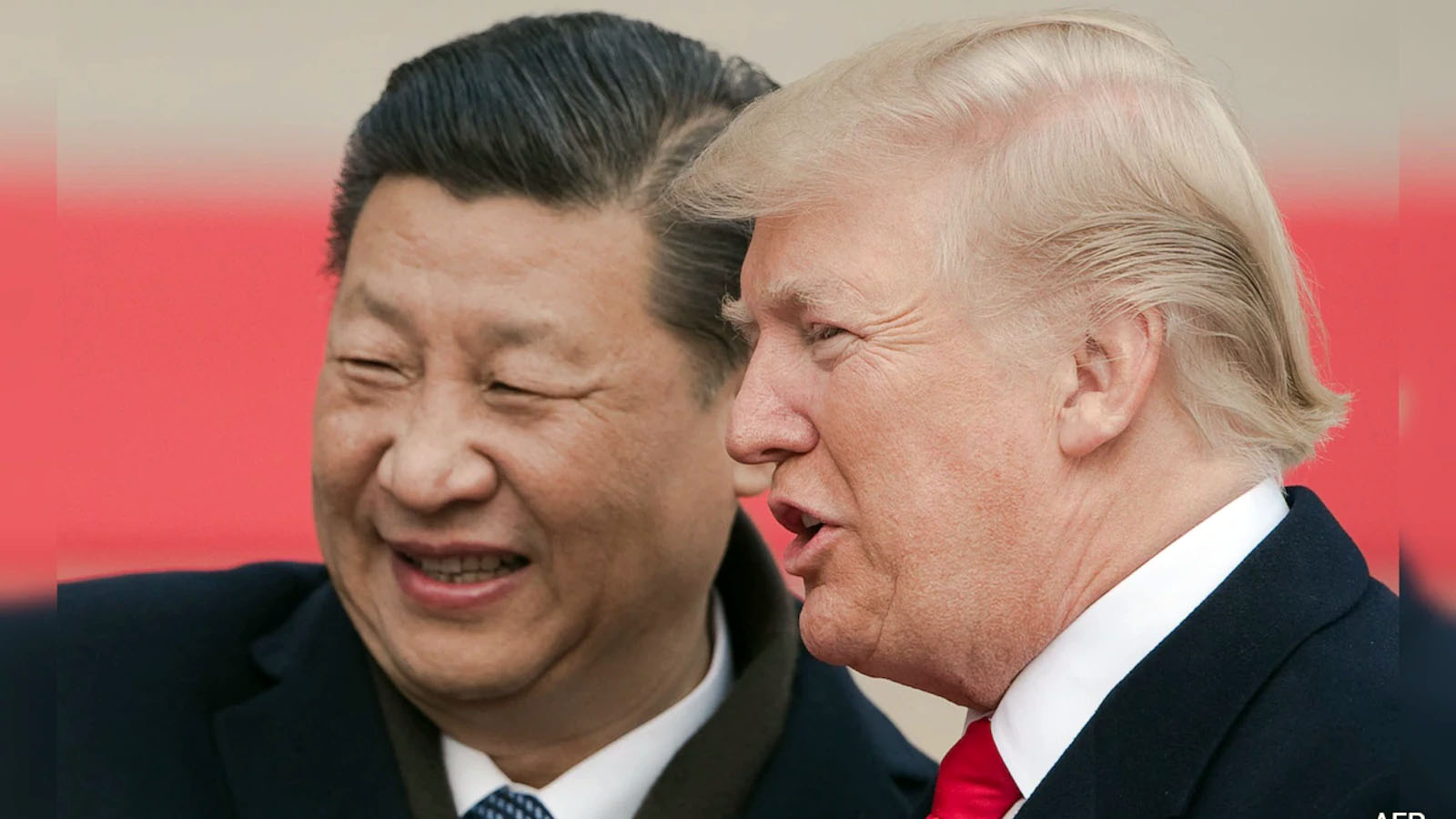
Speaking to reporters aboard Air Force One on Sunday, Trump was asked whether he would raise the issue with Chinese President Xi Jinping during their expected meeting in the United States.
Rather than directly addressing whether Beijing should be held responsible, Trump compared Chinese intelligence-gathering activities with those of the United States.
Trump also maintained that he has a good relationship with Xi, saying the Chinese leader had behaved reasonably well and that Washington and Beijing had likewise conducted themselves reasonably.
The comments come as the United States and China attempt to manage several areas of tension, including trade, technology, national security and China’s relationship with Iran.
The allegations are particularly sensitive because the reported transfer of imagery occurred before an attack that resulted in the deaths of American service members.
The Iran missile strike in Jordan was part of the broader conflict involving Iran and the United States, which has increasingly drawn in regional actors and raised concerns about the security of American military personnel and facilities across the Middle East.
The Wall Street Journal report, according to Reuters, could not immediately be independently verified. It also did not establish that Chinese authorities themselves provided the imagery or that Beijing had prior knowledge of the Iranian attack.
The distinction is significant because evidence that individual Chinese companies or entities supplied commercial satellite imagery would not, by itself, establish direct involvement by the Chinese government.
The controversy comes ahead of a potential meeting between Trump and Xi, with the two leaders expected to meet in the United States on September 24, although Beijing had not officially confirmed the meeting as of Monday.
China’s denial and Trump’s decision to downplay the allegation could help prevent the issue from becoming a major diplomatic confrontation ahead of the anticipated meeting.
For now, the central question remains whether Chinese commercial entities provided the imagery to Iran and, if so, what information was transferred and whether it materially contributed to the Iranian operation that killed the three US troops.
The allegations are likely to remain under scrutiny as Washington assesses the extent of Chinese support for Iran and its possible implications for US military operations in the Middle East.
China Denies Supplying Iran Intelligence Linked to Attack That Killed US Troops
International
‘Completely False’ — Moreno Denies Using AI to Prepare Games

Robert Moreno has begun his interim tenure as South Korea’s coach with a denial of one of the more unusual controversies attached to his coaching career, claims that he used ChatGPT to help prepare his teams for matches.
The Spanish coach, who arrived in South Korea this weekend, was asked about the allegation as he began work with the national side.
Moreno was accused by Russian media earlier this year of heavily relying on artificial intelligence during his spell at Sochi, where he left in September 2025 following a poor run of results.
He has consistently rejected the claim.
Moreno said the reports were “completely false” and argued that his use of technology had been misrepresented.
His explanation comes as he takes over a South Korean side attempting to recover from a turbulent World Cup campaign. The team crashed out in the group stage, leading Hong Myung-bo to resign and leaving the Korea Football Association under pressure over both the team’s performance and its previous recruitment process.
The KFA appointed Moreno as a temporary replacement rather than immediately committing to a permanent coach. He is expected to lead the team through six international matches, beginning with September and October friendlies against Ecuador, Uruguay, Venezuela and Uzbekistan.
His first squad includes veteran captain Son Heung-min, who now plays for Los Angeles FC, as well as Lee Kang-in and Kim Min-jae.
Moreno said he wants his tenure to be about more than results, with the immediate goal of rebuilding the relationship between the national team and its supporters.
“I want to make Korean football fans happy,” he said.
For now, however, the AI controversy remains part of the baggage surrounding his appointment, something Moreno appears keen to put behind him as he begins the task of rebuilding South Korea’s national team.
International
Trump Downplays Report of Chinese Satellite Help to Iran

US President Donald Trump has played down a report alleging that Chinese entities supplied Iran with satellite imagery of a US military base in Jordan before and after a deadly Iranian missile strike.
The report, published by The Wall Street Journal, said US officials had linked high-resolution satellite imagery provided by Chinese entities to Iran’s July 17 attack on Muwaffaq Salti Air Base, where three American soldiers were killed and four others injured.
Trump, however, appeared to dismiss the significance of the allegation while speaking to reporters aboard Air Force One on Sunday.
“When they say that China spies on us, I say you’re right, and we spy on them too,” he said, adding that the two countries essentially engage in similar intelligence activities.
The report has not established that Beijing directly authorised or participated in the alleged transfer. US officials cited by the Journal did not identify the Chinese entities involved, while Chinese officials reportedly rejected the allegation and asked Washington to provide evidence.
The development comes as Washington and Beijing prepare for a potentially sensitive meeting between Trump and Chinese President Xi Jinping, expected to take place at the White House on September 24.
The US has previously accused Chinese companies of assisting Iran’s military capabilities. Washington sanctioned three China-based satellite firms in May over alleged support for Iran’s military operations.
Despite the latest dispute, Trump struck a conciliatory tone when discussing Xi, saying the Chinese leader had “behaved reasonably well” and that the US had done the same.
Trump’s response leaves the satellite imagery allegations unresolved, with Beijing denying involvement and Washington yet to publicly identify the companies allegedly involved.
-

 metro3 days ago
Ondo Herbal Drink Tragedy: Survivor Vows Never to Drink Again as Death Toll Tops 30
-
 Business3 days ago
Dangote: ₦525 Refinery Shares Could Rise to ₦10,000
-

 metro3 days ago
Sokoto Cleric Stabbed Twice in Neck After Juma’at Prayer, Attacker Killed
-

 News1 day ago
SERAP Threatens Legal Action Over ₦126bn INEC Electoral Funds
-

 metro2 days ago
MURIC fires back at Peter Obi: Forget Sallah ceremony, free Nigerian Muslims
-

 metro2 days ago
Abia Police Arrest Father, Three Others Over Alleged Attempt to Sell 16-Month-Old Daughter
-
 International2 days ago
Trump Tells Supporters to ‘Cheat Like Hell’ Ahead of US Election
-

 metro2 days ago
FG Targets 2 Million Creative Jobs by 2030