
metro
Ten Nigerian judges sacked for falsifying age to extend tenure
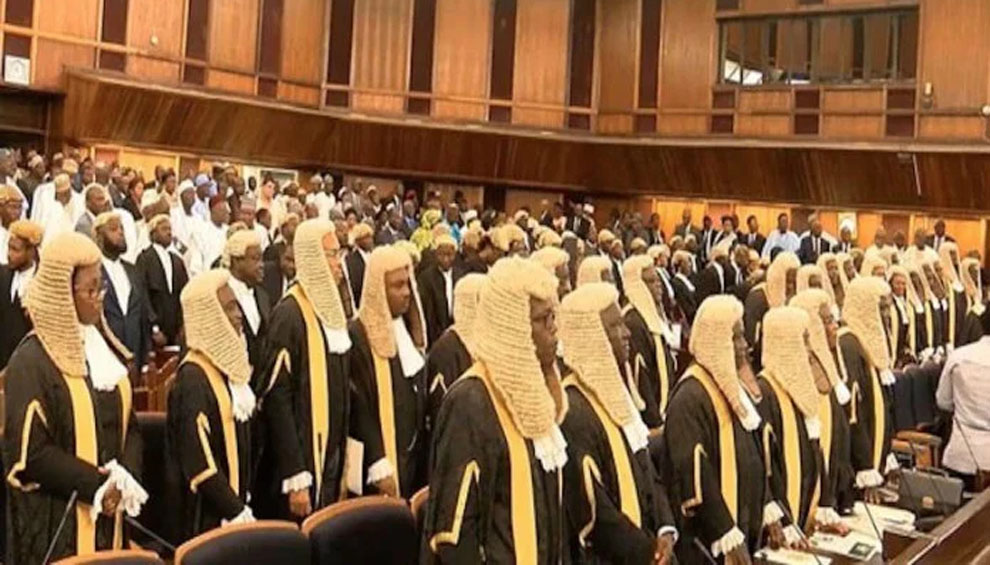
Ten Nigerian judges sacked for falsifying age to extend tenure
The National Judicial Council (NJC) has approved the compulsory retirement of ten judges in Imo State, nine of whom were found guilty of falsifying their dates of birth to unlawfully extend their tenure in office.
In a statement issued on Thursday by the NJC’s Deputy Director of Information, Kemi Babalola Ogedengbe, the resolution was reached during the Council’s 109th meeting held on June 25, and chaired by the Chief Justice of Nigeria, Justice Kudirat Kekere-Ekun.
According to the Council, the nine judges, comprising five from the High Court and four from the Customary Court of Appeal in Imo State, altered their official records in a deliberate effort to remain in service beyond the legal retirement age, an act described by the NJC as a serious breach of judicial integrity.
In addition to the nine, another judge, Justice T. N. Nzeukwu, was sanctioned for misconduct after making himself available to be sworn in as acting Chief Judge of the Imo State High Court despite being fourth in the hierarchy.
The Council said this act contravened Section 271 (4) of the Nigerian Constitution.
Although Justice Nzeukwu was penalised, the President of the Customary Court of Appeal in the state, Justice V. U. Okorie, who chaired the commission that recommended Nzeukwu for the position, was absolved, having officially dissented from the nomination.
The NJC noted that its decisions followed thorough investigations into allegations of age falsification against 18 judges in Imo State.
Three judges were cleared after their records showed no discrepancies, while six others were exonerated on the grounds that their date-of-birth irregularities were either minor or were corrected to their disadvantage.
READ ALSO:
- Reps probe police over weapons’ supply contracts, assets’ sales
- Abu Sufyan’s death, a great loss to Nigeria Muslims
- Three Palestinians killed during Israeli settler attack on West Bank village
The NJC reiterated its earlier directive to Imo State Governor, Senator Hope Uzodinma, to appoint the most senior judge in the state judiciary as acting Chief Judge.
Furthermore, the Council barred Justice Isaac J. Essien of the National Industrial Court from promotion for three years.
He was found guilty of misconduct after ordering the confiscation of over N1bn belonging to the Nasarawa State Government despite ongoing appeal proceedings.
Justice Essien, a former employee of the state university, reportedly used the court’s official letterhead to demand payment of his gratuity and even made an inappropriate personal visit to the Court of Appeal registry to check on the appeal status of the case.
The NJC ruled that these actions were clear violations of the judicial code of conduct.
Beyond the Imo judiciary, the NJC reviewed 30 petitions against judicial officers nationwide.
Four petitions were referred for further investigation, while four judges were cautioned for judicial missteps, including Justices Rahman Oshodi and Daniel Okungbowa of Lagos and Edo States respectively, for misuse of discretion in cases under them.
READ ALSO:
- Lagos Govt probes demolition of Obi’s brother property
- NLC vows to shut down FCT after Tinubu’s project inauguration
- FG empowers 3,700 women with tricycles
Justice G. B. Okolosi of the Delta State High Court received a final warning for consistent delays in judgment delivery, while Justice Sa’adatu Mark of the Federal High Court was cautioned for exceeding the constitutionally allowed 90-day period for delivering judgment.
In Benue State, the Chief Judge, Justice M. A. Ikpambese, was absolved of allegations of judicial misconduct. However, the NJC expressed concern over what it described as a coordinated attempt to remove him from office, allegedly orchestrated by the state’s Attorney-General, Fidelis Bemsen Mnyim.
The Council said Mnyim would be referred to the Legal Practitioners’ Disciplinary Committee for further action.
Meanwhile, the Council also considered complaints against several judicial candidates and recommended the appointment of 21 individuals to various courts across Nigeria, including new judges for the High Courts in Ekiti, Ogun, Cross River, Zamfara, Katsina, and Plateau States, as well as Kadis for Sharia Courts and a chairman for the Code of Conduct Tribunal.
In line with its policy of transparency, the NJC said it had received and reviewed 86 public comments on the shortlisted candidates, 73 of which were favourable. Of the 13 adverse comments, five were not considered due to failure to meet required verification standards.
The Council also reaffirmed its decision to publish names of candidates for judicial appointments for public scrutiny, emphasizing its commitment to transparency and integrity in the judiciary.
Ten Nigerian judges sacked for falsifying age to extend tenure








metro
Peller Escapes Generator Fire at Lagos Home, Recalls Earlier Lekki–Epe Scare

Peller Escapes Generator Fire at Lagos Home, Recalls Earlier Lekki–Epe Scare
Nigerian TikTok sensation and streamer, Habeeb Hamzat, popularly known as Peller, has narrowly escaped injury following a generator fire incident at his residence.
The social media influencer disclosed the incident on Saturday via his verified Instagram page, where he shared a video capturing the early-morning blaze. In the footage, flames could be seen engulfing his generator as Peller, visibly shaken, cried out for help while neighbors and occupants rushed to contain the fire.
After sustained efforts using buckets of water, the fire was eventually brought under control. The generator was completely destroyed, but the building itself and everyone inside the house were spared, preventing what could have escalated into a major tragedy.
Shortly after the incident, fans and followers flooded his comment section with messages of relief and gratitude, praising the swift response that prevented loss of life or further property damage. The video also circulated widely across other social media platforms, where viewers raised concerns about generator safety, ventilation, and fire preparedness in residential areas.
READ ALSO:
- Abuja Church Expels Newly Married Woman Over Refusal to Consummate Marriage
- Pastor Sentenced to Death by Hanging for Murdering Landlord in Akwa Ibom
- Scientists Warn Popular Hair Extensions Contain Cancer‑Linked Chemicals
As of the time of filing this report, the exact cause of the fire had not been independently confirmed, though preliminary reactions online speculated about possible fuel-related or electrical issues.
Earlier Lekki–Epe Expressway Incident
The generator fire comes months after Peller survived a separate and highly publicized scare along the Lekki–Epe Expressway.
During that earlier episode, which unfolded during a widely shared livestream, the influencer was seen driving while emotionally distressed. The broadcast, titled “RIP Peller,” sparked widespread concern after he made a series of alarming remarks that unsettled viewers.
At the time, Peller appeared agitated during a phone conversation believed to involve his girlfriend, amid online speculation about personal relationship challenges. The livestream ended abruptly after the vehicle was involved in a crash, though Peller later confirmed he survived the incident.
The back-to-back scares have renewed conversations among fans and industry observers about mental health awareness, content moderation during livestreams, and personal safety, particularly for young influencers who share real-time experiences with large audiences.
Despite the incidents, Peller has continued to engage his followers and has expressed appreciation for the overwhelming support he has received.
Peller Escapes Generator Fire at Lagos Home, Recalls Earlier Lekki–Epe Scare
metro
Abuja Church Expels Newly Married Woman Over Refusal to Consummate Marriage
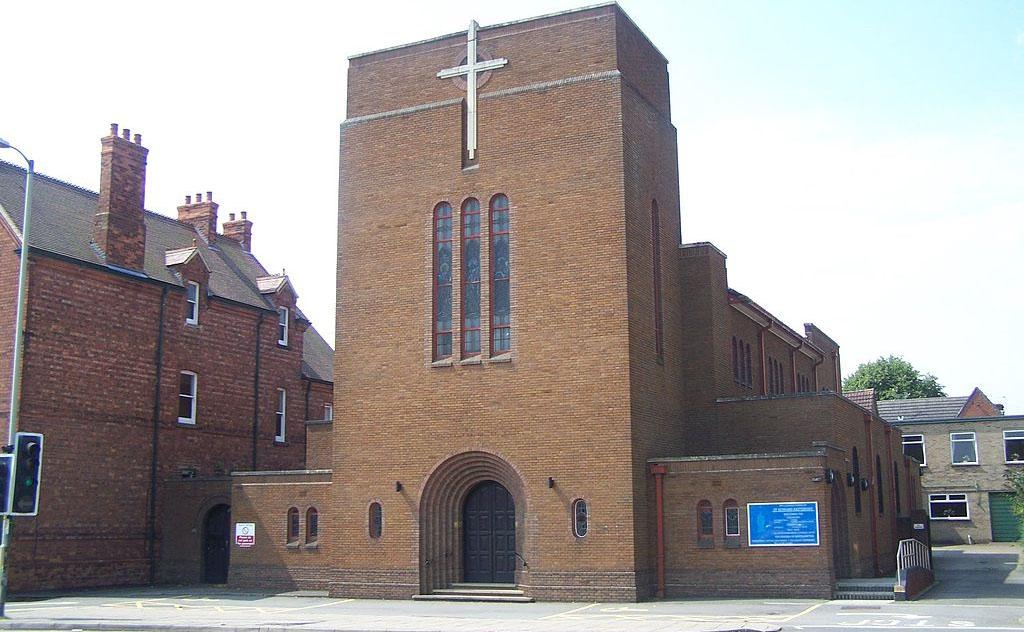
Abuja Church Expels Newly Married Woman Over Refusal to Consummate Marriage
An Abuja-based church has expelled a newly married woman, Oyiza, after she allegedly refused to consummate her marriage with her husband, Isaac—an action that has sparked widespread debate over marital consent, religious authority, and women’s rights in Nigeria.
The couple, who were living in Ibadan, got married on September 6, 2025, following the completion of their traditional marriage rites in Okene and a court wedding in Ibadan. Oyiza is originally from Kogi State.
According to accounts presented by the husband and church officials, marital tensions began shortly after the wedding, with Oyiza reportedly declining all attempts at intimacy. She allegedly told her husband she did not love him and later accused her mother of pressuring her into the marriage.
Family members and church leaders reportedly intervened multiple times over several months in an attempt to resolve the matter. Despite repeated marriage counselling sessions, the woman was said to have maintained her position, insisting she was emotionally unprepared for the union.
Isaac claimed that prior to the wedding, Oyiza had expressed doubts about proceeding with the marriage but later reassured him and the church’s marriage committee that she was ready, leading to approval of the wedding plans.
Photos from the ceremony, later circulated on social media, showed Oyiza appearing cheerful among friends and church members. However, Isaac said the marriage quickly deteriorated after the wedding, describing the relationship as emotionally exhausting and restrictive.
READ ALSO:
- Pastor Sentenced to Death by Hanging for Murdering Landlord in Akwa Ibom
- Scientists Warn Popular Hair Extensions Contain Cancer‑Linked Chemicals
- Keyamo Defends APC Amid Public Debate, Says Party ‘Not Made Up of Saints’
In February 2026, the controversy escalated after the church released a video on its YouTube channel announcing Oyiza’s expulsion and excommunication. The church’s International Director stated that five months of mediation had failed.
During the announcement, the cleric used strong and controversial language, accusing Oyiza of spiritual misconduct and urging members to pray against her, claiming she had disgraced the church. He also referenced traditional cultural practices, suggesting that emotional readiness should not prevent marital obligations—remarks that triggered intense backlash online.
The cleric further claimed that his wife received a spiritual revelation alleging that Oyiza was under a supernatural covenant preventing marital relations. These claims were made publicly but remain unverified.
Oyiza was not present during the announcement, and efforts to obtain her response have been unsuccessful.
The incident has since generated nationwide reactions, with many Nigerians, legal commentators, and rights advocates arguing that consent within marriage is non-negotiable and that religious institutions should not compel intimacy or publicly shame individuals over private marital disputes.
The case has reignited conversations around:
- Forced marriage and family pressure
- Consent and bodily autonomy
- Limits of church authority in private relationships
- Mental health and dignity of women
As of the time of reporting, the church has not released any further statement addressing the public criticism.
Abuja Church Expels Newly Married Woman Over Refusal to Consummate Marriage
metro
Pastor Sentenced to Death by Hanging for Murdering Landlord in Akwa Ibom

Pastor Sentenced to Death by Hanging for Murdering Landlord in Akwa Ibom
Prince Emmanuel Umoh, the resident pastor of Living Faith Church Chapel, Ifa Ikot Ubo–Ifa Ikot Okpon Branch in Uyo, Akwa Ibom State, has been sentenced to death by hanging for the murder of his landlord, Gabriel Bassey, a 500‑level civil engineering student at the University of Uyo.
Umoh was found guilty by Justice Gabriel Ette of the Akwa Ibom State High Court after evidence showed he fatally stabbed Bassey on December 21, 2020, inside the estate in Ifa Ikot Ubo, a community in Uyo Local Government Area. The judgment was delivered following a trial that lasted more than five years.
The prosecution established that Bassey had moved into his late mother’s property in Ifa Ikot Ubo to secure the family estate and be closer to school. The property previously housed a nursery school his mother built before her death in December 2019.
Court records show that part of the estate — a hall connected to a two‑bedroom apartment occupied by Bassey and his younger brother, Emmanuel Bassey — was leased to Living Faith Church for worship and community use at an annual rent of ₦150,000, with permission from Bassey’s father, Emana Bassey, a retired principal. The church began using the hall before the full rent was paid.
Umoh, who was later appointed the chapel’s first resident pastor, was given a spare key to the deceased’s apartment to allow access to church property stored inside. Evidence presented in court revealed that after this arrangement, personal items belonging to the deceased’s late mother — including clothing, dishes and valuables — began to go missing.
READ ALSO:
- Scientists Warn Popular Hair Extensions Contain Cancer‑Linked Chemicals
- Keyamo Defends APC Amid Public Debate, Says Party ‘Not Made Up of Saints’
- Lagos Police Arrest Officers After Fatal Alagbado Shooting Amid Public Outcry
The father, Mr. Emana Bassey, testified that he initially approved the spare key arrangement. However, when items started disappearing, he instructed his son to return the key. The defendant claimed he had lost the key, prompting concerns over security. The church’s senior pastor, Owoidoho Akpan, who testified for the defence, gave the Bassey family ₦5,000 to replace the locks. After the locks were changed, no further items were reported missing, the court heard.
Additional tensions arose between Umoh and Bassey over the use of rent funds supposedly meant for hall renovations, with disagreements escalating in the weeks leading up to the murder.
On the day of the incident, neighbours observed Umoh entering the premises shortly before cries of “Jesus” were heard. Minutes later, he was seen wearing a blood‑stained white garment, claiming he had fallen while fixing a banner. Bassey was not seen alive again.
Five days later, on December 26, 2020, Bassey’s decomposing body was found in his room, wrapped in a mat with multiple stab wounds and a butcher’s knife beside him. Forensic evidence and witness testimony linked Umoh to the crime, with bloodstains on his clothing and the fact that he was the last person seen with the deceased.
Umoh was arraigned on December 6, 2021, on a single count of murder. He pleaded not guilty, and the prosecution called six witnesses, including members of the Bassey family and church officials, to support its case.
In his lengthy judgment, Justice Ette described the crime as deeply troubling and a betrayal of trust, particularly because it was committed by a religious leader on church grounds.
“Life is sacred, and those who represent God on earth should teach that. It is an irony and quite appalling when a man who claims to be the representative of the divine on earth stoops so low as to denigrate the very essence of his calling and take someone’s life on the premises of the church,” the judge said.
He added that individuals who violate public trust in this way threaten society and must be punished in accordance with the law.
Having found the defendant guilty beyond reasonable doubt, the court pronounced sentence:
“I hereby sentence you to death by hanging.”
The conviction brings to an end nearly six years of legal proceedings and underscores the rule of law in Akwa Ibom State, even when the accused holds a position of religious leadership.
Pastor Sentenced to Death by Hanging for Murdering Landlord in Akwa Ibom

-

 Politics2 days ago
Peter Obi Launches ‘Village Boys Movement’ to Rival Tinubu’s City Boys Ahead of 2027
-

 International3 days ago
Canada Opens New Express Entry Draw for Nigerian Workers, Others
-

 News2 days ago
Police to Arrest TikToker Mirabel After She Recants False Rape Claim
-

 International2 days ago
Epstein, Ex-Israeli PM Named in Alleged Profiteering From Boko Haram Crisis
-

 metro3 days ago
Osun Awards 55.6km Iwo–Osogbo–Ibadan Road Project to Three Contractors
-

 Politics3 days ago
Updated: Rivers Senator Mpigi Barinada dies at 64
-

 Education8 hours ago
UTME: JAMB Clarifies Position on Hijab During Biometric Capture
-

 metro3 days ago
Ondo Monarch Killed as Bandits Strike Akure North