NAFDAC recalls Benylin cough syrup - Newstrends
Connect with us

Health

NAFDAC recalls Benylin cough syrup
Published

on

NAFDAC recalls Benylin cough syrup

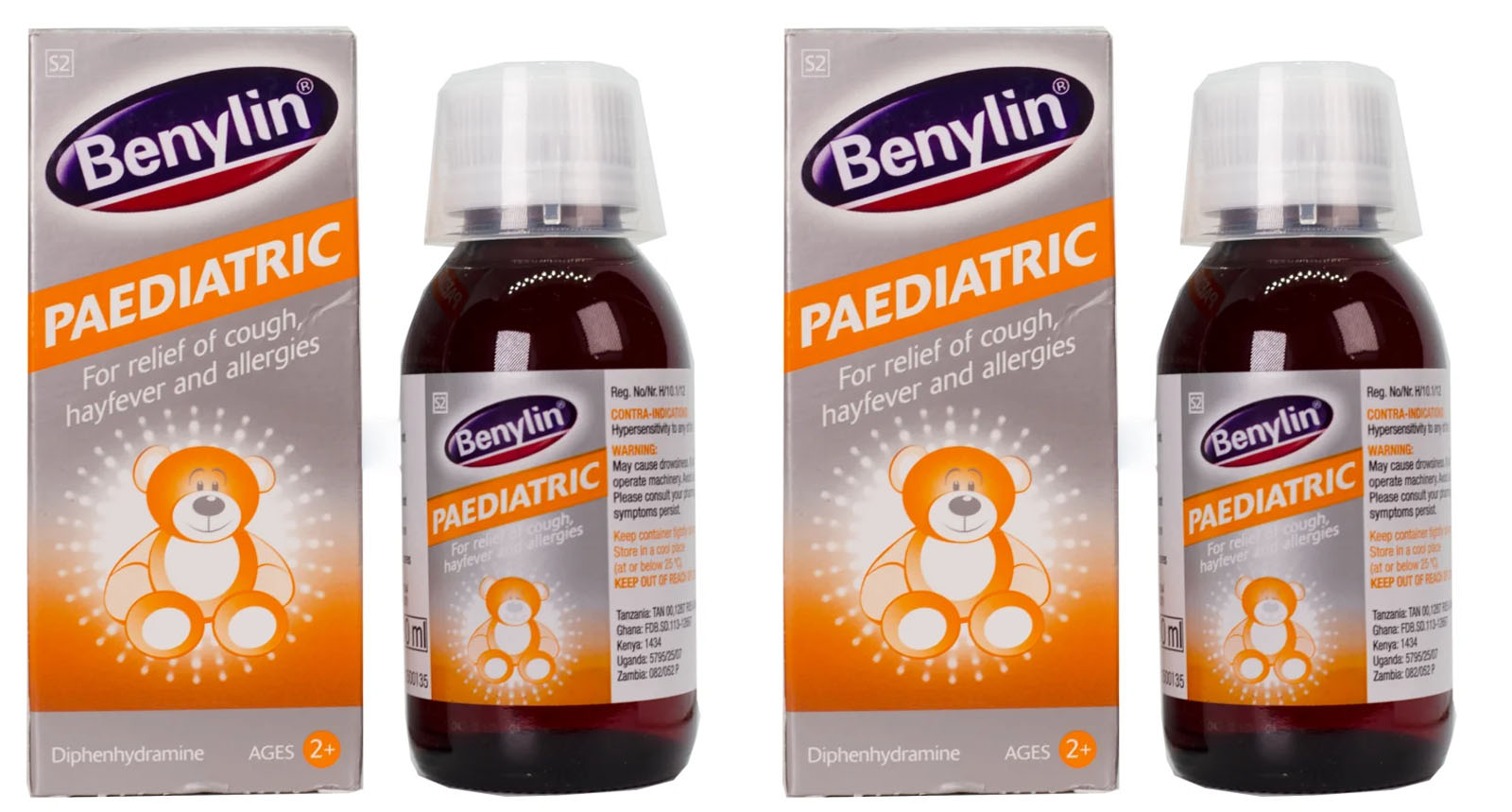
The National Agency for Food and Drugs Administration and Control has recalled Benylin Paediatrics Syrup manufactured by Johnson & Johnson, following recent toxicity findings in the laboratory on the product.

NAFDAC said laboratory analysis conducted on the product showed that it contains an unacceptable high level of Diethylene glycol and was found to cause acute oral toxicity in laboratory animals.

The agency disclosed this on its website on Wednesday.

A product recall is an important method of managing risks in response to product safety events and emergencies.

According to an online health portal, Science Direct, a product recall is a request to return to the maker, a batch, or an entire production run of a product, usually over safety concerns, design defects, or labelling errors.

“Benylin Paediatric syrup is indicated for the relief of cough and its congestive symptoms and for the treatment of hay fever and other allergic conditions in children aged two to 12 years.

“Diethylene glycol is toxic to humans when consumed and can prove fatal. Toxic effects can include abdominal pain, vomiting, diarrhea, inability to pass urine, headache, altered mental state, and acute kidney injury which may lead to death,” it noted.

READ ALSO:

The details of the product showed that the product is manufactured by Johnson & Johnson in Cape Town, South Africa.

With batch number 329304, the product was manufactured in May 2021, and it is to expire this month, April 2024.

NAFDAC, however, implored importers, distributors, retailers, and consumers to exercise caution and vigilance within the supply chain to avoid the importation, distribution, sale, and use of substandard (contaminated) regulated products.

It said all medical products must be obtained from authorised/licensed suppliers. The products’ authenticity and physical condition should be carefully checked.

“Anyone in possession of the above-mentioned product is advised to immediately discontinue the sale or use and submit stock to the nearest NAFDAC office. If you witness any adverse reaction/event after the use of this product in any children, you are advised to direct such patients to immediate medical attention from a qualified healthcare professional.

“Healthcare professionals and consumers are advised to report any suspicion of substandard and falsified medicines to the nearest NAFDAC office, NAFDAC on 0800-162-3322 or via email: sf.alert@nafdac.gov.ng

“Similarly, healthcare professionals and patients are also encouraged to report adverse events or side effects related to the use of the medicinal product to the nearest NAFDAC office, or through the use of the E-reporting platforms available on the NAFDAC website www.nafdac.gov.ng or via the Med-safety application available for download on android and IOS stores or via e-mail on pharmacovigilance@nafdac.gov.ng,” it added.

Meanwhile, the agency said it has directed the marketing authorisation holder (Johnson and Johnson company, West Africa) to initiate the recall of the batch and the notice will also be uploaded to the WHO Global Surveillance and Monitoring System.

NAFDAC regulates and controls the manufacture, importation, exportation, distribution, advertisement, sale, and use of food, drugs, cosmetics, medical devices, packaged water, chemicals, and detergents.

NAFDAC recalls Benylin cough syrup

Loading

Health

VIDEO: Nigerian Doctors in Canada Have Become ‘Medical Agberos’ — Doctor Alleges

Published

on

VIDEO: Nigerian Doctors in Canada Have Become ‘Medical Agberos’ — Doctor Alleges
Canada-based Nigerian doctor, Arinze Onwumelu

VIDEO: Nigerian Doctors in Canada Have Become ‘Medical Agberos’ — Doctor Alleges

A Canada-based Nigerian doctor, Arinze Onwumelu, has stirred intense reactions online after alleging that some Nigerian medical practitioners in Canada have turned into what he describes as “medical agberos,” accusing them of aggressively competing for patients in a manner akin to transport touts at Nigerian motor parks.

The doctor made the claim in a video shared on his Instagram page on Wednesday, where he lamented what he described as unhealthy rivalry among healthcare professionals, particularly within the Nigerian medical community in Edmonton, Alberta.

Drawing a comparison with transport touts commonly found at motor parks in Nigeria, Onwumelu said doctors now “drag” patients from one another in a manner similar to how touts lure passengers into boarding their vehicles. “This Canada where we are, Nigerian doctors have turned to medical agberos,” he said. Explaining his analogy, the doctor referenced the activities of transport touts at major bus terminals, where passengers are persuaded to abandon one vehicle for another with promises of cheaper fares and faster journeys. “Now we have doctors that do that here. They drag patients like there is no tomorrow. It has gotten to the stage that they kill themselves for patients,” he said.

The doctor further expressed concern over what he described as growing competition between older and younger practitioners, questioning why senior doctors would compete with younger colleagues for patients. “I don’t see any reason why a 70-year-old man would be dragging patients with a small boy. I don’t see any reason why a practice owner wouldn’t release a patient for a small boy,” he added. According to him, the situation could have long-term consequences for the medical community if not addressed. “But I have news for you, this city will be scattered in five years,” he warned. Describing the trend as embarrassing for the profession, Onwumelu said the conduct of some practitioners was damaging the image of doctors within the community and could adversely affect the chances of Nigerian doctors who plan to migrate to Canada to practice in the future. “This is disgraceful for our professionals as doctors. We’ve now become medical agberos and we would be the ones to damage this city,” he said.

READ ALSO:

His remarks quickly sparked debate on social media, with many users disagreeing with the comparison, while others questioned what exactly he meant by doctors “hustling” for patients. Several commenters argued that building a patient base is a normal part of professional practice and should not be compared to the activities of transport touts. Others, however, expressed concern that unethical competition could damage the reputation of Nigerian professionals abroad. @labalingo wrote: “I trust the system will root them out. Why I like the system abroad is they will give you a very long rope and allow the evidence to build up and then gbosa! You end up in jail.” @ann_omatf countered: “Calling medical professionals ‘agberos’ because they are building patient bases abroad is a stretch. They didn’t come to play.” @rexzeeefied011 questioned: “How’s that so? Are they given target as to how many clients they must treat??” @kelvinEda91 observed: “Anything wey Nigerians touch no worry e no fit be the same again. Especially the desperate ones.” @PlacidChief added: “Nigerians have a value problem and tend to be stupid most times. Greed will be the end of a lot of people.”

The controversy comes amid a growing presence of Nigerian medical professionals in Canada. The Canadian Association of Nigerian Physicians and Dentists (CANPAD) , a not-for-profit association registered in Ontario, Canada in 2001, recognizes and represents the professional and social interests of physicians and dentists of Nigerian descent living in Canada. CANPAD members meet annually across different provinces, and the organization offers scholarships providing financial assistance to students of African descent enrolled in Canadian institutions of higher learning. The association has approximately 2,000 members across the country, reflecting the significant and growing Nigerian medical community in Canada.

Nigerian doctors in Canada have also faced significant challenges, including reports of unconscious bias and systemic discrimination. A Nigerian medical doctor practicing in Calgary recently shared insights on these challenges, arguing that black immigrants start at a significant disadvantage in the Western job market. “As a black person in the West, you already have minus 30 percent. If you’re going for an interview, you already have minus 30 percent just for being black,” the doctor stated, adding that having an African name or a pronounced accent further deducts from one’s initial standing. The doctor described how even after prescribing treatment, a white patient would leave his clinic and go to ask the receptionist if the prescription is okay. “People always question you when you look different. People always question you when you’re black. Is he really a good doctor?” he said. Another professional, Dr. Zoe, likened the experience to a Nigerian proverb: “You as a black guy, you have to work three times harder than the local guys to be where they are.” Before moving to Canada, one doctor struggled to secure interviews despite his qualifications until a supervisor advised him to “remove the Nigerian thing” from his CV. “The moment I did that, I had about seven interviews in one week,” he claimed.

The term “agbero” has gained international recognition. In 2024, the Oxford English Dictionary officially included “agbero” in its lexicon, defining it as “a person who works as a tout at car parks and bus stops, collecting money from passengers and drivers, and ushering passengers onto vehicles.” The word is part of a growing list of Nigerian English terms now recognized by the prestigious dictionary, alongside “japa,” “419,” “eba,” and “suya,” among others.

Onwumelu’s warning raises important questions about professional ethics, cultural integration, and the reputation of Nigerian professionals abroad. As more Nigerian doctors seek opportunities in Canada, the behaviour of a few could potentially impact the perception of the entire community. The incident also highlights the broader tension between building a successful practice in a competitive healthcare system and maintaining the professional decorum expected of medical practitioners in Canada. Whether Onwumelu’s allegations reflect an isolated phenomenon or a growing trend remains to be seen, but his video has undoubtedly opened a necessary conversation within the Nigerian medical diaspora.

VIDEO: Nigerian Doctors in Canada Have Become ‘Medical Agberos’ — Doctor Alleges

Loading

Continue Reading

Health

NARD Issues Federal Govt 21-Day Ultimatum Over Unpaid Allowances

Published

on

Nigerian Association of Resident Doctors

NARD Issues Federal Govt 21-Day Ultimatum Over Unpaid Allowances

The Nigerian Association of Resident Doctors (NARD) has issued a 21-day ultimatum to the federal government, warning that industrial harmony in the health sector cannot be guaranteed if longstanding welfare and payment issues affecting doctors remain unresolved. The warning was contained in a communiqué released after the association’s Ordinary General Meeting (OGM) and Scientific Conference, which was held in Kano from May 31 to June 5, 2026. The conference was themed “Caring for the Caregivers: Mental Health and Emotional Resilience in Residency Training” and brought together resident doctors, medical experts, government officials, and other stakeholders to discuss challenges facing healthcare workers in Nigeria. The communiqué was signed by NARD President, Dr. Mohammad SuleimanSecretary-General, Dr. Shuaibu Ibrahim, and Publicity and Social Secretary, Dr. Abdulmajid Yahya Ibrahim. NARD said the federal government had repeatedly failed to fulfil commitments made to doctors despite several engagements and assurances. At the press briefing concluding the OGM, the association declared an industrial dispute with the government over 14 unresolved demands affecting the health sector. “The association hereby declares an industrial dispute with the federal government of Nigeria on the outlined matters above and cannot guarantee industrial harmony after the 21-day window period given to address all the demands,” the communiqué stated.

Among its key demands, NARD called for the immediate release and payment of the 2026 Medical Residency Training Fund (MRTF) to all eligible resident doctors nationwide within the next 21 days. The MRTF is a statutory intervention fund specifically meant to support the training of resident doctors across accredited health institutions nationwide. Despite repeated assurances from the government, the fund remains unpaid, leaving many resident doctors struggling to finance their training. According to the association, the continued withholding of the MRTF has severely impacted the quality of medical residency training across the country, forcing many doctors to bear the financial burden of their specialization training personally. NARD has consistently maintained that the fund is not a privilege but a statutory entitlement that the government is obligated to disburse annually.

READ ALSO:

The association raised concerns over unpaid salariespromotion arrears and discrepancies in professional allowances reflected in members’ May 2026 salaries across federal and state health institutions. NARD is demanding payment of outstanding arrears arising from the 25/35 percent upward review of the Consolidated Medical Salary Structure (CONMESS) , as well as 19 months of unpaid professional allowance arrears owed to doctors across the country. The doctors further called for the immediate correction of discrepancies in professional allowances reflected in their May 2026 salary cycle and the settlement of all related arrears. Many members, the association noted, have continued to receive incorrect or incomplete salary payments despite multiple complaints and engagements with relevant government agencies. House officers’ welfare was another major issue highlighted. NARD cited persistent salary delaysunpaid arrearsinternship placement challenges and onboarding difficulties that continue to affect young doctors just beginning their medical careers. The association noted that excluding house officers from the civil service scheme means they cannot benefit from wage awards or reviews, and called for a clear system ensuring every adjustment on salary or allowance is immediately reflected. NARD President Dr. Mohammad Suleiman has previously stated that “whenever the Federal Government makes adjustments to wage awards, minimum wage, or even during the review of hazard allowance, these adjustments do not automatically translate to house officers,” leaving this vulnerable group of doctors perpetually disadvantaged.

The association further accused Motunrayo Omidiran, Executive Chairman of the Federal Character Commission (FCC) , of delaying the issuance of compliance letters to federal health institutions. According to NARD, the delays have worsened manpower shortages and contributed to the growing brain drain in the health sector, as many qualified doctors and other healthcare workers are unable to be recruited into vacant positions. “The OGM demands the immediate issuance of a letter of compliance by the Chairperson of the FCC within the next 21 days to facilitate employment of healthcare workers and avert further worsening of the brain drain crisis,” NARD President Suleiman said during the press briefing. The association warned that the recruitment bottleneck created by the FCC’s delays has forced many young Nigerian doctors to seek employment opportunities abroad, further depleting an already overstretched workforce. With thousands of doctors leaving Nigeria annually for the United Kingdom, Saudi Arabia, Canada, and other destinations, NARD argues that addressing recruitment delays is a critical component of reversing the brain drain crisis.

The doctors also expressed grave concern over the rising cases of assaultharassmentintimidation and attacks on doctors while carrying out their duties. NARD President Suleiman described the trend as “barbaric, unacceptable and a dangerous threat” to the survival of the health system. “The OGM observed with grave concern the disturbing rise in cases of assault, harassment, intimidation and violent attacks against doctors across the country while discharging their professional duties,” Suleiman said. As part of its demands, the association urged the federal government and security agencies to develop and implement a National Healthcare Workers’ Assault Prevention and Response Protocol within the 21-day period. It also called for the immediate investigationarrest, and prosecution of perpetrators of attacks on health workers. The association noted that many attacks on doctors and other healthcare workers go unreported or unpunished, creating a culture of impunity that emboldens violent individuals. NARD warned that if the trend continues unchecked, more healthcare workers will abandon the profession or seek safer working environments outside the country.

READ ALSO:

The communiqué highlighted unresolved welfare issues in several major institutions, including the Lagos University Teaching Hospital (LUTH) and the Obafemi Awolowo University Teaching Hospitals Complex (OAUTHC) in Ile-Ife. NARD accused the management of OAUTHC of persistent intimidation of resident doctors, while alleging that LUTH had continued to withhold the provision of call meals for doctors despite repeated demands. The association also demanded full implementation of outstanding provisions in the Medical and Health Workers’ Collective Bargaining Agreement (CBA) and urged government action on excessive workloadprolonged call-duty hourscasualisation of doctors, and abusive locum appointments. Other welfare concerns were listed in various centres, including the Federal Capital Territory Administration (FCTA) hospitals and Barau Dikko Teaching Hospital in Kaduna, where doctors reportedly face severe staffing shortages and poor working conditions.

The association reiterated its demand for the full implementation of outstanding provisions in the Medical and Health Workers’ Collective Bargaining Agreement (CBA) . The CBA, which was signed between the federal government and health sector unions, contains several provisions aimed at improving the welfare and working conditions of healthcare workers. However, NARD noted that many of these provisions remain unimplemented years after they were agreed upon. Specific issues highlighted include excessive workload caused by severe manpower shortages, prolonged call-duty hours that violate safe working hour guidelines, the casualisation of doctors through irregular appointment practices, and abusive locum appointments that exploit young doctors. The association warned that these conditions are not only unfair to doctors but also dangerous for patients, as overworked and stressed physicians are more likely to make medical errors.

The association commended the governors of Kano and Osun statesAbba Kabir Yusuf and Ademola Adeleke, for their efforts to improve doctors’ welfare and strengthen healthcare delivery in their states. According to NARD, both governors have demonstrated commitment to addressing the concerns of resident doctors in their respective states, contrasting their actions with what it perceives as the federal government’s sluggish response to the crisis. NARD specifically praised the Kano State government for hosting the association’s OGM and Scientific Conference and for its ongoing investments in healthcare infrastructure and workforce welfare. The association called on other state governors to emulate the examples set by Kano and Osun.

NARD has stated that its National Officers Committee will engage relevant stakeholders within the 21-day window period. After this period, the association’s National Executive Council (NEC) will review progress and take further decisions, which could include a nationwide industrial action. The doctors’ body said it expects concrete action from the government before the deadline expires, warning that failure to address the issues could trigger industrial unrest across the country’s health sector. A nationwide strike by resident doctors would effectively shut down tertiary healthcare services in federal and many state hospitals, as resident doctors constitute the backbone of clinical services in these institutions. The latest ultimatum adds to a long history of disputes between the country’s resident doctors and the federal government over remuneration, welfare, and training funding. Over the years, NARD has repeatedly threatened or embarked on industrial actions over unpaid allowancessalary arrears, and delays in the release of the MRTF. Many of the issues highlighted in the latest communiqué have remained recurring points of contention between the association and the government.

NARD Issues Federal Govt 21-Day Ultimatum Over Unpaid Allowances

Loading

Continue Reading

Health

Don’t add lies to the terrorist horror in Oyo, By Farooq Kperogi

Published

on

The Shettima danger for Tinubu, By Farooq Kperogi
Farooq Kperogi

Don’t add lies to the terrorist horror in Oyo, By Farooq Kperogi

The kidnapping of schoolchildren and teachers in Oyo State is horrifying enough by itself. It does not need the embellishment of lies, half-truths, conjectures and opportunistic propaganda to make it more horrifying than it already is.

But that is precisely what appears to be happening with the viral, social-media-amplified list of “demands” allegedly made by the terrorist bandits who kidnapped schoolchildren and teachers in Oyo State.

According to the social media version of the story, the bandits have demanded four things as preconditions for releasing the innocent people in their captivity: one billion naira to be paid into an account in the Republic of Benin, the release of bandits supposedly being held in Agodi and Abolongo prisons, two Hilux vehicles and the amendment of Oyo State laws to introduce Sharia.

This list has travelled far and wide because it has all the elements that make rumors combustible in Nigeria. It involves money, foreign conspiracy, terrorism, prisons, Sharia and the implicit insinuation that some local Muslims must know more than they are saying. It is almost a perfect specimen of panic engineering.

The problem is that it has no firm evidentiary foundation. The abduction is, of course, real. So are the communal grief and the horrors people in Oyo and the Southwest are contending with now. But the four-point demand list that is now being hawked across social media as fact is not supported by any credible reporting.

The source of the social media-fueled four-point demand list appears to be a vague statement attributed to the Speaker of the Oyo State House of Assembly, Debo Ogundoyin. He was reported to have asked whether anyone would negotiate with terrorists if they asked for weapons, money or concessions on future laws of the land as part of their ransom.

That is a general, hypothetical-sounding formulation. But some people somewhere with a predetermined agenda sat down and chose to stretch this conjectural formulation from the Speaker as evidence of disclosure of a precise list of specific demands.

There is a world of difference between saying terrorists asked for “weapons, money or concessions on future laws” and saying they demanded “one billion naira into a Benin Republic account, two Hilux vehicles, release of detainees in Agodi and Abolongo prisons and the introduction of Sharia in Oyo State.” One is vague, perhaps even rhetorical. The other is specific, explosive and politically loaded. You cannot responsibly move from the first to the second without foolproof evidence.

READ ALSO:

Even the few newspaper reports that published the more sensational version were cautious and guarded in their language. They said, “reports indicate,” “reportedly attributed” and “according to the report” without once mentioning any “report.” That is lazy journalism’s way of saying, “We have no facts for this story.”

But certain people on social media have laundered the uncertainty into certainty, the allegation into fact, the list as a means to attract and monetize eyeballs, and the rumor into a psychological weapon.

The Sharia claim is the most suspicious part of the whole thing. Where will the Sharia be implemented? In the classrooms from which the children were abducted? In the Old Oyo National Park where the homicidal, blood-stained criminals are believed to be hiding? In the kidnappers’ forest camps? Or across Oyo State through a ransom note from bandits? The absurdity should detain us before outrage overtakes our capacity for critical thought.

The demand is also historically and empirically incoherent. Bandits and terrorists (who, in my dictionary, are indistinct) have murdered Muslims in states where Sharia already exists. They have attacked mosques. They have killed imams while they are leading prayers in mosques during Ramadan, Islam’s holiest month. They have kidnapped Muslim women, Muslim children, Muslim clerics and Muslim farmers.

They have devastated Zamfara, Katsina, Sokoto, Kebbi, Niger, Kaduna and other Muslim-majority communities such as Kwara North. Just last week, these insensate beasts abducted the wives and children of the Emir of Yasikiru in my natal local government of Baruten. Not done, they also burned the emir’s palace. This happened only a few months after murdering nearly 300 people and abducting nearly 300 women and children, most of whom are Muslims, in neighboring Kaiama Local Government.

To suddenly believe that the same species of criminals has discovered the virtues of Sharia and are championing its enshrinement in Oyo State’s laws is to suspend judgment in the service of prejudice.

READ ALSO:

The Benin Republic bank account story is also suspicious. Of course, no banking system is immune to criminal manipulation. Criminals use “mule accounts,” stolen identities and corrupt intermediaries everywhere. So, the existence of KYC and anti-money-laundering rules does not make the claim impossible. But it does make it evidentially demanding. If anyone claims that kidnappers asked for one billion naira to be paid into a named or unnamed Benin Republic account, the burden of proof should be higher than “according to reports.”

The danger of this rumor is not merely that it is false or unverified. It is that it has already acquired a social function. It is being used to suggest that Yoruba Muslims, especially those who have advocated the introduction of the civil aspects of Sharia to adjudicate issues like marriage and inheritance among Muslims, are somehow complicit in the crimes of these bandits.

It is also being used to imply that the abduction of Yoruba schoolchildren is part of an Islamic plot that local Muslims either endorse or secretly facilitate. This is how societies descend into self-sabotaging moral idiocy. Criminals commit crimes and innocent people who share a religion, ethnicity or language with the imagined identity of the criminals are made to bear the brunt of unjustified transferred aggression.

It bears stressing that Yoruba Muslims are not responsible for the abduction of schoolchildren in Oyo State. Muslim communities in Yorubaland are not accessories to banditry merely because a rumor says kidnappers demanded Sharia. The mere mention of Sharia in a viral post does not convert every Muslim in Oyo, Osun, Ogun or Lagos into a suspect. To argue otherwise is to accept the same collective guilt logic that has poisoned Nigeria’s intergroup relations for decades.

Terrorists murder Muslims, Christians, traditional worshippers and non-religious people. They murder Hausa, Fulani, Yoruba, Igbo, Tiv, Berom, Nupe, Baatonu and everyone else when doing so advances their greed, sadistic urges, murderous impulses or tactical objectives. They are not equal-opportunity humanists, of course. They often manipulate religion and ethnicity. They sometimes speak the language of faith while practicing the ethics of beasts. But their victims are not drawn from one religious community alone.

The fight against terrorism is weakened when we isolate innocent groups for demonization. It dissipates much-needed moral energy and produces enemies where allies are needed. It also encourages communities to hide behind siege mentalities instead of cooperating across religious and ethnic lines to expose criminals. The people who should be angry together are made to be angry at one another.

The people who kidnapped children in Oyo State are reprehensible, homicidal outlaws. The state must rescue the victims, punish the perpetrators, expose their collaborators and secure schools and forests. That is the task, and it is immense, urgent, ever-present and already morally overwhelming. It should not be complicated by people who are eager to graft their pre-existing animus onto other people’s pain.

Someone I discussed this issue with yesterday told me that the rumors of the list of demands are activated by an unusually heightened sense of vigilance. I get that. There is nothing wrong with vigilance. In fact, vigilance is now a condition for survival in Nigeria. But vigilance without verification can provoke self-annihilating hysteria and mob psychology.

The children and teachers in captivity deserve our full attention. Their families deserve empathy unpolluted by propaganda. Oyo State deserves security, not rumor-fed religious suspicion. Nigeria deserves a serious conversation about the collapse of state protection, the spread of kidnapping economies, the mass helplessness in the face of terror and the ungoverned spaces that have become refuge for terrorists and bandits.

What Nigeria does not need is another lie added to an already unbearable tragedy.

Don’t add lies to the terrorist horror in Oyo, By Farooq Kperogi


Kperogi is a renowned Nigerian columnist and United States-based Professor of Journalism.

Loading

Continue Reading

Trending