
News
Tribunal shifts hearing of Atiku’s suit against Tinubu over INEC’s failure to supply materials
Tribunal shifts hearing of Atiku’s suit against Tinubu over INEC’s failure to supply materials
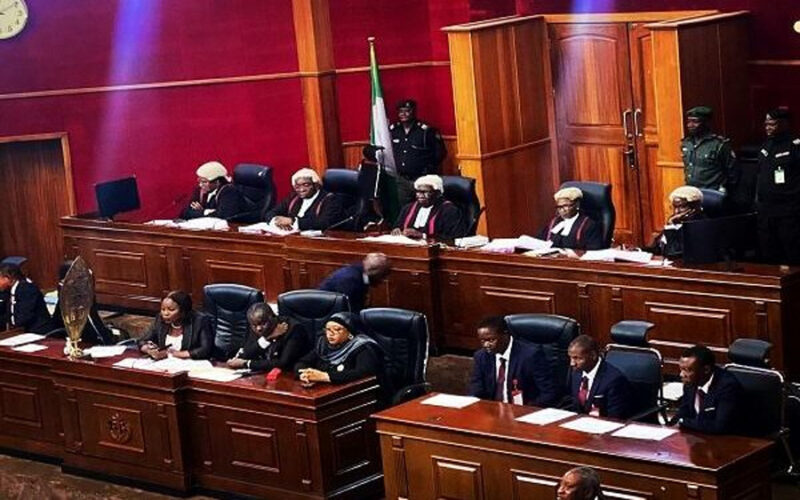
The Presidential Election Petitions Court was on Tuesday forced to shift hearing in the petition of Atiku Abubakar and the Peoples Democratic Party(PDP) over lack of documents from 11 local government areas of Kogi State.
The five-member panel of justices presided by Justice Haruna Tsammani shifted hearing in the petition to enable the PDP obtain the documents expected from the Independent National Electoral Commission (INEC).
Earlier, counsel to the PDP, Eyitayo Jegede (SAN) had sought to tender forms EC8A from 10 out of 21 local government areas of Kogi State to establish the petition against President Bola Tinubu.
The exhibits mainly documents used for the February 25 presidential election are those from Ankpa, Dekina, Idah, Ofu, Olamaboro, Yagba East, Yagba West, Kabba-Bunu, Igalamela Odolu and Kogi.
Although, the schedule of documents to the effect was filed along with the exhibits, the court however noted that tendering such sensitive exhibits at piece meals would not be of any help especially in marking and numbering them.
Jegede, however, blamed the INEC for deliberate refusal to supply his client with the vital documents.
READ ALSO:
- Saudi Arabia donates 50 tonnes of dates to Nigeria
- EFCC arrests 33 internet fraud suspects in Ilorin, Maiduguri
- Chukwueze wins best African player in La Liga
He said Atiku and the PDP had paid N6 million for the supply of certified true copies of the exhibits but INEC failed to provide them.
Jegede explained that to save the situation, the legal team had to subpoena top INEC officials to bring the required documents before the court.
He later requested for a 24-hour adjournment to enable him approach the electoral body to do the needful.
Following no objections from counsel to respondents, INEC represented by Abubakar Mahmud; Tinubu, Chief Wole Olanipekun; and the APC, Lateef Fagbemi, all Senior Advocates of Nigeria, the panel shifted the matter.
Earlier, the panel admitted the document of discontinuance of the suit at the Supreme Court filed by six states of the PDP challenging the declaration of Bola Tinubu as president.
PDP counsel, Jegede informed the court that the discontinuance notice in SC/CV/354/2023 between AG of Adamawa State and 6 others versus Attorney General of the Federation was contained in the 3 schedule of documents to be tendered.
It is intended to support their counter affidavit against the APC’s claim that they are still maintaining a similar suit at the Supreme Court.
The Attorneys General of Adamawa, Akwa Ibom, Bayelsa, Delta, Edo and Sokoto states had on February 28 filed the suit before the Supreme Court challenging INEC’s declaration of Tinubu as winner of the February 25 presidential election without compliance to the provisions of the Electoral Act, 2022 and INEC guidelines.
They had contended that the provision for the upload of results from the BVAS to the IREV was not complied with before the INEC pronouncement.
However, in a preliminary objection at the tribunal, Tinubu and the All Progressives Congress (APC) argued that Atiku and PDP’s petition was an abuse of court process having filed a similar suit at the apex court.
Tribunal shifts hearing of Atiku’s suit against Tinubu over INEC’s failure to supply materials
Daily Trust







News
Senate Backs ₦54.46trn 2026 Budget, Cuts Oil Price Benchmark to $60
Senate Backs ₦54.46trn 2026 Budget, Cuts Oil Price Benchmark to $60
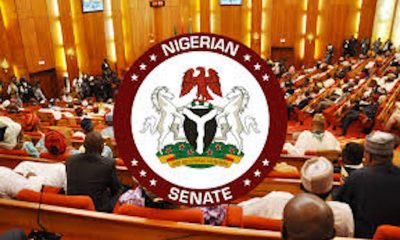
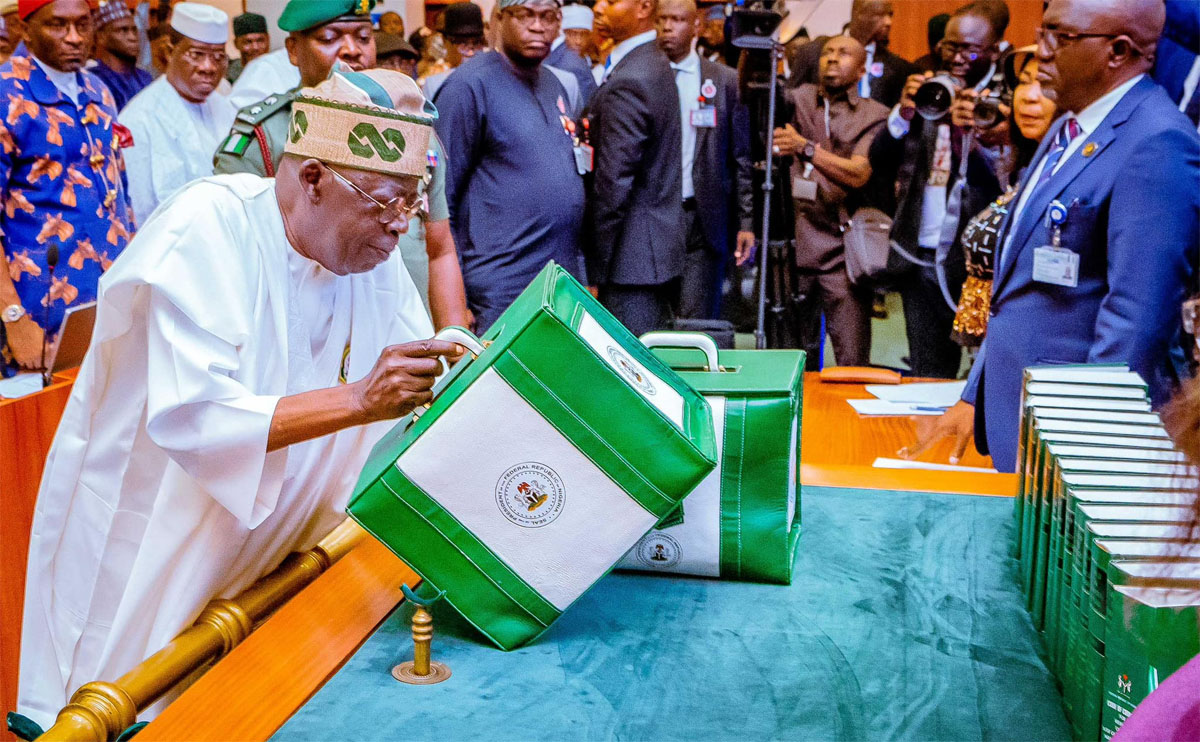
The stage is set for President Bola Ahmed Tinubu to present the 2026 Federal Government budget following the Senate’s approval of the 2026–2028 Medium Term Expenditure Framework and Fiscal Strategy Paper (MTEF/FSP).
The Senate, during plenary, approved a total ₦54.46 trillion 2026 budget, endorsing key fiscal and macroeconomic parameters despite concerns over a massive revenue shortfall recorded in 2025.
Under the approved framework, capital expenditure was pegged at ₦20.131 trillion, recurrent expenditure at ₦15.265 trillion, statutory transfers at ₦3.152 trillion, and Sinking Fund at ₦388.54 billion.
Lawmakers also approved an oil price benchmark of $60 per barrel, revised downward from the executive’s proposed $64.85, alongside projected aggregate revenue of ₦34.33 trillion, a fiscal deficit of ₦20.13 trillion, borrowings of ₦17.88 trillion, and debt service obligations of ₦15.52 trillion.
Other approved assumptions include crude oil production of 1.84 million barrels per day, inflation rate of 16.5 per cent, exchange rate of ₦1,512 to the dollar, and GDP growth rate of 4.68 per cent for 2026.
The approval followed the consideration of a report presented by the Chairman of the Senate Committee on Finance, Senator Mohammed Sani Musa (APC, Niger East). The committee recommended downward adjustments to oil price benchmarks in response to global geopolitical tensions and volatility in the international oil market.
READ ALSO:
- Inflation, Insecurity Drive Nigerians into Worst Survival Crisis in History – NLC
- Borno Police Defuse Unexploded Bomb Under Network Mast in Maiduguri
- Aisha Buhari Key to DSS DG Removal, Thwarts Alleged APC Primary Manipulation
The Senate also sustained projections for crude oil output, exchange rates and inflation for 2026–2028, citing the Central Bank of Nigeria’s stabilisation policies and ongoing economic reforms. Lawmakers expressed optimism that tax reforms would drive economic growth and improve revenue performance.
The committee further urged the Federal Government to implement a National Scanning Policy under the National Single Window of the Nigeria Revenue Service (NRS) to boost revenue assurance, reduce leakages, enhance transparency and strengthen national security.
Meanwhile, Minister of Finance and Coordinating Minister of the Economy, Wale Edun, disclosed that the Federal Government recorded a significant revenue shortfall in 2025, with actual inflows estimated at ₦10.7 trillion against a projected ₦40.8 trillion.
Speaking before the House of Representatives Committees on Finance and National Planning, Edun attributed the shortfall largely to weak oil and gas revenues, especially Petroleum Profit Tax (PPT) and Company Income Tax (CIT) from oil companies.
Despite the revenue gap, Edun said the government met key obligations, including salaries, statutory transfers, and debt servicing, through prudent treasury management.
He cautioned against rigid expenditure commitments tied to oil revenue projections, urging flexibility in spending plans amid recurring revenue underperformance.
Also speaking, Minister of Budget and National Planning, Atiku Bagudu, said the MTEF/FSP emerged from broad consultations and balanced conservative revenue assumptions with ambitious targets aimed at improving agency performance.
Chairman of the House Committee on Finance, James Faleke, stressed the need for critical scrutiny to prevent bloated budgets and ensure fiscal decisions that would move Nigeria’s economy forward.
Senate Backs ₦54.46trn 2026 Budget, Cuts Oil Price Benchmark to $60
News
Inflation, Insecurity Drive Nigerians into Worst Survival Crisis in History – NLC
Inflation, Insecurity Drive Nigerians into Worst Survival Crisis in History – NLC
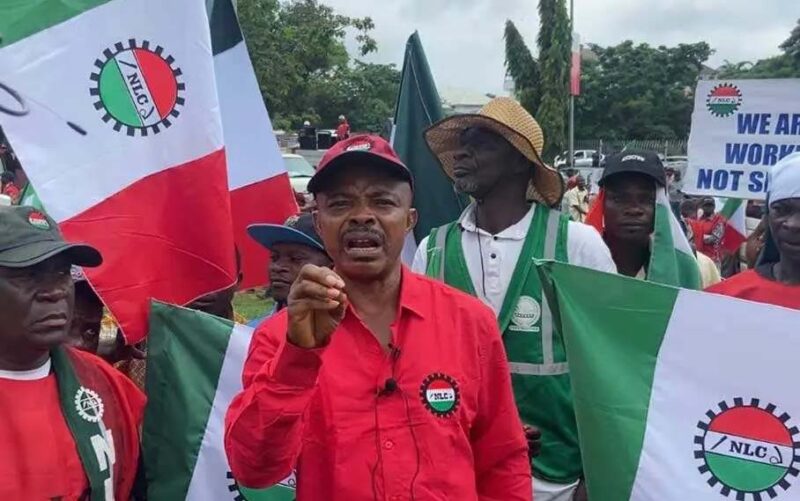
The Nigeria Labour Congress (NLC) has issued a grim warning that Nigerian workers and the wider population are grappling with the worst survival crisis in the country’s history, driven by soaring inflation, deepening insecurity, poor wages, and the collapse of social protection systems.
The labour union said Nigerians are now worse off than workers in several African countries, including war-ravaged nations such as Somalia and Sudan, stressing that financial insecurity has become the defining reality for millions of households.
In a review of the nation’s economic and social conditions, NLC President, Joe Ajaero, said the current hardship surpasses the suffering experienced during the civil war era and past austerity measures, warning that daily survival has become a relentless struggle for workers.
According to Ajaero, Nigerian workers now sit “at the bottom of the ladder” compared to their African counterparts, as income from work no longer meets basic needs such as food, shelter and transportation. He noted that many workers are heavily stressed, unable to save, accumulate assets or plan for the future.
The NLC linked the crisis to the combined effects of widespread insecurity, including Boko Haram, ISWAP terrorism, banditry, and kidnapping, alongside worsening financial insecurity, which it described as both a consequence of violence and an independent driver of hardship.
READ ALSO:
- Borno Police Defuse Unexploded Bomb Under Network Mast in Maiduguri
- Aisha Buhari Key to DSS DG Removal, Thwarts Alleged APC Primary Manipulation
- Dangote Raises Alarm Over Widespread Sabotage Crippling Nigeria’s Oil Sector
The union said Nigeria’s inflation rate, estimated at over 30 per cent in 2024, has severely eroded purchasing power, despite official claims of easing inflation by the National Bureau of Statistics (NBS). It added that real wages have stagnated or collapsed, with salaries failing to keep pace with rising prices.
Ajaero described the ₦70,000 national minimum wage as grossly inadequate, noting that the cost of a single bag of rice now exceeds the minimum wage, a situation he said should “prick the conscience of any responsible leader.”
The NLC further blamed the crisis on currency depreciation, which has driven up the cost of imported goods, fuel and services, as well as repeated fuel price hikes that have increased transportation and production costs across the economy.
According to the labour body, food inflation has made proper nutrition inaccessible to many families, with households spending as much as 80 per cent of their income on food. Rising unemployment and underemployment have also expanded the pool of desperate job seekers, depressing wages and fueling insecure, low-paying informal jobs.
The Congress highlighted weak social safety nets, noting that unemployment benefits, health insurance and pension coverage remain inadequate for most workers, especially those in the informal sector. Even within the formal sector, contributory pension schemes were described as insufficient due to low contributions and economic volatility.
Other pressures identified include the high cost of housing and transportation, forcing some workers to stay at their workplaces for days because they cannot afford daily commuting, as well as multiple taxation and deductions that further reduce take-home pay.
The NLC also decried rising electricity and telecommunications tariffs, highway tolls, and the burden of privately funding basic services such as power, water, security and healthcare due to failing public infrastructure.
Ajaero warned that inflation, insecurity, and poor wages have trapped Nigerian workers in a vicious cycle of financial precarity, where saving and investment are impossible and daily survival takes priority.
He called on the Federal Government to take urgent and decisive action to stabilise the economy, raise real incomes and strengthen social protections, warning that failure to act would continue to undermine workers’ well-being and Nigeria’s broader economic future.
Inflation, Insecurity Drive Nigerians into Worst Survival Crisis in History – NLC
Vanguard
News
Tinubu’s Emergency Declaration Gets Supreme Court Backing in Landmark Judgment
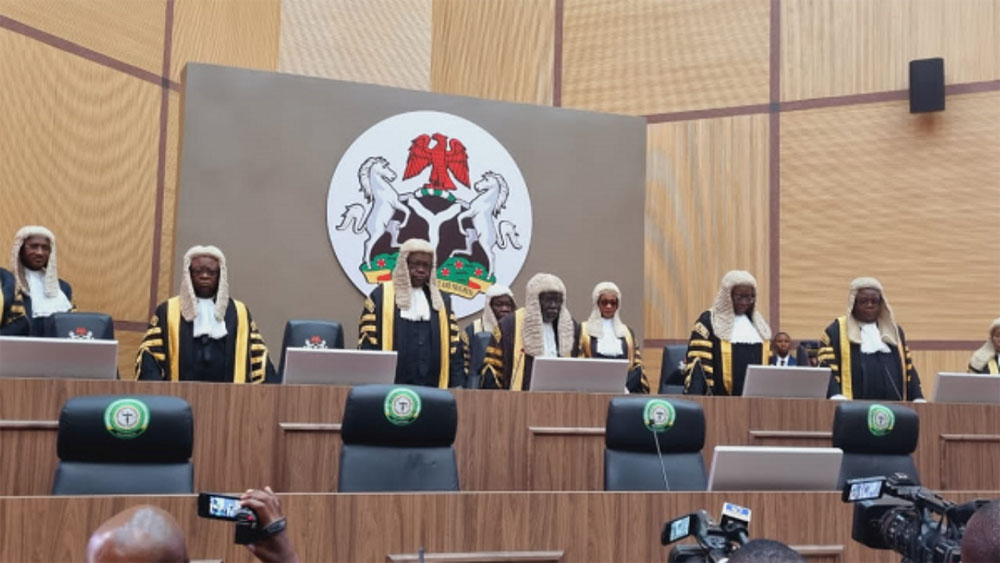
Tinubu’s Emergency Declaration Gets Supreme Court Backing in Landmark Judgment
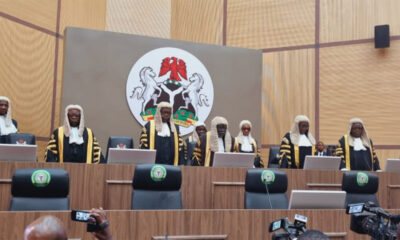
The Supreme Court of Nigeria has affirmed the constitutional authority of the President to declare a state of emergency in any state to prevent a breakdown of law and order or a slide into chaos and anarchy, ruling that such powers may include the temporary suspension of elected state officials.
In a split six-to-one judgment delivered on Monday, the apex court held that the President can take extraordinary measures during emergency rule, provided such actions are limited in duration and aimed at restoring normalcy.
Delivering the lead judgment, Justice Mohammed Idris said Section 305 of the 1999 Constitution (as amended) empowers the President to act decisively when national security or public safety is threatened. He noted that the Constitution does not expressly define the scope of “extraordinary measures,” thereby granting the President discretion on how to respond to emergency situations.
READ ALSO:
- Lekki Tollgate: No Massacre, Soldiers Fired Blank Bullets — Lai Mohammed Insists
- FRSC Moves to Prosecute TikTok Star Peller Over Alleged Reckless Driving, Live Streaming Incident
- Coordinated Bandit Attacks in Kogi Leave Worshipper Dead, 20 Others Kidnapped
The ruling followed a suit filed by Adamawa State and 10 other Peoples Democratic Party (PDP)-led states, which challenged the legality of the state of emergency declared by President Bola Tinubu in Rivers State, where elected officials were suspended for six months.
Justice Idris upheld preliminary objections raised by the Attorney General of the Federation (AGF) and the National Assembly, ruling that the plaintiff states failed to establish a valid cause of action capable of invoking the Supreme Court’s original jurisdiction. The suit was consequently struck out for lack of jurisdiction, while the substantive claims were also dismissed.
However, the decision was not unanimous. In a dissenting judgment, Justice Obande Ogbuinya held that although the President has the power to declare a state of emergency, such authority does not extend to suspending elected officials, including governors, deputy governors and members of state assemblies.
The judgment has far-reaching implications for Nigeria’s democracy, clarifying the scope of presidential emergency powers and setting judicial boundaries on federal intervention during periods of severe insecurity or governance breakdown.
Tinubu’s Emergency Declaration Gets Supreme Court Backing in Landmark Judgment

-
 metro3 days ago
Nigerian Troops Repel ISWAP Attack on Borno FOB, Kill Terrorists
-
 Health3 days ago
Bauchi Gov Approves 100% Salary Increase for Doctors, Health Workers
-

 metro2 days ago
End Biafra Agitation, Tinubu Has Integrated Ndigbo Into National Development — Umahi
-

 metro3 days ago
Adelabu–Ayodele controversy: Cleric knocks minister, gives reasons (Updated)
-

 Business2 days ago
Nigeria FX Market: Dollar Demand Surges, Naira Slides Slightly in Festive Season
-

 International2 days ago
(UPDATED) Sydney Bondi Shooting: Anti-Semitic Attack Leaves 16 Dead, 40 Injured
-

 Politics2 days ago
Ashimolowo Casts Doubt on Obi’s Northern Support as Opposition Coalition Wobbles
-

 Politics2 days ago
Peter Obi Poised to Dump Labour Party as Leadership Crisis Worsens